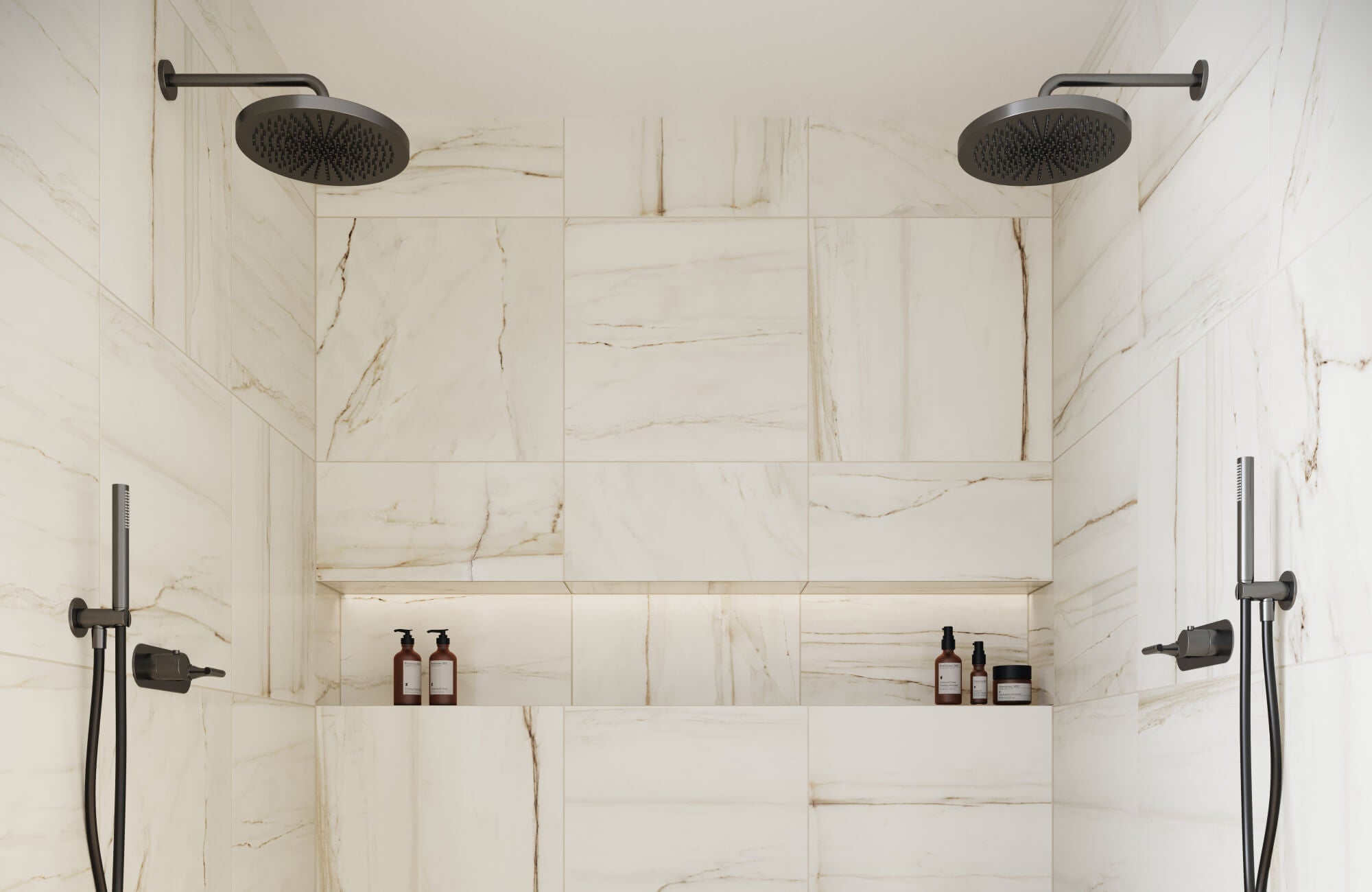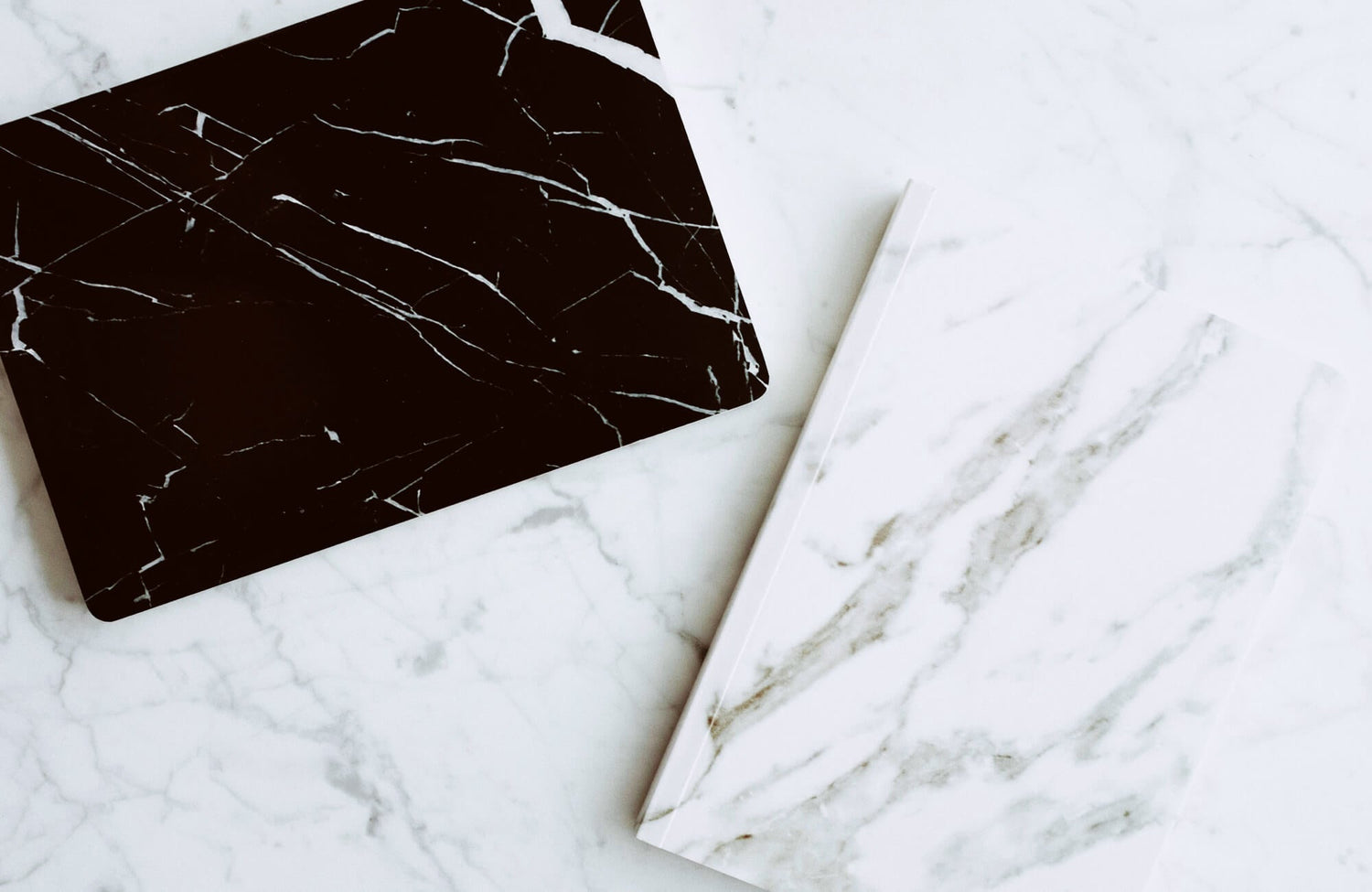
Marble and porcelain tile can look nearly identical once installed, which is why the real difference shows up in how they hold up over time. What feels like a simple style choice often turns into a decision about maintenance, durability, and how much effort you’re willing to put into keeping the surface looking its best. Marble brings natural variation and depth that can shape the entire space, while porcelain or marble look porcelain tiles offer a more predictable finish that’s easier to manage day to day. In this blog, we’ll break down how each option performs in real scenarios so you can move forward with a choice that actually fits your space and the way you live.

What Actually Sets Marble and Porcelain Apart in Real Use
Here, we’re not just looking at how marble and porcelain are made, but how those differences show up once they’re installed in a real space. Both can look refined at a glance, yet they behave very differently depending on where and how you use them.
Marble
Marble comes from natural stone that forms under intense heat and pressure, which is exactly why no two pieces ever look the same. That variation is what draws people in, since you’re working with movement and depth rather than a repeated pattern. In a well-lit space, the veining can shift throughout the day, making the surface feel more dynamic instead of static. At the same time, that natural variation means you don’t have full control over how the final layout will look once installed. Because of that, choosing marble often involves accepting a level of unpredictability that becomes part of its appeal.
Once you move into larger surfaces like floors or full wall applications, that variation needs to be handled more carefully. Installers typically lay pieces out in advance to guide how the veining flows from one tile or slab to the next. Without that step, the surface can feel disconnected, especially if strong veins abruptly change direction. This is where marble becomes more than just a material choice, since it requires planning to get a cohesive result. While it takes more effort, the payoff is a surface that feels intentional rather than random.
Finish also plays a major role in how marble behaves in daily use. A polished surface reflects light and makes the veining stand out more, which works well in formal or statement spaces. However, it can show scratches or etching more easily, especially in areas where spills or regular use are expected. Honed marble softens that effect by reducing shine and making marks less noticeable, which tends to work better in more relaxed settings. If you lean toward texture, tumbled marble introduces a slightly worn look that feels more grounded and less formal overall.
Marble Look Porcelain Tile
Marble look porcelain tile starts with a controlled manufacturing process, and that consistency changes how it performs once installed. Instead of relying on natural formation, manufacturers use detailed imaging to recreate marble patterns across multiple tiles. Because of this, you can plan a layout with a clear idea of how everything will come together. This removes a lot of the guesswork that comes with natural stone, especially in larger areas. For many homeowners, that predictability makes the entire design process easier to manage.
That consistency becomes even more useful when you’re working across wider surfaces or trying to achieve a clean, structured look. Tiles can be aligned to repeat patterns intentionally or spaced evenly without worrying about mismatched veining. In open spaces, this helps the flooring or wall finish feel more unified rather than visually scattered. It also shortens installation time since there’s less need to sort through pieces or adjust placement mid-process. As a result, the final look tends to feel more controlled and streamlined.
Different finishes allow porcelain to shift visually and functionally depending on the space. Glazed options reflect light in a way that feels close to polished marble, which works well in brighter interiors. Matte or textured finishes reduce glare and provide better grip, which becomes useful in bathrooms or outdoor areas. Rectified edges further refine the look by minimizing grout lines, creating a more seamless surface overall. These small details add up, making porcelain adaptable without requiring the same level of compromise.
Where Each Material Works Best (and Where It Doesn’t)
Where you plan to use the material plays a big role in how well it performs over time. Marble tends to work best in areas where it can be appreciated without constant wear, such as formal living rooms, feature walls, or low-impact flooring. In these settings, its natural variation becomes a focal point rather than something that needs to be protected. However, once it’s placed in spaces with regular spills or movement, maintaining that finish becomes more demanding. That’s where its limitations start to show more clearly.
Porcelain fits more naturally into everyday spaces where durability matters just as much as appearance. Kitchens, bathrooms, and entry areas benefit from its resistance to stains, scratches, and moisture. Because of that, it handles daily routines without requiring much adjustment in how the space is used. You don’t have to think twice about spills or frequent cleaning, which makes a noticeable difference over time. In homes where practicality is a priority, this tends to be a deciding factor.
Outdoor applications highlight the difference even further. Porcelain is built to handle moisture, temperature changes, and exposure without breaking down, which makes it a reliable option for patios or pool surrounds. Marble can still be used outside, but it needs consistent sealing and more attention to prevent long-term damage. Over time, that extra care adds up, especially in environments that are harder to control. If flexibility across different areas is important, porcelain simply comes with fewer limitations.

Durability and Maintenance
When selecting materials for your home, both durability and maintenance play a key role in ensuring long-term satisfaction. This becomes especially important when choosing between marble and marble look porcelain tile, as each material offers distinct strengths and upkeep requirements that can impact your daily routine and overall investment.
Scratch Resistance
Marble, with its naturally softer composition, is more prone to scratching from abrasive materials. Because of this, it requires careful handling and soft cleaning tools to maintain its refined appearance. Marble look porcelain tile, in contrast, features a much harder surface that is highly resistant to scratches. This level of durability makes it well-suited for frequently used spaces, easily withstanding everyday wear and furniture movement without compromising its finish.
Acid Etching and Stain Resistance
Marble is also especially susceptible to acid etching and staining. Exposure to substances like citrus juices, vinegar, or wine can dull or mark its surface, while items such as coffee and tea may leave permanent stains if not cleaned promptly. For this reason, regular sealing is essential to preserve its appearance. In comparison, marble look porcelain tile offers excellent resistance to both etching and staining. Its dense, non-porous nature makes it a more reliable option for kitchens and bathrooms, where spills are common and maintenance needs to remain minimal.
Vulnerability
While both materials are durable, they are not immune to impact damage. Marble can chip or crack if struck with enough force, so protective additions like area rugs are often recommended in spaces with frequent use or heavy furniture. Marble look porcelain tile, though more impact-resistant, can still crack under extreme pressure or when subjected to sharp, heavy drops. To prevent damage, it’s important to exercise caution during installation and avoid placing heavy items directly on tile surfaces without proper support.
Cleaning and Maintenance
Preserving the look of marble requires more attentive care. It should be cleaned with pH-neutral cleaners specifically formulated for natural stone and sealed regularly to guard against staining and surface damage. On the other hand, marble look porcelain tile is far easier to maintain. Routine sweeping or mopping with mild detergent is typically all that’s needed to keep it looking clean, thanks to its stain-resistant, non-porous surface.
That said, cleaning recommendations can vary depending on tile type. It’s important to follow the manufacturer’s care instructions, especially since natural stone and porcelain require different cleaning approaches. Additionally, while textured porcelain tiles can add visual interest, they may trap more dirt and grime. As a result, they call for a bit more diligence when it comes to regular cleaning to ensure the surface remains spotless and visually appealing.
Moisture Resistance
One of the standout qualities of marble look porcelain tile is its imperviousness to moisture. This makes it an excellent option for wet environments like bathrooms, laundry areas, and outdoor patios, where mold and mildew prevention is essential. Marble, while commonly used in these settings for its visual appeal, lacks the same level of built-in moisture protection. Its porous structure allows it to absorb water unless properly sealed.
To ensure that marble retains its appearance and function in moisture-prone areas, sealing must be done carefully and consistently. Without it, marble surfaces are more vulnerable to staining and mildew buildup over time. Therefore, porcelain tiles are often the more practical choice when ease of care and moisture resistance are top priorities in a home design.

How Marble and Porcelain Shape the Look of a Space
Marble introduces a level of visual movement that’s difficult to replicate because its veining forms naturally rather than following a repeatable pattern. In well-lit spaces, those veins can appear more pronounced at certain times of the day, which gives the surface a sense of depth instead of looking flat or printed. This works especially well in larger areas like open floors or full-height walls, where the material has enough room to read as a continuous feature. At the same time, that variation needs to be handled carefully during installation, since misaligned veining can break the flow and make the surface feel disconnected. Because of this, marble often ends up guiding the overall design direction rather than simply blending into it.
Marble look porcelain tile approaches design with more control, which becomes clear once you start planning layouts. Instead of adjusting to whatever variation the material gives you, you can choose patterns that are already balanced and repeat in a predictable way. This makes it easier to maintain consistency across wider areas, especially in spaces where you want everything to feel clean and structured. It also allows more flexibility in matching surrounding elements like cabinetry, wall colors, or furniture, since you’re not limited to the natural tones found in stone. With options ranging from soft, subtle veining to more defined patterns, porcelain can either act as a quiet backdrop or take on a more visible role depending on the selection.
The choice between the two often comes down to how much visual variation you want the surface to carry. Marble tends to act as a focal point, which works well if you want the material itself to stand out and shape the overall look of the room. However, that also means other finishes need to stay more restrained to avoid visual conflict. Porcelain offers more flexibility in this sense, since you can control how prominent or subtle the pattern appears without sacrificing consistency. In spaces where balance and coordination matter more than making a statement, that level of control can make the design process feel more straightforward.

Cost and Installation
Cost differences between marble and porcelain go beyond the price per tile, especially once installation and long-term upkeep are considered. What seems like a small gap at the start can widen depending on labor, material handling, and how much maintenance each surface requires over time.
Upfront Material Costs and Price Range
Marble typically sits at a higher price point because it’s sourced from natural stone, and no two batches are exactly alike. Variations in veining, color consistency, and slab thickness can quickly affect pricing, especially when you’re trying to achieve a more refined or uniform look. Some selections are also harder to source, which adds both cost and waiting time before installation can even begin. Because of this, budgeting for marble often involves some flexibility, since the final cost depends heavily on availability and selection. Porcelain tile, by contrast, is manufactured under controlled conditions, which keeps pricing more stable across different designs. Even higher-end porcelain tends to stay within a more predictable range, making it easier to plan for larger spaces without unexpected jumps in cost.
Installation Complexity and Labor Requirements
Working with marble involves a more detailed installation process, especially when the veining needs to flow naturally across the surface. Installers often lay out the pieces beforehand to guide placement, which adds time but helps avoid a scattered or mismatched appearance. The material itself is heavier and more delicate to handle, so cutting and positioning require precision to prevent chipping or breakage. Because of this, professional installation is almost always necessary, particularly for areas where the finish will be highly visible. Porcelain tile simplifies much of that process since each piece is more consistent in size and structure. This allows for faster installation and fewer adjustments during placement, which can help reduce labor time without sacrificing the overall look.
Long-Term Costs and Maintenance Impact
Marble continues to require attention even after installation, which adds to its overall cost over time. Its porous surface needs regular sealing to protect against stains, and cleaning has to be done with products that won’t damage the stone. In spaces where spills or moisture are common, this becomes part of the routine rather than an occasional task. Porcelain tile avoids most of these concerns because it doesn’t absorb moisture and resists staining without additional treatment. Regular cleaning is usually enough to maintain its appearance, which makes upkeep far less demanding. Over time, this difference can shift the total cost in favor of porcelain, especially in frequently used areas.
DIY Potential and Installation Flexibility
Porcelain tile offers more flexibility when it comes to installation, especially for homeowners with some hands-on experience. Its lighter weight and consistent sizing make it easier to cut and place, which can make smaller projects more manageable without professional help. Straightforward layouts like backsplashes or compact rooms are often where DIY installation becomes a realistic option. Marble, however, is less forgiving and leaves little room for error once cutting begins. A single mistake can affect both the material and the overall finish, which makes the process more risky for anyone without experience. For that reason, marble installations are usually handled by professionals to ensure the final result feels cohesive and properly aligned.

Choosing the Right Tile for Your Needs
Selecting the right tile directly affects how a space functions day to day. Marble and marble look porcelain tile can deliver a similar visual impact, but they respond very differently depending on where and how they’re used. Looking at your layout, routine, and design priorities together makes the decision much more practical.
Consider the Application
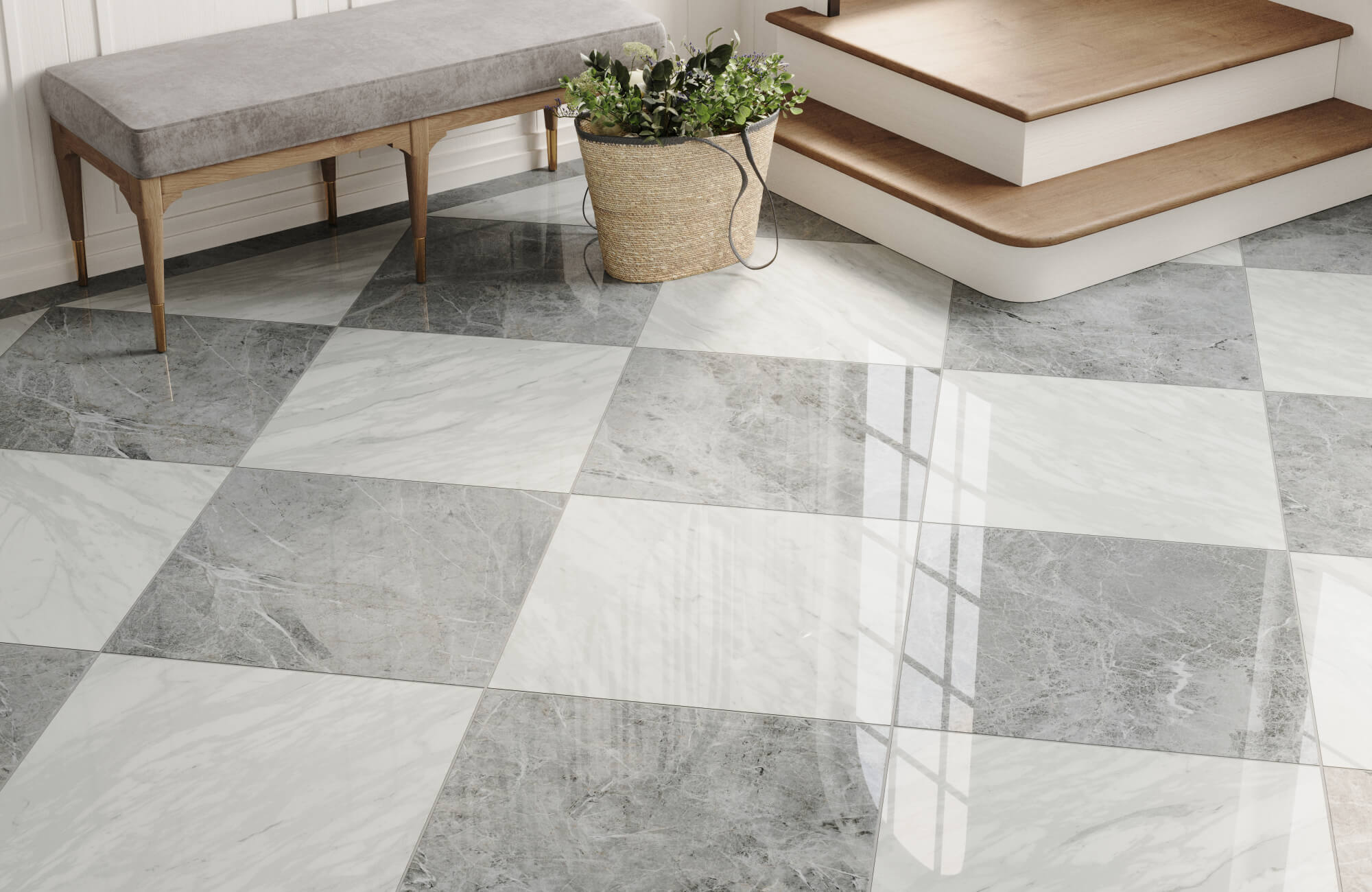
Start by thinking about where the tile will be installed and what that area demands over time. Marble look porcelain tile, like our Chantel 24x48 Matte Porcelain Tile in Imperial shown above, works especially well in spaces that deal with constant use, such as entryways or living areas, where surfaces are more exposed to movement, dirt, and furniture shifts. Its resistance to scratching and staining allows it to hold its finish without requiring extra care. While both marble and porcelain can be used in kitchens and bathrooms, marble tends to need more attention due to its sensitivity to spills and moisture, especially around sinks, countertops, or cooking zones where contact is more frequent.
When applied to countertops, the difference becomes more noticeable in daily use. Marble offers a refined, natural surface that develops character over time, but it also reacts more easily to acidic substances and repeated use. Porcelain tile can achieve a similar visual effect while remaining more stable under everyday conditions, which makes it easier to maintain without adjusting how the space is used. For outdoor areas, porcelain continues to perform more reliably, since it handles temperature changes, moisture exposure, and weather conditions without breaking down. Marble can still be used outside, but it requires more consistent sealing and care to prevent long-term wear.
Think About Your Lifestyle
Your daily routine plays a bigger role than expected when choosing between these materials. If you prefer surfaces that stay presentable with minimal effort, marble look porcelain tile tends to be the easier option, since it doesn’t require sealing and can be cleaned with standard methods. Marble, on the other hand, suits homeowners who are comfortable maintaining the surface regularly and being more mindful of how it’s used. This includes wiping spills quickly, using the right cleaning products, and protecting areas that see more contact.
Activity level within the home also makes a difference over time. In spaces where there’s frequent movement or regular use, porcelain tends to hold up more consistently without showing wear as quickly. Marble can still work in these environments, but it may show signs of use sooner, especially if the finish is polished. Cost ties into this as well, since porcelain is generally more accessible for larger areas, while marble can become a bigger investment once material, installation, and upkeep are combined. Taking all of these factors into account helps narrow down which option fits your routine without adding unnecessary maintenance.
Factor in Personal Preferences
Design preference ultimately shapes how each material fits into your space. Marble appeals to those who value natural variation and want a surface that feels unique, with veining that doesn’t repeat and adds depth to the overall design. It works especially well in interiors that lean toward classic or more layered styles, where the material itself becomes part of the visual focus. For many homeowners, that one-of-a-kind quality is what makes marble worth the added care.
Marble look porcelain tile offers a different kind of flexibility by giving you more control over the final look. With a wider selection of tones, patterns, and finishes, it becomes easier to coordinate with cabinetry, wall colors, or furniture without being limited to natural stone variations. Texture also plays a role here, since porcelain can range from smooth and polished to matte or slightly textured, depending on the finish. When thinking long term, marble may carry a sense of prestige that can influence property value, while porcelain provides a more manageable option that still delivers a similar visual result. The right choice often comes down to whether you prefer natural variation or controlled consistency in your design.
Choosing What Actually Works for Your Space Long Term
The decision between marble and marble look porcelain tile becomes clearer once you look at how the space will be used over time, not just how it looks on day one. Marble brings natural variation that can shape the entire design, but it also requires more attention to maintain that finish. Porcelain offers a more controlled result, which makes it easier to manage across larger areas or spaces that see regular use. When you weigh both options side by side, the better choice usually comes down to how much maintenance, flexibility, and visual consistency you want to deal with long-term.
If you’re still deciding, it often helps to see how each option fits within your actual layout rather than imagining it in isolation. Proportions, lighting, and surrounding materials can shift how a tile reads once installed, which is where guidance becomes valuable. Our Personalized Design Consultation can help you narrow down options based on how you live and how the space functions day to day. With a clearer direction, it becomes much easier to move forward with a choice that feels right beyond just the initial look.