A beautifully designed bathroom deserves more than just functional lighting; it deserves a sense of radiance that feels both intentional and timeless. Mirrors, when thoughtfully positioned, capture and amplify every glimmer of light, transforming compact spaces into luminous retreats. The gentle interplay between reflective surfaces, natural daylight, and carefully layered artificial lighting also enhances both the atmosphere and the utility of the bathroom. From expanding the perception of space to creating a spa-like ambiance, strategic mirror placement elevates even the simplest interiors into refined sanctuaries. By understanding where to place a mirror to brighten a bathroom, you can craft interiors that balance elegance, comfort, and light-filled sophistication.

Positioning Mirrors Opposite Windows to Amplify Natural Light
Bathrooms often struggle with limited daylight, which makes placing a mirror opposite a window one of the most effective strategies for brightening the space. This thoughtful arrangement captures natural light and gently redistributes it across surfaces, allowing the entire bathroom to feel more open and inviting.
Maximizing Daylight Penetration
Placing a large mirror opposite a bathroom window allows daylight to travel further into the interior, creating a more evenly lit environment. Low-iron, high-clarity glass ensures the reflection is crisp and undistorted, preserving the true color of natural light. When the mirror spans across a vanity wall, illumination spreads consistently across sinks and countertops where clarity is most needed. In bathrooms with frosted glass, the reflection multiplies the softened glow, eliminating harsh contrasts while maintaining brightness.
In the photo displayed above, Edward Martin’s Tristan Square Mirror in Polished Brass is placed directly opposite the window, capturing daylight and reflecting it back across the vanity. This not only brightens the space but also enhances depth by introducing outdoor views into the interior, creating a luminous and expansive atmosphere.
Expanding Outdoor Views Indoors
Mirrors placed opposite bathroom windows reflect light and extend the view of the outdoors, creating a sense of depth and tranquility. Reflections of trees, sky, or gardens reinforce biophilic bathroom design by bringing natural elements into the interior. Hard finishes, such as tile and stone, feel softened when balanced by these doubled views. Even smaller bathrooms appear larger, as the mirror also creates the illusion of openness beyond the physical boundaries of the walls. Moreover, the interplay of light and extended vistas introduces both calmness and vitality into the space. As a result, the bathroom feels visually expansive while maintaining a serene connection to nature.
Reducing Artificial Lighting Dependency
By reflecting daylight into shadowed areas, mirrors opposite windows significantly reduce the need for daytime artificial lighting. The redirected light bounces across tiles, shower glass, and polished vanities, ensuring that no corner remains dim. This also creates a naturally bright atmosphere that is both energy-efficient and visually comfortable. In addition, grooming tasks such as shaving or makeup application benefit from the even, flattering glow of daylight rather than the harsher output of overhead bulbs. Even bathrooms with smaller windows gain more functional brightness through reflective distribution. This combination of aesthetic enhancement and sustainable performance makes the placement a long-lasting design investment.

Enhancing Artificial Lighting with Mirror Placement
When bathrooms lack strong natural light, mirrors can extend the effectiveness of artificial illumination. With careful placement, they work hand in hand with fixtures to brighten every corner and create a balanced, inviting environment.
Behind or Adjacent to Light Fixtures
Positioning mirrors behind or beside sconces and vanity lights effectively doubles the spread of illumination. This approach ensures the glow reaches further into the bathroom, reducing shadows and improving visibility at the sink area. Extending the mirror slightly beyond the width of the fixture also balances both light and proportion, creating a sense of symmetry. As the light reflects outward, it softly fills corners and washes along the walls, bringing brightness to areas that direct fixtures alone might not reach.
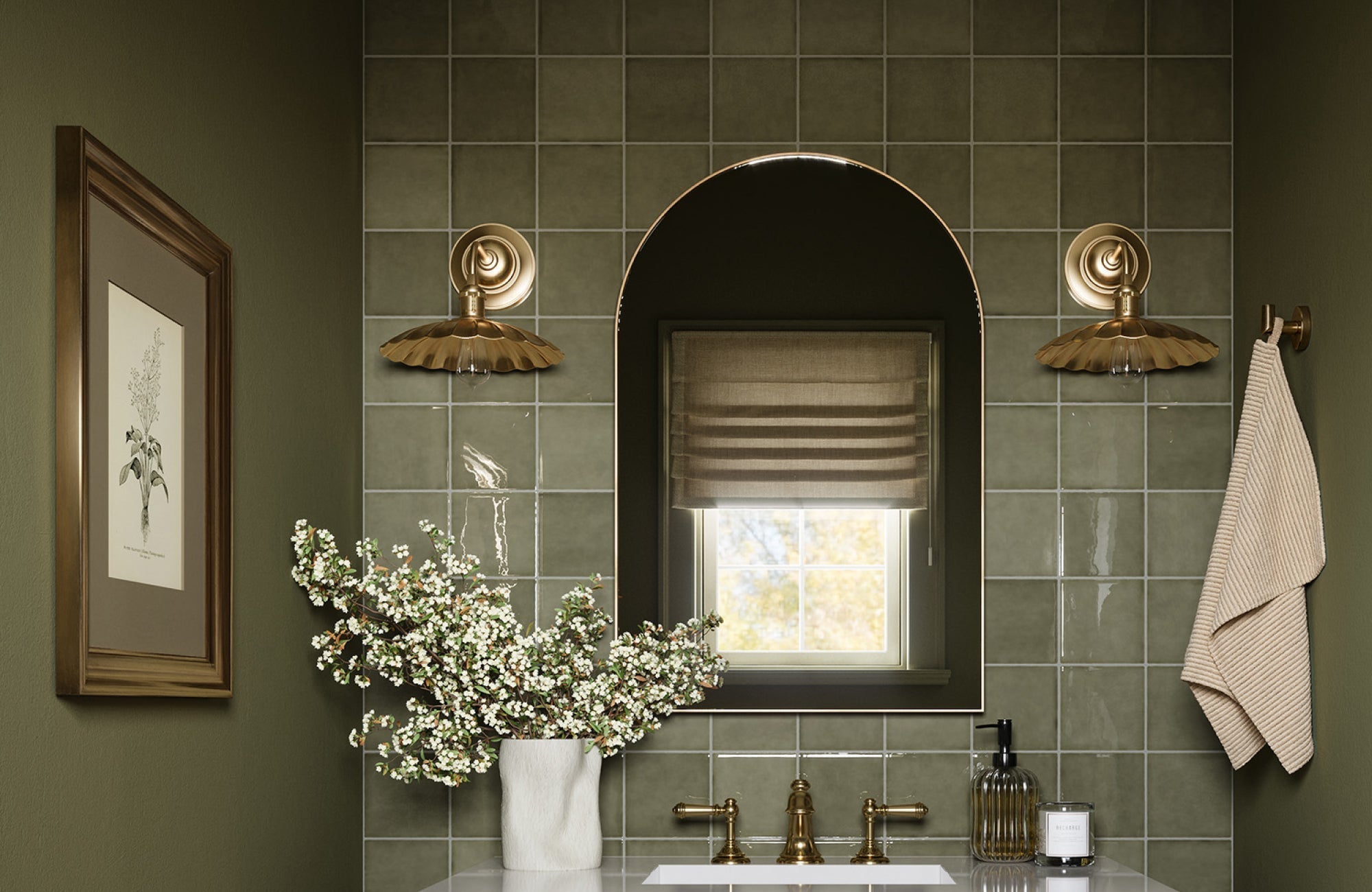
A beautiful pairing is the Esmeralda Small Mirror in Polished Brass with the Asha Wall Sconce in Aged Brass, as shown in the photo, where the mirror’s refined arch and luminous brass frame work hand in hand with the sconce’s warm glow to create depth, balance, and radiance. Together, they amplify both light and style, transforming the bathroom into a space that feels inviting, functional, and timelessly elegant.
Pairing with Diffused Illumination
Mirrors are particularly effective when combined with diffused light sources such as frosted bulbs, glass globes, or shaded sconces. This softened illumination reflects across the mirror’s surface, producing an even glow that avoids sharp glare. In a bathroom filled with reflective finishes like tile or glass, this balance also prevents uncomfortable brightness while still ensuring clarity. When paired with a generously sized mirror, the diffused glow creates a spa-like ambiance while maintaining functional brightness for daily routines. The reflection spreads the light smoothly throughout the space, enhancing both mood and practicality. This harmonious balance of diffusion and reflection turns the bathroom into a place of both relaxation and utility.
Choosing Finishes for Mood
The finish of a bathroom mirror determines not only its style but also how effectively it contributes to lighting. For instance, beveled edges create subtle shifts in the way illumination disperses, adding dimension to the reflection. Additionally, antique or tinted finishes introduce warmth, complementing designs that favor intimacy and softer moods. Frameless or metallic-framed mirrors, on the other hand, maximize brightness and suit contemporary aesthetics with clean lines. Darker frames also absorb some of the light, reducing reflection efficiency and slightly muting the overall glow. Choosing the right finish ensures the mirror enhances both brightness and design harmony in the bathroom.

Using Mirrors in Narrow or Constricted Bathroom Spaces
Compact bathrooms, powder rooms, and narrow en-suites often feel confined, but mirrors can counter this effect by reflecting light and extending visual boundaries. With thoughtful placement, they brighten these spaces while also creating an impression of depth and proportion.
Positioning Near Openings
Placing a mirror opposite a bathroom doorway makes use of borrowed light from adjoining rooms, which is especially valuable for windowless layouts. The reflection extends sightlines, giving the impression of greater depth beyond the immediate walls. Glossy finishes like porcelain tile or quartz countertops intensify this effect by bouncing the borrowed light more effectively. This technique not only improves illumination but also connects the bathroom visually to the rest of the home. The subtle extension of space creates a sense of openness while maintaining privacy. In practice, this placement offers a discreet yet highly functional solution to low-light bathrooms.
Hallways with Repetitive Mirrors
When a bathroom opens into a narrow hallway, the entry can often feel dark and compressed. Adding a series of smaller mirrors along the corridor reflects available light into the bathroom, easing the transition. The repeated reflections also create rhythm and mimic the effect of clerestory windows, which naturally brighten linear spaces. In addition, pairing these mirrors with soft sconces allows light to flow smoothly from the hallway to the bathroom. This approach creates visual continuity, ensuring both spaces feel integrated and luminous. The result is an inviting passage that enhances brightness and adds architectural refinement.
Vertical Mirrors in Compact Bathrooms
Vertical mirrors are particularly effective in bathrooms with limited ceiling height, as they guide the eye upward and make the space feel taller. Their elongated shape increases perceived proportions while reflecting pendant lights or sconces for added brightness. This vertical emphasis also prevents compact bathrooms from feeling boxed in and introduces a sense of openness. Moreover, the reflection highlights ceiling details or decorative lighting, which might otherwise go unnoticed. By balancing vertical reflection with strategic lighting, even small bathrooms achieve an airy, spacious quality. In this way, vertical mirrors transform functional necessities into powerful design statements.

Creating Focal Points with Mirror Walls and Large Formats
Oversized mirrors or mirrored walls serve as striking visual features while dramatically enhancing brightness. When integrated with care, they redefine the sense of scale in bathrooms and transform them into radiant, elegant spaces.
Floor-to-Ceiling Mirrors
Installing a floor-to-ceiling mirror instantly multiplies the perceived size of a bathroom, opening the space far beyond its physical boundaries. As light reflects across polished surfaces like glass and tile, the room takes on a luminous, immersive quality that feels both expansive and inviting. Acting almost like a secondary window, the mirror also distributes illumination evenly from both natural and artificial sources, ensuring balance throughout the interior. To avoid a look that feels overly clinical, designers often introduce textured surfaces such as stone or wood, which add depth and warmth. This thoughtful interplay between smooth reflection and tactile contrast creates a refined balance of brightness and comfort. The result is a bathroom that feels expansive, luxurious, and visually harmonious.
Mirrored Accent Walls
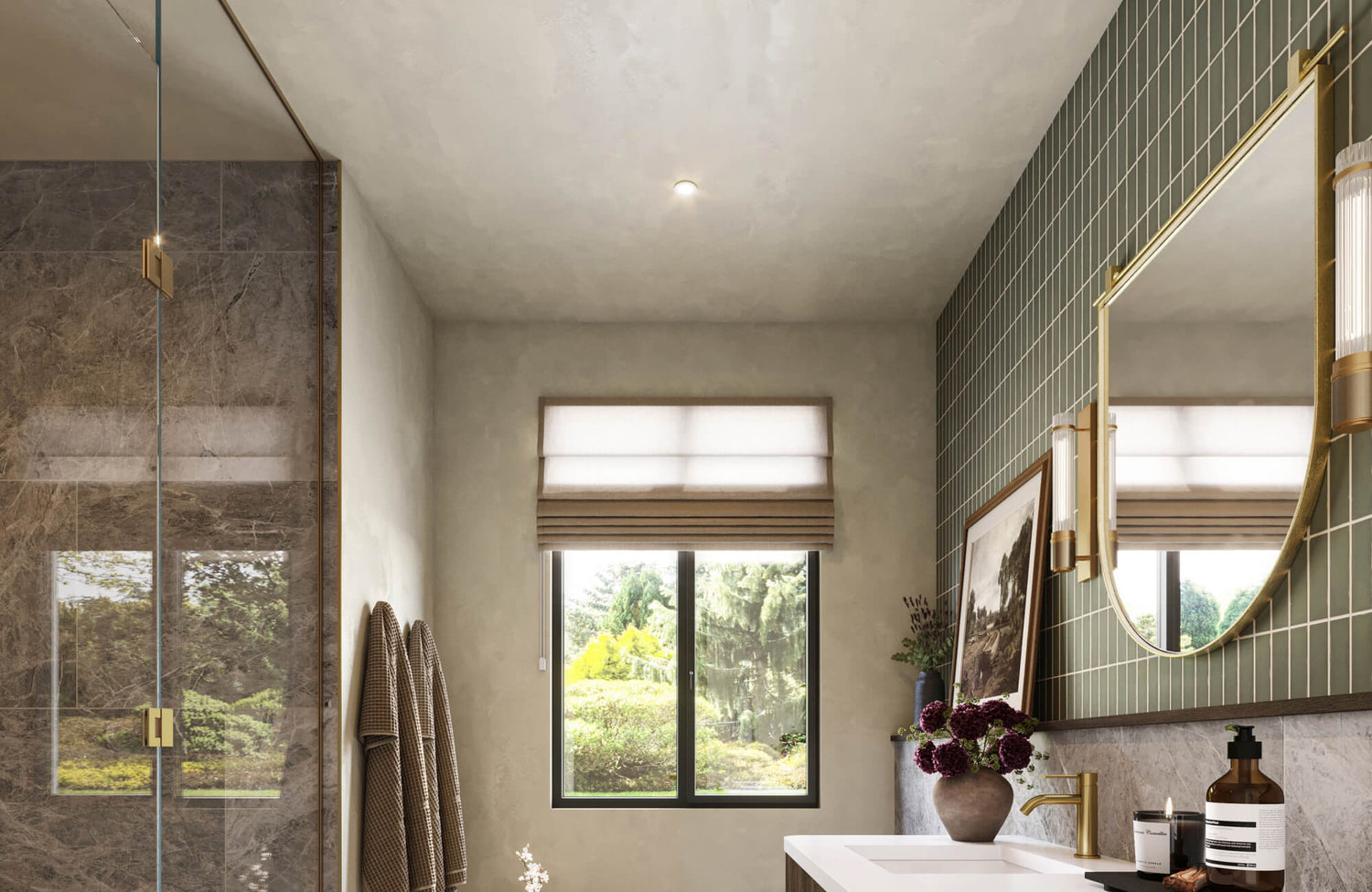
A mirrored accent wall serves as both a focal point and a light-enhancing surface within the bathroom, multiplying the glow of fixtures and creating dazzling patterns of illumination across the space. When paired with pendant or recessed lighting, the reflection achieves a striking visual rhythm that feels both modern and inviting. To keep the effect from becoming overwhelming, designers also balance reflective expanses with matte finishes or natural stone on adjacent walls. A refined example of this balance, as featured in the picture above, is our Rory Mirror in Antique Brass Iron, whose organic silhouette and bold brass frame add sculptural elegance while amplifying surrounding light fixtures. By combining form and function so seamlessly, mirrored accent walls, and statement pieces like the Rory, transform bathrooms into sophisticated, light-filled environments.
Safety and Installation Considerations
Large format mirrors require thoughtful planning to ensure both safety and durability in high-moisture bathroom environments. With this, using tempered or laminated glass adds resilience while minimizing the risks of breakage. Equally important is proper sealing and secure mounting, which prevent warping or detachment over time—an essential safeguard for floor-to-ceiling designs. Professional installation further guarantees stability while preserving a clean, seamless finish that elevates the overall look. In addition, adequate ventilation helps reduce condensation, protecting the mirror’s clarity and extending its performance. When all of these measures are combined, oversized mirrors provide lasting brilliance while maintaining the highest level of safety.

Considering Angles, Frames, and Reflective Surfaces for Light Distribution
Mirror performance in bathrooms is influenced not only by placement but also by angles, framing, and the reflectivity of surrounding surfaces. Subtle adjustments in these details can refine brightness and create a more balanced atmosphere.
Tilting Mirrors to Redirect Light
A mirror tilted slightly upward redirects light toward the ceiling, which then disperses illumination softly across the entire bathroom. This technique reduces shadows at the vanity, making grooming tasks more precise and comfortable. In darker bathrooms or those with low ceilings, upward reflection also creates the impression of added height and openness. By using the ceiling as a secondary reflector, the space benefits from an ambient glow that feels natural. This approach enhances both brightness and spatial perception without adding new fixtures. With careful angling, designers maximize light efficiency while maintaining harmony.
Frame Materials and Light Efficiency
Mirror frames subtly influence how much light a bathroom retains and reflects. For instance, polished metallic frames, such as chrome or nickel, complement bathroom hardware while amplifying reflectivity. Frameless mirrors also provide a clean, uninterrupted surface that maximizes brightness in contemporary spaces. While darker wood or matte frames can add style, they tend to absorb light and diminish overall luminosity. Selecting a frame that aligns with both design goals and lighting performance ensures optimal results. Attention to this balance enhances both the functional and aesthetic role of mirrors.
Surrounding Surfaces and Albedo
The effectiveness of a mirror also depends on the reflective value, or albedo, of nearby surfaces. Glossy, light-colored finishes such as porcelain tile, quartz, or polished ceramics enhance mirror reflections, making the bathroom feel radiant. Dark or matte finishes, by contrast, absorb illumination and reduce overall brightness. Moreover, placing mirrors opposite high-albedo surfaces maximizes their efficiency, turning the entire wall into a light-amplifying feature. This thoughtful coordination creates consistency between reflection and material finish. When executed properly, the result is a bathroom that feels luminous, balanced, and seamlessly designed.

Integrating Mirrors with Bathroom Design Elements for Enhanced Brightness
Beyond placement and scale, the true impact of a bathroom mirror comes from how it interacts with surrounding design elements. Coordinating mirrors with finishes, colors, and spatial layout ensures brightness feels intentional and harmoniously woven into the entire space.
Pairing Mirrors with Light-Colored Materials
Surfaces such as marble, porcelain tile, or quartz countertops naturally reflect light. When paired with a mirror, these high-albedo finishes amplify brightness, creating a bathroom that feels radiant and expansive. Light-colored stone also softens shadows, making reflections appear more luminous. A striking example is the combination of the Shirley Large Mirror in Antique Brass Iron with the Abigail 60" Single Vanity in Light Natural Oak with 3 cm White Zeus Quartz Top, where the mirror’s sculptural silhouette pairs beautifully with the vanity’s natural warmth and radiant quartz surface. Overhead, the Kaley 11" Pendant in Aged Brass introduces soft, diffused illumination that enhances the glow of the reflective finishes. Coordinating tiles, including the Miley 4.5x9.1 Glossy Porcelain Tile in Ice on the wall, the Makenna 6x6 Glossy Porcelain Tile in Ice as the backsplash, and the Tatum 24x48 Matte Porcelain Tile in Cross-Cut Straw on the floor, create a seamless blend of sheen and texture, allowing light to bounce throughout the room. Together, these elements form a cohesive environment where mirrors, materials, and fixtures harmonize to project clarity, warmth, and timeless elegance.
Coordinating with Paint and Wall Treatments
The wall color surrounding a mirror greatly influences the effect of reflected light. Pale neutrals, soft grays, or pastel tones bounce illumination back into the bathroom, while darker hues absorb light and reduce reflectivity. In addition, pairing a mirror with textured finishes like Venetian plaster or glossy tile introduces dimension while retaining brightness. Designers often frame mirrors with lighter trims to create a natural halo of illumination around the reflective surface. These subtle treatments ensure mirrors do more than brighten—they also anchor the bathroom’s aesthetic. In this way, color and surface treatments act as powerful partners to reflective design.
Aligning Mirrors with Bathroom Layout
How mirrors align with spatial flow determines their success in brightening the bathroom. For example, a mirror angled toward open floor space distributes light more effectively than one facing solid walls. When centered along key sightlines, it becomes a visual anchor that organizes the room while enhancing brightness. Mirrors positioned above vanities should also align with sink and lighting placement to ensure functionality as well as symmetry. In larger bathrooms, placing mirrors across from each other can create a dynamic interplay of reflections that maximizes brightness. This careful alignment elevates mirrors from simple accessories to integral design elements.
Creating Brighter Bathrooms with Mirrors
A mirror is far more than a reflective surface—it is a design element that brings light, depth, and harmony into the bathroom. With thoughtful placement, mirrors transform even modest layouts into luminous interiors filled with balance and beauty. By amplifying natural daylight and enhancing artificial illumination, they elevate function while enriching atmosphere. The result is a bathroom that feels radiant, expansive, and timelessly refined.
For those seeking tailored solutions, Edward Martin’s expert design services help you integrate mirrors seamlessly with your space, ensuring every detail reflects both elegance and practicality. To explore our collections, discover design guidance, or connect with our specialists, contact us today and bring your vision of a brighter bathroom to life!