When choosing a mirror for the dining room, placement is just as important as appearance. In Vastu Shastra, mirrors are believed to influence how energy flows through spaces where we eat, connect, and share everyday moments. A thoughtfully positioned mirror can help create a sense of abundance, emotional comfort, and balance, while a poorly placed one may gently unsettle the room’s harmony.
When viewing mirror placement through a Vastu lens, the focus moves beyond style alone. It invites you to consider how a mirror interacts with the room, the activities that happen there, and the atmosphere the space creates over time. Understanding these principles helps you make choices that feel thoughtful, practical, and naturally aligned with your home.

The Vastu Role of Mirrors in the Dining Space
In Vastu Shastra, mirrors are regarded as active elements rather than mere decorative features. What a mirror reflects is believed to be energetically amplified, making its placement in the dining room particularly significant. Since meals are closely connected to nourishment, emotions, and family interaction, reflections in this space are thought to have a stronger and more lasting influence.
Mirrors as Energy Amplifiers
When a mirror is placed in the dining room, it effectively doubles whatever it reflects. The food on the table, the people gathered around it, and even the overall mood of the space are visually repeated. If meals are shared in a calm and positive setting, the mirror helps reinforce that atmosphere. On the other hand, tension or clutter is reflected just as clearly. This is why it helps to look beyond the wall itself and consider the everyday moments that will consistently appear in the mirror’s view.
Symbolism of Reflection and Abundance
In Vastu philosophy, food is closely linked to prosperity and continuity. When a mirror reflects a dining table set with meals, it is believed to symbolically strengthen the sense of nourishment and abundance within the home. This perspective goes beyond decoration and focuses on intention. A mirror that captures shared meals is thought to support financial stability and reinforce a sense of sufficiency in everyday life.
Why Dining Rooms Need Special Care
Dining rooms differ from living rooms or bedrooms because they bring together physical nourishment and emotional exchange. Conversations, shared decisions, and everyday routines often unfold around the dining table. A mirror that works well in another space may feel distracting or overwhelming here. For this reason, Vastu considers dining room mirror placement with added precision and restraint.

Ideal Directions for Mirror Placement According to Vastu
Direction plays a key role in how a mirror influences energy within the dining room. Each wall interacts with natural forces differently, and placing a mirror on the appropriate side of the room can help maintain balance and stability rather than create imbalance.
North Wall Placement Benefits
The north direction is traditionally associated with financial flow and opportunity. Placing a mirror on the north wall of the dining room is believed to encourage income stability and long-term growth. It is often preferred because it can brighten the space while staying aligned with Vastu principles associated with prosperity. When positioned thoughtfully, the mirror can also help create a sense of openness without overwhelming the dining area.
East Wall Placement and Positivity
An east-facing mirror connects with morning light and fresh energy. This direction is linked to health, clarity, and harmonious relationships. If your dining room receives natural light from the east, placing a mirror on this wall can help distribute that brightness across the space, creating a more open and balanced setting during meals. Over time, this placement can foster a calmer and more uplifting dining environment.
Directions to Avoid Completely
South and west walls are generally discouraged for mirror placement in dining rooms. These directions are associated with weight and containment rather than expansion. A mirror placed here can symbolically draw energy away from the household, resulting in restlessness or a gradual sense of imbalance. In many cases, these placements can make the dining area feel heavier or less inviting during everyday use.

What a Dining Room Mirror Should Reflect
In Vastu, what a mirror reflects is just as important as where it is placed. A mirror does not simply occupy wall space; it repeats and reinforces whatever appears within its frame. For this reason, paying attention to what the mirror reflects can make a noticeable difference in keeping the dining room balanced and comfortable.
Reflecting the Dining Table
A mirror that reflects a clean, organized dining table is generally considered favorable. The repeated image of meals and shared settings helps reinforce a sense of nourishment and togetherness. This reflection should feel calm and complete, rather than rushed or unfinished. When the table is set with care, the mirror quietly supports a more grounded and pleasant dining experience.
Reflecting Natural Light and Openness
Mirrors can be used to distribute daylight more evenly across the dining room. When positioned to catch sunlight or soft ambient light, a mirror helps the space feel warmer and more welcoming. This approach supports a relaxed dining experience without overwhelming the room. It can also help the dining area feel more open, particularly in homes with limited natural light.
Reflections to Avoid
Avoid mirrors that reflect cluttered surfaces, sinks, or sharp architectural corners. Reflections of empty plates or unused dining areas can also weaken the sense of abundance. The goal is to reflect moments of use and care, not neglect or disorder. When the reflection feels unsettled or incomplete, it can quietly make the dining space feel less comfortable during meals.

Shape Size and Frame Guidelines for Vastu Compliance
The physical design of a mirror plays an important role in how it fits within the dining room. Elements such as shape, size, and framing influence not only the visual balance of the space but also how energy is believed to move through it.
Best Mirror Shapes for Dining Rooms
Square and rectangular mirrors are generally preferred because they symbolize stability and order. These shapes align naturally with dining tables and furniture layouts, helping create visual harmony without drawing unnecessary attention. For example, a rectangular design like Edward Martin’s Arelisse Rectangle Mirror in Charcoal complements linear furniture well and reinforces a sense of balance along the wall. Overall, these structured forms tend to feel more grounded and composed in a dining setting, helping to create a calm and comfortable atmosphere during meals.
Proportion and Scale Considerations
A mirror should feel balanced in relation to the wall and the dining table it complements. Very large mirrors can dominate the room and overstimulate reflections, while very small ones may feel visually disconnected. For instance, a medium-sized option like our Raelynn Mantel Mirror in Polished Brass, measuring 39 inches wide and 44 inches high, offers presence without overwhelming the space. Maintaining proper proportion helps preserve a calm visual flow during meals, allowing the mirror to blend naturally into the room rather than compete for attention.
Frame Materials and Colors
Frames made from wood or muted metal finishes work well in dining rooms, as they help ground the mirror and keep it from feeling stark or out of place. An earthy metallic option, such as our Tristan Round Mirror in Polished Brass, offers warmth while maintaining a subtle presence on the wall. Avoid damaged or chipped frames, as they suggest interruption rather than continuity in Vastu terms. Choosing finishes that complement the dining furniture further supports a cohesive and balanced feel in the space.

Common Dining Room Mirror Mistakes in Vastu
Many mirror placement issues happen unintentionally, yet they can gradually influence how comfortable and balanced a dining room feels. One common concern is placing a mirror directly opposite the main entrance of the dining area. When positioned this way, the mirror can push energy back out rather than allowing it to settle, gradually making the space feel less grounded.
Another frequent oversight is keeping broken, cracked, or distorted mirrors in the dining room. In Vastu, such mirrors are believed to reflect fractured energy, and even small imperfections can subtly affect the atmosphere. Clear, undistorted reflections are better suited to support calm interactions during meals. Similarly, using multiple mirrors in the same dining area can create visual noise. Too many reflections may feel distracting and interfere with conversation, which is why a single, thoughtfully placed mirror is usually enough.

Vastu-Based Mirror Placement for Different Dining Room Layouts
Every dining room comes with its own layout considerations. Even when space is limited or shared with other areas, Vastu principles can be applied thoughtfully and with flexibility.
Small Dining Rooms
In small dining rooms, a single mirror placed on the north or east wall can help the space feel more open without overwhelming it. The key lies in restraint and clarity of reflection. Choosing a mirror that reflects light rather than furniture helps avoid visual clutter. Keeping the surrounding wall area simple further ensures the mirror enhances the space rather than dominating it.
Open Plan Dining Areas
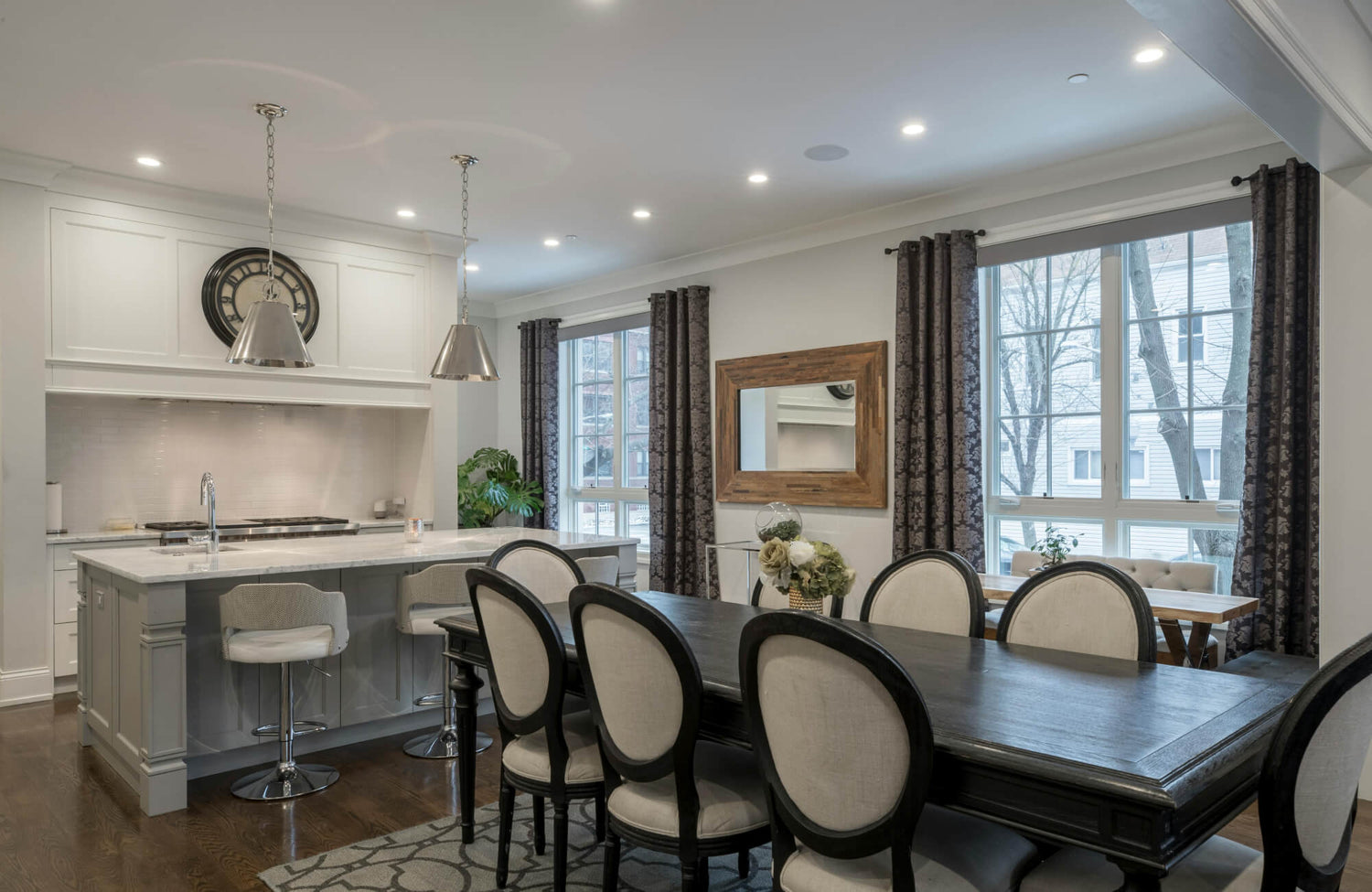
In open layouts, mirrors work best when they reflect the dining area rather than the surrounding spaces. Avoid capturing kitchen activity or seating spaces meant for rest, as Vastu encourages these energies to remain distinct. Thoughtful placement helps maintain a clear boundary between functions within the shared space. This approach allows the dining area to retain its own sense of calm and purpose.
Dining Rooms with Limited Walls
When ideal walls are unavailable, placing a mirror where it reflects light rather than objects can be a practical solution. Even partial reflections can support balance when chosen carefully. In such cases, the focus should be on enhancing brightness without drawing attention to busy or cluttered areas. This approach helps preserve openness while staying aligned with Vastu principles.
Bringing Balance and Harmony Through Thoughtful Mirror Placement
Placing a mirror in the dining room according to Vastu is less about rigid rules and more about awareness. When direction, reflection, and design are considered together, the mirror naturally becomes a supportive element rather than a distraction within the space. By choosing a placement that reflects nourishment, light, and togetherness, you help create a dining area that feels steady and inviting. Over time, these thoughtful choices can foster a calmer atmosphere, where meals feel more grounded and shared moments carry a greater sense of ease and connection.
If you would like guidance on mirror placement or need help choosing a design that suits your dining space, you can get in touch with us for personalized support. Our design services are available to help you make informed, practical decisions that align with both Vastu principles and your home’s layout.