Lighting can completely transform the appearance and atmosphere of a small bathroom. When space is limited, every inch counts, especially in how light spreads, how reflections behave, and how comfortable the room appears. With the right placement, lighting can make a compact space feel larger, brighter, and more balanced. In this article, we’ll explore how to layer light thoughtfully, from ceiling and mirror fixtures to shower and accent illumination, so your bathroom feels both functional and beautifully inviting.

Creating the Ideal Base Layer of Light
Every well-designed lighting plan begins with general illumination. This foundational layer sets the room’s overall brightness and guides how shadows appear and blend with other light sources. In a small bathroom, the aim is to achieve balanced, natural brightness that enhances visibility without feeling harsh or overwhelming.
Choosing the Right Overhead Placement
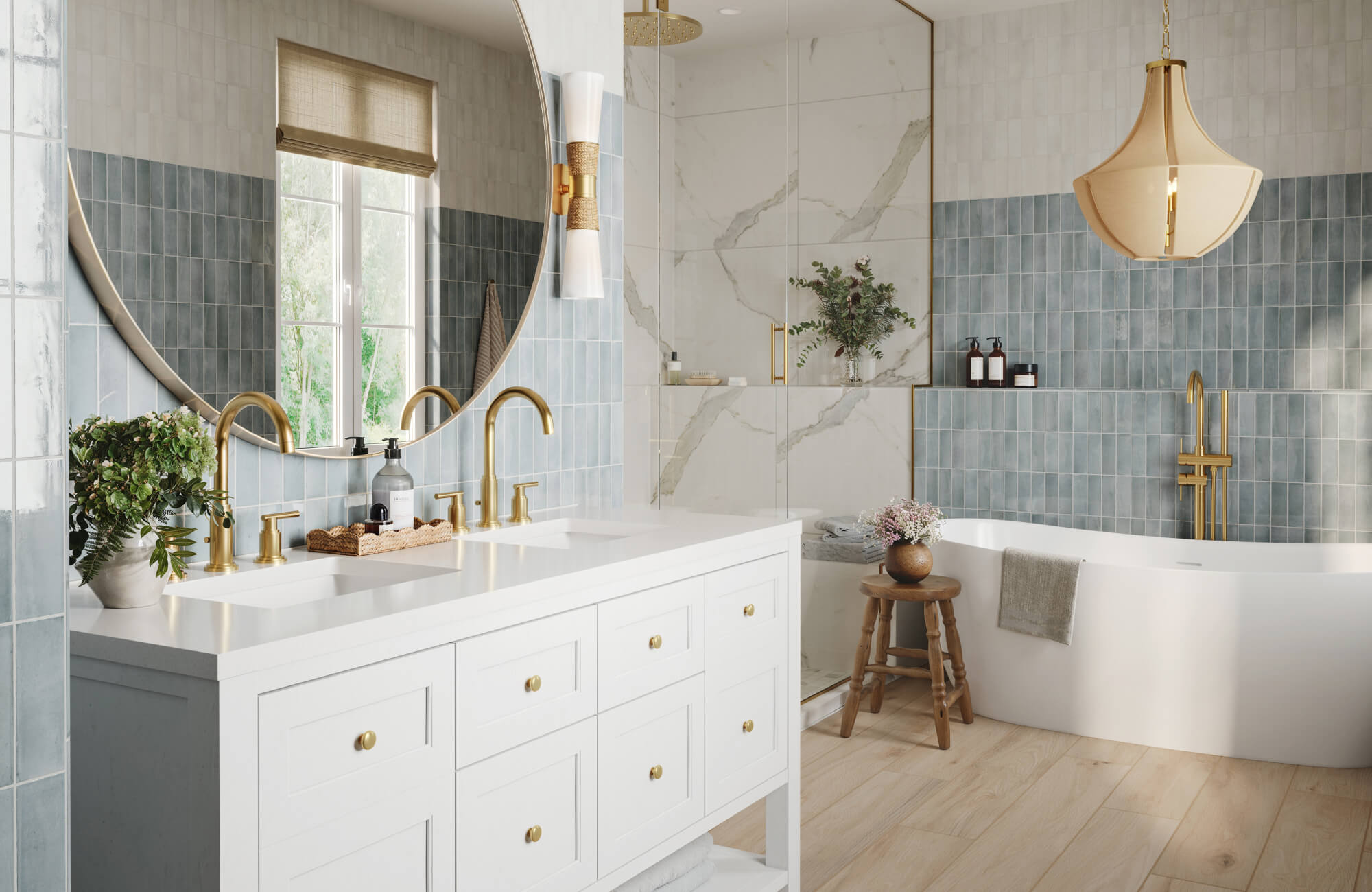
When planning ceiling lighting, placement is just as important as the fixture itself. A centered light works well for most layouts, but in narrow or elongated bathrooms, shifting it slightly toward the vanity or main walkway helps eliminate dark spots and brighten overlooked corners. The design featuring Edward Martin’s Runa Pendant in Aged Brass, as shown in the photo above, beautifully illustrates how pendant lighting can bring warmth and focus to the vanity area. Its placement adds depth and directs light exactly where it’s needed, creating a soft, inviting glow. For rooms with lower ceilings, recessed or flush-mount fixtures remain an excellent option, offering even illumination while keeping the ceiling clean and open.
Avoiding Uneven Light Zones
Uneven lighting can make a small bathroom feel even more confined. When fixtures are spaced too far apart, bright and dim areas tend to appear across the walls and floor. To create a smooth, consistent glow, use diffused lights with overlapping beams that blend naturally. Placing one or two ceiling fixtures strategically, or choosing models with a wide light spread, also helps ensure every corner, from the vanity to storage areas, is evenly illuminated.
Recessed Lighting for Clean Minimalism
For a sleek, streamlined ceiling, recessed lighting provides both function and subtle sophistication. Space the fixtures about two feet apart, aligning them with key areas such as the vanity, shower, or toilet to achieve balanced coverage without visual clutter. When paired with frosted trims or warm-toned bulbs, recessed lights diffuse brightness gently, reducing glare and creating an inviting glow that enhances both comfort and visibility.

Layering Task Lighting for Grooming and Detail Work
While general lighting brightens the entire room, task lighting provides the focused clarity needed for everyday activities. In a small bathroom, positioning lights thoughtfully around the mirror enhances visibility, making routines like shaving or applying makeup more comfortable and precise.
Flanking the Mirror with Vertical Sconces
Placing sconces on either side of the mirror provides balanced, shadow-free illumination across your face. Ideally positioned at eye level, about 60 to 65 inches from the floor, these fixtures distribute light evenly from both sides, avoiding the harsh shadows that overhead lighting can create. This setup not only enhances visibility but also draws attention to the mirror, adding a sense of symmetry and refinement to the space.
Above-Mirror Fixtures Done Right
When wall space is limited, an above-mirror light bar is an effective alternative to side sconces. Mount the fixture just a few inches above the mirror frame so the light falls evenly across your face. Opt for designs with frosted or opal glass shades to soften brightness and minimize glare. The concept is beautifully demonstrated, as shown in the photo above, where Edward Martin’s Posey Wall Sconce in Aged Brass is placed directly above the Esmeralda Small Mirror in Polished Brass, casting a balanced, flattering light across the vanity. This placement not only enhances visibility in a compact bathroom but also adds a warm, refined glow that makes the space feel open and well-proportioned.
Balancing Mirror Width and Light Spread
One of the most common lighting mistakes in small bathrooms is selecting a fixture that’s out of proportion with the mirror. For balanced coverage, the light should span about three-quarters of the mirror’s width. This proportion provides even illumination across the entire surface, preventing overly bright or shadowed areas. Properly scaled lighting not only improves functionality but also creates a cohesive, well-proportioned look between the mirror and vanity.

Enhancing Ambiance and Visual Depth
Lighting does more than provide visibility; it also shapes mood and character. In small bathrooms, ambient lighting introduces warmth and depth, turning a purely functional space into one that feels calm, inviting, and thoughtfully designed.
Using Cove or Perimeter Lighting
Installing LED strips along the edge of the ceiling or behind floating shelves adds a soft, upward glow that visually lifts the walls and ceiling. This indirect lighting technique smooths harsh corners and creates a sense of openness, making the space feel larger. It also complements your main light sources, adding depth and dimension without the need for extra fixtures.
Dimming for Versatility
A dimmer switch adds flexibility, letting you adjust the brightness to suit different times of day and activities. You can increase the light for morning routines or lower it in the evening to create a softer, more relaxed atmosphere. This simple addition further brings balance and comfort, especially in smaller bathrooms that serve both functional and personal purposes.
Light Temperature and Tone
Color temperature plays a key role in shaping the atmosphere of your bathroom. Warm white light (around 2700–3000K) creates a relaxing, spa-like feel, while neutral white light (3500–4000K) offers crisp clarity for detailed tasks. Consistency is essential: mixing different color temperatures can make the space feel uneven. Keeping all fixtures within the same tone maintains visual harmony and a balanced, comfortable glow.

Strategic Shower and Wet Zone Lighting
Lighting in showers and wet areas requires thoughtful placement and attention to safety. While moisture limits the types of fixtures you can use, the right choices allow you to maintain both functionality and style without sacrificing brightness or visual appeal.
Recessed Fixtures Above the Shower
A recessed downlight rated for wet areas provides focused, dependable illumination. Position it slightly off-center from the showerhead to avoid casting shadows while maintaining even light coverage. This placement also enhances visibility, accentuates tile texture, and makes the shower feel more spacious and inviting while avoiding harsh glare.
Niche and Alcove Lighting
Recessed LED strips in shelves or niches add both function and style, highlighting surface textures while improving visibility. They subtly illuminate toiletries or decorative accents, creating a modern, spa-like atmosphere. Always choose waterproof fixtures to protect against condensation and ensure lasting performance.
Balancing Function with Subtlety
In a compact bathroom, excessive brightness in one spot can disrupt visual balance. The goal is integration; your shower lighting should work in harmony with the rest of the room. Matching color temperature and brightness across all fixtures creates a smooth, cohesive transition between wet and dry zones, keeping the overall design unified and comfortable.

Maximizing Space with Reflective and Directional Lighting
Light plays a powerful role in how spacious a room appears. In small bathrooms, using reflection and direction strategically can make the space feel larger and more balanced, achieving a brighter, open look without the need for additional fixtures.
Positioning Lights to Reflect Off Mirrors
Mirrors can significantly amplify brightness when lights are positioned thoughtfully. Place fixtures close enough for their glow to reflect across the room rather than directing all the light downward. This approach enhances overall illumination, creating the effect of additional lighting without adding extra fixtures.
Glass and Glossy Surfaces as Light Multipliers
Lighting that interacts with glossy materials can make a small bathroom feel more spacious. When placed near glass tiles, polished stone, or chrome accents, the light reflects softly across surfaces, brightening the room and adding depth. This concept is beautifully illustrated in the photo displayed above, where Edward Martin’s Goodwin Wall Sconce in Aged Brass pairs with the Sarina 3x12 Glossy Ceramic Fishscale Tile in Shell to create a luminous, open atmosphere. The sconces cast a warm, flattering glow that bounces off the tiles and mirror, enhancing the room’s brightness without overwhelming it. Together, these reflective surfaces and thoughtful lighting choices contribute to a clean, airy design that feels polished yet inviting.
Avoiding Glare from Reflective Finishes
Reflections can enhance brightness, but when light is too direct, they can quickly become harsh. Angle your fixtures gently or use frosted diffusers to soften the glow and reduce glare. This careful control keeps the lighting bright enough to open up the space while remaining soft and comfortable to the eye.

Designing with Safety and Efficiency in Mind
Aside from aesthetics, bathroom lighting must also prioritize safety and performance. Each fixture should be selected for its durability, efficiency, and suitability for humid conditions, ensuring long-lasting function in moisture-prone areas.
Zone Ratings and Placement Rules
Different areas of a bathroom experience varying levels of moisture, so choosing the right fixture ratings is essential. Lights installed near tubs, showers, or sinks should have proper IP or damp ratings to withstand humidity and splashes. Adhering to these standards also keeps your lighting system safe, code-compliant, and protected from long-term issues such as corrosion or electrical faults.
Energy Efficiency and LED Selection
LED lighting is the most energy-efficient option for bathrooms. Choose bulbs with a Color Rendering Index (CRI) above 90 to ensure true-to-life color, particularly helpful for grooming tasks like shaving or applying makeup. LEDs consume less power, last longer, and provide consistent brightness, making them a practical and sustainable choice for everyday use.
Maintenance and Longevity
Select fixtures made from corrosion-resistant materials such as glass, ceramic, or coated metal to withstand humidity over time. Install them in accessible spots so cleaning and bulb replacements are simple and safe. Regular upkeep helps maintain consistent brightness, prevents moisture buildup, and extends the life of your lighting fixtures.
Designing the Best Lighting Layout for a Small Bathroom
Good bathroom lighting goes beyond brightness; it’s also about balance, proportion, and thoughtful placement. When general, task, and ambient lights work together, even the smallest bathroom can feel open, comfortable, and cohesive. Reflections enhance depth without clutter, and well-chosen, safety-rated fixtures ensure lasting performance. With the right mix of tone, texture, and positioning, your lighting can transform a compact bathroom into a space that feels both functional and beautifully refined.
If you’re planning to upgrade or redesign your bathroom lighting, contact us to learn more about our personalized design services. Our team can help you create a tailored lighting plan that complements your space and brings your vision to life.