

)
)
)
)
)
)
)
)
How To Layer Light In Your Home For Perfect Ambiance And Function
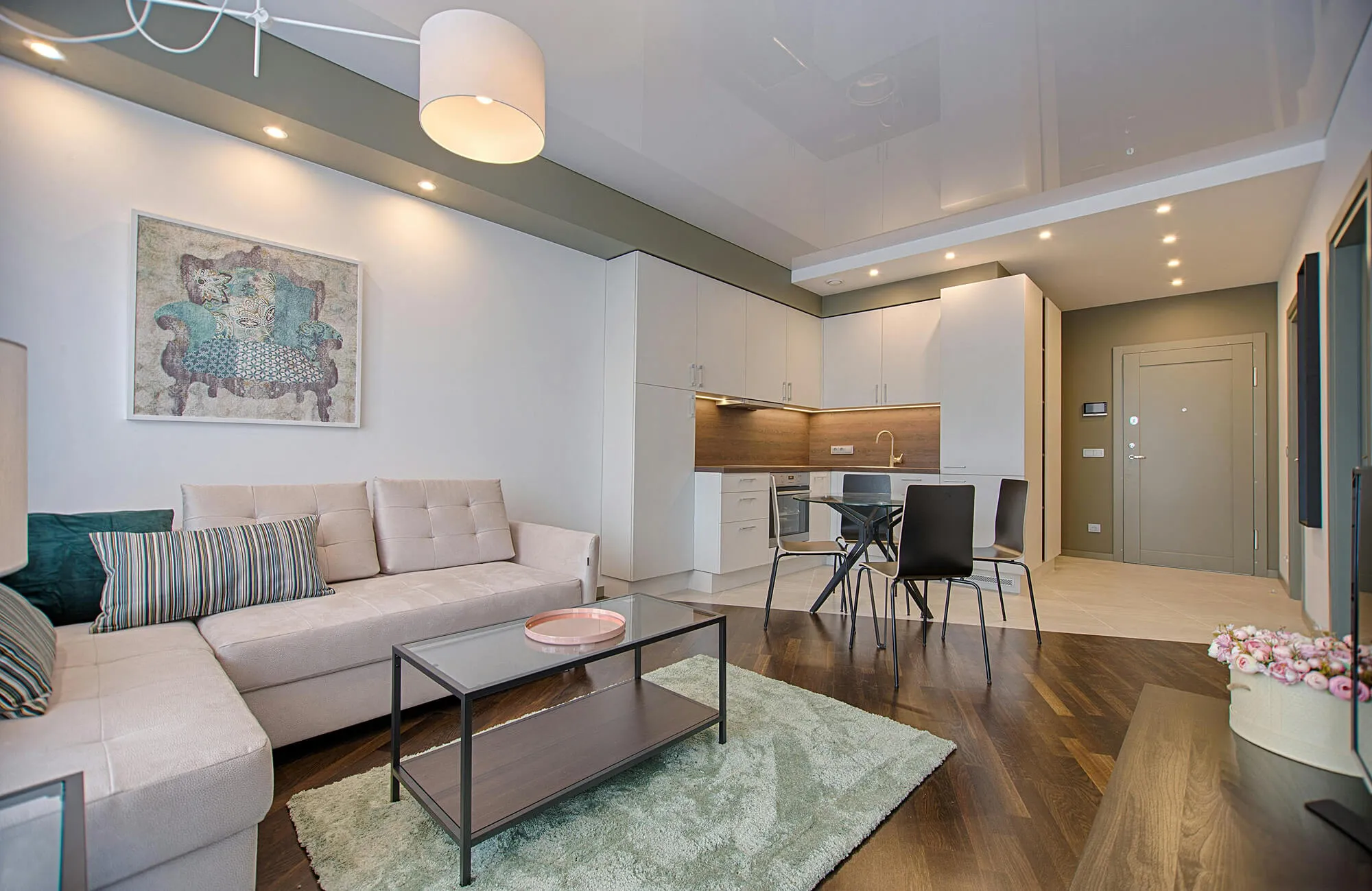
Light has the remarkable power to shape how a home feels—its warmth, rhythm, and quiet sophistication. A thoughtfully layered home lighting design goes beyond function, creating depth, harmony, and emotional resonance throughout every room. By weaving together ambient, task, accent, and decorative lighting, each layer reveals the architecture’s form while enhancing comfort and clarity. Natural light also joins this composition as the ever-changing element that breathes life into materials, textures, and tones. When carefully orchestrated, modern interior illumination transforms the ordinary into the extraordinary, where ambiance and function exist in perfect balance.
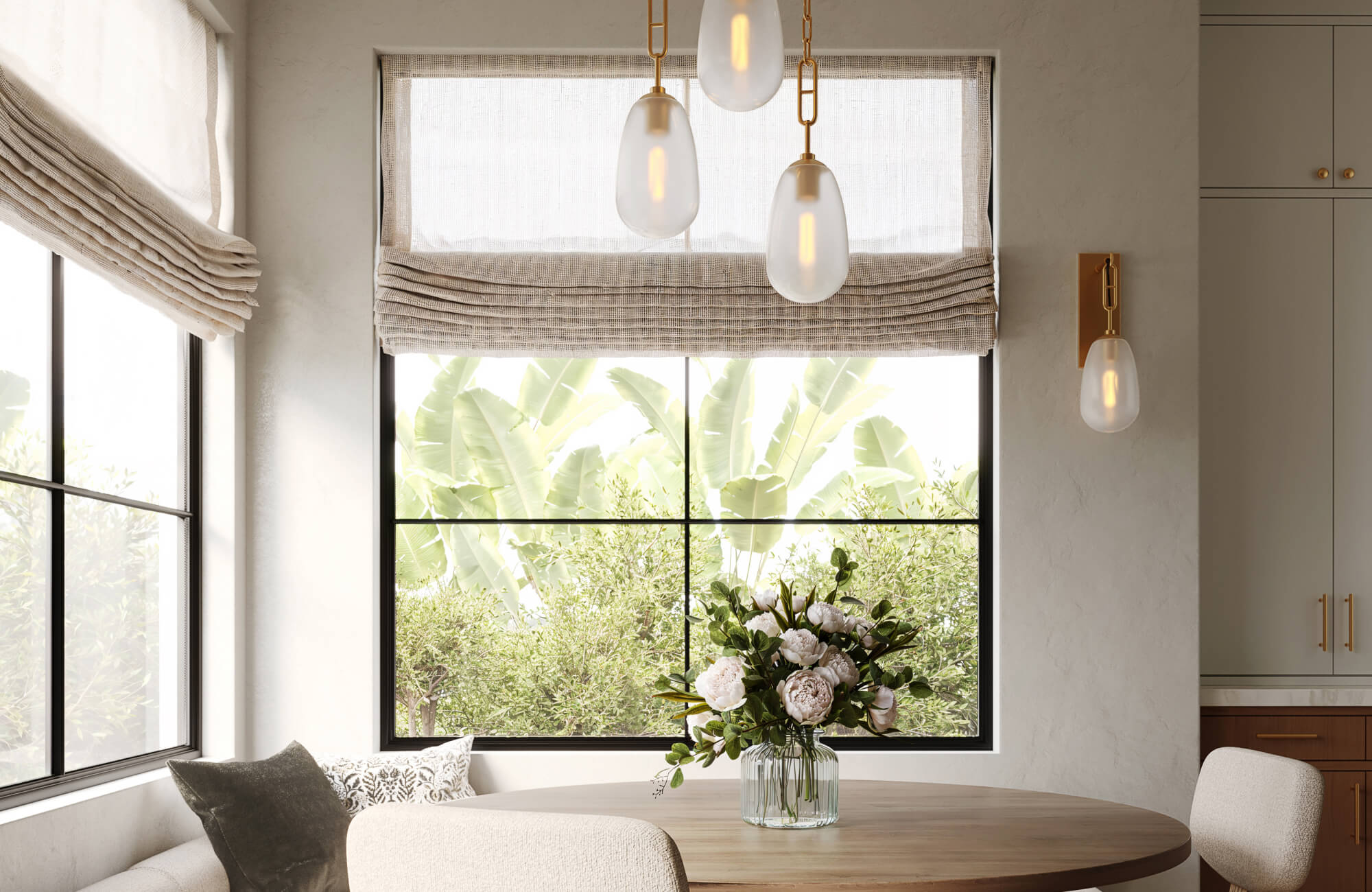
Ambient Lighting
Ambient lighting forms the foundation of every well-lit home, setting the tone and providing balanced, comfortable visibility. It creates a soft canvas of light that supports every subsequent layer, blending practicality with architectural cohesion.
Choosing the Right Fixtures
Recessed downlights, ceiling-mounted panels, and flush luminaires provide even illumination, establishing visual comfort throughout the room. Fixtures with high lumen-per-watt efficiency ensure ample brightness without excessive energy consumption, supporting the space’s functional needs. Cove lighting and concealed LED strips then contribute architectural definition, adding subtle gradients that make spaces feel open and fluid. Selecting color temperatures between 2700K and 3500K also strikes a balance between warmth and modern clarity while maintaining a cohesive lighting environment. Integrating adjustable dimming further allows seamless adaptation from daylight brightness to evening ambiance. When executed properly, these fixtures harmonize illumination and form, creating a gentle yet dynamic visual base.
Balancing Brightness and Uniformity
Balanced brightness ensures that light falls evenly across surfaces, preventing glare and unwanted shadowing. Using reflective materials and light-toned finishes enhances diffusion, lending softness and spatial coherence. Properly spaced luminaires also maintain a consistent distribution, ensuring every corner feels naturally illuminated. Moreover, calculating brightness levels—measured in foot-candles—ensures optimal visibility without visual fatigue. The subtle layering of soft light creates a sense of visual rhythm that’s both calming and continuous. Through this thoughtful equilibrium, ambient lighting becomes the silent framework that shapes atmosphere and clarity.
Integrating Dimmers and Controls
Incorporating dimmable drivers and smart control systems transforms static illumination into a living, adaptive element. Smooth transitions between brightness levels allow rooms to evolve naturally with time and activity, enhancing usability throughout the day. Scene-based controls then synchronize multiple zones, creating harmony between task, accent, and ambient layers. In addition, wireless dimming protocols such as DALI or Zigbee support this functionality with flicker-free performance and lasting efficiency. Motion sensors and occupancy detectors further introduce intuitive energy savings without compromising comfort. Together, these innovations bring ambient light to life as both a design and experiential feature.
Task Lighting
Task lighting provides the focus and clarity needed for daily activities while integrating gracefully into the ambient scheme. It sharpens visual performance, defining work zones through precise brightness and controlled directionality.
Optimizing Illumination for Function
Effective task lighting enhances function without disrupting the room’s balance. For instance, under-cabinet LEDs eliminate shadows in kitchens, while focused pendants anchor workspaces with purpose. Maintaining lux levels between 300 and 700 also ensures that illumination supports visibility without glare. Additionally, adjustable heads and flexible arms guide light precisely where it’s needed, optimizing usability. Neutral color temperatures between 3500K and 4100K then foster alertness while maintaining harmony with surrounding tones. When coordinated with ambient layers, task lighting complements functionality with subtle refinement.
Positioning for Visual Comfort
Thoughtful placement enhances comfort as much as brightness does. Lights positioned at eye level, such as vanity or wall sconces, eliminate harsh facial shadows and create flattering diffusion. Pendant fixtures hung 30 to 36 inches above countertops also balance task clarity with spatial openness, offering both practicality and harmony.
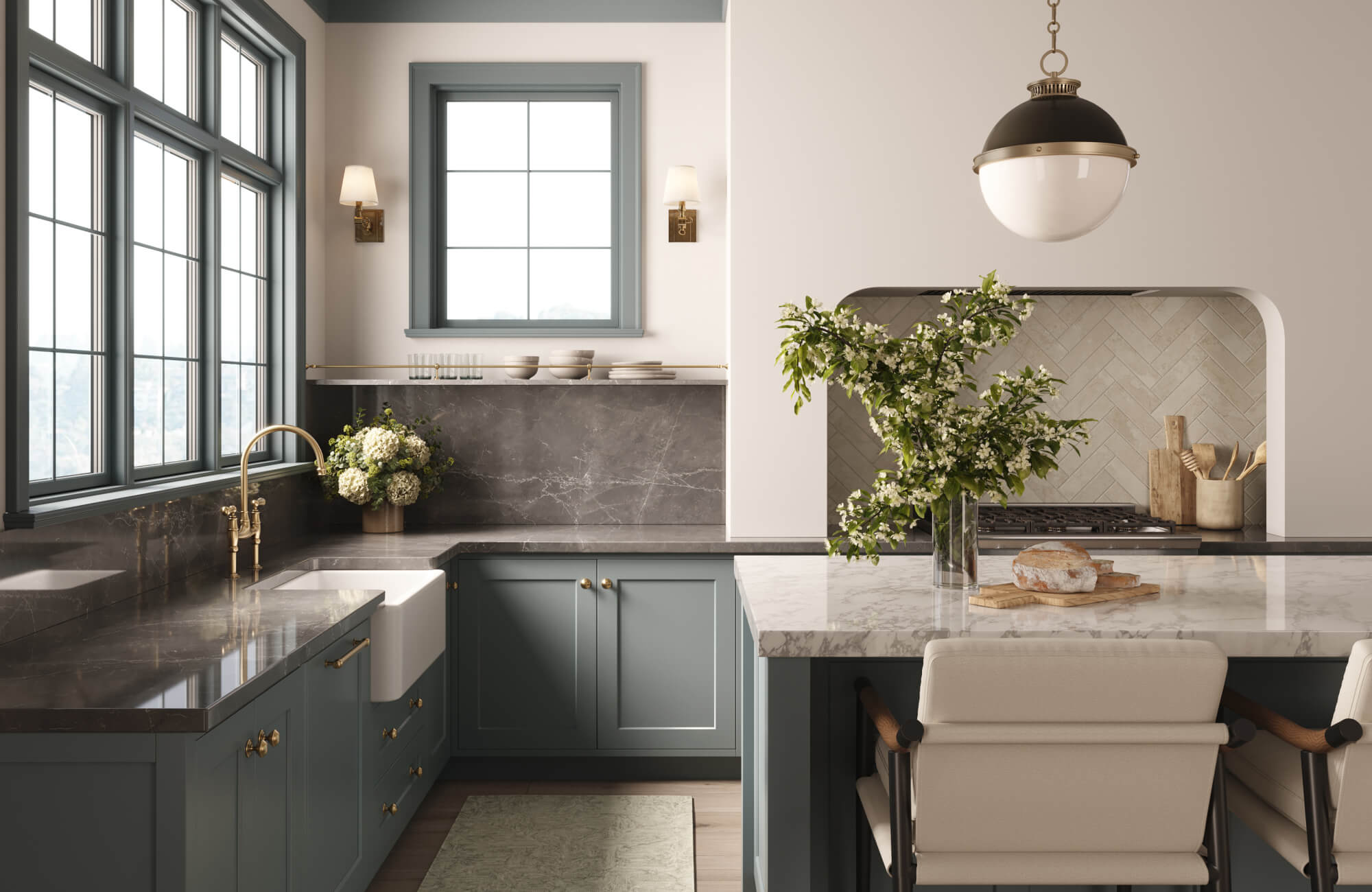
In the photo shown above, Edward Martin’s Barnes 14" Pendant in Aged Antique Distressed Bronze anchors the kitchen island with focused illumination that defines the workspace without overpowering surrounding light. Its aged bronze finish adds warmth and visual grounding, complementing both cool and neutral palettes. Paired with the Sylvan Wall Sconce in Aged Brass, positioned symmetrically around the window, the design achieves perfect visual comfort—balancing direct and ambient light to enhance depth and texture across surfaces.
Together, these fixtures demonstrate how layered lighting composition elevates usability and ambiance in equal measure. The pendant provides targeted brightness for everyday tasks, while the sconces diffuse a gentle glow at eye level, softening contrasts and enriching the room’s architectural rhythm. The result is a seamless flow of light that feels natural, flattering, and beautifully orchestrated.
Ensuring Consistency in Color Rendering
Accurate color rendering preserves both visual clarity and material integrity. LEDs with a Color Rendering Index (CRI) above 90 ensure that fabrics, food, and finishes appear authentic and vivid. Maintaining consistent color temperature across fixtures prevents tonal dissonance that interrupts visual flow. Phosphor-coated LED modules also achieve smooth spectral distribution, supporting both functionality and atmosphere. When every element of illumination shares a coherent tone, the environment feels intentional and cohesive. Task lighting then becomes an extension of craftsmanship—practical, precise, and beautifully integrated.
Accent Lighting
Accent lighting introduces contrast and character, guiding the eye toward focal points and architectural details. It gives rooms dimension and rhythm, transforming ordinary surfaces into expressive design statements.
Highlighting Architectural Details
Wall washers and recessed grazers sculpt surfaces by revealing texture and shadow in measured harmony. Linear LEDs, on the other hand, trace the contours of alcoves, niches, or ceiling beams, bringing architecture to life through light and depth. Directional fixtures with narrow beams also spread concentrated brightness precisely where emphasis is desired, while anti-glare trims maintain comfort and visual refinement.
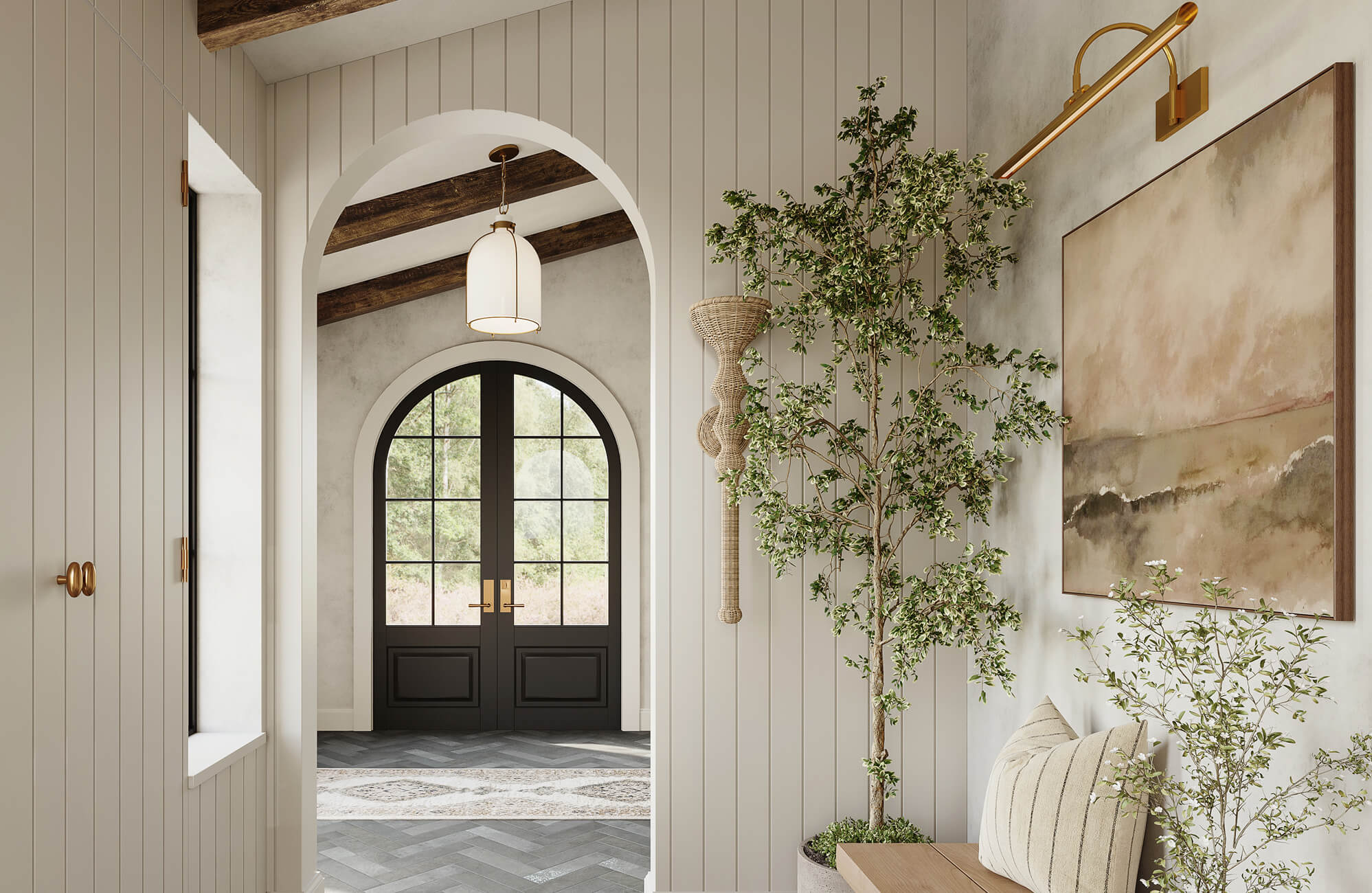
In the entryway photo displayed above, the McAvoy 24" Picture Light in Aged Brass perfectly exemplifies accent lighting’s role in defining focal points. Mounted above the artwork, it casts a soft, directed glow that highlights the painting’s texture and tone while complementing the vertical paneling behind it. Its warm brass finish also mirrors the natural light entering from the arched doorway, creating visual warmth and cohesion.
Paired with our Rosa Rounded Pendant in Aged Brass, which provides ambient illumination that gently diffuses through the space, the design achieves true layered lighting harmony. The pendant fills the passageway with balanced brightness, while the picture light adds focus and depth, demonstrating how accent and ambient layers interact to enhance architectural rhythm and visual storytelling.
Together, these fixtures transform a transitional space into an illuminated composition, where light defines structure, highlights craftsmanship, and evokes a refined sense of arrival. Elements create layers of visual intrigue that celebrate craftsmanship and form.
Layering Contrast for Visual Impact
Contrast defines perception and adds vitality to spatial design. For example, accent lights should shine at roughly three times the brightness of ambient levels to achieve depth without disruption, reinforcing focus where it matters most. These controlled light ratios establish hierarchy, giving the eye subtle guidance across the room. Combining wall grazing with recessed uplighting then generates rich tonal interplay across vertical planes, enhancing architectural features. Polished finishes and textured materials further amplify reflected highlights, expanding visual perception. Through this interplay of light and shadow, the space achieves a balance that feels both dramatic and naturally composed.
Adapting to Artistic Displays
Lighting for art requires precision and respect for color fidelity. Track systems with adjustable beam angles, in particular, allow tailored focus on canvases or sculptures of varying scale. Meanwhile, high-CRI LED modules preserve pigment accuracy, ensuring true representation of hue and texture. Tunable white lighting also adapts to daylight changes, maintaining consistent display conditions throughout the day. Additionally, anti-glare optics prevent distractions, allowing the artwork to remain the visual protagonist. Through controlled light placement, design and artistry coexist seamlessly within the illuminated environment.
Decorative Lighting
Decorative lighting acts as both illumination and ornamentation, merging technical design with emotional resonance. It serves as a visual anchor, setting the mood and personality within the broader lighting composition.
Selecting Signature Fixtures
Statement pieces like chandeliers, pendants, or sculptural sconces infuse artistry and elegance into a room. The material and finish, whether hand-blown glass, antique brass, or woven fiber, dictate how light diffuses and reflects. Scaled properly, a feature fixture also commands attention without overpowering its surroundings, allowing the lighting design to feel intentional and balanced.
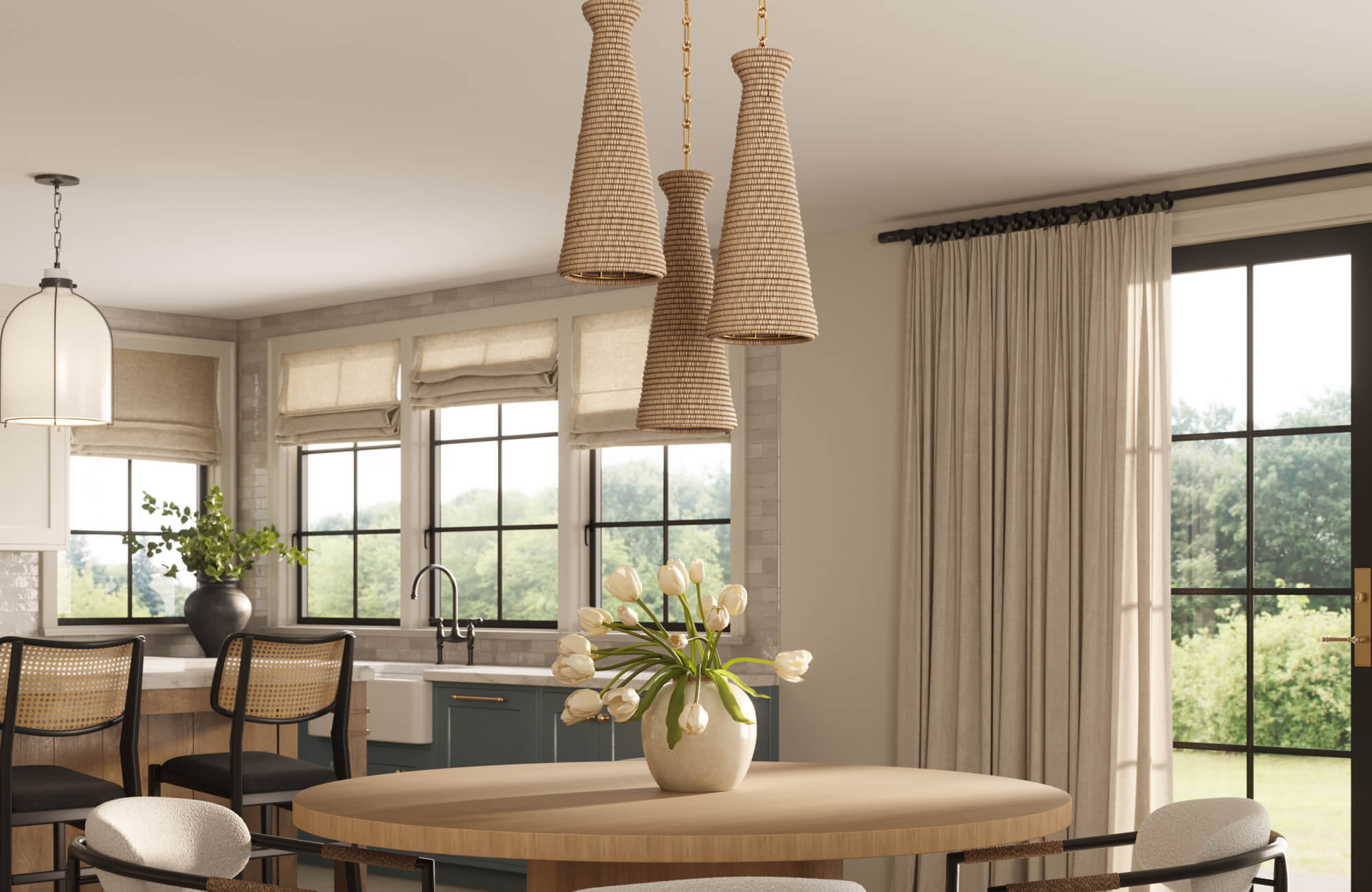
In the dining and kitchen photo featured above, our Santos Pendant in Vintage Gold Leaf becomes a focal point of craftsmanship and warmth. Its organic silhouette and gilded finish cast a soft, inviting glow that enriches the natural textures and tones within the room. Positioned closer to the dining area, it also captures attention with its sculptural form, radiating understated luxury while maintaining comfort and intimacy.
Just beyond, the Rosa Rounded Pendant in Old Bronze bridges the transition between spaces, contributing to the layered lighting scheme with complementary tone and scale. Its clean contours and timeless metal finish ground the scene, creating visual rhythm between the task-focused and ambient layers. Together, these pendants embody the essence of decorative layering, where statement lighting enhances atmosphere, anchors design continuity, and completes the architectural story through light.
Balancing Scale and Proportion
Proportion is key to creating visual harmony between fixture and space. A chandelier should measure about half the width of its table to achieve balanced symmetry, ensuring the light feels appropriately scaled to its surroundings. Height placement also considers ceiling elevation to maintain openness while preserving intimacy. Aligning decorative fixtures along architectural axes establishes rhythm and spatial balance throughout the room. Coordinating metals and glass tones with other finishes then ties the lighting seamlessly into the overall palette. When scale and proportion align, decorative lighting becomes an effortless extension of design identity.
Enhancing Mood with Control Systems
Mood control transforms lighting into an emotional experience. For example, smart systems with programmable scenes transition lighting from a bright social ambiance to a calm evening glow. Similarly, adjustable dimmers and color tuning expand the emotional vocabulary of light, adapting to activity and occasion. Wireless systems also ensure smooth fades that preserve the eye’s comfort and perception. In addition, subtle variation in tone and brightness enriches spatial fluidity, encouraging interaction rather than distraction. In this seamless orchestration, decorative lighting defines both beauty and atmosphere.
Natural Light Integration
Natural light remains the most organic and energy-efficient element in any lighting plan. When integrated harmoniously, it enhances well-being, visual comfort, and the architectural dialogue between indoor and outdoor space.
Maximizing Daylight Entry
Daylight shapes a space through orientation, proportion, and reflection. South-facing windows capture warm light that shifts in tone throughout the day, while north-facing ones provide a steady, diffused glow. From above, skylights and clerestories introduce a gentle radiance that softens architectural form and enhances spatial depth. This light continues its journey through translucent partitions, extending brightness deeper into the room without sacrificing privacy. As it reflects off pale surfaces, illumination multiplies, enriching the atmosphere while conserving energy. When architecture and daylight move in harmony, the result is a space that feels effortlessly luminous and alive.
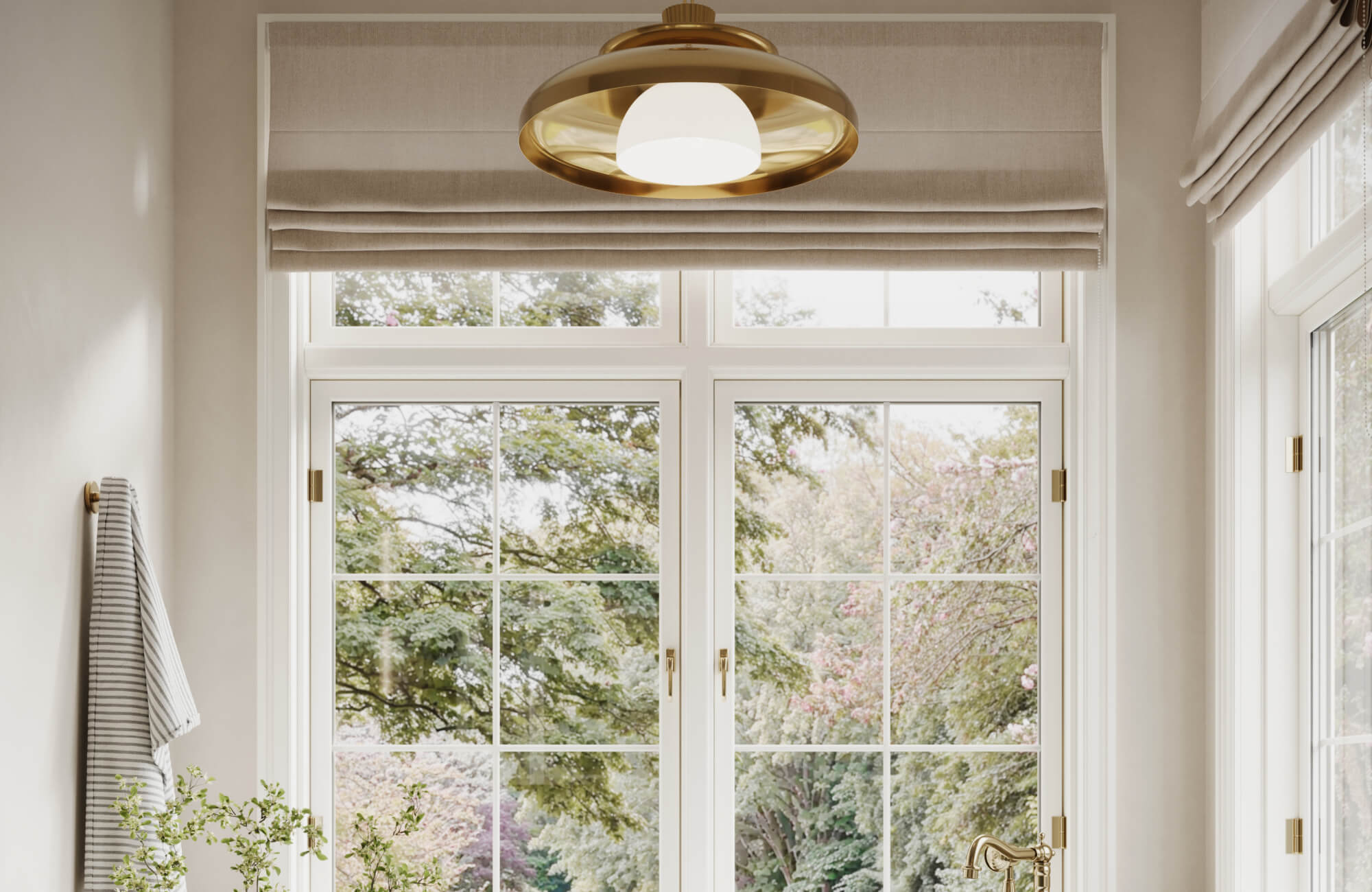
As displayed in the picture above, the Carly 22" Pendant in Vintage Brass beautifully complements this natural illumination, demonstrating how thoughtful fixture selection can enhance and harmonize with sunlight. Its polished brass finish gently reflects daylight, spreading a warm, diffused glow that transitions seamlessly into the evening. Positioned in front of expansive windows, this Carly pendant becomes both a sculptural accent and a reflective companion to natural light, amplifying brightness without overpowering it.
This balance between daylight and design lighting exemplifies the essence of layered illumination. By pairing architectural openness with reflective materials and timeless fixtures like the Carly, the space remains visually connected to the outdoors while maintaining a sense of compositional warmth and cohesion throughout the day.
Controlling Glare and Heat Gain
Managing daylight requires careful precision to maintain comfort and performance. Low-emissivity glazing and solar shades help moderate brightness while preserving exterior views, ensuring openness without glare. Light shelves then redirect sunlight onto ceilings, reducing contrast and softening the areas closest to windows. As the sun shifts, adjustable louvers and blinds respond to changing angles, maintaining a consistent balance of light. Automated sensors further refine this control by coordinating shading with artificial illumination, keeping luminance steady throughout the day. With thoughtful calibration, daylight becomes not just a natural resource but a graceful and reliable design partner.
Daylight Harvesting Systems
Daylight harvesting technology merges sustainability with seamless automation. Sensors continuously measure available natural light and adjust artificial illumination accordingly. This synchronized control maintains balanced brightness while minimizing energy consumption. Tunable LEDs can also mimic natural daylight progression, supporting circadian rhythms and occupant comfort. Additionally, integration with smart systems ensures fluid transitions between sunlight and LED sources. As technology and nature align, lighting evolves into a living, adaptive ecosystem.
Lighting Controls and Smart Home Integration
Modern lighting control systems transform static illumination into an intelligent, responsive network. They merge convenience, sustainability, and emotional engagement into one cohesive experience.
Digital Control Protocols
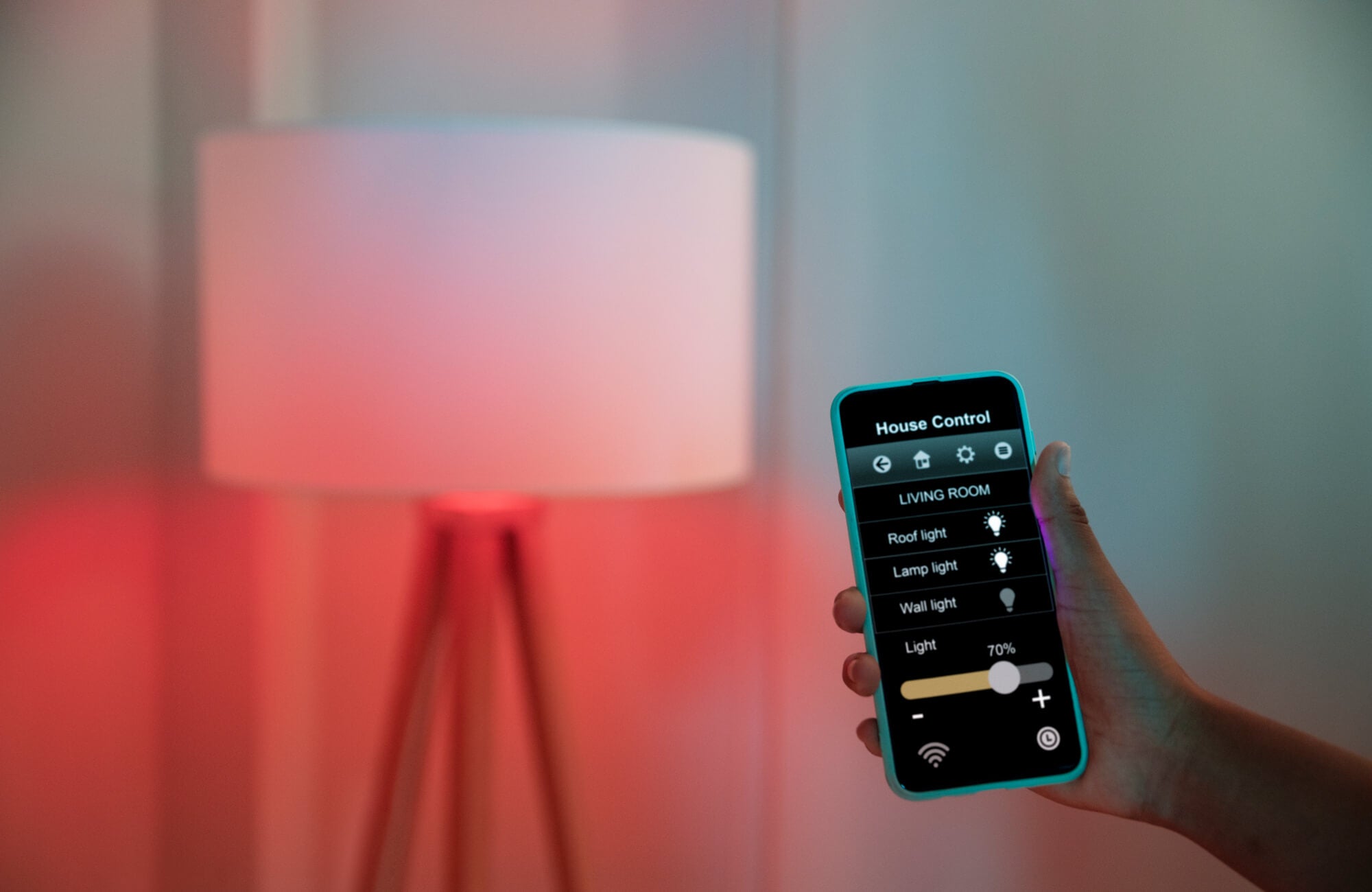
Advanced systems like DALI, Zigbee, and KNX enable precise communication between fixtures, ensuring smooth dimming and scene transitions. By reducing wiring complexity while preserving reliability across zones, wireless integration supports cleaner installations and flexible layouts. With each luminaire independently programmed for brightness, color temperature, or timing, lighting adjusts easily to task or mood. App-based management then brings real-time control through smartphones or voice assistants, making adjustments intuitive and accessible. As multiple circuits synchronize, every lighting layer interacts cohesively rather than competing for attention. Ultimately, this digital infrastructure transforms illumination into a customizable design language.
Personalized Scene Settings
Scene-based control gives lighting a form of emotional intelligence, allowing preset modes like “Morning Wake,” “Work Mode,” or “Evening Relax” to instantly recalibrate brightness and tone. Integrated motion and occupancy sensors also contribute to automation that feels effortless and intuitive, adapting as people move throughout the space. Voice-controlled systems further enhance accessibility without interrupting daily routines. By unifying ambient, task, and accent lighting under one coordinated ecosystem, smart platforms ensure every layer works together seamlessly. The result is illumination that moves in rhythm with life—responsive, purposeful, and beautifully orchestrated.
Human-Centric Lighting
Human-centric systems bridge science and design by aligning light with our biological needs. Tunable white LEDs, for example, shift tone gradually, reflecting the natural cycle of daylight. Morning cool light, on the other hand, promotes alertness, while evening warmth signals the body to unwind. Automatic scheduling also ensures this pattern unfolds effortlessly throughout the day. Research shows that this alignment improves mood, focus, and sleep quality. In this harmony, technology elevates lighting into an instrument of wellness and comfort.
Mastering Color Temperature and CRI Balance
Color temperature and CRI define the emotional and visual authenticity of a space. Together, they determine how textures, tones, and materials are perceived under artificial light.
Understanding Color Temperature
Color temperature, measured in Kelvin, shapes the emotional atmosphere of interiors. For example, warm white tones around 2700K evoke intimacy and relaxation, ideal for lounges or bedrooms. Meanwhile, neutral tones near 3500K create balanced clarity for active zones like kitchens. Cooler whites above 5000K also replicate daylight, supporting focus in workspaces. Moreover, maintaining consistency across lighting layers prevents visual discord and ensures a unified aesthetic. When coordinated effectively, temperature balance becomes the invisible thread tying a home’s atmosphere together.
Evaluating CRI for Material Fidelity
High color rendering is vital for authenticity and design integrity, with a CRI above 90 ensuring true reflection of material hues, from natural oak grains to marble veining. When fixtures differ in CRI, these subtleties can become distorted, disrupting visual harmony. Premium LED modules also help prevent that by maintaining color stability even at dimmed settings, preserving vibrancy throughout use. Designers often combine high-CRI sources with layered lighting to reinforce depth and realism. In turn, this fidelity enhances not only aesthetics but the overall sensory quality of the space.
Dynamic Color Tuning
Dynamic tuning technology allows light to mirror the day’s natural progression, creating a more intuitive connection between people and their environment. As tones shift from crisp, cool light in the morning to warm, calming hues in the evening, circadian support becomes seamlessly built into the experience. These changes occur gradually, ensuring comfort and preserving spatial continuity rather than calling attention to the technology behind them. Through app-based platforms, you can further tailor settings to your mood or activity, making control feel personal and effortless. In this way, tunable lighting evolves into a living design component that adapts, responds, and enhances well-being throughout every hour of the day.

Lighting Layout Planning
Successful lighting design begins with careful planning that unites architectural intent with technical precision. Each layer, circuit, and control is mapped to achieve a cohesive and responsive environment.
Comprehensive Layout Mapping
Effective planning starts with understanding how light interacts with spatial geometry. Design software like Dialux or Relux allows simulation of brightness levels, beam angles, and glare control. Mapping fixture positions relative to furniture also ensures function aligns with the architecture. In addition, coordinating lighting diagrams early avoids costly revisions during installation. Each decision reinforces the balance between efficiency and aesthetic integrity. The outcome is a lighting plan that performs as beautifully as it appears.
Zoning and Circuit Design
Dividing a space into zones allows for tailored illumination and efficient energy use. Each layer—ambient, task, or accent—operates independently yet harmonizes through shared control systems. Dedicated circuits also enable seamless scene transitions without light overlap, while smart dimmers fine-tune intensity for precision and comfort. Additionally, circuit zoning simplifies maintenance and future upgrades. This structured approach ensures versatility and aesthetic fluidity throughout the home.
Collaborating with Design Professionals
Lighting design thrives through collaboration between disciplines. Architects integrate fixture placement with spatial rhythm, while interior designers ensure visual coherence with materials and finishes. Electricians also translate plans into safe, efficient installations that preserve intent. Meanwhile, lighting consultants bridge artistry with photometric performance, optimizing beam spread and lux levels. Open dialogue among professionals prevents redundancy and reinforces purpose. The collective expertise creates environments that illuminate with both intelligence and soul.
Illuminating the Art of Design
A truly refined home begins with light that moves in harmony with its architecture, purpose, and mood. Layered home lighting design unites form and function, balancing ambient, task, and accent illumination to create both atmosphere and utility. Each layer contributes to a seamless visual rhythm, enhancing texture, tone, and proportion in ways that elevate daily living. Through modern lighting solutions and intelligent control systems, you can craft environments that adapt beautifully to time, activity, and emotion. When light is integrated as an architectural element rather than an afterthought, it transforms spaces into expressions of comfort and sophistication. In the end, the art of lighting design lies not only in what it reveals but in how it makes a home feel perfectly alive.
Edward Martin offers comprehensive lighting design services, from concept development and fixture curation to smart control integration and on-site coordination, ensuring every detail enhances both beauty and performance. If you’re ready to illuminate your home with expert guidance, connect with us, and let’s create a lighting experience that feels distinctly yours!
Follow us on Instagram
@EDWARD.MARTIN
)
)
)
)
)
)
)
)
)
)
)
)
)
)
)
)