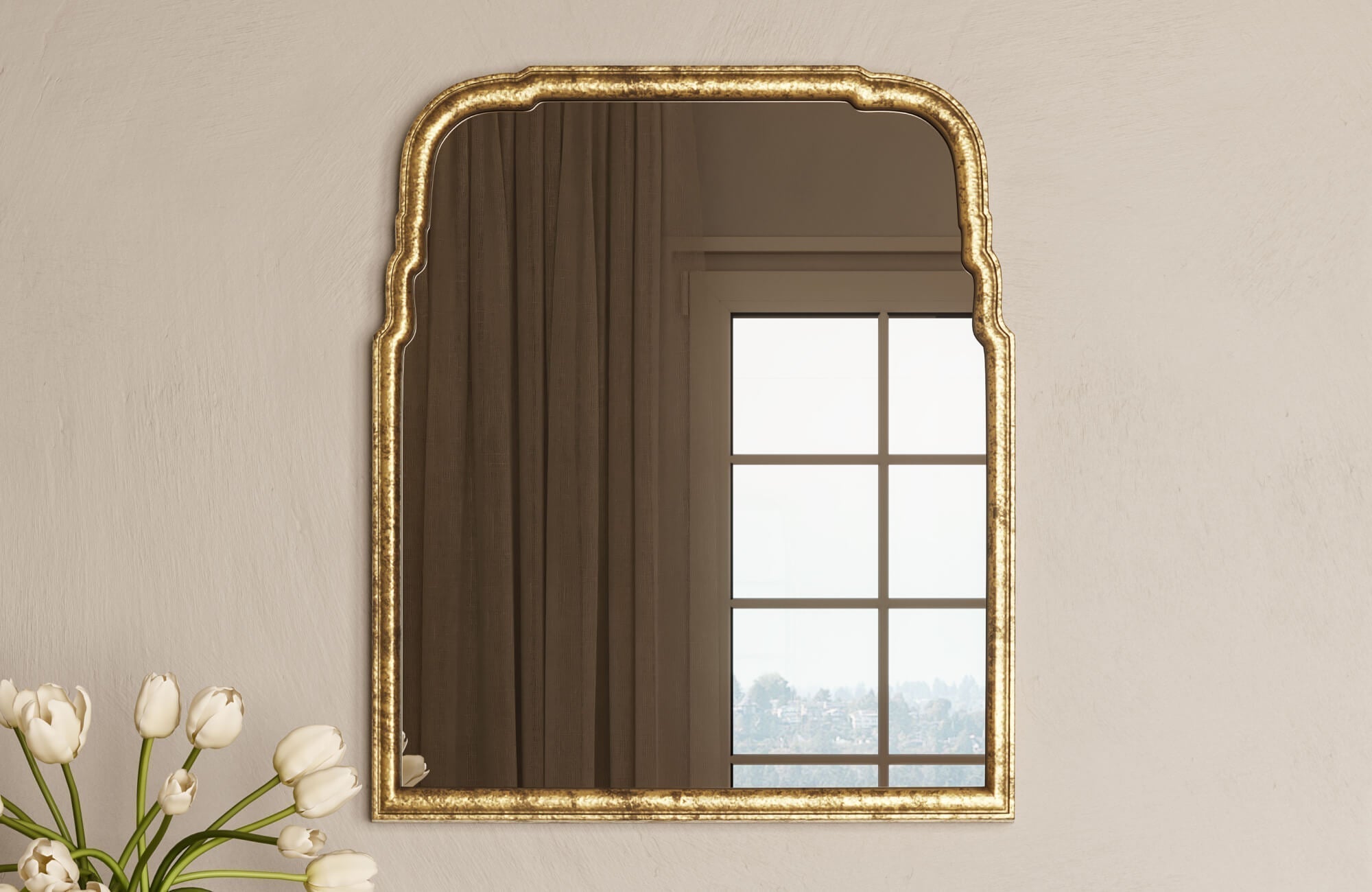
Designing a double vanity requires careful consideration of both function and aesthetics, and mirror shape is central to achieving balance. The right mirror not only enhances daily routines but also impacts lighting, symmetry, and spatial perception within the bathroom.
From oval silhouettes that soften angular cabinetry to rectangular mirrors that reinforce clean architectural lines, each option serves a distinct design purpose. Scale, proportion, and placement are equally important to ensure harmony between vanity, fixtures, and wall space. Below, we’ll discuss the best mirror shapes to complement a double vanity and elevate bathroom design.

The Timeless Appeal Of Rectangular Mirrors
When it comes to double vanities, rectangular mirrors remain a classic choice. Their clean lines and versatile proportions make them a reliable foundation for both traditional and modern designs.
Why Choose One Large Rectangle
A single large rectangular mirror creates a unified focal point above a double vanity, emphasizing continuity and visual expansion. Its broad surface reflects more light, enhancing brightness and the perception of space, an especially valuable feature in compact bathrooms. Designers often specify oversized rectangles for contemporary projects because their uninterrupted planes support minimalist schemes and maximize functionality for multiple users.
The Symmetry Of Two Smaller Rectangles
Opting for two separate rectangular mirrors allows for precise symmetry, aligning each mirror with its respective sink. This arrangement defines personal space for users while reinforcing the linear rhythm of cabinetry and fixtures. It also offers flexibility in sizing, making it easier to proportion mirrors appropriately to the vanity width. Many designers recommend this setup when the vanity incorporates double sconces, as the mirror edges provide natural visual breaks that frame lighting elements effectively.
Framed Versus Frameless Rectangle Mirrors
The choice between framed and frameless rectangular mirrors adds another layer of design nuance. Framed versions introduce materiality and detail, with wood, metal, or composite finishes that can coordinate with cabinetry hardware or plumbing fixtures. Frameless mirrors, by contrast, deliver a sleek, seamless profile, often beveled for subtle dimension. They are especially favored in contemporary and transitional spaces where clean lines and an unobtrusive presence are desired. Both options maintain the timeless rectangular form while catering to different stylistic objectives.

The Soft Elegance Of Round Or Oval Mirrors
While rectangular mirrors offer structure, round and oval shapes bring balance by softening rigid lines. Their curves add warmth and a touch of refinement, making them ideal for creating visual contrast.
The Cohesion Of Two Identical Round Mirrors
Installing two identical round mirrors above a double vanity creates symmetry while maintaining a graceful aesthetic. The consistent curvature provides a unifying rhythm, balancing the visual weight of side-by-side sinks. This arrangement works particularly well with wall-mounted sconces, as the circular shape leaves room for lighting placement without crowding the composition.
Combining Shapes For A Dynamic Look
Pairing round or oval mirrors with rectangular elements, such as vanities, backsplashes, or wall panels, introduces geometric contrast that enlivens the design. The interplay between curves and straight edges draws the eye, preventing the space from feeling overly rigid or monotonous. Designers often use this strategy to soften modern, angular bathrooms or to add sculptural interest in transitional interiors.
How To Size Round And Oval Mirrors
Proportion is critical when selecting round or oval mirrors for a double vanity. Ideally, each mirror should be two to four inches narrower than the width of the corresponding sink or cabinet section to maintain balanced margins. For ovals, the vertical orientation enhances perceived ceiling height, while wider horizontals emphasize breadth.
Ensuring that mirrors are centered above each basin not only supports functional use but also preserves visual harmony within the overall layout. Shown here, Edward Martin’s Tristan Round Mirror in Polished Brass embodies these principles with a slim metallic frame that lends refinement while preserving timeless balance.

Exploring Unique And Asymmetrical Shapes
Beyond classic silhouettes, unique and asymmetrical mirrors can transform a vanity wall into a statement feature. Building on the softness of curves, these designs add creativity and a sense of individuality.
The Appeal Of Arched Or Cathedral Style Mirrors
Arched and cathedral-style mirrors echo architectural traditions, lending vertical emphasis that enhances a sense of height and grandeur. Their curved tops soften the rigid horizontals of a vanity, while still maintaining alignment with cabinetry below. These mirrors are particularly effective in bathrooms with tall ceilings, where their elongated profiles complement vertical sightlines and amplify the room’s scale. Seen above, Edward Martin’s Raelynn Mantel Mirror in Iron Matte Black captures this effect beautifully, with a gently arched silhouette that adds sculptural elegance and creates a balanced focal point.
The Use Of Geometric And Abstract Forms
Incorporating hexagonal, triangular, or irregularly contoured mirrors introduces geometric dynamism to a space. These shapes break away from predictable lines, offering visual interest and a contemporary edge. Abstract silhouettes can be used as accent pieces above floating vanities or set against bold tilework, where the unconventional outline stands out as an artistic element. For designers seeking a modern, boutique-inspired atmosphere, these mirrors serve both as functional tools and decorative art objects.
Layering Mirrors For Added Depth
Layered mirror designs, such as overlapping panels, stacked shapes, or mirrors framed within mirrors, create depth and dimension on otherwise flat wall planes. This technique enhances reflectivity and can amplify natural or artificial light in strategic ways. For example, a smaller asymmetrical mirror mounted over a larger rectangular backing panel adds contrast and texture, producing a sculptural quality. Layering not only elevates the visual complexity of the vanity wall but also allows designers to customize focal points that suit the scale and style of the room.

The Strategic Placement And Sizing Of Mirrors
Shape alone doesn’t determine success, since placement and sizing carry equal weight. After considering symmetry, softness, or unique forms, thoughtful positioning ensures both beauty and function.
Finding The Perfect Height And Spacing
The ideal mirror height is determined by eye level, typically positioning the mirror’s center between 57 and 65 inches from the floor. This ensures usability for most household members while maintaining visual balance on the wall. For double vanities, spacing should align mirrors with sink centers, leaving a consistent margin between mirrors or between a mirror and adjacent walls. Even spacing prevents crowding and creates a cohesive rhythm across the vanity wall. Displayed in the space above, Edward Martin’s Shirley Large Mirror in Antique Brass Iron demonstrates how thoughtful placement enhances both proportion and harmony.
Sizing Mirrors To Your Vanity
Proportion is essential when selecting mirror dimensions relative to vanity width. As a general guideline, mirrors should be two to four inches narrower than the vanity or cabinet section beneath them. This margin preserves visual framing and prevents the mirror from overwhelming the base unit. Oversized mirrors can expand a small bathroom’s perceived scale, while undersized mirrors may disrupt balance and reduce functional viewing area. Designers often use rectangular mirrors to reinforce horizontal lines or taller ovals to accentuate verticality.
Creating A Focal Point With Mirrors
Strategically chosen mirrors can become the defining feature of a bathroom, drawing attention while supporting the overall design language. A single oversized mirror creates drama and continuity, while a pair of smaller mirrors establishes symmetry and order. Adding unique frames, backlighting, or asymmetrical silhouettes elevates mirrors from functional surfaces to architectural focal points. By integrating mirror placement into the broader design plan, you can transform a standard vanity wall into a visually commanding centerpiece.

Beyond Shape Material And Style Considerations
Finally, once proportions and placement are resolved, it’s the finer details that complete the design. Frames, finishes, and integrated lighting elevate mirrors from functional pieces to cohesive design elements.
The Impact Of Frame Material
Frame material establishes both the durability and the visual character of a mirror. Metal frames in finishes like brushed nickel, matte black, or brass offer longevity while tying into plumbing and hardware details. Wood frames introduce warmth and texture, often used to complement vanities in natural oak or walnut. Composite or resin frames provide moisture resistance, making them ideal for high-humidity environments.
Choosing the right frame not only reinforces the room’s aesthetic but also ensures long-term performance. Featured here, Edward Martin’s Tristan Square Mirror in Polished Brass shows how a refined brass edge can elevate a vanity while seamlessly echoing gold-toned fixtures.
Integrated Lighting And Its Role
Mirrors with integrated LED lighting have become increasingly popular for their ability to improve both function and ambiance. Perimeter-lit designs provide even illumination without casting shadows, making grooming tasks more precise. Tunable lighting technology allows users to adjust color temperature, shifting from cool daylight for task use to warm tones for relaxation. Integrated lighting also reduces the need for additional fixtures, streamlining the vanity wall for a cleaner, more contemporary aesthetic.
How To Match Mirrors To Faucets And Fixtures
Cohesion between mirrors and bathroom fixtures is essential for a polished look. Mirror frames and finishes should coordinate with faucet styles, whether transitional, modern, or traditional, to maintain design continuity. For example, a mirror with a slim, matte black frame pairs seamlessly with minimalist black faucets, while ornate brass frames resonate with vintage-inspired fixtures. Even frameless mirrors can be aligned with hardware through complementary details, such as beveled edges that echo the curvature of arched spouts. Thoughtful alignment between mirrors and fixtures ensures a bathroom design feels intentional and harmonious.
Bringing Balance To Double Vanity Design
Selecting the best mirror shape for a double vanity requires careful balance of proportion, symmetry, and visual impact. Rectangular options highlight structure and continuity, while round or oval silhouettes introduce softness and contrast. For those seeking more individuality, unique or asymmetrical designs create statement features, and proper placement ensures both function and light distribution. Material and finish choices further strengthen cohesion with faucets, hardware, and cabinetry.
To make these decisions with confidence, Edward Martin’s design consultation service provides expert guidance tailored to your project. For personalized recommendations or product support, contact Edward Martin for assistance with mirrors, tiles, rugs, or furniture selections.