A bathroom is more than a utilitarian space—it is a sanctuary where design and function merge to create comfort and style. Among the many choices that define this environment, the relationship between the bathroom mirror frame and the vanity plays a central role in shaping harmony, balance, and visual impact. Whether homeowners prefer the seamless cohesion of matching finishes or the bold sophistication of contrast, this decision sets the tone for the entire space. Considerations such as symmetry, material durability, lighting interaction, and evolving design trends also influence how these elements work together. By understanding the nuances of bathroom mirror and vanity coordination, it becomes possible to craft a space that feels timeless, intentional, and exquisitely refined.

Design Cohesion and Visual Balance
Matching a mirror frame to the vanity creates a unified aesthetic that feels intentional and refined. This design approach works particularly well in bathrooms where symmetry, alignment, and proportion remain central to the overall layout.
Symmetry and Proportions
When a mirror and vanity are aligned proportionally, the result is a sense of balance that feels natural and comfortable to the eye. At the same time, a mirror that mirrors the width of the vanity grounds the wall above, creating a seamless extension rather than an isolated feature. Designers often emphasize this effect by centering mirrors directly above sinks and ensuring edges align to maintain geometric precision. Such a structure also enhances order and makes the bathroom appear thoughtfully planned, which is particularly important in compact spaces where details stand out. Without this alignment, the layout can feel unbalanced, causing visual distraction and discomfort. Achieving proportional harmony ensures the mirror complements the vanity rather than competing with it.
Repetition of Finishes
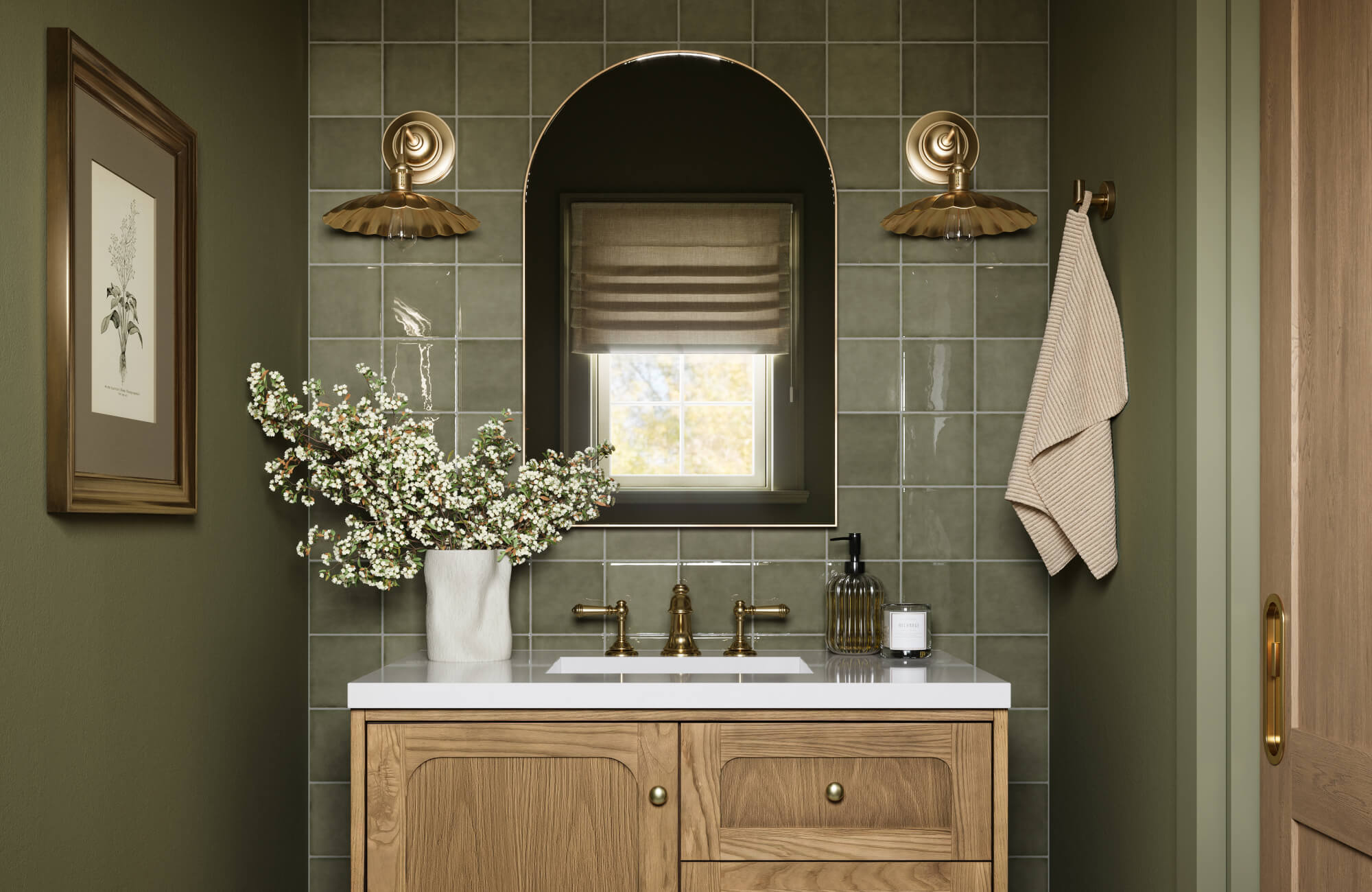
Repetition across finishes strengthens design cohesion and establishes a calm, consistent visual rhythm. A walnut-stained vanity paired with a walnut-framed mirror, for example, creates a continuous flow that feels deliberate and polished. This shared material language also reduces visual clutter, allowing hardware, fixtures, and lighting to act as secondary accents rather than disruptive elements. As the eye recognizes repeating finishes, the space feels more restful and structured. This psychological sense of familiarity reinforces the idea that the bathroom is not a collection of separate parts but a cohesive whole. A beautiful example of this approach, as displayed in the picture above, is Edward Martin’s Shirley Large Mirror in Antique Brass Iron, where the frame not only harmonizes with the brass fixtures but also mirrors the warm, natural tones of the vanity, creating a space that feels intentional, unified, and exquisitely refined.
Minimalist and Transitional Styles
Minimalist and transitional bathrooms especially benefit from mirror and vanity pairings that share matching finishes. In minimalist design, where the focus lies in simplicity and clarity, too many material variations can disrupt the desired sense of serenity. Transitional spaces, which blend traditional cabinetry with modern fixtures, also rely on coordinated elements to create a smooth dialogue between both styles. A painted vanity with a coordinating mirror frame, for instance, helps unify classic forms with contemporary lighting or hardware. By bridging the gap between old and new, the space achieves a balance that feels timeless rather than trend-driven. Coordinated finishes, therefore, allow minimalist and transitional bathrooms to express understated elegance without sacrificing design intent.

Contrast for Depth and Character
Choosing a mirror frame that contrasts with the vanity prevents the design from appearing flat and introduces definition. This strategy adds dimension and establishes a visual hierarchy that makes both elements distinct yet complementary.
Color and Tone Contrast
Color contrast creates immediate visual interest and turns the mirror into a focal point that anchors the design. A white vanity beneath a matte black mirror, for example, produces sharp definition and lends sophistication to the overall atmosphere. This clear hierarchy also ensures that neither feature is lost, with each contributing to the character of the space. Designers frequently use this approach in modern interiors, where crisp contrasts prevent a monochromatic scheme from appearing dull. In addition, pairing warm wood tones with cool metal frames introduces balance between organic warmth and industrial refinement. The resulting contrast adds vibrancy while preserving overall harmony.
Texture and Material Variation
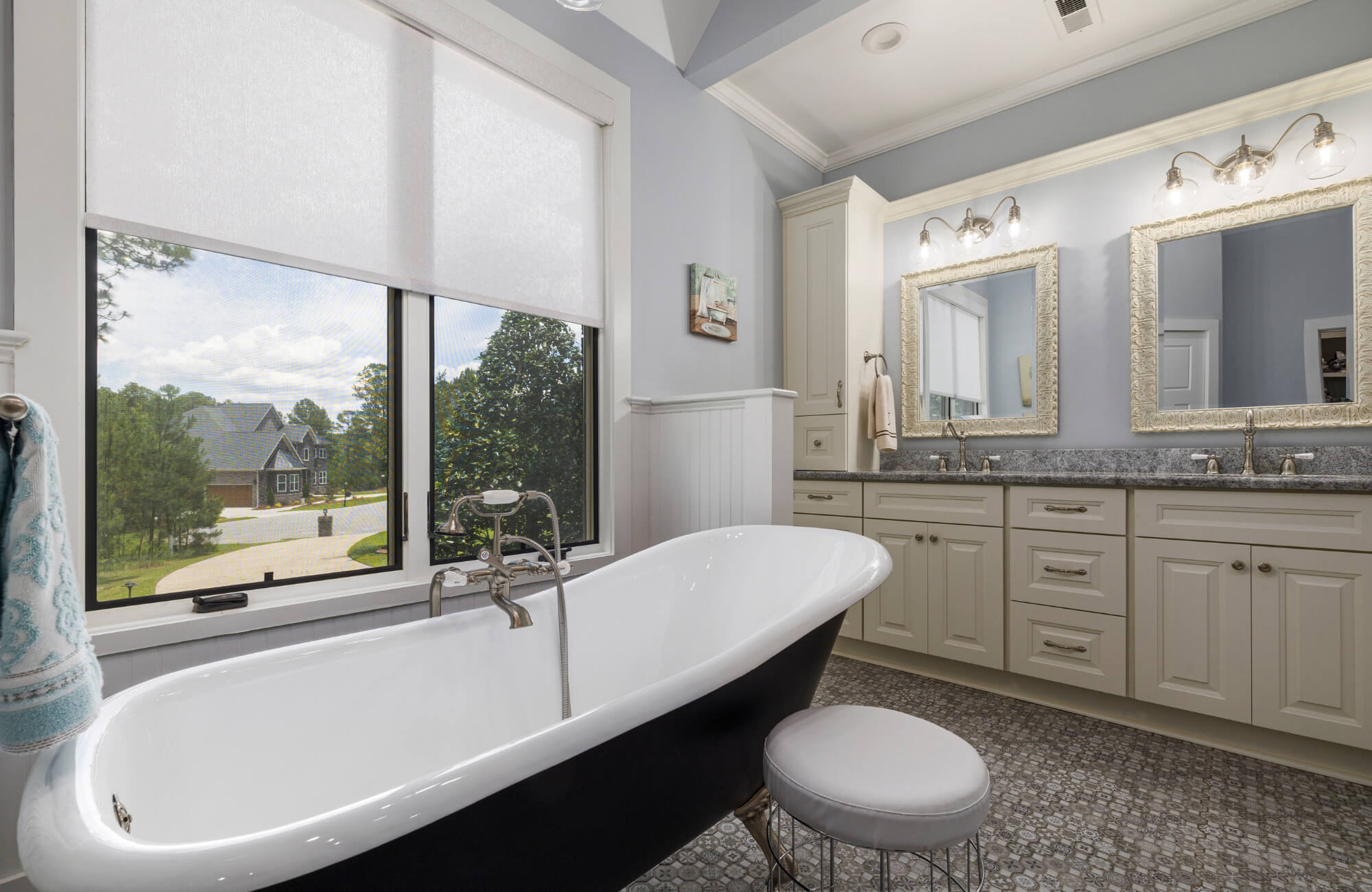
Varying textures between a mirror frame and vanity introduce tactile richness that elevates the design beyond color alone. A sleek lacquered vanity paired with a reclaimed wood mirror frame, for example, creates a compelling dialogue between smooth and rustic finishes. Metal-framed mirrors in brushed brass or stainless steel also complement natural wood cabinetry by introducing subtle industrial notes. This blending of textures allows the bathroom to feel layered, making the space more engaging and less predictable. As the eye registers these contrasts, it appreciates the craftsmanship and detail that went into the selection. A striking illustration of this principle, as shown in the photo above, is the Esmeralda Wide Mirror in Iron Matte Black, whose bold black frame contrasts beautifully with the warm woven texture of the vanity, creating a balanced composition that feels both modern and inviting.
Contemporary and Eclectic Design Language
Contemporary and eclectic bathrooms often thrive on contrasts that introduce personality and flair. In contemporary settings, designers highlight sophistication by pairing materials such as stone, glass, and metal, deliberately juxtaposed for visual impact. Eclectic interiors take this further, embracing bold colors and unexpected pairings that showcase individuality. For example, a teal vanity topped with a black metal-framed mirror delivers vibrant energy without appearing chaotic when tied together by subtle undertones. The success of such contrasts lies in incorporating one unifying detail, such as hardware finish or countertop veining, to bridge the elements. With this balance, contrast enhances design storytelling while maintaining visual cohesion.

Material and Finish Compatibility
While aesthetics influence the first impression, the true success of a bathroom design depends on how well the chosen materials withstand moisture, heat, and daily use. Selecting finishes that are compatible in performance ensures both visual harmony and long-term durability.
Moisture Resistance
Humidity and condensation are constant challenges in bathrooms, making moisture resistance essential for both vanities and mirrors. With this, using solid hardwood frames treated with marine-grade polyurethane help maintain their structure, resisting warping where veneers or MDF would fail. Metal frames, particularly those with powder coating or anodized finishes, also perform well in environments with limited ventilation. Pairing such resilient materials with vanities built from equally durable surfaces creates a uniform response to moisture exposure. For example, a sealed oak vanity paired with a similarly sealed oak mirror frame will age consistently, preventing uneven deterioration. By prioritizing moisture-resistant solutions, homeowners ensure both elements remain beautiful and structurally sound over time.
Longevity of Finishes
The durability of finishes determines whether a bathroom retains its intended look as years pass. For example, a high-gloss lacquered vanity can preserve its sheen for decades, while an untreated wood mirror frame may darken, discolor, or crack under the same conditions. These discrepancies can disrupt cohesion and require ongoing maintenance. In addition, selecting finishes with comparable lifespans helps the bathroom mature evenly, maintaining both style and structure. For instance, combining quartz-topped vanities with metal-framed mirrors results in finishes that resist wear consistently across elements. Aligning finishes in terms of durability creates not only visual stability but also peace of mind for the homeowner.
Functional Harmony
Beyond durability, functional harmony considers how materials interact under the demands of everyday use. A mirror frame that tarnishes quickly undermines the practicality of a vanity designed for low maintenance, creating an imbalance in upkeep. To avoid this, designers recommend pairing materials that share similar cleaning requirements and resistance to wear. This way, both elements can maintain their appearance with equal effort. Such compatibility also ensures the bathroom functions as an integrated system rather than a collection of mismatched parts. Functional harmony ultimately enhances both the longevity and overall satisfaction of the design.

Influence of Lighting and Reflective Surfaces
Lighting and surface reflectivity significantly alter how bathroom elements are perceived, often changing the relationship between a mirror frame and vanity. By planning for illumination and gloss levels, homeowners can ensure both features are shown in their best light.
Light Temperature and Finish Appearance
The temperature of bathroom lighting directly affects how finishes are perceived, often shifting tones in subtle but important ways. For example, warm LED lighting enhances the richness of brass, walnut, and gold finishes, while cool daylight bulbs emphasize the crispness of chrome, glass, and white surfaces. This also means that a mirror frame may appear warmer, darker, or sharper depending on the chosen bulb. Testing samples under the intended lighting conditions avoids unexpected results and ensures consistency between the frame and vanity. Many designers recommend installing dimmable fixtures, which allow homeowners to adjust the ambiance without compromising cohesion. With thoughtful lighting selection, finishes appear harmonious and their intended qualities are fully realized.
Reflectivity and Gloss Levels
Gloss and reflectivity determine how surfaces interact with one another within the bathroom. Highly reflective materials, such as polished stone countertops or glossy tiles, can intensify the brightness of a glossy mirror frame, sometimes making it appear harsher than expected. On the other hand, combining entirely matte finishes may lead to a space that feels too muted and lacking in dimension. A satin-finish mirror paired with a matte vanity also offers a middle ground, producing balance without overwhelming glare. This subtle calibration ensures both definition and comfort within the design. By aligning gloss levels thoughtfully, the bathroom retains depth and refinement without visual strain.
Layered Lighting Design
Layered lighting ensures that mirrors and vanities are presented cohesively and functionally. Task lighting, for instance, provides precision for grooming, while ambient lighting sets the tone for relaxation and overall mood. Accent lighting then introduces highlights that draw attention to specific finishes, textures, or architectural details. Together, these layers prevent either the mirror or the vanity from overshadowing the other, instead establishing equilibrium between the two. Layered lighting also reveals materials from multiple angles, bringing out depth in textures and subtle shifts in tone.
A beautiful example of this balance is shown in the photo above with our Shirley Large Mirror in Antique Brass Iron, whose reflective surface is enhanced by the warm glow of the Noelle Wall Sconce in Vintage Brass. Together, they create a layered lighting effect that not only flatters the finishes but also transforms the bathroom into a space that feels refined, inviting, and thoughtfully illuminated.

Current Trends and Professional Recommendations
Modern bathroom design trends emphasize personalization over uniformity, with many professionals encouraging homeowners to explore a balance of coordinated finishes and bold contrasts. The focus is on creating spaces that feel unique, timeless, and adaptable to changing lifestyles.
Mixed-Finish Pairings
Combining neutral vanities with statement mirror frames introduces individuality without overwhelming the overall scheme. A white vanity paired with a matte black or rattan-framed mirror, for example, creates a focal point while maintaining balance through complementary undertones. This strategy allows homeowners to add personality while keeping the core design flexible and easy to adapt.
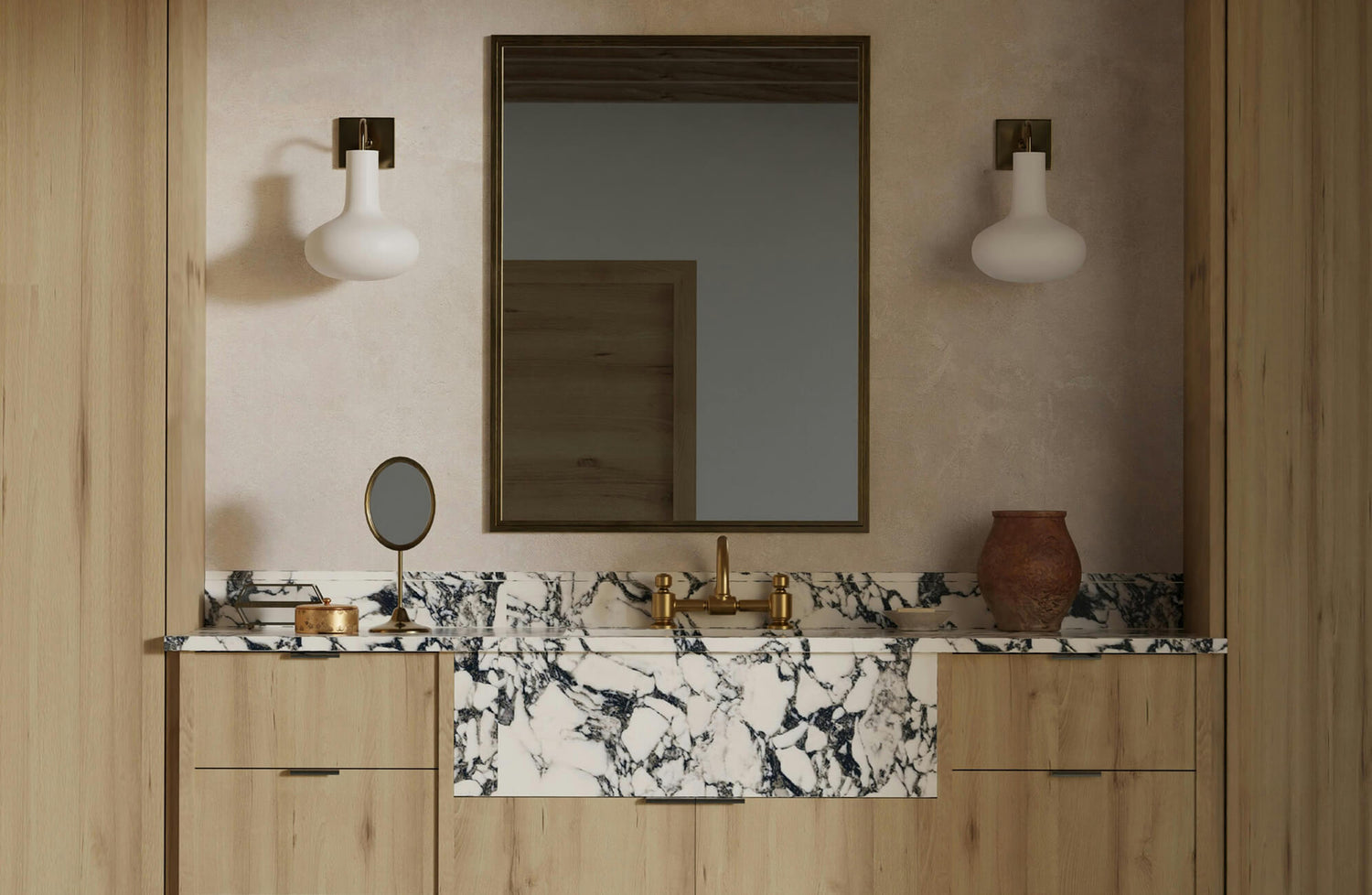
A perfect example of this principle, as featured in the picture above, is the pairing of Edward Martin’s Bridgette 36" Single Vanity in Bright White with 3 cm White Zeus Quartz Top with the Esmeralda Small Mirror in Iron Matte Black, where the crisp white finish is beautifully contrasted by the bold black frame, creating a balanced and timeless mixed-finish design. Mixed finishes also make it simpler to integrate future updates, whether through new fixtures or updated accessories. Designers recommend this approach for those who want a dynamic yet practical solution that remains stylish over time.
Frameless and Backlit Innovations
Frameless mirrors with integrated LED backlighting are increasingly popular in luxury and modern interiors. By removing the frame entirely, they redirect visual focus toward the vanity and surrounding finishes, achieving an uncluttered look. The subtle glow of backlighting adds depth by creating a floating effect, which enhances the perception of space. These mirrors also improve functionality by providing evenly distributed illumination for grooming tasks. Their sleek profile makes them ideal for homeowners seeking sophistication with minimal visual interruption. As technology advances, frameless and backlit mirrors continue to reshape how vanities and mirrors are paired in contemporary bathrooms.
Practical and Resale Considerations
While bold contrasts work well for personal expression, matching mirror frames and vanities often appeals more to potential buyers. Coordinated finishes suggest quality craftsmanship and careful planning, which enhances perceived value during resale. Powder rooms or secondary bathrooms may also provide opportunities for creative contrasts, while main bathrooms benefit from more timeless, neutral approaches. By striking a balance between personalization and broader appeal, homeowners can enjoy their bathroom design today while safeguarding property value for the future. Designers frequently advise considering both immediate preferences and long-term goals before finalizing mirror and vanity pairings. This balance ensures a design that feels satisfying now and strategically valuable later.
Creating Harmony Between Mirror and Vanity
The choice of whether a bathroom mirror frame should match a vanity is ultimately a balance of aesthetics, function, and personal expression. Matching finishes can create seamless cohesion and timeless elegance, while contrasting designs introduce character and depth that elevate the entire space. By considering symmetry, material durability, lighting dynamics, and modern bathroom design trends, you can select pairings that feel both stylish and enduring. The result is a bathroom that reflects individuality while maintaining harmony, transforming a functional room into a beautifully curated retreat.
To make these choices effortless, Edward Martin’s expert design services offer personalized guidance that ensures every detail, from mirror frames to vanities, works in perfect harmony. If you’re ready to bring your vision to life, explore our curated collections and contact us for tailored design solutions that elevate your bathroom with timeless elegance!