The right wall tile pattern can completely transform the way a room feels, turning a tight or enclosed space into one that appears more open, airy, and expansive. Rather than relying on major renovations or structural changes, pattern and visual strategy work together to reshape your perception of space. Through thoughtful design choices, you can also guide the eye, soften boundaries, and create depth that wasn’t physically there to begin with.
As you explore how direction, geometry, tile size, color, and layout influence what you see, you discover that tile patterns are far more than decorative elements. They are purposeful tools that redefine room proportions and alter how you experience your surroundings. With the right approach, any room can feel brighter, wider, and effortlessly larger.

Understanding the Visual Science Behind Spacious Tile Patterns
Tile patterns have an extraordinary ability to influence how you perceive depth, scale, and openness within a room. By intentionally arranging tiles to guide your gaze, you can create the impression of greater width, added height, or expanded depth. Directional patterns such as horizontal, vertical, or diagonal layouts play a crucial role in shaping these perceptions because they act as visual pathways. As your eye follows these uninterrupted lines, the room’s dimensions also begin to feel stretched, softened, or rebalanced. Moreover, tile size contributes significantly to this visual experience. Larger, elongated formats reduce segmentation and create broad, continuous surfaces that feel much more open than walls broken up by dense grout lines. Even in small rooms, these large-scale patterns allow the eye to glide smoothly, reinforcing the sense of spaciousness.
Additionally, grout color and joint spacing have a surprisingly powerful impact on the sense of depth within a tiled space. When grout closely matches the tile, the individual pieces seem to merge, dissolving boundaries that might otherwise make the wall feel busy or confined. Paired with narrow joints, this low-contrast approach creates a nearly seamless plane that appears to recede visually, expanding the room’s apparent size. As these elements work together—directional alignment, tile proportion, and cohesive detailing—they form a holistic visual system that transforms the way you experience space. Through thoughtful pattern choices, you can also dramatically enhance openness and create an environment that feels more generous, balanced, and inviting.

Aesthetic Value and Timeless Appeal
Large format tiles and seamless slab-like patterns create an immediate sense of calm, refinement, and spaciousness. Their broad surfaces reduce visual interruptions, allowing your eyes to move freely across the room. As a result, tight or highly detailed spaces feel more open, balanced, and effortlessly elegant.
Continuous Slab Look
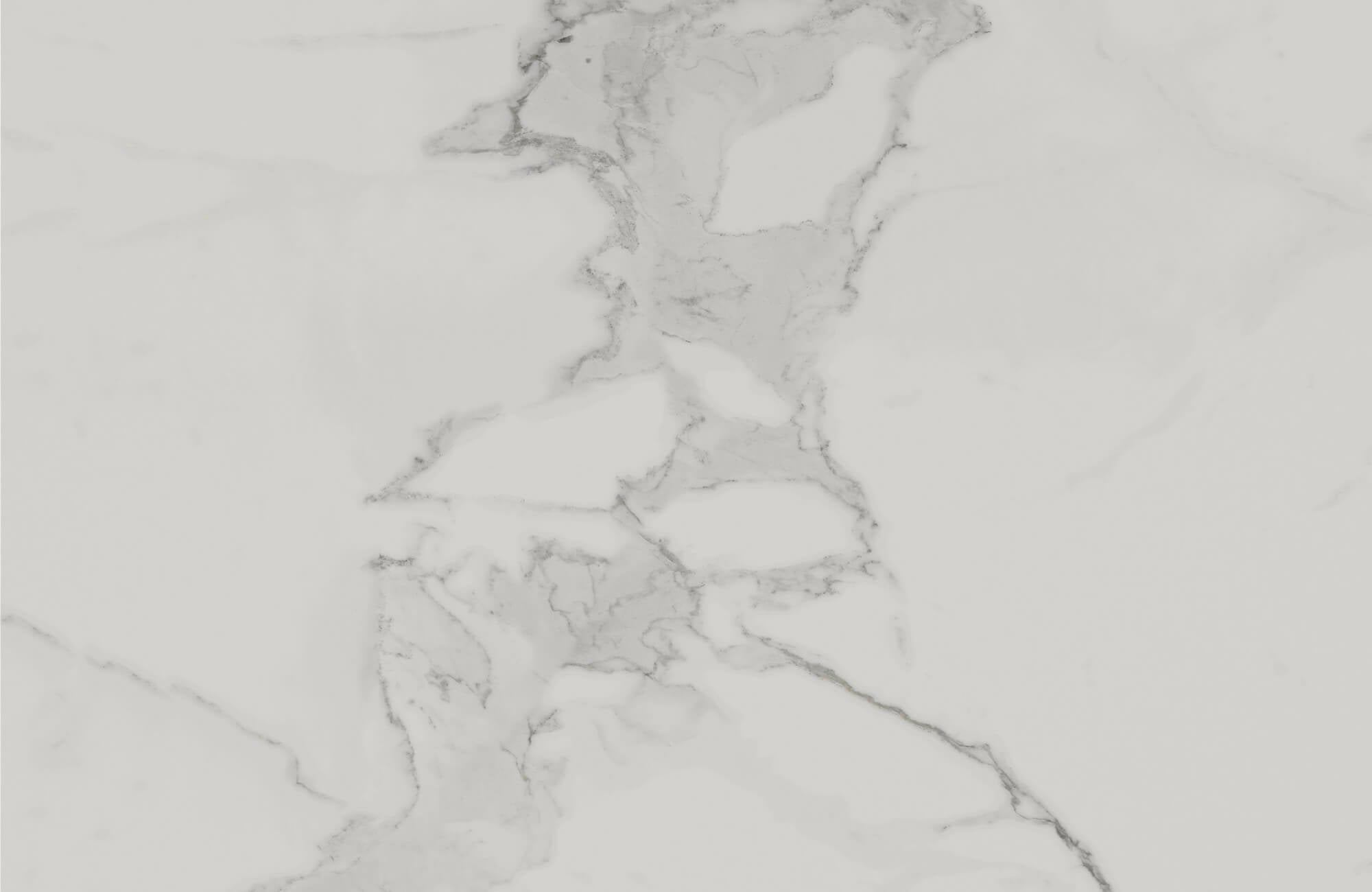
Extra-large porcelain tiles with book-matched veining and clean, rectified edges can replicate the luxurious appearance of natural stone without the challenges of real slabs. When these tiles are installed with very tight joints, the surface begins to feel uninterrupted, as if carved from a single piece of material. This continuity expands the visual plane, making the walls appear broader and more expansive. A perfect example of this approach is our Aniston 24x48 Matte Porcelain Tile in Calacatta Viola, a striking white tile with deep violet veining that enhances the seamless-slab illusion beautifully.
As your eye follows the flow of the veining without stopping at grout lines, the effect becomes even more powerful. The smooth transitions give the impression of architectural solidity and grandeur while also making the room feel more open. Even in small spaces, this illusion of an unbroken stone surface helps you perceive the area as wider and more luxurious.
Oversized Grid Patterns
Laying large tiles in a simple, oversized grid minimizes segmentation and keeps the wall from looking overly busy. Because the tiles are bigger, the number of joints dramatically decreases, which means your eye encounters fewer visual stops as it moves across the room. This smoother movement creates a more relaxed and spacious feel, especially in compact environments. In the bathroom shown above, this effect is achieved with our Leona 24x48 Matte Porcelain Tile in Marfil. Its generous scale and soft beige color help the entire space feel more open and visually uninterrupted.
A matte finish also strengthens the effect by softening the way light interacts with the tile surface. Rather than creating harsh reflections that highlight individual tiles, a matte sheen diffuses light evenly, helping the wall read as one cohesive backdrop. As the space feels calmer and more unified, the perception of openness naturally increases, giving the room a modern, serene character.
Seamless Wrap Patterns
Continuing the same tile across multiple surfaces, such as wrapping it from the floor up the wall or around an alcove, removes traditional visual boundaries. When the pattern flows uninterrupted, corners and edges seem to fade, encouraging your eye to interpret the room as a single connected volume rather than a series of segmented areas. This seamless flow creates a striking illusion of enlarged space.
As you move through the room, the continuous material also reinforces a sense of cohesion and architectural clarity. The walls appear longer, the height feels greater, and the entire room takes on a more expansive character. This approach offers both aesthetic impact and spatial enhancement, making even the most compact areas feel open, fluid, and thoughtfully composed.

Geometric Patterns That Visually Expand Space
Geometric tile layouts can reshape how you perceive the limits of a room by manipulating direction, depth, and movement. These patterns add visual energy that pushes the eye outward, making small spaces feel more open and engaging. With the right approach, geometry becomes a practical tool for amplifying spaciousness.
Chevron and Herringbone
Chevron and herringbone patterns create a lively zigzag effect that encourages the eye to travel along their directional flow. When installed horizontally, these angled lines stretch across the room from side to side, giving narrow walls the illusion of extra width. As your gaze follows the repeating pattern, the space feels as though it extends farther than it actually does.
In the kitchen image seen above, the warm, earthy backsplash uses a herringbone layout, an elevated take on the classic subway style, to subtly draw the eye outward. A tile like our Catalina 2x16 Matte Porcelain Tile in Clay, which has a soft, warm beige-brown tone, fits seamlessly into this palette. Its muted, organic tone also echoes the hexagon floor tile and woven textures, making the directional pattern feel cohesive and intentionally crafted.
When these patterns run vertically, the effect shifts upward, making low ceilings appear taller by pulling your eye toward the higher portions of the wall. This rhythmic motion not only adds movement but also deepens the perceived dimension of the entire space. Because of this dynamic pull, chevron and herringbone layouts offer a highly effective way to expand a room’s visual footprint while adding a sense of craftsmanship and sophistication.
Diamond and Rhombus Patterns
Diamond and rhombus patterns interrupt the traditional horizontal and vertical cues your eye relies on to define a room’s edges. By breaking away from the expected grid, they blur the boundaries of where walls begin and end, making a confined room feel more open and fluid. As your eye traces the angled shapes, the corners become less pronounced, softening the room’s structure and giving it a more spacious character.
Hexagon tiles can also enhance this effect in an equally compelling way. Their continuous, honeycomb-like geometry creates a flowing pattern that draws the eye across the entire surface without locking it into predictable square or rectangular divisions. A perfect example is our Juliet 7x8 Hexagon Matte Porcelain Tile in Denim, a soft, muted blue shade that captures this airy movement beautifully. Its gentle color variation also adds subtle depth while maintaining a calm, cohesive visual rhythm.
Additionally, using soft, monochromatic palettes keeps the focus on the geometric form without overwhelming the space. The gentle color transitions prevent the pattern from feeling too bold, allowing the shapes to add depth without crowding the room. When combined, these geometric illusions and subtle hues create a wall that feels expanded, airy, and visually intriguing.
Three-Dimensional Illusion Tiles
Three dimensional illusion tiles use shadow play and geometric tricks to simulate an added layer of depth on a flat surface. Designs that resemble cubes, pyramids, or folded shapes make the wall appear to recede or project outward, depending on how the light hits them. This visual complexity enhances the sense of volume, giving a small room a more spacious and sculptural feel. For spaces that benefit from a modern, architectural focal point, a white tile like our Zayne 12x36 Matte Ceramic Tile in Prisms, named for its softly faceted, prism-like surface, creates this effect beautifully. Its geometric relief also catches light at multiple angles, generating subtle shadows that enhance the illusion of depth without overwhelming the room.
Because these tiles draw substantial visual attention, they work best when used intentionally on a feature wall or within a defined niche. Concentrating the pattern in one area prevents the space from feeling overstimulated while still achieving the desired depth effect. When placed strategically, these illusion tiles also transform a plain wall into a dimensional surface that makes the room feel fuller, larger, and more architecturally expressive.

Minimalist Patterns That Maximize Light and Air
Simplicity carries remarkable power when you want a room to feel more open and breathable. Minimalist tile patterns use soft movement, subtle texture, and low contrast to reduce visual heaviness and allow light to move freely. As the surfaces become calmer and more unified, the entire room feels brighter, lighter, and more expansive.
Soft Linear Patterns
Soft linear patterns, such as faint veining or gentle directional textures, guide your eye in a smooth, uninterrupted motion. As you follow these subtle lines, the individual tiles begin to blend together, losing the rigid grid effect that can make small rooms feel segmented. This sense of natural flow also mimics materials like brushed stone or marble, helping the wall feel more like a single continuous surface.
Because these patterns rely on delicate movement rather than bold contrast, the eye experiences less visual interruption. The softened boundaries allow light to glide along the wall, which enhances brightness and reduces the appearance of depth breaks. As a result, even small or enclosed areas appear more fluid, inviting, and refined without the need for dramatic design choices.
Micro Pattern Tiles
Micro patterns offer the perfect balance between texture and restraint. Ultra-fine details like subtle terrazzo flecks or gentle speckling introduce visual interest while avoiding the busy appearance that can overwhelm a compact room. When these micro patterns appear in light neutral tones, they create a refined layer of depth that supports spaciousness rather than competing with it.
The fine texture also works with light in a unique way, enhancing surface reflectivity without producing harsh highlights or shadows. This gentle scattering of light softens the room’s overall atmosphere and contributes to a sense of calm. As a result, the walls feel airy and harmonious, expanding the perceived space through subtle sophistication rather than overt patterning.
To achieve this balance, combining our Sloane 12x24 Matte Porcelain Tile in Charcoal with Aniston 3x12 Polished Porcelain Tile in Calacatta Antico, as featured in the photo above, creates a refined, cohesive look. The black tile introduces soft speckling that grounds the space, while the polished, silvery-gray and bluish veining above it adds brightness and gentle movement. Together, their complementary micro-textures enhance depth and openness, helping the room feel both calm and visually expanded.
Subtle Gradient Patterns
Gradient and ombre tile designs gradually shift from darker to lighter tones, creating a soft, luminous transition across the surface. This gentle progression guides your eye along the wall in a fluid motion, reducing abrupt contrasts that can fragment a small room. As the colors blend smoothly, the wall appears lighter and more expansive, giving even compact areas a sense of quiet openness.
Zellige tile can also achieve a similar effect, although in a more organic and handcrafted way. Its natural shade variations and glossy, light-catching glaze create a mottled glow that softens the surface without feeling busy. As light plays across the irregular finish, the wall takes on a subtle luminosity that enhances the perception of depth and airiness. When paired with warm, diffused lighting, both gradient designs and zellige tile elevate a room into a space that feels serene, modern, and effortlessly expansive.

Creative Layout Strategies For Irregular Room Shapes
Even rooms with unconventional proportions or unusual wall angles can feel balanced and visually spacious with the right tile layout. By intentionally directing the eye and redefining perceived boundaries, you can transform awkward geometry into a room that feels cohesive and harmonious.
Balance Long And Narrow Rooms
Long, narrow rooms often feel tunnel-like, but tile orientation can counteract this disproportion. When you place tiles perpendicular to the room’s length, either on the floor or on the shorter end walls, you introduce strong horizontal lines that visually push outward. As your eye follows these widening strokes, the space immediately feels broader and less constricted. This lateral emphasis works particularly well when the tiles feature subtle linear movement that reinforces the widening effect.
Adding vertical orientation in selected areas, such as on one of the shorter walls or within a focal zone, also helps redirect your gaze upward and break the monotony of the room’s extended length. This creates a layered sense of proportion, allowing the space to feel taller and more open. Through this balance of perpendicular directions, the room becomes less about its long footprint and more about its redefined, more comfortable shape.
Open Up Rooms With Slanted Or Angled Walls
Rooms with slanted or angled walls can feel disjointed because the eye instinctively follows those irregular lines. A diagonal tile layout can shift your visual focus by introducing a new, intentional direction that competes with the awkward geometry. As your eye moves along the diagonal flow, the unusual wall angles feel less dominant, softening the room’s structural quirks. This allows the space to feel more fluid and dynamic rather than sharply defined by its imperfections.
Radiating patterns also work beautifully in these scenarios, especially when tiles are laid from a central point or a dominant corner. The movement these patterns create brings a sense of rhythm to the room and establishes a visual order where the architecture may not. As the eye gravitates toward the pattern rather than the angles, the overall space begins to feel more cohesive and far more inviting.
Correct Asymmetrical Or Offset Spaces
Asymmetrical rooms, whether due to older construction, partial renovations, or unusual structural placements, can feel visually off balance. Introducing a centered tile motif, such as a medallion, patterned insert, or distinct geometric cluster, gives the room a strong focal anchor. As you naturally focus on this central element, the uneven edges and irregular outlines of the space recede in importance. This helps restore a sense of equilibrium that the architecture itself may lack.
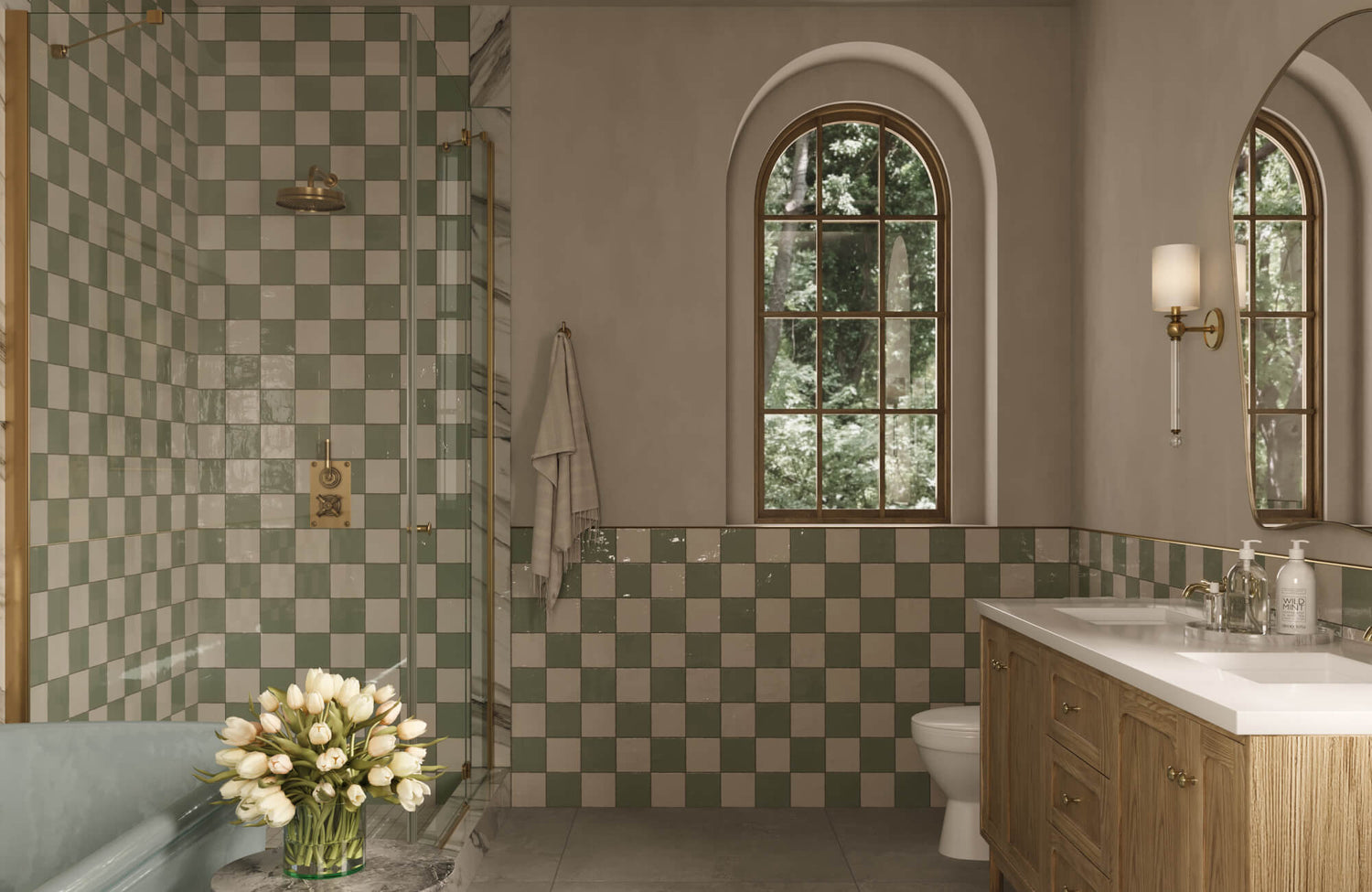
Symmetrical geometric repetition, like a checkerboard or even a repeated diamond configuration, also works to reestablish visual order. A classic checkerboard layout in modern tones of beige and white, as displayed in the picture above, can be created beautifully with combinations such as our Ellie 5x5 Matte Ceramic Tile in Tan paired with Ellie 5x5 Matte Ceramic Tile in Eggshell, forming a balanced rhythm that naturally counters the irregularities of an offset room. These patterns provide consistency and predictability, helping to neutralize the visual unpredictability of uneven walls or offset corners. As the room develops this steady repetition, the eye also perceives the space as more structured and intentional, allowing harmony to emerge from what once felt imbalanced.

Color-Based Pattern Choices That Enhance Spaciousness
Color and pattern work together to shape how large or small a room feels, often before you even register the effect consciously. By choosing hues and contrast levels that support openness, you can amplify the spacious qualities of any tile layout. With thoughtful color use, even the most compact rooms can feel brighter, wider, and more visually fluid.
Monochrome Pattern Schemes
Monochrome tile schemes use a single color applied across different shapes or subtle patterns to create a unified, expansive appearance. When all tiles share one consistent hue, your eye no longer fixates on individual pieces, allowing the wall to read as a continuous surface rather than a patchwork of shapes. This seamless flow is especially transformative in small or enclosed rooms, where visual fragmentation can quickly make the space feel tighter.
Finishes like satin or matte further enhance this effect by softening reflections and creating a smooth, velvety surface. Without harsh glare or stark edges drawing attention to tile transitions, the room gains a gentler, more open character. As your gaze glides uninterrupted across the walls, the unity of color and softened texture helps the entire space feel calmer, brighter, and noticeably more expansive.
Light Reflective Patterns
Light reflective tiles, particularly those with glossy or pearlescent finishes, bring a sense of buoyancy to a room by bouncing light across surfaces. One standout example is our Juliet 2.5x10 Matte Porcelain Tile in Pearl, which works beautifully in spaces like the kitchen shown above, where its warm cream and off-white toned surface subtly brightens the backsplash without overwhelming the room. When natural or artificial light hits these reflective patterns, the glow gently disperses, making the walls seem lighter and the entire space feel more open.
The orientation of these tiles can also enhance the effect even further. Placing them parallel to windows or primary light sources allows the reflective surface to catch and distribute light back into the room. As the glow spreads across the tile face, shadows diminish, and the entire space feels lighter and airier. This interplay of reflection and illumination becomes a subtle yet powerful tool for enlarging the visual of the room.
Soft Contrast Patterns
Soft contrast patterns use gentle shifts between similar tones, like pale gray paired with dove gray, to introduce depth without overwhelming the space. These nuanced transitions create visual interest while maintaining a cohesive atmosphere that supports spatial openness. Because the colors are closely related, the pattern feels smooth and understated, avoiding the chopped-up appearance that strong contrasts can create.
This approach also adds a layer of complexity that keeps the eye engaged but not overstimulated. As your gaze follows the soft tonal variations, the surface appears to recede slightly, giving the wall a sense of layered dimension. This balance of depth and subtlety helps the room feel both sophisticated and spacious, proving that a delicate touch with color can have a surprisingly powerful impact on perceived space.
Choosing The Right Tile Pattern To Expand Any Room
Making a room look bigger begins with understanding how tile patterns influence the way your eye moves through a space. When you use layouts that create continuity, reduce visual breaks, and encourage natural flow, the walls start to feel wider, taller, and more open. Patterns that emphasize gentle movement, soft color transitions, or uninterrupted geometry also help the room appear lighter and more expansive. As these visual cues work together, they reshape your perception and allow even small or irregular rooms to feel more comfortable and roomy. With intentional choices that prioritize openness and clarity, the right tile pattern becomes a powerful tool for transforming the scale and atmosphere of any space.
To help you bring these spacious design principles to life, our design services can guide you in selecting patterns, scales, and color strategies that enhance openness in your specific room. For an even clearer sense of how these choices will transform your space, our augmented reality (AR) tool lets you preview tiles directly on your walls, allowing you to visualize continuity, flow, and overall impact before committing to a final design. With both expert support and immersive visualization at your fingertips, you can move forward with confidence and create a room that truly feels larger, brighter, and beautifully intentional.