



Blank walls in a contemporary home can either reinforce the architecture or quietly work against it. Because these interiors often prioritize clean lines, open layouts, and strong material choices, the wrong artwork can feel disconnected almost immediately. The goal is not simply to fill space, but to choose pieces that respond to proportion, light, and structure in a thoughtful way. In this blog, we will explore what types of wall art work best for contemporary homes and how to select pieces that feel intentional and enduring.

The Visual Language of Contemporary Interiors
Contemporary interiors have a rhythm to them that feels current without trying too hard. They tend to lean on clean compositions, intentional restraint, and materials like glass, steel, concrete, and natural wood that already carry a strong visual presence. Because these spaces often highlight openness, proportion, and light, wall art needs to support that structure instead of pulling attention away from it.
Contemporary vs Modern: Why the Distinction Matters
A lot of people use contemporary and modern as if they mean the same thing, but they point to different ideas. Modern design refers to a specific historical period, while contemporary design shifts with the present moment and adapts as tastes evolve. That difference gives contemporary homes more flexibility, but it still requires editing and intention. Art in these spaces does not have to follow one strict style, yet it should feel aligned with what the room is already saying. Once you understand that contemporary is about relevance and awareness rather than a fixed rulebook, selecting wall art starts to feel clearer and more intuitive.
How Architecture Influences Art Selection
In contemporary homes, architecture often sets the tone before any furniture or décor is introduced. Strong ceiling lines, wide expanses of glass, and solid material blocks create a framework that art needs to respond to. A tall wall may invite a vertical composition, while a long stretch above a sofa may call for something wider and more expansive. Materials matter too, since a cool concrete backdrop might benefit from softer textures or warmer tones layered on top. Thinking about art as part of the architectural conversation helps the space feel cohesive rather than layered in separate parts.
The Importance of Scale and Breathing Room
Scale can quietly determine whether a wall feels resolved or slightly unsettled. In contemporary interiors, especially, giving artwork space around it allows the room to maintain its sense of openness. A piece that is too small can look hesitant, while something oversized can overpower the architecture if it ignores proportion. Taking the time to measure and visualize placement makes a noticeable difference in how grounded the art feels. When scale and spacing are considered early, the wall reads as intentional rather than improvised.

Large-Scale Abstract Art That Grounds Open Layouts
Open-concept homes can feel expansive, but that openness sometimes leaves walls looking unfinished or disconnected. Large-scale abstract art helps anchor those wide stretches of space without cluttering them. Instead of filling the wall with multiple smaller pieces, a single commanding work can create focus and give the entire layout a stronger sense of direction.
Oversized Abstract Paintings With Intentional Color
An oversized abstract painting has the ability to hold a room together, especially in living areas that flow into dining spaces or kitchens. Because open layouts often lack dividing walls, a bold canvas can quietly define zones without adding physical barriers. Color becomes especially important here, since it should echo tones already present in the furniture, flooring, or architectural finishes. When the palette feels intentional, the painting looks integrated rather than added as an afterthought. Proportion also matters, as the width of the artwork should relate to the sofa or table beneath it so it feels grounded. In larger rooms with higher ceilings, a generous vertical scale helps prevent the art from looking undersized against the architecture.
Monochromatic or Tonal Canvases for Subtle Drama
Not every large statement needs vibrant contrast to feel impactful. Monochromatic or tonal abstracts can introduce depth while keeping the atmosphere calm and cohesive. In homes that already feature strong materials like concrete, stone, or warm wood, layered shades of a single color can add visual interest without competing for attention. The subtle shifts in tone catch light differently throughout the day, which keeps the wall from feeling flat. This approach works especially well when you want drama that feels refined rather than loud. In open layouts where multiple functions share the same view, tonal artwork maintains continuity across the space.
Diptychs and Triptychs for Balanced Width
When a single canvas feels too compact for a long wall, diptychs and triptychs offer a balanced alternative. Splitting an abstract composition across two or three panels allows the artwork to span a wider area without overwhelming it. This format works beautifully above extended sofas, long credenzas, or dining tables where horizontal movement already defines the space. The separation between panels introduces breathing room while still reading as one cohesive piece. It also allows the composition to feel expansive without becoming visually heavy. In open-plan homes, that balance helps maintain flow while still giving the wall a clear focal point.

Structured Gallery Walls With Architectural Discipline
Gallery walls can absolutely work in contemporary homes, but they need structure to feel intentional. Instead of looking like pieces added over time without a plan, they should follow a clear system that respects alignment, spacing, and proportion. When done with discipline, a gallery wall becomes an architectural feature rather than a decorative afterthought.
Grid Layouts for Clean Symmetry
A grid layout immediately introduces order, which is why it works so well in contemporary interiors. Equal spacing between frames creates rhythm, and that repetition allows the eye to move comfortably across the wall. This approach feels especially appropriate in rooms with strong lines, such as spaces defined by large windows or sharp ceiling details. Measuring carefully before hanging makes a noticeable difference because even slight inconsistencies can disrupt the symmetry. The goal is not stiffness, but clarity, where each piece feels like it belongs within a larger framework. In open-plan areas, a structured grid can also act as a visual anchor without adding clutter.
Black-and-White Photography Series
Black-and-white photography has a timeless quality that naturally aligns with contemporary spaces. Without competing color, the focus shifts to composition, light, and subject matter, which keeps the wall feeling refined. A cohesive series, whether architectural studies, portraits, or landscapes, adds narrative without overwhelming the room. Because the palette is restrained, the gallery wall feels unified even if the images vary slightly in tone. This works especially well against concrete, white plaster, or warm wood surfaces where contrast feels crisp yet balanced. A well-edited photography series reads as curated, not casual.
Limited Color Palettes for Cohesion
If color is introduced, keeping it controlled helps maintain architectural discipline. Choosing artwork that shares a common tonal thread, whether soft earth tones or cool neutrals, creates harmony across multiple frames. This consistency prevents the wall from feeling busy, even when several pieces are displayed together. It also allows the art to complement surrounding furniture and finishes instead of competing with them. In contemporary homes where materials already provide texture and interest, a restrained color story keeps the overall composition steady. The effect feels layered but calm rather than loud or scattered.
Matching Frames vs Slim Metal Profiles
Framing plays a larger role than many people realize. Matching frames create uniformity and allow the artwork itself to take center stage, which works beautifully in grid arrangements. Slim metal profiles, on the other hand, introduce a subtle modern edge and pair well with glass, steel, or minimalist interiors. The key is consistency, since mixing too many frame styles can disrupt the visual rhythm. Choosing one direction and committing to it keeps the gallery wall aligned with the room’s architectural tone. With careful framing, the entire installation feels cohesive instead of pieced together over time.

Textural and Sculptural Wall Art for Material Contrast
In many contemporary homes, walls are smooth, clean, and visually quiet, which makes texture especially powerful. Dimensional art introduces relief, shadow, and tactile contrast without disrupting the overall simplicity of the space. When chosen carefully, these pieces soften minimal interiors and add depth while still respecting a refined, material-driven aesthetic.
Plaster, Resin, and Relief Panels
Plaster and resin relief panels bring subtle movement to otherwise flat surfaces. Instead of relying on bold imagery, they create interest through raised forms, soft undulations, or sculpted lines that shift with the light. In rooms dominated by glass, steel, or polished stone, that gentle texture adds warmth without feeling decorative. Because the palette is often neutral, the focus stays on form and shadow rather than color. This makes relief panels especially suitable for contemporary interiors that value restraint. The dimensional quality gives the wall presence while still maintaining a calm visual tone.
Metal Wall Sculptures With Clean Geometry
Metal wall sculptures introduce structure and precision, which align naturally with contemporary design. Clean geometric lines or abstract forms can echo architectural details already present in the room. Depending on the finish, whether matte black, brushed brass, or soft bronze, the piece can either recede quietly or provide a controlled contrast. The reflective quality of metal also interacts with natural and artificial light, adding subtle variation throughout the day. Because these works are often streamlined rather than ornate, they feel integrated instead of ornamental. That clarity keeps the focus on form and proportion.
Woven or Fiber Art in Neutral Tones
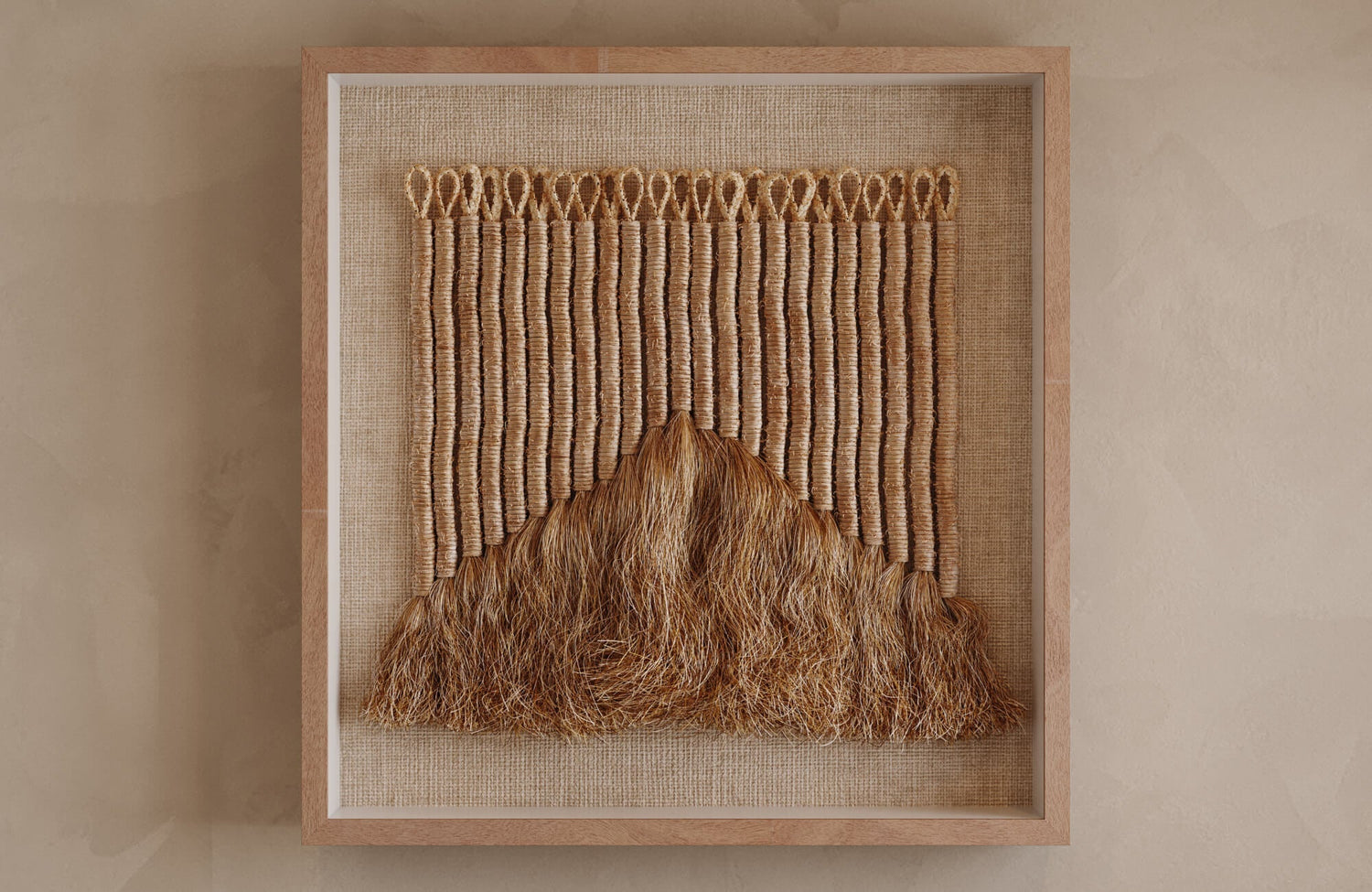
Fiber-based wall art offers texture in a softer, more organic way. Neutral woven pieces, especially those in off-white, beige, charcoal, or muted earth tones, add dimension without overpowering a space. In contemporary interiors that lean heavily on hard surfaces, woven art introduces balance through tactile variation. The subtle irregularities in the fibers make the wall feel layered rather than flat. Keeping the color palette restrained ensures the piece complements the architecture instead of competing with it. This approach works particularly well in living rooms or bedrooms where warmth is welcome but excess detail is not.
In a setting like the one shown above, layered textile artwork introduces warmth without overwhelming the architectural backdrop. Our Silent Orchard Wall Art features intersecting patterned textiles that overlap like fragments of a cherished heirloom, bringing fine wavy detailing, broad tonal striping, and gently fringed edges into one grounded composition. The subdued palette allows the texture to do the visual work, which pairs beautifully with wood finishes and ambient lighting. Wood-framed, assembled in the USA, and crafted by local artisans in India, it offers a thoughtful blend of craftsmanship and restraint that feels integrated rather than decorative.
Carved Wood Panels With Modern Lines
Carved wood panels can bring warmth and structure at the same time. When the carving follows clean, modern lines instead of intricate traditional motifs, the result feels aligned with contemporary interiors. The natural grain adds quiet movement, while the geometry maintains order. This type of wall art pairs beautifully with neutral upholstery and streamlined furniture. It introduces contrast through material rather than pattern, which keeps the look refined. The combination of craftsmanship and simplicity gives the wall depth without visual noise.
Layered Mixed-Media Assemblages
Mixed-media wall art adds depth by combining materials such as metal, wood, fabric, or resin in one composition. The key in contemporary settings is balance, where each material has room to breathe, and nothing feels excessive. Subtle layering creates shadow and variation, especially in rooms with abundant natural light. Because the focus stays on texture and composition rather than decorative flourish, the piece feels thoughtful and composed. When materials are edited carefully, the wall gains complexity without losing clarity. This type of dimensional art works well in entryways or large living areas where visual interest needs to carry across a broader space.

Minimal Graphic and Line-Based Art
Minimal graphic art has a quiet confidence that works beautifully in contemporary homes. Instead of relying on heavy texture or layered materials, it leans into clarity, negative space, and deliberate composition. When framed thoughtfully and placed with intention, these pieces add character without introducing visual clutter.
Continuous Line Portraits
Continuous line portraits feel expressive without being busy. A single unbroken stroke can suggest a face or figure in a way that feels modern and restrained at the same time. Because the composition is simple, the surrounding negative space becomes part of the artwork rather than an empty background. This makes it especially suitable for rooms that already feature strong architectural elements or layered materials. Framed in slim black or metal profiles, line portraits maintain their clean presence without overpowering the wall. They bring personality into a space while still respecting its simplicity.
Architectural Sketches and Blueprint Prints
Architectural sketches and blueprint-style prints speak directly to the structure of a contemporary home. Their precise lines and measured compositions echo the geometry found in windows, millwork, and ceiling details. Displayed in a consistent frame style, they feel curated rather than nostalgic. The restrained palette, often black, white, or muted tones, keeps the focus on form and proportion. These pieces work especially well in offices, hallways, or living spaces where clarity and order are already present. They reinforce the architectural language instead of competing with it.
Bold Graphic Blocks and Color Fields
Graphic blocks and color-field compositions can introduce energy without clutter. Clean shapes and defined edges keep the artwork aligned with contemporary aesthetics, even when stronger colors are involved. Because the design is reduced to essential forms, the impact feels direct rather than chaotic. This type of art pairs well with neutral furniture, allowing the wall to carry visual weight in a controlled way. Proportion remains important, since the size of the piece should relate to the furniture beneath it. When scale and color are chosen with care, graphic art adds focus while keeping the overall space composed.
Typography Used as Design, Not Decoration
Typography can work in contemporary interiors when it is treated as a graphic form rather than a sentimental message. Clean, well-spaced letterforms or abstracted text compositions read more like design elements than wall quotes. The emphasis should stay on layout, balance, and spacing rather than decorative script. Choosing restrained fonts and thoughtful framing helps the piece feel architectural instead of casual. This approach keeps the wall refined while still allowing personality to come through. In the right context, typography becomes part of the visual composition rather than a statement competing for attention.

When Art Becomes Part of the Architecture
In some contemporary homes, art does not hang on the wall; it becomes the wall. Instead of being added after the fact, it is planned alongside lighting, millwork, and material selections from the beginning. This approach blurs the line between decoration and structure, creating spaces where visual impact feels permanent and deeply integrated.
Backlit or LED-Integrated Art Panels
Backlit art panels shift the experience of a room because they interact directly with light. Rather than relying solely on pigment or texture, these pieces glow softly, adding atmosphere as well as visual interest. In contemporary interiors where lighting is already carefully considered, integrated illumination feels cohesive instead of theatrical. The panel becomes part of the architectural plan, especially when recessed cleanly into the wall. This approach works well in hallways, living rooms, or entryways where subtle drama can elevate the space. Because the light source is built in, the art feels intentional and immersive rather than simply displayed.
Modular Wall Systems
Modular wall systems offer flexibility while still feeling architectural. Instead of a single static piece, these installations consist of repeating components arranged in a deliberate configuration. The repetition introduces rhythm, which pairs naturally with contemporary interiors that emphasize order and proportion. Materials such as metal, wood, or composite panels can be arranged to respond to the scale of the room. This format allows the wall to feel dynamic without losing structure. Over time, modular systems can even be reconfigured, keeping the design fresh while maintaining cohesion.
Full-Wall Murals With Contemporary Restraint
Full-wall murals can feel expansive and immersive when handled with restraint. In contemporary homes, the key is choosing imagery or abstraction that supports the architecture rather than overwhelming it. Soft tonal landscapes, subtle gradients, or large-scale abstract washes tend to work better than highly detailed scenes. Because the artwork spans the entire surface, proportion and placement become critical. When aligned carefully with furniture and lighting, the mural reads as part of the room’s foundation. The effect is immersive without feeling busy or overpowering.
Custom Commissioned Installations
Custom installations take integration one step further by responding directly to a specific space. An artist can consider ceiling height, natural light, and architectural lines before creating the work. This level of intention ensures that the piece does not feel portable or generic. Instead, it feels rooted in its environment, almost as if the room was designed around it. Materials and scale can be tailored to complement surrounding finishes. That collaboration between art and architecture gives the home a distinctive identity that cannot be replicated easily.
Sculptural Wall Features Built Into Millwork
Sculptural elements built into millwork create a seamless visual experience. Carved panels, inset metal forms, or layered wood details can be integrated directly into cabinetry or feature walls. Because these elements are part of the construction, they carry a sense of permanence that framed art cannot achieve. The texture and shadow they introduce feel structural rather than decorative. In contemporary interiors where clean lines dominate, subtle sculptural additions bring depth without disrupting simplicity. This integration reinforces the idea that art can live within the architecture itself rather than simply sitting on top of it.
Bringing Contemporary Walls Into Focus
Choosing the right wall art for a contemporary home ultimately comes down to awareness. It is less about following a trend and more about understanding how scale, material, structure, and light interact within your space. When art supports the architecture instead of competing with it, the room feels resolved and confident. Each piece becomes part of a larger visual conversation rather than a standalone decoration.
If you are unsure where to begin, a personalized design consultation can help translate these principles into choices that fit your home specifically. Our team works closely with you to evaluate proportion, layout, lighting, and existing finishes so that your wall art feels intentional from the start. Whether you are considering a large-scale abstract, a structured gallery wall, or an integrated installation, thoughtful guidance makes the process clearer and more cohesive.


