Choosing the perfect bathroom floor tile can feel like balancing art with science. You want something that looks beautiful, feels comfortable, and lasts through years of splashes, humidity, and daily use. But beyond style, there’s a world of performance factors to consider like how much water a tile can absorb, how safe it is underfoot, and how much maintenance it requires.
In this article, you’ll uncover how different tile materials perform in wet environments. Each section also dives into a unique factor that affects how your bathroom floor looks, feels, and functions. Whether you prefer the timeless elegance of natural stone or the unbeatable durability of porcelain, this article will help you understand which tile truly earns its place in a wet-area design built to last.

Water Absorption
Water resistance begins with understanding a tile’s porosity—how much water it can absorb and how that affects durability and hygiene over time. The more water a tile takes in, the faster it deteriorates, especially in spaces like bathrooms where moisture is constant and relentless.
Porosity Factor
Every tile has a unique relationship with water, and that relationship is measured by its Water Absorption Rate (WAR). This rating tells you exactly how much moisture the tile will take in, which directly impacts how it performs in wet environments. Tiles classified as impervious, with a WAR of 0.5% or less, are your safest bet for bathrooms, showers, and other damp areas. Their dense structure keeps water out, preventing swelling, mildew, and staining. Porcelain tiles shine because they are fired at extremely high temperatures, creating a vitrified body that blocks moisture completely.
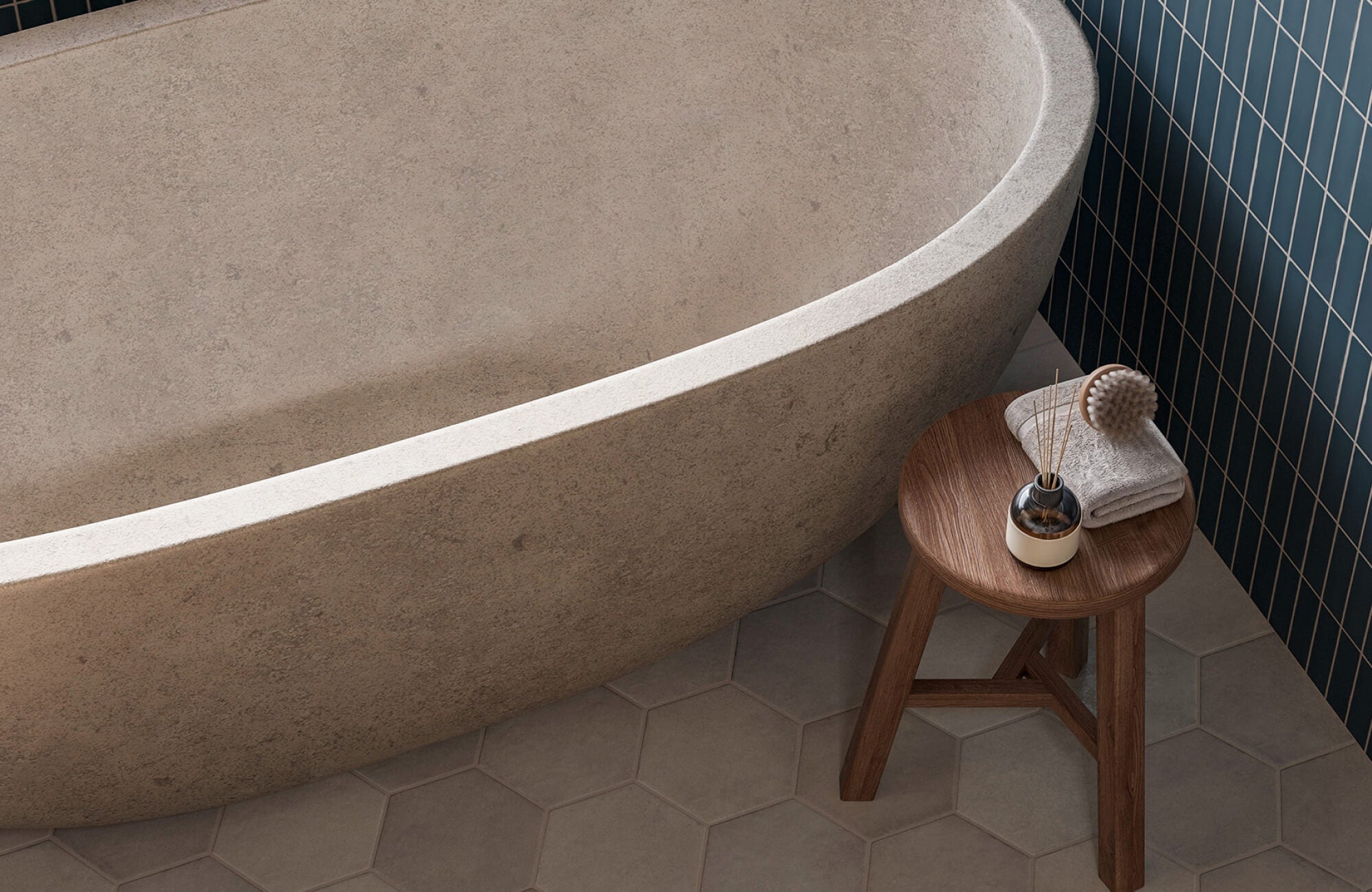
You can see this principle in action in the bathroom image above, where sleek porcelain tiles create a cohesive, spa-like environment while offering unmatched water resistance. That look can be achieved with our Chantel 12x11 Matte Porcelain Hexagon Mosaic Tile in Imperial. Its soft gray tone and matte surface not only echo the natural beauty of stone but also deliver the moisture protection and durability essential for wet-area flooring and shower applications.
In contrast, non-vitreous which are those that can absorb over 7% of their weight in water, behave very differently. When these tiles are exposed to continuous moisture, they can gradually weaken, leading to cracks or discoloration. Over time, water trapped within the tile promotes mold growth, affecting both appearance and hygiene. This is why choosing a tile with the right absorption rate is not just about longevity; it’s also about keeping your bathroom clean, fresh, and easy to maintain.
Glazing and Its Wear
Glazing provides an additional defense layer, sealing the tile surface to repel water and stains. However, it’s not a permanent shield. With regular use and cleaning, the glaze can slowly wear down. The Porcelain Enamel Institute (PEI) rating helps you understand how resistant a tile’s glaze is to abrasion. For bathroom floors, it’s best to look for tiles with a PEI rating of III or higher. This ensures that the glaze remains intact even under daily exposure to moisture, cleaning products, and frequent use.
Although glossy tiles might seem more resistant to water at first glance, their smooth surface can also make them slippery when wet. Choosing a matte or lightly textured glazed finish provides the right balance between style and function, helping water bead on the surface without compromising traction. In short, a tile’s glaze isn’t just about shine. It’s about sustaining protection where it matters most.
Installation and Grout
Even the most water-resistant tile can fail if it isn’t installed correctly. The weakest points in any tile floor are often the joints, which is the narrow gaps filled with grout. Traditional cement-based grout is naturally porous, meaning it absorbs water unless it’s properly sealed. Over time, that trapped moisture can seep down into the subfloor, creating hidden damage that’s costly to repair.
To prevent this, you can opt for epoxy grout, which is fully waterproof and resistant to stains and mildew. It’s slightly more expensive and requires careful installation, but its long-term performance in wet areas makes it well worth the investment. Additionally, beneath the tile layer, a waterproof membrane acts as a crucial barrier against leaks and saturation. Skipping this step might save time initially, but it risks undermining the durability of the entire floor system.

Slip Resistance
A beautiful tile that becomes slippery when wet poses serious safety risks. Slip resistance should always be a top priority when choosing flooring for bathrooms, showers, and other wet spaces. Understanding how tiles grip underfoot can help you create a bathroom that feels both secure and sophisticated.
Grip Coefficient of Friction (COF)
Slip resistance isn’t just a matter of surface texture. It’s a measurable property known as the Dynamic Coefficient of Friction (DCOF). This value determines how much traction a tile provides when wet or dry. According to ANSI standards, a DCOF of at least 0.42 is recommended for wet floors. The higher the rating, the better the grip.
Glossy tiles, although elegant and reflective, often fall below this safety threshold. Their smooth surface allows water to pool, creating a film that reduces friction. In contrast, matte or lightly textured tiles increase surface contact with your feet, providing far better traction. This simple distinction can make a significant difference in everyday comfort and safety, especially when stepping out of the shower or bath.
Traction
Surface texture plays a critical role in preventing slips. Tiles with stone-like textures or slate finishes help break up the thin water layer that forms when the floor gets wet. This disruption allows more direct contact between your foot and the tile, reducing slipperiness. Even subtle textures can enhance grip without making the surface feel rough or uncomfortable.
Small-format tiles and pebble mosaics take this concept further. Because they feature many grout lines, they naturally create extra traction and drainage points. The grout also provides micro-ridges that help keep your footing secure, even in standing water. This makes mosaics particularly ideal for shower floors, where both style and practicality meet.
One excellent example of form meeting function in shower flooring is our Astrid 2x2 Matte Porcelain Mosaic Tile in Oyster, displayed in the picture above. Its soft gray-beige hue and matte finish create a soothing, spa-like atmosphere while the small mosaic format provides extra grout lines that naturally improve traction and drainage. This design not only enhances safety underfoot but also complements neutral bathroom palettes beautifully, adding texture and warmth to wet areas.
Honed vs. Polished
Natural stones such as marble and limestone exude timeless beauty, but their polished surfaces can be surprisingly slick when wet. If you love the look of stone, opting for honed or tumbled finishes offers a safer alternative. These finishes have a soft, matte appearance that diffuses light while providing the grip you need for daily use. The slightly uneven texture also helps your feet maintain traction, even on damp floors. However, to preserve their integrity and prevent water absorption or staining, it’s important to seal natural stone regularly to maintain both its beauty and performance over time.

Porcelain’s Enduring Performance
Porcelain tile stands out as one of the most reliable and versatile materials for wet areas. Its superior engineering gives it exceptional strength, resistance to moisture, and timeless visual appeal, all while requiring very little upkeep.
Vitrification and Water Resistance
Porcelain owes its exceptional performance to a process called vitrification, where the tile is fired at extremely high temperatures until its particles fuse into a dense, glass-like structure. This transformation makes porcelain incredibly compact and impermeable to water. Unlike more porous tiles that absorb moisture over time, porcelain naturally repels it, making it an ideal choice for bathrooms, showers, and laundry areas where humidity is constant. Tiles such as our Catalina 7x8 Hexagon Matte Porcelain Tile in Cotto embody these qualities beautifully. Its terracotta-inspired hue and hexagonal shape lend warmth and character to wet spaces while maintaining the same water resistance and durability expected from vitrified porcelain.
Because of this nonporous nature, porcelain resists common bathroom issues such as staining, mildew, and mold growth. Water simply cannot penetrate its surface, keeping the tile’s integrity intact for decades. This means you don’t have to worry about the hidden damage or odors that moisture can cause beneath the surface. In essence, vitrification gives porcelain a built-in shield against both visible wear and invisible deterioration, ensuring your floors remain beautiful and functional long after installation.
Strength, Durability, and PEI Rating
Porcelain isn’t just water-resistant. It’s also incredibly tough. Its dense composition provides a high breaking strength, allowing it to handle the rigors of daily life without cracking or chipping. In addition, the PEI (Porcelain Enamel Institute) rating measures surface durability, and a score of 3 or higher confirms that porcelain can endure constant use, dropped toiletries, and even pet activity with ease. This level of toughness makes it one of the most dependable flooring materials you can choose for moisture-prone areas.
Another advantage of porcelain is its compatibility with radiant heat flooring systems, which bring warmth to your feet even on the coldest mornings. Because of its density, porcelain distributes heat evenly and efficiently, enhancing both comfort and energy performance. The combination of durability and comfort makes porcelain not just practical but also a true investment in long-term living quality.
Low Maintenance and Versatility
Porcelain is one of the few flooring materials that offers exceptional looks with almost zero maintenance. Unlike natural stone, it doesn’t require sealing to keep out water or stains. Its hard, smooth finish also resists scratches and can be cleaned easily using manufacturer-recommended mild, non-abrasive cleaners. This makes caring for it simple and stress-free, an important advantage when you’re managing a busy household or shared bathroom.
Equally impressive is porcelain’s design versatility. Because of advanced printing technology, porcelain can mimic the rich veining of marble, the organic grain of wood, or even the industrial appeal of concrete. It can also replicate the handcrafted charm of zellige tiles, capturing their subtle color variations and artisanal texture without the maintenance such handmade pieces typically require. You can enjoy the charm of these materials without dealing with their upkeep challenges.
For a warm, grounded look that still performs beautifully in wet areas, consider our Karina 5.5x5.5 Matte Porcelain Tile in Cotto, shown in the photo above. Its terracotta-inspired tone and soft matte finish bring an inviting warmth to bathrooms while offering the same durability, low maintenance, and moisture resistance that make porcelain a top choice for everyday living.

Aesthetic Value and Timeless Appeal
Performance doesn’t have to come at the expense of beauty. Because of modern manufacturing techniques, today’s bathroom tiles combine visual elegance with practical performance, allowing you to create a space that looks stunning while still being safe and easy to maintain.
Matching Tile Style
Modern tile technology has completely transformed what’s possible in bathroom design. With advanced digital printing techniques, porcelain tiles can now replicate the natural depth and variation of materials like marble, wood, and concrete. This allows you to achieve the refined elegance of marble veining, the warmth of wood grain, or the urban edge of concrete, all without worrying about the fragility or upkeep of those original materials.
Because of this versatility, you can easily tailor your space to any aesthetic, whether it’s a clean, minimalist retreat, a cozy rustic spa, or a sleek modern oasis. The ability to mix and match finishes and patterns also means you can bring cohesion to the entire bathroom, extending the same design language from the floor to the walls, all while maintaining the durability and water resistance essential for wet areas.
Size and Layout
The size and layout of your tiles have a powerful influence on both the look and performance of your bathroom floor. Smaller tiles, such as mosaics, offer enhanced slip resistance because their many grout lines create extra grip and drainage. This makes them ideal for shower floors or areas with consistent water exposure. Beyond safety, smaller tiles also allow for more intricate designs and better flexibility on uneven or sloped surfaces.
At the same time, creative layouts like herringbone, basketweave, or chevron can turn your floor into a design statement. These patterns draw the eye, add texture, and make the bathroom feel more dynamic and intentional. Each layout also creates a different visual rhythm, helping you balance functionality with artistry. Tiles like our Natasha 2x6 Matte Porcelain Tile in Bone work beautifully in these patterns, with their soft beige hue and elongated form creating a sense of openness and flow. Furthermore, the matte surface diffuses light gently, adding warmth and refinement while maintaining the durability and water resistance needed in wet areas.
Colors and Textures
Color and texture selection plays a crucial role in crafting a bathroom that feels both stylish and livable. Matte finishes are an excellent choice for wet areas because they provide natural slip resistance and help conceal water spots and soap residue. Our Shea 2x2 Matte Porcelain Mosaic Tile in Dune captures this balance beautifully, featuring a soft sand-beige color that evokes warmth and serenity while maintaining practical traction underfoot. As seen in the image above, its subtle tone pairs seamlessly with wood or green accents, creating a spa-like atmosphere that feels organic and refined.
When it comes to color, warm neutrals such as taupe, beige, or soft gray create a sense of calm and cleanliness while subtly masking everyday wear. These tones make the space feel inviting and timeless. For added depth, pairing matte floor tiles with glossy wall finishes introduces balance and light reflection. This interplay between textures also enhances dimension—your bathroom feels brighter, more spacious, and effortlessly cohesive.
Choosing the Best Tile for Wet Areas
When it comes to wet-area flooring, the best bathroom floor tile is one that blends safety, durability, and design without compromise. Porcelain consistently leads the way because it resists moisture, prevents slips, and mimics high-end materials with minimal maintenance. However, success doesn’t come from the tile alone. It’s also about proper installation and thoughtful design choices that balance form and function. Ultimately, the ideal tile for your bathroom is the one that complements your aesthetic and performs flawlessly under the demands of everyday life, creating a space that is both beautiful and built to endure.
If you’re ready to turn your bathroom vision into reality, our design services can help you make confident, informed choices. Our expert team works with you to select tiles, finishes, and layouts that suit your space while maintaining the balance of beauty and performance your bathroom deserves. To see your ideas come to life before making a decision, you can also use our augmented reality (AR) tool. This interactive tool lets you visualize how different designs, colors, and textures will look in your actual space, helping you find the perfect fit for both your style and everyday needs.