When people start exploring double sink bathroom vanities, the underlying concern is often the same, regardless of style preferences or budget. Will this choice actually suit the space and make daily routines easier rather than more complicated? A double sink vanity can be a practical solution, but only when it is selected with a clear understanding of how it will function in the bathroom over time.
As we work through the key considerations together, the aim is to help you evaluate your options with clarity. Instead of focusing only on how a vanity looks, focus on how it fits into your space, supports shared use, and holds up to everyday demands, helping you make a well-informed decision.

Assessing Bathroom Space and Layout Constraints
Before looking at finishes or sink styles, it’s worth considering whether your bathroom has enough space for a double-sink vanity to feel comfortable and easy to use. The overall layout and surrounding fixtures play a key role in determining if it will function smoothly or feel restrictive in daily use.
Measuring Width, Depth, and Clearance
Start by looking at the available wall width, but that measurement alone does not tell the full story. Vanity depth plays an equally important role, particularly in narrower bathrooms where even small differences can affect comfort. A deeper vanity may make the space feel tight, while a shallower one can limit usable storage.
Clearance around the vanity deserves the same level of attention. There should be enough room to open drawers fully, stand comfortably at each sink, and move through the space with ease. Careful measuring upfront helps avoid selecting a vanity that fits on paper but feels awkward once it is in place.
Centering the Vanity With Existing Fixtures
Next, consider how the vanity fits alongside other permanent fixtures in the bathroom. Elements such as tubs, toilets, and showers all influence where a double sink vanity can reasonably be placed. What initially appears to be open wall space can feel more limited once these fixtures are taken into account. While a centered vanity can create a sense of balance, placement should ultimately support how the bathroom is used, with small adjustments often improving access and overall comfort.
This approach is reflected in the space featured above, where Edward Martin’s Bridgette 60" Double Vanity in Smokey Celadon with a 3 cm White Zeus Quartz Top is positioned in clear relationship to the freestanding tub and surrounding architectural details. Rather than competing with these elements, the vanity feels intentionally placed, allowing the room to maintain visual balance while accommodating everyday use.
Balancing Symmetry With Practical Flow
A double sink vanity often introduces a sense of symmetry, with the sinks evenly arranged across the cabinet. While this kind of balance can look appealing, it should never come at the cost of comfort or ease of use. In certain bathrooms, maintaining perfect symmetry can make the layout feel more restrictive.
It helps to think about how the bathroom is used from entry to exit. When symmetry supports that experience, it enhances the space, but when it gets in the way, a small adjustment in placement can make everyday use noticeably more comfortable.

Choosing the Right Sink Configuration and Bowl Design
Once the size and placement are clearly defined, it becomes easier to focus on how the vanity will be used each day. Details like sink placement and design affect how much counter space you have, how easy the vanity is to clean, and how comfortable it feels when shared. Paying attention to these factors helps create a setup that supports everyday use rather than complicating it.
Integrated vs. Separate Sink Bowls
Integrated sinks are built directly into the countertop, creating a smooth, continuous surface that is easy to maintain and visually understated. This type of configuration is often preferred in shared bathrooms where quick cleaning and a cohesive look are priorities. Separate sink bowls, by contrast, provide greater flexibility in style and help create clearly defined spaces for each user.
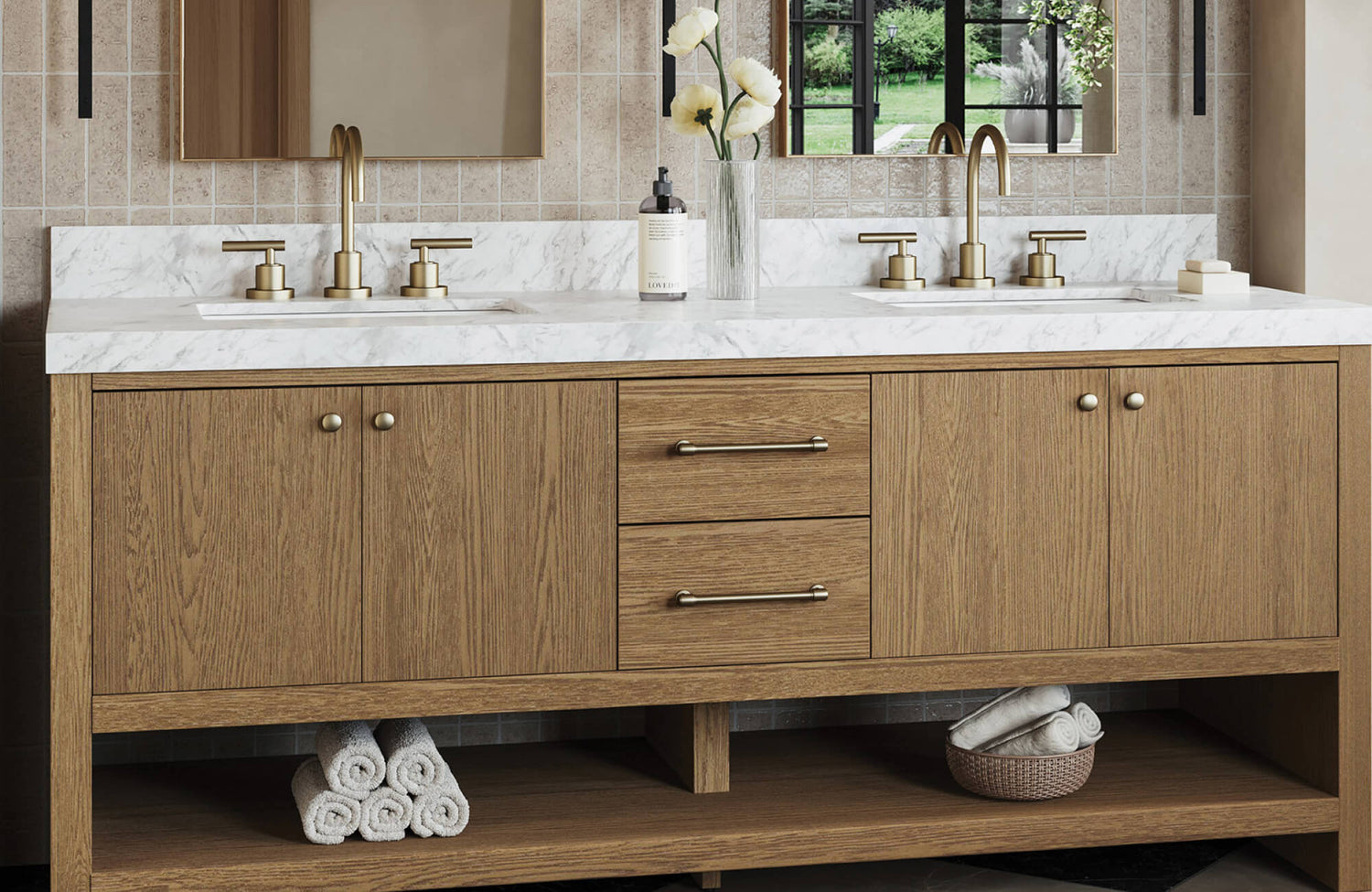
That difference is easy to spot in the photo featured above, where Edward Martin’s Elodie 60" Double Vanity in Whitewashed Oak with a 3 cm White Zeus Quartz Top shows two distinct sink bowls set into a shared countertop. The layout maintains visual unity while still giving each user a clearly defined area, illustrating how separate bowls can balance personalization with overall cohesion.
Sink Depth and Splash Control
Sink depth is often overlooked, but it plays a meaningful role in everyday comfort. Shallower sinks are more likely to cause splashing and require frequent counter cleanup, while deeper bowls help keep water contained. It’s worth choosing a sink depth that aligns with how the bathroom is used. For routines that involve frequent face washing or shared use by children, a deeper bowl tends to be the more practical option.
Spacing Between Sinks
Spacing between sinks plays a larger role in comfort than many people anticipate. As you consider the layout, sinks placed too close together can make shared use feel restrictive, while spacing them too far apart may reduce usable counter space. Ultimately, the goal is to find a balance that allows both users to access their sinks comfortably while still preserving a practical central area for shared items.

Evaluating Vanity Cabinet Construction and Materials
A double sink vanity is regularly exposed to moisture, weight, and daily use, making construction quality just as important as its appearance. Understanding how materials and building methods affect durability and stability helps ensure the vanity performs well over time.
Solid Wood vs. Engineered Materials
Solid wood is known for its strength and long lifespan, but it needs proper sealing to withstand bathroom humidity. Engineered materials such as plywood and MDF are also widely used and can perform reliably when manufactured to a high standard. Rather than focusing only on material labels, it’s more helpful to consider how those materials are constructed and finished. In many cases, a well-made engineered cabinet will hold up better in a bathroom environment than solid wood that has not been properly treated.
Moisture Resistance and Finish Quality
The finish on a vanity serves a purpose beyond appearance by helping protect the cabinet from moisture. Details like sealed edges, smooth interior coatings, and consistent finish coverage help reduce the risk of swelling and warping over time, especially in bathrooms where humidity is constant. Paying attention to interior surfaces is just as important as evaluating the exterior, since moisture-related issues often begin in less visible areas.
A great example is our Edward Martin’s Sasha 72" Double Vanity in Carbon Oak with a 3 cm White Zeus Quartz Top, as shown in the photo above, which uses a multi-stage coating applied both inside and out to support long-term resistance to moisture and UV exposure. Rather than relying solely on surface finishes, this approach shows how comprehensive sealing can contribute to durability throughout the entire cabinet.
Drawer and Door Hardware Performance
The quality of the hardware plays a noticeable role in how the vanity feels to use each day. Features like soft-close hinges, durable drawer slides, and well-aligned doors help reduce wear over time and contribute to a smoother experience. It’s worth paying attention to how drawers operate when fully loaded and how doors close, since these small details often reveal the overall quality of the construction.

Storage Planning for Shared Bathroom Use
A double sink vanity is often chosen to support shared routines, yet without careful storage planning, it can still feel cluttered. Considering how storage is designed and divided helps support personal space, organization, and ease of use for everyone sharing the bathroom.
Dividing Storage for Individual Users
It helps to think of a double sink vanity as two distinct zones rather than a single shared cabinet. Dedicated drawers and compartments allow each person to keep their items organized, reducing confusion and making it easier to maintain a tidy bathroom over time. This approach also simplifies daily routines by ensuring frequently used items are always within reach. Over time, clearly defined storage areas can help prevent clutter from building up on the countertop.
Drawer Depth and Internal Organization
Drawer depth plays a key role in both what you can store and how easily items can be reached. Shallow drawers work well for everyday essentials, while deeper drawers are better suited for larger or less frequently used items. Thoughtful use of dividers and organizers helps prevent drawers from turning into catch-all spaces, especially when the layout reflects how you actually use the bathroom. This kind of planning makes it easier to keep items visible and accessible without constantly rearranging contents.
Accommodating Plumbing Without Losing Storage
Double sink plumbing does take up cabinet space, but well-designed vanities minimize its impact. Features like U-shaped drawers and rear cutouts help preserve usable storage around the plumbing, so the cabinet remains functional rather than feeling broken up. Taking a closer look at how interior space is organized makes it easier to judge whether a vanity uses its footprint efficiently or sacrifices large sections to plumbing alone.
That approach is clearly illustrated in the photo featured above with Edward Martin’s Maxine 72" Double Vanity in Black Wash Oak Veneer with a Carrara Marble Top. The open cabinet view shows how storage areas are intentionally shaped around the sinks and plumbing, demonstrating how thoughtful interior design can maintain usable space on both sides. Over time, layouts like this can noticeably increase how much usable storage you end up with.

Plumbing and Installation Requirements
Installation details often influence both the cost and timeline of a project. Having a clear understanding of plumbing requirements early on makes it easier to plan realistically and anticipate how installation choices may affect complexity and flexibility.
Single-Drain vs. Dual-Drain Systems
Some double sink vanities are designed to share a single drain, while others use separate drain systems for each sink. Each option comes with different considerations for installation and ongoing maintenance. As you weigh these options, it helps to understand which setup works best with your existing plumbing and the extent of changes you’re prepared to make during the renovation. In many cases, this decision can influence both installation time and long-term service needs.
Wall-Mounted vs.Freestanding Installations
Wall-mounted vanities tend to create a lighter visual impression and make floor cleaning easier, though they require adequate wall support for proper installation. Freestanding vanities are generally simpler to install and often provide more storage within the cabinet. When comparing the two, it’s helpful to focus on structural requirements and practicality rather than appearance alone. Additionally, the choice can affect future flexibility if repairs or updates are needed down the line.
Compatibility With Existing Plumbing Locations
The location of existing plumbing can influence which vanity options are practical or whether modifications are needed. While minor adjustments are fairly common, more extensive changes can add to the overall cost. Checking plumbing compatibility early in the process helps avoid unexpected issues once the vanity is selected and installation begins. This step also helps you set more realistic expectations for both the budget and the installation timeline.

Balancing Style With Long-Term Practicality
Style plays an important role, but it works best when it supports long-term satisfaction rather than driving the decision on its own. Taking time to consider how visual choices align with everyday use and future needs can help ensure the vanity remains practical and appealing over time.
Matching Vanity Scale to Bathroom Style
A vanity should feel well-proportioned to the size of the bathroom. Designs that are too large can overpower smaller spaces, while those that are too small may feel underwhelming. Paying attention to scale helps the vanity feel intentional and well-suited to the room. It also allows surrounding elements such as mirrors and lighting to feel balanced rather than crowded.
That sense of balance is evident in the photo featured above, where Edward Martin’s Delilah 72" Double Vanity in Seaside Oak with a 3 cm White Zeus Quartz Top fits comfortably within the space. Its width aligns naturally with the wall and mirrors, creating a cohesive arrangement that feels grounded without dominating the room, which reinforces how thoughtful sizing contributes to both visual harmony and everyday comfort.
Countertop Materials and Maintenance Needs
Different countertop materials come with varying care requirements. Some are more resistant to moisture and staining, while others need regular sealing to maintain their condition. Choosing a material that aligns with your maintenance preferences can make everyday upkeep much easier over time. This becomes especially important in bathrooms that are used frequently each day.
Planning for Resale and Changing Needs
Neutral designs tend to age more gracefully and appeal to a broader range of preferences. Even when resale is not a near-term concern, choosing flexible features can add long-term value. It’s worth considering how your needs may change over time and whether the vanity can adapt accordingly. A thoughtful choice now can help avoid the need for future replacements.
Choosing the Right Double Sink Vanity for Your Bathroom
Choosing a double sink bathroom vanity is more straightforward when each factor is considered thoughtfully. Looking at space, construction, storage, plumbing, and long-term practicality together helps ensure the vanity truly enhances how your bathroom functions. When these elements work in harmony, the result is a setup that supports shared routines and holds up well over time without adding unnecessary complexity.
If you’d like guidance specific to your space, our design service can help clarify layout, sizing, and functional considerations. Getting in touch with us early can make the decision process smoother and more confident.