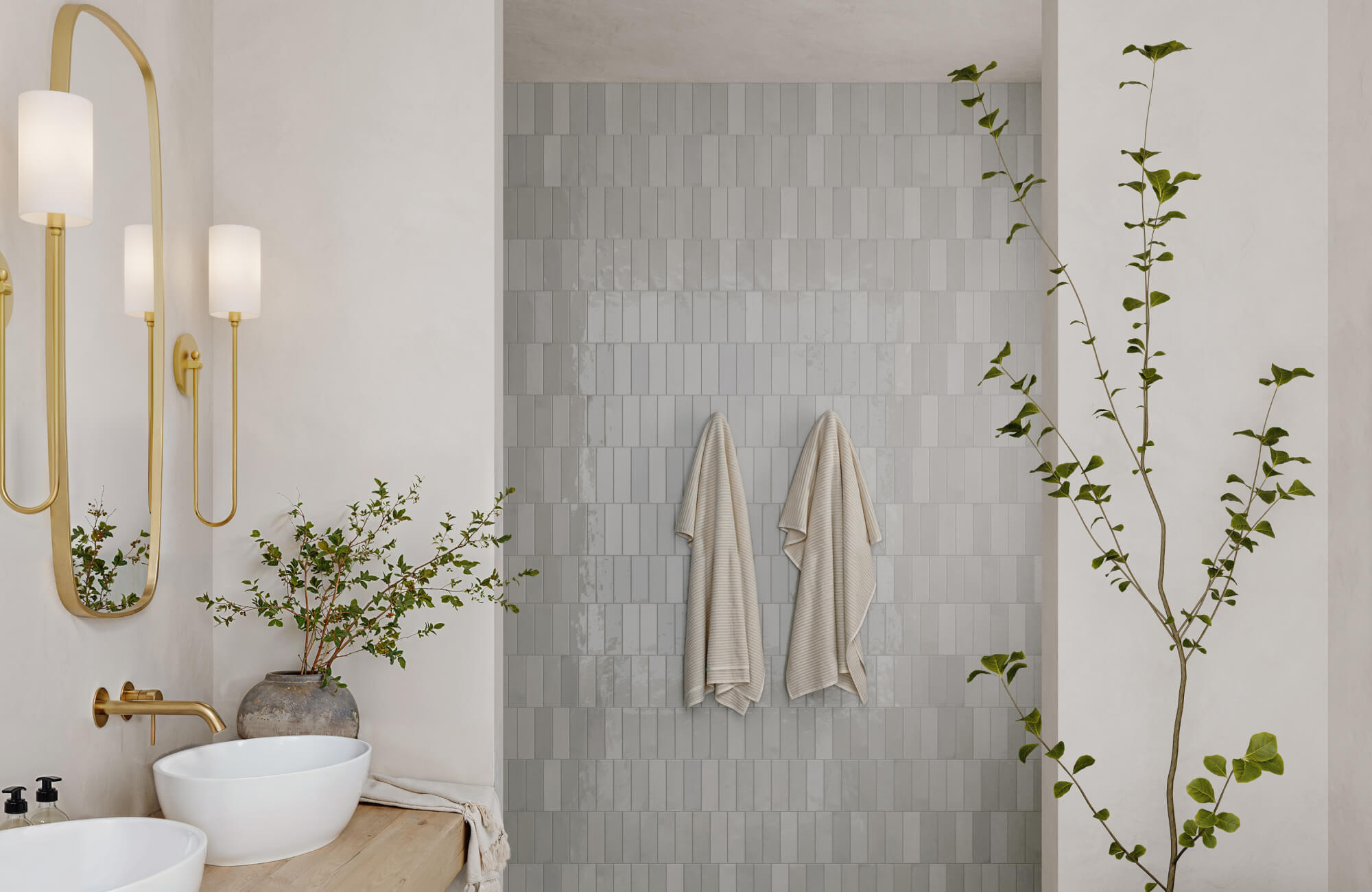
With their clean lines and timeless appeal, subway tiles have become a cornerstone of contemporary interior design. Known for their versatility, durability, and ability to complement a wide range of styles, they are a popular choice for spaces ranging from kitchens and bathrooms to living rooms and hallways. This guide provides essential information about subway tiles, including their history, materials, installation methods, and maintenance tips to help you make the most of this classic design element.
But before diving into installation specifics, it's important to first understand what makes subway tiles such a lasting favorite. In the next section, we’ll explore their history, materials, and key characteristics, giving you the foundational knowledge needed to make informed choices for your project.

Madilyn 3x12 Glossy Ceramic Tile in Pearl creates a clean vertical backsplash, balanced by light wood shelving, white cabinetry, and gold hardware.
Exploring the Basics of Subway Tiles
Subway tiles have a rich history that dates back to the early 1900s, originally designed for the New York City subway system. Their iconic 3"x6" rectangular shape provided a clean, durable, and easy-to-maintain surface, perfect for busy areas like subway stations. It wasn’t long before homeowners adopted this design for kitchens and bathrooms, appreciating its timeless appeal and functionality. Today, subway tiles continue to be a go-to choice for both traditional and modern interiors, thanks to their versatility and classic look.
When it comes to subway tiles, two materials dominate the market: ceramic and porcelain. While both materials share certain qualities like durability and low maintenance, there are important differences that could influence your choice depending on where and how you intend to use the tiles.
Ceramic tiles, a traditional and popular choice for subway tiles, are made from natural clay fired at a lower temperature than porcelain, making them lightweight, cost-effective, and available in a wide range of colors, finishes, and textures. While ideal for residential settings and DIY projects due to their ease of installation, ceramic tiles, though durable, are less strong than porcelain and can be more susceptible to chips and cracks in busy areas.
Porcelain subway tiles, on the one hand, are denser, stronger, and more durable than their ceramic counterparts. Made from refined clay and fired at a higher temperature, they are non-porous, making them more resistant to water, stains, and wear. This makes them ideal for moisture-prone areas like bathroom walls, showers, and kitchen backsplashes, while their durability allows them to be used on floors and in commercial settings. Porcelain tiles also often feature a refined, polished appearance with matte and glossy finishes available. Though more expensive than ceramic tiles, their increased strength and water resistance ensure long-term performance, particularly in demanding environments. Additionally, porcelain tiles tend to have consistent color throughout, so chips or surface damage are less noticeable compared to ceramic tiles.

Kennedy 12 x 36 Matte Porcelain Tile in Sand Deco adds subtle texture around the bathing area, while Leona 12 x 12 Checkerboard Matte Porcelain Tile in Calacatta and Amani Grey grounds the bathroom with a patterned floor detail.
The Aesthetic Appeal and Versatility of Subway Tiles
Now that we've covered the essential characteristics and material options for subway tiles, it’s time to explore how these tiles can elevate the look and feel of your space. Beyond their practicality and durability, subway tiles offer a wide range of aesthetic possibilities that can enhance any interior design style. Their minimalist design allows them to adapt to various styles seamlessly, making them a preferred choice for both contemporary and classic homes. Whether you're aiming for a traditional, modern, rustic, or eclectic look, subway tiles offer the versatility needed to create a balanced and cohesive design.
Traditional Style
When incorporated into a traditional style, subway tiles bring a timeless and elegant touch. Paired with ornate details such as crown molding, antique fixtures, and classic cabinetry, their clean lines balance the richness of traditional design elements. The simplicity of subway tiles prevents traditional spaces from feeling overly ornate, adding just the right amount of refinement. Opting for neutral colors like white or cream also helps maintain the room’s classic and sophisticated appeal.
Modern Style
Subway tiles are an excellent choice for achieving a modern, minimalist aesthetic. When combined with sleek furnishings, clean-lined fixtures, and a restrained color palette, these tiles offer a streamlined and polished look. Their simple geometric shape complements the sharp lines of modern interiors, while glossy or matte finishes can shift the mood from reflective and bright to soft and understated.
While darker shades like black or charcoal can create a dramatic contemporary effect, lighter and mid-tone colors can feel equally modern when the layout is clean and intentional. Edward Martin's Cleo 2 x 6 Glossy Ceramic Tile in Sage is a strong example of this approach. Its slim proportions and glossy surface bring subtle movement to the wall, while the green tone softens the space without interrupting the room’s modern structure. Used in a vertical layout with glass, brass, wood, and white surrounding surfaces, it demonstrates how subway tiles can support a contemporary bathroom design while still feeling warm and livable.
Rustic Style
In a rustic setting, subway tiles add a refined contrast to the natural, raw materials often found in this design style. Whether paired with rough-hewn wood beams, stone accents, or farmhouse elements, they introduce a smooth, clean surface that balances the rugged textures of rustic interiors. The structured, classic shape of subway tiles also enhances the warmth and earthy tones typically associated with rustic designs, such as beige or gray.
Eclectic Style
For eclectic interiors, subway tiles act as a unifying element that ties together diverse design components. Their simple and understated form provides balance in spaces filled with various colors, textures, and patterns. They can serve as a neutral backdrop, allowing bolder design choices, such as vibrant furnishings or artwork, to stand out. By adding cohesion to visually dynamic rooms, subway tiles ensure that eclectic spaces feel harmonious rather than chaotic.

Jaden 2.5 x 16 Glossy Ceramic Tile in Ink forms a dark, reflective backsplash that contrasts with white cabinetry, warm wood, black countertops, and brass fixtures.
Subway Tiles in Different Spaces
While their aesthetic appeal and versatility are impressive, subway tiles are also known for their ability to function well in a variety of rooms. Their durability, easy maintenance, and timeless design make them a smart choice for multiple spaces throughout the home. Let’s take a closer look at how subway tiles can be used to enhance different areas, from kitchens and bathrooms to living rooms and hallways.
Kitchens
Ceramic or porcelain subway tiles are a favorite for kitchen backsplashes because they offer durable, easy-to-clean surfaces in areas exposed to splashes, steam, and daily cooking activity. They also help define the wall behind stoves, sinks, and countertops, turning a practical surface into an important visual feature. Whether arranged in a classic horizontal pattern, a stacked layout, or a bold herringbone design, subway tiles can shape the overall character of the kitchen while supporting everyday use.
For kitchens that lean more dramatic, Edward Martin's Jaden 2.5 x 16 Glossy Ceramic Tile in Ink shows how a darker subway tile can create depth without making the space feel heavy. Its elongated shape draws the eye across the backsplash, while the glossy black surface reflects light and connects naturally with black countertops, brass fixtures, warm wood, and white cabinetry. The result illustrates how subway tiles can balance performance and style, especially when the surrounding materials are chosen to soften and frame a strong backsplash color.
Bathrooms
In bathrooms, subway tiles are often used for walls, showers, and even floors because of their water resistance and ease of cleaning. Their smooth surface makes maintenance simple, while their variety of colors and finishes allows for a range of design possibilities, from serene spa-like environments to bold, modern statements. Porcelain subway tiles, in particular, are an excellent option for floors, offering enhanced durability and water resistance in high-moisture areas. Their versatility ensures they can complement any bathroom style, from classic to contemporary.
Living Rooms
Subway tiles in living rooms create a refined, elegant touch when used as a feature wall or around a fireplace. Their sleek, structured appearance can elevate the aesthetic of a communal space without overwhelming the overall decor. They also balance rustic elements with modern simplicity when paired with natural materials like wood or stone. With options in various sizes and finishes, subway tiles can be used to make subtle design statements or become the room's focal point.
Hallways
In busy hallways, porcelain subway tiles are a practical choice for both walls and floors, offering durability and easy maintenance. Their versatility in color, size, and layout allows homeowners to personalize hallways without compromising on functionality, and they can also make small hallways feel larger and brighter, thanks to their light-reflective properties. Whether as an accent wall or a protective floor surface, subway tiles bring both style and practicality to these often-overlooked spaces.

Dax 6 x 24 Matte Porcelain Tile in White adds a bright lower wall detail, while Brody 12 x 24 Matte Porcelain Tile in Dune supports the soft, natural palette beneath the glossy green subway tile walls.
Choosing the Right Subway Tiles
Once you've determined where to use subway tiles in your home, the next step is to choose the right size, shape, and color to complement your space. While the standard size for subway tiles is 3" x 6", there are numerous options available that can create different effects.
Color and Pattern Selection
When selecting subway tiles, color and pattern choices play a vital role in shaping the overall aesthetic of your space. Neutral tones like white, gray, and beige create a clean, calming backdrop that pairs well with bolder accent colors. For a more expressive look, subway tiles in green, blue, red, or deeper neutral shades can introduce personality without overwhelming the room, especially when the layout remains simple and consistent. The choice between glazed and unglazed finishes also matters, with glazed tiles adding light reflection and surface movement, while unglazed tiles offer a more natural, matte appearance.
Edward Martin's Olivia 4 x 16 Glossy Ceramic Tile in Sage demonstrates how color can feel refined when supported by proportion and layout. Its elongated format gives the wall a broad, horizontal rhythm, while the glossy green surface adds subtle variation and reflects natural light. Paired with wood trim, white wainscoting, woven seating, soft textiles, and indoor greenery, the tile shows how a colored subway tile can become part of a balanced palette rather than a standalone accent. This makes it a useful example for homeowners weighing not only color, but also finish, scale, grout visibility, and how the tile will interact with nearby materials.
Size and Layout Considerations
Choosing the right size of subway tiles is essential for achieving the desired visual effect in your space. The classic 3" x 6" size is a timeless option that provides a clean, structured look, ideal for both traditional and modern interiors. However, subway tiles now come in various sizes, allowing for more design flexibility. For those seeking a more expansive look, larger subway tiles, like 4” x 16”, help create a smooth, clean look with fewer grout lines, making the space feel bigger and more modern while still keeping the classic subway tile style.
For a more intricate and eye-catching design, smaller subway tile mosaics or non-standard sizes can introduce texture and dimension. These smaller formats work well in feature walls, backsplashes, or accent areas, providing a more dynamic visual appeal. Additionally, exploring different layouts like herringbone, stacked, or brick bond patterns can further transform the space, giving even the simplest subway tiles a unique and stylish look.
Remember that when selecting the size, consider the overall proportion of the room and the impact you want the tiles to create—larger tiles can make spaces feel bigger, while smaller tiles add detail and intricacy. By thoughtfully choosing the size and layout, you can personalize your subway tile installation to perfectly match your design vision.
With your tile selection finalized, the next important step is planning the installation. Whether you’re considering a DIY approach or hiring a professional, installation plays a crucial role in achieving a polished, long-lasting finish.

Madison 12" Socket Wall/Vanity Light in Brushed Gold/Clear Ribbed Glass frames the mirror with warm light, while Colton 48" Single Vanity in Sable with 3 cm White Zeus Quartz Top complements the green tile wall and brass fixtures.
Installation Considerations
The right installation approach depends on the tile layout, room conditions, surface preparation, and your comfort with precise measuring, cutting, spacing, and grouting. A simple backsplash may be manageable for an experienced DIYer, while larger surfaces, wet areas, and detailed patterns often benefit from professional skill.
DIY Installation
A DIY subway tile installation can work well for smaller projects with a straightforward layout, such as a basic kitchen backsplash or a compact accent wall. It gives you control over the pace of the project and may reduce labor costs, but it still requires careful surface preparation, accurate tile spacing, consistent grout lines, and clean cuts around outlets, corners, and edges.
The main risk with DIY installation is that small errors can become more visible once the full surface is complete. Uneven rows, inconsistent grout joints, poorly sealed edges, or inadequate waterproofing in moisture-prone areas can affect both appearance and performance. For best results, DIY installation is strongest when the layout is simple, the surface is flat, and the installer has the right tools and patience for detail work.
Hiring a Professional
For more complex subway tile designs or large-scale installations, hiring a professional is often the best choice to ensure quality and accuracy. Professionals have the expertise and tools to handle intricate patterns, detailed cuts, and highly visible surfaces where uneven spacing can quickly stand out. Reflective finishes also make precision especially important because light can emphasize slight variations in alignment, grout width, or surface preparation.
Edward Martin's Graham 3 x 6 Glossy Ceramic Tile in Moss is a useful example of where professional installation can strengthen the final result. Its classic rectangular proportions rely on consistent grout lines, while the glossy green surface highlights the rhythm of the layout across the vanity wall. Around a mirror, sconces, faucet, countertop, and wood cabinetry, clean edge finishing and careful cuts help the tile feel integrated with the full composition rather than simply applied to the wall. This level of detail is especially valuable in bathrooms, kitchens, and other moisture-prone spaces where appearance and long-term performance both matter.
Before finalizing an installation approach, Edward Martin’s AR Visualization Tool can also help compare subway tile colors, sizes, and patterns in your own space so the layout feels more considered before any tile is set.

Juliet 2.5 x 10 Matte Porcelain Tile in Olive gives the shower wall a calm vertical rhythm, with recessed niches adding practical storage within the tiled surface.
Maintenance and Care
Once your subway tiles are installed, maintaining their beauty and functionality is key to ensuring their long-term appeal. Regular upkeep helps protect the tile surface, grout joints, corners, and edges from everyday buildup, especially in kitchens, bathrooms, showers, and other areas exposed to moisture or frequent use. Simple cleaning habits can keep subway tile installations looking fresh while reducing the risk of discoloration or residue over time.
Ceramic and porcelain subway tiles are generally low-maintenance, but they still benefit from routine cleaning with mild detergent and water. Avoid harsh chemicals or abrasive cleaners, as these can affect the tile surface or surrounding grout. Edward Martin's Juliet 2.5 x 10 Matte Porcelain Tile in Olive shows why maintenance should account for both tile finish and installation setting. Its matte porcelain surface creates a softer, less reflective look than glossy tile, while the vertical layout and recessed shower niches introduce grout lines, corners, and storage areas where water spots, soap residue, and product buildup can collect.
Grout should be cleaned with an appropriate grout cleaner when discoloration appears, and sealing grout every few years can help protect against stains and moisture. In shower applications, extra attention should be given to niches, inside corners, and the lower wall area where water exposure is more frequent. Always follow the manufacturer's care guidelines for your specific tile and grout products to support long-term performance and keep the installation visually consistent.
Bringing Style and Function Together with Subway Tiles
Subway tiles offer a timeless solution for homeowners and designers looking to combine both style and practicality. Whether you’re working on a modern kitchen, a classic bathroom, or an eclectic living room, they can elevate the overall aesthetic of any space. With their versatility, durability, and wide range of options in material, color, and finish, subway tiles have become a staple in contemporary design. From ceramic to porcelain, and from traditional layouts to bold patterns, these tiles provide an accessible way to create cohesive, long-lasting designs.
To help you make the best choice for your project, it’s important to see and feel the materials firsthand. That’s why Edward Martin offers a convenient sample request service that allows you to explore different tile options in the comfort of your home. By requesting samples, you can test how various colors, textures, and finishes will look in your space before making a final decision. Whether you're leaning toward classic white tiles or bold, modern hues, ordering samples can ensure you choose the perfect subway tile to match your design vision.