Mirrors labeled as “vintage” don’t always tell the full story. Some truly carry decades of history, while others are thoughtfully designed to capture the look without the age. At a glance, the difference can be hard to spot, especially when finishes, frames, and glass are intentionally styled to feel timeworn. In this blog, we’ll walk through how to tell whether a mirror is genuinely vintage or simply vintage-inspired by looking at visual wear, materials, construction, and context. By the end, you’ll also have a clearer sense of whether an authentic vintage piece or a vintage-inspired mirror makes more sense for your home.

What Visual Details Reveal About a Mirror’s Age
At first glance, a mirror can look convincingly old or intentionally styled to appear that way, which is why visual details matter so much. True age tends to show up in subtle, uneven ways that develop slowly over time rather than through obvious surface effects. Looking closely at how materials have changed, settled, or worn can often reveal whether a mirror has real history behind it or is simply borrowing the look.
Patina, Oxidation, and Natural Aging Marks
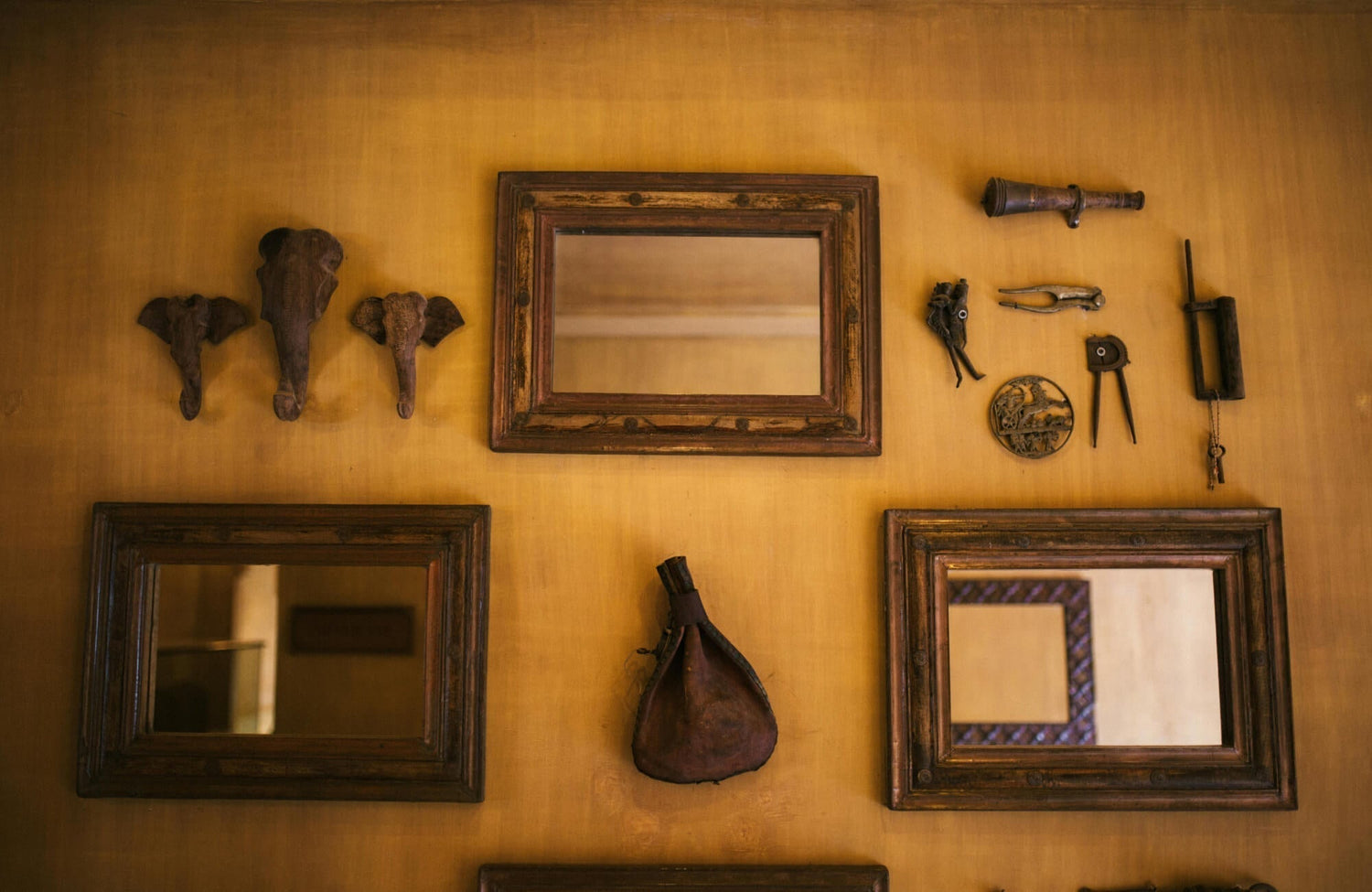
Genuine vintage mirrors often show patina and oxidation that feel irregular and organic rather than decorative. These changes usually appear gradually, with variation in tone, depth, and placement that reflects years of exposure to air, moisture, and light. You might notice darker areas near edges or backing points where aging tends to occur first. This kind of wear rarely looks uniform or symmetrical. By contrast, artificially aged finishes often repeat the same marks across the surface. Natural aging feels incidental, not planned.
Subtle Irregularities in Glass and Reflection
Older mirrors frequently show slight distortions in their reflection, especially when viewed from an angle. This can come from early glass-making methods that didn’t produce perfectly flat surfaces. The reflection may ripple gently or appear slightly softened rather than crisp. These irregularities are usually subtle and easy to miss unless you’re looking closely. Modern vintage-inspired mirrors often aim for visual clarity instead. When the reflection feels too perfect, it can be a sign of newer glass.
Hand-Finished vs Machine-Perfect Frames
Vintage mirror frames often carry small inconsistencies that suggest they were shaped or finished by hand. You might notice uneven carving depth, minor asymmetry, or slight variations in molding details. These imperfections don’t look sloppy; instead, they feel human and intentional for the time. Machine-made frames, on the other hand, tend to look identical from one edge to the next. When a frame feels overly precise, it’s worth questioning its age. True vintage pieces rarely aim for perfection.
Thickness and Weight as Early Clues
The physical weight and thickness of a mirror can offer early hints about its age. Older mirrors often use thicker glass and heavier backing materials, which gives them a more substantial feel. When lifted, they tend to feel denser than modern reproductions. This extra weight comes from both the glass itself and the construction methods used at the time. While weight alone isn’t definitive, it can support other visual clues. Lighter mirrors with thin profiles are more commonly modern.
When Wear Looks Too Even to Be Authentic
One of the biggest red flags is wear that looks evenly distributed across the entire mirror. Natural aging usually happens unevenly because different areas experience different levels of exposure and handling. When distress appears balanced or repeated in predictable spots, it often points to intentional aging. This kind of wear can look convincing at a distance but feels artificial up close. Authentic vintage mirrors tend to show randomness rather than pattern. Paying attention to where and how wear appears helps separate age from styling.

Materials That Distinguish Vintage From Vintage-Inspired
Materials often tell a clearer story than style alone, especially when it comes to mirrors that claim a certain age. Frame construction, glass, and hardware tend to reflect the tools and techniques available at the time a piece was made. Taking a closer look at what the mirror is actually built from can help confirm whether it’s truly vintage or simply inspired by the past.
Solid Wood, Gesso, and Traditional Frame Construction
True vintage mirrors are commonly built from solid wood rather than engineered or composite materials. You may also find layers of gesso beneath painted or gilded finishes, which was a traditional method for creating depth and texture. Over time, these materials tend to crack, soften, or wear in ways that feel natural rather than decorative. Modern vintage-style frames often imitate this look, but the underlying materials behave differently. When you examine edges or worn areas, solid wood and gesso usually reveal themselves. Those details can quietly confirm a mirror’s age.
Early Metals vs Modern Replicas
Metal elements on vintage mirrors often have a weight and finish that feel different from newer reproductions. Older metals may show subtle pitting, soft oxidation, or color shifts that develop slowly with exposure. These changes usually don’t look polished or uniform. Modern replicas, by comparison, often rely on coatings or treatments to mimic age. While convincing at first glance, they tend to lack the depth and irregularity of true aging. Paying attention to how the metal has worn can reveal whether time or technique did the work.
Old Glass vs Modern Silvering Techniques
The glass itself can be one of the strongest indicators of age. Older mirrors were made using silvering methods that often result in slight clouding, dark spots, or edge deterioration over time. These changes usually appear gradually and unevenly, especially near the perimeter. Modern mirrors use more consistent silvering techniques that produce a cleaner, clearer reflection. Even when distressed, newer glass often looks intentionally altered rather than naturally aged. Subtle flaws in old glass tend to feel settled rather than applied.
The Role of Backing Materials and Hardware
Backing materials and hardware are easy to overlook, but they often provide valuable clues. Vintage mirrors may use wood panels, paper backings, or early fasteners that differ from modern hanging systems. Nails, brackets, and screws can reflect the era in which the mirror was made. Newer pieces usually rely on standardized hardware and modern adhesives. When the back of a mirror feels as considered as the front, it’s often a sign of authenticity. Taking a moment to check what’s hidden can be surprisingly informative.
Why Some Materials Didn’t Exist in Certain Eras
One of the simplest ways to spot a vintage-inspired piece is to notice materials that didn’t exist during the claimed period. Certain engineered woods, plastics, or finishes are distinctly modern, even when styled to look old. If a mirror includes materials that only became common in recent decades, that’s a strong indicator it isn’t truly vintage. This doesn’t make the piece less attractive, but it does change its story. Understanding when materials entered common use helps separate historical accuracy from aesthetic influence.

Style, Era Accuracy, and Design Context
Style can be one of the trickiest clues when trying to determine a mirror’s age. Many pieces borrow visual references from historical periods without fully adhering to the design rules that defined those eras. Looking closely at proportions, decorative choices, and overall context helps clarify whether a mirror truly aligns with a specific period or is simply drawing inspiration from it.
Common Design Motifs by Era
Every design era tends to repeat certain motifs that show up across furniture, architecture, and decorative objects. These can include specific carving patterns, frame profiles, or ornamental details that were popular during a particular time. When a mirror is genuinely vintage, those motifs usually feel consistent and purposeful rather than mixed. Vintage-inspired mirrors often reference one or two familiar details without following the full design language of the era. This can result in pieces that feel broadly traditional but not historically grounded. Recognizing recurring motifs helps narrow down whether a mirror truly belongs to a period or is loosely styled.
Proportions That Match or Miss the Period
Proportion plays a quiet but important role in era accuracy. Mirrors from earlier periods were designed to suit the scale of rooms, furniture, and wall space common at the time. As a result, their height, width, and frame depth often feel more restrained than modern designs. Vintage-inspired mirrors sometimes stretch or slim these proportions to suit contemporary interiors. While that can look appealing, it often signals a modern reinterpretation rather than true age. When proportions feel noticeably exaggerated or unusually minimal, it’s worth questioning the mirror’s origin.
Decorative Details That Feel Historically Off
Decorative details can quickly reveal whether a mirror is historically accurate or simply styled to look old. Certain finishes, embellishments, or carving styles were never commonly used together in the same era. When a mirror combines details that don’t historically align, it often points to a vintage-inspired design. These choices are usually made to appeal visually rather than reflect period accuracy. True vintage mirrors tend to show a more cohesive decorative approach. When details feel slightly mismatched, it’s often because they were selected for effect, not authenticity.
Why Era Labels Can Be Misleading
Era labels are often used loosely, especially in marketing and product descriptions. Terms like “antique,” “vintage,” or “period-style” may describe an overall aesthetic rather than an actual age. Without supporting details, these labels don’t offer much certainty. It’s more helpful to examine the mirror’s proportions, materials, and construction together. Cross-checking those elements often tells a clearer story than the name alone. In many cases, the mirror itself reveals more than the label attached to it.

Provenance, Labels, and Seller Claims
Once you move past era labels and surface descriptions, provenance becomes the next layer worth examining. Elements like maker’s marks, original hardware, and credible sourcing can either reinforce what the mirror appears to be or raise new questions. Looking at these details alongside visual and material clues helps build a more complete and reliable picture of the mirror’s history.
Maker’s Marks, Stamps, and Labels
Maker’s marks, stamps, or labels can offer valuable insight into a mirror’s origin, especially when they’re consistent with the claimed era. These markings may appear on the back, within the frame, or occasionally on hardware. Over time, genuine labels tend to show wear that matches the rest of the piece. However, the absence of a mark doesn’t automatically mean a mirror isn’t vintage, because many older pieces were never labeled. What matters more is whether any markings present feel believable and age-appropriate. For instance, crisp, modern printing on a supposedly old label can raise questions.
Original vs Replacement Hardware
Hardware often tells a quieter but equally important story. Original hanging systems, nails, or brackets usually reflect the tools and materials of their time. Over the years, some hardware may be replaced for safety or stability, which isn’t uncommon. The key is whether replacements feel respectful of the original construction or obviously modern. For example, brand-new screws paired with heavily aged frames can feel mismatched. Looking at how hardware aligns with the rest of the mirror helps clarify what’s original and what’s been updated.
Estate Pieces vs Reproductions
Estate pieces often come with some level of context, such as where they were found or how they were used. This background doesn’t guarantee authenticity, but it does add credibility. Reproductions, on the other hand, are typically sold without much history beyond style descriptions. That difference in sourcing can be telling. When a mirror has a traceable path, even loosely, it supports its claim of age. A complete lack of backstory doesn’t mean a piece lacks value, but it may suggest it’s vintage-inspired.
Marketing Language to Read Carefully
Certain phrases are commonly used to blur the line between vintage and vintage-inspired. Words like “antique-style,” “period look,” or “inspired by” often signal modern production. Even terms like “vintage” can be used loosely. It helps to read descriptions slowly and look for specifics rather than broad claims. For example, vague language without dates, materials, or sourcing should prompt further questions. Marketing can shape perception, but details reveal reality.
Questions Worth Asking Before Buying
Asking the right questions can quickly clarify a mirror’s story. Inquiring about age, materials, repairs, or previous ownership often reveals how much the seller actually knows. It’s also useful to ask for additional photos, especially of the back and hardware. These details can confirm or contradict what’s being claimed. A seller who’s transparent and willing to provide information usually inspires more confidence. When answers are unclear or inconsistent, it’s often a sign to pause and reassess.

When Vintage-Inspired Might Be the Better Choice
Authentic vintage mirrors bring character, but they don’t always align with how modern spaces are used day to day. In some rooms, a vintage-inspired mirror simply fits better because it offers predictable sizing, safer construction, and easier placement. Looking at how the mirror needs to function, not just how it looks, often leads to a choice that feels more practical and less forced over time.
Durability and Safety Considerations
Authentic vintage mirrors were made long before modern safety standards were established, which can affect how they perform today. Older glass may be thinner, more fragile, or paired with backing materials that have weakened over time. Because of this, they can be more prone to cracking or shifting once installed, especially in busy areas. This matters even more in bathrooms or hallways, where moisture and daily use come into play. Vintage-inspired mirrors are typically built with reinforced backing and updated mounting systems, making them more reliable for modern living. You still get the aged look, but with materials that are better suited for everyday use.
Size and Scale for Modern Interiors
Many true vintage mirrors were designed for older homes with smaller rooms and different proportions. When placed in modern spaces, they can sometimes feel undersized or visually lost, especially above wider vanities or large wall surfaces. Even a beautifully aged piece can struggle to anchor the room if the scale is off. Vintage-inspired mirrors are often designed with today’s layouts in mind, offering larger dimensions and stronger visual presence. This helps them feel more balanced in open or contemporary interiors.
A great example of this is our Clementine Mirror in Antiqued Gold Leaf, shown above, which brings a vintage feel without overwhelming the space. Its lean profile and softly curved, stepped frame keep the look refined while staying properly scaled for tighter vanities and modest wall widths. The antiqued gold finish adds warmth and character, but the overall silhouette remains clean and controlled. This balance makes it easier to achieve a timeless look that feels intentional in a modern layout rather than visually heavy or out of place.
Consistency for Paired or Multiple Mirrors
Using authentic vintage mirrors in pairs can be challenging because no two pieces age exactly the same way. Differences in patina, frame thickness, or proportions can become noticeable when symmetry matters. In spaces like double vanities, that variation can subtly disrupt the sense of balance. Vintage-inspired mirrors make consistency much easier to achieve because finishes and dimensions are intentionally matched. This creates a cleaner, more cohesive look across the space. You still get character, but without the visual tension that uneven aging can introduce.
Budget and Availability Factors
Finding the right authentic vintage mirror often requires time, patience, and flexibility. Sizes, styles, and conditions vary widely, and prices can rise quickly depending on rarity and restoration needs. Because of this, planning a space around a true antique can complicate timelines and budgets. Vintage-inspired mirrors are generally more accessible and easier to source in specific sizes and finishes. This makes planning simpler, especially when working within a set budget. For many homeowners, that predictability makes the design process far less stressful.
Mixing Vintage-Inspired Pieces With True Antiques
Choosing vintage-inspired mirrors doesn’t mean avoiding authentic vintage pieces altogether. In fact, combining the two can create a more layered and thoughtful space. A true antique mirror can serve as a focal point, while vintage-inspired pieces support the rest of the room. This approach keeps the design from feeling overly themed or forced. It also allows antiques to be placed where wear and tear are less of a concern. When done intentionally, the mix feels collected and personal rather than staged.

Minimalist Vintage-Inspired Mirrors for a Clean Look
While authentic vintage mirrors have undeniable charm, they aren’t always the best match for modern interiors. Simpler, vintage-inspired designs can feel more cohesive in spaces that favor clean lines and reliable materials. In these cases, the reference to the past is quieter but often more practical.
Why Minimalist Vintage-Inspired Mirrors Suit Modern Homes
Minimalist vintage-inspired mirrors focus on restraint rather than embellishment. Instead of layered carvings or distressed finishes, they rely on proportion, silhouette, and material quality to create visual interest. This makes them easier to integrate into contemporary layouts, especially spaces with clean cabinetry, streamlined lighting, or modern fixtures. Because the design is quieter, the mirror feels intentional rather than styled for effect. Over time, this simplicity tends to age better than more ornate pieces.
Durable Finishes That Balance Style and Longevity
Finishes like brushed brass and matte black are popular because they bridge vintage influence and modern durability. Brass introduces warmth and a subtle historical reference without relying on artificial distressing. Matte black, on the other hand, offers contrast and structure while resisting visible wear and fingerprints. Both finishes tend to hold up well in daily-use spaces like bathrooms and entryways. Because they are designed for modern environments, they feel less precious and easier to live with long-term.
Choosing Modern Shapes That Still Feel Timeless
Shape plays a quiet but important role in how a vintage-inspired mirror fits into a modern space. Round mirrors soften sharp lines, which helps balance rooms filled with straight edges and flat surfaces. Arched silhouettes reference classic architectural forms, offering a gentle nod to tradition while still feeling current. Square mirrors feel more grounded and structured, making them a natural fit for contemporary bathrooms and clean-lined interiors. For a softer, more relaxed look, organic shapes introduce movement and warmth without relying on heavy ornamentation. When the shape feels right, the mirror reads as timeless rather than tied to a passing trend.
A good example of this balance is our Esmeralda Small Mirror in Polished Brass, shown above, where a subtle arched silhouette softens the clean lines of a modern double vanity. The slim, earth-toned aluminum frame keeps the profile light and understated, so the mirror feels intentional rather than decorative. Its polished brass finish adds warmth without overpowering the space, making it easy to pair with both classic wood cabinetry and contemporary fixtures. The result is a vintage-inspired look that feels calm, refined, and well-suited to everyday use.
When a Vintage-Inspired Mirror Is the Smarter Choice
In spaces that demand consistency, safety, and predictable sizing, vintage-inspired mirrors often make more sense than authentic antiques. Modern construction methods provide reinforced backing and reliable mounting, which is especially important in bathrooms or high-use areas. These mirrors also make it easier to match finishes or dimensions across a room. While they may lack decades of history, they offer peace of mind and design flexibility. For many homes, that trade-off feels practical rather than limiting.
Choosing a Mirror That Fits Your Space and Lifestyle
Knowing the difference between a truly vintage mirror and a vintage-inspired one makes it easier to choose with confidence. Details like wear, materials, construction, and history all play a role, but they tend to make the most sense when you look at them together. Instead of focusing on one standout feature, it helps to step back and consider what the mirror actually brings to the space. That perspective usually reveals whether the piece feels authentic, practical, or somewhere in between.
If you’re still unsure which direction works best for your home, our design consultation can help you think it through with a clearer perspective. Walking through your layout, wall space, and how you actually use the mirror day to day often brings clarity faster than scrolling or guessing. Instead of focusing on labels, the conversation stays centered on what will feel right in your space. When a mirror fits naturally into your routine and layout, it’s more likely to feel comfortable and work well for years to come.