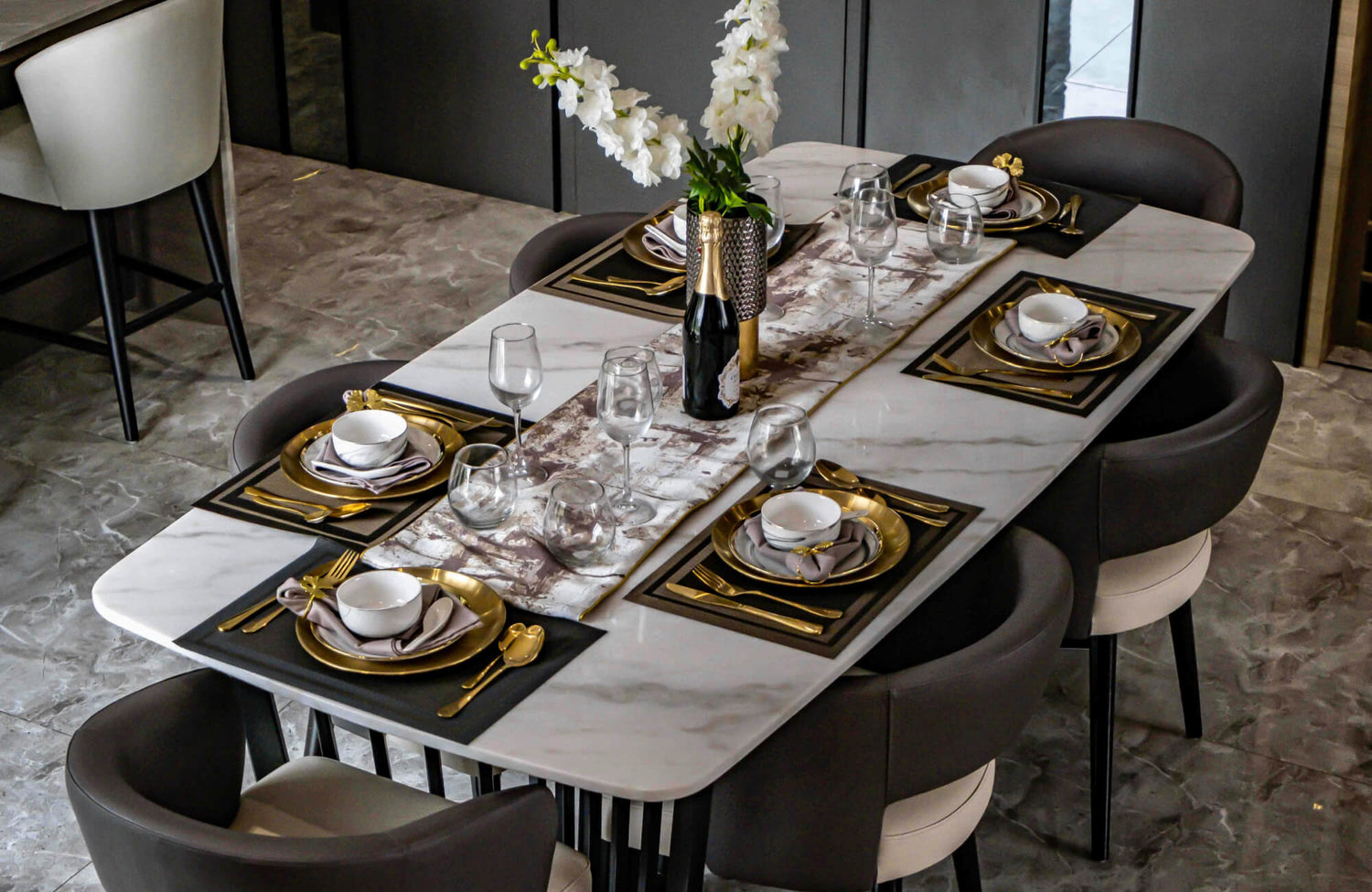
A marble dining table instantly sets the tone in a room. Its weight, veining, and surface finish naturally draw attention, which means the chairs around it matter more than most people expect. The wrong pairing can feel heavy, awkward, or out of balance, while the right one makes the entire dining space feel intentional and comfortable. In this blog, we’ll break down which dining chairs pair best with a marble table by looking at scale, materials, silhouettes, and layout. From armless designs to armchairs and nearby sideboards, you’ll learn how to create a dining setup that feels cohesive, functional, and easy to live with.

Start by Balancing Marble Weight and Chair Presence
Marble dining tables tend to make a strong first impression, whether that comes from a thick tabletop, expressive veining, or a sculptural base. Because of that presence, the chairs around it play a bigger role than many people expect in how balanced the room feels. Below, we’ll talk through why marble naturally anchors a dining space and how choosing the right chair presence helps the table feel intentional rather than overwhelming.
Why Marble Tables Visually Anchor the Dining Space
Marble tables naturally act as an anchor in a dining room because the material itself carries visual and physical weight. Even lighter marbles tend to feel substantial once you factor in slab thickness, veining movement, and how light reflects off the surface. Because the eye is drawn to the table first, everything around it tends to be read in relation to that mass. This is why marble rarely fades into the background, even in more minimal interiors.
The table base also shapes how grounded the piece feels in the room. For instance, pedestal bases concentrate weight at the center, while four-leg designs spread that weight outward and visually occupy more floor space. In both cases, the table establishes a sense of permanence. Once you recognize that anchoring effect, it becomes easier to understand why chair selection needs to respond to it rather than ignore it.
Choosing Chairs That Offset, Not Match, Stone Weight
Instead of trying to match marble’s visual heaviness, chairs often work better when they introduce a sense of contrast. Lighter wood tones, slimmer legs, or more open silhouettes help keep the area around the table from feeling too dense. This is especially important in dining rooms that share space with kitchens or living areas, where visual flow matters more. By offsetting the stone, the room feels more relaxed and easier to move through.
That said, offsetting does not mean choosing chairs that feel insubstantial. Chairs still need enough presence to hold their own next to a marble surface. For example, a streamlined wood chair with a supportive frame or a lightly upholstered seat can soften the table without disappearing beside it. When contrast comes from proportion rather than extremes, the overall setup feels more natural and considered.
When Substantial Chairs Actually Work With Marble
There are situations where more substantial chairs make sense, especially when the marble table itself is relatively restrained. Tables with thinner profiles, softer veining, or simpler bases often benefit from chairs that add a bit more visual weight. In these cases, fuller silhouettes or upholstered designs help balance the table instead of competing with it. This pairing tends to work well in larger dining rooms where there is already enough space for both elements to breathe.
Material choice also plays an important role here. Upholstery, leather, or textured wood introduces warmth that offsets marble’s cool, hard surface. Because the contrast is tactile rather than purely visual, the space feels layered instead of heavy. When proportion, material, and room size are considered together, substantial chairs can actually make a marble dining setup feel more welcoming and complete.

Armless Dining Chairs for Clean Lines and Flexible Layouts
Armless dining chairs tend to work especially well with marble tables because they let the table remain the visual centerpiece. Without arms interrupting the silhouette, the space feels more open and adaptable, which is helpful in both everyday dining and entertaining setups.
Why Armless Chairs Feel Natural With Marble Tables
Armless chairs allow the eye to move freely around the table, which helps the marble surface stay front and center. Because marble already has visual weight through veining and thickness, simpler seating keeps the overall composition from feeling crowded. This is especially noticeable in dining rooms where the table is visible from multiple angles. Without arms, chairs slide in neatly and don’t compete with the table’s silhouette. As a result, the setup feels cleaner and more intentional. That balance makes armless chairs a natural partner for stone surfaces.
Ideal Room Sizes and Layouts for Armless Seating
Armless chairs are often associated with smaller dining areas, but they work just as well in larger rooms. In compact spaces, they help keep circulation paths clear and make it easier to move around the table. In open layouts, they maintain clean sightlines and prevent the dining area from feeling visually boxed in. Because the chairs tuck in easily, the table reads as more streamlined from a distance. This flexibility makes armless seating suitable for a wide range of room sizes. It’s less about square footage and more about flow.
Comfort Considerations That Matter More Than Armrests
Comfort isn’t automatically sacrificed when you remove armrests. Seat depth, back support, and cushioning often matter more than whether a chair has arms. A well-shaped backrest can provide plenty of support during longer meals. Upholstered or contoured seats also go a long way toward comfort, especially in dining spaces used often. Armless chairs encourage easier movement, which can actually feel more comfortable over time.
A great example is our Rita Dining Chair in Taupe above, which pairs beautifully with marble thanks to its clean, armless profile. The cushioned seat and backrest offer lasting comfort without adding visual bulk, while the solid oak base brings warmth that balances the coolness of stone. Its wire-brushed finish highlights natural grain and subtle texture, helping the chair feel grounded yet light. Together, those details make it an easy, comfortable match for both everyday dining and entertaining around marble tables.

Using Armchairs Without Overpowering the Table
Armchairs can work beautifully with a marble dining table when they’re used with intention. Rather than filling every seat with arms, the focus is on placement, proportion, and silhouette so the table remains the visual anchor. Below, we’ll look at where armchairs make the most sense, which styles pair best with marble, and how to mix them with armless chairs without overwhelming the space.
Armchairs at the Head of the Table for Visual Framing
Placing armchairs at the head of the table is one of the easiest ways to introduce structure without crowding the layout. This setup naturally frames the table and signals a sense of balance, especially in rectangular dining rooms. Because only two chairs have arms, the marble surface still feels open and dominant. Armchairs at the ends also make the arrangement feel intentional rather than overdesigned. They add presence where it matters most without repeating visual weight around the entire table. As a result, the space feels polished but still relaxed.
Slim Arm Profiles That Work Best With Marble
When pairing armchairs with marble, slimmer arm profiles tend to work best. Thin, open arms keep the chair visually light, which helps prevent competition with the stone top. For instance, gently curved or tapered arms feel softer and more refined than boxy, enclosed designs. This matters because marble already brings strong lines and visual weight to the table. A lighter armchair silhouette supports the table rather than fighting it. Over time, this restraint helps the dining setup feel balanced and comfortable.
A great example of this approach is our Leticia Outdoor Dining Chair in Cream above, which features a delicately curved, open arm profile that feels supportive without adding visual bulk. Its slim black aluminum frame keeps the silhouette light, while the off-white upholstery and woven wicker details introduce softness against stone surfaces. Because the arms stay refined and unobtrusive, the chair complements marble tables rather than competing with them.
Mixing Armchairs and Armless Chairs Successfully
As mentioned earlier, mixing armchairs with armless chairs can create a layered arrangement that feels intentional rather than overly structured. Armchairs add definition at key spots, often at the head of the table, while armless chairs keep the rest of the layout feeling open and easy to move around. This setup also works well for daily use, since armless chairs slide in and out without much effort. From a visual standpoint, the contrast adds interest without making the space feel busy. Because the armchairs are used selectively, they never compete with the marble top. Instead, the overall setup feels balanced, comfortable, and thoughtfully pulled together.

Upholstered vs Non-Upholstered Chairs Around Marble
Marble tables naturally bring a cool, polished presence into a dining room, which makes the choice between upholstered and non-upholstered chairs especially important. The materials used for seating influence not only comfort, but also how warm or relaxed the space feels overall. Here, we’ll look at how different chair finishes interact with marble and how those choices affect both daily use and long-term balance.
When Upholstery Helps Balance Cold Stone Surfaces
Upholstered dining chairs can soften the visual and physical coolness of a marble table in a way that immediately feels more inviting. Fabric or leather introduces warmth, which helps counterbalance the smooth, reflective nature of stone. This pairing works especially well in rooms that already lean modern or minimal, because the upholstery adds comfort without clutter. Upholstered seats also make longer meals more comfortable, which matters in dining spaces used for gatherings or everyday family time. However, the key is choosing upholstery that feels tailored rather than bulky. When the profile stays clean, upholstery supports the marble instead of overpowering it.
A strong example of this balance is our Gideon Dining Chair in Grey, which pairs tailored upholstery with a warm metal base for a look that feels both refined and grounded. The dark gray faux leather introduces softness and visual warmth, helping offset the cool, polished surface of marble without adding unnecessary bulk. Its exposed brass-toned steel frame keeps the silhouette structured and modern, so the chair feels substantial without overpowering the table. Together, the contrast in texture and tone creates a dining setup that feels comfortable, intentional, and well-suited for everyday use.
Wood, Cane, and Metal Chairs for a Lighter Look
Non-upholstered chairs made from wood, cane, or metal tend to keep the dining space feeling lighter and more open. These materials allow the marble surface to remain the focal point while adding subtle texture around it. For instance, wood chairs introduce warmth through natural grain, while cane adds softness without visual heaviness. Metal chairs, especially in thinner profiles, echo the crispness of marble while keeping the overall look streamlined. Because these materials don’t absorb light the way upholstery does, they help the room feel more breathable. This makes them especially effective in smaller dining areas or open-plan layouts.
Maintenance and Longevity With Everyday Dining Use
Every day use should always factor into the decision between upholstered and non-upholstered seating. Upholstery can require more care, especially in homes where spills, pets, or frequent meals are part of daily life. Leather tends to be more forgiving than fabric, but it still benefits from regular upkeep. Non-upholstered chairs are generally easier to clean and maintain, which makes them appealing for busy households. Over time, durability becomes just as important as appearance. Choosing materials that suit how the space is actually used helps avoid frustration later.
Choosing Texture Without Overdecorating the Space
Texture plays an important role in balancing marble, but it works best when used with restraint. Too many competing textures can make the dining area feel busy, especially when marble already commands attention. Upholstery, woven seats, or wood grain should feel intentional rather than layered for effect. For example, pairing a marble table with lightly textured chairs keeps the look grounded without feeling overdone. The goal is to add softness and contrast without distracting from the table itself. When texture is chosen carefully, the space feels calm, cohesive, and easy to live with.

Chair Leg Styles That Complement Marble Tables
Chair legs may seem like a small detail, but with marble tables, they play a much bigger role in how balanced the space feels. Because marble already carries visual weight, the wrong leg style can quickly make the dining area feel heavy or mismatched. Below, we’ll take a closer look at how different leg styles interact with marble and when each option works best.
Tapered vs Straight Legs With Marble Tops
Tapered chair legs often work well with marble tables because they visually lighten the seating. The gradual narrowing draws the eye downward without adding bulk, which helps balance the solid presence of stone. Straight legs feel more structured and grounded, which can be a good fit when the marble has bold veining or a thicker edge. That said, straight legs need careful proportion so they don’t overpower the table. The key is choosing a leg profile that offsets the marble’s weight rather than matching it directly. When the balance feels right, the table remains the clear focal point.
Metal Legs With Stone Tables: When It Works Best
Metal chair legs can pair beautifully with marble when the profile stays slim and refined. Thin metal legs echo the clean lines of stone without introducing visual heaviness. This combination often works best in modern or transitional dining spaces where contrast adds interest. However, mixing multiple metal finishes in one area can feel busy if not handled carefully. Sticking to one dominant tone keeps the look cohesive. When done thoughtfully, metal legs add structure while letting the marble surface stand out.
Matching Chair Legs to Pedestal vs Four-Leg Tables
The table base should naturally guide the style of chair legs you choose. Pedestal tables concentrate most of their visual weight at the center, so lighter chair legs help keep the setup from feeling grounded or bottom-heavy. This matters even more with marble tops, since the stone already draws a lot of attention on its own. On the other hand, four-legged tables spread weight more evenly, which allows chairs to have slightly thicker or more defined legs without overwhelming the space. Even then, it works best when the chairs complement the table rather than mirror it exactly. When the legs respond to the table’s structure instead of competing with it, the dining area feels more cohesive and thoughtfully arranged.
Leg Thickness and Visual Balance
Leg thickness plays a bigger role in the overall feel of a dining setup than most people expect. Thinner legs tend to keep the space feeling open, which is especially helpful when the marble top is large or has bold veining. Thicker legs can work as well, but they need to feel clearly proportional to the table’s scale to avoid visual heaviness. For example, a slimmer marble top usually pairs better with refined, lighter legs rather than chunky ones. When proportions are slightly off, the room can start to feel crowded even if there’s plenty of floor space. Paying attention to leg thickness helps the entire dining area feel more balanced and visually at ease.
Mixing Finishes Without Overdoing It
Mixing finishes can add depth and personality to a marble dining setup, but a lighter touch usually works best. When too many materials compete in one area, the space can start to feel busy rather than layered. Subtle connections often feel more natural than exact matches. For instance, warm wood chair legs can quietly echo softer tones in the marble veining without copying it outright. This approach keeps the marble table as the clear focal point while still creating visual flow. When finishes feel thoughtfully coordinated instead of forced, the dining space comes together in a way that feels calm and intentional.

How Sideboards and Storage Pieces Influence Chair Choice
Dining chairs rarely live in isolation, especially in rooms where a marble table sits alongside a sideboard or storage piece. Because everything shares the same visual and physical space, these elements naturally affect one another. Thinking about chairs and storage together helps the dining area feel intentional rather than pieced together over time. Below, we’ll take a closer look at how materials, spacing, and balance work together when chairs and sideboards occupy the same zone.
Coordinating Chair Materials With Dining Sideboards
When chair materials relate to a nearby sideboard like our Brooke Sideboard in Black above, the dining space tends to feel calmer and more cohesive. This doesn’t mean finishes need to match exactly, but they should at least feel like they belong in the same conversation. For example, wood chairs often feel more grounded when they echo the tone or texture of a wood sideboard nearby. Upholstered chairs can also work well when the sideboard has softer detailing or warmer finishes. The key is connection rather than duplication. When materials feel intentionally related, the marble table naturally stands out instead of competing with everything around it.
Balancing Wood Tones Near Marble Surfaces
Marble already brings a strong visual presence, which makes nearby wood tones especially noticeable. Lighter woods can help soften the stone and keep the room from feeling too formal or heavy. Darker wood tones add contrast, but they tend to work best when they’re used consistently across chairs and storage. Mixing several different wood finishes can pull attention away from the marble and make the space feel unsettled. Instead, choosing one main wood tone with subtle variation usually feels more balanced. That approach lets the stone remain the focal point while the room still feels warm and layered.
Spacing and Clearance for Comfortable Movement
Sideboards don’t just affect how the room looks; they also shape how well the space functions. Chairs need enough room to slide back comfortably without bumping into storage behind them. When spacing is tight, even well-designed chairs can become frustrating to use day to day. Allowing proper clearance between the table, chairs, and sideboard makes the room easier to move through. This matters even more in dining rooms that see daily use, not just special occasions. A layout that supports natural movement almost always feels better over time.
Creating a Unified Dining Zone, Not Isolated Pieces
A dining room feels most comfortable when it reads as one complete space rather than a collection of separate furniture decisions. Chairs, tables, and sideboards should quietly support one another instead of competing for attention. This often comes down to repeating finishes, aligning proportions, or choosing silhouettes that feel visually compatible. When everything feels considered together, the room naturally looks more settled. The marble table anchors the space, while chairs and storage reinforce it without stealing focus. That sense of cohesion is what makes a dining area feel easy to live with.
Choosing Dining Chairs That Truly Work With Marble
Pairing the right dining chairs with a marble table comes down to balance, proportion, and how the space is actually used day to day. Marble naturally carries visual weight, so chairs need to support that presence without competing with it. Whether you lean toward armless silhouettes, selective armchairs, upholstered seats, or lighter materials, the best pairings feel intentional rather than overstyled. When chairs respond thoughtfully to the table and surrounding pieces, the dining area feels comfortable, cohesive, and easy to live with.
If you’re still weighing which chair styles truly make sense for your layout, our design consultation is here to help you think it through. We look at room size, circulation space, nearby sideboards, and how you actually use your dining area, because those details often shape the right choice more than style alone. Rather than selecting pieces in isolation, we focus on how everything works together as a complete dining zone. That approach makes it easier to choose chairs that not only look right with marble, but also feel comfortable and natural in everyday use.