
)
)
)
)
)
)
)
)
What Mirror Size Should I Put In A Bathroom?
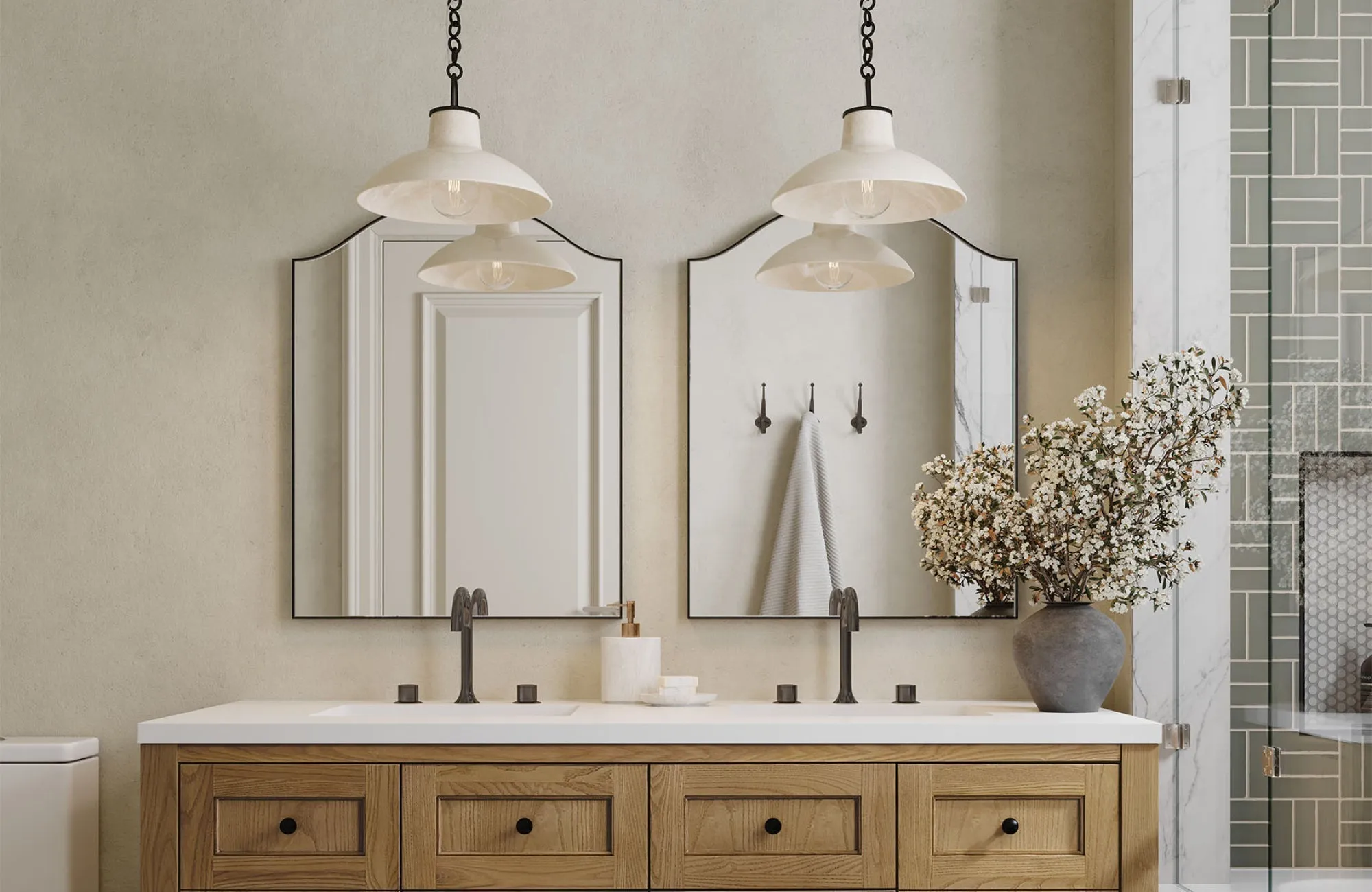
Finding the right mirror size for your bathroom goes beyond style; it also plays a key role in how the space works, feels, and comes together. Whether you're updating a master bath or designing a compact powder room, the mirror you choose can brighten the room, improve daily routines, and bring harmony to the overall layout. In this article, we’ll guide you through the most important factors to consider, helping you choose a mirror that fits both your space and your needs with confidence.
Assessing the Size and Layout of Your Bathroom
Before we can start narrowing down the mirror options, it's helpful to take a step back and look at the bathroom as a whole. Understanding your room’s size and structure sets the foundation for a mirror that fits naturally into the space, neither overwhelming nor underdelivering.
Sizing Mirrors to Fit Ceiling Height
Ceiling height plays a key role in how your mirror feels within the space. Higher ceilings can give more flexibility to incorporate taller mirrors, which naturally draw the eye upward and create a more open, refined atmosphere. In bathrooms with lower ceilings, however, a mirror that’s too tall can feel cramped or disproportionate. Opting for a wider, horizontal mirror in those cases can also visually expand the space and help lift the ceiling line. To determine the ideal height, consider the space between the top of your faucet and the nearest light fixture or ceiling; this gives you a practical boundary for selecting a mirror that feels balanced and well-fitted to the wall.
Considering the Wall Shape
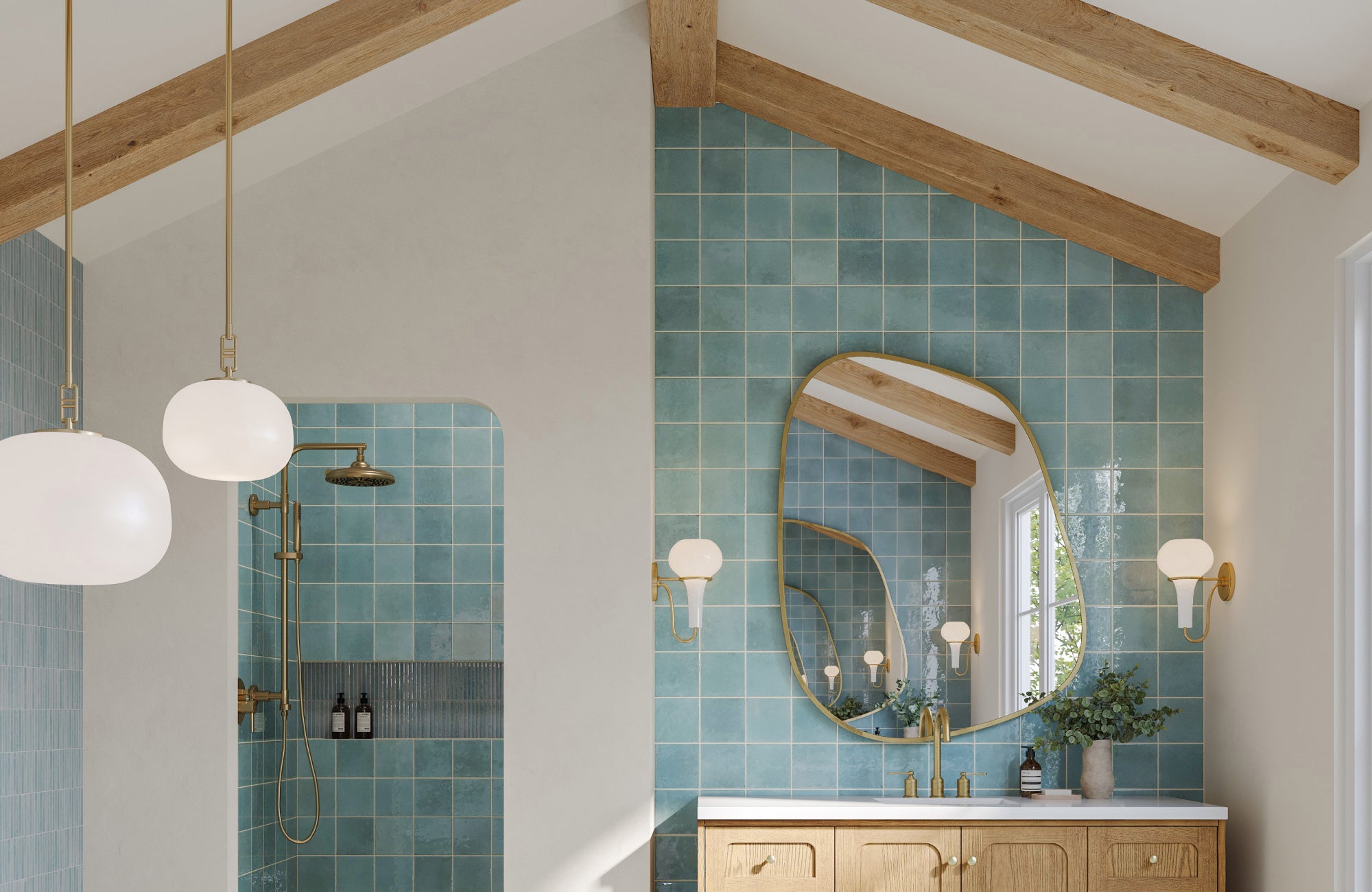
Not all bathrooms offer four flat, uninterrupted walls. If your space includes sloped ceilings, alcoves, or tight corners, it’s worth considering a mirror that’s either custom-sized or uniquely shaped to suit those features. For instance, oval or arched mirrors can help soften the sharp lines of angled walls, while irregular layouts may benefit from a mirror that prioritizes visibility without overwhelming the area. Rather than working around the wall shape, treat it as a chance to choose a mirror that feels intentionally made for your space.
A striking example of this approach is Edward Martin’s Shirley Large Mirror in Antique Brass Iron, which fits seamlessly against the angled ceiling and tiled feature wall, as shown in the photo above. Its soft, organic form complements the geometry of the space without clashing with its bold lines. Its asymmetrical shape also mirrors the natural flow of the ceiling beams while remaining functional and stylish. This pairing shows how the right mirror can elevate even the most unconventional layouts, transforming architectural quirks into intentional and eye-catching design features.
Matching the Mirror to the Vanity
Once you’ve mapped out the overall space, the next logical step is to focus on the vanity. This pairing does more than just affect mirror size; it also determines how unified and comfortable your bathroom feels every day.
Aligning Mirror Width with the Vanity
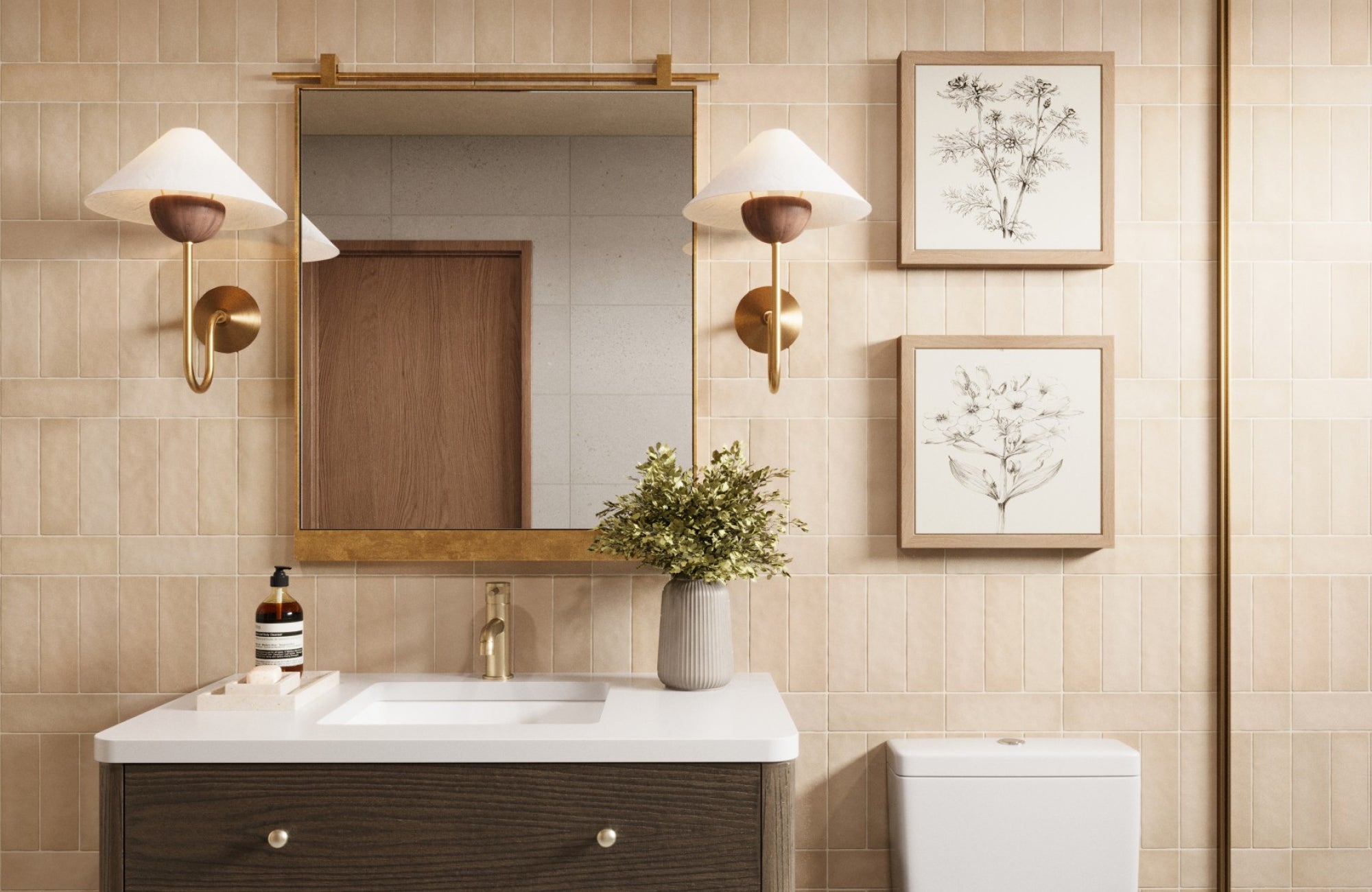
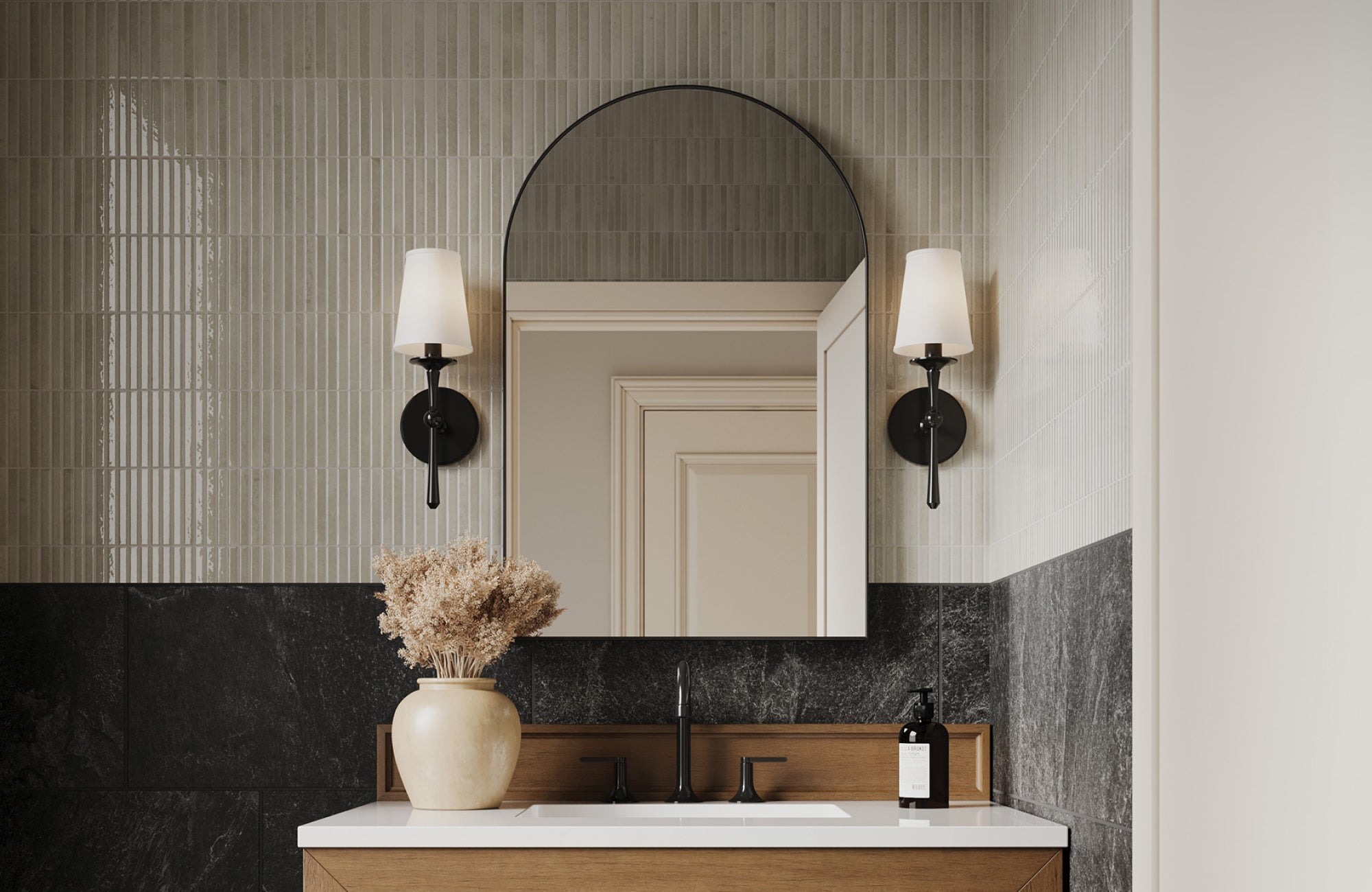
The mirror and vanity should work in visual harmony. A mirror that matches the width of the vanity or falls just slightly inside its edges typically offers the best balance. If it stretches too wide, it can feel oversized; if it’s too narrow, the wall may look incomplete. For example, Edward Martin’s Clancy Small Mirror in Antique Brass paired with the Colton 36" Single Vanity in Sable and a White Zeus Quartz top, as displayed in the photo above, shows how aligning mirror width with the vanity can create a centered, well-scaled focal point. The mirror stops just short of the vanity’s edges, and its warm brass frame ties in with the surrounding sconces; an ideal example of how sizing and coordination elevate the entire space.
Double Vanity Considerations
If your bathroom features a double vanity, the mirror setup becomes a bit more flexible. You’ll need to decide whether to use one large mirror or two separate mirrors. A single large mirror can create a sleek, continuous look, especially in modern designs. But two individual mirrors, one over each sink, can further help personalize the space, particularly when different users have their own needs. If you’re dealing with limited lighting or specific plumbing placements, that might steer the decision one way or the other.
Style Compatibility
Your vanity’s design can guide not just the size but also the shape and feel of the mirror. Floating vanities, for example, often pair well with minimalist, frameless mirrors that echo their light, airy quality. Pedestal sinks, on the other hand, leave more wall space and open the door for more decorative mirrors, especially those with ornate or textured frames. Make sure your mirror complements the vanity’s tone rather than competing with it; this is where proportion and style come together to create a cohesive, well-balanced design.
Accounting for Lighting and Reflection
Lighting and reflection go hand in hand when it comes to mirrors. The size and placement of your mirror can either enhance the lighting in your bathroom or work against it, so it’s equally important to consider how these elements interact before making a final choice.
Mirror Height and Light Fixtures
One of the most common missteps in bathroom design is selecting a mirror without accounting for the lighting placement. Whether you're adding sconces beside the mirror or mounting a fixture above it, the mirror should fit comfortably within that setup. A mirror that's too tall can crowd your lighting and create uneven shadows, while one that's too short may leave your lighting feeling detached and ineffective. Taking a moment to measure the space between your faucet and the planned light fixture further helps ensure the mirror fits comfortably and everything aligns both visually and functionally.
Enhancing Natural Light
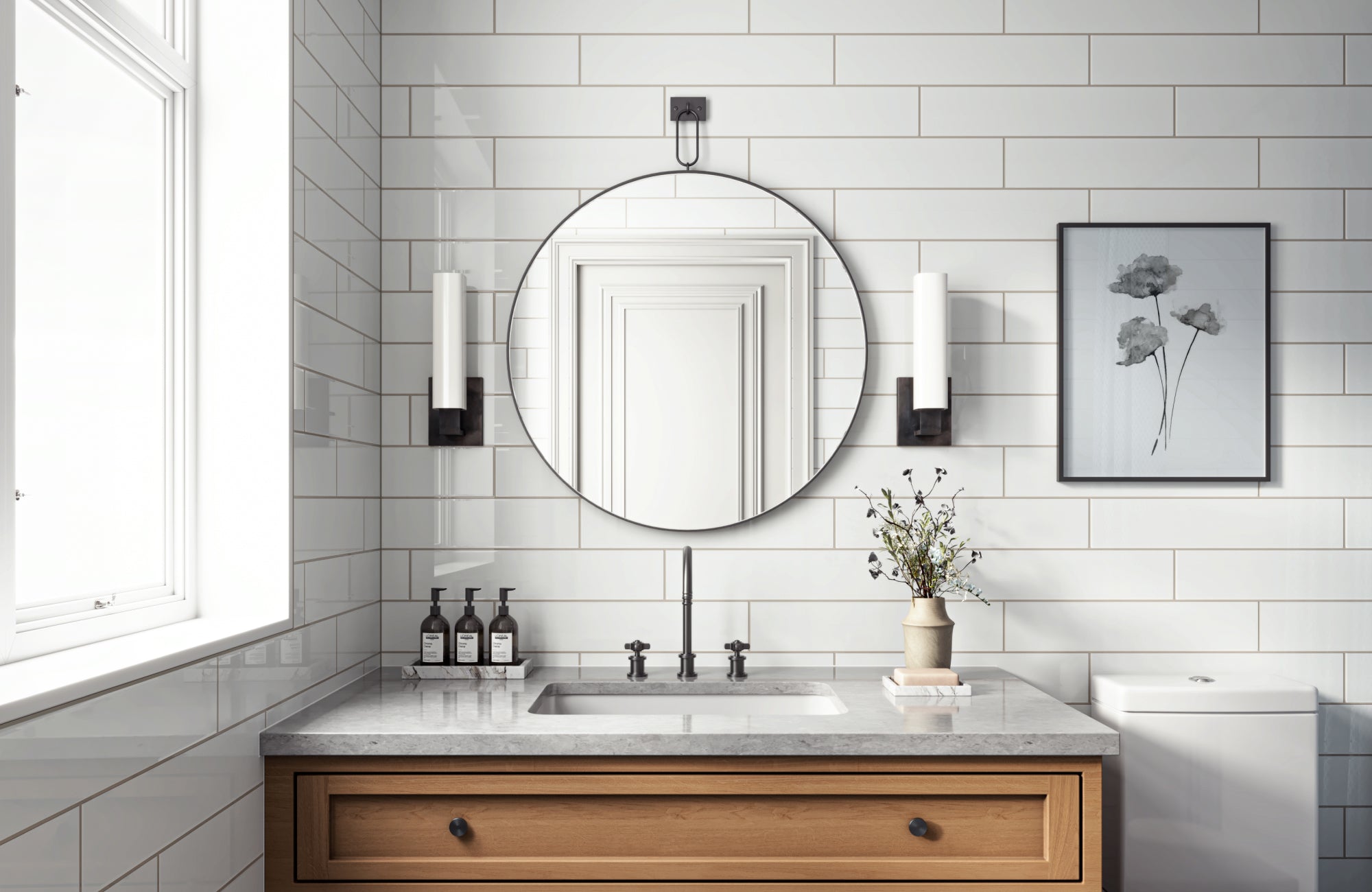
Mirrors are fantastic tools for bouncing daylight deeper into the room. If you have a window nearby, a taller or wider mirror can catch more of that sunlight and reflect it into spaces that would otherwise feel dim. This is also especially helpful in bathrooms without overhead lights or with darker finishes. Think of the mirror as a secondary light source, magnifying what’s already available.
This effect is beautifully demonstrated by Edward Martin’s Fitz Mirror in Antiqued Iron, as displayed in the photo above, which is placed opposite a generous window and flanked by sconces for evening use. Its round shape and reflective surface capture natural light and distribute it evenly across the vanity area. Combined with the soft white tile and warm wood tones, the mirror not only enhances brightness but also contributes to a calm, balanced atmosphere throughout the space.
Avoiding Glare and Uneven Light
Not every mirror pairs well with every lighting setup. Bright or directional lighting can create glare or concentrated reflections when cast onto a large mirror. In these situations, a matte-framed or slightly smaller mirror can further help soften the effect, diffusing light rather than intensifying it. By selecting a mirror that suits both the type and placement of your lighting, you can also maintain a well-lit space that remains comfortable and visually balanced throughout the day.
Exploring Frame, Shape, and Orientation
Once the dimensions are set, it’s time to focus on style. The mirror’s shape, frame, and orientation can all have a noticeable impact on how the room looks and feels, even when the size itself doesn’t change.
Frame Thickness and Size Illusion
A thick, decorative frame can make a bold statement, but it also reduces the usable mirror surface. In smaller bathrooms or spaces where function is a priority, a thinner frame, or even a frameless option, can further help maximize reflection and keep the look light and open. Frameless mirrors tend to blend into the wall, making the space feel larger. However, a substantial frame can serve as a striking focal point, especially in rooms that benefit from added character.
Vertical vs. Horizontal Layout
Orientation changes everything. A vertical mirror emphasizes height and works well in bathrooms with tall ceilings or narrow vanities. It also brings attention upward and can make a room feel more expansive vertically. A horizontal mirror, meanwhile, spreads the space side to side and often pairs better with wide vanities or shared sinks. Your layout and how you want the space to read can further help steer the choice.
Unconventional Shapes
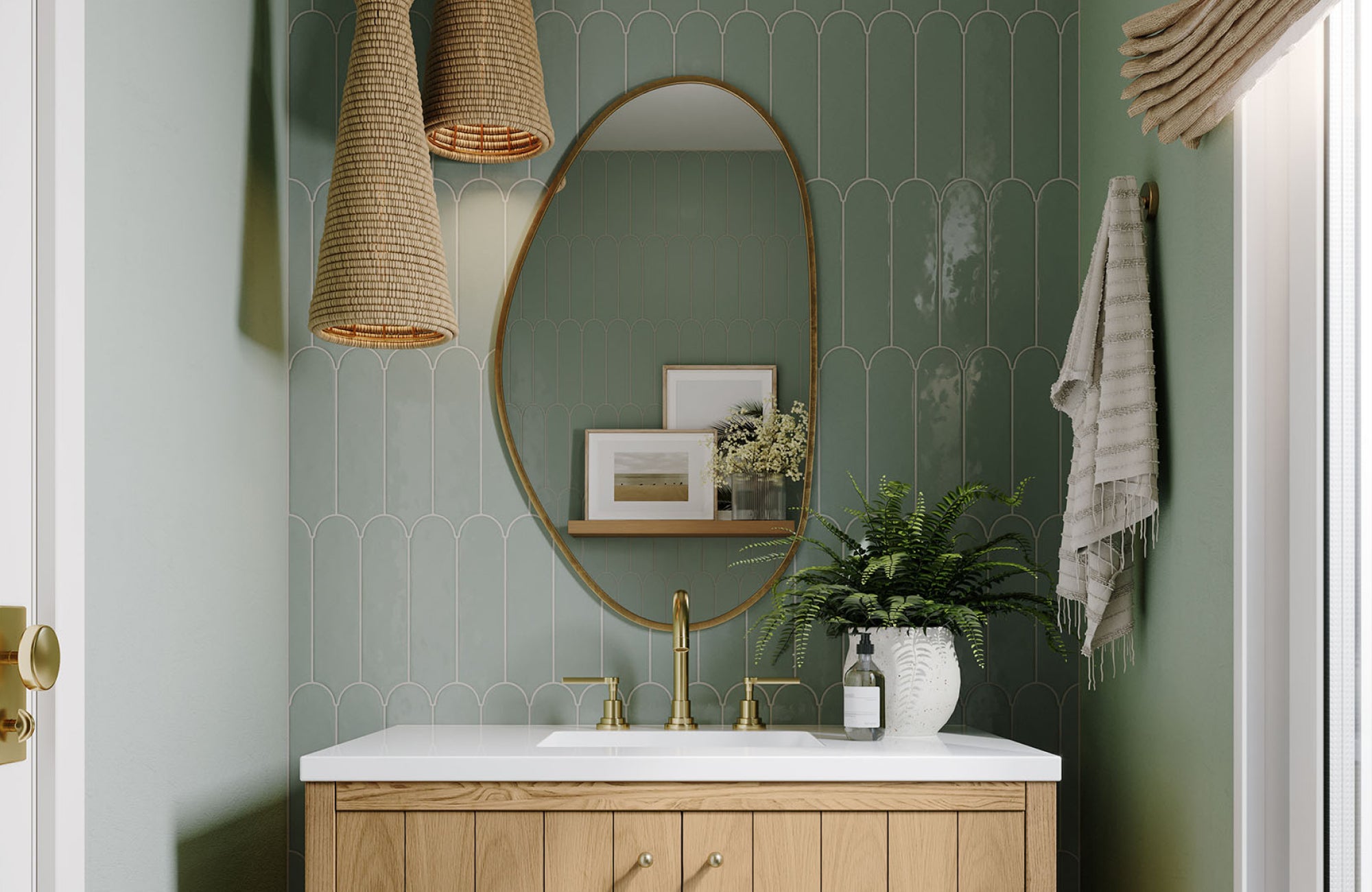
Not all mirrors need to be rectangular. Rounded, oval, and asymmetrical mirrors are making a strong statement in modern and eclectic bathrooms. These shapes introduce softness, help balance angular design elements, and are perfect for compact spaces or above vanities.
Take our Rory Mirror in Antique Brass Iron, as shown in the photo above, for example. Set against soft green tile with elegant curves, this mirror’s elongated oval shape gently breaks from tradition, echoing the organic lines of the room. The warm antique brass finish complements the brass fixtures while bringing a subtle glow to the space. Without changing anything else, the mirror transforms the wall into a focal point, proof that an unexpected silhouette can bring both charm and visual harmony to a thoughtfully layered bathroom.
Practical Considerations for Installation
Mirror sizing wouldn’t be complete without considering the practical details of installation. Even the most beautiful mirror won’t be effective if it’s hung at the wrong height or lacks proper support. Here’s what to keep in mind to get it right.
Standard Mounting Height
There’s no one-size-fits-all rule here, but a good guideline is to hang the mirror so the center sits around eye level for most users, typically about 60 inches from the floor. If you’re installing the mirror above a sink, allow roughly 5 to 10 inches of space between the top of the faucet and the bottom of the mirror. These are flexible numbers, but staying within that range further helps keep the mirror functional and visually grounded.
Wall Support and Weight
Larger mirrors add more weight, which places extra strain on your wall. Before installation, it’s essential to identify the wall type, whether drywall, tile, or plaster, and choose the right anchors and brackets accordingly. Whenever possible, mounting into wall studs provides the most secure support. For heavier mirrors, using two anchors is often recommended to keep the mirror level and prevent any shifting or bowing over time.
Accessibility and Function
In shared bathrooms or households with children and older adults, it’s equally important to position the mirror at a height and angle that works for everyone. Tilted mirrors are also useful in spaces with a wide range of user heights, offering better visibility without requiring major adjustments. For even more flexibility, consider mirrors with a built-in pivot or tilt feature, as they can add everyday convenience while maintaining a clean, stylish look.
Adapting to Bathroom Types and Needs
Not all bathrooms serve the same purpose, and the type of space you're designing has a big impact on which mirror size will work best. To help clarify, let’s look at a few common scenarios.
Powder Room Styling
Powder rooms permit you to go bold. Since they’re typically small and used primarily by guests, functionality doesn’t need to take center stage. Here, you can opt for a decorative, even dramatic mirror; something round, asymmetrical, or highly stylized, that doesn’t necessarily follow traditional sizing rules. The goal is to add personality and make the room memorable.
Master Bath Functionality
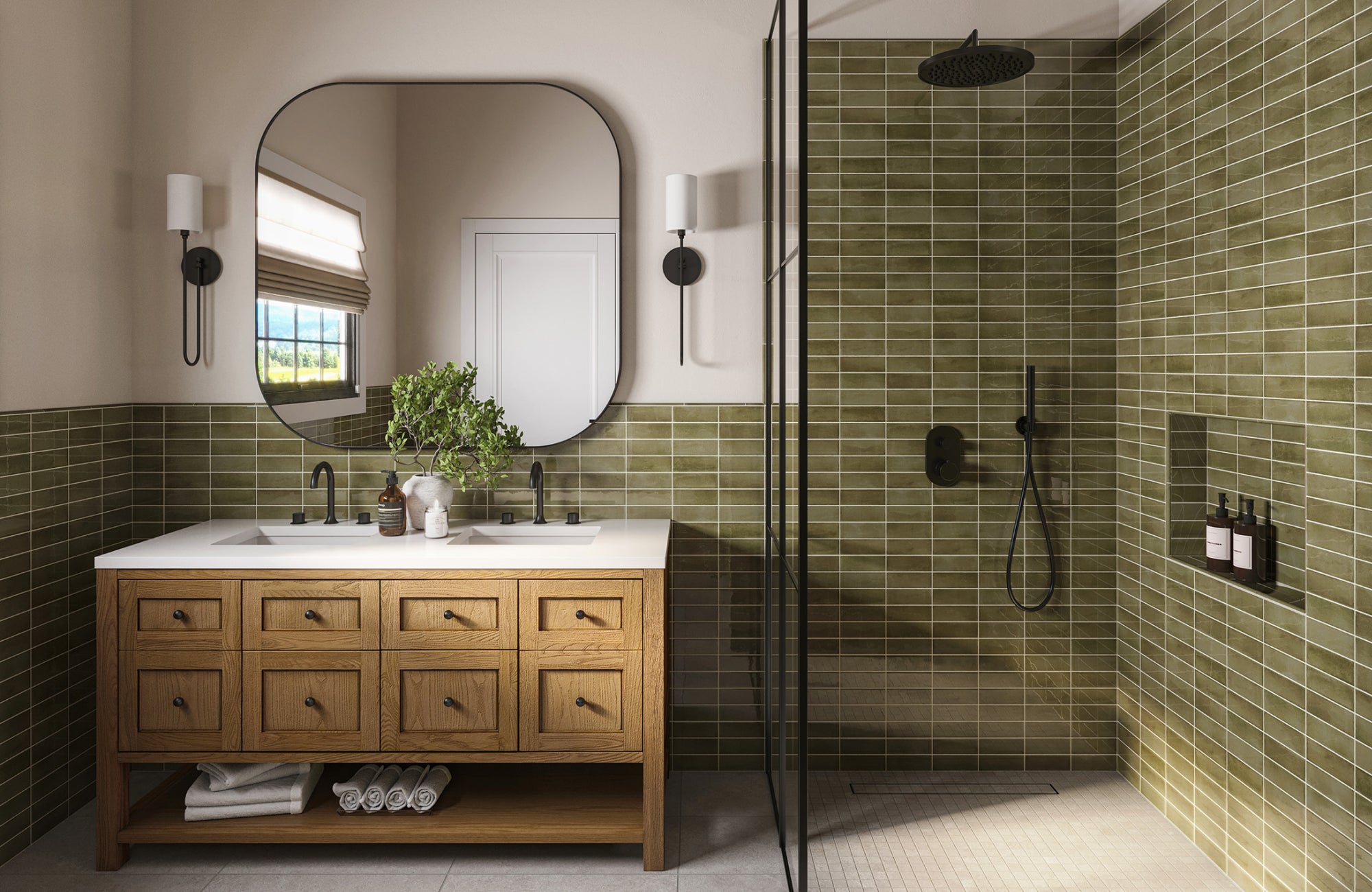
Master bathrooms are designed with both comfort and function in mind. In these spaces, a larger mirror often makes sense to support daily routines such as grooming, skincare, or makeup. If the bathroom is shared, a wide mirror or a pair of mirrors can also offer convenience without compromising flow. Choose a size that offers clear face visibility while still leaving enough space for lighting, storage, and comfortable movement around the vanity.
Edward Martin’s Tristan Square Mirror in Rustic Black, as featured in the photo above, is a strong example of this balance. Framed in a bold yet minimal style, the mirror pairs beautifully with the double-sink vanity and surrounding sconces. Its generous proportions provide ample visibility for two users without overwhelming the wall, while the rounded corners soften its presence. This setup also demonstrates how thoughtful mirror sizing in a master bath can enhance both everyday function and the overall aesthetic.
Guest Bathroom Flexibility
Guest bathrooms often blend form and function in equal measure. A medium-sized mirror typically fits best, offering sufficient reflection for everyday use without overwhelming the space. In these settings, mirror size is usually influenced more by aesthetics and how well it complements the overall design than by purely functional needs.
Choosing the Right Bathroom Mirror Size
Choosing the right mirror size is about more than fitting it to the wall; it’s also about creating harmony within the space. When considering the room’s layout, lighting, vanity size, and how the mirror will be used, the decision becomes much easier. Whether your goal is functionality, personality, or a blend of both, the right mirror ties everything together seamlessly.
If you’re unsure where to begin or would like help bringing your vision to life, we’re here to help. Reach out to us through our contact us page to speak with our team or learn more about our complimentary design services. Whether you need help selecting the perfect mirror or coordinating it with the rest of your space, our experts are ready to guide you every step of the way!
Follow us on Instagram
@EDWARD.MARTIN
)
)
)
)
)
)
)
)
)
)
)
)
)
)
)
)