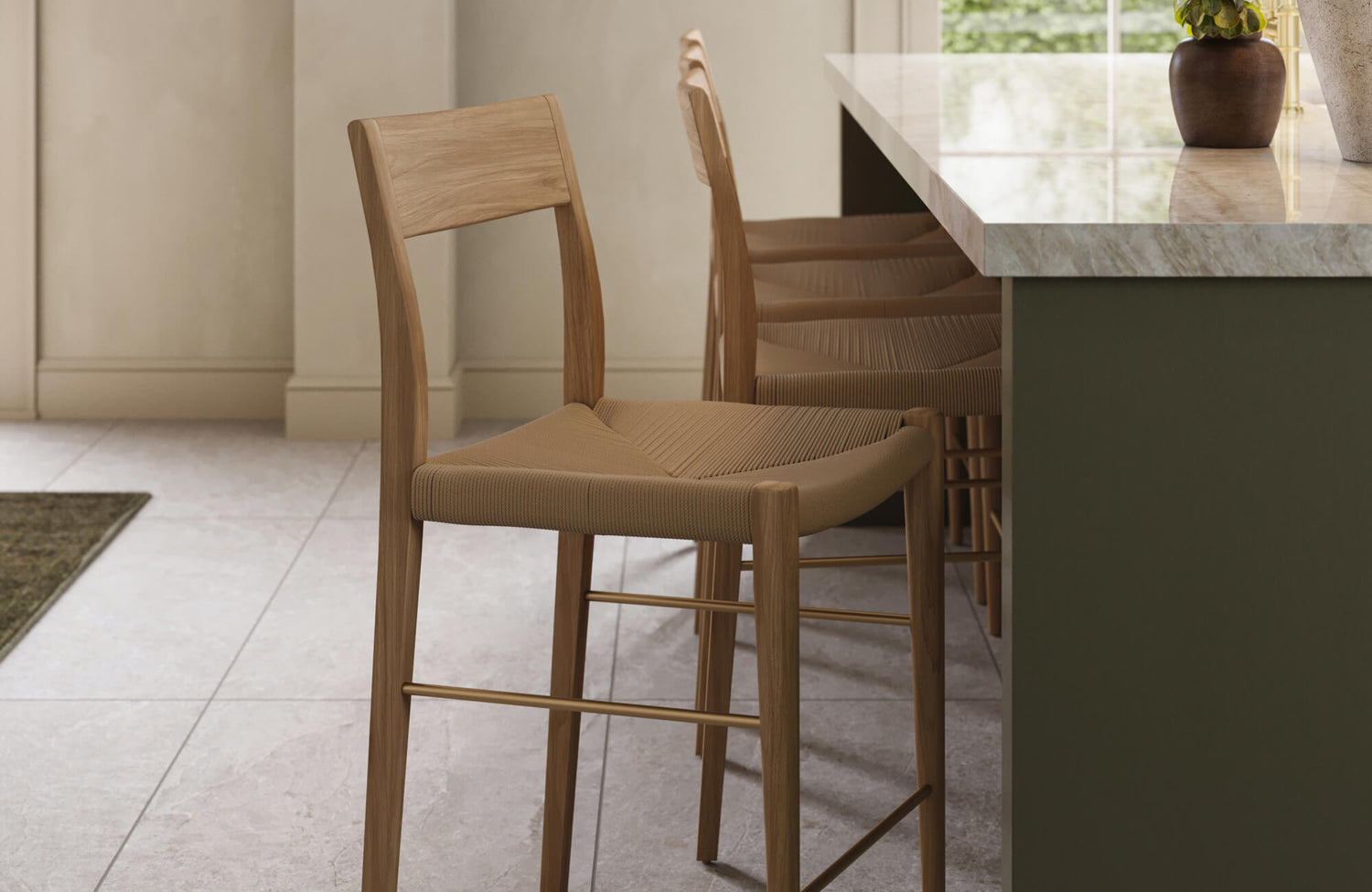
Oak counter stools tend to earn their place in the kitchen because they’re made to be used, not just admired. In everyday dining spaces, seating needs to feel comfortable, dependable, and easy to live with, especially when the kitchen doubles as a gathering spot. In this blog, we’ll walk through what makes oak counter stools such a practical choice, from how they hold up over time to how they fit into different kitchen styles and real-life use.

Why Oak Works Well For Daily Kitchen And Dining Use
Oak has long been used in furniture that’s meant to be lived with, not just looked at. Its natural strength and balanced weight make it especially well-suited for counter stools that see daily use in kitchens and dining areas. Below, we’ll look at why oak performs so reliably in these spaces and what sets it apart when consistency and durability matter most.
Natural Strength That Holds Up To Everyday Sitting
Oak’s strength comes from its dense grain structure, which allows it to handle repeated weight and movement without loosening or feeling unstable over time. This matters for stools that are pulled in and out, shifted, or used multiple times a day. Because oak resists bending and compression better than many woods, it maintains its shape even with frequent use. That reliability helps stools feel steady rather than wobbly as years pass. It also means joints and legs stay supportive instead of gradually weakening. For everyday seating, that kind of consistency makes a noticeable difference.
Why Oak Feels Solid Without Feeling Visually Heavy
Even though oak is known for its strength, it doesn’t visually overwhelm a space the way bulkier materials sometimes can. Its natural grain adds texture and depth, which helps stools feel grounded without looking dense or blocky. This balance matters in kitchens, too, where visual openness still plays a big role in how comfortable the space feels. Oak has a way of reading as substantial without dominating the room or pulling too much focus. It supports daily use while still allowing the space to breathe. That combination of presence and restraint is one of the reasons oak works so well across everyday dining spaces.
One stool that shows how oak can feel substantial without weighing down a space is our Joel Counter Stool in Dove Cream above. The solid oak wood frame gives it a steady, grounded feel, while the curved backrest and softly cushioned, quilted seat keep the silhouette light and inviting at the counter. Finished in a weathered brown tone, the wood’s natural grain comes through without overpowering nearby cabinetry or surfaces. It’s a good example of how oak can support everyday seating needs while still allowing the kitchen to feel open and balanced.
How Oak Performs Better Than Softer Wood Options
Compared to softer woods, oak tends to handle daily wear more predictably because it’s less prone to dents and surface compression. Softer wood options, for instance, may start showing signs of use much sooner, especially on stool legs and seats that see constant contact. Oak’s density helps it resist those early signs of fatigue, which means the stool maintains its structure over time. This becomes especially noticeable in kitchens, where stools are often moved, leaned on, or used for more than just quick meals. Rather than gradually feeling worn or unstable, oak continues to feel reliable. When durability matters for everyday seating, oak usually holds up with fewer compromises.

Comfort Factors That Matter For Everyday Seating
Comfort plays a big role in whether counter stools actually get used every day or end up feeling like occasional seating. For kitchens and dining areas, the goal is practical comfort that supports quick meals as well as longer, relaxed moments.
Seat Shape And Depth For Casual, Extended Use
Seat shape and depth play a big role in how comfortable a stool feels once you’re seated for more than just a few minutes. If a seat is too shallow, it can feel like you’re perching rather than settling in, while one that’s too deep may push your posture out of alignment. For everyday dining, a gently contoured seat often feels more natural than a perfectly flat surface. It helps distribute weight more evenly and reduces pressure points during longer meals or conversations. Depth matters as well, because legs should rest comfortably without feeling restricted or cutting off circulation. When seat proportions are well balanced, stools feel supportive without needing constant shifting.
The Role Of Back Support In Daily Comfort
Back support can quietly change how relaxed everyday seating feels, especially over longer periods. Even a low or slightly angled back gives you something to lean into, which helps reduce fatigue as time goes on. This becomes especially useful in kitchens, too, where stools are often used for more than quick meals, such as conversation, homework, or casual work. Back support also encourages a more natural posture, instead of forcing users to stay rigidly upright. At the same time, it doesn’t need to be tall or heavily padded to do its job well. When designed thoughtfully, back support adds comfort without making the stool feel bulky or impractical.
One stool that shows how back support can improve everyday comfort without feeling bulky is our Vivian Counter Stool in Black, seen above. Its gently angled back, finished with a handwoven rattan panel, gives you something natural to lean into while keeping the profile open and breathable. The extended solid oak frame provides steady support, while the seat’s soft cushioning helps maintain a relaxed posture during longer moments at the counter. Together, these details make the stool feel comfortable for daily use, whether it’s a quick meal or time spent lingering in the kitchen.
Footrests And Leg Support For Relaxed Dining
Footrests might seem like a small detail, but they make a noticeable difference in how comfortable a stool feels over time. Without somewhere to place your feet, legs tend to dangle, which can become uncomfortable faster than most people expect. A well-positioned footrest helps distribute weight more evenly, allowing the body to settle into the seat instead of constantly adjusting. It also adds a sense of stability, which matters during longer meals or casual conversations at the counter. For everyday dining, that extra support encourages people to sit longer without feeling restless. Often, it’s these subtle features that turn a stool into something truly comfortable for daily use.

Oak Counter Stools And Long-Term Durability
When counter stools are used every day, durability becomes just as important as comfort. Oak stands out here because it handles repeated movement, shifting weight, and daily wear without quickly showing strain. Below, we’ll look at how oak performs over time and why it continues to feel dependable in busy kitchen settings.
Resistance To Wear From Frequent Movement
In everyday kitchens, stools rarely stay in one place for long. They’re pulled out, pushed back in, turned, and shifted throughout the day as people move around the space. Oak handles this kind of constant movement well, largely because of its dense grain and natural toughness, as mentioned earlier. Over time, that density helps minimize surface wear that tends to show up more quickly on softer woods. It also means joints and connections are less likely to loosen from repeated use. When stools are part of daily routines, this resistance helps them continue to feel solid and dependable.
How Oak Ages With Regular, Everyday Use
Oak tends to age in a way that feels natural rather than worn out. Instead of looking tired or fragile, it often develops subtle character through small marks and gently softened edges. In busy kitchens, this kind of aging feels lived-in rather than neglected. Because oak resists deep dents and compression, most signs of use stay surface-level instead of affecting the structure. That allows the stool to feel familiar over time without losing its integrity. For many homes, this balance between everyday use and long-term appearance is a big part of oak’s appeal.
Stability That Matters In Busy Kitchens
In busy kitchens, stools are used by different people throughout the day, often in quick and casual ways. Oak brings a grounded sense of stability that supports this kind of constant use. Because the wood resists twisting and uneven stress, stools tend to stay balanced even when they’re moved around frequently. This makes sitting down and standing up feel secure rather than tentative. In spaces where the kitchen doubles as a gathering spot, that stability adds everyday confidence. Over time, it helps stools feel like a reliable part of the room instead of something that needs frequent adjustment.
One stool that reflects this kind of everyday stability is our Georgia Counter Stool in White, shown above. Its solid oak body creates a grounded base that feels secure even as the stool is pulled, shifted, and repositioned throughout the day. Paired with sturdy, powder-coated metal legs, the structure resists wobbling and uneven stress, helping the stool stay balanced in busy kitchen settings. Together, these materials support frequent use while maintaining a steady, dependable feel that holds up over time.

Finish Options That Suit Everyday Dining Spaces
The finish you choose on oak counter stools has a quiet but lasting effect on how they look and feel over time. Because these stools are used daily, the right finish helps balance warmth, wear visibility, and how easily they settle into the rest of the kitchen.
Light Oak Finishes For Brighter, Open Kitchens
Light oak finishes tend to keep kitchens feeling airy and open, which works especially well in spaces with limited natural light. Because the tone reflects light more gently, stools blend in without drawing too much attention to themselves. This can make the island area feel less visually crowded, even when multiple stools are in use. Light finishes also pair easily with a range of cabinet colors and surfaces, so they adapt well as kitchens evolve. That said, they can show wear more quickly if the finish is very pale. Choosing a slightly warmer light oak often helps strike a better balance between brightness and everyday practicality.
Medium And Natural Oak Tones For Warmth And Balance
Medium and natural oak tones are a popular middle ground because they feel warm without becoming visually heavy. These finishes tend to anchor the seating area while still allowing the kitchen to feel open and comfortable. They also do a good job of masking small marks that come from daily use, which makes them easier to live with over time. Because the grain remains visible, the stools feel textured and inviting rather than flat. This range works well in kitchens that see constant activity, since it hides wear without looking too dark. For many homes, this tone simply feels steady and familiar.
Finishes That Help Hide Minor Wear And Scuffs
Some finishes are better suited to everyday dining because they disguise small signs of use rather than highlighting them. Subtle variations in tone, for instance, help scuffs and light marks blend in instead of standing out. Matte or satin finishes also tend to be more forgiving than high-sheen options, which can reflect wear more easily. This doesn’t mean the finish looks dull, but it does feel more relaxed in real life. Over time, these finishes allow stools to age evenly without looking worn down. When practicality is a priority, forgiving finishes help stools stay visually balanced with daily use.
One stool that shows how darker finishes can stay visually balanced with daily use is our Joel Counter Stool in Black above. Its deep, inky acacia finish naturally helps mask small scuffs and surface marks that tend to show up around busy kitchen islands. Because the tone allows the wood’s grain to remain visible, the stool still feels warm and textured rather than flat or overly polished. Over time, this kind of finish lets the stool settle into the space without drawing attention to everyday wear, making it well-suited for regular dining use.

Design Versatility Across Different Kitchen Styles
One of the reasons oak counter stools work so well in everyday kitchens is how easily they adapt to different design directions. Oak has a natural neutrality that allows it to shift alongside modern, transitional, or more traditional spaces without feeling out of place.
Oak Counter Stools In Modern And Contemporary Kitchens
In modern and contemporary kitchens, oak counter stools add warmth without disrupting the clean, streamlined look. Because oak has visible grain and natural variation, it softens sharp lines from flat-panel cabinets, minimal hardware, and smooth surfaces. This helps the space feel more inviting, too, rather than overly sleek or stark. Lighter or natural oak tones, for example, often sit comfortably alongside white, gray, or black kitchens without stealing attention. Oak also works well next to modern materials like stone, concrete, or metal, since it provides contrast without competition. The result is a space that feels balanced, current, and thoughtfully layered.
How Oak Fits Naturally In Transitional Spaces
Transitional kitchens blend classic elements with modern simplicity, which is exactly where oak tends to shine. Oak stools feel neither too polished nor too rustic, so they bridge the gap between old and new with ease. This flexibility helps tie together mixed finishes, cabinetry styles, and materials without forcing the space in one direction. For instance, oak pairs just as comfortably with painted cabinets as it does with natural stone or subtle veining. Because of that, the seating area feels connected to the rest of the kitchen rather than added on later. In transitional layouts, oak often acts as the quiet connector that brings everything into balance.
Using Oak Stools In More Traditional Or Classic Layouts
In traditional or classic kitchens, oak counter stools feel right at home because they carry a sense of familiarity and warmth. Their natural grain and subtle variation work comfortably alongside detailed cabinetry, richer color palettes, and time-tested materials. Rather than drawing attention to themselves, oak stools tend to settle into the space, which helps the kitchen feel layered and lived-in. They also sit well with decorative elements like paneling or crown molding, adding substance without tipping into heaviness. Because oak has long been a staple in traditional interiors, it doesn’t feel trendy or out of place. Instead, it reinforces a sense of continuity and everyday comfort.
Coordinating Oak With Countertops And Cabinetry
Coordinating oak stools with cabinets and countertops is usually more about tone and balance than finding an exact match. Oak works well when it either gently contrasts with surrounding finishes or clearly relates to them in warmth and depth. For example, oak stools can soften painted cabinetry, while pairing them with wood cabinets creates a more unified, grounded look. Countertops matter as well, since stone, quartz, and wood each interact with oak in slightly different ways. What helps most is thinking about how these surfaces sit together visually, rather than aiming for perfection. When oak feels intentionally placed among these elements, the kitchen comes together in a way that feels natural and cohesive.

Maintenance And Care For Everyday Use
One of the biggest advantages of oak counter stools is that they don’t require complicated care to stay looking good. Because they’re made for regular use, upkeep tends to fit easily into everyday routines rather than becoming another chore.
Simple Cleaning Habits That Keep Oak Looking Good
For everyday care, oak counter stools usually need very little attention. A quick wipe with a soft, dry, or slightly damp cloth is often enough to clear away crumbs, dust, or light spills before they settle in. Because oak is naturally dense, it doesn’t react as quickly to small amounts of moisture as softer woods might. Even so, it’s still a good habit to wipe spills sooner rather than later, especially around edges or joints. Occasional, gentle cleaning helps keep the surface looking even without turning upkeep into a chore. Over time, this simple routine allows the stools to age in a way that feels natural rather than neglected.
What To Avoid To Preserve Finish And Structure
A few mindful habits can go a long way in protecting both the finish and structure of oak stools. Harsh or abrasive cleaners, for example, can slowly dull the surface or wear down protective coatings. Letting moisture sit for extended periods may also stress the wood, particularly near seams, joints, or footrests. Repeatedly dragging stools instead of lifting them can add unnecessary strain to the frame over time. None of these habits is dramatic on its own, but they do add up. Being a bit more intentional with daily use helps keep the stools feeling solid longer.
Why Oak Is Low-Stress For Daily Living
One reason oak works so well in everyday kitchens is that it’s naturally forgiving. Small marks and signs of use tend to blend in, rather than immediately standing out. This makes oak stools easier to live with, especially in busy households where the kitchen is always in use. You don’t have to worry about them looking flawless all the time. Instead, they gradually develop character as they’re used, which often adds to their charm. That relaxed durability is what makes oak such a practical choice for daily dining.
Choosing Oak Counter Stools That Support Everyday Living
Oak counter stools earn their place in everyday kitchens because they strike a rare balance between strength, comfort, and visual ease. They’re solid enough to handle daily movement and shared use, yet they don’t overwhelm the space or feel overly formal. Over time, oak adapts to real life, developing character instead of showing quick wear. That combination makes it a dependable choice for kitchens that are meant to be used, not tiptoed around.
If you’re deciding whether oak counter stools are the right fit for your kitchen, a thoughtful plan can make all the difference. Layout, counter height, finishes, and how the space is used day to day all play a role in getting the choice right. Our design consultation can help you sort through those details with confidence. With the right guidance, it’s easier to choose seating that feels comfortable, cohesive, and built for everyday dining.