Sideboards have become one of the most enduring and beloved additions to the dining room because they bring together functionality, style, and versatility in a way few other furniture pieces can match. Although their history is rooted in traditional serving and storage, modern sideboards have evolved into dynamic elements that elevate how a dining space both looks and functions. They also support everything from everyday meals to holiday celebrations, all while adding balance, beauty, and intentional design to the room.
As dining rooms increasingly serve multiple roles, the adaptability of a sideboard becomes even more valuable. It can anchor the space visually, streamline the flow of gatherings, hide clutter, and express personal style through thoughtful displays. Throughout this article, you will explore the many reasons sideboards rise above other cabinet types and why they remain a smart, stylish, and enduring investment for any dining area.

Functional Versatility
The functional versatility of sideboards is what makes them such a valuable addition to the dining room. Their storage is intentionally designed for dining-specific items, giving you a place for oversized platters, delicate serveware, linens, and glassware that might otherwise overwhelm your kitchen cabinets. This thoughtful organization keeps everything you need within reach, reducing clutter and making both everyday meals and special gatherings easier to manage. Moreover, the top surface doubles as an effortless serving station when entertaining, providing space for buffets, beverage setups, or dessert displays without crowding the dining table.
Beyond hosting, sideboards integrate seamlessly into everyday life by offering a central location to store items that often clutter shared spaces. You can use them to organize mail, chargers, children’s supplies, or even create a dedicated coffee or cocktail station. Their balance of concealed storage and open display space also helps maintain order while adding personality and warmth to the room. As a result, sideboards support not just the function of the dining room but the rhythm of your entire space, making them one of the most adaptable and purposeful furniture pieces you can own.
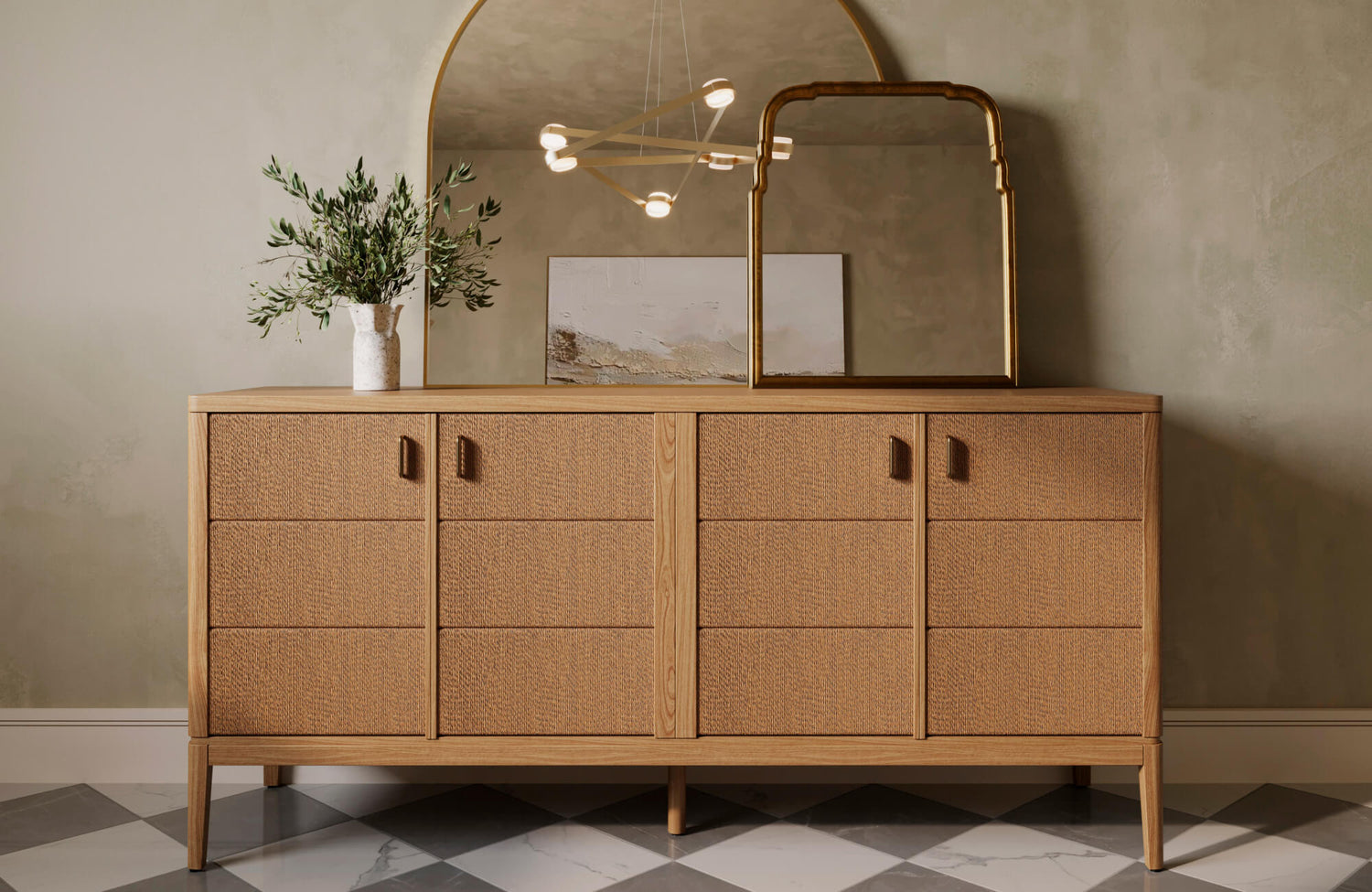
In settings that emphasize warmth, texture, and practical elegance, the sideboard itself becomes an active contributor to daily functionality. Our Brooke Sideboard in Rustic Oak, shown in the image above, exemplifies this versatility with its light brown tone and generously scaled cabinetry that adapts easily to both entertaining and everyday use. Its spacious interior also accommodates everything from serving pieces to household essentials, while the broad top surface offers a natural place for seasonal décor, lighting, or a casual serving spread. By blending ample storage with a timeless, approachable finish, this sideboard reinforces how functional design can elevate the overall character and flow of the dining room.

Elevate Dining Room Aesthetics
Sideboards play a powerful role in shaping the visual atmosphere of a dining room because they introduce balance, structure, and intentionality to the space. Their long, low silhouettes naturally ground the room, counteracting taller vertical elements and creating a harmonious visual rhythm. Whether your dining area is enclosed or part of an open-concept layout, a sideboard helps define the zone with subtle architectural presence. By aligning it with a focal wall or the dining table’s axis, you establish symmetry and flow that make the entire space feel more polished and cohesive.
In addition to their structural impact, sideboards provide endless styling opportunities that reflect your personal taste. Their wide surfaces act as curated display platforms for everything from artwork and mirrors to lamps, ceramics, and greenery. Because this area is so prominent, even small seasonal updates or decorative refreshes can transform the room’s overall mood. Furthermore, sideboards adapt beautifully to various interior styles, whether you prefer sleek modern woods, rustic reclaimed textures, or transitional designs that blend classic and contemporary elements. When chosen and styled thoughtfully, a sideboard becomes both a functional anchor and a dynamic aesthetic centerpiece that elevates the room year-round.
In spaces where refined materials and understated elegance take center stage, the sideboard becomes a defining visual element rather than a supporting piece. Our Leonardo Sideboard in Brown, seen in the photo above, enhances this effect with its deep brown wood finish, softly rounded edges, and sculptural form that brings warmth and sophistication to the dining room. Paired with layered lighting, natural accents, and thoughtfully chosen décor, its rich tone and clean silhouette create a sense of depth and cohesion, reinforcing how a well-designed sideboard can elevate the room’s aesthetic while anchoring the overall design.

Comparing Sideboards to Other Dining Storage Options
Understanding what makes a sideboard one of the best dining room cabinets becomes clearer when you compare it with similar furniture pieces. Although buffets, hutches, credenzas, and consoles share storage functions, each has distinct characteristics that influence how well it suits a dining space. By recognizing these differences, you can better appreciate the unique combination of practicality and style that sideboards offer.
Sideboards vs Buffets
Buffets and sideboards share a similar lineage, but their proportions and purposes set them apart. Buffets are typically taller, which positions them as upright serving stations ideal for large gatherings or formal dining. Their height allows for more elevated presentations, but this same feature can make them visually heavier in everyday settings. As a result, buffets often feel more suited to occasional use rather than daily functionality.
Sideboards, on the other hand, sit lower and integrate effortlessly into the dining room’s overall flow. Their grounded profile creates a more relaxed and versatile presence, making them perfect for both casual, everyday routines and entertaining. A sculptural design like our Charlie Sideboard in Taupe, featured in the picture above, with its ribbed façade and soft neutral tone, illustrates how a sideboard can feel substantial without becoming visually heavy. Because it anchors the room horizontally rather than vertically, it allows surrounding artwork, lighting, and décor to remain the focal point while still offering generous concealed storage. This balance is what makes sideboards adaptable to a wide range of dining environments.
Sideboards vs China Cabinets or Hutches
China cabinets and hutches focus on verticality and display, often featuring glass-front doors and illuminated shelves designed to showcase fine china or collectibles. Although this upright design creates a striking focal point, it also prioritizes visibility over concealment. If you prefer a cleaner, more understated aesthetic, the constant visual presence of displayed items may feel overwhelming or outdated in a modern dining room.
Sideboards offer the opposite experience. Their horizontal form provides concealed storage that helps maintain a streamlined, clutter-free look. The lack of upper shelving also keeps wall space available for artwork, mirrors, or decorative installations that contribute to a contemporary atmosphere. This low, sleek profile makes sideboards more compatible with minimalist or modern interiors where simplicity and openness are key design priorities.
Sideboards vs Credenzas and Consoles
Credenzas share some functional qualities with sideboards but evolved from office and media settings, where sliding doors and low profiles support equipment or documents. Although they can occasionally work in a dining room, credenzas often lack the depth and internal configuration required for dining-specific items like serveware or table linens. Their storage design is generally not optimized for the unique needs of a dining space.
Consoles, meanwhile, are tall, narrow, and primarily decorative. Their shallow depth limits the types of items they can hold, making them better suited for entryways or hallways rather than dining storage. This is where sideboards stand above the rest: they offer generous depth, ample length, and robust structure perfect for storing dining essentials while still providing a surface for styling and serving. Their balance of practicality and design adaptability positions them as a superior choice among dining room cabinets.

Customization, Sizing, and Placement Considerations
Choosing the right sideboard involves more than selecting a beautiful design. It requires thoughtful attention to scale, internal layout, and positioning so the piece feels naturally integrated into your dining room. When these elements work together, the sideboard enhances the room’s functionality, elevates its style, and supports the way you host and live every day.
Choosing the Right Size for Your Dining Space
Proportion is one of the most important factors in selecting a sideboard. A piece that is too large can overwhelm the room, while one that is too small may feel insignificant or fail to provide adequate storage. To maintain comfortable movement, allow for at least 36 inches of clearance between the sideboard and any surrounding furniture, ensuring guests can pass behind chairs even when they are pulled out. A standout example like our Large Aria Sideboard in Black and Gold works best when its generous scale is balanced by adequate spacing, allowing its length and presence to feel intentional rather than overpowering. As you consider size, aim for a sideboard that spans roughly half to three-quarters of your dining table’s length, which creates visual harmony and keeps the room feeling well-proportioned.
Height also plays a significant role in maintaining balance. A sideboard that aligns with or slightly exceeds the height of your dining table creates a smooth visual transition without interrupting the room’s sightlines. When these sizing elements align cohesively, the sideboard contributes structure and balance to the dining room rather than competing for visual dominance.
Exploring Configuration and Internal Design
The inside of a sideboard should be just as thoughtfully designed as its exterior. Begin by assessing your storage needs and the types of items you plan to keep within reach. Large cabinets are ideal for bulky serveware, tall pitchers, or small appliances you prefer to keep out of view. Drawers provide efficient organization for linens, cutlery, and delicate items that benefit from compartmentalization. When the interior configuration reflects the way you host and dine, your sideboard becomes a powerful tool for organization.
Additional features can elevate the functionality even further. Adjustable shelves offer flexibility as your collection of serveware grows, while integrated wine racks or open cubbies add purpose-driven convenience. Customizable interiors also ensure your sideboard adapts with you over time, making it an investment that continues to support your lifestyle long after installation.
Ideal Placement for Aesthetics and Flow
Placement determines how successfully a sideboard enhances both the ambiance and movement of the room. Positioning it along a focal wall opposite or adjacent to the dining table naturally draws the eye and gives the piece a place of prominence. A bold option like our Brooke Sideboard in Black, featured above, demonstrates how a black finish can anchor the space with confidence, creating contrast against lighter walls or patterned surfaces without disrupting flow. Situating a statement piece like this near the dining area or along a transition wall allows it to define the zone visually, while its streamlined silhouette keeps circulation smooth and unobstructed.
Styling the wall above the sideboard further enhances its visual impact. Hanging a mirror amplifies light and gives the illusion of a larger space, while artwork introduces personality and depth. When thoughtfully placed, the sideboard completes the room’s visual architecture and ensures that circulation remains smooth and intuitive.

Material Quality and Craftsmanship That Set Sideboards Apart
Material quality and craftsmanship are essential in determining whether a sideboard will simply look appealing at first glance or remain a long-lasting, reliable feature in your dining room. High-caliber materials such as solid hardwoods, tempered glass, stone, and well-engineered composites provide the strength and stability needed to support heavy serveware and withstand daily use. Additionally, these materials bring tactile richness and visual depth, allowing the sideboard to complement your dining space with both elegance and substance. When paired with thoughtful surface selections like stone or metal accents, the piece gains durability while maintaining a timeless, refined appearance.
Equally important are the construction techniques that hold the piece together. Quality joinery, such as dovetail or mortise-and-tenon connections, ensures structural integrity, while kiln-dried wood prevents warping over time. Premium hardware, including soft-close hinges and smooth-gliding drawer slides, further enhances longevity and user experience. Finally, durable finishes like polyurethane or conversion varnish protect the sideboard from heat, moisture, and everyday wear. When these craftsmanship elements work in harmony, the result is a sideboard that not only stands up to years of use but also enriches your dining room with heirloom-worthy character and enduring beauty.
Why Sideboards Stand Out as Exceptional Dining Room Cabinets
Sideboards stand out as exceptional dining room cabinets because they seamlessly blend utility, aesthetics, and long-term value into a single, highly adaptable piece. Their generous storage, flexible surfaces, and ability to enhance both organization and ambiance make them indispensable in a modern dining room. When crafted with quality materials and placed thoughtfully within your layout, a sideboard becomes far more than storage; it becomes a versatile companion that enriches daily routines, supports memorable gatherings, and elevates the entire dining experience with a timeless, effortless sense of style.
When choosing a sideboard that truly complements your dining space, expert guidance can help refine both function and style. For personalized assistance with selecting the right proportions, finishes, and storage features to suit your room and lifestyle, you can connect directly through our contact page. With professional insight supporting your decision, it becomes easier to invest in a sideboard that not only enhances organization but also aligns seamlessly with your dining room’s overall design vision.