Kitchen pendant lighting has evolved into one of the most defining elements in contemporary interior design, shaping both the spatial rhythm and emotional warmth of the home’s central gathering place. As innovations in materials and lighting technologies continue to rise, pendants now carry a sculptural elegance that elevates even the most functional moments of daily life. When thoughtfully selected, they create a curated balance of proportion, brightness, and atmosphere that feels both tailored and timeless. With every choice, whether scale, color temperature, or optical detail, the kitchen gains a deeper sense of cohesion and refinement. This article explores how each of these elements works together to help you select the ideal pendant lighting for your island or counter with confidence and artistry.

Selecting the Right Pendant Scale for Kitchen Islands
Choosing the right pendant scale establishes the foundational balance between visual proportion and functional illumination, ensuring the kitchen feels intentionally composed rather than visually fragmented. As this balance takes shape, the fixture contributes to a lighting layout that enhances both architectural rhythm and practical brightness across the island.
Determining Fixture Diameter
Larger kitchen islands often require pendants between 16 and 24 inches, as these fuller proportions create a visual anchor that feels naturally aligned with the island’s volume. This scale helps maintain a sense of grounded elegance rather than allowing the fixture to disappear or dominate. Smaller islands, by contrast, respond beautifully to more modest diameters between 10 and 14 inches, which preserve openness while still offering meaningful presence. When both island size and pendant diameter work in concert, they establish a gentle equilibrium that shapes how brightness spreads and how shadows soften. This proportional relationship becomes an early but essential step in shaping a cohesive lighting composition. Ultimately, diameter selection lays the foundation for a fixture that feels tailored, intentional, and visually balanced.
Balancing Pendant Quantity and Spatial Rhythm
Using two or three pendants introduces a rhythmic repetition that guides the eye along the island with a calm, measured continuity, allowing the entire kitchen to feel intentional and thoughtfully choreographed. This symmetrical placement of the pendants creates a natural cadence that echoes the island’s proportions and reinforces the architecture’s horizontal flow. A single oversized pendant can also achieve a different kind of harmony, offering a sculptural focal point that anchors the center of the room with confident simplicity.
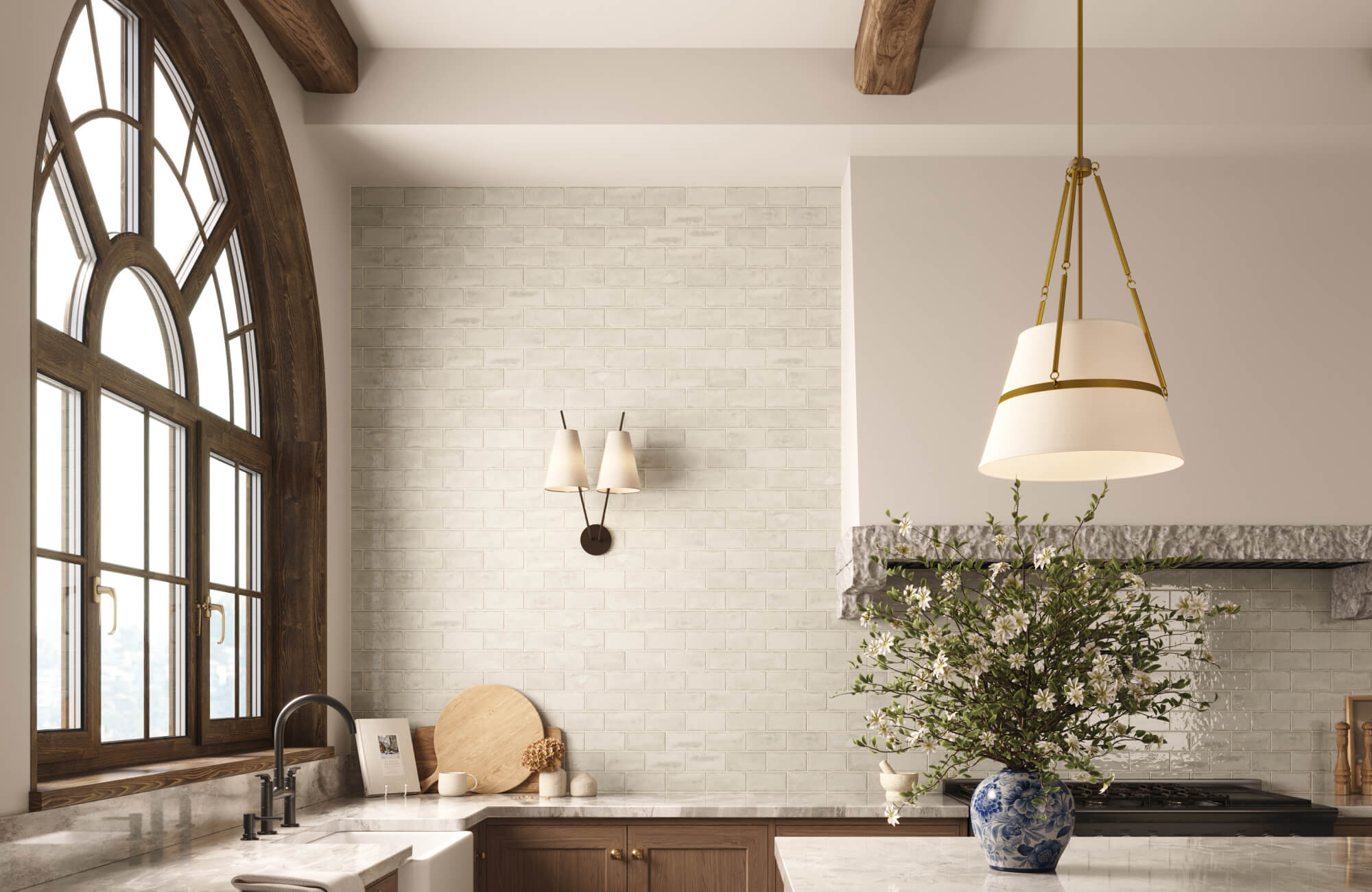
This stylistic balance mirrors the effect of Edward Martin’s Carly 34" Pendant in Vintage Brass, as displayed in the picture above, whose generous silhouette and warm metallic finish establish a similar sense of rhythm through both scale and refined detailing. When pendant quantity aligns with the island’s length and surrounding sightlines, the lighting arrangement feels seamlessly integrated rather than mechanically arranged. In turn, the kitchen gains a fluid spatial rhythm where illumination, proportion, and visual movement unfold with effortless cohesion.
Accommodating Ceiling Height Variations
Taller ceilings call for pendants with extended downrods or elongated silhouettes, allowing the fixture to remain visually connected to the island rather than drifting upward into unused vertical space. As the pendant lowers, it reestablishes a sense of closeness that restores balance between the ceiling height and the workspace. Adjustable suspension systems then refine this placement further, ensuring the fixture aligns cleanly even in rooms with vaulted or angled ceilings. These adjustments also help the pendant feel anchored and intentional, preventing the architecture from overshadowing the lighting. When ceiling height and fixture length complement one another, the kitchen gains a more confident sense of proportion and flow. Through this thoughtful alignment, the pendant feels seamlessly integrated into the room’s structure.

Optimizing Light Output and Color Temperature
Achieving the right balance of lumen output and color temperature ensures the island receives adequate brightness without compromising visual comfort. With careful calibration, the lighting enhances both functional tasks and the kitchen’s ambient warmth.
Lumen Requirements for Task Efficiency
Kitchen islands often serve as hubs for preparation, dining, and conversation, making a lumen range of 600–1,200 per pendant a reliable standard for balanced illumination. When light spreads across the surface, this brightness helps prevent uneven patches that strain the eyes during tasks like chopping or reading. Countertop materials also influence lumen needs, since darker or matte finishes tend to absorb light more readily than pale or glossy ones. When lumen output is thoughtfully matched to both the island’s finish and its intended function, the space gains a harmonious clarity that feels calm rather than clinical. This careful calibration reduces visual fatigue while enhancing the confidence and ease of daily kitchen activities. Over time, the island becomes not just a work surface but an inviting, well-lit centerpiece of the home.
Selecting the Ideal Color Temperature
Warm white temperatures, ranging from 2700K to 3000K, envelop the kitchen in a soft glow that feels welcoming and intimate, making conversations around the island feel more relaxed and lived-in. As this golden warmth touches surrounding surfaces, it gently softens edges and enriches natural wood tones. Neutral whites from 3000K to 3500K also introduce a touch more clarity, offering a crispness that benefits tasks requiring sharper visual accuracy. Designers often pair these temperatures with 90+ CRI LEDs, allowing colors in food, décor, and stone surfaces to appear true and vibrant. With each shift in temperature, the emotional and functional qualities of the kitchen subtly transform. Thoughtful selection ensures the lighting complements both the atmosphere you desire and the tasks you perform.
Diffusion, Glare Control, and Light Spread
Opal diffusers encourage light to unfold softly across the island, helping to eliminate glare without dampening overall brightness. When light passes through the diffuser, harsh hotspots dissolve into a more uniform wash, creating a sense of visual ease. Etched acrylic and prismatic lenses also refine this effect further by shaping the beam precisely to the island’s dimensions. Designers often rely on these optical layers to manage how light interacts with glossy materials like quartz or polished stone. With each refinement, the illumination becomes more responsive to the room’s textures and finishes. This creates a lighting environment that feels balanced, gentle, and naturally attuned to the space.

Perfecting Pendant Placement, Spacing, and Suspension Height
Thoughtful placement ensures that pendant lighting aligns with architectural features, delivering both visual harmony and functional clarity. When spacing and height work in tandem, the kitchen gains a lighting layout that feels naturally integrated.
Achieving Consistent Spacing
A spacing distance of 30–36 inches between pendant edges creates a quiet visual rhythm that carries the eye naturally along the island, allowing the kitchen to feel unified rather than fragmented. The evenly placed pendants establish a steady cadence that echoes the island’s length and reinforces the symmetry created by the cabinetry and range hood. This measured alignment also prevents the fixtures from competing for attention, instead encouraging them to work together as a cohesive lighting composition.
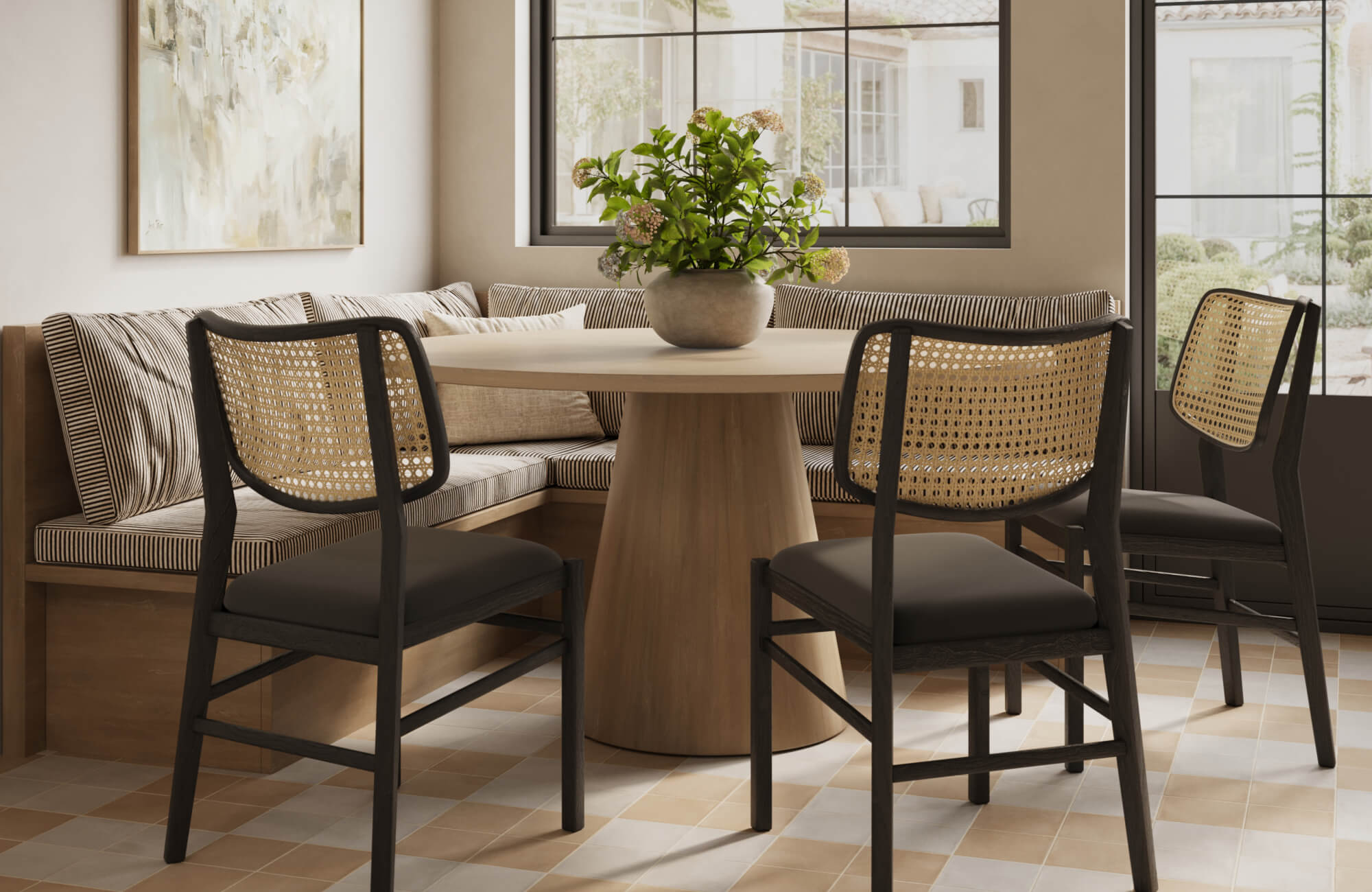
As shown in the photo above, the Oswald Pendant in Dusty Iron achieves a similar effect, as its sculptural tiered silhouette and slender suspension create a balanced presence that thrives when spaced with thoughtful precision. Its moody iron finish also deepens the sense of rhythm, grounding the pendants while complementing darker cabinetry and patterned backsplashes. Through this harmonious spacing, the room gains a sense of order and fluidity, allowing the lighting to guide movement and perception with quiet sophistication.
Positioning Along the Island Axis
Centering pendants along the island’s longitudinal axis creates a strong sense of alignment that connects lighting to architecture. As the fixtures follow the island’s natural line, they reinforce the symmetry of surrounding cabinetry and appliances. Designers also often consider sink placement, seating arrangements, and ventilation hoods to maintain this cohesion. When pendants sit in harmony with these elements, the illumination naturally falls where it’s needed most. This creates a kitchen environment where both form and function feel seamlessly interwoven. Over time, the alignment becomes a subtle yet essential component of the room’s spatial comfort.
Establishing Proper Drop Height
A drop height of 30–36 inches above the countertop strikes a compelling balance between presence and openness, allowing pendants to illuminate without obstructing the room’s sightlines. When the fixtures hover at this height, they feel intimately attuned to the island while still allowing clear movement and conversation. Larger pendants may also be lifted slightly higher to maintain proportional grace, while smaller pendants benefit from slightly lower placement to achieve visual impact. Additionally, adjustable hardware makes precise alignment possible, especially in kitchens with tall ceilings or unique architectural details. When height is fine-tuned to both the fixture and the room, the lighting gains a sense of effortless refinement. This calibration ensures the pendants feel naturally at home within the space.

Choosing Materials and Optical Characteristics
Material selection shapes how light behaves and how the fixture harmonizes with surrounding design elements. With each choice, the fixture contributes not only illumination but also texture, tone, and architectural presence.
Glass Pendants for Expansive Illumination
Clear or softly tinted glass pendants allow light to flow outward with ease, creating a luminous openness that brightens the entire island. They retain their clarity and brilliance, amplifying the kitchen’s natural glow. This transparency also expands the perceived volume of the room, making it ideal for smaller or enclosed spaces. Designers often turn to glass when they want lighting to feel airy rather than heavy, letting the fixture support the space without overwhelming it. When paired with high-efficiency LEDs, the effect becomes even more polished and energy-conscious. Together, these qualities create a pendant that feels both refined and quietly radiant.
Metal Shades for Directional Task Lighting
Metal pendants introduce focused illumination that channels light downward with purpose, creating crisp, high-contrast visibility ideal for detailed work. When the beam narrows through the shade’s opening, it produces a defined pool of brightness that enhances clarity on the island surface. Matte blacks, antique bronzes, and burnished brass finishes also lend the fixture a sense of structure and weight, enriching the kitchen’s visual architecture. Designers frequently use metal shades to anchor transitional, industrial, or modern interiors with a strong, sculptural presence. This controlled directionality minimizes glare on glossy countertops while increasing precision where it's needed most. Ultimately, metal pendants combine technical performance with striking stylistic impact.
Mixed-Media and Textured Finishes
Mixed-media pendants weave together materials like brass, alabaster, rattan, or crystal to create a layered visual narrative within the kitchen. As light interacts with these different textures, it reveals subtle depth and character that enrich the room’s atmosphere. Designers often introduce these pendants to soften rigid lines or add artisanal warmth to modern spaces. Moreover, the combination of transparency, pattern, and natural materials creates a gentle play of highlights and shadows that elevates the overall ambiance. This diversity in texture also links the lighting to surrounding finishes, bridging wood tones, stone surfaces, and metal hardware. In doing so, mixed-media pendants become expressive centerpieces that feel both curated and thoughtfully integrated.

Coordinating Pendant Style With Kitchen Architecture
When pendant style aligns with architectural language, the entire kitchen benefits from a unified sense of movement and design intent. As style and structure reinforce one another, the lighting becomes an integral expression of the room’s identity.
Modern and Minimalist Aesthetics
Modern kitchens thrive on the quiet discipline of geometric silhouettes, slim profiles, and finishes that echo the clean lines of contemporary cabinetry. Matte black, brushed nickel, and soft chrome finishes, for instance, add understated refinement without detracting from the surrounding architecture. Designers also favor these minimalist forms for their ability to amplify the room’s natural openness while still providing functional illumination. The understated nature of the fixtures allows light itself to become the focal element rather than the hardware. Through this balance, modern pendants create a serene, harmonious backdrop for daily living.
Transitional and Classic Design Synergy
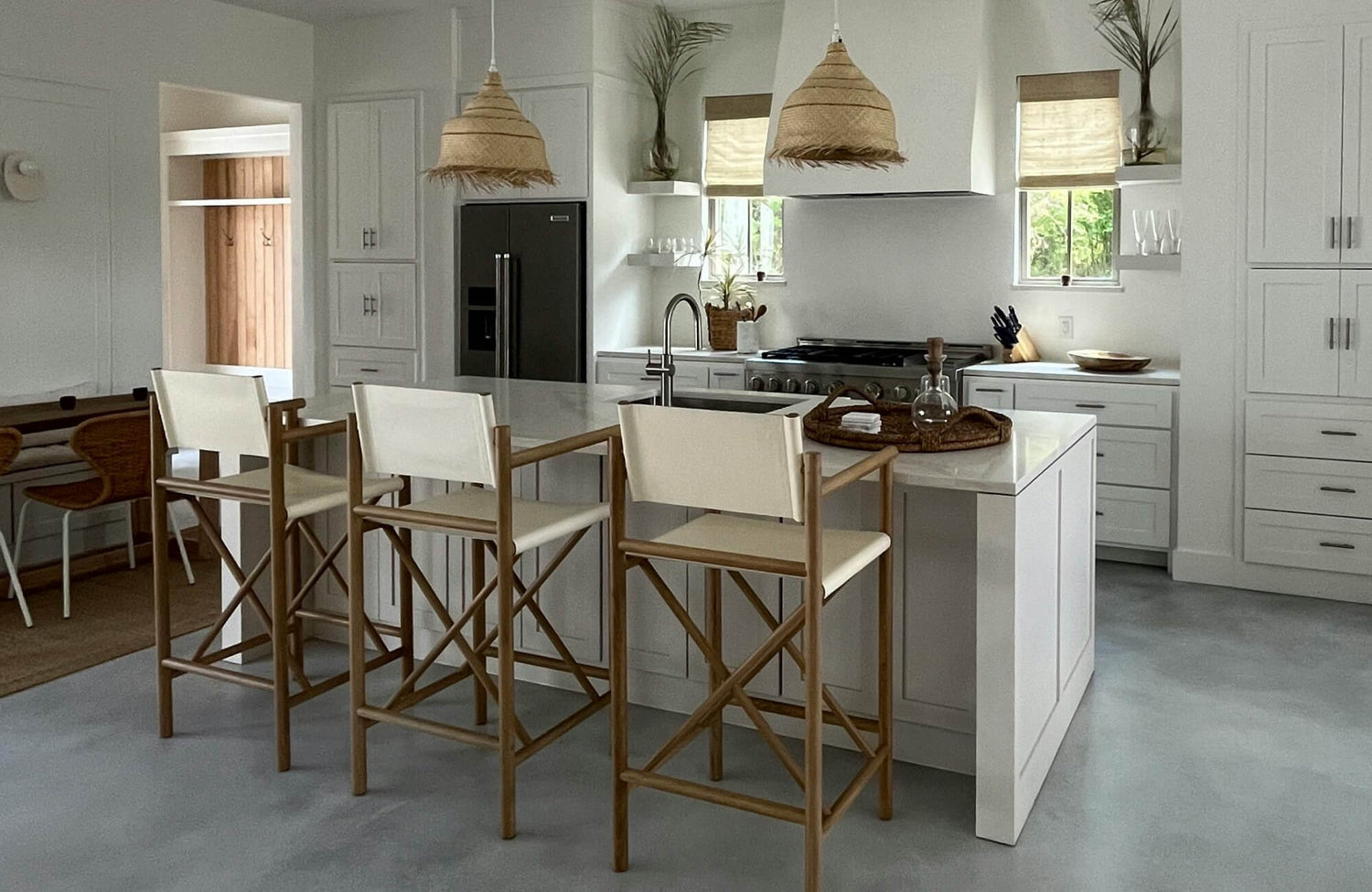
Transitional kitchens benefit from pendants featuring gentle geometry and softened contours, creating a bridge between traditional cabinetry profiles and modern, pared-back refinement. Our Rosa Triangular Pendant in Aged Brass, as featured in the photo above, achieves a similar harmony, with its sculpted shade and warm metallic finish complementing natural woods, creamy stone surfaces, and muted color palettes. Its tapered silhouette also reinforces vertical proportion above the island while adding a sense of crafted elegance that feels both timeless and current. Designers value pendants like this Rosa pendant for their ability to elevate a space without overwhelming it, allowing light, material, and form to work in balanced dialogue. Through this synergy, transitional kitchens gain a lighting presence that feels gracefully unified and enduring in its appeal.
Coastal, Organic, and Soft-Contemporary Influences
Coastal and organic kitchens come alive with pendants shaped from natural glass, woven textures, and softly reflective metals that evoke the ease of shoreline living. As light filters through these materials, it creates gentle movement and a breezy ambiance that feels refreshingly relaxed. Rounded silhouettes and fluid contours also reinforce the softness of coastal palettes, from pale woods to ocean-inspired blues. Designers often select these pendants to cultivate calm, uplifting spaces that feel warm and connected to nature. This gentle shaping further enhances visual harmony by diffusing brightness in a way that feels effortless rather than engineered. As a result, the kitchen becomes a sanctuary of comfort, lightness, and organic beauty.
A Refined Look at the Power of Thoughtful Pendant Lighting
Thoughtfully selected pendant lights have the power to transform kitchen islands and counters into beautifully illuminated focal points that blend performance with artistry. As scale, optics, and placement work together, the lighting supports both daily tasks and the overall emotional tone of the space. High-quality materials and carefully chosen color temperatures further enrich the kitchen’s depth, adding character and clarity to every surface. This harmony between functionality and style elevates the kitchen beyond basic illumination, turning it into a curated environment shaped with purpose.
For homeowners seeking expert guidance in achieving this elevated balance, Edward Martin’s design services offer personalized support and refined lighting solutions. Contact us to begin creating your beautifully curated kitchen!