

)
)
)
)
)
)
)
)
What Are The Rules For Pendant Lights On A Kitchen Island?
A well-planned pendant layout can completely transform how your kitchen island functions and feels. Understanding the key principles behind spacing, height, brightness, and installation makes it much easier to choose a design that truly works for your space. In this article, we’ll walk you through the essential rules that guide effective pendant placement so you can create lighting that feels intentional, balanced, and tailored to the way you use your kitchen.
Ideal Pendant Spacing and Placement
A thoughtful layout begins with spacing. When pendants are positioned with intention, they distribute light evenly and create a natural visual rhythm above the island. Understanding how to position them allows the arrangement to enhance your kitchen’s flow rather than distract from it.
Centering Over the Island
Centering the fixtures over the island creates a stable, balanced look that immediately feels intentional. Rather than focusing solely on exact measurements, consider how the pendants appear from key viewpoints in your kitchen. If the island is slightly asymmetrical or the space opens to another room, aligning the fixtures to the island’s visual midpoint often produces a more natural result. You want the pendants to sit where your eye instinctively expects them, especially when you enter the space. Establishing this clear visual anchor also helps the island feel grounded within the overall layout.
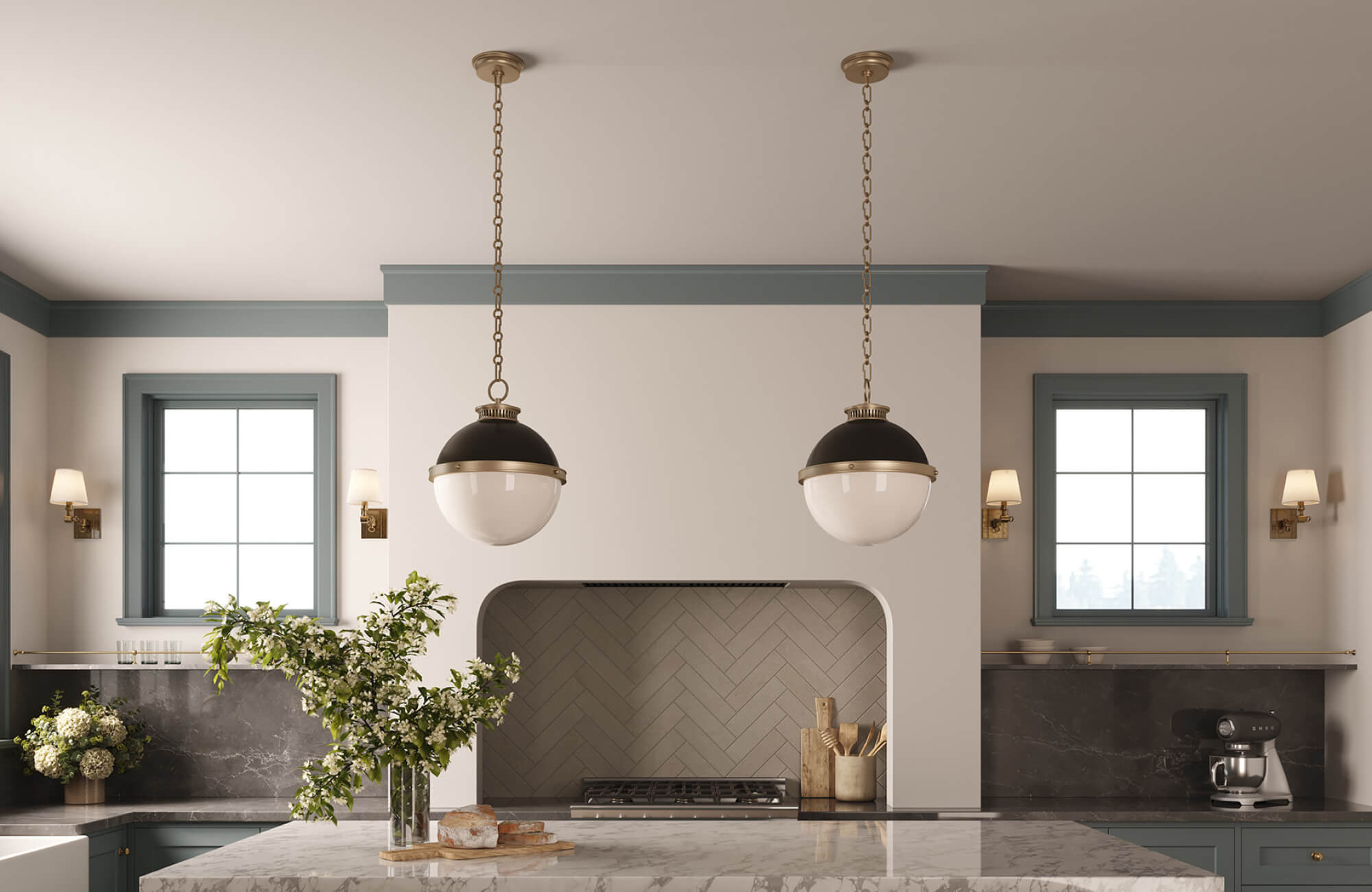
In the photo displayed above, the use of Edward Martin’s Barnes 14" Pendant in Aged Antique Distressed Bronze shows how a centered pendant can anchor the island and create a strong, well-balanced focal point within the kitchen.
The Right Distance Between Pendants
After centering the fixtures, the next consideration is the space between them. A practical starting range is 26 to 30 inches between the edges of each pendant, which allows the light to spread evenly without overwhelming the island. If your island is longer or the fixtures are larger in scale, adding a few extra inches helps the layout feel open and comfortable. For smaller islands, slightly closer spacing keeps the arrangement unified. The aim is to create a steady visual rhythm that feels organized rather than scattered.
Accounting for Sight Lines
Pendant placement influences how you see and move through the surrounding space. When fixtures sit near windows or open living areas, they can interrupt your view if they’re positioned too closely or too far forward. Pulling them slightly toward the island’s center often preserves a clear visual path. This small adjustment helps the kitchen feel more connected to nearby rooms and makes conversations with guests or family members more comfortable. Maintaining open sight lines allows the pendants to feel naturally woven into the overall layout.
Determining Proper Hanging Height for Function and Comfort
Height is one of the most important choices you’ll make when planning your pendant layout. When fixtures hang at the right level, the light feels comfortable, everyday tasks become clearer, and the pendants look naturally aligned with the island. Understanding a few practical height guidelines helps you avoid glare, awkward proportions, and unnecessary adjustments later.
Standard Working Height Range
Most pendants perform well when they hang about 30 to 36 inches above the countertop. Within this range, the light remains bright enough for tasks like chopping or reading recipes while still minimizing glare. At the lower end, the placement can create a more intimate feel, whereas the higher end helps the space appear more open. Additionally, if your pendants have wider shades or produce stronger light, positioning them toward the upper part of the range often feels more comfortable. A simple way to confirm the height is to imagine leaning over the island; if a pendant interrupts your view, it likely needs to be raised.
Adjusting for Tall or Short Family Members
Your household’s height makes a meaningful difference in how pendants should be positioned. If you or others in your home are taller, raising the fixtures by an inch or two keeps them from falling at eye level. For shorter individuals, lowering the pendants slightly ensures the light stays practical without disrupting visibility. This becomes especially important when the island is used for seating, since people should be able to talk across it comfortably. Taking these needs into account leads to a layout that feels natural for everyone throughout the day.
How Ceiling Type Affects Height
Your ceiling style plays a key role in determining the right hanging height. For instance, vaulted or angled ceilings often call for longer cords so the pendants don’t appear undersized within the space. Similarly, beamed ceilings may require small adjustments to keep the fixtures from competing with the structure above. Even a tray ceiling influences placement because its recessed edges naturally draw the eye upward. By considering how the pendants interact with these architectural features, the entire layout feels more intentional and cohesive.
Sizing Pendants to Match Island Proportion
Choosing the right pendant size is just as important as determining height or spacing. The scale of each fixture influences whether the arrangement feels balanced or visually out of place. Understanding how size relates to your island and surrounding space helps you create a layout that feels harmonious from every angle.
Calculating Ideal Fixture Diameter
A helpful way to determine pendant diameter is by looking at the width of your island and selecting a size that feels proportional. For instance, dividing the island’s width in half offers a reliable starting point when using a pair of pendants. You can also consider the combined diameter of all fixtures and compare it to a portion of the island’s total length to maintain balance. Pendants that are too small tend to disappear, while oversized ones can overpower the surface. These simple calculations can guide you toward a scale that feels cohesive from every viewpoint.
Choosing Number of Pendants
The number of pendants you choose should reflect both the length of your island and the scale of the fixtures. As islands grow longer, two or three pendants often work well when spaced evenly, while a compact island may feel more balanced with a single, larger fixture. In addition, the goal is to prevent the arrangement from feeling crowded. When an island is under six feet, two pendants can sit uncomfortably close. Once you reach eight feet or more, however, three smaller pendants can create a pleasant rhythm, and two larger ones can deliver a strong, symmetrical look. By considering quantity alongside proportion, you can maintain a layout that feels intentional and visually steady.
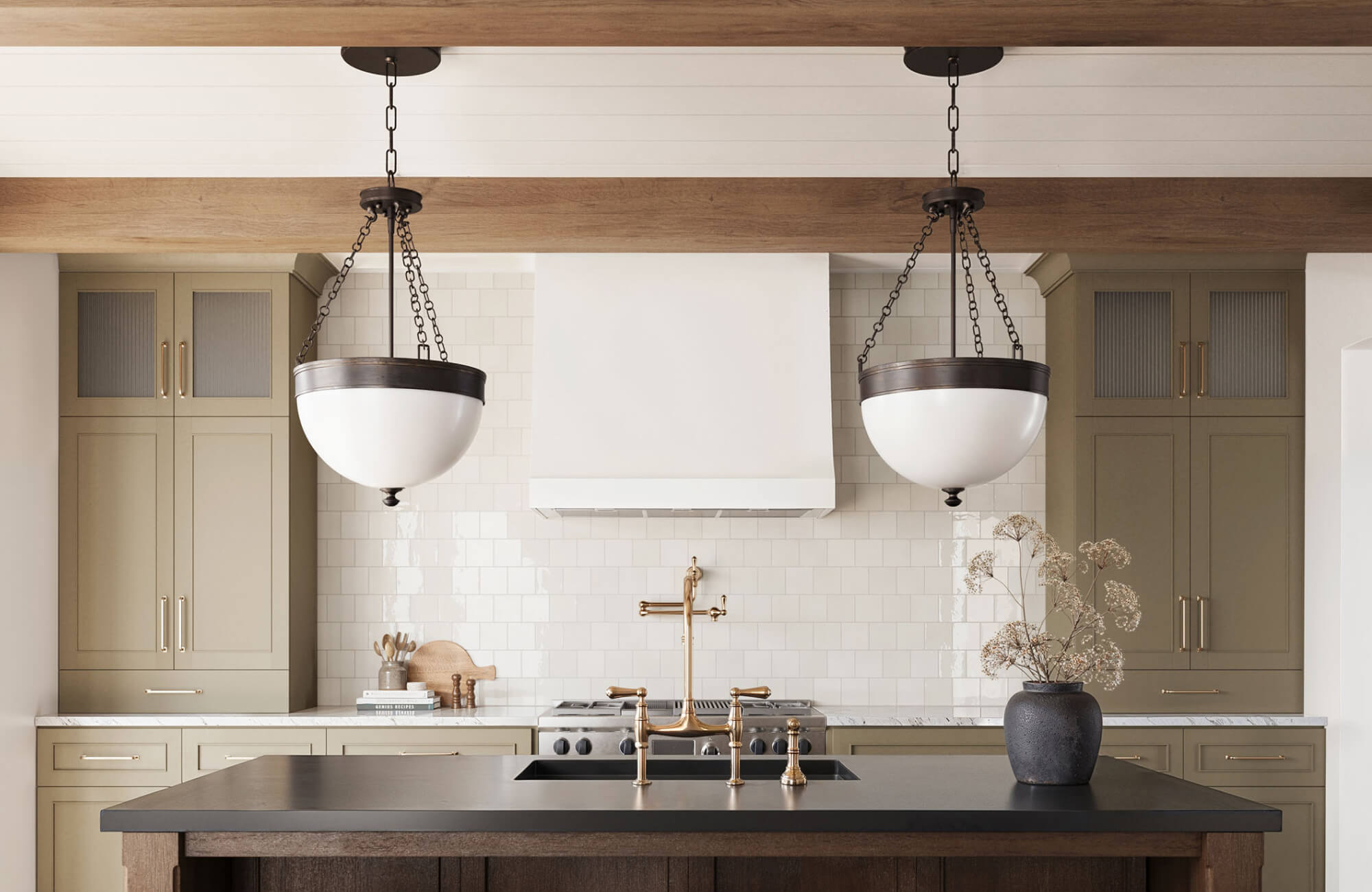
In the photo featured above, the pair of Edward Martin’s Rosa Rounded Pendants in Old Bronze illustrates how choosing two fixtures can perfectly suit a longer island, offering balanced coverage without overwhelming the space.
Balancing Visual Weight
The materials and shape of your pendants influence how large or small they appear within the space. A metal shade often feels visually heavier than clear glass, even when both share the same diameter, while opaque designs attract more attention and transparent ones blend more subtly into the room. Round silhouettes can create a softer look, whereas angular forms introduce a more structured presence. These characteristics influence how the overall layout is perceived. Selecting pendants with the right visual weight ensures they support the island’s proportions rather than dominate them, resulting in a balanced and grounded design.
Coordinating Pendants With Overall Kitchen Layout
Every kitchen has a natural rhythm shaped by cabinetry lines, appliances, and architectural details. Pendants should support this structure so the space feels cohesive rather than disjointed. Understanding how these elements interact helps you position fixtures in a way that complements the broader layout and maintains visual harmony.
Avoiding Interference With Cabinet Doors
Pendants that sit too close to upper cabinets or nearby appliances can limit how far those doors open. Although it is an easy detail to overlook, checking these clearances ensures that every cabinet and refrigerator door moves freely without brushing against a fixture. If a pendant is positioned near a pantry or display cabinet, shifting it inward by a few inches can prevent future complications. Taking a moment to consider these movements keeps the kitchen functional and helps protect both the cabinetry and the lighting.
Aligning With Architectural Features
Architectural elements such as ceiling beams, vents, windows, and decorative trim can guide how your pendants should be arranged. When fixtures align with these features, the kitchen immediately feels more organized and cohesive. For example, positioning pendants along the line of ceiling beams highlights the room’s structure, while centering them beneath a window naturally draws the eye outward. Even coordinating their placement with a cooktop or sink reinforces a clear sense of order. When your lighting works in harmony with the architecture, the entire space feels more intentional and well-composed.
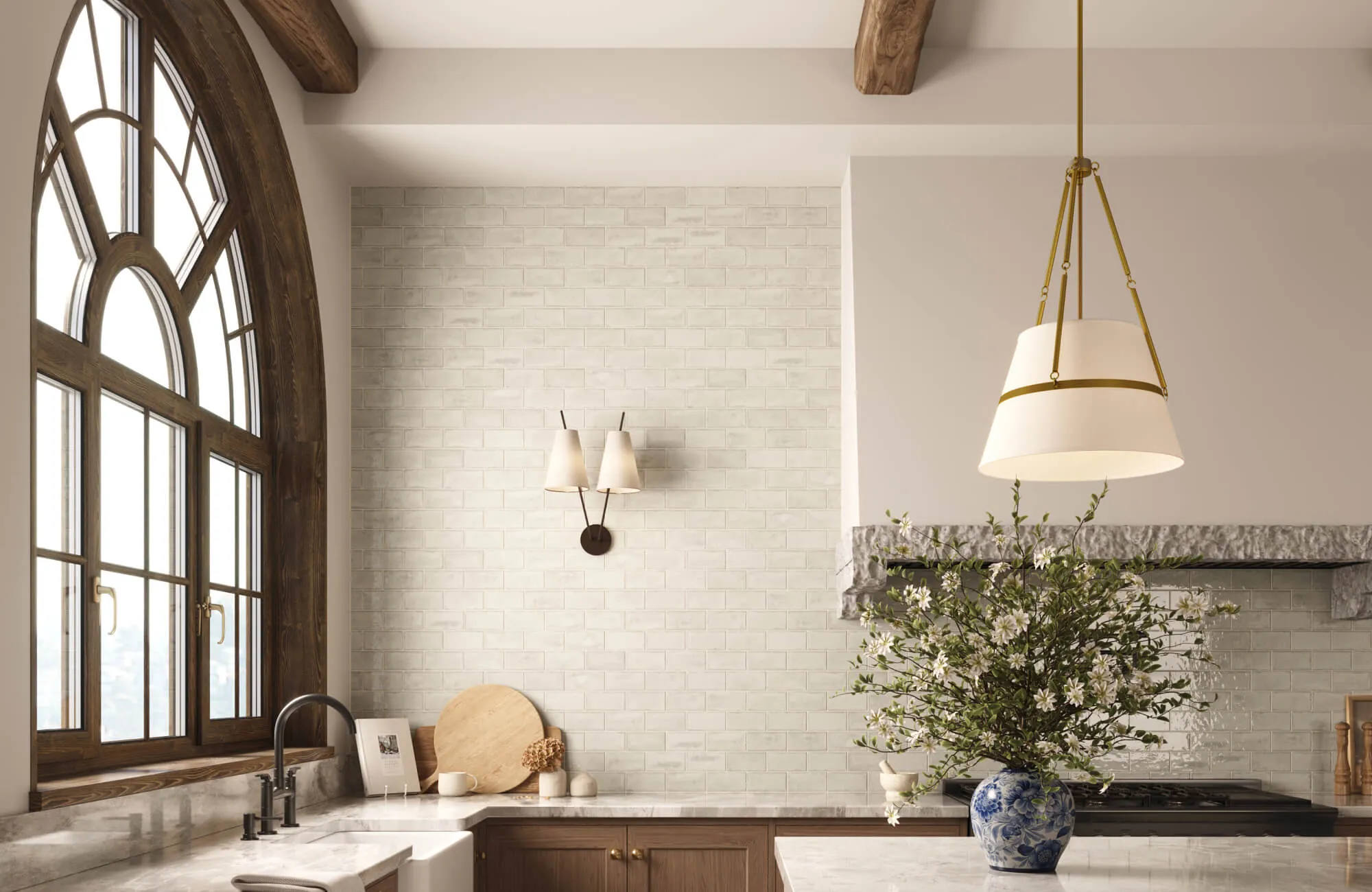
In the photo shown above, the installation of Edward Martin’s Phineas Pendant in Historic Bronze demonstrates how aligning pendants directly with the exposed ceiling beams strengthens the room’s architectural rhythm and creates a unified, well-balanced layout.
Positioning Relative to Adjacent Lighting
Pendants often share the room with recessed lights, chandeliers, or other fixtures, so their placement should support a cohesive lighting plan. In many kitchens, leaving a comfortable distance between the outer pendants and the nearest recessed lights helps prevent overlapping beams and keeps the layout visually clear. It is also useful to consider brightness. When the pendants are significantly stronger or weaker than surrounding fixtures, the island can feel either overemphasized or underlit. By balancing output and spacing, the various light sources work together more effectively, creating a comfortable and unified atmosphere.
Light Output, Brightness, and Shade Style
Light output plays a major role in both the mood and functionality of your kitchen island. The right level of brightness makes daily tasks easier, while the shade style determines how the light moves through the space. Understanding these factors helps you choose pendants that deliver the illumination you need without sacrificing visual comfort.
Selecting the Right Lumens
Choosing the appropriate lumen level determines how comfortable and functional the lighting will feel. For many kitchen islands, a range of 300 to 500 lumens per pendant provides reliable everyday illumination, while larger islands often benefit from slightly higher output to avoid dim spots. If your pendants use diffused shades, you may need additional lumens to achieve the same clarity as a fixture with a more focused beam. Selecting the right brightness ensures the island remains practical for cooking, reading, and gathering with others.
Downward vs Diffused Shades
Shade design plays a central role in shaping how light spreads across the island. For instance, downward-facing shades direct illumination onto the surface, offering clear and concentrated lighting suitable for detailed tasks. In contrast, diffused shades soften the output and distribute it more broadly, creating a gentle glow throughout the room. Because each shade type produces a distinct effect, understanding how they behave makes it easier to select an option that aligns with the atmosphere and functionality you want for your kitchen.
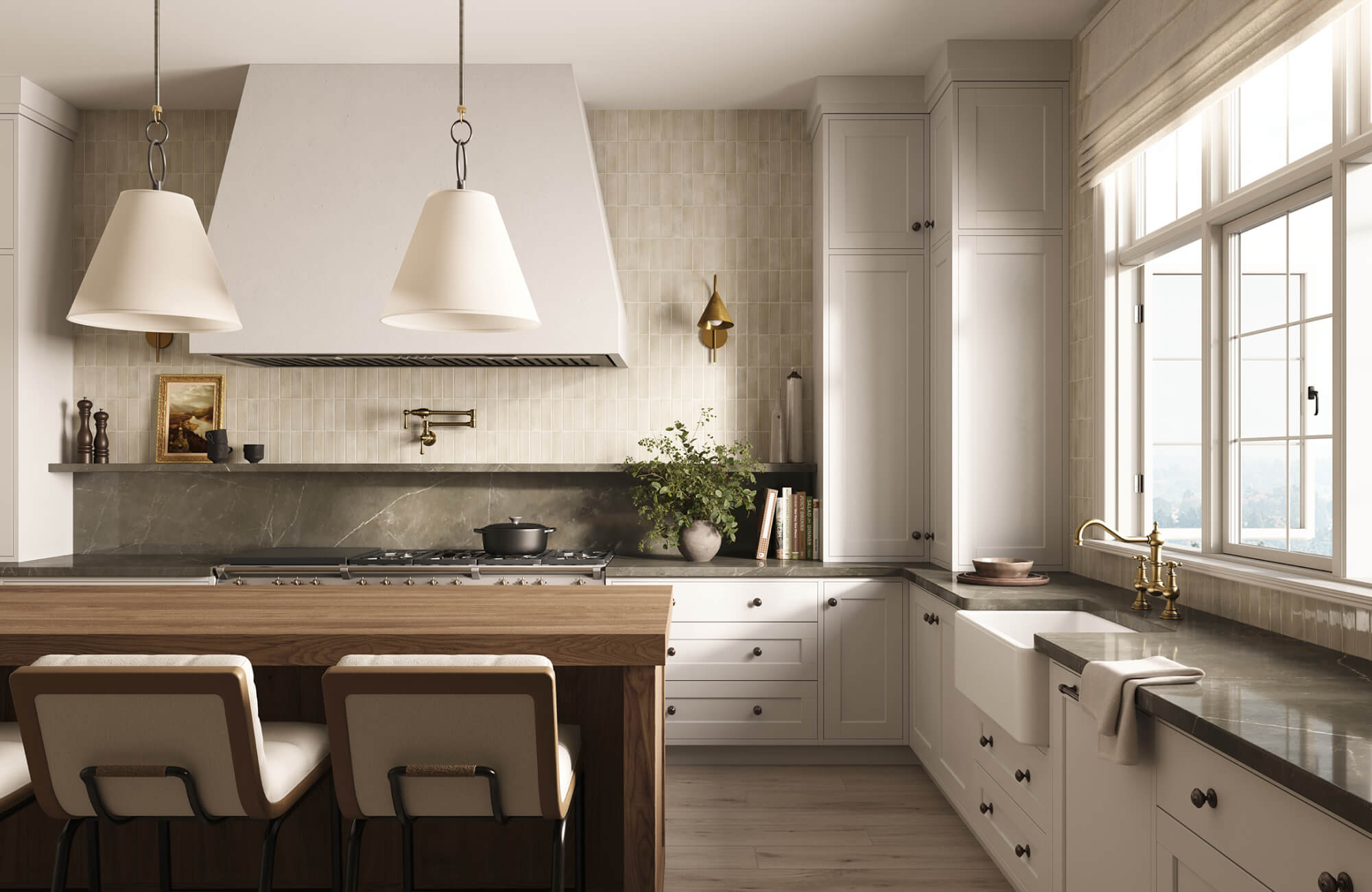
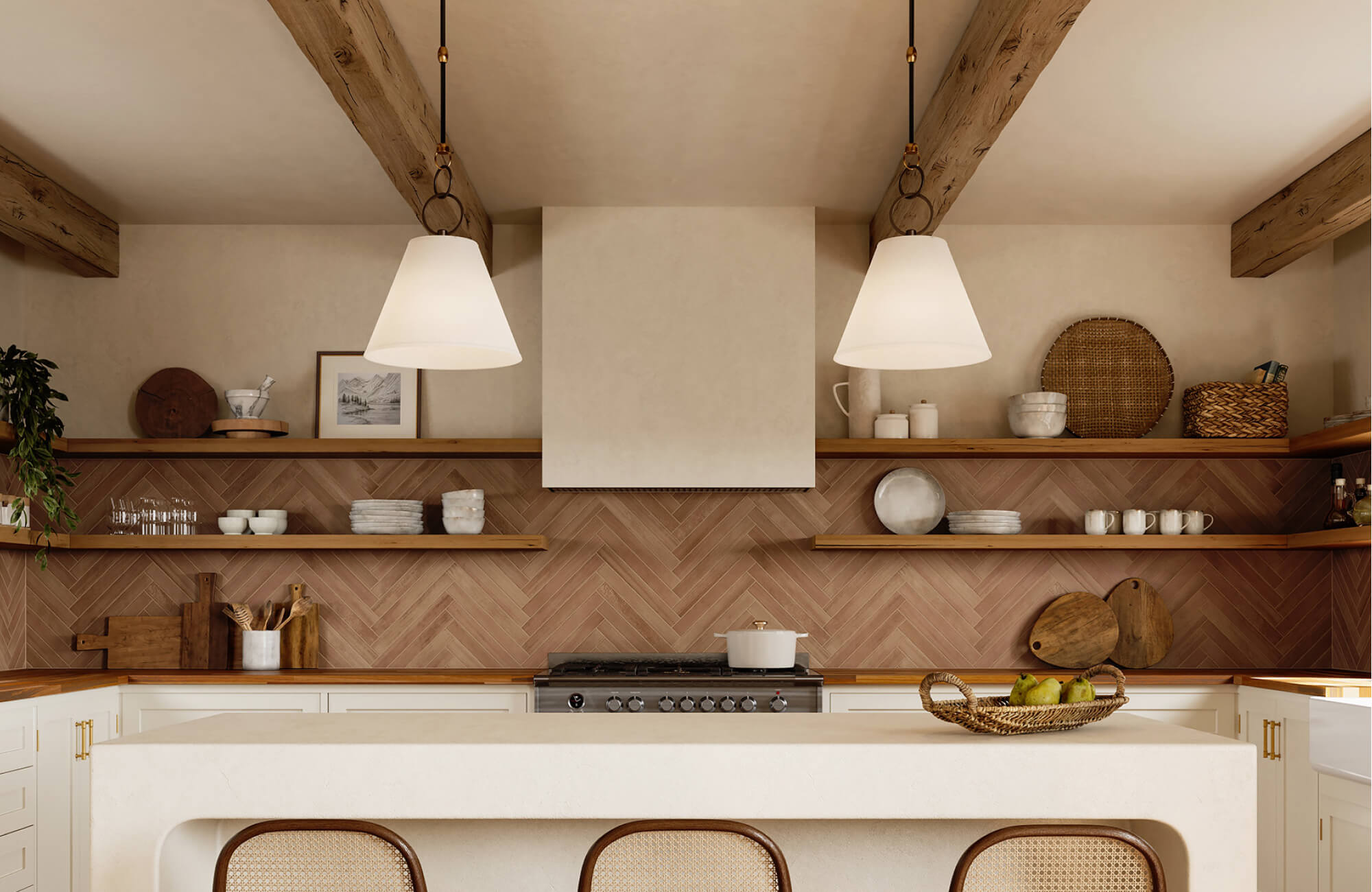
In the photo shown above, Edward Martin’s Hilda 12" Pendant in Distressed Bronze provides a clear example of how a downward-facing shade focuses light onto the island, reinforcing task visibility while maintaining a warm, inviting ambience throughout the space.
Choosing Bulb Temperature
Bulb temperature has a noticeable influence on the overall tone of your kitchen. A range between 2700K and 3000K tends to work well, as it keeps colors looking natural while still offering clear, comfortable illumination for everyday tasks. Cooler temperatures can shift the room toward a more sterile appearance, while much warmer tones may reduce visibility. Finding the right balance helps maintain the kitchen’s color palette and creates a pleasant atmosphere throughout the day.
Wiring, Codes, and Installation Constraints
Every pendant layout depends on a set of practical installation factors. Understanding these limitations helps you plan lighting that fits within your home’s existing structure and follows local requirements. By considering these details early, you can create a setup that is both safe and well-integrated into your kitchen design. For the best results, it is always wise to consult a qualified professional who can evaluate your space and ensure everything is installed correctly.
Existing Junction Box Limitations
If your kitchen already has junction boxes in place, their location may influence where the pendants can be installed unless you decide to rewire. Because relocating boxes involves extra work, many people prefer to design around the existing setup. You can still achieve a balanced arrangement by adjusting the size or number of fixtures to suit these fixed points. This approach lets you work within the constraints while maintaining a visually appealing layout.
Weight and Mounting Requirements
Pendant weight is another important factor to consider, particularly when the fixtures are made from heavier materials. These pieces often require reinforced mounting boxes that can support the added load. If you prefer a larger pendant or one with a substantial shade, it helps to confirm that the ceiling structure can safely accommodate it. Taking this step ensures the fixtures remain secure and stable over time.
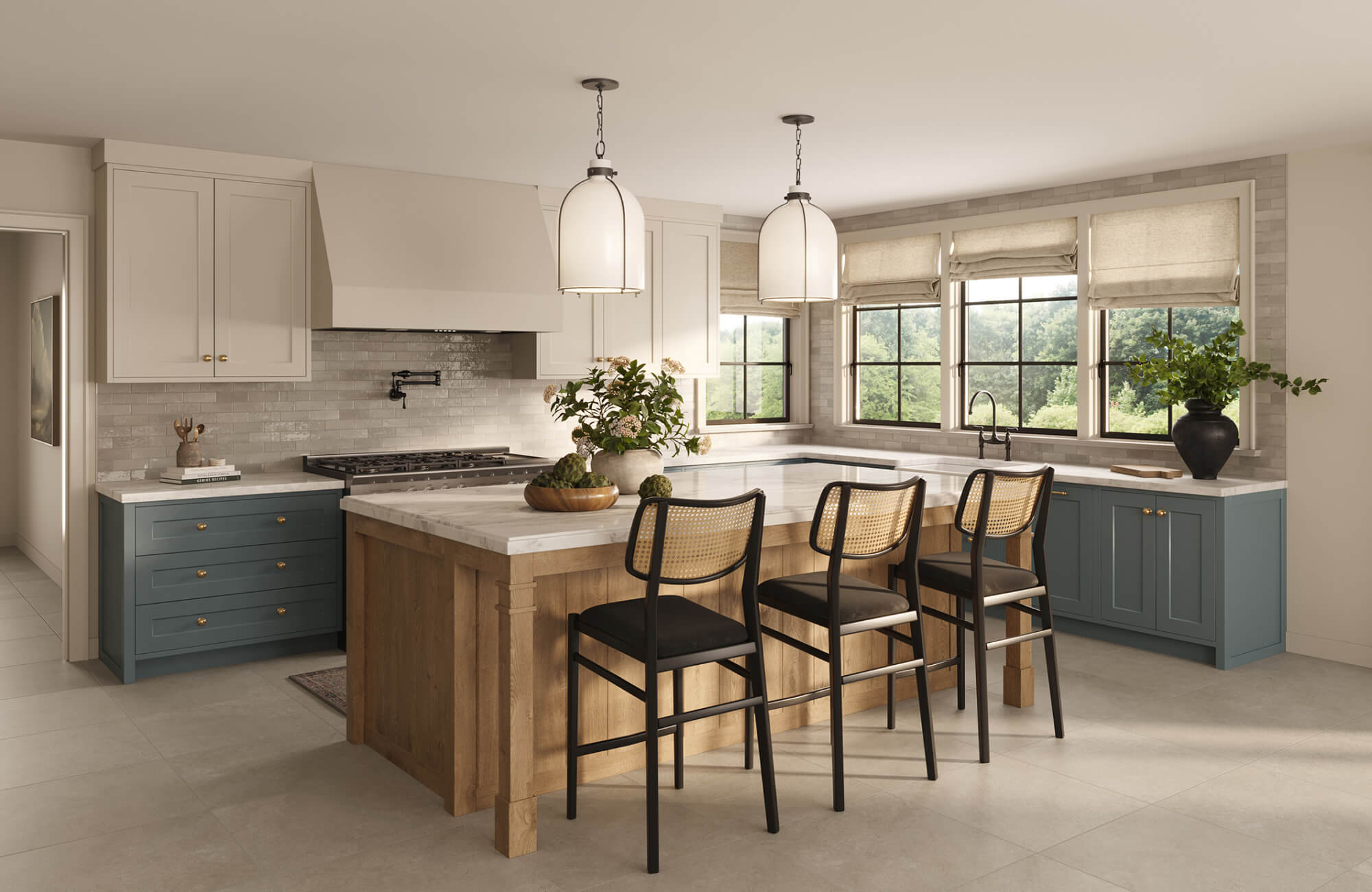
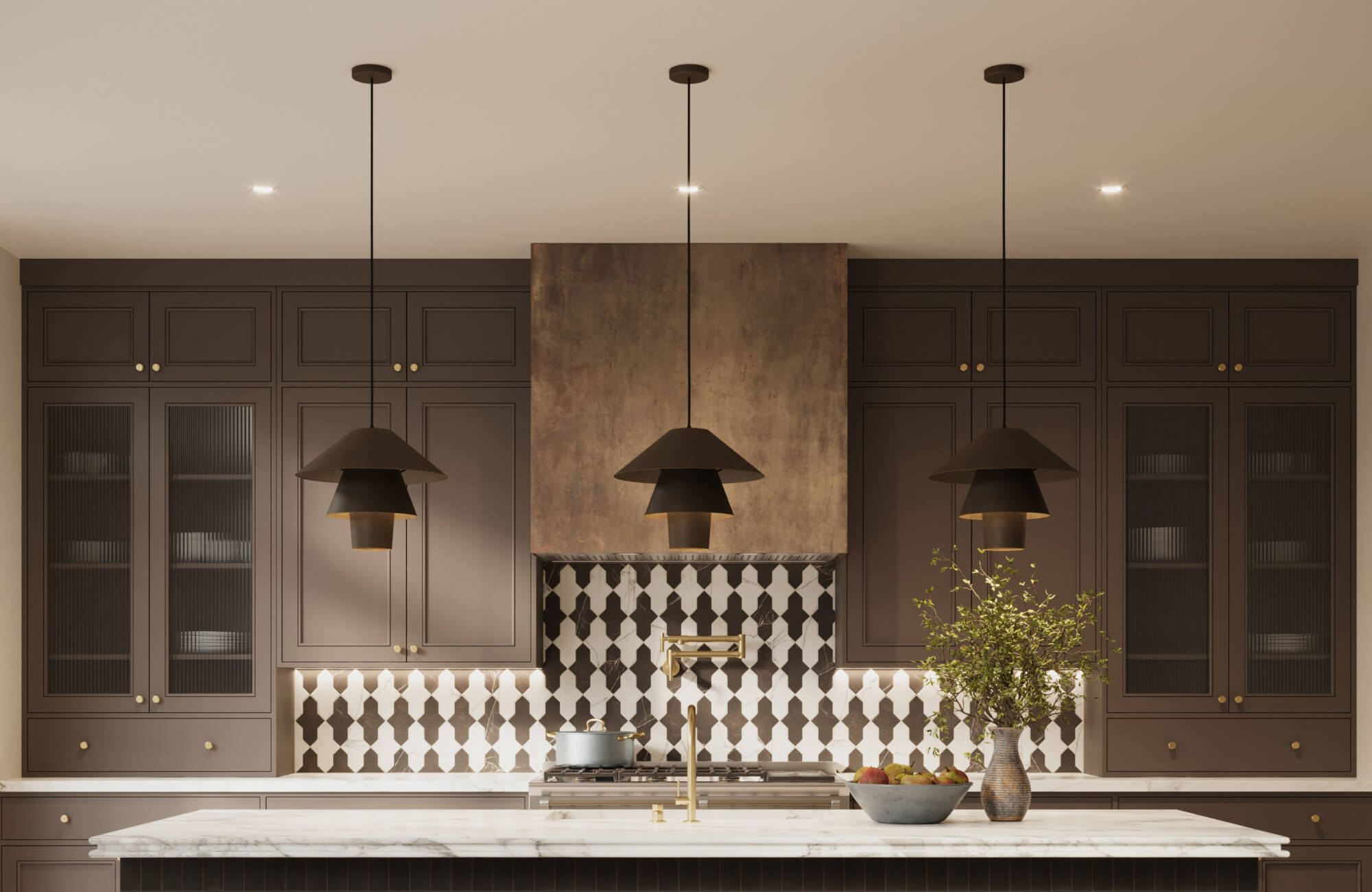
As shown in the photo above, Edward Martin’s Oswald Pendant in Dusty Iron illustrates how a more substantial fixture benefits from proper support, emphasizing the value of ensuring that the ceiling and mounting hardware are equipped to handle added weight.
Local Electrical Code Considerations
Local electrical codes can determine how close your pendants may be to a sink, how high they must hang, or whether the wiring requires an inspection. These guidelines are designed for safety, and following them helps protect your kitchen over time. If any requirements are unclear, speaking with a licensed electrician is a reliable way to ensure compliance and prevent complications during or after installation.
Creating a Well-Balanced Pendant Lighting Plan
A thoughtful pendant lighting plan ultimately follows a few core rules: maintain balanced spacing, choose an appropriate hanging height, match fixture size to the island, ensure proper light output, and account for installation requirements. When these guidelines work together, your kitchen island becomes both a practical workspace and a comfortable place to gather. Understanding how each rule supports the others allows you to create lighting that feels cohesive, functional, and tailored to the way you use your kitchen. If you’d like help choosing the right fixtures or planning your layout, feel free to contact us or explore our design services for personalized support.
Follow us on Instagram
@EDWARD.MARTIN
)
)
)
)
)
)
)
)
)
)
)
)
)
)
)
)