Choosing bathroom tile sounds simple until you start weighing how each option actually performs once the space is in use. Floors get wet, surfaces need regular cleaning, and some materials hold up better than others over time. It’s not just about picking a style you like; it’s about finding something that fits how your bathroom is used every day. The wrong choice can feel off quickly, while the right one tends to work quietly in the background. In this blog, we’ll break down which tiles work best in real bathroom conditions so you can choose with confidence and avoid second-guessing later.

What to Look for When Choosing Bathroom Tiles That Last
Before getting into colors and layouts, it helps to think about how your tiles will actually behave once the bathroom is in use. Bathrooms deal with constant moisture, daily use, and regular cleaning, so your choices need to hold up in real conditions, not just look good on display. When you focus on how the tile performs from the start, it becomes much easier to avoid problems later on.
Tiles That Can Handle Moisture Without Breaking Down
Bathrooms are one of the most demanding areas in a home when it comes to moisture, so not every tile will hold up the same way. Materials like porcelain and certain ceramics are often the safest choice because they don’t easily absorb water, which helps prevent long-term issues like staining or surface damage. This matters most in showers and floors, where water sits longer and gets repeated exposure throughout the day. If the tile isn’t built for that kind of environment, you might start seeing wear much sooner than expected. That could mean discoloration, weakened grout, or surfaces that don’t feel as solid underfoot. Choosing a tile that’s meant for wet areas helps you avoid those headaches early on.
It also helps to know that “water-resistant” and “waterproof” aren’t exactly the same thing. Some tiles can handle splashes and humidity but still take in moisture over time, especially in areas that stay damp longer. That’s why installation matters just as much as the tile itself. A proper waterproofing layer underneath gives you an extra level of protection that you won’t see, but you’ll definitely appreciate later. When both the material and the installation are done right, the surface stays consistent and reliable even with daily use. That’s the kind of setup that lets you focus on enjoying the space instead of worrying about maintenance issues popping up.
Prioritizing Slip Resistance for Everyday Safety
Slip resistance is one of those things you don’t think about until a floor feels a little too slick. In a bathroom, especially around the shower, that can quickly become a problem. Some tiles look great but feel completely different once they’re wet, which is why surface texture matters just as much as appearance. Matte finishes, and smaller tiles with more grout lines usually give you better grip without making the floor feel rough or uncomfortable. Mosaic tiles are a good example, since the extra grout lines naturally help with traction. This gives you a safer surface without needing to rely on heavily textured materials.
You’ll also want to think about how the tile feels during everyday use, not just what the specs say. Ratings like COF can help guide you, but they don’t always tell the full story of how a surface feels under bare feet. A tile that’s too smooth might feel risky, while something overly textured can be harder to clean. Finding that middle ground is what makes a space feel comfortable and easy to use. It also helps to be intentional about where you use each type of tile, since floors, walls, and shower areas all behave differently. When slip resistance is handled well, it becomes something you don’t even think about, which is exactly how it should be.
Keeping Maintenance Simple Without Losing Visual Appeal
Maintenance might not seem like a big deal at first, but it quickly becomes part of your daily routine once the bathroom is in use. Tiles that are smooth and non-porous, like glazed ceramic or porcelain, are usually much easier to clean and don’t hold onto stains as easily. That makes a big difference in spaces that get used often. On the other hand, materials like natural stone can look great but often need sealing and more careful upkeep to keep them looking the same over time. If you’re not prepared for that extra effort, it can start to feel like a chore pretty quickly. That’s why it’s worth thinking about how much maintenance you’re actually willing to keep up with.
Grout is another detail that ends up mattering more than most people expect. Lighter grout can make the space feel brighter, but it tends to show buildup faster, especially in high-use areas. Darker grout is more forgiving, which can make day-to-day maintenance feel easier. Sealing grout also helps protect it from moisture and staining, which keeps everything looking cleaner for longer. Matte porcelain mosaics are often a solid option here because they balance easy cleaning with a softer, less reflective look. They don’t show water spots as easily and still feel refined in the space. When you think through both tile and grout together, the bathroom ends up feeling much easier to maintain without losing its overall look.

Designing Your Dream Bathroom
Designing a bathroom isn’t just about picking finishes that look good together; it’s about choosing materials and layouts that actually work with your daily routine. Tiles influence how the space feels, how easy it is to maintain, and how well it holds up over time. When you think through those details early, the entire design comes together more naturally without feeling forced.
Choosing Tile Materials That Fit Your Space and Daily Use
Tile material is one of the first decisions that quietly shapes everything else in your bathroom. Natural stone, for example, brings a depth and variation that feels more organic compared to manufactured options. Marble, granite, and slate all carry that high-end look, but they also need a bit more care. They can absorb moisture if not sealed properly, and certain products can leave marks if you’re not careful with cleaning. They also tend to feel colder underfoot, which some people like, but others don’t. So while they look great, they usually work best when you’re prepared for that level of upkeep.
Ceramic tiles are a lot more forgiving and easier to work into most designs. They come in a wide range of finishes and colors, which makes them flexible for walls, backsplashes, and even some flooring applications. You can get a clean, polished look without spending too much, which is why they’re used so often. That said, they’re slightly less dense than porcelain, so they can chip more easily in areas that get a lot of use. If you’re using ceramic on the floor, it’s worth checking the durability rating so it holds up properly. For walls, though, they’re usually a safe and practical choice.
Porcelain tiles tend to sit right in the middle of performance and flexibility. They’re denser, less porous, and handle moisture without much trouble, which is why they’re commonly used for both floors and shower areas. If you want something that can take daily wear without needing constant attention, porcelain usually makes the most sense. Glass tiles are a different story; they’re more about visual impact. They reflect light and can brighten up smaller spaces, but they’re better used in accents since they can be more fragile. Each material has its place; it just depends on how much maintenance you’re comfortable with and where the tile is going.
Using Tile Layouts to Shape How the Space Feels
Tile layout isn’t just a visual choice; it changes how the entire bathroom reads when you walk in. A grid pattern keeps things simple and structured, which works well if you want a clean, modern look that doesn’t compete with other elements. It’s predictable in a good way, everything lines up, and nothing feels out of place. That makes it easier to pair with different fixtures or finishes later on without rethinking the whole design. It’s also one of those layouts that doesn’t get tiring over time because it doesn’t try too hard.
If you want something with a bit more movement, layouts like herringbone or stacked patterns shift how your eye moves across the space. Herringbone, for example, adds direction and makes surfaces feel more dynamic without needing bold colors. Subway stacks can feel more modern or slightly more traditional depending on how they’re arranged. Mosaics take it further by adding detail and texture, especially in areas like niches or shower floors. The key is knowing where to stop; not every surface needs a statement. When the layout is used intentionally, it helps guide the design instead of overwhelming it.
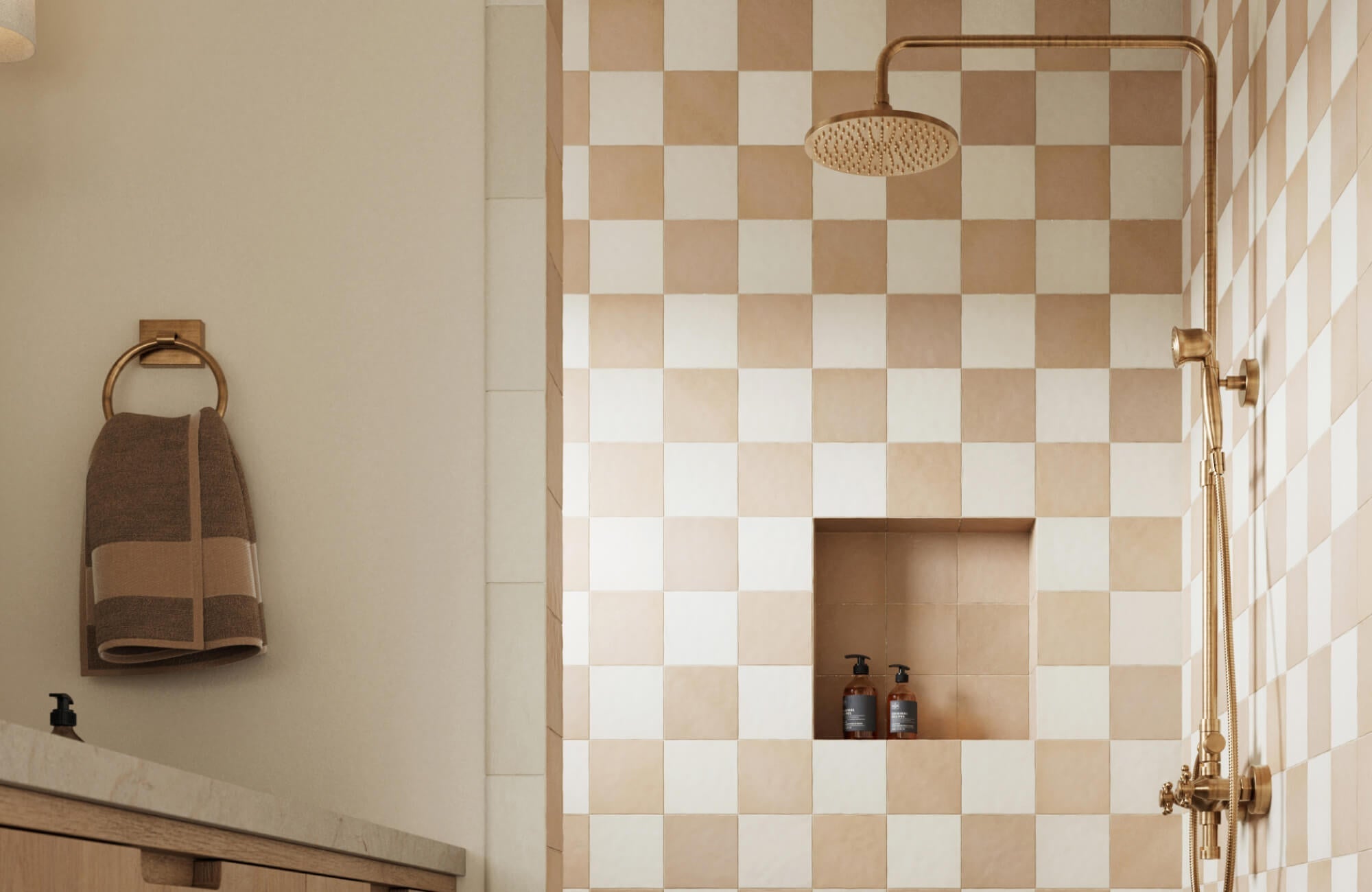
If you’re aiming to bring more character into your bathroom without relying on bold colors, layouts like the one shown above can quietly do the heavy lifting. Our Isabel 11x11 Matte Porcelain Tile Star in Almond Mist and Cross in Almond Mist introduces a rhythmic, geometric pattern that adds movement while still feeling grounded in warm, natural tones. The subtle surface texture and soft, powdery finish give it that lived-in, handcrafted feel, which works especially well in spaces that lean modern but still want a bit of warmth. It’s a strong example of how layout alone can define the space without making it feel overdone.
Picking Tile Sizes That Actually Work With the Room
Tile size plays a big role in how open or detailed a bathroom feels, especially once everything is installed. Larger tiles tend to make a space feel more continuous because there are fewer grout lines breaking things up. That’s why they’re often used in smaller bathrooms; they help the room feel less crowded visually. When paired with lighter tones, they can also help reflect whatever light is available, which makes a noticeable difference. It’s a simple way to make a space feel more open without changing the layout.
Smaller tiles bring a different kind of value, especially in areas that need more flexibility. They’re easier to work around slopes, corners, and tighter spaces, which is why they’re common in showers and floors. Mosaic tiles, as mentioned a lot earlier, in particular, are useful when you need grip and adaptability at the same time. In larger bathrooms, mixing sizes can actually help break things up in a good way. You can keep main areas clean with larger tiles and use smaller ones where you want detail or function. When size is chosen based on the space instead of just preference, everything feels more balanced without forcing it.

Cost Considerations for Bathroom Tile Projects
Tile costs aren’t just about the price per piece; they’re shaped by material, layout, installation, and how the space is built. Looking at the full picture early helps you avoid surprises and plan a setup that fits both your design and your budget.
How Tile Material Affects Your Overall Budget
The type of tile you choose sets the baseline for your budget, and the differences can be more noticeable than expected. Ceramic tiles are usually the most budget-friendly, offering a wide range of styles without pushing costs too high. Porcelain tends to cost more upfront, but it holds up better in wet and busy areas, which can save you from repairs or replacements later. Natural stone sits on the higher end, not just because of the material itself, but also because of the added care it needs over time. You might also need sealing products or specialized cleaning, which adds to the long-term cost. So while some materials look similar at first glance, their pricing makes more sense when you factor in how they perform over time.
How Tile Size and Finish Influence Cost
Tile size and finish can quietly affect both material and labor costs, even if the difference doesn’t seem obvious at first. Larger tiles can reduce the number of grout lines, which means less material and often faster installation. Although they may require more precise handling, especially in smaller or uneven spaces. Smaller tiles, like mosaics, usually take longer to install because of the extra alignment and grout work involved. Finishes also play a role, since glossy or specialty finishes can sometimes cost more than standard matte options. These details might seem minor individually, but they can add up once applied across an entire bathroom. It’s worth thinking about how these choices impact both the look and the effort required to install them.
What Drives Installation and Labor Costs
Labor is often one of the biggest parts of the budget, especially if the design involves more detailed work. Straightforward layouts like grid patterns are quicker to install, which helps keep labor costs lower. More intricate patterns, such as herringbone or detailed mosaics, require more time and precision, which naturally increases the cost. The shape and accessibility of the bathroom can also make a difference, since tighter or irregular spaces take more effort to work around. Even things like cutting tiles to fit corners or fixtures can add to the total time. When you factor in labor early, it becomes easier to balance design choices with what you’re willing to spend.
When DIY Makes Sense and When It Doesn’t
Taking on tile installation yourself can reduce costs, but it depends on the scope of the project and your level of experience. Simpler layouts in smaller areas are usually more manageable and can be a good place to save on labor. Once you get into larger spaces, complex patterns, or waterproofing in showers, the risk of mistakes becomes higher. Fixing those issues later can end up costing more than hiring a professional from the start. Professional installers bring precision and consistency, especially in areas where proper alignment and sealing matter. Deciding between DIY and professional help often comes down to how confident you are in handling the details that affect long-term performance.
Planning for Long-Term Value Instead of Just Upfront Cost
It’s easy to focus on the initial price, but tile choices also affect how much you’ll spend maintaining the space over time. A cheaper material that wears down quickly or needs constant upkeep can become more expensive in the long run. On the other hand, slightly higher upfront costs for durable materials can pay off by reducing repairs and maintenance. It also helps to think about how often the bathroom will be used and what kind of wear it will go through. Choosing something that fits your daily routine usually leads to fewer issues later on. When you look at cost this way, the goal shifts from spending less to choosing something that holds up without extra effort.
Choosing Bathroom Tiles That Still Feel Right After Daily Use
The best tile for a bathroom usually comes down to porcelain, especially for floors and shower areas where moisture and daily use are constant. It handles water well, holds up to wear, and doesn’t require much maintenance, which makes it one of the most reliable options overall. Ceramic can still work well for walls or lighter-use areas, while natural stone fits better if you’re willing to keep up with sealing and maintenance. There isn’t a single perfect choice for every space, but the right tile is the one that matches how your bathroom is used day to day. When durability, safety, and upkeep all line up with your routine, the space simply works better.
If you’re still weighing options or unsure how everything will come together in your own space, our personalized design consultation can help you move forward with more clarity. You’ll get guidance on materials, layouts, and finishes based on your bathroom’s layout, lighting, and daily use, so your choices feel intentional rather than uncertain. It also makes it easier to visualize how different tiles will work together before committing, which helps prevent costly changes later on.