A rug in the kitchen does more than add a decorative touch; it also softens your step, defines key areas, and brings warmth to a space often filled with tile, wood, and metal. While style is part of the decision, there’s more to it than just choosing a pattern. Comfort, functionality, durability, and safety all matter. In this article, we’ll walk you through what to consider so you can choose a rug that looks great and fits seamlessly into your daily kitchen routine.

What a Kitchen Rug Should Do
A kitchen rug does more than add visual appeal; it also plays a practical role in your everyday routine. Whether you’re preparing meals, cleaning up, or moving through the space, the right rug brings comfort underfoot, helps define key areas, and adds a softer touch to a room filled with hard surfaces. Here’s how a well-placed rug can make a noticeable difference in your kitchen experience
Soften and Support
It’s easy to overlook how much time we spend on our feet in the kitchen; chopping vegetables, loading the dishwasher, or waiting for the kettle to boil. Over time, this steady standing can lead to discomfort in your feet, legs, and lower back. A rug with light cushioning provides a layer of relief that makes these daily tasks more comfortable. Especially if you tend to cook often or work at a central island, even a modest amount of support can noticeably ease the strain on your body.
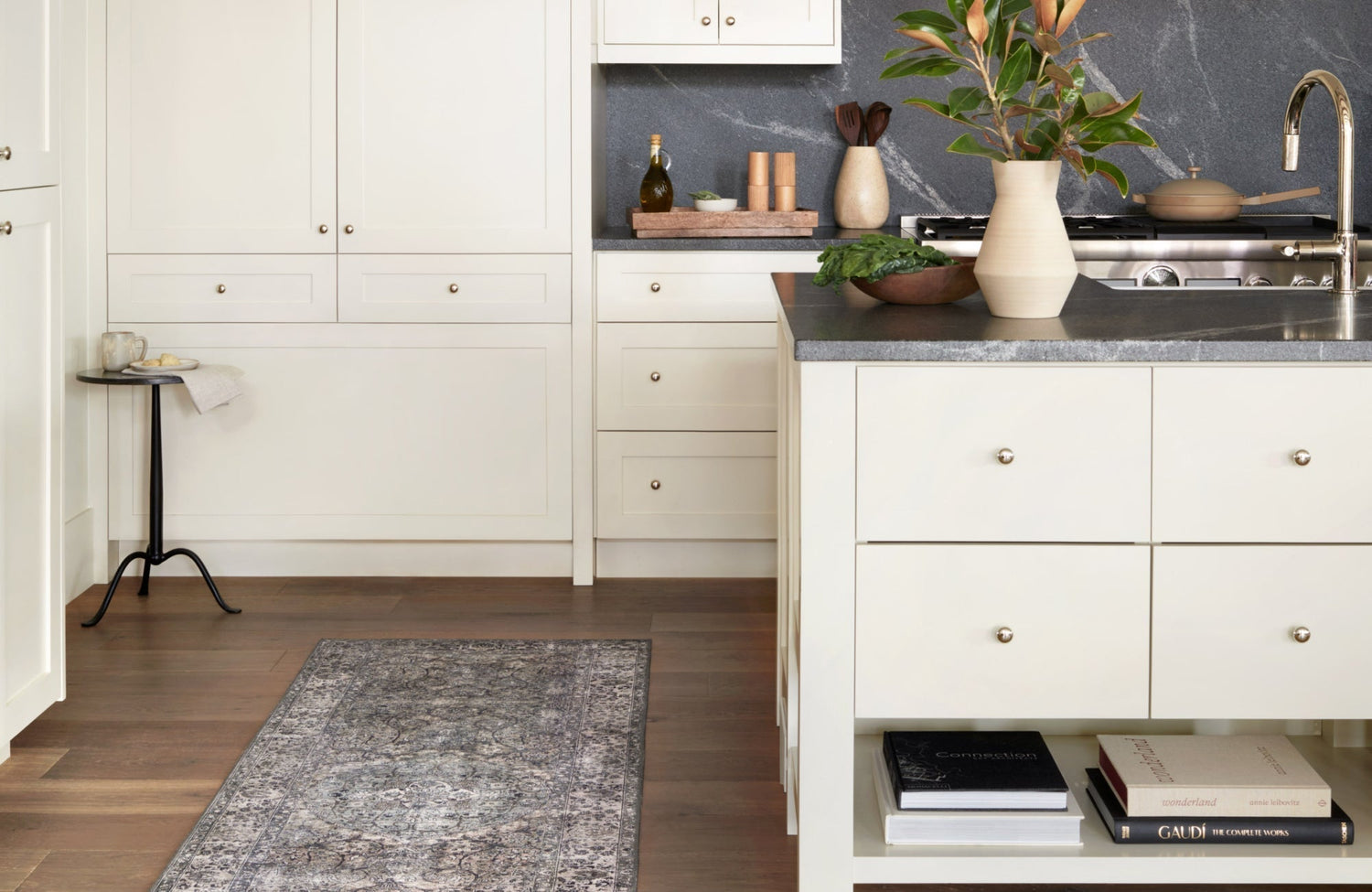
One practical example is Edward Martin’s Pascal Polyester Face Rug in Burgundy / Multi, as featured in the kitchen above. Positioned along the main prep and cooking zone, it offers soft, low-profile support without interfering with movement or appliance access. Its runner shape fits seamlessly into a galley-style layout, providing comfort exactly where it’s needed most while enhancing the warmth and character of the space.
Define Zones
Today’s kitchens are often part of open-concept layouts, blending seamlessly into dining rooms or living areas. In these shared spaces, a rug can serve as a subtle but effective visual marker, helping to define the boundaries of the kitchen without the need for walls. Even in more compact kitchens, placing a rug beneath the sink, stove, or prep area further helps anchor that spot and distinguishes it as a dedicated work zone. This not only brings clarity to the layout but also makes the space feel more organized and thoughtfully designed.
Add Visual Warmth
Kitchens are often dominated by hard, cool surfaces, such as tile floors, stainless steel appliances, and stone countertops, all contribute to a space that can feel a bit stark. Introducing a rug adds an element of softness and texture, breaking up those harder materials and bringing a more inviting feel to the room. Whether your kitchen style is sleek and modern or more traditional and rustic, the right rug can make the room feel cozier, more welcoming, and more connected to the rest of your home.

Choosing Materials That Withstand Daily Kitchen Use
Kitchen rugs face frequent messes, moisture, and constant use, making durability essential. Choosing the right material ensures it holds up over time while staying easy to clean and comfortable to stand on.
Durable and Stain-Resistant Fibers
Kitchen rugs need to handle daily wear without quickly showing signs of damage. Synthetic materials like polypropylene and nylon are especially well-suited for this purpose, as they’re both durable and resistant to stains. These fibers also maintain their shape over time, making them ideal for frequently used areas such as in front of the sink or stove. In spaces where spills and splatters are part of the routine, choosing a rug made from these materials helps ensure it lasts longer and stays looking clean.
Fast-Drying and Low-Absorption Options
Moisture is a common issue in kitchens, and rugs that stay damp can quickly develop mildew or unpleasant odors. To avoid this, it’s best to choose materials that dry quickly and resist absorbing liquids. Flat-weave rugs are a practical choice; they're designed to keep spills on the surface, making them easier to clean before anything soaks in. This not only speeds up maintenance but also helps prevent long-term damage and keeps the rug fresher over time.
A great example is Edward Martin’s Hutchinson Polyester Face Rug in Navy / Rust, as featured in the kitchen above. Its flat-weave construction not only contributes to a low-profile look but also offers the quick-drying properties ideal for moisture-prone areas like this one. Positioned along the main prep path, it adds both function and warmth without trapping spills or moisture beneath the surface.
Machine-Washable or Spot-Clean Friendly
In a kitchen, messes are part of the daily routine, whether it’s a splash of sauce, a dropped utensil, or flour from baking. That’s why easy maintenance should be a priority. Machine-washable rugs, such as those made from cotton blends or lightweight polyester, are ideal for busy kitchen areas. They can be tossed in the wash when needed, making cleanup simple and efficient. For less active spots, a rug that can also be spot-cleaned with mild soap and water. Either way, the rug should support your kitchen routine, not make it more demanding.

Matching Rug Dimensions to Your Kitchen Layout
Once you’ve chosen a material, it’s equally important to find a rug that suits your kitchen’s layout. The right size and placement ensure it complements the space, offering both comfort and visual harmony.
Runners for Narrow Walkways
In narrow kitchens where space is tight and movement is linear, a long runner makes sense. It provides continuous coverage without crowding the floor. Placed along the central walkway or under a line of cabinets, it adds both comfort and cohesion. Runners also work well in galley-style kitchens, where the shape mimics the natural flow of the room.
A great example is Edward Martin’s Hutchinson Polyester Face Rug in Graphite / Olive, as featured in the kitchen above. Its slim profile fits perfectly along the walkway, offering soft support underfoot while blending seamlessly with the light cabinetry and wood flooring. This type of runner not only enhances function in compact layouts but also brings a subtle elegance that elevates the overall space.
Small Mats for Focused Comfort
Not every kitchen calls for a large rug; sometimes, a simple mat in the right spot is all you need. Placing a small mat in front of the sink, stove, or prep area provides targeted comfort where you’re most likely to stand for extended periods. These compact rugs are easy to move, clean, and replace, making them especially practical for everyday use. Despite their smaller size, they can also offer just the right amount of support without getting in the way.
Full Rugs for Spacious Kitchens
In open-concept kitchens or those with a central island, a larger area rug can help define the space and make it feel more cohesive. Unlike smaller mats or runners, full-size rugs serve as visual anchors, helping to balance the room’s proportions and unify its design elements. They also help absorb sound, reducing echo and footstep noise, especially useful in kitchens with tall ceilings or hard flooring. A well-placed area rug not only adds comfort but also enhances the overall flow of a larger kitchen layout.

Complementing Your Kitchen’s Design Style
Once the practical details are in place, the rug should also reflect your kitchen’s aesthetic. The right design brings balance to the space, tying together color, texture, and layout with subtle impact.
Coordinating Colors and Finishes
Your rug doesn’t need to match your cabinets or walls exactly, but it should feel connected to the rest of the space. Start by considering your kitchen’s overall color palette. If your counters and cabinetry feature cooler tones, such as grays, whites, or blues, a rug in similar shades can create a cohesive look. In contrast, warmer hues like rust, beige, or terracotta can add depth to a white or stainless steel kitchen. The key is to complement the existing finishes in a way that feels balanced, not overly matched.
Selecting Patterns for Visual Interest
In kitchens where most design elements are fixed, such as cabinets, appliances, and backsplash, rugs can offer a flexible way to introduce pattern and personality. Whether you prefer understated geometrics or more expressive vintage motifs, a patterned rug can add visual depth while helping to mask everyday wear. The right design adds character without overwhelming the space, striking a balance between interest and simplicity.
A great example is Edward Martin’s Liddy Polyester Pile Rug in Graphite / Platinum, as pictured above. Its subtle linear pattern and soft contrast bring visual texture without overpowering the surrounding elements. This kind of design works especially well in modern or minimal kitchens, offering just enough detail to enhance the look while remaining easy to coordinate with existing finishes.
Texture to Match the Mood
Texture has a noticeable impact on both the feel and appearance of a kitchen rug. Flat-weave styles offer a clean, structured look that pairs well with modern or industrial spaces. If you're aiming for a softer feel or a more layered visual effect, a low-loop or lightly textured rug can also add warmth without overwhelming the room. However, heavily textured or shaggy rugs tend to trap crumbs and are harder to maintain, making them less practical for everyday kitchen use.

Minimizing Safety Risks with Smart Rug Choices
Given the constant activity in a kitchen, safety should remain a key factor when choosing the right rug. Even the most attractive, well-placed rug can pose a risk if it shifts, curls, or bunches. To prevent accidents and keep your rug reliably in place, it’s equally important to pay attention to a few essential details.
Non-Slip Backing as a Must
In kitchens, spills are inevitable, and when combined with smooth flooring, they can create a slipping hazard. That’s why rugs with built-in non-slip backing are essential, especially near sinks, stoves, or prep zones where moisture is common. This backing keeps the rug securely in place, preventing it from sliding or bunching underfoot during everyday use.
A good example is Edward Martin’s Georgette Polyester Pile Rug in Spice / Indigo, as pictured above. Its dark, textured backing is designed to grip hard surfaces, helping the rug stay put even in busy areas. With this added stability, you get the comfort of a rug without compromising safety.
Adding Low-Profile Rug Pads
If your rug doesn’t come with a non-slip backing, a rug pad is a simple and effective solution. Look for a low-profile pad specifically made for hard surfaces, as it should hold the rug firmly in place without adding unnecessary height. This helps keep the rug flat, prevents corners from curling, and reduces the risk of slipping or tripping, particularly in busy kitchen areas.
Keeping Edges and Corners Flat
Over time, even high-quality rugs may start to curl at the edges, particularly in spots with frequent use or movement. To keep your rug safely in place, it’s a good idea to check for lifted corners and address them early. Applying rug tape, repositioning the rug, or anchoring it partially under furniture can help maintain a flat, secure surface. It's also wise to steer clear of rugs with thick fringe or long tassels in walkways, as they can easily catch on shoes or cleaning tools and become a tripping hazard.

Maintaining Your Rug to Extend Its Life
Even the most durable or well-designed kitchen rug won’t last without regular care. Fortunately, maintenance doesn’t need to be complicated, just consistent. A simple routine can make a big difference in keeping your rug clean, functional, and looking its best over time.
Daily and Weekly Upkeep
Kitchens get messy quickly, and rugs in these spaces are no exception. A quick shake outdoors or regular vacuuming can help remove crumbs, dust, and grit before they settle into the fibers. For rugs placed near food prep areas, wiping the surface with a damp cloth at the end of the day helps prevent buildup that’s harder to clean later. Be sure to follow the care guidelines for your rug’s material, as some fabrics may require more delicate handling to prevent damage.
Immediate Spill Response
In the kitchen, spills are inevitable, and cleaning them up promptly is the best way to prevent stains from setting in. The longer a spill sits, the more likely it is to set into the fibers. Gently blot the area with a clean cloth and mild detergent; there’s no need to scrub aggressively, which can damage the rug’s surface. Harsh cleaners such as bleach should be avoided unless the care label specifically allows it. A gentle, prompt response helps maintain both the rug’s texture and its original color.
Occasional Deep Cleaning
Even with consistent care, your kitchen rug will occasionally need a more thorough cleaning to stay fresh and in good condition. Depending on the material, this could involve machine washing, steam cleaning, or scheduling a professional cleaning. Always refer to the manufacturer’s care instructions to ensure the method you choose is safe for the rug’s construction. Periodic deep cleaning not only refreshes the appearance but also helps maintain a cleaner, more hygienic kitchen environment.
Choosing the Right Kitchen Rug with Purpose
The best kitchen rug strikes a balance between comfort, durability, and practicality. Materials like polypropylene, nylon, or flat-weave polyester are ideal for their stain resistance, quick-drying properties, and ease of cleaning. Select a size and shape that suits your layout, runners for narrow walkways, small mats for frequently used areas, or full rugs for open kitchen spaces. For safety, opt for a rug with a non-slip backing or pair it with a low-profile rug pad. Finally, choose a design that complements your kitchen’s style without overpowering it. When function and aesthetics come together, the right rug can truly elevate the way your kitchen looks and feels.
Need help choosing the perfect rug for your space? Contact us today or explore our design services for personalized recommendations tailored to your kitchen’s style and layout.