In bathroom design, the vanity plays a central role, offering both essential storage and serving as a major visual focal point. Choosing the right vanity color is a key decision, as it needs to feel current while standing the test of time. For many homeowners, the goal is to avoid trends that fade quickly and instead invest in a design element that remains stylish for years to come. This article explores how to identify timeless vanity colors by examining their versatility, historical usage, impact on space and lighting, and ability to evolve with changing decor. The aim is to provide you with the knowledge to confidently choose a vanity color that will enhance your bathroom for the long haul.

Exploring Timelessness in Bathroom Design
To determine the most timeless bathroom vanity color, it helps to first understand what "timeless" means in the context of interior design.
What Defines a Timeless Color
A timeless color in interior design isn't just about current trends—it’s about enduring appeal. These colors are known for their versatility and subtlety. Rather than commanding attention, they serve as a balanced backdrop, easily complementing a wide range of hues, textures, and materials. Their neutrality allows them to work across different styles, whether traditional, transitional, or modern, without becoming dated. Because of their balanced nature, timeless colors avoid “trend fatigue” and consistently offer a sense of calm and understated sophistication. They anchor the design, allowing other elements to evolve while maintaining an enduring visual harmony.
Why It Matters in the Bathroom
The concept of timelessness holds special importance in bathroom design, where updates often come with high costs and long-term commitments. Replacing vanities, tiles, or fixtures involves not only significant expense but also considerable disruption. That’s why choosing a vanity color that won’t feel outdated in a few years is a smart investment. Since bathroom fixtures tend to be more permanent than decor items, the selected color must withstand both aesthetic shifts and everyday use. Additionally, because bathrooms are typically smaller spaces, overly bold or trendy hues can overwhelm the room. A timeless color provides a neutral and calming foundation that visually opens the space and maintains its appeal over time. Consulting a design professional can also help ensure the color complements the room’s layout, lighting, and overall design vision.

Color Psychology and Practical Considerations
Beyond aesthetics, the chosen vanity color significantly impacts the mood, spatial perception, and long-term maintenance of a bathroom. These psychological and practical factors are crucial for a truly timeless selection.
Mood and Lighting Effects
Vanity color impacts how light interacts in the bathroom and sets the overall mood. Light-colored vanities, such as white, naturally reflect light, enhancing brightness and creating a clean, airy feel, particularly beneficial in bathrooms with limited natural light. In contrast, wood tones add warmth and organic character, helping to ground the space with a cozy, natural vibe. Gray vanities offer a flexible range of moods: soft grays contribute to a serene and elegant atmosphere, while deeper charcoals bring a sense of intimacy and modern sophistication. Ultimately, the emotional tone of the bathroom will be shaped not just by the vanity color alone, but by how it interacts with both natural and artificial lighting sources.
Maintenance and Stain Visibility
In addition to aesthetics, vanity color can affect how easily the surface shows wear and how much maintenance it demands. White vanities, though they offer a clean and crisp look, tend to reveal dust, smudges, and water spots more readily, often requiring more frequent cleaning. Mid-tone finishes, including most wood tones and medium grays, are generally more forgiving, helping conceal everyday signs of use. Darker vanities can mask dust but may highlight mineral deposits or water streaks if not cleaned regularly. Understanding these tendencies will help you choose a color that matches your desired level of upkeep.
Long-Term Adaptability With Decor
A timeless vanity color also supports flexibility over time. Neutral tones like white, gray, and natural wood provide a dependable base that pairs well with a wide range of other finishes and colors. This makes it easy to refresh your bathroom’s look simply by updating paint, hardware, lighting, or accessories, without needing to replace the vanity itself. This built-in versatility makes classic vanity colors a practical choice for homeowners who want their space to evolve with their tastes.

Classic Color Contenders for Vanity Longevity
When seeking a bathroom vanity color that will truly stand the test of time, certain hues emerge as historically reliable contenders, each possessing inherent qualities that contribute to their enduring appeal.
White for Clean Elegance
White remains one of the most enduring vanity color choices thanks to its association with cleanliness, brightness, and simplicity. Its reflective nature helps amplify light, making bathrooms feel more open, especially in smaller or windowless spaces. White vanities work across diverse styles: from the cozy charm of a farmhouse setting to the sleek lines of a modern or minimalist bathroom. In more traditional interiors, detailed white vanities lend an air of refinement and grace. Their ability to adapt and reflect changing trends through easy accessory updates makes them a consistently reliable foundation for long-term design.
Wood Tones for Natural Warmth
Wood-finished vanities bring organic warmth and a connection to nature, offering both visual and tactile richness. Light woods like birch and oak brighten a space with a casual, fresh look, while darker tones such as walnut or cherry convey depth and sophistication. A beautiful in-between option, our Easton 72" Double Vanity in Whitewashed Walnut with Glossy White Composite Stone Top, as shown above, strikes a perfect balance—its soft finish and natural grain offer warmth while maintaining a refined, modern edge. Wood’s natural grain adds texture and authenticity, enhancing styles that range from rustic to contemporary. Unlike synthetic surfaces, real wood ages gracefully, often gaining character over time. This inherent durability and aesthetic flexibility solidify wood tones as a timeless choice that complements evolving design trends.
Gray for Sophisticated Neutrality
Gray has emerged as a staple neutral in modern design, offering a versatile middle ground between warm and cool palettes. Light grays introduce softness and serenity, perfect for calm, understated bathrooms. Deeper charcoals bring a moody elegance and visual weight without overwhelming the space. This adaptability makes gray especially useful in transitional t colors and decorative finishes to take the spotlight, ensuring the overall design remains relevant and easy to refreshinteriors, bridging traditional and contemporary elements. Gray vanities also allow accent colors and decorative finishes to take the spotlight, ensuring the overall design remains relevant and easy to refresh.

Matching Timeless Colors With Bathroom Styles
The enduring flexibility of classic vanity colors ensures they remain relevant across an evolving landscape of design aesthetics, adapting to and enhancing various bathroom styles.
Traditional and Transitional Bathrooms
In traditional bathrooms, white vanities serve as a clean, timeless centerpiece. They pair effortlessly with features like subway tile, crown molding, and vintage-style fixtures. A great example is our Bridgette 36" Single Vanity in Bright White with 3 cm White Zeus Quartz Top, which brings classic elegance and crisp simplicity that complements both decorative and architectural detailing. Similarly, rich wood tones, such as cherry or mahogany, contribute warmth and classic charm, especially when complemented by detailed millwork and patterned tile.
Transitional bathrooms, which blend traditional and modern elements, benefit from the neutrality of both white and mid-toned wood vanities. These colors provide a familiar base that can be easily updated with modern hardware or lighting, allowing for stylistic flexibility over time.
Modern and Minimalist Spaces
Modern and minimalist bathrooms prioritize simplicity and streamlined design. Here, matte white or soft gray vanities excel by offering understated sophistication. Their clean lines and flat-panel profiles support a clutter-free aesthetic while allowing other architectural elements, like bold tile patterns or sculptural fixtures, to stand out. These neutral tones maintain the minimalist mantra of “less is more,” delivering a serene and adaptable visual foundation that doesn’t distract from the overall composition.
Scandinavian, Coastal, and Organic Styles
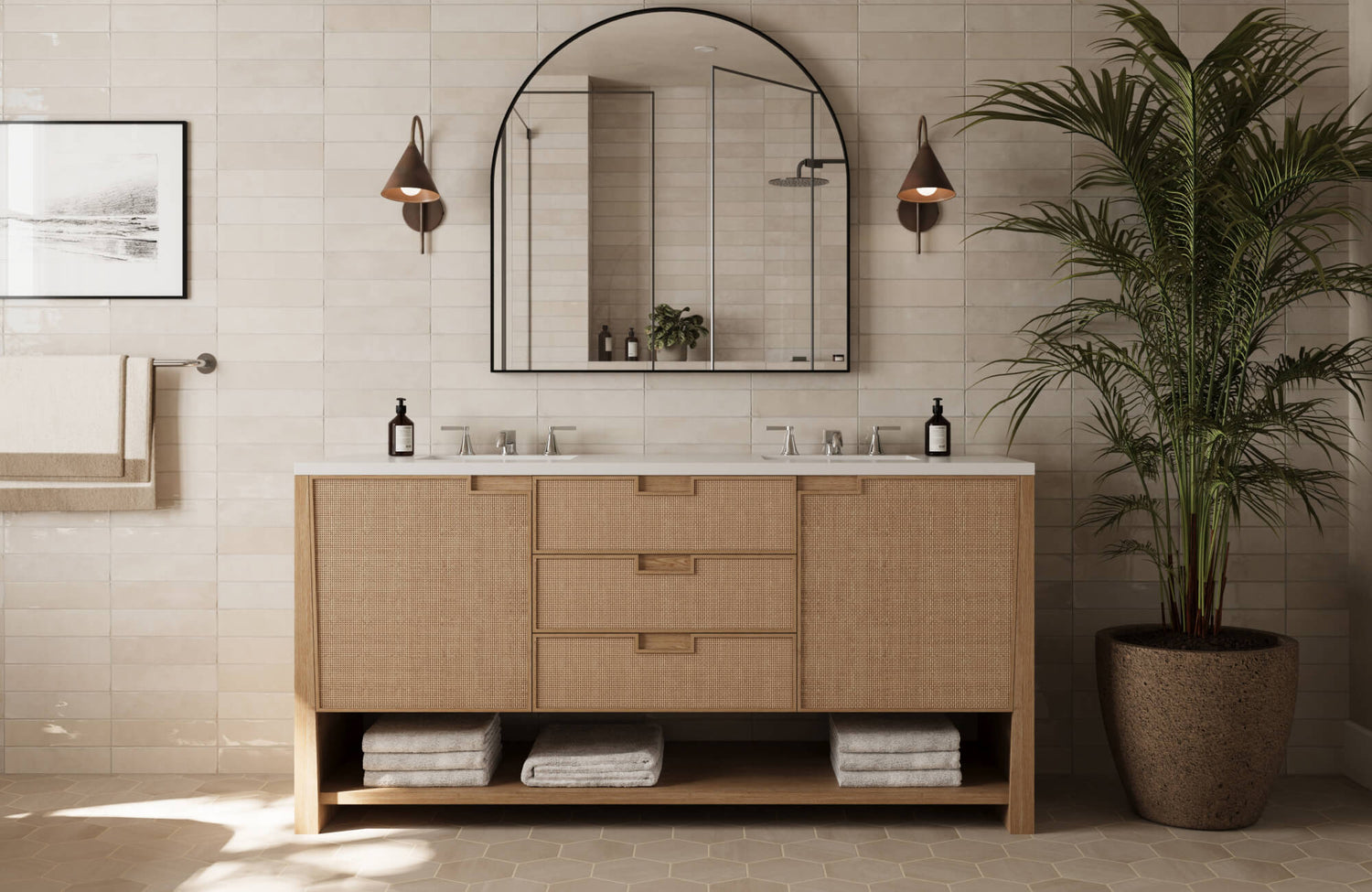
Bathrooms inspired by Scandinavian, coastal, or organic design themes embrace light, natural materials, and soft, neutral tones. Light wood vanities, such as bleached oak, maple, or thoughtfully crafted pieces like our Abigail 60" Single Vanity in Light Natural Oak with 3 cm White Zeus Quartz Top, seen above, fit beautifully within these aesthetics, adding subtle texture and warmth. Paired with soft wall colors and minimalistic design elements, they foster a sense of openness and tranquility. Similarly, soft whites and muted grays support the clean and relaxed aesthetic of these spaces, reinforcing a calm, nature-inspired atmosphere.

When to Break the Mold With Accent or Trend Colors
While timeless colors offer long-term value, there are smart ways to introduce bold or trendy vanity colors that add personality without sacrificing future adaptability.
Using Bold Colors as Secondary Statements
Bold vanity colors such as navy, forest green, or matte black can make a strong impression, especially when used to highlight specific areas rather than define the entire space. These rich tones are particularly well-suited for smaller bathrooms like powder rooms or guest baths, where their visual impact is contained. In these settings, a bold vanity can create a high-end, jewel-box effect without overwhelming the space. For larger bathrooms, introducing bold colors as a secondary feature, perhaps through an accent vanity or unique cabinetry, adds flair without anchoring the entire design to a trend. This approach makes it easier to update the look later with minimal effort or cost.
Balancing Trendy Colors With Neutral Backdrops
If you opt for a trend-forward vanity color, ensure the rest of the bathroom maintains a neutral and timeless palette. Flooring, wall finishes, and large fixtures in classic tones, such as white, soft gray, or light wood, create a stable canvas that offsets a bold vanity. This strategy allows the vanity to shine without overwhelming the space and provides flexibility for future updates. Should the color trend fade, swapping the vanity becomes a manageable update rather than a full-scale renovation, making this a smart compromise between personality and practicality.
The Enduring Appeal of Timeless Vanity Colors
Choosing a bathroom vanity color is an investment in both design and practicality. Timeless options like white, wood tones, and gray provide a strong foundation for long-lasting beauty, adaptability, and ease of maintenance. They pair well with a variety of styles and allow for affordable updates as tastes evolve. Ultimately, the best timeless vanity color is one that fits your home, supports future changes, and continues to feel fresh and inviting year after year. If you're looking for guidance on selecting the right vanity color for your space or need help refining your bathroom design, contact us for personalized support and expert advice.