Understanding the various types of lighting fixtures available is the first and most crucial step in designing a beautiful, functional, and well-lit home. Two fixtures that often cause confusion for homeowners exploring decorative lighting options are the wall sconce and the flush mount light. While both fixtures attach directly to a fixed surface, their design intent, projection, and function within a layered lighting scheme are fundamentally different.
This guide will clarify the specific physical characteristics, primary lighting roles, aesthetic impact, installation considerations, and ideal placement for both sconces and flush mount lights, ensuring you can confidently choose the perfect fixture to illuminate and elevate every room in your space.

Defining Physical Form and Projection
The most noticeable distinction between sconces and flush mounts begins with their physical shape and how far they extend into a room. This projection influences not only appearance but also how the fixture interacts with surrounding architecture.
The Distinctive Profile of a Sconce
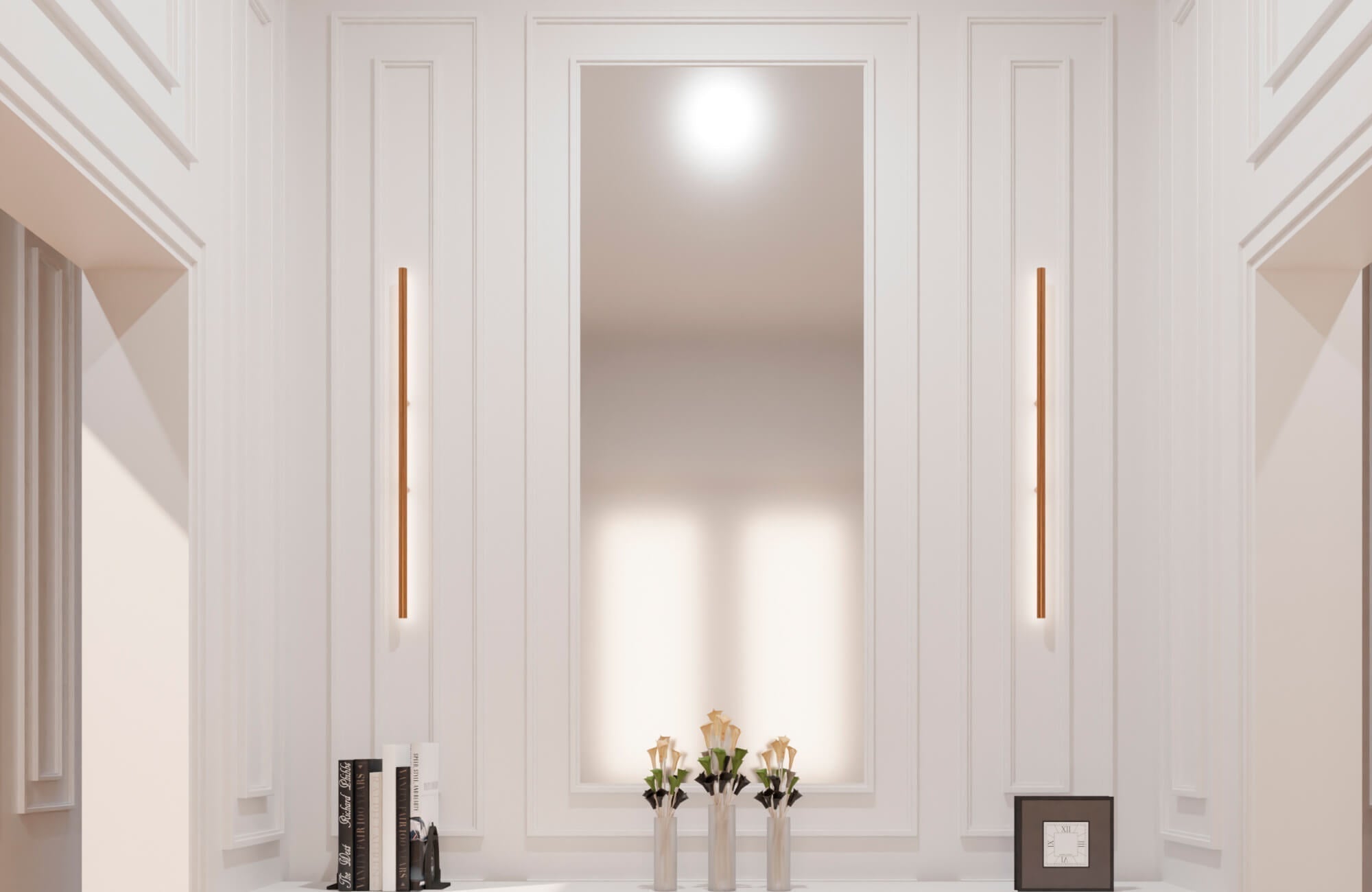
A sconce is a wall-mounted fixture that typically extends outward, creating a visible profile within the room. This projection can range from a few inches to over a foot, depending on the design. Because of this three-dimensional form, sconces are often used as decorative statements in addition to their lighting function. The housing, shade, or armature becomes part of the wall’s architectural composition, making sconces ideal for accentuating corridors, framing mirrors, or defining focal points in living areas. In the kitchen shown above, Edward Martin’s Jodie Wall Sconce in Antique Brass Iron demonstrates how a thoughtfully scaled fixture can bring both function and elegance to everyday spaces.
The Minimalist Closeness of Flush Mounts
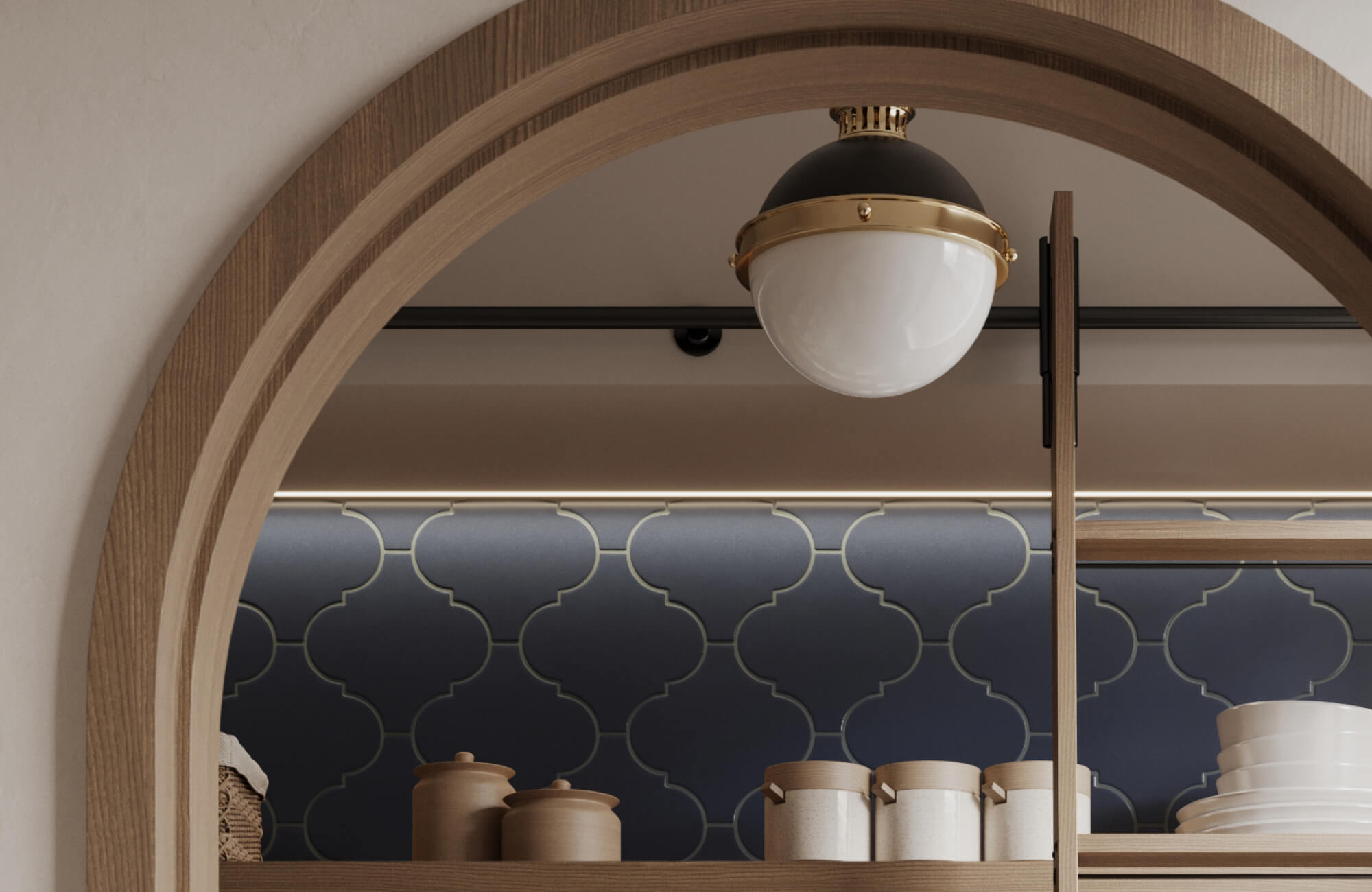
Flush mount fixtures, by contrast, are engineered to sit directly against the ceiling plane, minimizing any protrusion into the room. With an average depth of only a few inches, they provide illumination without interrupting the line of sight or creating bulk overhead. This streamlined integration makes flush mounts particularly effective in spaces with lower ceiling heights, such as bedrooms, hallways, or entryways. Their form is intentionally restrained, prioritizing unobtrusive functionality while still offering stylistic flexibility. In the similar photo above, Edward Martin’s Sebastian Pendant in Aged Brass Iron stands out as a prime example, delivering a refined silhouette that enhances the room’s design while maintaining visual lightness.
Clearance and Traffic Flow Considerations
The projection of each fixture type has direct implications for clearance and circulation. Because sconces extend from the wall, placement must account for traffic flow to avoid obstructions or accidental contact in narrow passages. Building codes and best practices often recommend mounting sconces between 60–72 inches from the floor and ensuring adequate lateral clearance. Flush mounts, with their low-profile design, eliminate such concerns overhead and are ideal for high-traffic areas where headroom is limited. By understanding these spatial requirements, designers can specify fixtures that not only meet aesthetic goals but also ensure safety and comfort in everyday use.

Primary Lighting Roles and Functionality
Once the form is understood, the next step is recognizing how each fixture type functions. The way sconces and flush mounts distribute light defines their primary roles in a layered lighting plan.
Sconces as Task and Accent Lighting
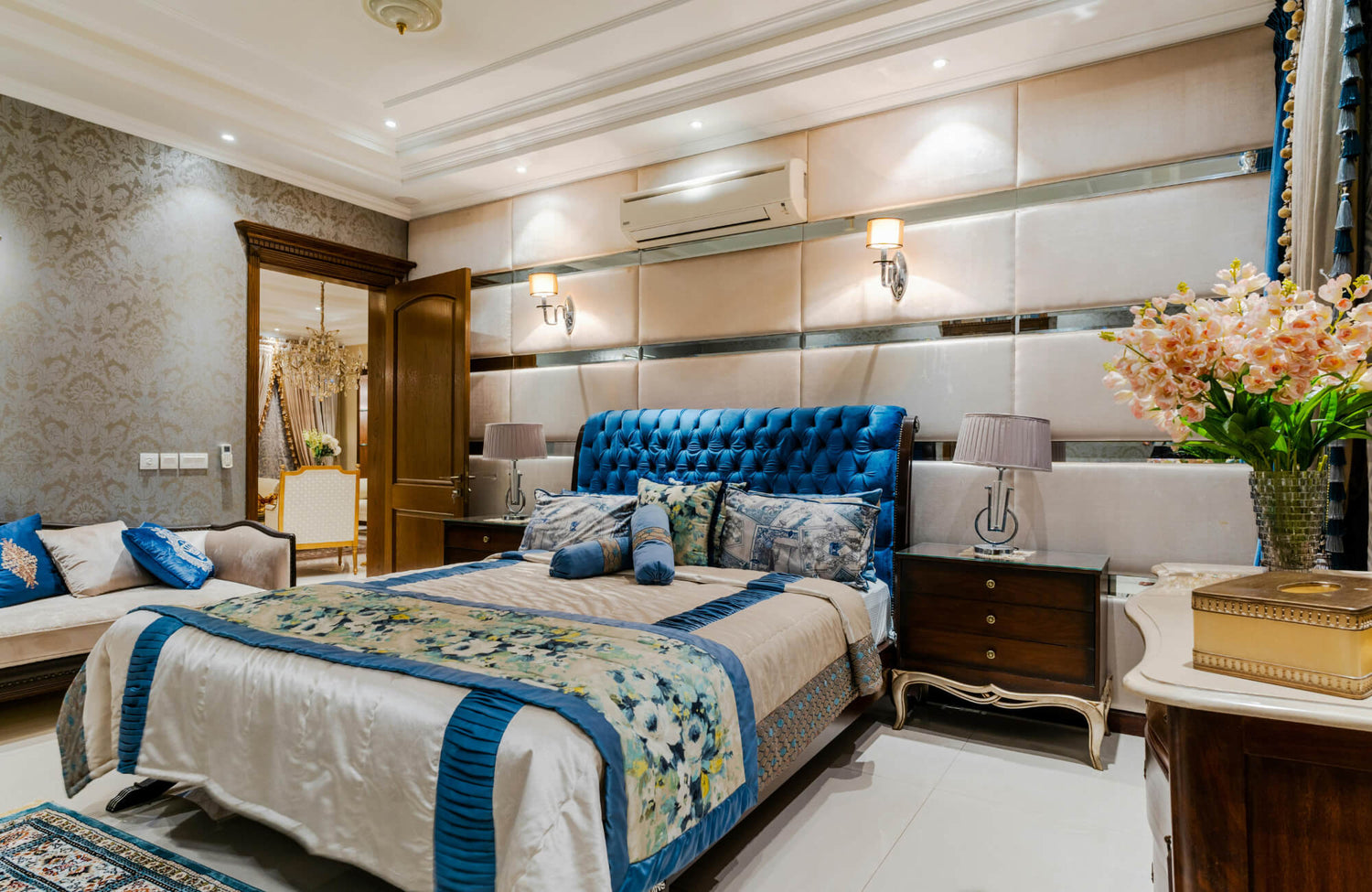
Sconces are typically employed for localized illumination, offering precise light where it is most needed. In bathrooms, they are frequently mounted at eye level beside mirrors to reduce facial shadows and provide accurate task lighting for grooming. In hallways or living spaces, sconces function as accent lights, emphasizing architectural features, artwork, or textured wall finishes. Their directional projection allows designers to highlight focal points while simultaneously contributing to the room’s layered atmosphere. In the bathroom pictured above, Edward Martin’s Ortega Wall Sconce in Patina Brass demonstrates how a refined silhouette can provide both practical light and decorative impact without overwhelming the design.
Flush Mounts as Ambient Light Producers
Flush mount fixtures are primarily designed to serve as general, or ambient, lighting. Because they are ceiling-mounted and positioned centrally, they distribute light evenly across a wide field. This broad coverage makes them effective for bedrooms, kitchens, and utility spaces where consistent illumination is required for safety and comfort. Many flush mounts employ multiple lamp sources or integrated LEDs to maximize lumen output, ensuring sufficient brightness even in larger or multi-purpose rooms. In the similar photo above, Edward Martin’s Clementine Semi-Flush in Gold Leaf illustrates how an understated ceiling fixture can achieve ambient balance while complementing surrounding finishes with warmth and texture.
The Use of Diffusers and Shade Direction
Both sconces and flush mounts rely heavily on diffusers, reflectors, and shade orientation to control the quality of light. A sconce may incorporate upward-facing shades to bounce light off the ceiling for a softer effect, or downward-facing shades to deliver concentrated task lighting. Flush mounts often feature frosted glass or acrylic diffusers that scatter light evenly, reducing glare and enhancing uniformity. The choice of diffuser material and shade direction directly impacts color rendering, brightness distribution, and the overall mood of a space, making these technical details crucial in professional lighting design.

Aesthetic Design and Decorative Impact
Beyond form and function, lighting also serves as a design element. Looking at the decorative impact of sconces and flush mounts reveals how they shape style and atmosphere in different spaces.
Sconces as Architectural Embellishments
Sconces often double as ornamental elements, introducing dimension and rhythm to vertical surfaces. Whether styled with ornate metalwork, sculptural glass shades, or streamlined contemporary forms, they contribute to the architectural narrative of a room. Their placement along walls can create symmetry, frame doorways or artwork, and provide a layered interplay between light and shadow. In historic and transitional interiors, sconces are especially valued for their ability to evoke craftsmanship while maintaining functional illumination. In the dining space shown above, Edward Martin’s Lynn Wall Sconce in Vintage Gold Leaf exemplifies how a sculptural form can enrich the wall with both decorative artistry and a warm, glowing presence.
Flush Mounts for a Clean Unobtrusive Look
Flush mount fixtures, in contrast, are defined by their restrained presence. With housings that hug the ceiling plane, they allow the architecture itself to take visual precedence. This makes them a favored choice in modern, minimalist, and utilitarian spaces where visual clutter must be avoided. Their low-profile silhouette ensures that the fixture supports, rather than competes with, other decorative features such as millwork, furnishings, or ceiling treatments. In open-concept layouts, flush mounts provide consistency and cohesion without drawing focus away from key design elements.
Material Choices and How They Influence Style
Both sconces and flush mounts rely heavily on material selection to articulate style and complement broader design schemes. A sconce in hand-rubbed brass or wrought iron may reinforce traditional or rustic aesthetics, while polished chrome and etched glass lean toward modern sophistication. Flush mounts frequently employ materials such as frosted acrylic, linen diffusers, or minimalist metal housings to enhance their understated appearance. Materiality not only influences the decorative impact but also affects light transmission, color temperature perception, and the overall mood of a space. For designers, these material decisions are as critical as fixture placement.

Installation Requirements and Electrical Considerations
Aesthetic choices are only as effective as their installation. Understanding the electrical and mounting requirements of each fixture ensures safety, efficiency, and long-term performance.
The Vertical Wiring of Wall Sconces
Wall sconces typically require electrical boxes installed at a specific height along vertical wall studs. Placement is critical: in bathrooms, for instance, sconces are often mounted at eye level (roughly 60–66 inches from the floor) to minimize shadows when used beside mirrors. Wiring must be routed through walls, which may necessitate cutting drywall or coordinating with existing conduit pathways. In retrofit scenarios, junction box placement must be carefully aligned to support the fixture’s weight and projection, ensuring both stability and electrical safety. Because this work involves concealed wiring, it’s advisable to hire a licensed electrician to ensure compliance with local codes.
Central Junction Box Placement for Flush Mounts
Flush mount fixtures rely on ceiling-mounted junction boxes, usually located in the center of the room or along the main ceiling grid. This centralized position allows for even light distribution and simplified wiring, especially in new construction where ceiling joists can be planned to accommodate fixture placement. Flush mounts are typically anchored directly to the junction box with mounting brackets or plates, which must be rated to handle the fixture’s weight. In remodels, relocating or installing a new junction box may require cutting into ceilings and coordinating with attic or overhead access. Since overhead wiring can pose safety risks, it’s best to let professionals handle the installation to avoid structural or electrical hazards.
Dimming Capabilities and Layered Control
Both sconces and flush mounts can be integrated into dimming systems, though their applications differ. Sconces, often used as accent or task lights, benefit from independent dimmer switches that allow fine-tuned control of mood and emphasis. Flush mounts, providing ambient illumination, are frequently tied to central dimming circuits or smart home systems that manage whole-room lighting levels. Advanced configurations may incorporate multi-zone dimming or programmable scenes, enabling layered control across sconces, flush mounts, and other fixture types. For best results, compatibility between the dimmer, lamp type (LED, incandescent, CFL), and driver must be confirmed to avoid flickering or reduced lamp life. Because dimmer compatibility can be complex, consulting a professional installer helps ensure reliable performance and long-term efficiency.

Best Placement and Room Specific Applications
With design and installation in mind, the final piece is strategic placement. Knowing where sconces and flush mounts work best helps tailor lighting plans to the unique needs of each room.
Sconces for Hallways and Bedside Reading
Wall sconces excel in areas where targeted, human-scaled illumination is essential. In hallways, evenly spaced sconces at 6–8 foot intervals provide balanced light while reducing reliance on overhead fixtures, which can create glare or uneven coverage. In bedrooms, sconces mounted at headboard height serve as efficient reading lights, offering localized illumination without occupying nightstand space. Adjustable-arm sconces are particularly effective here, allowing users to direct light precisely for comfort and task efficiency. In the laundry space shown above, Edward Martin’s Miriam Wall Sconce in Aged Brass highlights how a classic, scalloped design can bring both charm and task-ready lighting to utility-focused rooms.
Flush Mounts for Low Ceilings and Utility Areas
Flush mount fixtures are indispensable in rooms with restricted vertical clearance. With profiles that project only a few inches, they preserve headroom while delivering wide ambient coverage. In laundry rooms, closets, kitchens, and basements, flush mounts ensure uniform brightness across work surfaces and storage areas. Their ceiling-centered positioning prevents shadow pockets that might compromise visibility in utilitarian spaces. In residential construction with 8-foot ceilings, flush mounts are often the default solution for meeting illumination standards while maintaining a clean ceiling line.
Combining Both Fixtures in an Open Concept Space
In large, multi-functional areas such as open-plan living and dining rooms, the combined use of sconces and flush mounts creates layered lighting that addresses varied needs. Flush mounts establish a baseline of ambient illumination, while sconces introduce zones of accent or task lighting along perimeter walls. This dual strategy not only enhances visual depth but also provides flexibility, ambient levels can be dimmed while sconces highlight architectural details or provide softer light for intimate gatherings. Integrating both fixture types ensures that expansive spaces feel cohesive, adaptable, and visually engaging.
Choosing the Right Fixture for Your Home
Deciding between a sconce and a flush mount often comes down to how you want light to work in your space. Flush mounts provide broad, even illumination from above—perfect for keeping rooms bright without taking up visual space. Sconces, on the other hand, bring dimension and focus by casting light from the wall, making them as decorative as they are functional.
If you’re unsure which direction to take, Edward Martin’s design consultation service can help. Our team offers thoughtful guidance tailored to your project, so you can feel confident in your choices and create a home that reflects your style. And if you need more support along the way, simply contact Edward Martin for personalized recommendations, answers to product questions, or help selecting lighting, tile, rugs, or furniture that fit seamlessly into your design vision.