Checkered floors are a timeless design choice that can add vintage charm or modern sophistication to any space. Whether featured in kitchens, bathrooms, or entryways, this bold pattern creates visual impact while remaining adaptable to various styles. Beyond aesthetics, selecting the right tile is essential for durability and maintenance. Factors like material strength, moisture resistance, and long-term upkeep determine which tiles work best in different environments. In this blog, we’ll break down what actually works so you can choose with confidence and get a result that feels right in your space from day one.

Durability and Practicality for Busy Areas
Busy areas tend to reveal the strengths and weaknesses of flooring faster than anything else. In spaces like kitchens, hallways, or entryways, materials are constantly exposed to movement, spills, and everyday wear, so durability isn’t something you can overlook. Choosing the right tile here is less about appearance and more about how well it holds up over time without needing constant attention.
Porcelain Checkered Tile
Porcelain checkered tile is often the go-to option when durability is the main priority, especially in spaces that see regular use throughout the day. Its density comes from a higher firing temperature and finer clay composition, which makes it more resistant to scratches, stains, and moisture compared to other materials. This matters more in real use, where floors deal with foot movement, furniture weight, and the occasional spill without warning. Choosing the right Porcelain Enamel Institute (PEI) rating also helps ensure the tile performs as expected, with a rating of 3 or higher generally recommended for residential floors. Higher ratings handle abrasion better, which becomes noticeable in areas where surfaces are constantly being used rather than just seen. Over time, this consistency is what keeps the floor looking intact without visible wear patterns forming too quickly.
Another advantage shows up when you consider long-term appearance, especially with through-body porcelain tiles. Because the color and pattern extend through the entire tile, minor chips or surface wear don’t stand out the same way they would on surface-level designs. This makes a difference in busy areas where small impacts are hard to avoid. Pieces like our Leona 24x24 Checkerboard Matte Porcelain Tile in Calacatta and Amani Grey above work well in this context, since they combine that durability with a softer, more refined take on the checkered pattern. Instead of feeling overly bold, the tones stay balanced while still holding up under daily use. It’s the kind of option that doesn’t require much adjustment once installed, which makes it easier to live with long-term.
Ceramic Checkered Tile
Ceramic checkered tile works well when you’re trying to balance cost and performance, especially in areas that don’t deal with constant wear. While it shares a similar base material with porcelain, it’s less dense, which means it’s slightly more prone to scratches or chips over time. That doesn’t necessarily make it a poor choice, but it does mean placement matters more. In spaces like backsplashes, accent walls, or lower-use floors, ceramic can still hold up well without needing the same level of durability as porcelain. It also tends to be easier to cut and install, which can help simplify the process in more detailed layouts. For homeowners who want the look of a checkered pattern without committing to a higher price point, it offers a practical middle ground.
Tile grading becomes more important with ceramic, since quality can vary more noticeably between options. Grade 1 tiles provide the most consistent finish with minimal imperfections, which helps maintain a cleaner overall pattern once installed. Lower grades may still work, but small inconsistencies can become more visible in a checkered layout where alignment and contrast matter. Rectified ceramic tiles also help improve the final look by allowing tighter grout lines, which makes the pattern feel more precise and less interrupted. Over time, this can make a noticeable difference in how polished the space feels. While ceramic may not be the most durable option available, it can still perform well when used in the right setting.
Natural Stone
Natural stone brings a different kind of appeal to checkered floors, especially when the goal is to create a more elevated or layered look. Materials like granite and marble naturally carry variation in tone and texture, which adds depth that manufactured tiles often try to replicate. Granite, in particular, holds up well in busy areas due to its hardness, making it more resistant to scratches and surface wear. Marble, on the other hand, offers a softer and more refined appearance, but it tends to show wear more quickly over time. This difference becomes more noticeable in areas where the floor is used regularly rather than occasionally. Choosing between them often comes down to whether you prioritize durability or visual character.
Maintenance is where natural stone requires a bit more attention compared to other options. Because it’s more porous, sealing becomes part of the routine to help prevent moisture and stains from settling into the surface. The frequency of sealing depends on the type of stone, with marble typically needing more care than granite. Finish also plays a role, since honed or leathered surfaces tend to hide scratches and wear better than polished ones. In a busy area, this can help the floor age more evenly instead of showing immediate signs of use. While natural stone offers a more distinctive look, it usually works best when you’re prepared to maintain it properly over time.

Style and Design Considerations
Once you move past durability, the real impact of a checkered floor comes down to how it looks and feels in your space. Because the pattern is naturally bold, small decisions like tile size, color, and layout can completely change the overall effect. The goal isn’t just to make it look good, but to make sure it fits how you want the room to feel day to day.
Timeless Elegance with Classic Black and White
Black-and-white checkered floors have been around for decades, and there’s a reason they keep coming back. They instantly bring a sense of structure and contrast that works in both traditional and more updated spaces, depending on how you style them. Smaller tiles tend to lean more vintage, especially in kitchens or entryways where that classic look feels natural, while larger tiles clean things up and feel more current. You can see this in options like our Leona 12x12 Checkerboard Matte Porcelain Tile in Calacatta and Nero Marquina shown above, where the marble look softens the contrast just enough to feel refined instead of harsh. Details like grout color and edge finish also matter more than you’d expect, since they can either sharpen the pattern or make it feel more blended. If you get those small things right, the whole floor ends up feeling intentional instead of overpowering.
Modern Designs with Color and Texture Variations
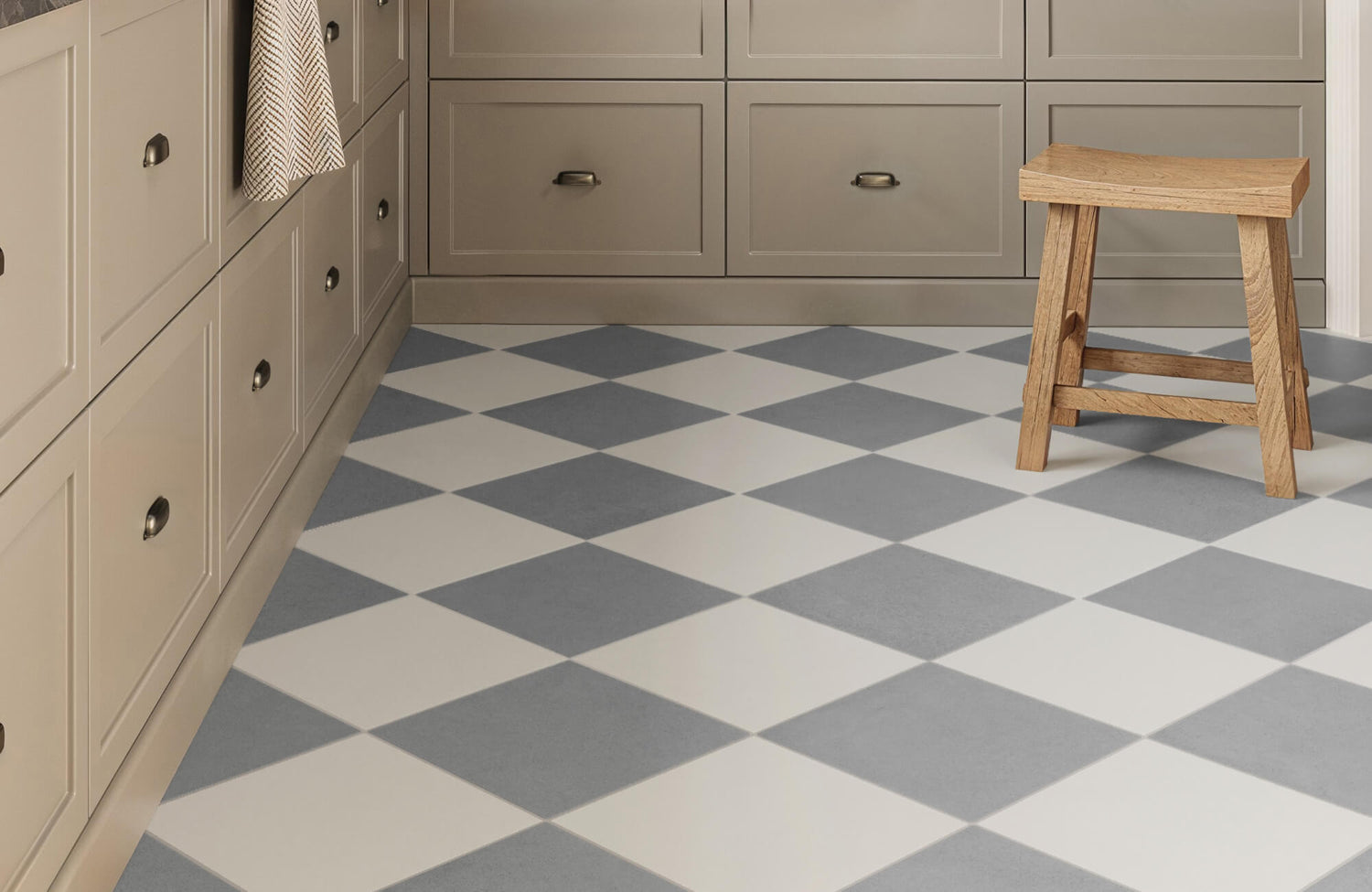
If black and white feels too bold or traditional, shifting the palette is usually the easiest way to modernize the look. Softer combinations like gray and white, or even warmer tones, can keep the pattern while making the space feel more relaxed and less formal. Textures also play a bigger role here, especially when you’re working with matte finishes or stone-inspired surfaces that don’t reflect too much light. Options like our Palmer 12x12 Checkerboard Matte Porcelain Tile in White and Grey are a good example of how the pattern can feel subtle without losing its structure. Larger tiles also help simplify the overall look, especially in open spaces where smaller patterns might feel too busy. It’s less about changing the design completely and more about adjusting it so it fits your style.
How Tile Size Changes the Feel of the Room
Tile size is one of those things you don’t always think about at first, but it has a big impact once everything is installed. Smaller tiles create more movement because of the repeated pattern, which can make a space feel more detailed but also a bit busier. Larger tiles, on the other hand, stretch the pattern out, which tends to make the room feel more open and less crowded visually. This becomes especially noticeable in smaller rooms, where the wrong scale can make things feel tighter than they actually are. It also affects how often grout lines show up, which changes the overall texture of the floor. If you’re unsure, it usually helps to think about how calm or dynamic you want the space to feel before choosing a size.
Playing with Layout Direction for a Different Look
Most people default to a straight grid when laying out checkered tiles, but changing the direction can completely shift the feel of the space. A diagonal layout, for example, adds a bit more movement and can make the room feel less rigid, especially in square or boxy areas. It also helps draw the eye across the space instead of stopping it at straight lines, which can make smaller rooms feel a bit more open. That said, diagonal layouts do require more planning and cutting, so they tend to be a bit more involved during installation. Still, if you’re looking for something that feels less predictable, this is one of the easiest ways to change the look without changing the materials. It’s a subtle shift, but it makes the floor feel more designed.
Elevating Designs with Borders and Inlays
If you want the checkered floor to feel more custom, adding borders or inlays can take it a step further without overcomplicating the design. Borders help frame the space and make the layout feel more intentional, especially in larger rooms where the pattern might otherwise feel too open. Inlays, on the other hand, let you introduce small details or shapes that break up the repetition and add a bit of personality. These don’t have to be overly decorative either, since even simple variations in material or color can make a difference. It’s really about giving the floor a defined edge or focal point so it doesn’t feel like it just continues endlessly. When done right, these details make the space feel more finished without taking away from the main pattern.

Tile Finishes and Their Impact on Checkered Floors
Once you’ve chosen the pattern and color, the finish is what really changes how the floor feels in everyday use. It affects how light moves across the surface, how much maintenance you’ll notice, and even how safe the floor feels underfoot. Picking the right finish isn’t just about looks; it’s about how the space actually functions day to day.
Polished Finishes for a Brighter, More Reflective Look
Polished tiles are usually the first thing people think of when they want a more eye-catching checkered floor. The glossy surface reflects both natural and artificial light, which can make smaller rooms feel more open and brighter overall. This works especially well in spaces that don’t get a lot of sunlight, since the floor helps bounce light around instead of absorbing it. At the same time, that shine tends to highlight everything, including footprints, smudges, and water spots, which means you’ll notice the need for cleaning more often. It can also become slippery when wet, which is something to keep in mind for areas like bathrooms or entryways. If you’re going this route, it usually works best in spaces where visual impact matters more than heavy daily use.
Matte Finishes for a More Balanced, Everyday Feel
Matte finishes tend to be the easier choice to live with, especially if the space is used regularly. Instead of reflecting light, they soften it, which helps reduce glare and keeps the pattern from feeling too sharp or overwhelming. This also means dust, streaks, and minor marks don’t stand out as much, so the floor looks cleaner even between routine cleaning. In areas like kitchens or hallways, that difference becomes noticeable pretty quickly. Matte tiles also offer better traction, which makes them feel more stable underfoot, especially in spaces where moisture might be present. Overall, they strike a good balance between style and practicality without needing constant upkeep.
Textured Finishes for Added Grip and Depth
Textured finishes, like honed or brushed surfaces, bring a slightly different feel to checkered floors by adding both grip and subtle variation. They’re especially useful in areas where slipping might be a concern, since the uneven surface provides more traction compared to smoother finishes. Visually, they also help break up the pattern a bit by creating small shifts in how light hits each tile, which can make the floor feel more layered and less flat. This works well if you want the checkered look to feel softer or more natural instead of highly defined. The tradeoff is that dirt and grime can settle into those slight textures, so cleaning may take a bit more effort. Still, if you’re prioritizing safety and a more relaxed finish, this is usually the better option.
Choosing the right finish can significantly impact both the look and functionality of your checkered floors, but it can be challenging to visualize how different options will work in your space. To simplify the decision-making process, our advanced augmented reality (AR) technology lets you preview a variety of tile finishes in real time. Whether you're drawn to the glossy elegance of polished tiles, the understated charm of matte surfaces, or the rugged appeal of textured finishes, the AR tool helps you see exactly how each option interacts with your room's lighting and design. This ensures you’ll find the perfect combination of style and practicality for your home.

Cost Comparison and Budgeting
Cost plays a big role in narrowing down your options, especially when you’re balancing design with long-term use. With checkered floors, it’s not just about tile price, but how material choice and layout affect the total investment. Looking at both upfront and practical costs helps you choose something that holds up without adding unexpected expenses later.
Material Costs for Different Budgets
Tile prices can vary widely depending on the material, but the real value shows up when you consider how each option performs over time. Ceramic is often the most accessible starting point, typically ranging from $1 to $5 per square foot, making it a solid choice for decorative areas or lighter-use spaces. LVT sits slightly higher at $2 to $7 and offers visual flexibility, though tile tends to deliver a more lasting finish in moisture-prone or frequently used areas. Natural stone, like marble or granite, ranges from $10 to $30 and brings a more distinctive, high-end look that can elevate the overall design. Each material offers a different balance of cost and appearance, depending on how the space is used.
Porcelain usually lands in the middle at around $3 to $10 per square foot, but it stands out for how well it balances durability, appearance, and long-term value. It holds up consistently in busy areas, handles moisture without extra treatment, and maintains its look with minimal effort over time. Compared to other options, it offers a more stable investment for spaces that see daily use. Since checkered floors require at least two tile colors, material planning becomes even more important to keep costs controlled. Factoring in grout, trims, and layout early on helps ensure the final budget stays aligned with your expectations.
Key Factors That Influence Installation Costs
Installation costs for checkered floors tend to reflect the level of detail involved in the pattern. Straight layouts are more efficient to install, while diagonal or custom arrangements require more precise cutting and alignment, which naturally increases labor time. Compared to faster-install materials like LVT, tile installation includes multiple steps, such as setting, spacing, and grouting, all of which contribute to the final cost. Natural stone installations can also require more careful handling to maintain consistency and finish quality. These factors make installation a key part of the overall investment, not just the material itself.
The size and layout of the space also influence how installation costs add up. Larger areas require more materials and longer installation time, especially when maintaining a consistent pattern across the entire floor. Subfloor preparation can also play a role, as a level surface ensures a cleaner and more precise final result. Working with an installer experienced in patterned layouts helps ensure the design comes together properly without visual inconsistencies. While this may come at a slightly higher upfront cost, it supports a more polished and lasting finish. In the long run, proper installation is what allows the design to fully deliver on both style and performance.
Planning for Hidden Costs Beyond the Tile
It’s easy to focus on tile pricing, but smaller components often make a noticeable difference in the final budget. Grout, trim pieces, adhesives, and sealants all contribute to the overall cost, especially in patterned floors where precision matters. Delivery, material overages for cuts, and layout planning should also be considered early on. More detailed patterns typically require extra material to maintain consistency across the design. Taking these factors into account from the start helps avoid adjustments later and keeps the project running smoothly. When everything is planned properly, the investment feels more predictable and aligned with the final result.

Maintenance and Cleaning
Keeping a checkered floor looking sharp doesn’t have to feel like extra work, but the right routine does make a difference over time. Because the pattern naturally highlights contrast, even small amounts of dust or buildup can stand out more than on solid floors. Once you settle into a simple cleaning rhythm that fits your material, it becomes easy to maintain without overthinking it.
Daily and Weekly Cleaning Routines
For porcelain and ceramic checkered floors, maintenance is pretty straightforward once you get into a routine. Regular sweeping or vacuuming helps prevent dust and debris from settling into grout lines or dulling the surface. A weekly mop with a pH-neutral cleaner is usually enough to keep the tiles looking clean without leaving behind residue. These materials handle moisture well, so you don’t have to be overly cautious with everyday cleaning. Using softer tools like microfiber mops also helps maintain the finish without causing surface wear. Over time, this kind of simple upkeep is what keeps the pattern looking crisp instead of faded.
Natural stone checkered floors follow a similar routine but benefit from a bit more care in product choice. Using a stone-safe cleaner helps maintain the surface without affecting its natural texture or finish. Microfiber mops or soft cloths work best to avoid unnecessary abrasion while still lifting dirt effectively. Keeping up with regular cleaning prevents buildup that can make the surface look uneven over time. Periodic sealing also helps maintain the stone’s appearance by supporting its resistance to moisture and everyday use. With the right approach, it stays looking consistent without needing constant attention.
Preventing and Removing Stains
Handling spills early makes a noticeable difference, especially in a patterned floor where contrast can highlight small changes in surface appearance. Blotting instead of wiping helps contain the spill and keeps it from spreading across multiple tiles or grout lines. For everyday messes, porcelain and ceramic surfaces respond well to simple cleaning solutions that lift stains without affecting the finish. This makes it easy to deal with common spills like coffee or food without needing anything too aggressive. Keeping a consistent routine helps prevent buildup that can make the floor look less defined over time. It’s more about staying ahead of it than reacting later.
Natural stone benefits from a more controlled approach when it comes to stain care, especially in spaces where spills are more frequent. Using pH-balanced cleaners designed for stone helps maintain both the look and integrity of the surface. Regular sealing adds an extra layer of protection, making it easier to clean spills before they settle in. Grout lines also play a role here, since they tend to absorb moisture more quickly if left unsealed. Applying a grout sealer helps keep the pattern looking sharp and prevents discoloration from building up over time. When everything is maintained together, the floor stays clean without losing its definition.
Why Porcelain Is the Best Tile for Checkered Floors
Choosing the right tile for a checkered floor comes down to how well it performs once it’s actually part of your daily space. While ceramic and natural stone each have their place, porcelain consistently offers the most balanced result, combining durability, moisture resistance, and a look that holds up without extra upkeep. It handles everyday use without showing wear as quickly, and it adapts easily across different styles, whether you’re aiming for something classic or more modern. Over time, that reliability is what keeps the floor looking intentional instead of something you have to maintain constantly.
If you’re working through different layouts, finishes, or color combinations, having a second set of eyes can make the process much easier. Our Personalized Design Consultation is built to help you make confident decisions based on your space, not just general recommendations. From selecting the right checkered pattern to making sure the scale, tone, and material all work together, we’ll guide you through the details that matter most. It’s a more thoughtful way to approach the design, especially when you want the final result to feel cohesive from the start.