



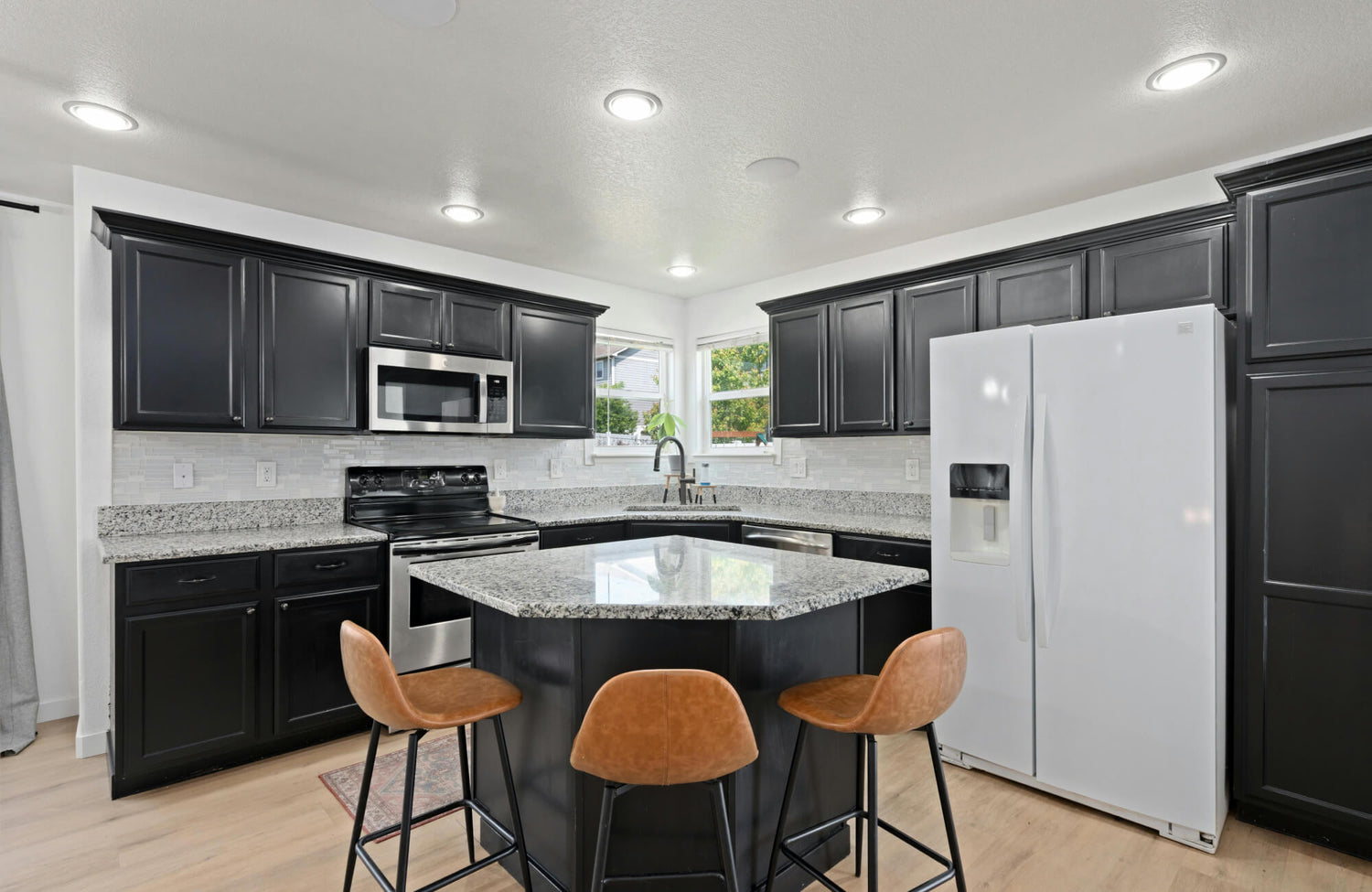
A kitchen island often becomes the most used surface in the entire home. It’s where quick breakfasts happen, guests gather during dinner prep, and everyday conversations unfold. Because of that, the seating layout matters more than most people realize. The number of stools, their spacing, height, and even material can either make the island feel inviting or unintentionally crowded. In this blog, we’ll break down the best seating layout for a kitchen island with stools, covering spacing, height, materials, and real-life functionality.

Start With Your Island Size And Shape
Before choosing stools or finalizing a seating plan, it helps to step back and really look at your island itself. Its length, depth, and overall shape naturally determine how many stools can fit comfortably without feeling crowded. Below, we’ll walk through how proper measurements and island shape guide your layout so the seating feels balanced from the start.
Standard Straight Islands and Even Spacing
With a standard straight island, the goal is consistency. Most designers recommend allowing about 24 to 30 inches of width per stool so everyone has enough elbow room to sit comfortably. When spacing is even, the layout feels calm and organized rather than squeezed together. Symmetry also plays a subtle role here because evenly placed stools tend to create a sense of rhythm across the island. If the island is longer, you may be tempted to add more seating, but comfort should always come first. Leaving just a little breathing room between stools can make the entire kitchen feel more relaxed and thoughtfully arranged.
L-Shaped and Wraparound Islands
L-shaped or wraparound islands open up more flexible seating options, especially around corners. When planned carefully, corner seating can feel inviting because it encourages conversation and connection. However, it’s important to avoid pushing stools too tightly into the corner, since that can limit legroom and make the seat feel awkward. Allowing enough space for knees and movement keeps the layout functional as well as comfortable. Wraparound seating often works best in larger kitchens where there’s room to circulate easily. When the spacing feels natural, the island becomes a gathering spot rather than a tight squeeze.
Narrow vs Deep Islands
The depth of your island matters just as much as its length. For comfortable seating, you’ll typically want at least 12 to 15 inches of overhang so there’s enough room for legs underneath the counter. On narrower islands, limited depth may mean fewer stools or slimmer profiles to avoid feeling cramped. In these cases, backless stools can be especially helpful because they tuck in easily and keep the layout visually light. Deeper islands, on the other hand, allow for more generous seating and can comfortably accommodate stools with backs. Paying attention to depth ensures that your seating layout feels practical and comfortable, not just visually appealing.

Decide How Many Stools Your Layout Can Comfortably Handle
It’s tempting to fill every inch of your island with seating, especially if you enjoy hosting or have a full household. Still, more stools do not always mean a better layout. When seating is packed too tightly, the island can start to feel cramped and harder to move around comfortably.
Recommended Spacing Between Counter Stools
A reliable starting point is allowing about 24 to 30 inches of width per stool. That spacing gives everyone enough elbow room so conversations feel easy instead of awkward. When stools are pushed too close together, even the most beautiful island can feel crowded. Leaving proper space keeps the setup looking lighter and more intentional. It also makes everyday moments, like quick breakfasts or coffee breaks, far more comfortable. Sometimes, giving each seat just a little extra breathing room is what makes the whole layout feel relaxed and well considered.
Planning for Walkways and Clearances
Spacing between stools is only part of the equation, because the area behind them matters just as much. Ideally, aim for at least 36 inches of clearance so people can pass by comfortably, even when someone is seated. If your kitchen is more compact, you may need to scale back the number of stools to preserve easy movement. This allows cooking, prepping, and gathering to happen at the same time without anyone feeling boxed in. A layout with thoughtful clearance feels smoother and more functional overall. When movement flows naturally around the island, the entire kitchen works better day to day.
Balancing Visual Weight With Stool Count
Sometimes the strongest layout is the one that shows a little restraint. Leaving some negative space between stools can make the island feel more intentional instead of overly packed. In many kitchens, an odd number, such as three stools along a medium-length island, tends to look naturally balanced. When too many seats are lined up in a row, especially with full backs or upholstery, the island can start to feel visually heavy. It helps to step back and view the space as a whole rather than focusing only on seating capacity. When the stool count feels aligned with the size of the kitchen, the entire layout reads as calm, open, and well considered.
As seen above, our Joel Counter Stool in Black demonstrates how thoughtful spacing can instantly elevate an island layout. The clean, mid-century silhouette and slim acacia frame allow multiple stools to sit side by side without overwhelming the island visually. Because the design feels structured yet light, it supports an open layout even when several seats are lined up in a row. The curved backrest and contoured seat add comfort, while the dark, inky finish grounds the space without making it feel heavy. When stools are proportioned and spaced with care, as shown above, the entire kitchen reads balanced, refined, and easy to live in.

Choose The Right Counter Stool Height For Your Island
Even the most beautiful layout won’t feel right if the stool height is off. Counter-height and bar-height islands require different seat measurements, and getting this detail wrong can make seating uncomfortable very quickly. Below, we’ll look at how to measure properly and choose a stool height that feels natural, supportive, and proportionate to your island.
Counter-Height Islands (36 Inches)
Most standard kitchen islands are around 36 inches high, which means counter-height stools are typically the right fit. For this setup, a seat height between 24 and 26 inches usually provides comfortable legroom. This height works well for everyday tasks, whether you’re enjoying a quick breakfast, helping with homework, or chatting while dinner is being prepared. Because counter-height islands often serve multiple purposes, comfort becomes especially important. When the seat height aligns correctly with the underside of the counter, everything feels easy and relaxed. It allows people to sit naturally without feeling too low or slightly hunched over.
Bar-Height Islands (42 Inches)
Bar-height islands, usually around 42 inches tall, call for taller stools with a seat height closer to 28 to 30 inches. The extra elevation creates a more defined separation between the prep area and the seating area, which some homeowners prefer. This setup can feel slightly more formal and is often chosen for entertaining or open-concept layouts. However, precision matters here because even a small height mismatch can feel awkward. Measuring from the floor to the underside of the counter ensures there’s enough room for knees and comfortable movement. When properly sized, bar-height seating feels elevated in a good way, not inconvenient.
Adjustable Stools for Flexible Layouts
Adjustable stools can be a smart solution if your island serves multiple functions or if you’re unsure about fixed heights. They offer flexibility, especially in kitchens that blend prep space, dining, and casual gathering areas. If you have a slightly non-standard counter height or anticipate changes in the future, adjustability can provide peace of mind. That said, they tend to work best in modern or relaxed settings where a bit of mechanical detailing feels appropriate. It’s still important to check the full height range to ensure it aligns with your island’s measurements. When chosen thoughtfully, adjustable stools give you versatility without compromising comfort.

Select Counter Stool Materials That Support Your Layout
Once you’ve finalized the layout and stool height, the material becomes the detail that really shapes the mood of the island. Some materials feel light and airy, while others add presence and structure. In here, we’ll explore how different stool materials influence comfort, durability, and overall style so your seating feels aligned with the kitchen rather than competing with it.
Wood Counter Stools for Warmth and Versatility
Wood counter stools are often the most approachable option because they work effortlessly across a range of kitchen styles. In transitional spaces, they help bridge modern cabinetry with more classic finishes, creating a natural sense of balance. They also soften stone or quartz islands, especially when those surfaces feel sleek or cool to the eye. Depending on the stain, wood can either blend in quietly or introduce a gentle contrast that adds depth. Over time, it tends to wear gracefully, which makes it practical for everyday use. If you’re looking for seating that feels warm, grounded, and easy to live with, wood is usually a dependable choice.
Metal Frames for Modern Structure
Metal stools bring a clean, structured look that feels especially at home in modern kitchens. Their slimmer frames often work well in tighter layouts because they don’t take up as much visual space. Even when several are placed side by side, the island can still feel open and streamlined. Metal is also durable and easy to maintain, which makes it well-suited for busy households. In contemporary settings, the crisp lines of metal pair beautifully with flat-panel cabinets and minimal hardware. When selected thoughtfully, metal stools add definition and edge without overpowering the overall layout.
Upholstered Stools for Comfort
If comfort sits high on your priority list, upholstered stools can completely change how the island feels. The added padding and fabric soften the look of harder surfaces like marble, tile, or stainless steel, which creates a more welcoming atmosphere. Because upholstered stools carry more visual presence, they usually work best in kitchens that have enough space for them to breathe. They’re especially appealing when the island doubles as a casual dining area or a spot where people linger longer. Of course, practicality still matters, so performance fabrics or easy-to-clean materials are worth considering. When the layout allows, upholstered stools help the kitchen feel less purely functional and more like a lived-in gathering space.
Woven or Rattan Stools for Texture
Woven or rattan stools introduce texture in a way that feels relaxed and easygoing. Their lighter visual weight helps prevent the island from feeling too solid or heavy, especially in bright kitchens with natural finishes. These materials pair beautifully with light wood tones, stone countertops, and soft color palettes. They add subtle patterns and dimension without drawing too much attention to themselves. In coastal or organic-inspired spaces, woven stools reinforce that layered, collected look. When used thoughtfully, they bring warmth and character while still keeping the overall seating layout balanced and airy.
As shown above, our Genevieve Counter Stool in Light Oak highlights how woven materials can soften and elevate an island layout at the same time. The handwoven paper rope seat introduces subtle texture, while the light oak frame keeps the overall look grounded and natural. Because the structure feels open and airy, multiple stools can sit side by side without making the island appear heavy. The steam-bent backrest adds gentle curvature, which balances more linear cabinetry and countertops beautifully.

Consider Backless vs High-Back Counter Stools
The back style of your stools can shift the entire feel of your island, even when the layout and height are already dialed in. Some options keep the space feeling open and minimal, while others introduce more comfort and visual presence. Below, we’ll look at how different back styles influence spacing, openness, and everyday flow so you can choose what truly fits your kitchen.
Backless Stools for Tighter Layouts
Backless stools are often the most practical choice for smaller or tighter kitchens. Because they slide fully under the counter when not in use, they keep the island looking clean and streamlined. This is especially helpful when the space behind the stools is limited, and movement needs to feel easy. Visually, they carry less weight, which allows the island itself to stand out. They also make it simpler for people to move around the seating area without navigating around taller backs. If your goal is to maintain openness and flexibility, backless stools tend to feel effortless and functional.
Low-Back Stools for Subtle Support
Low-back stools offer a comfortable middle ground between openness and structure. They provide support while still keeping sightlines across the kitchen relatively clear. In medium-sized kitchens, this balance can feel just right. The slight extension above the counter adds depth without dominating the layout. They’re a great option when you want the seating to look intentional but not overly formal. For many homes, low-back stools deliver that extra bit of comfort while still preserving a light and approachable feel.
Full-Back Stools for Statement Seating
Full-back stools bring more presence to the island and can make the seating area feel more like a dining space. Their taller profile naturally draws the eye, which makes them ideal for larger kitchens that can handle that added height. At the same time, they require more breathing room to avoid feeling crowded. Because they visually fill more space, spacing becomes even more important. When proportioned correctly, full-back stools can elevate the look of the island and make it feel more anchored. In the right setting, they turn casual seating into a confident design feature.
With its sculpted profile and upholstered back, our Shaw Counter Stool in Bergen Olive, featured above, demonstrates how full-back seating adds presence and refinement to an island. The curved silhouette wraps the seat in comfort, while the olive fabric introduces depth against lighter cabinetry and countertops. Because full-back stools visually occupy more space, they work best in kitchens that can comfortably support their height and structure.

Align The Seating Layout With How You Use Your Kitchen
The most successful island layouts are the ones that reflect real life, not just measurements on paper. Before deciding on stool count or configuration, it helps to ask how your kitchen actually functions throughout the week. In here, we’ll look at how daily routines, hosting habits, and multi-purpose use should shape your seating layout so it feels natural and supportive.
Everyday Family Use
If your island is the unofficial headquarters of the house, comfort and durability should guide your decisions. This is where quick breakfasts happen, bags get dropped, homework gets finished, and conversations unfold while dinner simmers nearby. Stools need to feel supportive enough for people to linger, not just perch for a few minutes. Easy-to-clean surfaces also matter more than you might expect, especially in busy households. Instead of focusing on making a dramatic statement, prioritize seating that can handle real use without constant maintenance. When the layout supports everyday routines comfortably, the island becomes a space people naturally gather around.
Entertaining and Hosting
If you love having people over, your island likely plays a different role. In that case, think about how the stools are oriented and how guests will interact with both the kitchen and each other. Seating that faces inward keeps guests connected to the cooking process, while a slightly outward angle can encourage broader conversation across the room. Spacing becomes even more important here, since no one wants to feel squeezed during a relaxed evening. A well-planned layout makes it easy for guests to sit, stand, and move around without interrupting the flow. When designed with hosting in mind, your island can shift effortlessly from prep zone to social centerpiece.
Multi-Use Islands
For many homes, the island has to wear several hats throughout the day. It might function as a workspace in the morning, a casual lunch spot in the afternoon, and a serving station during gatherings. In these situations, flexibility is key. Stools that are lightweight or easy to reposition can make the layout feel adaptable rather than fixed. It also helps to avoid overcrowding the island, so different activities can happen without friction. When seating works with your routine instead of competing with it, the kitchen feels intuitive and thoughtfully designed.
Create A Seating Layout That Truly Fits Your Kitchen
A well-planned island seating layout should feel effortless the moment you walk into the kitchen. When the spacing is comfortable, the stool height feels natural, and the materials complement the space, everything works together quietly in the background. The island no longer feels like a row of chairs added for convenience, but a thoughtful extension of the room itself. When those details align, the seating supports how you live instead of competing for attention.
If you’re unsure which layout, stool style, or spacing works best in your kitchen, you don’t have to figure it out alone. Our design consultation service is here to help you evaluate proportions, seating flow, and overall cohesion so every detail feels intentional. Whether you’re refreshing a compact kitchen or designing around a spacious island, we’ll guide you toward choices that feel practical and beautifully balanced. Schedule a personalized design consultation today and bring clarity and confidence to your kitchen layout.


