Choosing a rug for your living room is one of those decisions that quietly shapes how the entire space functions and feels. From the first step you take across it, the material sets expectations for comfort, durability, and style, influencing everything from how you relax to how the room handles daily life. With so many options available, the challenge is not finding a beautiful rug, but finding one that truly works for the way you use your space.
As you look closer, it becomes clear that the best rug material is rarely a one-size-fits-all answer. Instead, it emerges from a thoughtful balance of texture, usage, maintenance needs, visual impact, and even environmental values. By understanding how different materials perform in real living rooms, you can move beyond guesswork and make a choice that feels intentional, practical, and long-lasting.

Comfort and Texture Underfoot
Comfort and texture play a defining role in how your living room feels on a daily basis, often shaping your experience more than color or pattern. Plush materials such as wool, high-pile synthetics, and cotton create warmth and softness that invite you to relax, whether you are walking barefoot or spending time on the floor. Their cushioned feel and insulating qualities also help transform the space into a welcoming retreat, especially when comfort is a central part of how you use the room.
At the same time, not every living room benefits from a soft, sink-in surface. Structured materials like jute, sisal, and flatweave wool offer a firmer, more grounded sensation that brings clarity and order to the space. These textures emphasize stability and definition, allowing furniture to sit cleanly while adding subtle tactile interest. Ultimately, the right choice depends on how you want the room to feel, as comfort can come from softness and warmth or from balance, structure, and intentional restraint.
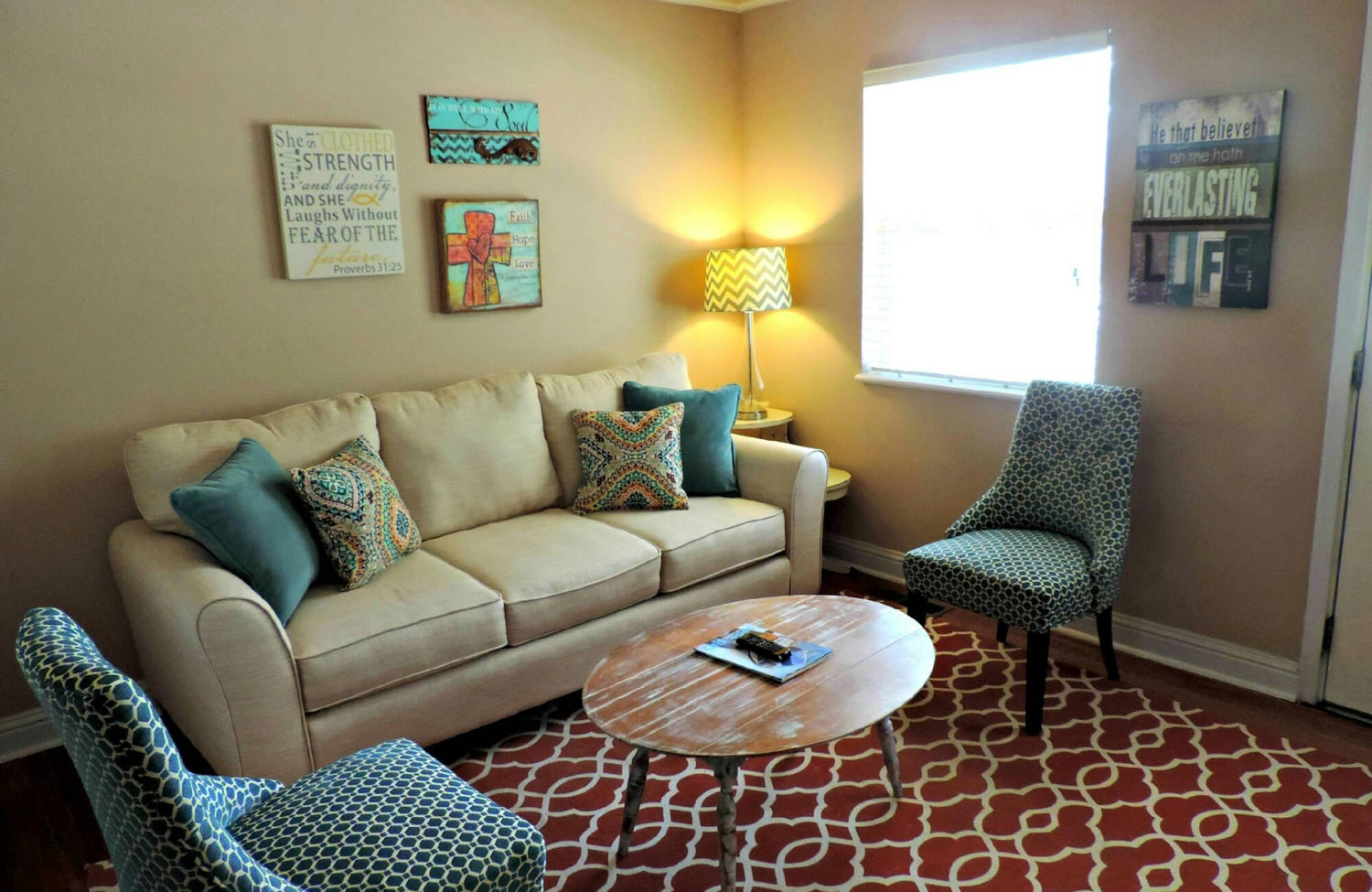
In spaces where comfort and visual warmth work together, patterned rugs can add softness without overwhelming the room. A design like our Georgette Rug in Clay / Navy shown in the image above, blends a low, comfortable pile with an intricate motif, allowing it to feel inviting underfoot while still offering visual depth. Its palette of warm red, muted blue, and golden yellow adds richness and contrast that grounds light furnishings and natural materials, making it a versatile option for living rooms that balance relaxation with refined texture.

How Lifestyle and Usage Shape Material Choice
Every living room follows its own daily rhythm, and the rug you choose needs to perform within that reality. From frequent activity to quieter moments, daily use plays a defining role in how well different rug materials hold up over time.
Busy Living Rooms With Frequent Use
When your living room functions as an active gathering space, durability quickly becomes a top priority. Wool stands out as one of the most dependable choices for these conditions because its naturally crimped fibers are designed to flex and recover. As you walk across it or place furniture on top, the fibers compress and then spring back, helping the rug maintain its shape even under consistent use.
In addition to resilience, wool offers built-in resistance to dirt and static, which keeps it looking presentable between cleanings. This makes it especially practical when pets or children are part of the equation. Over time, the material also continues to age gracefully, developing character rather than visible wear, which adds to its long-term value.
If you prefer a more budget-conscious option, high-quality synthetics such as solution-dyed nylon or heat-set polypropylene perform exceptionally well in busy living rooms. These fibers are engineered for strength and stain resistance, making them well-suited for daily use, especially when woven into low-pile or flatweave constructions that resist crushing. A blended approach can also offer the best of both worlds, as seen with our Micah Rug in Natural / Graphite, displayed in the photo above, which combines the resilience of wool with added durability in a textured gray and black base that maintains structure and visual balance in frequently used spaces.
Non-busy or Formal Living Spaces
In living rooms that see minimal activity, material choice can shift from durability toward visual refinement and tactile elegance. Fibers such as silk, viscose, and bamboo silk excel in these environments, offering a smooth surface with a soft sheen that responds beautifully to changing light. As you move through the space, the pile subtly shifts in tone, adding depth and sophistication to the room.
These materials work best when the living room is designed more for ambiance than everyday use. Because they are more sensitive to pressure, moisture, and aggressive cleaning, limited use allows them to retain their luxurious appearance. Their delicate nature also makes them ideal companions for carefully arranged furniture and curated décor rather than high-energy activity.
To preserve their structure, adding a supportive rug pad underneath becomes especially important. The extra cushioning reduces stress on the fibers and helps the rug sit more securely in place. In a formal or quiet setting, these refined materials can elevate the overall atmosphere, rewarding you with visual richness and a sense of understated luxury.

Maintenance, Cleaning, and Everyday Practicality
How a rug fits into your daily routine often matters more than how it looks on the showroom floor. Easy-care materials such as polypropylene and polyester are well-suited for active living rooms because they resist moisture, tolerate frequent vacuuming, and handle spot cleaning with minimal effort. As a result, spills and everyday messes feel manageable rather than stressful, allowing you to enjoy the space without constantly worrying about damage or upkeep. This practicality makes low-maintenance rugs especially appealing when efficiency and durability are top priorities.
In contrast, natural fiber rugs require a more deliberate approach to care, which can be rewarding if you are prepared for it. Wool, silk, viscose, jute, and sisal offer depth and texture, but they demand gentle cleaning methods and controlled conditions to maintain their appearance. Although this added attention may limit where and how you use them, it also preserves their distinctive character over time. For best results, always follow the manufacturer’s care and cleaning recommendations specific to your rug material.

Style, Aesthetics, and Visual Impact
Beyond comfort and durability, a rug plays a defining role in the visual language of your living room. The material you choose influences how color appears, how light moves across the surface, and how the rug connects with surrounding finishes and furnishings.
Materials That Enhance Color and Pattern
If you want your rug to command attention, material choice becomes essential to preserving color depth and pattern clarity. Wool stands out for its ability to absorb dye deeply, which allows intricate motifs and detailed designs to remain crisp over time. As light shifts throughout the day, wool fibers reflect color with richness rather than glare, helping patterns feel dimensional instead of flat.
This quality makes wool especially effective for traditional designs, geometric layouts, or layered interiors where the rug acts as a visual anchor. Even in busy spaces, the material maintains definition, preventing patterns from blurring as the pile compresses. As a result, your rug continues to look intentional rather than worn.
Polyester blends offer a different kind of visual strength. Because the fiber is dyed during production, color becomes part of the material itself rather than sitting on the surface. This allows saturated hues, jewel tones, and modern palettes to remain bold even under strong lighting, as seen with our Liddy Rug in Graphite / Pearl, featured above, which pairs striping black and gray to create crisp contrast and refined pattern definition. In contemporary or eclectic spaces, rugs like this hold their own against expressive furniture and artwork, reinforcing the room’s overall energy without overwhelming it.
Subtle and Organic Visual Effects
If your goal is a calmer, more restrained aesthetic, certain materials deliver depth without relying on bold color. Undyed wool, jute, and sisal create visual interest through natural variation and texture rather than pigment. As light moves across the surface, these rugs reveal gentle shifts in tone that feel organic and understated.
Undyed wool, in particular, excels at creating a soft, lived-in atmosphere. Its natural hues blend seamlessly with neutral palettes, light wood tones, and textured fabrics like linen or cotton. This effect is beautifully captured by our Sweeney Rug in Linen, which features warm beige and off-white fibers that add quiet warmth and visual continuity without drawing attention away from the surrounding space.
Plant-based fibers such as jute and sisal further emphasize this grounded effect. Their woven structures introduce rhythm and texture, allowing the rug to complement minimalist or nature-inspired interiors. In these cases, the material becomes a quiet foundation, enhancing the room’s character without competing for focus.

Sustainability and Environmental Impact
Beyond performance and appearance, rug materials vary widely in how they affect the environment. If sustainability is important to you, understanding how each fiber is produced, used, and eventually disposed of helps you make a more responsible choice.
Renewable and Natural Material Options
Natural fibers such as wool, jute, sisal, and cotton are widely regarded as environmentally responsible because they come from renewable sources and can biodegrade at the end of their lifespan. Wool, in particular, offers unique environmental benefits since it naturally sequesters carbon during a sheep’s lifetime and breaks down without releasing harmful residues. As a result, a wool rug can return safely to the earth after decades of use.
Plant-based fibers like jute and sisal further strengthen the case for natural materials. These crops grow quickly and require relatively little water or chemical intervention, which reduces pressure on agricultural systems. Their cultivation supports a more balanced production cycle, especially when compared to resource-intensive synthetic manufacturing.
To ensure your choice truly aligns with sustainability goals, certifications play an important role. Labels such as GOTS or Cradle to Cradle help verify responsible sourcing and ethical production practices. In addition, rugs with natural backings made from jute or natural latex contribute to healthier indoor air quality by limiting exposure to synthetic adhesives and volatile compounds.
Synthetic Materials and Environmental Trade-Offs
Synthetic rug materials, including polypropylene, nylon, and polyester, come with inherent environmental challenges since they are derived from fossil fuels and do not biodegrade naturally. Their production also requires significant energy, and once discarded, these fibers remain in landfills for extended periods. However, this does not automatically exclude them from sustainable consideration.
Recent innovations have improved the environmental profile of synthetics, particularly through the use of recycled polyester made from post-consumer plastic waste. By repurposing existing materials, these rugs help divert plastics from landfills and reduce demand for virgin resources. This approach allows you to benefit from synthetic durability while lessening environmental impact.
Durability also plays a meaningful role in sustainability. Because synthetic rugs often last longer under heavy use, they can reduce the frequency of replacement, which in turn limits waste. To make a more responsible synthetic choice, look for solution-dyed fibers that require less water and energy during manufacturing, and prioritize brands that design rugs with recyclability in mind at the end of their life cycle.
Aligning Rug Material with How You Live
The best rug material for your living room ultimately comes down to alignment rather than perfection. When comfort, durability, maintenance, style, and sustainability work together, the rug becomes more than a decorative layer. It becomes a functional foundation that supports how you move, relax, and gather every day. By choosing a material that matches your lifestyle and priorities, you create a living room that not only looks cohesive but also feels effortless to live in, proving that the right rug choice is as much about daily experience as it is about design.
If you need guidance in finding that balance, our team is here to help. Through our Contact Us page, you can connect with knowledgeable specialists who can answer questions, clarify material options, and help you navigate choices based on how you truly use your space. This personalized support also ensures your rug selection feels considered and confident, reinforcing a living room design that aligns seamlessly with your everyday life.