Choosing a bathroom mirror seems simple until you realize how much it affects the entire vanity wall. The frame, the edges, and even how the mirror meets the lighting can change whether the space feels finished or slightly unresolved. Framed and frameless LED mirrors each bring something different to the table, although they don’t behave the same way once they’re actually installed and used every day. In this blog, we’ll walk through the real differences between framed and frameless LED mirrors, how each one performs in everyday bathrooms, and which option tends to feel easier to live with over time.

Framed vs Frameless LED Mirrors: What’s the Real Difference?
When choosing between framed and frameless LED mirrors, the difference goes beyond appearance and into how each mirror is constructed and how it behaves on the wall. The way edges are finished, how the mirror meets the vanity, and how lighting is contained all influence how the bathroom feels once everything is installed.
How Framed And Frameless Mirrors Are Built Differently
Framed LED mirrors are built with a defined outer structure that surrounds and protects the mirror and lighting components. This frame gives the mirror a clear boundary, which helps the piece feel intentional and finished once it is mounted on the wall. Because the LED lighting is housed within or behind the frame, the construction tends to feel more contained and deliberate. Over time, this added structure can also help protect the mirror edges from everyday wear. The overall build feels solid and thoughtfully assembled rather than minimal for the sake of minimalism.
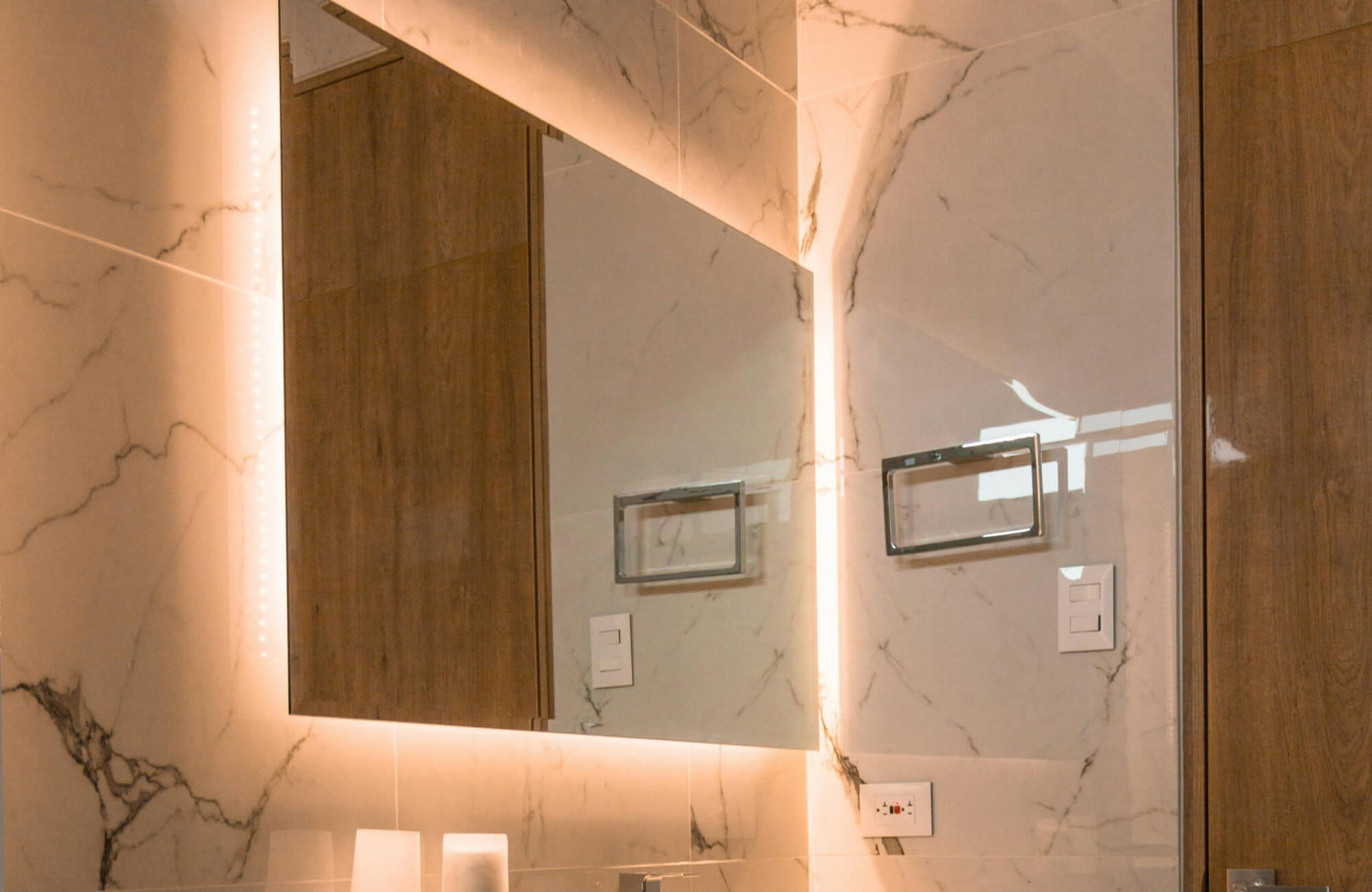
Frameless LED mirrors, by comparison, rely on exposed or lightly finished edges to create a cleaner silhouette. The lighting is typically integrated directly behind the glass, which allows the mirror to appear thinner and more lightweight on the wall. While this approach can feel visually simple, it also means the mirror has fewer protective elements built into its design. Small details like edge finishing and wall alignment become more noticeable as a result. The construction prioritizes visual lightness over physical definition.
Visual Presence And How Each Style Defines The Vanity Area
Framed LED mirrors tend to define the vanity area more clearly because the frame creates a visual outline against the wall. This makes the mirror feel anchored above the vanity rather than blending into the background. In bathrooms where the vanity serves as a focal point, that definition helps organize the space visually. The mirror feels like part of the overall layout instead of an accessory added later. Over time, this sense of structure can make the bathroom feel more balanced and composed.
Frameless LED mirrors, on the other hand, create a softer visual presence by allowing the mirror to blend into the wall. Because there is no frame to break up the surface, the mirror can feel lighter and less prominent. This works well in spaces where the goal is to keep visual elements subtle and understated. However, without a defined edge, the vanity area may feel less grounded, especially in larger or more detailed bathrooms. The mirror becomes quieter in the composition, for better or for worse.
How Integrated LED Lighting Reads With And Without A Frame
With framed LED mirrors, the lighting tends to feel more controlled because the frame naturally contains and directs the glow. This creates a clear outline around the mirror, which helps the light feel intentional rather than drifting across the wall. Instead of competing with nearby surfaces, the illumination supports the mirror itself and reinforces its presence above the vanity. Because the edges are defined, the glow reads as an integrated design element rather than an added effect. As a result, the vanity area often feels more composed and visually finished.
Frameless LED mirrors, on the other hand, allow light to spread more freely, which produces a softer, halo-like effect around the glass. This approach can feel subtle and modern, although it also means the lighting blends more closely with the wall surface. In some bathrooms, that softness works beautifully, especially when the surrounding finishes are calm and minimal. In others, it can reduce contrast and make the vanity area feel less defined. Because there is no frame to shape the light, the overall effect depends heavily on wall color and nearby materials. The lighting becomes more atmospheric, but it also asks the rest of the space to carry more visual structure.

Why Framed LED Mirrors Often Work Better In Real Bathrooms
In everyday bathrooms, design choices need to balance visual appeal with how the space is actually used from morning to night. Framed LED mirrors tend to work better in these settings because they add structure and clarity without requiring perfect conditions or overly minimal surroundings.
How Frames Add Visual Structure And Balance
Frames give LED mirrors a clear visual boundary, which helps the mirror feel grounded rather than floating on the wall. This structure becomes especially important in bathrooms where multiple materials are at play, such as tile, stone, cabinetry, or wall paint. Because the frame creates a defined outline, the mirror reads as a complete element instead of blending into the background. This added definition helps balance the wall visually, particularly above wider vanities. Over time, that sense of balance makes the bathroom feel more settled and less visually scattered. The mirror feels like it belongs there, not like it was added as an afterthought.
Framed Mirrors As A Natural Anchor Above The Vanity
A framed LED mirror naturally anchors the vanity area because the frame gives the mirror visual weight and presence. This is helpful in bathrooms where the vanity serves as the main focal point, since the mirror reinforces that hierarchy without extra decoration. The frame helps connect the mirror to the scale of the vanity below, making the two feel like a cohesive pair. Because of this, the vanity wall feels organized rather than open-ended. The mirror visually holds the space together, even when the rest of the bathroom remains simple. That anchoring effect supports a layout that feels intentional and easy to read.
Why Frames Feel More Finished In Most Bathroom Layouts
In most bathrooms, framed mirrors tend to feel more complete because they introduce a clear beginning and end to the mirror surface. This is especially noticeable in spaces that are not ultra-minimal, where other elements already carry texture or detail. The frame helps the mirror stand on its own without relying on perfect wall conditions or surrounding finishes to look right. As a result, the mirror feels designed rather than purely functional. That sense of completion often translates into a bathroom that feels thoughtfully planned. The space looks pulled together without needing additional styling.
Durability And Edge Protection In Daily Use
Beyond appearance, frames also offer practical benefits that matter in daily use. The frame helps protect the edges of the mirror, which are often the most vulnerable areas over time. In busy bathrooms, this added protection can make a noticeable difference, especially in shared or frequently used spaces. The frame also helps conceal minor wall inconsistencies that might otherwise be visible along the mirror’s edge. Because of this, framed mirrors tend to age more gracefully in real homes. They hold up visually and physically as routines and needs evolve.

When Frameless LED Mirrors Still Make Sense
Frameless LED mirrors can work well in certain bathrooms, especially when the overall design is intentionally restrained. While they are not always the most versatile option, there are situations where their simplicity supports the space rather than leaving it feeling incomplete.
Frameless Mirrors In Ultra-Minimal Or Contemporary Spaces
In ultra-minimal or highly contemporary bathrooms, frameless LED mirrors can blend seamlessly into the wall without drawing attention to themselves. This works best in spaces where surfaces are clean, flat, and visually uninterrupted, such as large-format tile or smooth plaster walls. Because there is little visual competition, the mirror does not need a frame to feel complete. Instead, it becomes part of the wall rather than a focal point. This approach suits bathrooms designed around simplicity rather than contrast. In those settings, the lack of a frame feels intentional instead of unfinished.
When Visual Lightness Is The Top Priority
Frameless mirrors can also make sense when the goal is to keep the bathroom feeling as visually light as possible. In smaller spaces or layouts where the vanity wall already feels busy, removing the frame helps reduce visual weight. This can be helpful when other elements, such as bold tile or strong cabinetry finishes, already command attention. Because the mirror edges disappear, the wall can feel more open and less segmented. That said, this effect works best when the rest of the design is carefully controlled. Without that balance, the mirror can start to feel undefined.
Practical Limitations Of Frameless Designs Over Time
Over time, frameless LED mirrors can reveal a few practical limitations that are easy to overlook during the selection process. Without a frame, the mirror edges are more exposed, which can make chips, wear, or wall inconsistencies more noticeable. Installation also needs to be precise, since even small alignment issues are harder to hide. In everyday bathrooms, this can lead to a mirror that feels less forgiving as conditions change. While frameless designs look clean at first, they often require more attention to maintain that look. For many homeowners, that trade-off is worth considering before committing.

Why Traditional Framed Mirrors Remain A Strong Alternative To LED Mirrors
Traditional framed mirrors continue to be a reliable choice in bathrooms where clarity, balance, and long-term comfort matter more than built-in lighting. Without integrated LEDs, these mirrors rely on form, proportion, and framing to define the vanity area in a way that feels familiar and intentional. Below, we’ll look at how traditional mirror shapes support everyday bathroom layouts and why they still hold their place alongside newer LED options.
Why Framed Mirrors Feel More Intentional On The Vanity Wall
Framed mirrors tend to feel more intentional on the vanity wall because the frame gives the mirror a clear edge and visual presence. Instead of appearing as a floating surface, the mirror reads as a defined element with a beginning and an end. This helps the vanity area feel planned rather than assembled as an afterthought. The frame naturally anchors the mirror in place, especially in bathrooms with clean lines or minimal detailing. Because the mirror has visual weight, it feels connected to the vanity below instead of secondary to it. Over time, that sense of structure makes the space feel calmer and more finished.
A great example of this sense of intention is our Clancy Mirror in Antique Brass, shown above. Its sharp square silhouette and slim iron frame give the mirror a strong outline that feels deliberate without feeling heavy. The integrated linear overhead bar adds a subtle sense of suspension, which keeps the piece visually light while still anchoring the vanity wall. Rather than relying on illumination to define the area, the mirror’s proportion and framing do the work, creating a setup that feels composed, balanced, and thoughtfully placed.
How Framed Mirrors Define Space Without Built-In Lighting
Framed mirrors define space through form and outline rather than relying on light to do the work. The frame creates a boundary that separates the mirror from the wall, giving the vanity area its own visual zone. This structure helps organize the wall, especially in bathrooms where multiple finishes meet. While LED mirrors often use glow to establish presence, framed mirrors achieve the same clarity through proportion and contrast. Because of this, the mirror still feels prominent even when the lighting is subtle. The result is a vanity wall that feels composed instead of visually diffuse.
The Role Of Framed Mirrors In Layered Bathroom Lighting
Traditional framed mirrors work especially well in bathrooms that use layered lighting. Instead of replacing other light sources, they support wall sconces, vanity lights, and ceiling fixtures by giving those elements something solid to work around. This allows each light source to serve its purpose without competing for attention. The mirror reflects light naturally, helping distribute brightness without becoming the focal point itself. Because the lighting is layered, the bathroom feels adaptable throughout the day. This approach often feels more comfortable and balanced in everyday use.
Framed Mirrors As A More Flexible Design Choice Over Time
Framed mirrors tend to age more gracefully because they are not tied to a single lighting system or built-in technology. As vanity lights, hardware, or finishes change over time, the mirror can continue to fit in without needing to be replaced. This flexibility makes framed mirrors easier to live with as styles evolve or updates happen gradually rather than all at once. You are not locked into one integrated solution that dictates the look of the entire wall. Instead, the mirror acts as a steady anchor while other elements shift around it. That kind of adaptability often makes framed mirrors feel like a more confident long-term choice.
Why Many Bathrooms Don’t Actually Need Integrated LED Mirrors
While integrated LED mirrors can look appealing, many bathrooms function just as well without them. In real-world layouts, layered lighting often provides more comfortable illumination for daily routines than a single glowing surface. Vanity lights and sconces usually handle task lighting more evenly, which can feel better over time. In those situations, an LED mirror may end up feeling redundant rather than essential. Framed mirrors allow lighting to be adjusted, replaced, or upgraded independently as needs change. For many households, keeping these elements separate results in a setup that feels simpler, more flexible, and easier to maintain.

Popular Frame Finishes And How They Shape Bathroom Style
Frame finish plays a quiet but important role in how a bathroom feels once everything comes together. The right finish can influence mood, add contrast, and help mirrors coordinate naturally with lighting and hardware rather than feeling like a separate element. Below, we’ll look at common framed mirror finishes and how each one shapes the overall style of a bathroom.
Black Framed Mirrors For Contrast And Definition
Black framed mirrors are often chosen because they add clear definition without relying on decorative detail. In bathrooms with lighter walls, stone surfaces, or wood finishes, black creates contrast that helps the mirror stand out in a controlled, intentional way. This finish also works well alongside black lighting or hardware, although it does not require an exact match to feel cohesive. Because black reads as neutral, it supports both modern and transitional spaces with ease. It tends to ground the vanity wall, which helps the layout feel structured rather than floating. Over time, that clarity makes black frames feel reliable rather than overly bold.
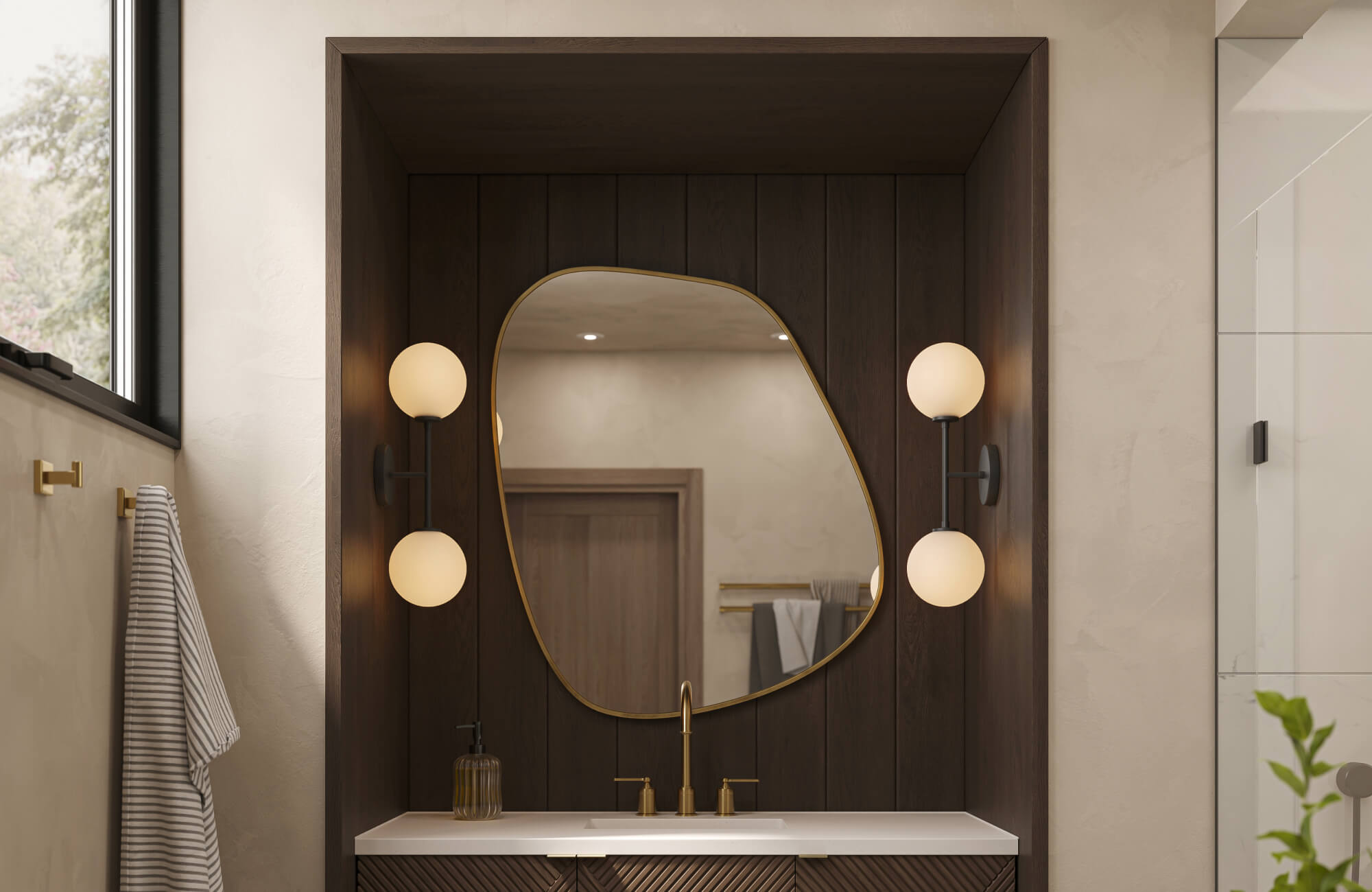
A great example of this effect is our Tristan Square Mirror in Rustic Black, shown above. Its thin iron frame outlines the mirror with just enough weight to sharpen the vanity wall without overpowering surrounding finishes. Against lighter tile and warm brass fixtures, the dark frame creates a clean visual break that helps organize the space. The rounded silhouette softens the contrast, keeping the look balanced rather than severe. Together, the finish and form reinforce definition while still allowing other materials to remain in focus.
Brass And Warm Metallic Frames For Soft Warmth
Brass and other warm metallic finishes introduce a softer, more inviting tone to the bathroom. These finishes reflect light gently, which helps the space feel warmer without becoming shiny or distracting. When paired with framed LED mirrors, warm metals often add a sense of depth that balances cooler surfaces like tile or quartz. They also coordinate naturally with warm-toned hardware, creating a layered look that feels thoughtful instead of forced. Because the finish has visual presence, the frame feels intentional rather than purely functional. This makes brass frames especially appealing in bathrooms that want warmth without losing structure.
Chrome And Neutral Finishes For Clean Coordination
Chrome and neutral finishes are often chosen for their ability to blend rather than stand out. These frames coordinate easily with existing fixtures, which makes them a practical option in bathrooms with mixed metals or simpler palettes. Because the finish reflects its surroundings, it tends to feel lighter on the wall than darker options. This can help smaller or brighter bathrooms feel more open while still benefiting from the structure of a frame. Neutral finishes also age well because they rarely feel tied to a specific trend. Their quiet presence supports a clean, cohesive look over time.
Choosing A Finish That Feels Timeless, Not Trend-Driven
When selecting a frame finish, it helps to think beyond what feels current and focus on what will continue to feel comfortable years from now. Timeless finishes tend to relate easily to other elements in the bathroom, such as lighting, hardware, and vanity materials. Rather than chasing contrast for its own sake, choosing a finish that complements the room’s overall tone usually leads to better balance. This approach keeps the mirror from feeling dated as styles shift. Because framed mirrors are long-term fixtures, their finish should feel flexible rather than overly specific. When the finish feels settled, the entire bathroom benefits from that sense of continuity.
Making The Right Mirror Choice For Your Bathroom
Choosing between a framed and frameless LED mirror ultimately comes down to how you want your bathroom to function and feel over time. Framed mirrors tend to offer more structure, visual balance, and flexibility, especially in real-world bathrooms that evolve as lighting, finishes, and hardware change. While frameless LED mirrors can work in very controlled or minimal spaces, they often require more precision and upkeep to maintain their intended look. For many homeowners, even traditional framed options simply feel more settled, intentional, and easier to live with day after day.
If you’re still weighing which mirror style makes the most sense for your space, our personalized design consultation can help clarify the decision. Working with a design expert allows you to consider mirror style, lighting, vanity scale, and finishes together, instead of choosing each piece in isolation. This approach helps ensure the mirror supports both your layout and daily routines, not just the initial look. With the right guidance, selecting the right mirror becomes a confident choice rather than a second guess.