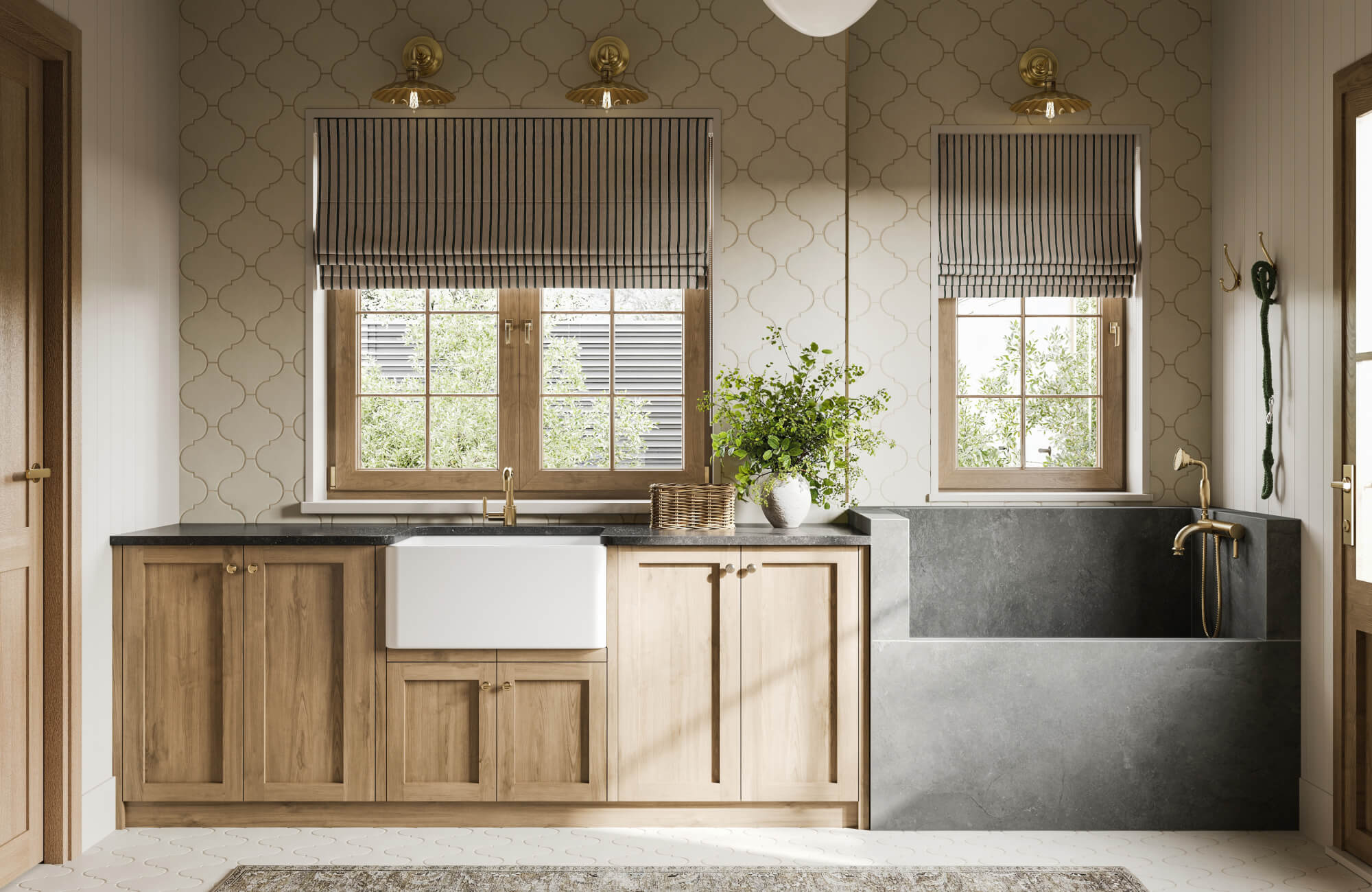
Light wood vanities have become a highly sought-after feature in contemporary bathroom and home design, celebrated for their natural warmth, serene aesthetic, and remarkable versatility. Their soft tones and organic textures offer a fresh alternative to traditional dark woods or stark whites. A key design consideration is selecting the perfect flooring to pair with this prominent element. The relationship between these two components significantly influences the aesthetic balance and long-term cohesion of the space. This article provides comprehensive guidance to help you make informed decisions that create a harmonious and enduring design.

Exploring the Tone and Texture of Light Wood
Before exploring flooring options, it's essential to understand what qualifies as light wood and how its characteristics influence flooring choices.
What Counts as Light Wood
Light wood vanities typically feature wood species such as maple, birch, light oak, or ash. These woods have natural hues ranging from creamy whites to soft blondes. The light appearance can also result from finishes like bleaching, which removes darker pigments; natural finishes that highlight inherent lightness with a clear sealant; or whitewashing, which softens the wood with a translucent stain. Each of these variations contributes to the overall light aesthetic of the vanity.
Warm Versus Cool Undertones in Light Wood
Identifying whether your vanity leans warm or cool is critical. Warm undertones, like those in golden oak or creamy maple, have hints of yellow or orange, creating an inviting atmosphere. Conversely, cool undertones, seen in bleached ash or some whitewashed oaks, feature gray or taupe tints and offer a modern, serene, or minimalist appeal. Matching the flooring undertones with the vanity prevents clashes and ensures a cohesive design.

Best Flooring Materials to Complement Light Wood Vanities
Understanding your material options is key to making informed design choices. Each material has its own visual qualities and functional strengths.
Porcelain or Ceramic Tile
Porcelain or ceramic tile offers immense versatility and practicality when paired with light wood vanities. For a striking contrast, consider concrete-look tiles in a dark gray, providing an industrial edge. To infuse luxury, marble-look tiles, especially those with subtle gray or warm beige veining, offer timeless elegance that complements the natural warmth of light wood. A great example is our Holly 72" Double Vanity in Sunwashed Oak with 3 cm White Zeus Quartz Top, which sits beautifully against oversized marble-look porcelain tiles, creating a spa-like ambiance with elevated texture and tone. For an earthy or natural vibe, stone-effect porcelain in muted earth tones creates a grounded foundation. These tiles are durable, water-resistant, and come in a vast array of finishes and sizes, making them a robust choice for bathrooms.
Luxury Vinyl Plank or Laminate
Luxury Vinyl Plank (LVP) and laminate flooring mimic the look of wood or stone while offering excellent moisture resistance and durability, perfect for frequent use or splash-prone areas. For light wood vanities, recommend warm-toned or medium oak-look LVPs, maintaining visual continuity while adding depth. They also come in a variety of widths and patterns, allowing for diverse design expressions that complement the light vanity without clashing.
Natural Stone Flooring
For a rich, tactile aesthetic, natural stone brings unmatched character. Travertine adds warmth, limestone offers subtle softness, and slate delivers bold, textured contrast. These materials naturally complement sleek light wood finishes and introduce organic depth. Though they require regular sealing and care, their authenticity and luxury make them worth the investment.
Concrete or Microcement
For minimalist or industrial designs, concrete and microcement provide a clean, modern backdrop. Their cool gray tones contrast beautifully with the warmth of light wood, highlighting the vanity’s texture and clean lines. Microcement offers a similar aesthetic with greater flexibility and thinner application, making it ideal for renovation projects. Both materials support a sleek, architectural look that keeps the focus on the vanity.
Grain Pattern and Finish Texture
The wood grain and finish of the vanity should guide flooring texture choices. Bold grains like oak suit natural or slightly textured floors, while fine grains like maple may work better with smooth surfaces. Similarly, match or contrast the vanity’s finish, such as matte vanities pair well with matte or textured floors for consistency, while glossy vanities benefit from contrasting textures to add visual interest. Balancing these elements ensures a cohesive and visually engaging design.

Contrasting for Impact Versus Coordinating for Harmony
Choosing flooring to pair with a light wood vanity offers two primary approaches: creating contrast or fostering harmony. Each delivers a distinct visual impact depending on your design goals.
Going Bold with Contrast
Using contrast creates visual drama and makes the vanity a standout feature. Pairing a light wood vanity with dark flooring creates a striking visual contrast. For example, creamy oak against charcoal tile or espresso-toned LVP makes the vanity a focal point. This approach adds depth and sophistication, making it ideal for modern or dramatic interiors.
Creating Serenity with Tonal Harmony
For a more calming and cohesive effect, opt for tonal harmony. Choose flooring in a similar shade and undertone as the vanity, such as light greige tiles or pale wood-look LVP, to create a soft, spa-like feel. This seamless transition promotes tranquility and makes the room feel open and cohesive.
Visual Balance with Mid-Tone Floors
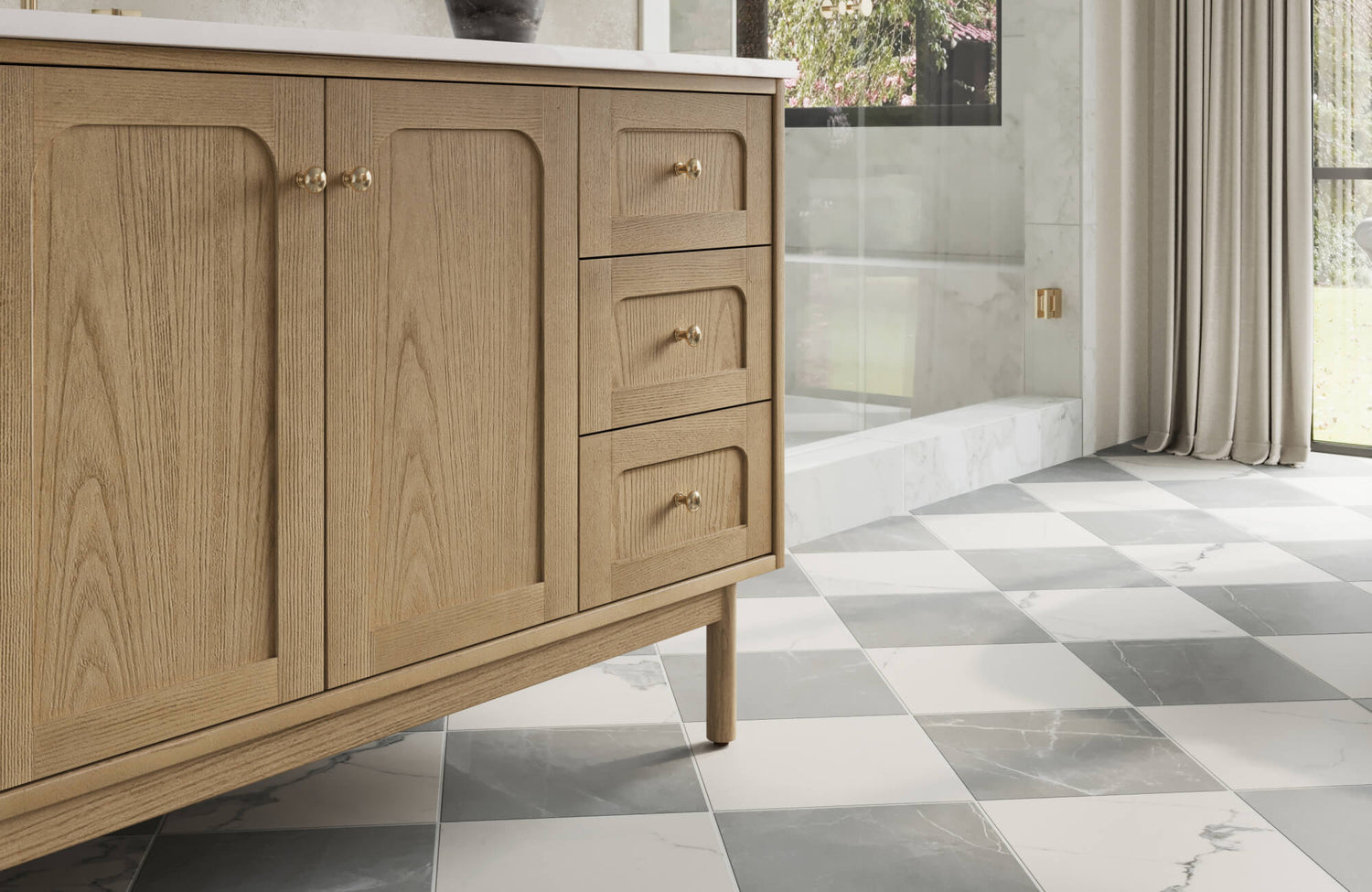
If you want a balance between contrast and cohesion, mid-tone flooring provides a refined middle ground. Shades like warm walnut-look LVP or medium-gray tiles, as seen with the Abigail 60" Single Vanity in Light Natural Oak with 3 cm White Zeus Quartz Top paired effortlessly with our Leona 12x12 Checkerboard Matte Porcelain Tile in Calacatta and Amani Grey, strike the perfect equilibrium. The soft veining of the tile and warm tones of the vanity complement one another without competing, allowing both elements to enhance the room’s visual appeal. This balanced pairing contributes equally to the space’s character, creating a setting that feels both grounded and effortlessly open.

Playing With Color Palettes and Design Styles
The choice of flooring color and material not only affects balance with a light wood vanity, but it also helps establish the overall design style of the room.
Scandinavian-Inspired Simplicity
For a clean and airy Nordic look, pair a birch or light oak vanity with pale gray tiles or whitewashed wood-look floors. This bright, understated combination maximizes natural light and keeps the design feeling minimal, serene, and functional.
Modern Rustic Appeal
To blend rustic textures with modern touches, choose flooring with earthy richness. Slate or stone-look porcelain in warm browns or charcoal tones complements the natural wood finish and adds rugged depth. The contrast highlights the vanity’s lightness while grounding the space in organic warmth. A perfect example is our Rosalie 36" Single Vanity in Amber Birch with 3 cm White Zeus Quartz Top, featured above, which pairs effortlessly with deep charcoal tile to create a cozy, cabin-inspired look that still feels clean and elevated.
Contemporary and Monochromatic
A modern monochrome palette benefits from subtle shifts in tone. Pair your light wood vanity with soft taupe or beige flooring to maintain a unified look while introducing depth through gentle variation. The vanity adds warmth and texture, keeping the minimalist aesthetic from feeling too sterile.
High-Contrast Modern Design
For a striking, architectural effect, go for high contrast. Combine a light wood vanity with dark gray or matte black flooring, particularly in bold patterns like herringbone, to create visual drama. This design suits urban and avant-garde spaces where boldness and sophistication are priorities.

Common Mistakes and How to Avoid Them
While light wood vanities offer great versatility, certain design missteps can disrupt their natural appeal. Being mindful of these common pitfalls can help you achieve a cohesive and polished look.
Mixing Clashing Wood Tones
One of the most common issues is blending too many wood tones with conflicting undertones. For example, pairing a warm, yellow-toned light wood vanity with a cool, red or blue-tinged wood floor can create visual discord. To maintain harmony, match undertones—warm with warm or cool with cool. Alternatively, opt for a flooring material that contrasts in color but not in tone, like a neutral tile, allowing the vanity to remain the primary wood element in the space.
Using Cold Gray Floors with Warm Vanities
Undertone mismatch between the flooring and the vanity can make a space feel disjointed. A warm-toned vanity (with yellow or orange hues) combined with a cold gray floor (with blue or icy undertones) can result in a harsh visual clash. Instead, choose a warm gray or greige floor with subtle beige or taupe notes. This maintains a consistent temperature across surfaces, promoting a more balanced and inviting design.
Overlooking Texture and Finish Consistency
Texture and finish play a vital role in creating visual unity. Mismatched gloss levels, such as pairing a glossy vanity with a rough, heavily textured floor, can feel unintentional and visually jarring. Aim for complementary finishes: matte vanities work well with either matte or lightly textured floors, while glossy vanities benefit from smoother or subtly contrasting surfaces. Coordinating texture helps tie the space together and ensures a well-thought-out aesthetic.
Choosing the Perfect Floor for Your Light Wood Vanity
Selecting the right flooring enhances both the functionality and visual impact of your light wood vanity. A successful pairing begins with understanding the vanity’s undertones and finish, then aligning your choice of materials with your desired design outcome. Whether you opt for bold contrast, serene harmony, or nuanced visual balance, making thoughtful, informed decisions will ensure a cohesive and timeless bathroom design. If you need personalized guidance, feel free to contact us—our team is here to help you bring your vision to life.