A rug is never just a decorative layer; it is a spatial anchor, a tactile surface, and a visual narrative that shapes how a room feels and functions. Through fiber, weave structure, pattern scale, and placement, rugs define zones, introduce texture, and bring emotional depth to an interior. They also carry histories of craftsmanship, cultural identity, artistic expression, and personal memory. From hand-knotted heirlooms to contemporary area rugs made with sustainable materials, each piece reveals something about the values, traditions, and design intentions behind it.
Over time, rugs have come to represent far more than comfort or style. Their motifs may reference ancestry, spirituality, protection, or status, while their materials can reflect regional resources, climate, and ethical priorities. Whether used as a floor covering, wall textile, ceremonial object, or focal design element, a rug gives meaning to the space it occupies. In the sections below, we explore how rugs represent culture, power, emotion, spirituality, artistry, sustainability, and the evolving story of home.

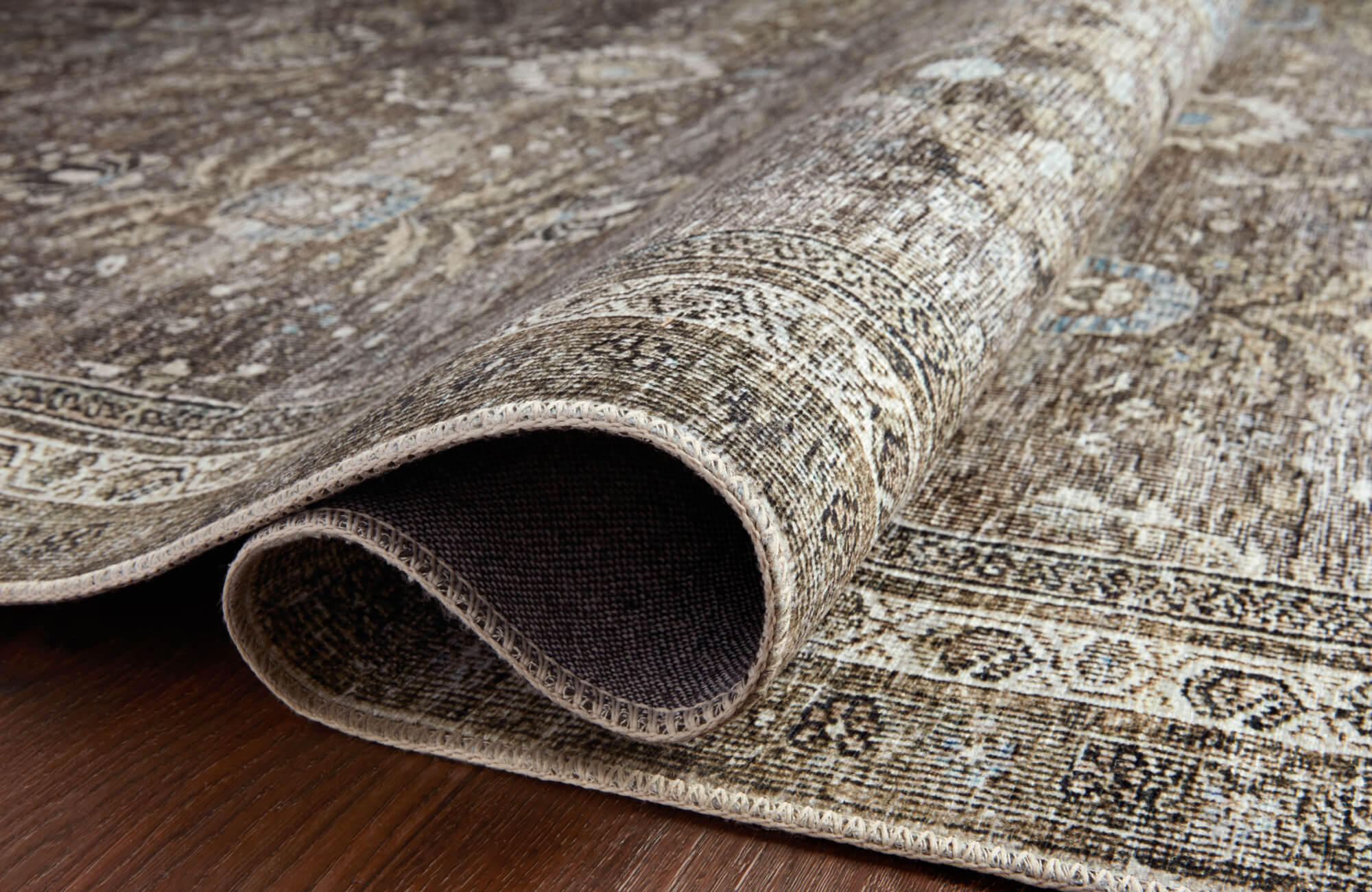
The Haverford Rug in Desert / Rust reveals a softly distressed rust, beige, and muted gold surface with a curled bound edge, giving its heritage-inspired pattern the worn character of a textile shaped by time and tradition
Rugs as Cultural Narratives
Rugs have long served as cultural documents, preserving the visual language of communities through motif, material, and weaving technique. Before they became common interior design elements, they functioned as practical textiles shaped by geography, migration, belief systems, and regional craftsmanship. Their patterns were rarely arbitrary; many carried symbolic codes that reflected protection, fertility, lineage, spirituality, and connection to the natural world.
Symbols in Traditional Motifs
Traditional rug motifs often operate like a woven vocabulary, communicating meaning through repeated symbols, borders, medallions, and geometric arrangements. In Persian rug design, stylized gardens, floral arabesques, and central medallions often reference paradise, order, and spiritual harmony. Turkish rugs frequently incorporate protective motifs such as the evil eye, ram’s horn, or hand-inspired forms, each connected to ideas of safety, strength, and blessing. Navajo weavings, by comparison, often draw from landscape, symmetry, and cosmological balance, while Berber rugs use abstract diamonds, lines, and tribal markings to express identity, protection, and ancestral memory.
Because these symbols are embedded within the structure of the design, understanding them changes how a rug is viewed. It becomes more than a color story or decorative accent; it becomes a cultural artifact shaped by visual storytelling. This awareness adds depth to the selection process, allowing the rug to be appreciated not only for its surface beauty but also for the history, symbolism, and human intention carried through its weave.
When you understand the intention behind these motifs, your relationship with a rug becomes more than surface-deep. You’re no longer selecting a piece simply for color or texture. Instead, you’re recognizing the visual storytelling embedded in its design, appreciating it not just as décor, but as a bearer of cultural memory and symbolism. This awareness also brings a greater sense of respect to the spaces you create and fosters a deeper connection with the people and traditions behind the piece.
Regional Identity Through Weaving Techniques
Regional weaving techniques reveal how communities adapted textile construction to climate, mobility, and daily life. In nomadic cultures across Central Asia, flat-woven kilims were valued for their portability, reversible structure, and ease of transport during seasonal movement. Their weft-faced construction made them lightweight yet durable, ideal for tents, floor coverings, and functional household use. In colder mountainous regions, such as Tibet or parts of Morocco, thicker pile rugs offered greater insulation, cushioning, and warmth, making the textile both practical and expressive.
Material selection also reflects regional identity. Silk, often associated with Persian weaving, adds luster, fine detail, and a sense of refinement, while wool remains prized in Turkish, Tibetan, and Moroccan rugs for its resilience, crimp, and natural insulating properties. Jute, commonly used in Indian textiles, offers a plant-based fiber with a coarse hand, organic texture, and strong connection to local sourcing. When these construction methods and materials are understood together, the rug becomes a record of place, climate, and craft rather than a simple decorative object.

The Marcela Cotton Rug in Lake / Spice pairs faded blue-gray medallion details with warm spice accents and decorative beads, showing how refined patterning can bring quiet prestige to a layered interior vignette
Symbols of Status and Power
Throughout history, rugs have also represented wealth, authority, and refined taste. Their value was often tied to the rarity of materials, complexity of design, knot density, dye quality, and the labor required to produce them. In elite interiors, rugs were not only used for comfort; they were displayed as signs of connoisseurship, global trade, and access to master craftsmanship.
Historical Associations with Nobility
In royal courts and aristocratic homes, rugs often functioned as visible markers of status. During the Renaissance, Persian and Anatolian rugs were highly prized across Europe and were frequently displayed on walls, tables, and furniture rather than placed underfoot. This placement preserved the textile while emphasizing its value as an imported luxury object and collectible work of art.
That historical association still influences contemporary interiors. High-end rugs are often used as statement pieces, whether layered beneath a seating arrangement, displayed as wall hangings, or positioned to define a formal entry. In each case, the rug contributes more than softness; it signals discernment, craftsmanship, and a cultivated appreciation for material quality.
Prestige Materials and Fine Craftsmanship
Luxury rugs are often distinguished by premium fibers, refined construction, and exceptional finishing. Silk creates a luminous surface with fine pattern resolution, making it ideal for intricate motifs and high knot-count designs. Hand-knotting, one of the most labor-intensive rug-making methods, produces a dense and durable structure in which each knot contributes to the clarity, texture, and longevity of the piece. Natural dyes, hand-spun yarns, and carefully finished edges further elevate the textile’s character.
Other fibers, including mohair, alpaca, and high-grade wool, add softness, sheen, and dimensional texture. In more opulent designs, metallic threads or silk-wrapped accents may be incorporated to create subtle reflectivity and ceremonial richness. These details are not merely decorative; they demonstrate technical mastery and material sophistication. Choosing a rug of this caliber is therefore an investment in craft, longevity, and heritage, especially when the piece is designed to become an heirloom within the home.

The Georgette Polyester Pile Rug in Navy / Rose anchors the seating area with a vintage-style field of muted blue, rose, and ivory, visually connecting the white sofa, leather chair, fireplace, and woven coffee table
Emotional Anchors in Interior Design
Beyond cultural and historical meaning, rugs play a powerful role in shaping the emotional atmosphere. In interior design, they influence spatial perception, acoustic softness, circulation, and tactile comfort. Through pile height, pattern density, color temperature, and placement, rugs help determine whether a room feels intimate, energized, grounded, or serene.
Establishing Emotional Zones
In open-concept layouts or multifunctional rooms, rugs create visual boundaries without the need for walls. A plush, high-pile rug beneath a lounge chair can soften a reading corner, while a low-profile flatweave in a dining area supports movement, durability, and everyday use. These differences in texture and construction help each zone feel distinct while still maintaining continuity across the overall floor plan.
The living area shown in the image above demonstrates this principle through the Georgette Polyester Pile Rug in Navy / Rose. Its blue and pink palette introduces softness and contrast, while the pile surface grounds the seating arrangement and gives the room a more cohesive focal point. Rather than acting as a separate decorative layer, the rug connects furniture, color, and atmosphere into one composed setting.
Memory and Attachment
Rugs often become emotionally significant because they remain present through daily rituals and life transitions. A rug chosen for a first apartment, nursery, family room, or renovated home gradually absorbs personal meaning as it becomes part of ordinary routines. Its surface may witness gatherings, quiet mornings, celebrations, and seasonal changes, turning it into a familiar landmark within the home.
This emotional attachment is one reason rugs often outlast passing design trends. Their value is not limited to pattern or material; it also comes from the memories associated with them. When selected with intention, a rug can mark a chapter of life while continuing to support the practical needs of the space.
If you’re looking for guidance in choosing a rug that truly reflects your story, our Design Services team is here to help you find the perfect piece—one that’s as lasting as the memories it represents.

The Pascal Rug in Smoke / Multi reinforces the idea of intentional placement, illustrating how patterned textiles can help define spaces dedicated to reflection, ritual, and mindfulness
Spiritual and Ritual Objects
Across many traditions, rugs serve as sacred or ritual textiles that define space for prayer, meditation, reflection, and ceremonial practice. Their physical placement helps separate ordinary activity from intentional stillness, while their motifs and orientation can carry spiritual meaning. In this context, the rug becomes both a surface and a threshold.
Prayer Rugs and Sacred Textiles
In Islamic tradition, prayer rugs, often called sajjadah, are used as dedicated surfaces for daily prayer. Many feature a mihrab-inspired design that visually indicates direction and supports spiritual focus. Their motifs may reference gardens, lamps, arches, or geometric order, each contributing to a sense of reverence and contemplation.
Because these rugs hold religious significance, they should be approached with cultural sensitivity. Displaying or using sacred textiles without understanding their purpose can diminish the meaning they carry. When admired for their beauty, they are best appreciated with respect for their devotional context, symbolism, and intended use.
Ritual Spaces and Intentional Placement
Rugs also support personal rituals outside formal religious practice. In yoga, meditation, breathwork, or ancestral reflection, a rug can define a quiet zone where the body and mind transition into a more focused state. Texture, warmth, and placement all contribute to this shift, turning a corner of the home into a space of pause and presence.
Over time, repeated use gives the rug a deeper association with calm, grounding, and intention. Its role becomes both functional and symbolic, supporting posture, comfort, and emotional focus. When chosen for this purpose, a rug should feel balanced in texture, scale, and color so it can reinforce the atmosphere of stillness rather than compete with it.

The Hutchinson Polyester Face Rug in Burgundy / Khaki fills the sunlit lounge with a softly faded burgundy pattern, letting its painterly surface echo the warm wood frame, relaxed sofa, and natural light
Mediums of Artistic Expression
Rugs are also textile artworks, translating composition, color theory, proportion, and rhythm into a functional surface. Their artistry lies not only in pattern but also in the relationship between fiber, pile direction, dye variation, and negative space. Whether traditional or contemporary, a well-designed rug can operate as the visual foundation of an entire room.
Artistry in Composition and Color
A rug’s composition depends on many of the same principles used in painting, architecture, and interior design. Symmetry creates order and formality, while asymmetry introduces movement and visual tension. Borders frame the field, medallions establish hierarchy, and allover patterns create rhythm across the surface. Color temperature, contrast, and saturation further influence how the rug interacts with furniture, lighting, and surrounding materials.
In minimalist interiors, a richly patterned rug can become the dominant focal point, adding depth and movement to an otherwise restrained palette. In more layered rooms, a softer vintage-inspired design can unify mixed materials without overwhelming the space. Our Hutchinson Polyester Face Rug in Burgundy / Khaki, shown in the image above, demonstrates this balance through its muted terracotta tones and gently distressed pattern. Its coloration adds warmth, while its faded surface creates visual texture that complements natural light, wood accents, and earthy décor.
Collaboration Between Artists and Weavers
Contemporary rug design increasingly blurs the boundary between fine art and functional textile. Artists and weavers often collaborate to translate drawings, paintings, or digital compositions into woven form. This process requires more than reproduction; it involves interpreting linework, tonal variation, scale, and texture through yarn, knotting, tufting, or flatweave construction.
These collaborations are valuable because they combine artistic vision with technical expertise. The artist contributes composition, concept, and visual language, while the weaver determines how fiber, density, pile height, and finishing will affect the final piece. The result is a rug that functions as both design element and collectible artwork, bringing tactile dimension and narrative depth into the interior.

The Mallory Wool Pile Rug in Khaki shows a raised ivory-and-khaki wool pattern with visible loops and fringe, emphasizing the tactile beauty of natural fiber craftsmanship in a close-up view
Symbols of Sustainability and Ethical Values
As interiors become more values-driven, rugs increasingly represent sustainability, responsible sourcing, and ethical production. Fiber content, dye process, labor standards, and product longevity all influence the environmental and social impact of a rug. Choosing thoughtfully made pieces allows the home to reflect not only personal style but also a broader commitment to mindful living.
Eco-Conscious Material Choices
Natural and responsibly sourced fibers such as wool, jute, and organic cotton offer durability, texture, and lower-impact material profiles. Wool is valued for its resilience, natural crimp, insulating ability, and stain resistance, making it especially suitable for long-term use. Jute provides a renewable plant fiber with a textured hand and relaxed organic appearance, while recycled or responsibly grown cotton offers softness with reduced material waste.
The Mallory Wool Pile Rug in Khaki, shown in the image above, reflects this type of material-conscious design. Made from 100% wool, it combines softness, durability, and a warm neutral tone that works across modern, transitional, and traditional spaces. Its natural fiber construction supports comfort and longevity while giving the room a grounded, tactile quality.
Certifications can further support informed decision-making. GoodWeave helps identify rugs made without child labor, while OEKO-TEX indicates that textiles have been tested for harmful substances. Together, responsible materials and verified production standards allow rugs to contribute to a healthier, more ethically considered interior.
Social Impact Through Artisan Support
Sustainability also includes the people behind the product. Handcrafted rugs often preserve specialized techniques such as hand-knotting, hand-tufting, flatweaving, natural dyeing, and hand-finishing. These methods require skill, time, and generational knowledge, particularly in regions where rug-making remains an important cultural and economic practice.
Supporting artisan-made rugs helps sustain these craft traditions while promoting fairer economic opportunities. It also gives the finished piece a human connection that mass-produced textiles often lack. The rug becomes part of a larger network of material knowledge, cultural preservation, and responsible commerce, allowing the home to express both beauty and integrity.
Rugs as Living Narratives
A rug is a layered object, shaped by material, technique, symbolism, and lived experience. It may reflect the heritage of a weaving tradition, the refinement of skilled craftsmanship, the emotional rhythm of a room, or the values behind a more sustainable home. As it settles into daily life, it gathers meaning through use, memory, and placement, becoming more than a decorative surface.
Choosing a rug with intention allows the space to feel grounded, personal, and visually complete. Whether the goal is cultural depth, artistic impact, tactile comfort, or ethical design, the right piece can shape the atmosphere of a room while telling a story that feels enduring. Edward Martin’s design services can help guide that selection with thoughtful recommendations tailored to your space, style, and values. Contact us to explore rugs that bring lasting beauty, craftsmanship, and meaning into your home!