Mirrors are often seen as purely functional objects, but in the hands of a skilled decorator, they are powerful design tools. The right mirror can open up a small room, add light to a dark corner, or serve as a stunning focal point. However, the true impact of a mirror lies not just in its reflection but in its shape.
The lines, curves, and angles of a mirror’s frame communicate a specific aesthetic, evoking feelings from calm and serene to bold and dramatic. This article will explore how various mirror shapes influence a room's style and help you make a confident, intentional choice for your home.

The Soothing Appeal of Round and Oval Mirrors
While mirrors are often chosen for function, their shape has a strong influence on the mood and feel of a space. Round and oval mirrors, in particular, bring softness and calm that can subtly transform a room’s energy.
The Harmonious Circle
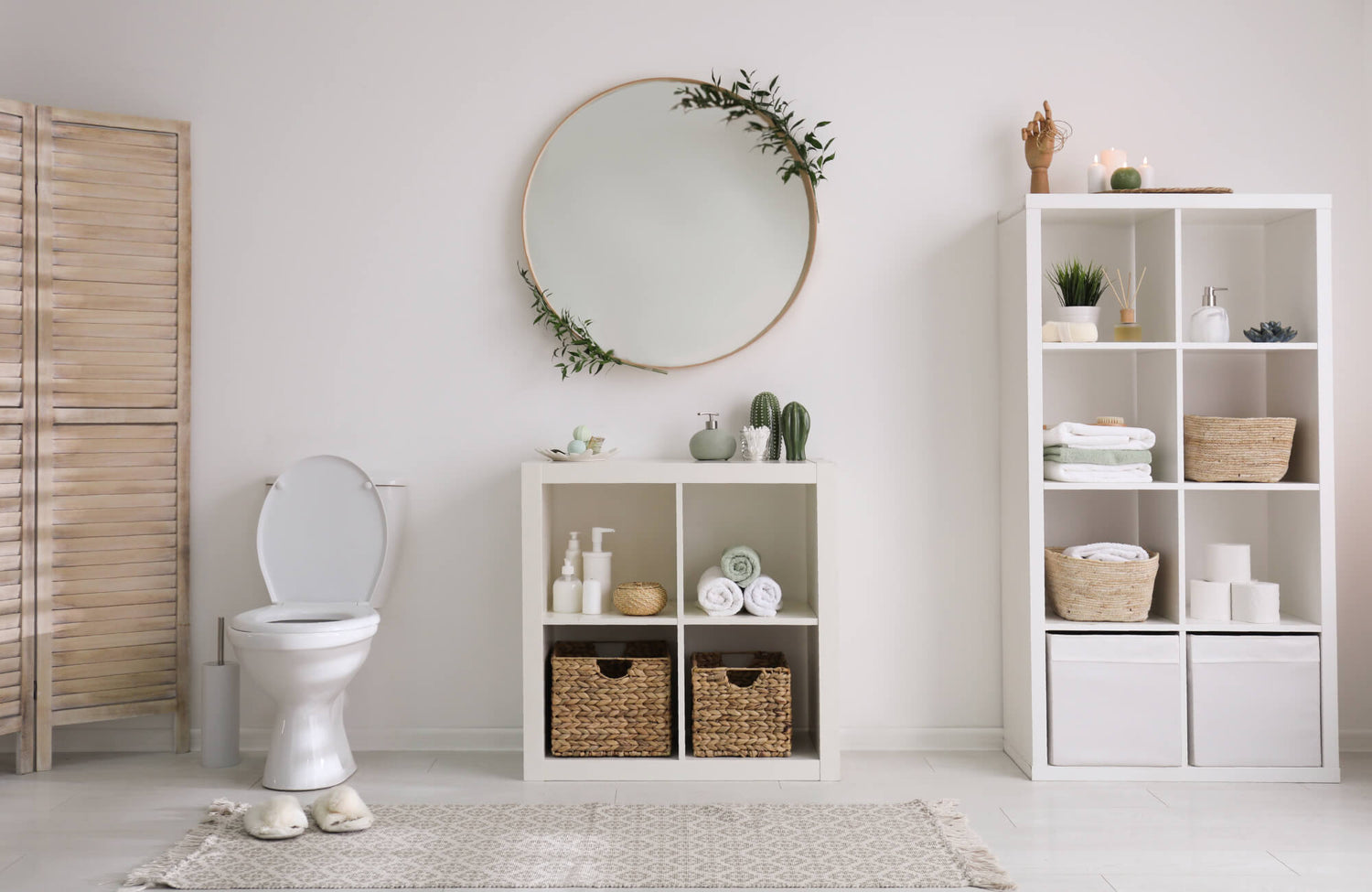
With a shape that symbolizes unity and continuity, round mirrors naturally evoke a sense of harmony. Their lack of corners visually softens a space and can help reduce perceived tension in a room’s layout. Thanks to their symmetrical form, these mirrors work beautifully as focal points, especially when paired with structured elements like paneling or angular furniture.
Used thoughtfully, round mirrors can break up visual rigidity, making them a favorite in modern and minimalist interiors. Positioned above a console or vanity, they contribute to spatial balance while reflecting light evenly across the room. This radial symmetry not only enhances illumination but also adds subtle depth without overwhelming surrounding décor.
A perfect example is Edward Martin’s Tristan Round Mirror in Polished Brass, which combines clean design with warmth. As featured in the photo above, its elegant silhouette and refined metal edge tie in effortlessly with brass fixtures, reinforcing a cohesive, tranquil atmosphere.
The Graceful Oval
Building on the benefits of round mirrors, ovals add a sense of movement through their elongated form. A vertically hung oval mirror draws the eye upward, enhancing vertical space and adding lift to low ceilings. Turned horizontally, it visually stretches a wall, ideal for making narrow spaces feel wider and more open.
Because of their organic curvature, oval mirrors lend themselves well to traditional and romantic interiors, where softness and subtle detailing are key. They also echo curved architectural elements, like arched doorways or crown molding, creating a visual rhythm that feels intentional and seamless. Whether layered in groupings or used as sculptural standalones, their proportions offer versatility across a wide range of layouts.

The Structured Statement of Rectangular and Square Mirrors
Where curved mirrors offer flow and ease, angular shapes like rectangles and squares bring clarity and structure. These classic forms help define space with precision, making them essential tools for creating order and symmetry.
The Classic Rectangle
Among mirror shapes, the rectangle is perhaps the most adaptable. Its elongated form aligns effortlessly with common architectural features, walls, windows, and furniture, making it a natural choice for establishing visual cohesion. When hung vertically, rectangular mirrors emphasize height and draw the eye upward, a helpful strategy in narrow entryways or spaces with lower ceilings.
Flipped horizontally, they widen the room’s perspective, an approach frequently used in dining areas, bathrooms, and over sofas or consoles. Rectangular mirrors also integrate well with millwork and architectural framing, reinforcing the linear rhythm of a space. Their geometric precision supports symmetrical layouts, such as flanking sconces or matching paired furniture, making them a favorite for interiors where balance and structure are key.
The Modern Square
While rectangles offer versatility, square mirrors bring a refined, contemporary sensibility. Their equal dimensions create a sense of calm and stability, making them ideal for interiors rooted in modernism or minimalism. Often used in grid-style installations, square mirrors contribute to a rhythmic visual pattern, especially in entryways, galleries, or bath spaces.
Used individually, they serve as compact focal points, perfect for powder rooms, small nooks, or above vanities. Their uniform proportions also lend themselves well to modular layouts, where coordination with shelves, art, or cabinetry is essential. Whether framed in matte black or polished brass, the square mirror’s crisp geometry adds a polished finish without visual excess.
Edward Martin’s Tristan Square Mirror in Polished Brass, as shown in the photo above, softens the strict square form with gently rounded corners, adding a subtle layer of sophistication. Its brass frame mirrors the surrounding fixtures, enhancing cohesion while maintaining a sense of modern restraint.

Whimsy and Architectural Interest with Arch and Irregular Mirrors
Balancing the structure of straight-edged mirrors, arched and irregular designs introduce character and movement. These expressive shapes add architectural flair or playful contrast, enriching rooms with a touch of personality.
The Timeless Arch
Inspired by classical architecture, arched mirrors channel the elegance of Roman and Gothic arches, symbolizing openness and grandeur. Their curved tops soften vertical lines while naturally drawing the eye upward, an effect that enhances perceived height and adds a sense of graceful proportion. This also makes them especially effective in spaces like entryways, dining rooms, or above fireplaces, where a touch of formality is desired without sharp, angular edges.
Beyond aesthetics, arched mirrors reinforce architectural harmony by echoing features such as arched doorways or windows. Even in contemporary interiors, they provide historical context while pairing effortlessly with modern materials like brushed metal or minimalist wood. Their curvature also serves a functional purpose, subtly redirecting light and softening rigid spatial layouts to create a more relaxed, inviting atmosphere.
Edward Martin’s Raelynn Mantel Mirror in Iron Matte Black, as featured in the photo above, exemplifies this versatility. Its asymmetrical arch and slim frame introduce artisanal detail while complementing the deep tones of the surrounding finishes. The result is a grounded, cohesive look that balances modern restraint with sculptural warmth.
The Playful Irregular Shape
In contrast to the formality of arches, irregular mirrors embrace spontaneity. These organic, asymmetrical designs push beyond traditional geometry, becoming focal points that suggest motion, softness, and creative expression. Ideal for eclectic or avant-garde spaces, they also disrupt symmetry with intention, adding an artful, curated feel to interiors that celebrate individuality.
Often shaped to resemble natural elements like water droplets, stones, or waves, irregular mirrors lend a biomorphic quality that’s tactile and approachable. Their flowing lines soften otherwise stark rooms, making them particularly effective in minimalist or monochromatic environments. Whether frameless for a seamless look or boldly edged to heighten their visual presence, these mirrors bridge functionality and sculpture in equal measure.
Used thoughtfully, they invite interaction and encourage visual exploration, turning any wall into a conversation piece while complementing a range of contemporary styles.

Creating Drama and Light with Decorative Mirrors
After exploring shape, it’s worth considering how detailing and framing can further elevate a mirror’s impact. Decorative mirrors, especially those with sculptural or ornate designs, deliver bold style statements while enhancing light and depth.
The Striking Sunburst
Few mirror styles command attention like the sunburst. With its radiating frame inspired by solar forms, this design has roots in both neoclassical and mid-century modern aesthetics. Typically finished in metallic tones such as antiqued gold, bronze, or polished nickel, sunburst mirrors scatter light across the room, brightening even the dimmest corners. Their circular geometry also naturally draws the eye, making them a bold centerpiece over mantels, entry consoles, or feature walls.
Beyond light play, sunburst mirrors introduce sculptural texture and a sense of movement. Whether displayed solo or layered into a gallery arrangement, they bring energy and focus to still compositions. Available in a range of sizes, from compact accents to oversized statements, they adapt easily to both modest rooms and expansive foyers without overpowering the surrounding design.
Edward Martin’s Clementine Mirror in Antiqued Gold Leaf channels this dramatic spirit with its richly tiered frame and timeworn gilded finish. While not a literal sunburst, its radiant silhouette and dimensional detailing deliver a similar effect, casting light and depth while adding a sophisticated, historical layer to the space.
The Ornate Decorative Frame
While sunbursts emphasize form, ornate mirrors highlight craftsmanship. These framed designs often draw from historical styles, Baroque, Rococo, or Moroccan, featuring carved wood, gilt plaster, or wrought iron that acts as sculptural embellishment. Here, the frame becomes a central design element, offering texture, rhythm, and a sense of artisanal richness.
Such mirrors are especially well-suited to interiors that embrace maximalism, tradition, or vintage elegance. Their elaborate profiles also complement architectural detailing like panel molding or coffered ceilings, and they bring balance to richly furnished spaces. Unlike minimalist mirrors that disappear into the background, ornate styles invite the viewer in, serving both aesthetic and narrative purposes.
Whether gracing a grand staircase, anchoring a formal dining room, or adding heritage character to a library, these mirrors lend timeless appeal and tactile depth.
Finding the Perfect Mirror for Your Space
Choosing the right mirror shape is essential in shaping a room’s identity. From the softness of a circle to the drama of an ornate frame, each form influences how your space feels, reflects light, and frames key architectural elements.
For those seeking expert support, Edward Martin’s design consultation service offers personalized guidance tailored to your layout, lighting, and overall design vision. Whether you're choosing a single mirror or coordinating it with tile, rugs, or furnishings, our team is here to help you move forward with clarity and confidence. For assistance with selections or product details, don’t hesitate to contact Edward Martin. We're ready to help you bring your design goals to life, beautifully and seamlessly!