Bathroom mirrors in 2025 have become sophisticated design features that combine aesthetics, intelligent function, and sustainable craftsmanship. No longer a static fixture, the modern mirror integrates smart technology, customized lighting, and bold shapes to deliver a highly personalized user experience. This shift reflects a growing demand from homeowners, interior designers, and renovators for mirrors that not only enhance the visual appeal of a space but also support efficient, mindful living.
In response, trending designs are now shaped by broader movements in home automation, minimalist architecture, and biophilic principles. In this article, we’ll explore five of the most significant bathroom mirror trends this year, each grounded in functional innovation and design-forward thinking.

Smart Bathroom Mirrors
Bathroom mirrors are undergoing a digital transformation, enabling seamless interaction with smart home systems. Designed with embedded sensors, voice recognition, and touch interfaces, these mirrors enhance convenience by integrating directly into daily routines.
Voice and App Integration
Smart mirrors increasingly feature native support for Alexa, Google Assistant, and proprietary control apps, allowing users to adjust lighting, play music, or receive real-time updates—all hands-free. This integration facilitates streamlined multitasking during morning routines, like checking calendars or weather, while grooming. Companion mobile apps also often enable granular customization, from lighting temperature to sensor sensitivity. Additionally, firmware updates via Wi-Fi help keep features current, extending the mirror’s functional lifespan. These capabilities reflect the broader trend toward adaptive, connected environments in bathroom design.
Anti-Fog and Demisting Systems
Humidity is a perennial issue in bathroom environments, but advanced demisting technologies have effectively solved it. For instance, heating pads or thin-film resistive elements embedded behind the glass surface prevent condensation build-up, ensuring a clear reflection post-shower. These systems often include automatic activation linked to ambient humidity levels or user proximity sensors. Some high-end models even offer selective demisting zones for dual users, preserving efficiency. This innovation not only improves visibility but also extends mirror durability by minimizing moisture-induced degradation.
Touch Interface and Ambient Display
Modern smart mirrors feature intuitive capacitive touch panels that eliminate the need for traditional switches. Users can now fine-tune brightness, toggle anti-fog settings, and shift color temperature with just a light tap. Many mirrors also include ambient displays that present time, indoor temperature, and weather updates in low-profile, frosted overlays. These additions are carefully integrated to maintain a minimalist visual aesthetic while enhancing utility. This seamless blending of technology and design reflects a next-generation approach to bathroom innovation.

Backlit and Edge-Lit LED Mirrors
Lighting plays a central role in bathroom functionality and atmosphere, and LED mirrors have emerged as a leading solution. These mirrors improve visual clarity and spatial perception while introducing a visually refined presence on the wall.
High-CRI Lighting Performance
A high Color Rendering Index (CRI), typically above 90, ensures that LED mirrors reflect skin tones and colors with true fidelity. This is particularly vital for grooming tasks such as shaving and applying makeup, where color accuracy is essential. In response to growing consumer demand, manufacturers are prioritizing high-CRI lighting even in mid-range models, making this once-premium feature more accessible.
Additionally, LED mirrors provide a consistent, flicker-free output, reducing eye strain and fatigue. Quality LEDs even have a lifespan exceeding 50,000 hours, supporting long-term use with minimal maintenance. As a result, they’re increasingly found in wellness-oriented bathrooms that blur the line between utility and relaxation. Their reliable illumination also helps create a professional-grade grooming environment at home.
Dimmable and Adaptive Brightness Control
Dimmable mirrors allow users to control intensity across a spectrum of brightness levels, typically via touch sliders or gesture sensors. This enables comfort and functionality in varying lighting conditions from soft ambient light at night to full brightness in the morning. The flexibility also allows for mood-setting scenarios, such as calming illumination for evening unwinding or energizing brightness for morning routines.
Many newer models feature adaptive brightness that adjusts in real time to ambient light levels, maintaining visual consistency. These adaptive functions reduce energy waste while optimizing the user experience. In bathrooms shared by multiple users, this dynamic lighting system ensures each person can personalize their experience without disrupting the overall ambiance. The result is a lighting environment that aligns naturally with circadian rhythms and daily routines.
Seamless Illumination Architecture
LEDs are now integrated directly into the mirror panel, either along the edge or behind the surface, for a soft backlit glow. This use of etched light guides or frosted diffusers ensures that the illumination is uniform, shadow-free, and visually balanced. Innovations like these are also particularly valuable in windowless bathrooms, where artificial lighting must replicate natural light as closely as possible.
Building on this seamless integration, frameless or flush designs further elevate the mirror’s minimalist appeal by eliminating visible wiring or hardware. This architectural integration supports a clean and modern aesthetic favored in spa-style bathrooms. Additionally, the uninterrupted surfaces are easier to maintain, reducing visual clutter and enhancing long-term usability. The lighting effect also helps visually expand smaller rooms, making them appear more open and inviting.

Frameless and Minimalist Profiles
Minimalist mirror designs are in demand for their understated elegance and spatial versatility. Frameless constructions, often with ultra-thin profiles, provide a clean and timeless look that enhances architectural cohesion.
Edge Treatment and Optical Clarity
Frameless mirrors rely on precision-polished or micro-beveled edges to create a refined silhouette that eliminates the need for visible framing materials. These subtle edge treatments not only enhance the mirror’s sleek appearance but also reflect light in a way that contributes to a seamless integration with the surrounding environment. To support both durability and clarity, high-grade float glass is commonly used, featuring copper- and lead-free backing that resists corrosion, especially in high-humidity conditions.
For even greater transparency and visual sharpness, some manufacturers opt for low-iron glass, which minimizes the green tint typically seen in standard glass. Combined, these material and design choices ensure the mirror delivers both aesthetic elegance and long-term functional performance.
Floating and Recessed Mounting Systems
Mounting systems have evolved to complement the minimalist look, often utilizing concealed Z-clips, standoffs, or cleat brackets that keep hardware out of sight. These discreet methods create the illusion of a "floating" mirror, enhancing the visual lightness and adding to the sense of modern refinement. For an even more seamless effect, recessed installations provide a flush, built-in appearance that blends effortlessly with tiled or paneled walls.
Beyond aesthetics, these installation techniques also offer practical benefits. By minimizing dust-trapping gaps and eliminating hard-to-reach crevices, they make cleaning significantly easier. The result is a mirror that feels not just installed, but thoughtfully integrated into the overall space.
Matte and Minimal Framing Accents
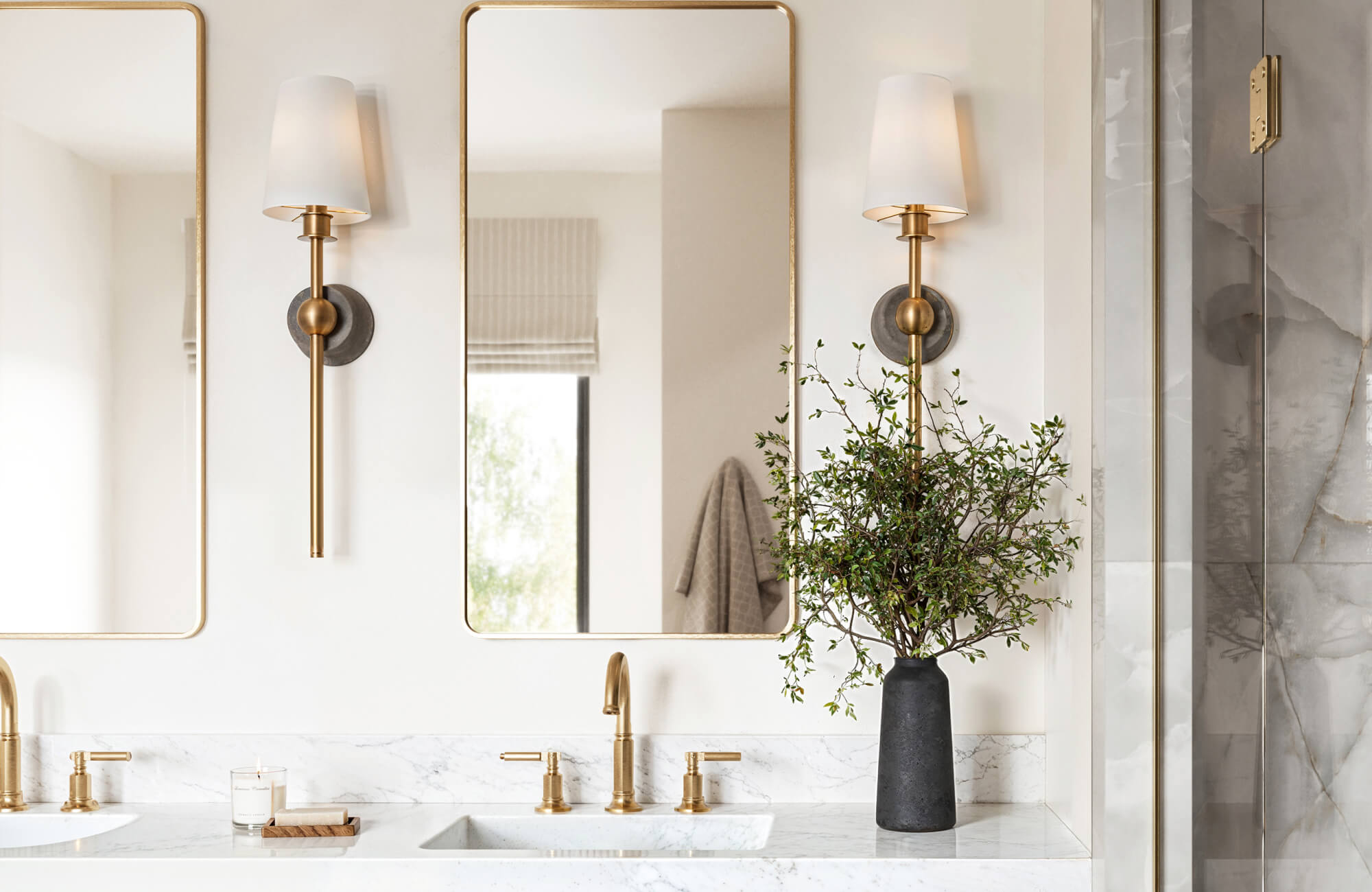
For designs that incorporate framing, ultra-thin trims in brushed metal or powder-coated aluminum offer subtle definition without visual weight. A prime example, as displayed in the photo above, is Edward Martin’s Tristan Round Mirror in Polished Brass, which features a sleek, narrow edge that enhances its elegant form without overwhelming the surrounding décor. The polished brass finish delivers a warm, lustrous accent that complements both modern and traditional palettes while maintaining the minimalist ethos.
Soft gold, satin nickel, and matte black, like our Esmeralda Wide Mirror in Iron Matte Black, are also trending for their ability to subtly anchor a space without adding visual weight. These accents resist fingerprints and moisture damage, ensuring practical durability alongside refined aesthetics.

Sculptural and Organic Shapes
As bathroom design leans into more expressive and curated aesthetics, mirrors are taking on artistic and sculptural forms. These pieces break from convention, introducing dynamic shapes that contribute to a room’s personality and narrative.
Asymmetrical and Freeform Designs
Asymmetrical mirrors are gaining popularity for their ability to break up rigid visual grids, offering movement and visual interest. Inspired by natural shapes like water droplets, clouds, or leaves, these designs reflect a biophilic sensibility that softens hard lines and structured layouts. This organic influence introduces a calming, nature-inspired energy to interiors that might otherwise feel stark or overly geometric.
Despite their freeform appearance, these mirrors are fabricated using precision techniques such as laser cutting and CNC shaping, ensuring high production accuracy. Their unconventional forms also open the door to more creative lighting strategies—directional sconces or ceiling-mounted pendants can be used to accentuate their unique contours. This makes them particularly effective as statement pieces in minimalist or industrial bathrooms, where their softness provides an intentional contrast. By defying predictability, they lend a bespoke, artisanal quality that elevates the entire space.
Arched and Oval Mirrors
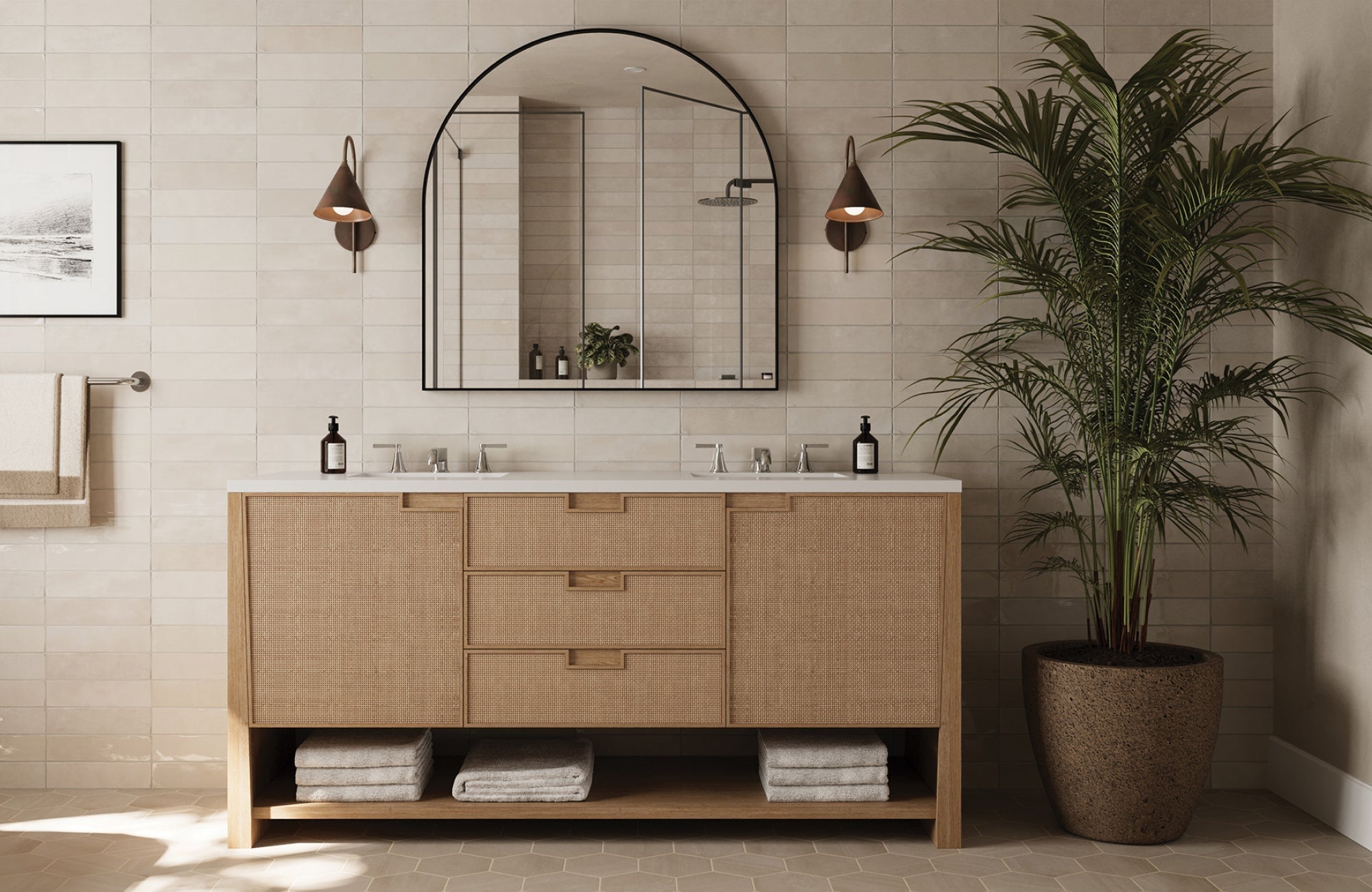
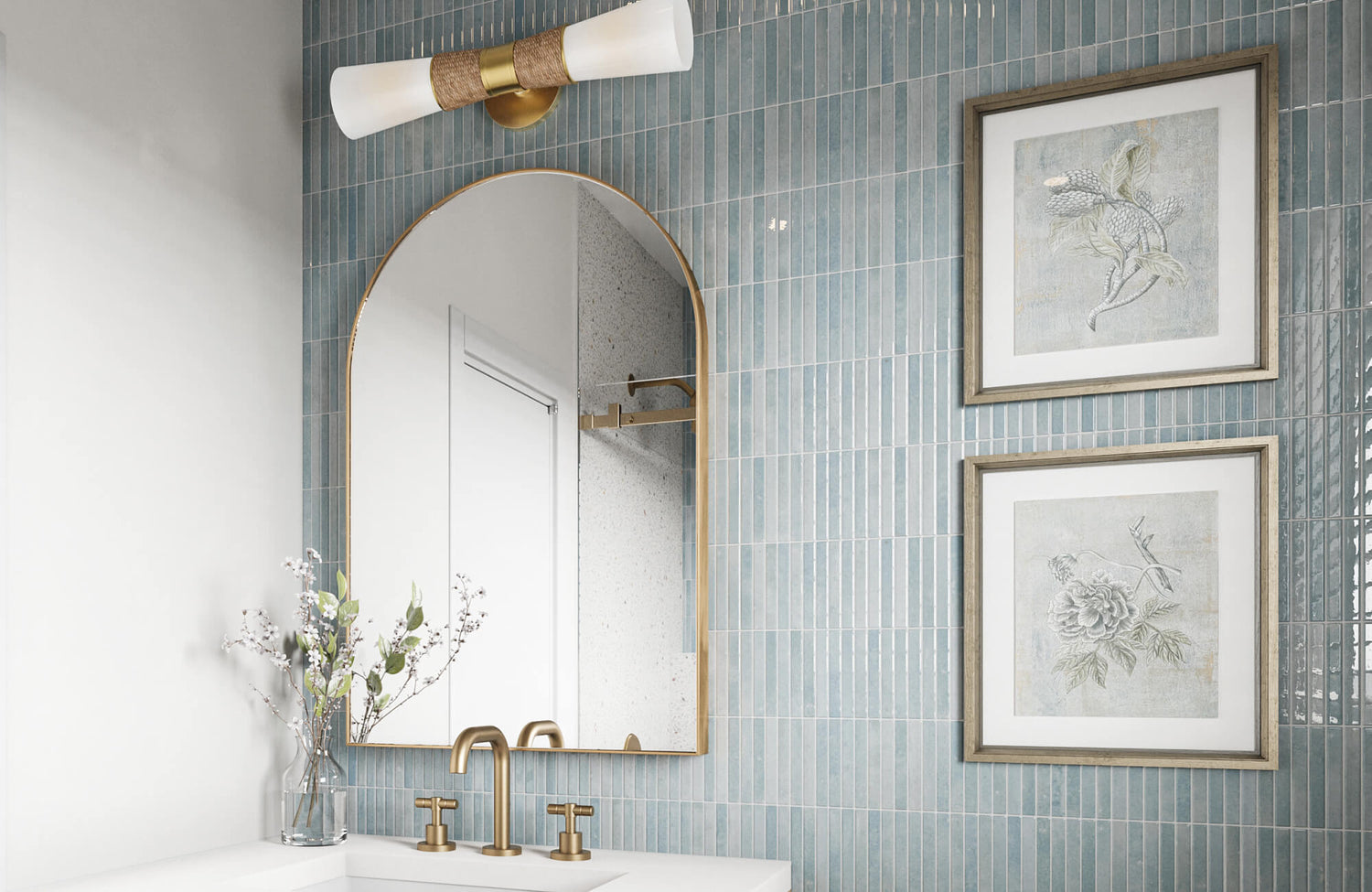
Arched and oval mirrors offer an elegant alternative to traditional rectangular designs, introducing gentle curves that soften the overall aesthetic. When mounted vertically, arched styles draw the eye upward, subtly elongating the wall and creating a sense of height. These rounded shapes help balance the sharp lines often found in tilework and cabinetry, adding a more organic, calming feel to the space.
Their balanced symmetry feels both soothing and timeless, making them a versatile choice for vintage-inspired and modern interiors alike. In smaller bathrooms, the curved silhouettes can reduce visual harshness, helping the room feel more open and inviting. Often complemented by finishes such as antique brass or matte bronze, these mirrors blend a sense of heritage with contemporary appeal.
Edward Martin’s Rory Mirror in Antique Brass Iron exemplifies this style, featuring a refined, organic silhouette that softens bathroom lines while adding sculptural interest. Its graceful form and aged finish create a warm focal point that blends effortlessly with classic and transitional design palettes. Mirrors like this also work well above vanities and console sinks, where their form enhances proportion and symmetry.
Layered and Double-Mirror Compositions
Mirrors are increasingly being used in multiples to create layered visual effects or symmetrical compositions. For example, double mirrors over dual sinks can mirror each other in shape but vary in size or framing for subtle complexity. This approach allows designers to create a sense of individuality within a shared space, balancing unity with personal expression. In other cases, overlapping mirrors of different opacities or depths generate depth and drama. These compositions enhance rhythm and repetition in bathroom design, often serving as an anchor for lighting and tile patterns.
With careful placement, these arrangements can also manipulate perceived proportions, making ceilings appear higher or walls wider. This strategy works particularly well in larger spaces, where mirror arrangements can become a focal point without overwhelming the room.

Sustainable Materials and Eco-Conscious Manufacturing
As sustainability becomes a priority in residential design, bathroom mirrors are being reengineered with eco-conscious materials and production methods. These innovations support green living without compromising on aesthetics or performance.
Lead-Free and Copper-Free Glass
Traditional mirrors often rely on lead and copper in the reflective backing, materials known to be harmful to the environment during both production and disposal. In response, newer models now feature environmentally safer alternatives, such as silver nitrate-based backing that resists oxidation without relying on toxic compounds. These advancements not only reduce environmental harm but also reflect a growing demand for cleaner, more responsible manufacturing practices in home construction.
By aligning with sustainable certification standards, manufacturers can ensure that their mirrors meet rigorous benchmarks for both performance and environmental impact. As a result, these mirrors maintain high reflectivity while significantly minimizing their ecological footprint across their entire lifecycle. Enhanced corrosion resistance further adds to their longevity, reducing the frequency of replacement and reinforcing a more sustainable approach to design. Increasingly, such innovations are no longer niche; they’re becoming standard features in eco-certified buildings and wellness-focused home renovations.
Reclaimed and Renewable Framing Materials
Eco-friendly mirrors often feature frames made from reclaimed wood, bamboo, or Forest Stewardship Council (FSC)–certified hardwoods. This shift toward renewable materials reflects a larger trend in eco-conscious interiors, where every element contributes to a sustainability narrative. Beyond their environmental benefits, these materials bring a warm, organic character to bathroom spaces, fostering a sense of natural calm.
To complement these sustainable choices, finishes are typically achieved using low-VOC (volatile organic compound) stains and sealants, which support healthier indoor air quality. These protective coatings not only preserve the material’s integrity in moisture-rich environments but also enhance its longevity. Adding to their charm, the unique grain patterns and natural imperfections of reclaimed wood give each mirror a distinctive, handcrafted look. As a result, these mirrors integrate beautifully into rustic, bohemian, and transitional design schemes, styles where texture, authenticity, and character are essential.
Energy-Efficient Lighting and Smart Operation
Many eco-conscious mirrors incorporate energy-saving LED modules that consume only a fraction of the power used by traditional lighting. Complementing this efficiency, integrated design elements, such as built-in diffusers, ensure even light distribution, reducing glare and enhancing usability. Additional features like motion-sensing activation, sleep timers, and auto-dimming functions further optimize energy use, creating an intuitive bathroom experience that adapts to user presence and preferences.
Beyond daily convenience, smart operation enables usage tracking, empowering homeowners to monitor consumption and actively reduce their carbon footprint. Mirrors that meet Energy Star or equivalent standards often qualify for green building credits or rebates, reinforcing their long-term value. Together, these sustainable innovations make environmental responsibility a built-in advantage rather than an afterthought. Thoughtful engineering also contributes to the spatial design, as integrated lighting and streamlined surfaces help visually expand smaller rooms, making them feel more open and inviting.
Redefining the Modern Bathroom Mirror
The evolution of bathroom mirrors reflects a broader shift in how people approach personal spaces—no longer as purely functional, but as immersive, high-performance environments. Today’s leading designs combine intelligent features, sculptural expression, and sustainable thinking to create mirrors that are as responsive as they are visually refined. From smart mirrors that adapt to user routines to organically shaped frames that soften architectural lines, each trend reveals a new layer of design innovation. Even the materials and lighting are carefully selected to promote wellness, longevity, and a positive environmental impact. Together, these trends signal a future where bathroom mirrors are not just reflective surfaces, but integral components of thoughtful, holistic design.
Edward Martin brings these design innovations to life through tailored services that combine aesthetic vision with functional expertise. Visit our Contact page to connect with a design specialist and begin your bathroom transformation!