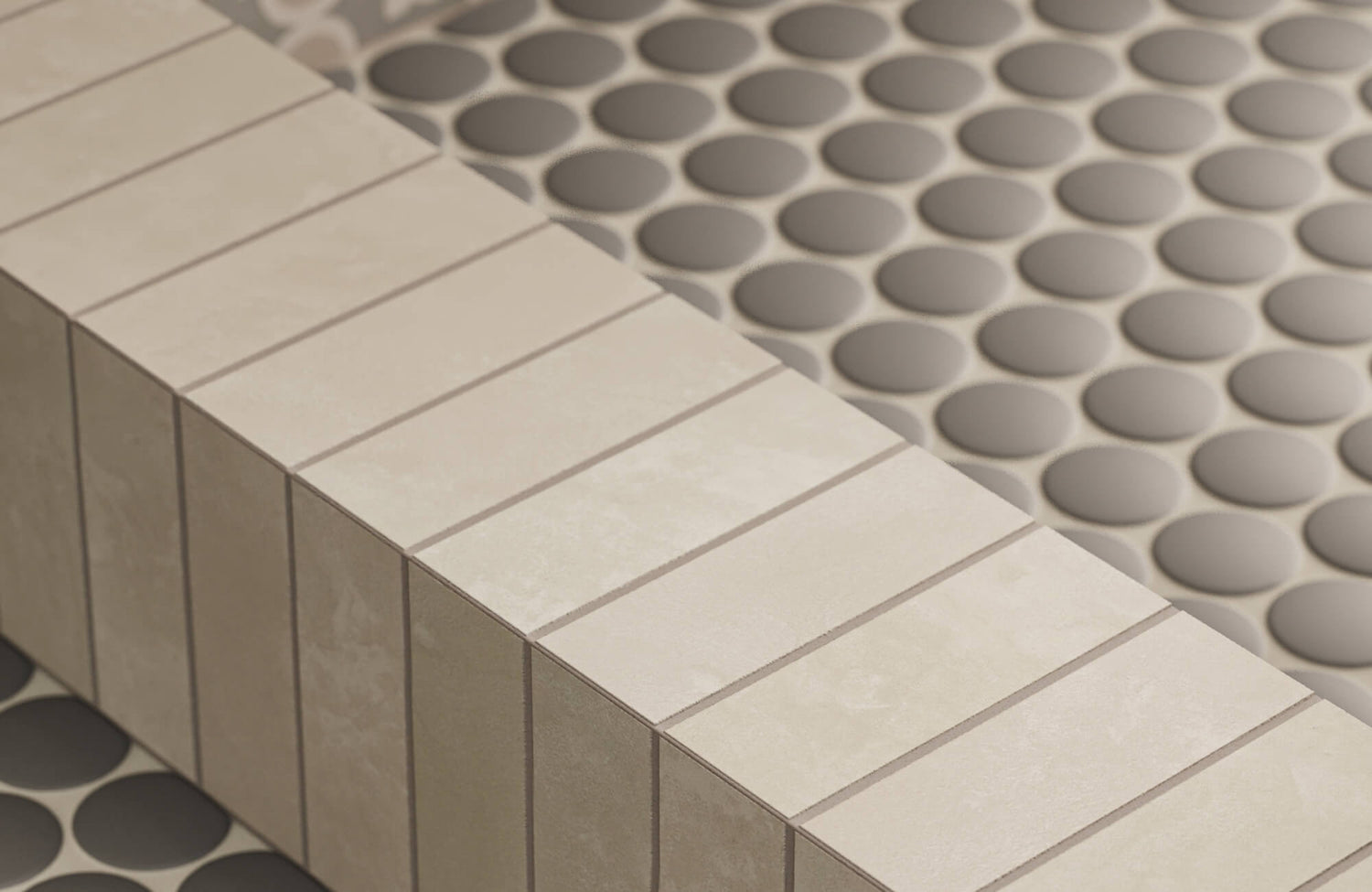
Penny tile is a small format, round mosaic tile that has remained relevant across decades of interior design. Valued for its visual rhythm, adaptability, and performance in moisture-prone environments, it is frequently specified for bathroom floors, shower bases, and accent surfaces. While penny tile offers notable advantages in slip resistance, design flexibility, and spatial articulation, it also introduces challenges related to installation precision and ongoing maintenance. Evaluating the pros and cons of penny tile requires a closer look at material composition, functional performance, labor demands, durability, and long-term care. When these factors are considered together, penny tile reveals itself as a highly intentional material choice rather than a purely decorative finish.

Design Versatility and Visual Impact of Penny Tile
Penny tile brings a distinctive visual cadence that bridges traditional craftsmanship with contemporary design sensibilities. Its circular geometry and modular format allow it to influence scale, movement, and material expression within a space.
Material Composition and Finish Options
Penny round tile is produced in ceramic, porcelain, glass, and natural stone, each offering a distinct balance of durability, texture, and visual depth. Ceramic penny tile is often chosen for its consistent glazing and accessible price point, making it especially well-suited for decorative wall applications. In contrast, porcelain features a denser body and a low water absorption rate, which supports long-term performance in high-moisture environments.
Meanwhile, glass penny tile adds a subtle reflectivity that amplifies light and can make compact bathroom layouts feel more open, whereas natural stone introduces organic variation and surface richness, though it requires sealing due to its inherent porosity. Because these material characteristics differ so significantly, thoughtful selection is essential to ensure both aesthetic appeal and functional longevity.
Color Blending and Pattern Customization
The sheet-mounted construction of penny tile allows designers to blend colors gradually, creating transitions that feel intentional rather than abrupt while maintaining visual continuity. This capability supports nuanced gradients, borders, and accent zones that preserve the rhythm of the circular pattern rather than interrupt it.
In a penny tile bathroom floor, subtle tonal shifts also often introduce depth and movement without overwhelming surrounding finishes. As the eye moves across the surface, the repeated round forms soften color changes and guide visual flow in a measured, cohesive way. A great example is Edward Martin’s Quinn 12×12 Matte Porcelain Octagon Mosaic Tile in Grey & White (as displayed in the photo above), where gentle contrast and geometric repetition ground the space while complementing adjacent wall tile tones.
Scale and Spatial Perception
Because of its small diameter, penny round tile interacts with space differently than larger formats, often making compact rooms feel more expansive. The repeated pattern increases visual articulation, which helps break down floor surfaces without fragmenting them. In a bathroom with penny tile installation, this effect can also subtly widen perceived floor area through continuous pattern repetition. Rounded edges further soften transitions, allowing the surface to feel fluid rather than rigid. As light moves across the tile, shadows and highlights add dimension that enhances depth perception. When scale is used deliberately, penny tile becomes a spatial tool rather than a purely decorative finish.
To better visualize how penny tile patterns and finishes interact with surrounding materials, Edward Martin’s augmented reality (AR) tool offers a practical design aid. This technology allows you to preview penny tile surfaces in real spaces, helping design decisions feel more confident and precise before installation.

Slip Resistance and Functional Performance in Wet Areas
Penny tile is frequently specified for wet environments where safety and performance must align seamlessly with design intent. Its functional advantages arise from geometry, material choice, and installation technique working in concert.
Grout Density and Traction Mechanics
One of the defining characteristics of a penny tile bathroom floor is its high grout-to-tile ratio, which naturally increases surface traction. Each grout joint contributes micro-friction points that enhance stability underfoot, particularly in wet conditions. This structural quality also makes penny round tile especially effective for shower floors and wet rooms. As water disperses across the surface, the dense joint network helps reduce slippage. However, this benefit depends on maintaining proper grout joint depth throughout the installation. When executed correctly, the system delivers consistent traction without relying on aggressive surface textures.
Surface Finish and Coefficient of Friction
Surface finish plays a critical role in how penny tile performs underfoot, particularly in moisture-prone settings. For instance, matte and lightly textured finishes maintain higher coefficients of friction than polished or high-gloss alternatives. In bathrooms with penny tile applications, glossy ceramic or glass surfaces require greater reliance on grout texture to maintain safety. Manufacturers also often provide slip-resistance data that helps guide appropriate finish selection. These metrics become increasingly important in family bathrooms and aging-in-place designs. By aligning finish choice with performance requirements, designers ensure that visual appeal does not compromise everyday usability.
Moisture Management and Drainage
Beyond traction, penny tile supports effective moisture management through its modular layout. The rounded edges encourage water to move naturally toward drains without abrupt directional shifts. This characteristic is particularly beneficial in bathroom floor installations, where standing water must be minimized. Proper subfloor slope further enhances drainage efficiency. Waterproof membranes beneath the tile assembly remain essential despite surface-level advantages. Together, these components create a system that manages moisture predictably and reliably.

Installation Complexity and Labor Considerations
Although penny tile delivers a refined, detailed appearance, it demands a high level of precision during installation to achieve consistent results. Because each tile contributes to the overall pattern, even minor inconsistencies can compound across the surface, ultimately affecting both visual continuity and long-term performance.
Substrate Preparation and Flatness
A properly prepared substrate is essential for penny round tile installations, as the small tile size makes surface irregularities far more visible than with larger formats. Even subtle variations in flatness can telegraph through the finished surface once the tile is set. For this reason, installers working on penny tile bathroom floors often exceed standard flatness tolerances to achieve uniform alignment. Self-leveling underlayments are also frequently used to create a stable and predictable base. Without this level of preparation, lippage and uneven grout joints become more likely as the installation progresses. Consequently, substrate work plays a defining role in both the appearance and durability of the finished tile surface.
Sheet Alignment and Pattern Continuity
Because penny tile is mounted on mesh-backed sheets, maintaining pattern alignment requires continuous attention throughout the installation process. Minor shifts between adjacent sheets can disrupt the rhythm of the circular pattern and become especially noticeable after grouting. To avoid this, installers often adjust individual penny tiles by hand to preserve consistent spacing and visual flow. This level of detail becomes particularly critical in open areas of a bathroom floor where the pattern remains uninterrupted. Although the process is time-intensive, these adjustments help prevent visible seams from emerging once the grout cures. Skilled craftsmanship ensures the pattern reads as seamless rather than segmented.
Cutting, Grouting, and Labor Costs
Cutting penny round tile around drains, curves, and fixtures introduces an additional layer of complexity that requires specialized tools and experienced handling. At the same time, the dense network of grout joints increases grouting time and material usage compared to larger-format tile installations. As a result, penny tile bathroom projects often carry higher labor costs than expected based solely on tile size. Precision during grouting is also critical to maintaining consistent joint depth and overall surface uniformity. The use of epoxy grout further increases installation difficulty, although it significantly enhances long-term performance. For these reasons, labor demands should be evaluated early to ensure accurate budgeting and realistic project expectations.

Durability, Structural Integrity, and Material Performance
When specified with application demands in mind, penny tile delivers reliable durability across residential bathroom environments. Its long-term performance is shaped by how tile composition, moisture exposure, and supporting systems interact over time to maintain both structural stability and surface integrity.
Tile Body Density and Impact Resistance
Porcelain penny tile, such as the Ollie 3/4x3/4 Matte Porcelain Mosaic Penny Round Tile in White, as shown in the photo above, offers high compressive strength and a dense body structure, making it particularly well-suited for bathroom floor installations that experience regular use. This density also allows the surface to resist chipping and edge wear more effectively than softer materials.
Ceramic penny tile, while dependable for wall applications, is more vulnerable to impact when used on floors due to its lower density. Glass penny tile, on the other hand, performs well in terms of stain resistance and visual clarity but may be susceptible to cracking under concentrated point loads. Moreover, natural stone varies widely in durability depending on mineral composition and internal veining. Understanding these material differences ensures that each penny tile type is applied where it performs best rather than where it simply looks appealing.
Water Absorption and Environmental Exposure
Water absorption rates play a defining role in penny tile performance, particularly in environments subject to daily moisture exposure. Porcelain penny tile meets stringent absorption standards that allow it to perform reliably in wet areas without dimensional instability. Ceramic and natural stone options, however, require sealing to limit water infiltration and reduce the risk of long-term degradation. Without adequate protection, repeated moisture exposure can weaken grout, compromise bonding systems, and discolor tile surfaces over time. For this reason, waterproofing membranes beneath the tile assembly remain an essential component rather than an optional upgrade. Together, low-absorption materials and layered moisture protection safeguard structural integrity throughout the system.
Grout Performance as a Structural Component
Within penny round tile systems, grout serves a structural function that extends well beyond visual definition. Cementitious grout is more prone to cracking, staining, and moisture absorption, particularly in areas subject to movement or thermal variation. Epoxy grout, by contrast, offers enhanced chemical resistance, reduced porosity, and improved load distribution across the tile field. These characteristics make it especially beneficial for penny tile bathroom floor applications that experience consistent use. Because grout failure often occurs before tile failure, its performance directly influences overall system longevity. Selecting high-performance grout strengthens the installation as a whole and reduces long-term maintenance concerns.

Maintenance Requirements and Long-Term Care
The long-term appeal of penny tile is closely tied to how well its maintenance needs align with daily use and lifestyle expectations. Because grout plays such a prominent role in penny tile systems, ongoing care directly affects not only appearance but also cleanliness and surface longevity over time.
Cleaning Frequency and Methods
Penny tile surfaces in the bathrooms naturally require more frequent cleaning due to the dense network of grout joints, which tends to collect soap residue, mineral deposits, and everyday moisture buildup more readily than large format tile. As these residues accumulate, they can dull the surface and gradually discolor grout if not addressed consistently. Using pH-neutral cleaners also helps preserve both the tile finish and grout integrity without compromising protective sealers. In contrast, abrasive or acidic products may accelerate grout erosion and damage glazed surfaces, ultimately shortening the installation’s lifespan. Establishing a routine cleaning schedule prevents buildup from becoming embedded and difficult to remove. Over time, these practices help maintain a uniform, well-kept appearance across the entire penny tile bathroom floor.
Sealing and Stain Prevention
In bathroom floor installations that use penny tile and cement-based grout, periodic sealing plays a critical role in protecting against moisture intrusion and staining. Sealers form a barrier that slows absorption, making routine cleaning more effective while extending grout lifespan. Epoxy grout, by comparison, eliminates the need for sealing altogether and offers superior resistance to water, chemicals, and discoloration. Even so, grout color selection influences long-term appearance, as darker tones tend to mask inevitable wear more effectively than lighter shades. Sealant performance can also vary based on product quality, application method, and environmental exposure. When sealing strategies are planned proactively, long-term care becomes far more manageable.
Lifecycle Costs and Practical Suitability
Although penny tile delivers enduring visual character, its maintenance requirements should be weighed carefully when evaluating overall lifecycle cost. In busy bathrooms, increased footfall and moisture exposure naturally accelerate grout wear and cleaning frequency. As a result, penny round tile may be less suitable for homeowners seeking minimal upkeep without ongoing attention. High-performance grout systems can also significantly reduce maintenance demands, though they often increase initial installation costs. Balancing these trade-offs early in the design process allows aesthetics and practicality to work together rather than compete. With informed planning, penny tile installations can remain both visually compelling and functionally sustainable over time.
Lasting Value Through Informed Material Choices
Penny tile remains a compelling option for bathroom design when its strengths and limitations are evaluated with clarity and precision. Its distinctive geometry, slip-resistant qualities, and adaptability make penny tile especially effective for shower floors and detailed surfaces. However, the complexity of installation and grout-focused maintenance require thoughtful planning to avoid long-term challenges. Ultimately, a well-executed penny tile bathroom floor reflects informed design decisions that balance beauty, function, and longevity.
For added confidence in material selection, Edward Martin’s request samples allow homeowners and designers to evaluate penny tile finishes firsthand. These high-quality 4" × 4" samples accurately represent the color and finish across all tile sizes, ensuring design decisions feel informed before final installation!