
)
)
)
)
)
)
)
)
15 Home Design Trends Driving Bathroom Renovations In 2026
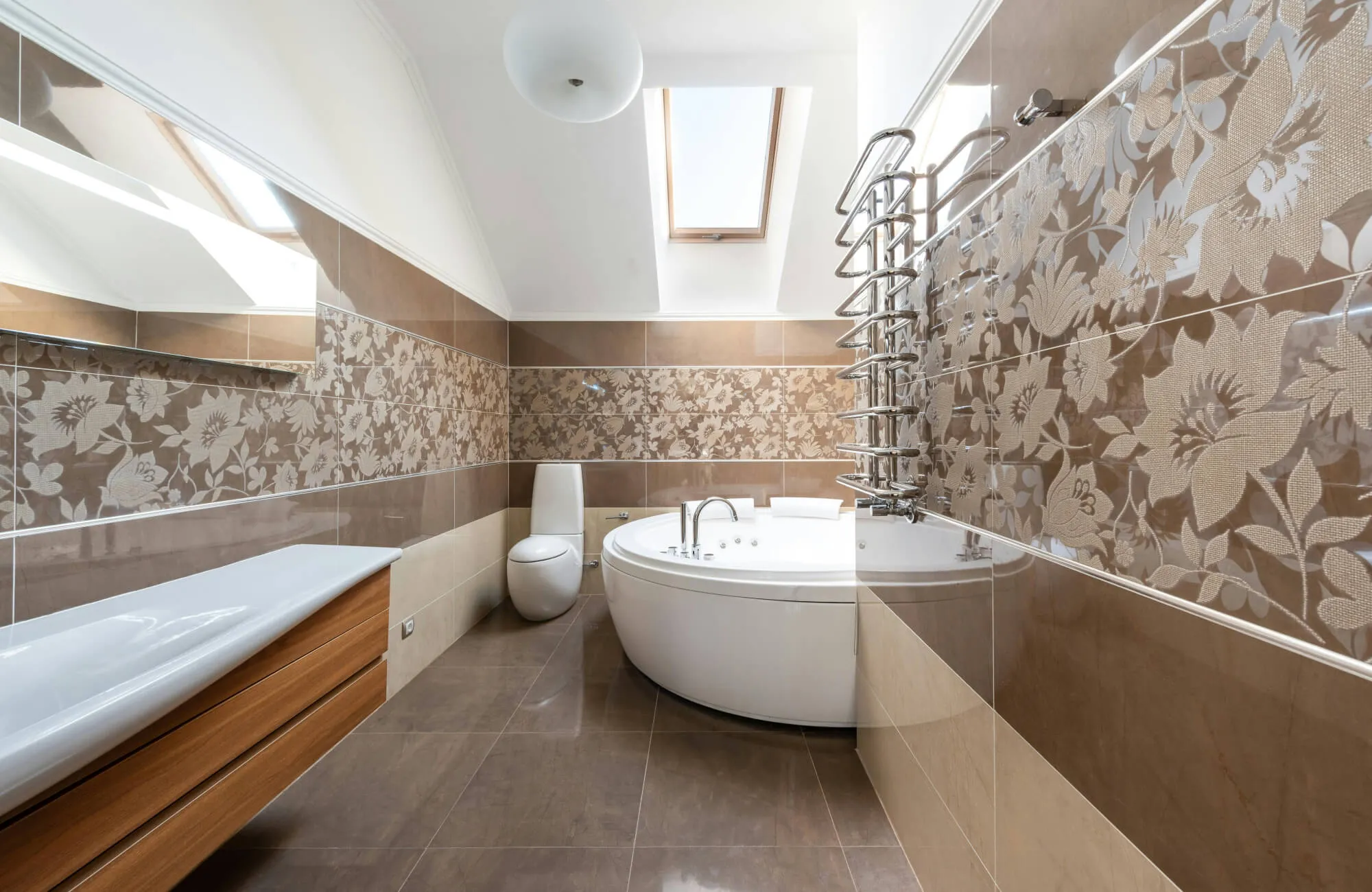
Bathroom renovations in 2026 are characterized by purposeful design choices that strike a balance between aesthetics, performance, and long-term durability. Rather than focusing on surface-level updates, homeowners are transforming bathrooms into engineered spaces that support wellness, efficiency, and future adaptability. Innovations in material technology, smart systems, and building science are raising expectations for how these spaces should function and age over time. As lifestyle priorities and resale considerations continue to evolve, bathrooms are increasingly viewed as strategic, value-driven investments rather than purely cosmetic upgrades.
1. Wellness-Oriented Bathroom Layout Planning
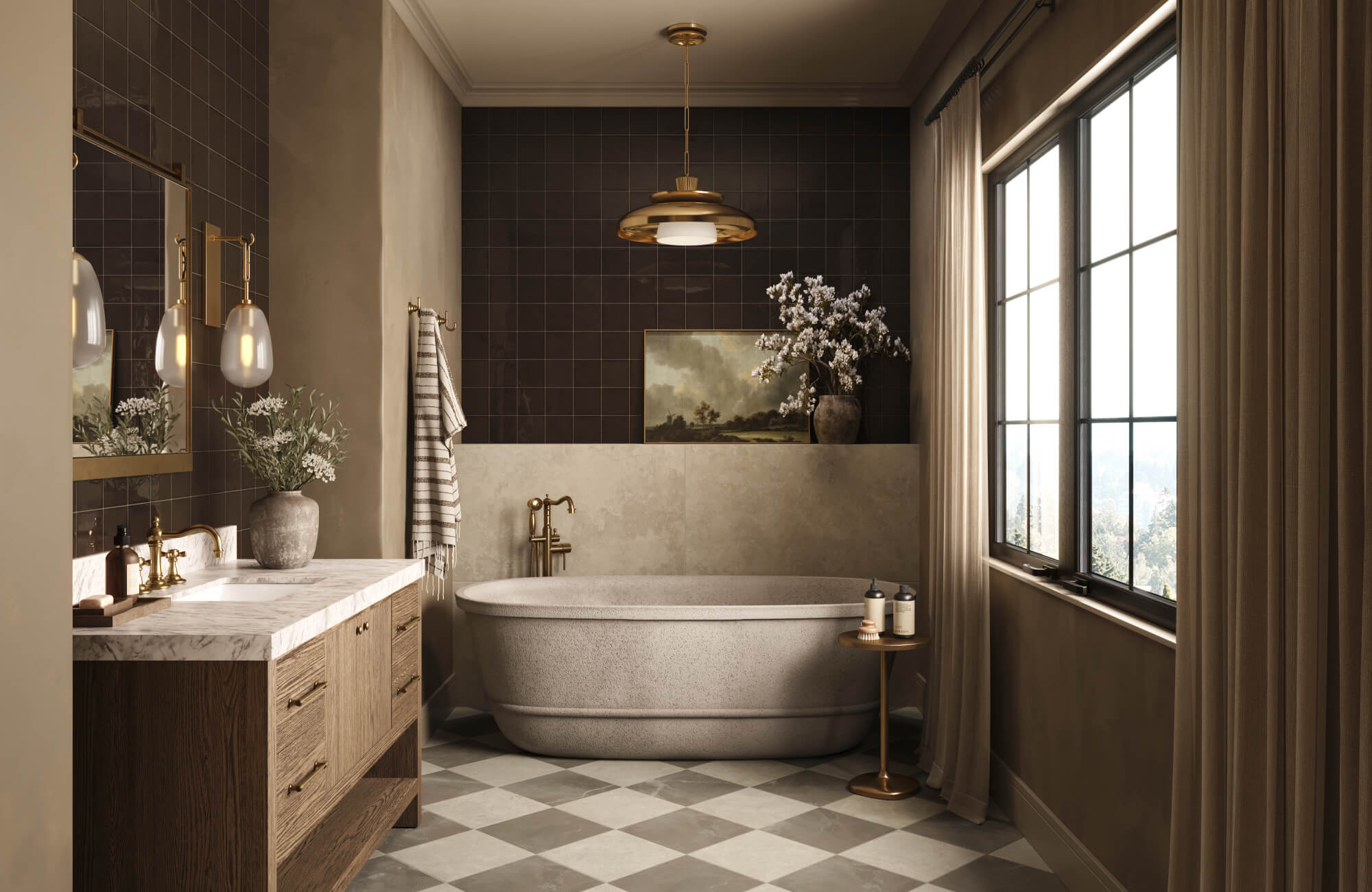
Bathroom layouts are increasingly shaped by wellness-driven planning that prioritizes intuitive movement, ergonomic comfort, and visual calm. Designers are rethinking fixture placement, clearances, and circulation paths to reduce friction in daily routines while improving long-term usability. This approach supports the growing demand for wellness-focused bathroom renovation layouts that feel balanced rather than crowded. As a result, unnecessary partitions and awkward transitions are being eliminated in favor of more fluid, breathable configurations. These layouts also allow greater flexibility for future accessibility modifications without requiring major structural changes.
2. Spa-Inspired Shower Systems with Advanced Controls
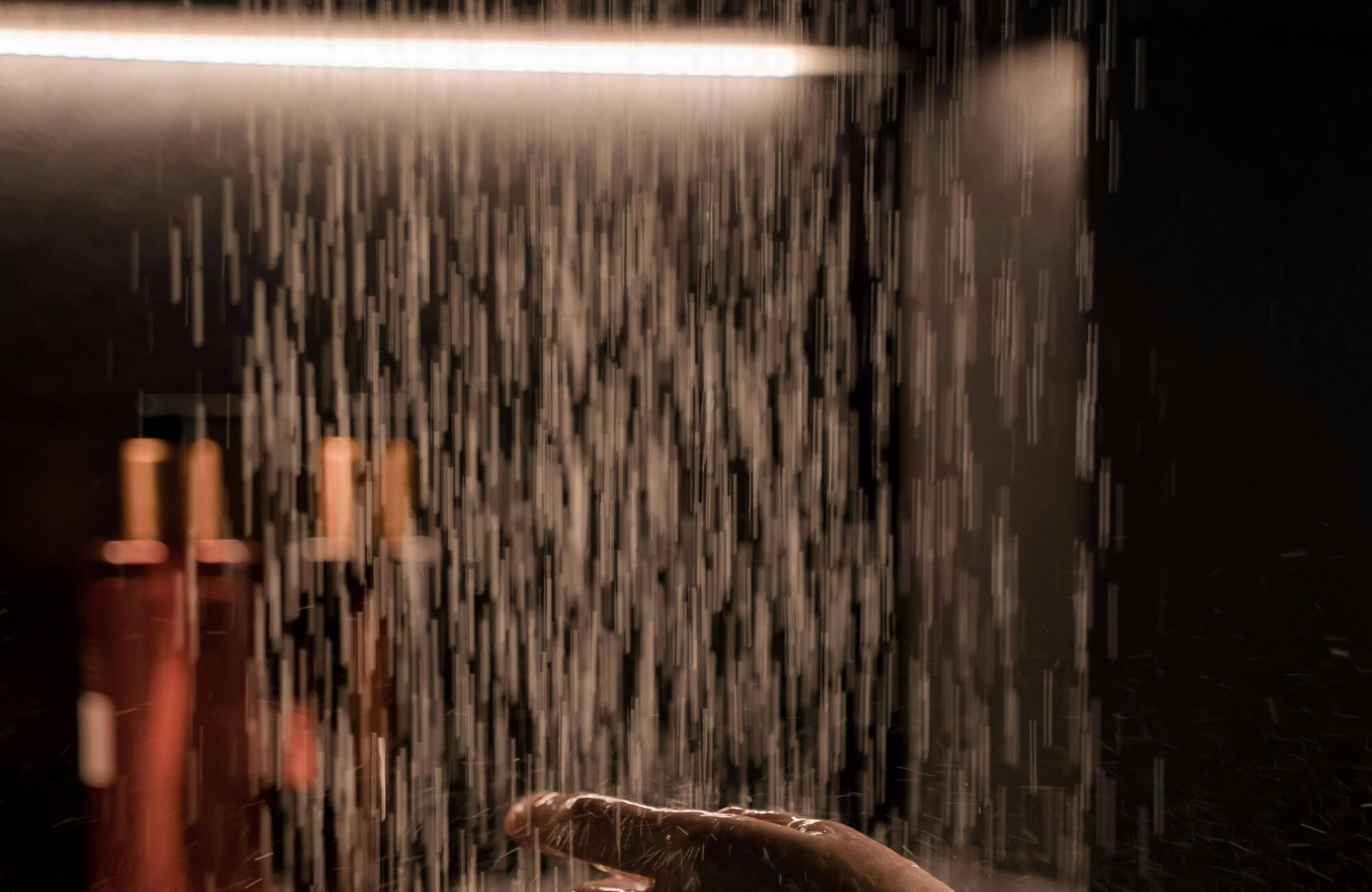
As spatial planning becomes more intentional, shower systems are emerging as the experiential core of modern bathrooms. Thermostatic mixing valves, pressure-balancing technology, and digital control interfaces provide precise temperature regulation and water delivery. Multi-outlet configurations combining rain heads, hand showers, and body sprays also create a layered bathing experience while maintaining system efficiency. This trend aligns with demand for spa-inspired shower system upgrades for residential bathrooms that deliver comfort through engineering rather than ornamentation. Consistent performance under fluctuating water pressure is now an expected standard rather than a luxury.
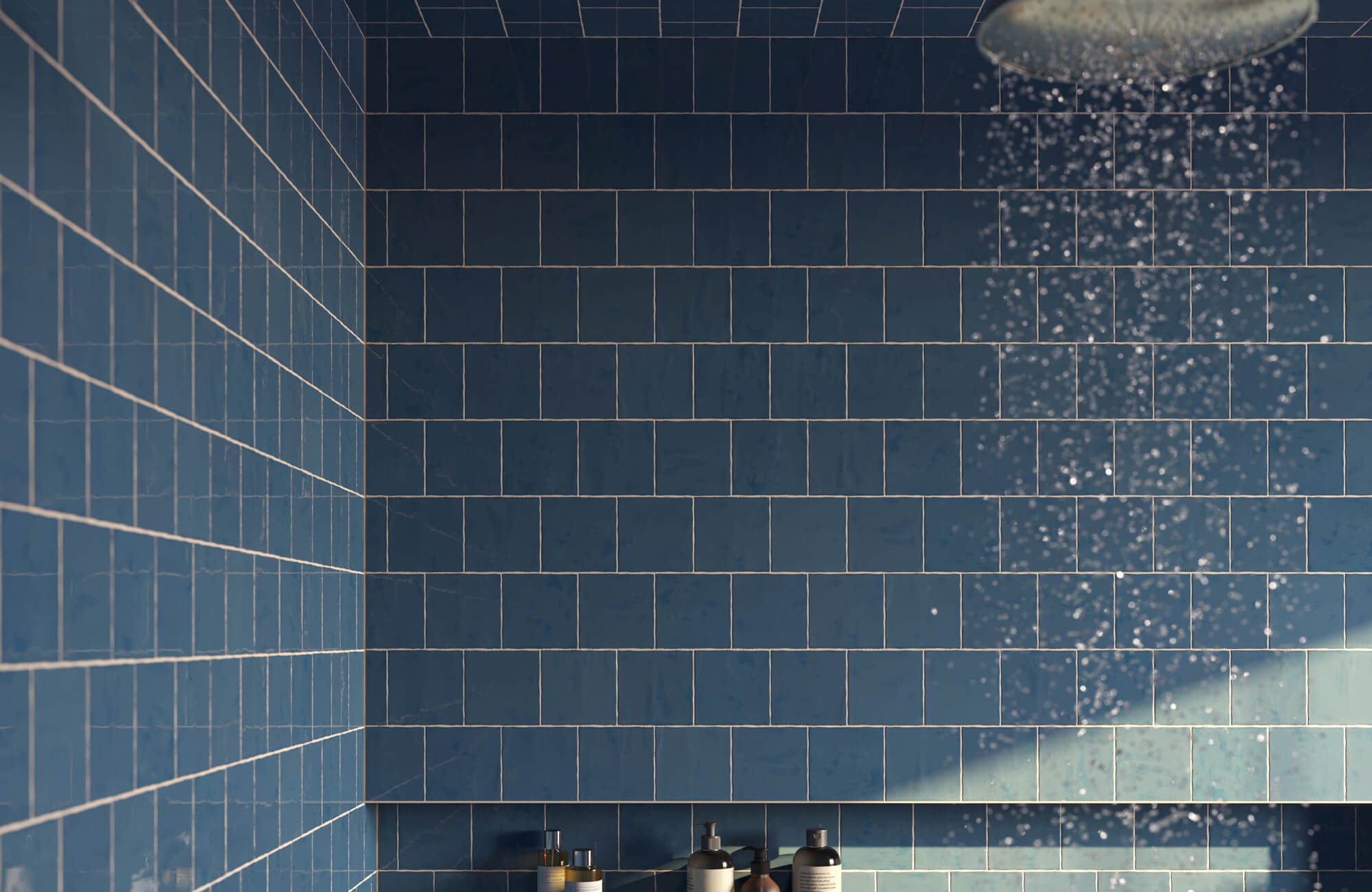
3. Steam Showers Engineered for Moisture Management
The increasing popularity of steam showers has elevated the importance of technical execution. Proper installations now emphasize vapor-sealed enclosures, ceiling slope geometry for condensation control, and high-capacity steam generators with automatic cleaning cycles. These elements also protect wall assemblies and finishes from long-term moisture exposure. Homeowners pursuing steam shower bathroom remodels with professional-grade construction standards are prioritizing durability alongside wellness benefits. This systems-based approach ensures steam environments perform reliably over time.
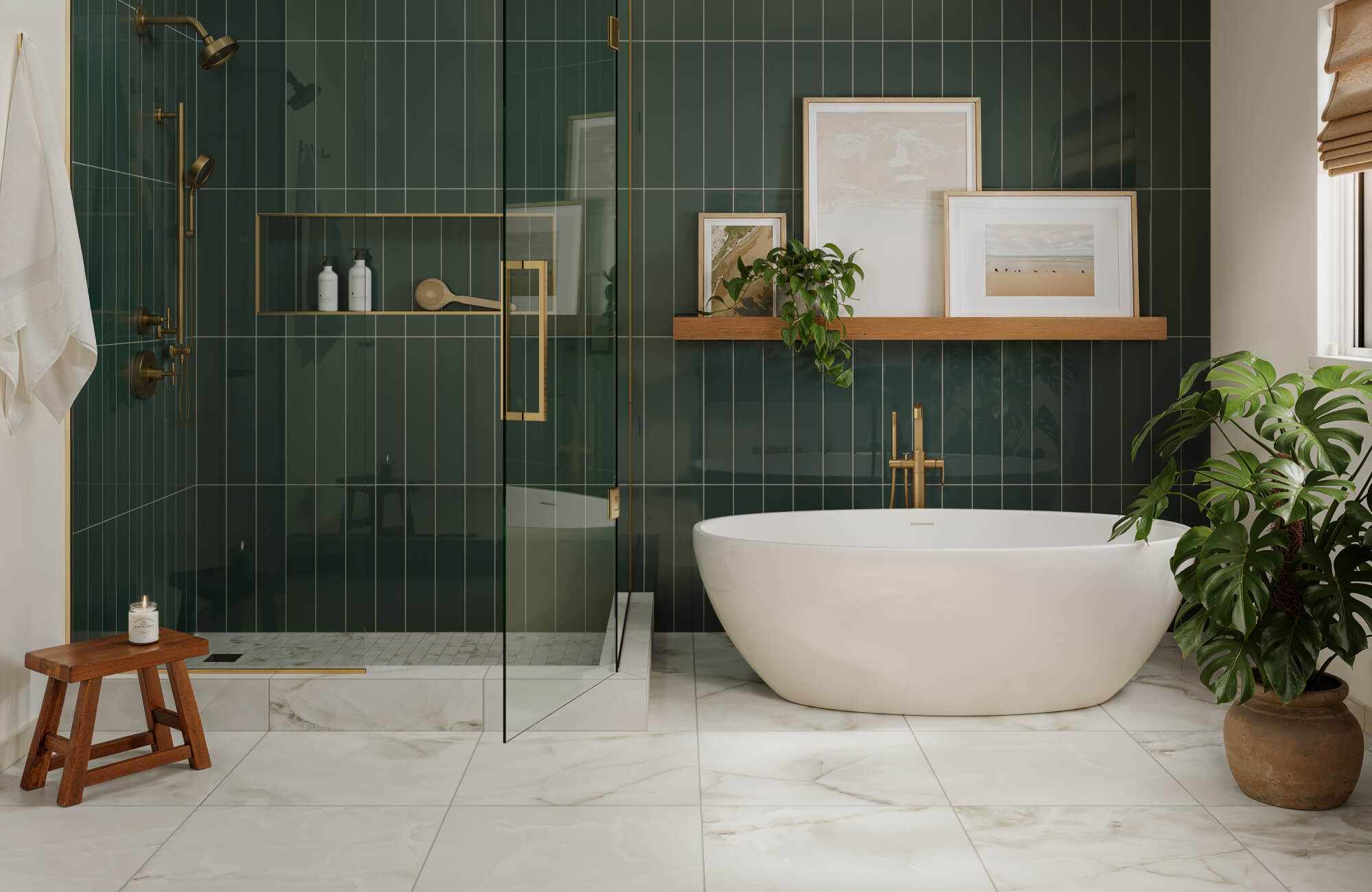
4. High-Performance Porcelain Surfaces for Walls and Floors
Material selection in 2026 strongly favors porcelain products engineered for high-moisture performance and longevity. Large format like Edward Martin’s Astrid 24x24 Matte Porcelain Tile in Pearl (shown in the photo above) and gauged porcelain tiles reduce grout joints, improving water resistance while creating a more seamless visual effect. Their low porosity and chemical resistance also make them ideal for showers, tub surrounds, and bathroom flooring. This has accelerated the adoption of large format porcelain tile for bathroom renovations that balance aesthetics with functional resilience. Advances in digital glazing further enhance realism while maintaining consistent quality.
To support confident design decisions, visualization tools such as Edward Martin’s augmented reality (AR) experience allow homeowners and designers to preview how tile, finishes, and shower surfaces will appear within the space before installation. This seamless blend of advanced shower technology and immersive digital planning reinforces the demand for spa-inspired shower system upgrades for residential bathrooms that are both technically sound and visually cohesive.
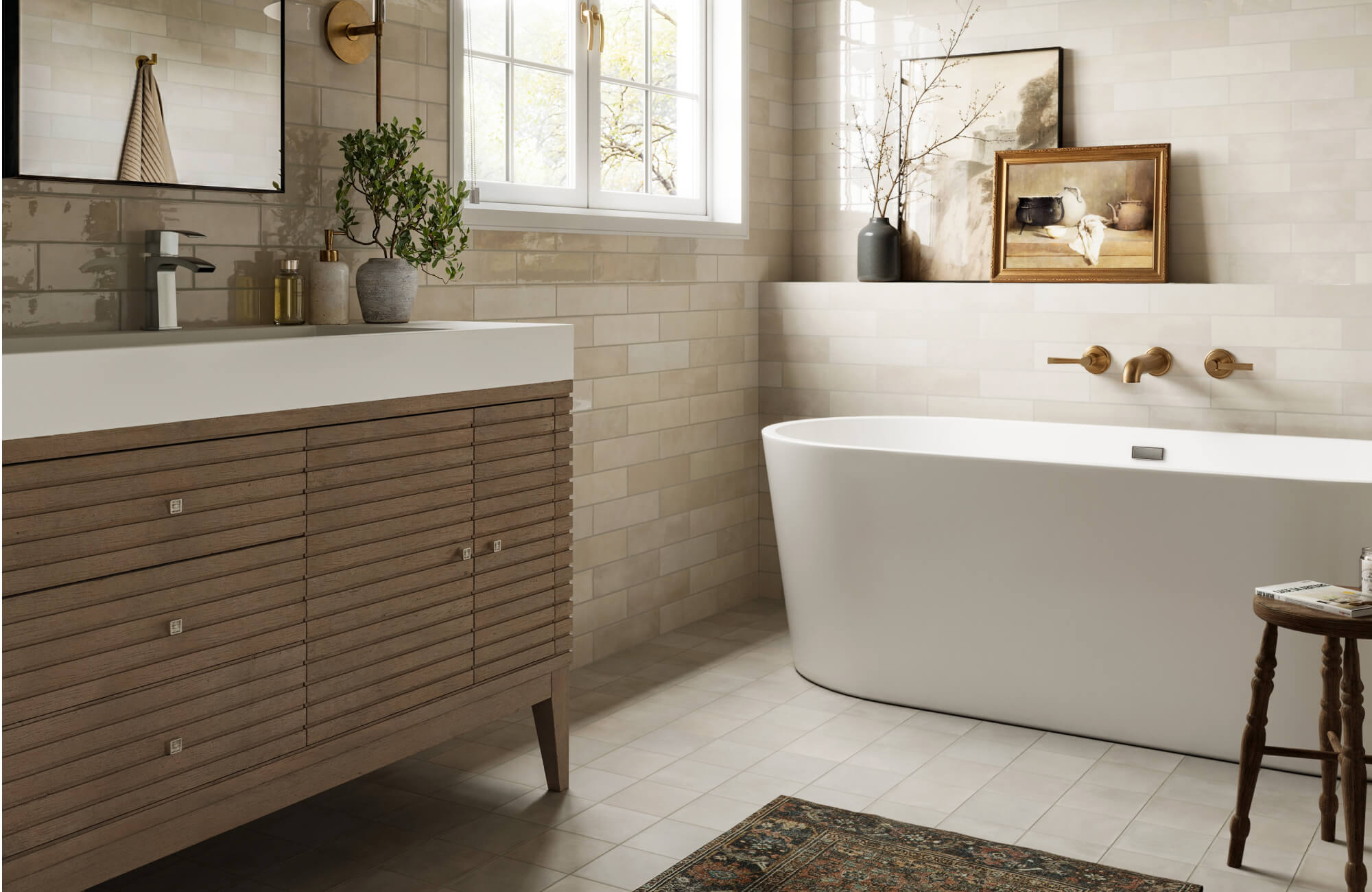
5. Slip-Resistant Flooring Designed for Wet Environments
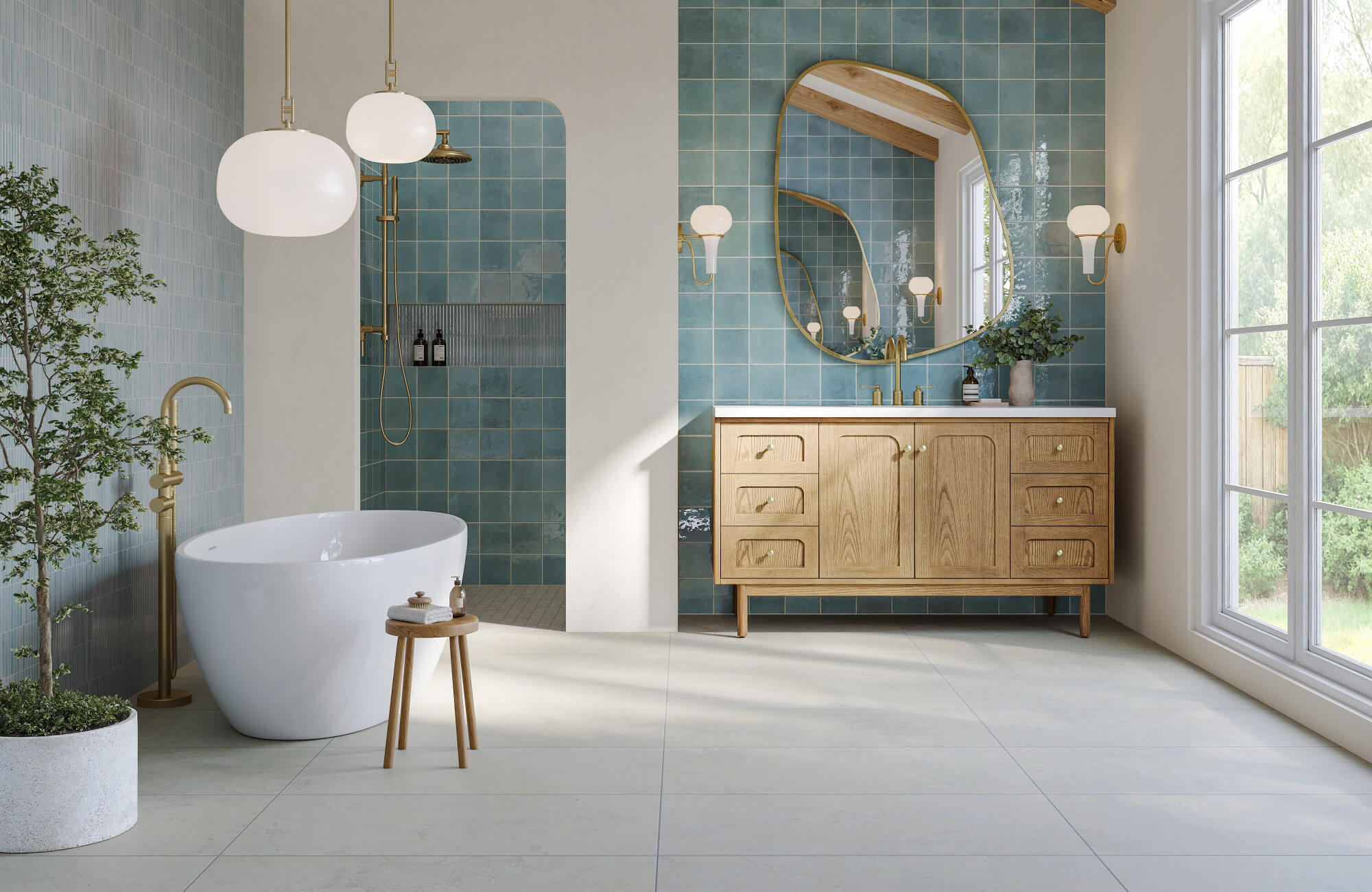
As material performance becomes more closely evaluated, bathroom flooring is increasingly selected for its ability to balance safety, durability, and visual warmth. Matte porcelain tiles with higher slip resistance are now preferred for wet environments, offering improved traction without the harsh texture of traditional non-slip surfaces. A strong example is the Karina 5.5×5.5 Matte Porcelain Tile in Greige, whose soft matte finish and compact format enhance grip while maintaining a calm, cohesive aesthetic. As seen in the photo above, its beige-gray tone pairs naturally with warm wood cabinetry and sculptural fixtures, reinforcing a seamless, spa-like atmosphere. This makes Karina especially well-suited for slip-resistant bathroom flooring solutions where safety, comfort, and refined design must coexist.
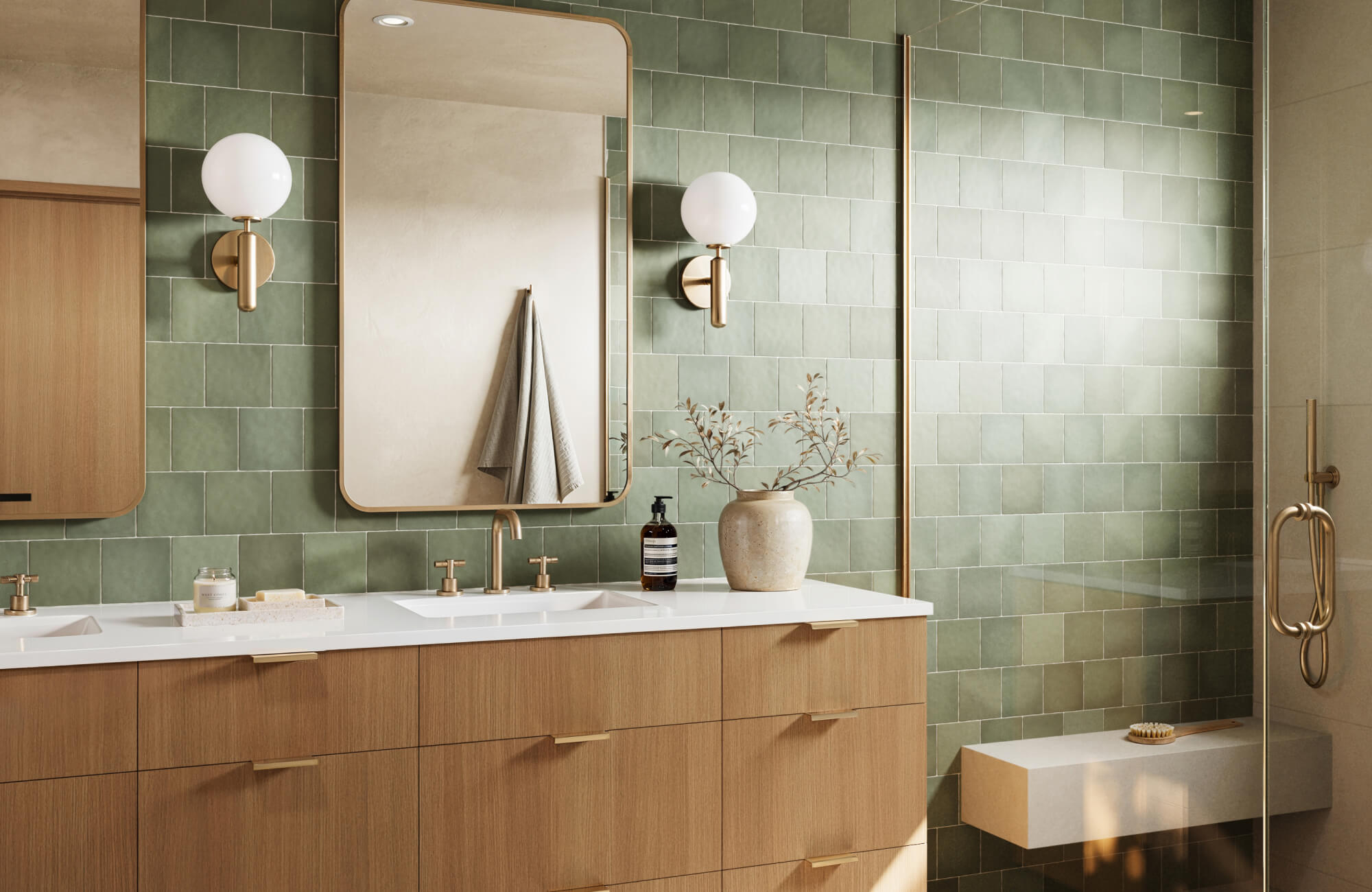
6. Antimicrobial and Easy-Clean Surface Technologies
Hygiene considerations are shaping surface innovation across bathroom renovations. Manufacturers are integrating antimicrobial treatments into tile glazes, solid surfaces, and composite materials to inhibit bacterial growth and reduce odor-causing microbes. These technologies lower maintenance demands while supporting healthier indoor environments. Demand for low-maintenance, antimicrobial bathroom materials continues to rise as homeowners seek cleaner spaces with less reliance on harsh chemicals. Over time, these surfaces also help preserve finish integrity and appearance.
7. Layered Lighting Design with Functional Zoning
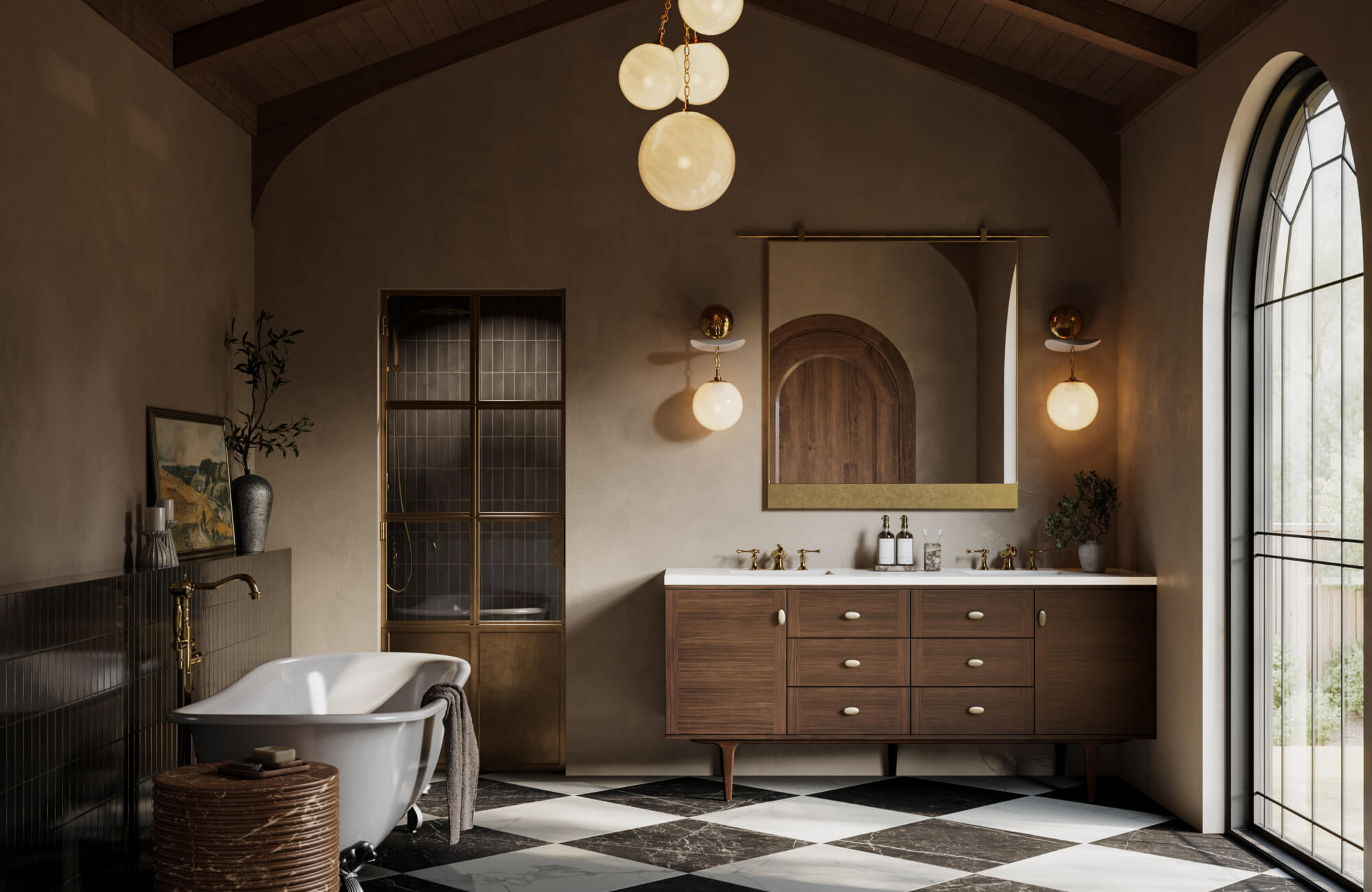
Lighting design in 2026 bathrooms is increasingly treated as an architectural tool that defines zones, enhances materials, and supports daily tasks without visual clutter. Rather than relying on a single overhead fixture, designers are layering ambient, task, and accent lighting to create depth and flexibility throughout the space. Statement pendants such as the Therese Pendant in Vintage Brass play a key role in this strategy, providing warm ambient illumination while introducing sculptural presence above vanities or freestanding tubs. As displayed in the picture above, its soft globe form and vintage brass finish cast a diffused, inviting glow that complements warm wall tones and natural wood cabinetry. This approach exemplifies layered bathroom lighting design with functional zoning, where decorative fixtures enhance atmosphere while working in harmony with task-focused lighting.
8. Energy-Conscious Heating and Thermal Comfort Solutions
Thermal comfort is increasingly addressed through integrated systems rather than isolated fixtures. Radiant floor heating, for instance, delivers consistent warmth while reducing reliance on forced-air HVAC systems that can create uneven temperatures. These systems are also often paired with programmable thermostats to optimize energy efficiency. Homeowners investing in energy-efficient bathroom heating solutions for residential renovations value both comfort and operational control. Heating strategies are now considered early in the design process rather than added as afterthoughts.
9. Smart Bathroom Technology Integration
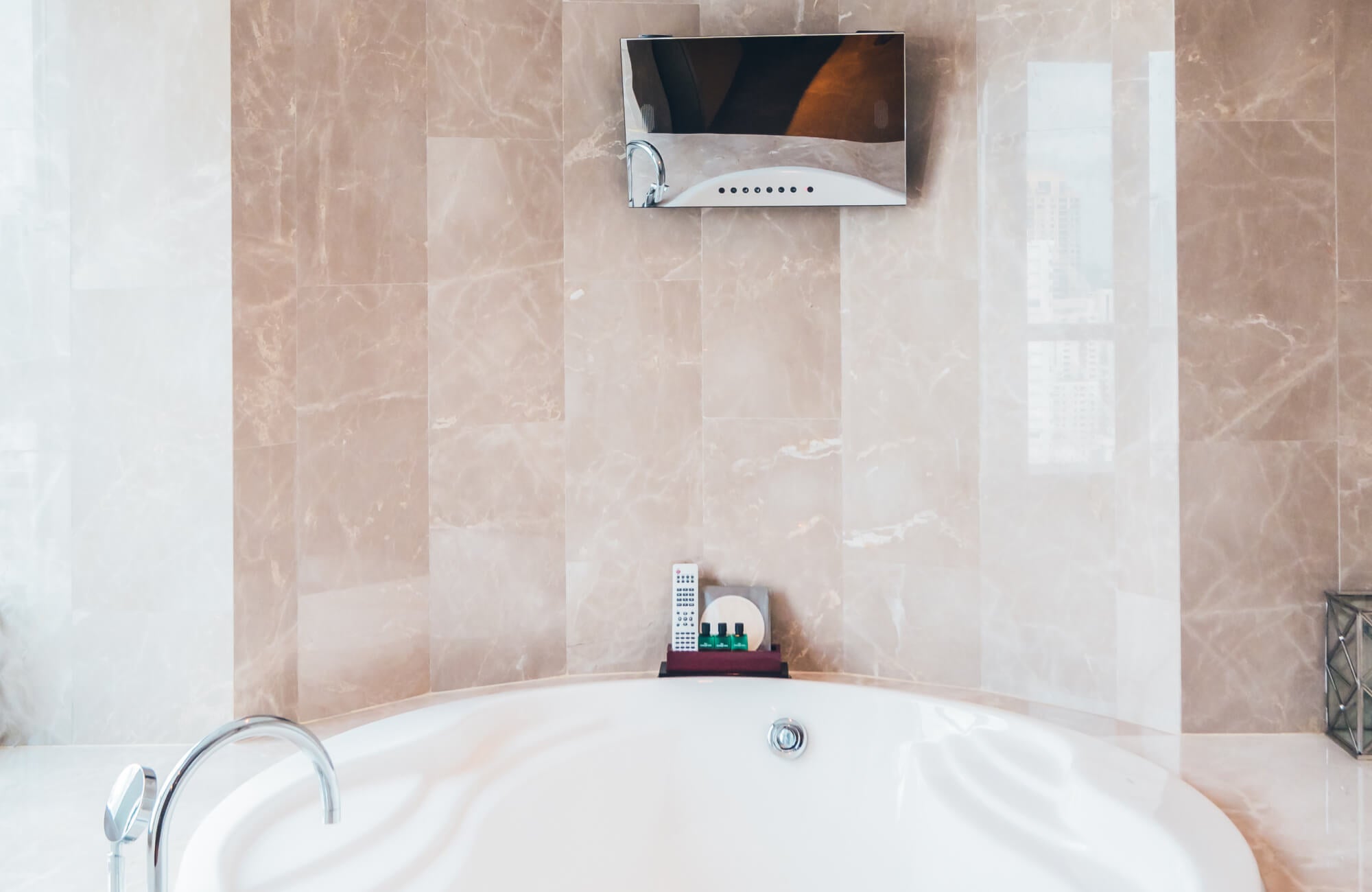
Technology integration in bathrooms has become more seamless and purpose-driven. For instance, app-controlled showers, voice-activated lighting, and intelligent mirrors enhance convenience while allowing for personalized settings. These systems are also designed to integrate with broader smart home platforms, improving overall usability. The rise of smart bathroom technology integration in modern renovations reflects a preference for intuitive control rather than novelty. Proper electrical planning and infrastructure coordination are essential to ensure long-term reliability.
10. Intelligent Ventilation and Indoor Air Quality Control
Ventilation systems are gaining renewed attention due to their role in moisture management and material preservation. Exhaust fans with humidity sensors automatically adjust airflow based on real-time conditions, reducing condensation buildup. This proactive approach also helps prevent mold growth and protects surrounding finishes. The trend supports bathroom ventilation systems designed for humidity and air quality control rather than basic air extraction. Effective ventilation is now viewed as a core system rather than a secondary component.
11. Floating Vanities and Wall-Mounted Fixtures
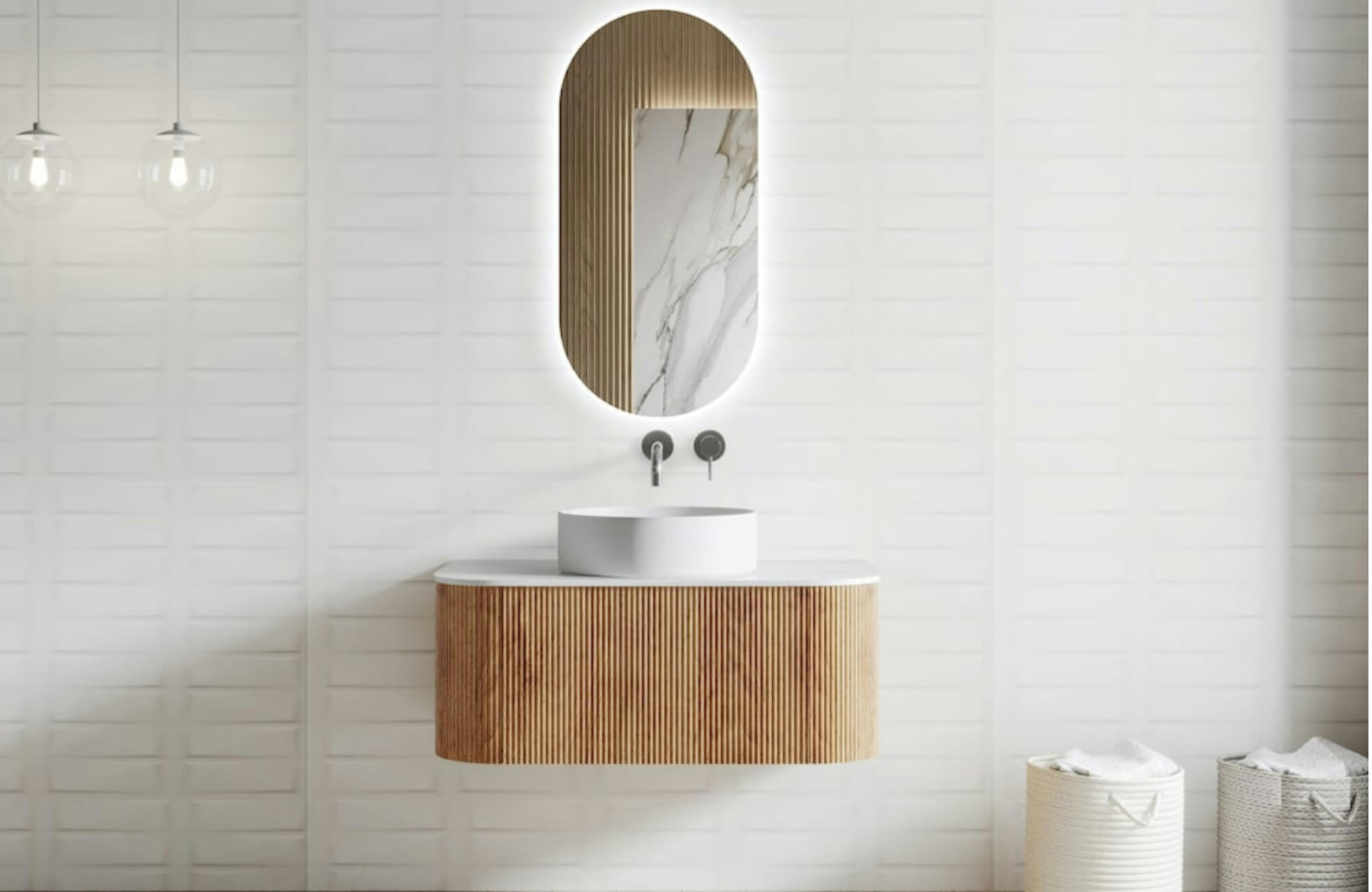
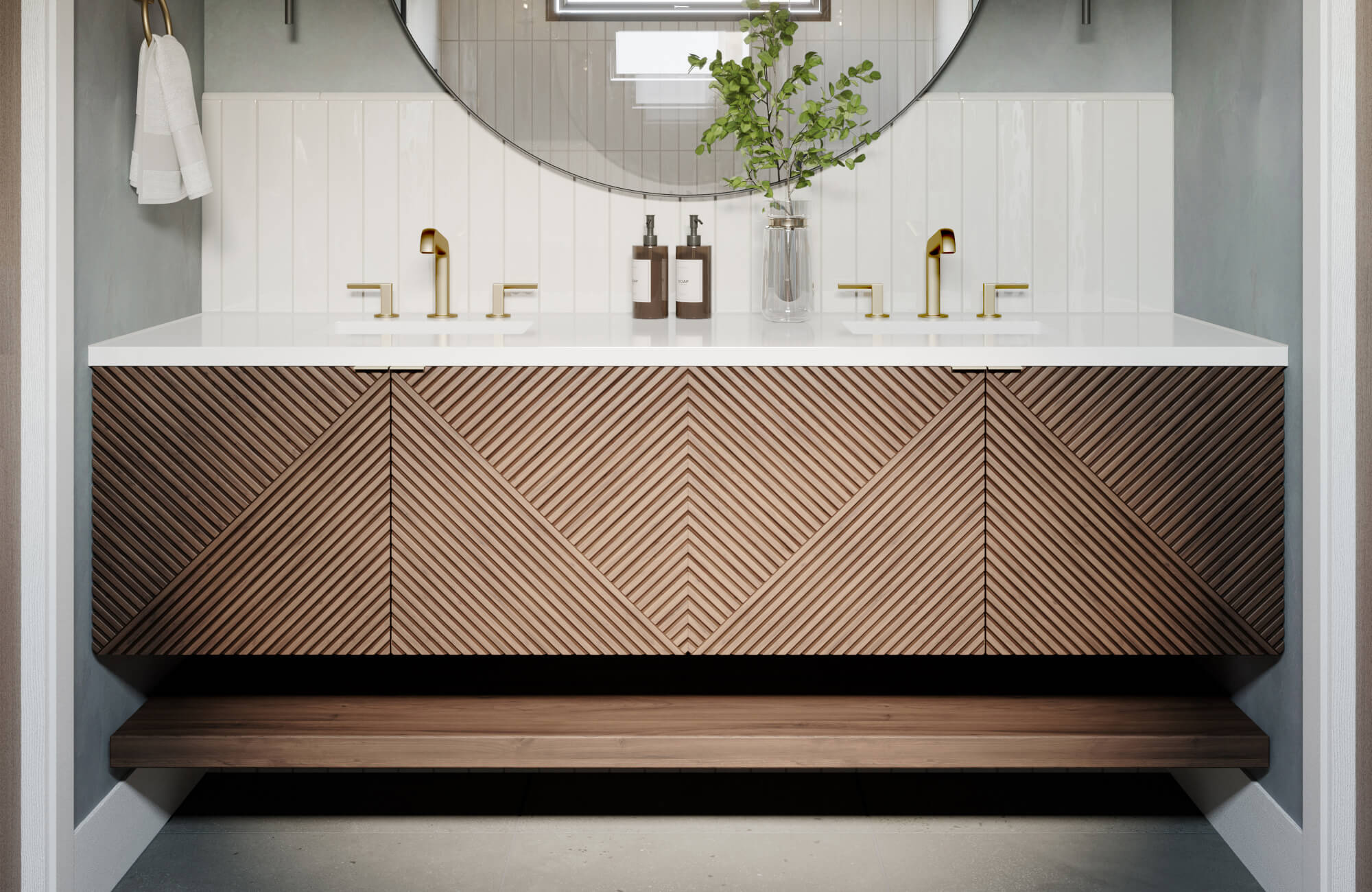
Floating vanities have become a defining feature of contemporary bathroom renovations, offering both visual lightness and practical benefits. By lifting cabinetry off the floor, these designs create a stronger sense of openness while simplifying cleaning and maintenance. A refined example is the Royce 72" Double Vanity in Chestnut with 3 cm White Zeus Quartz Top, which combines a wall-mounted profile with rich wood texture and precise craftsmanship. As featured in the photo above, the geometric wood detailing adds depth and visual interest, while the substantial quartz countertop provides durability, moisture resistance, and a crisp contrast to the warm cabinetry. This balance of structure and elegance also reinforces why wall-mounted bathroom vanities are increasingly favored for designs that prioritize spatial efficiency, material performance, and modern sophistication.
12. Customized Storage Solutions for Functional Organization
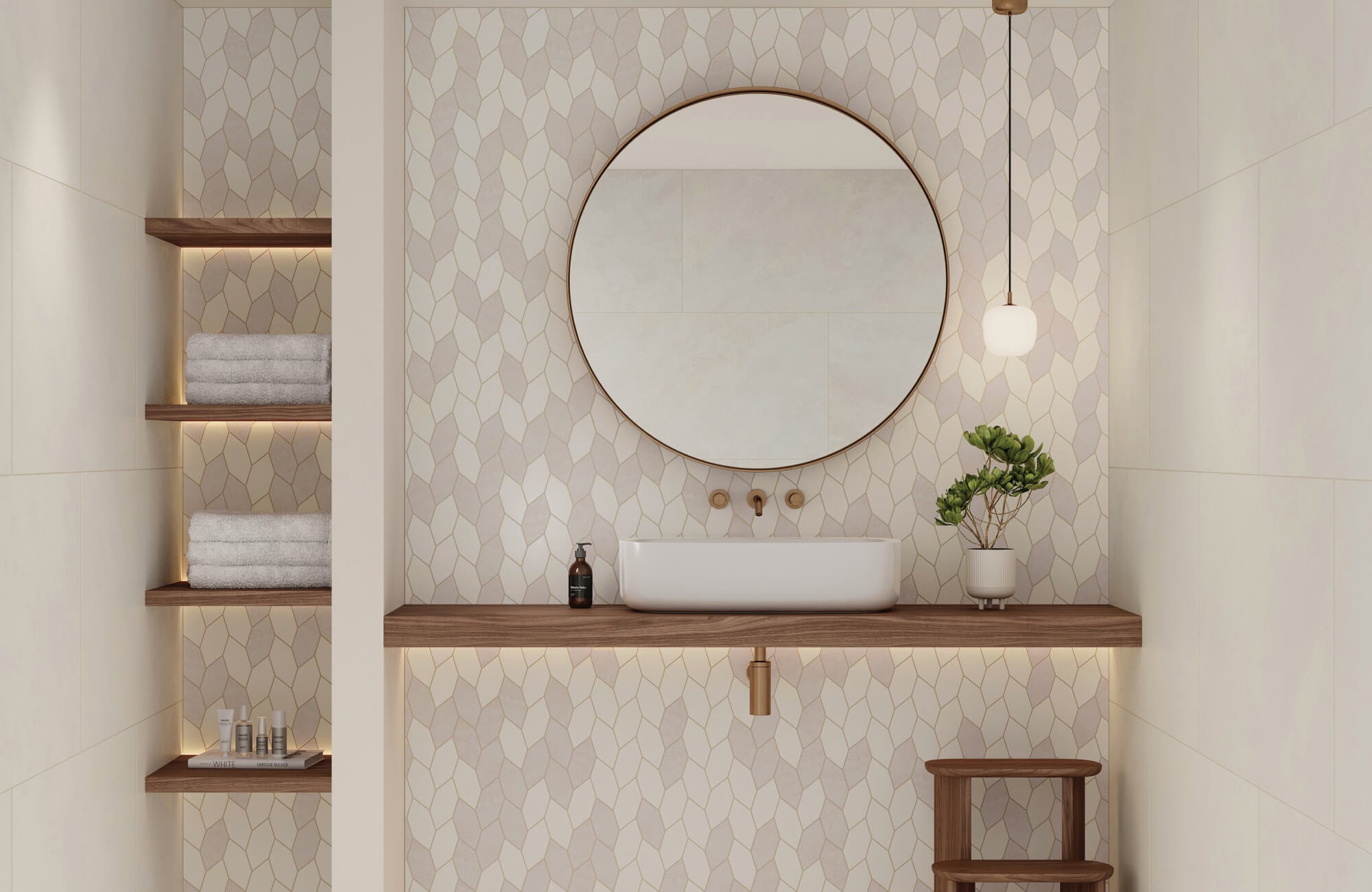
As bathrooms become more personalized, storage design is growing increasingly intentional. Custom drawer configurations, recessed niches, and vertical cabinetry are tailored to daily routines and household needs. Storage placement is planned to reduce countertop clutter while maintaining accessibility. This supports demand for custom bathroom storage solutions for functional organization. Thoughtfully integrated storage contributes to a calmer, more efficient bathroom environment.
13. Warm Minimalism and Organic Material Expression
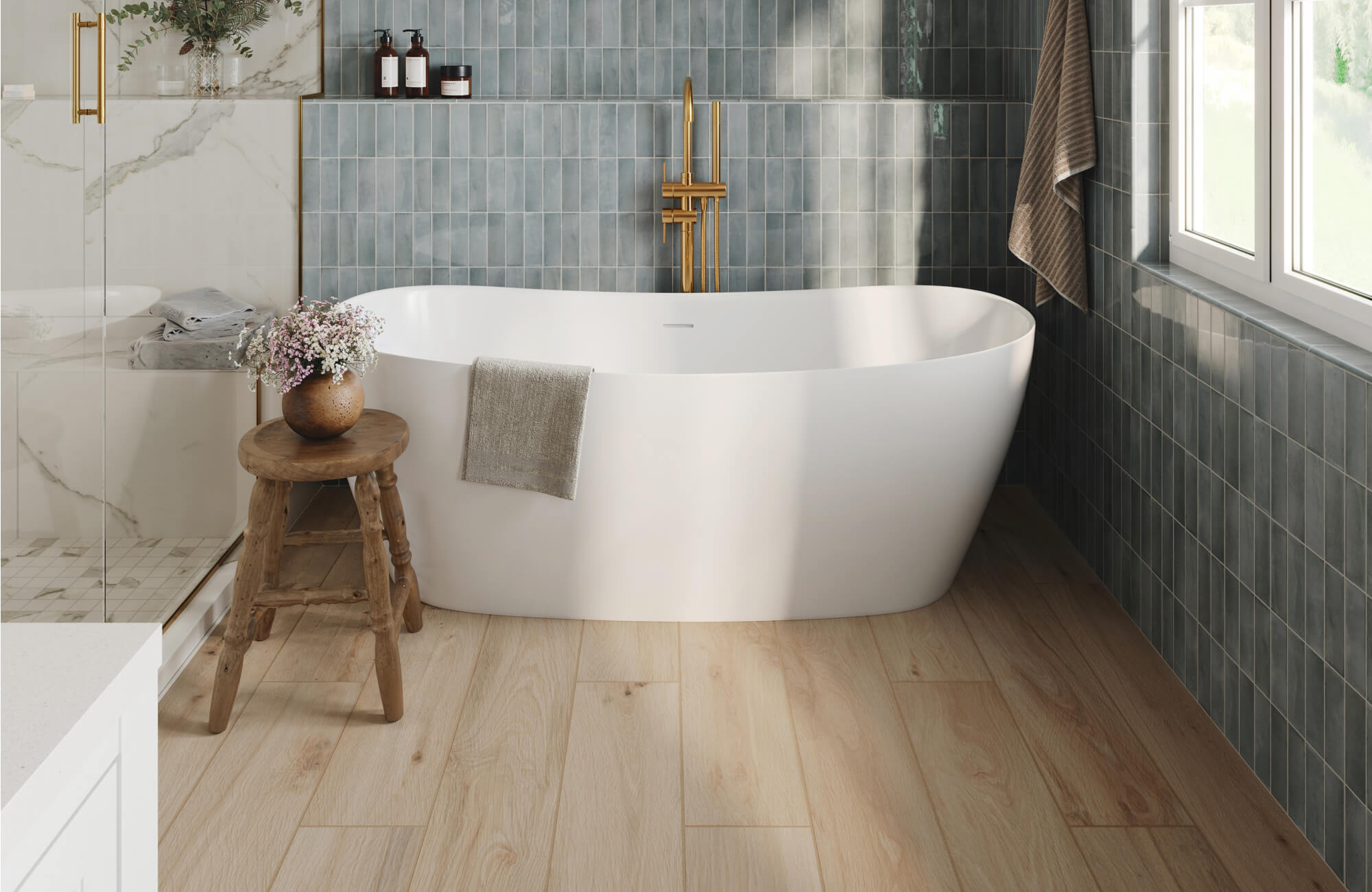
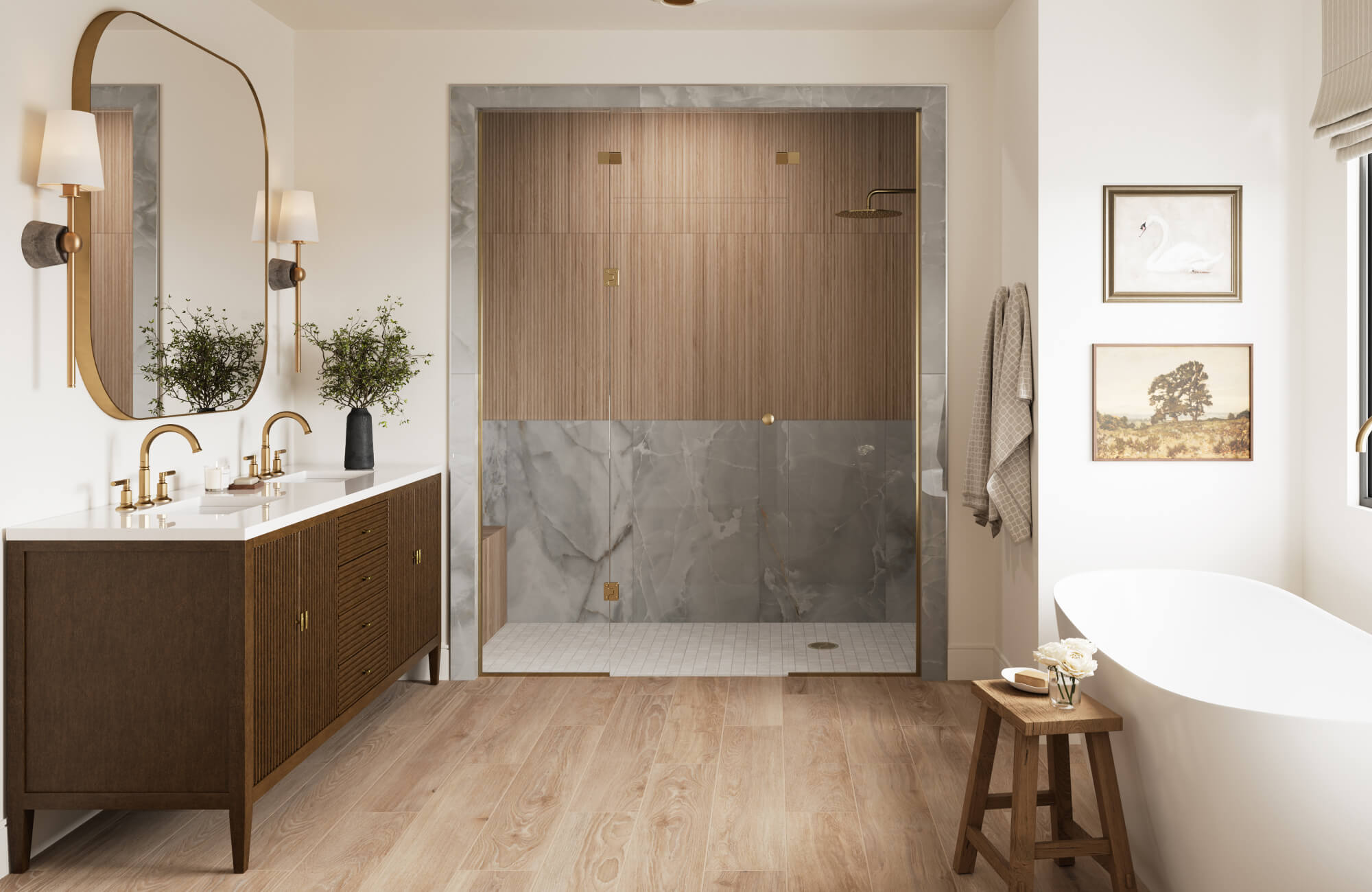
Warm minimalism in 2026 bathrooms emphasizes restraint softened by texture, tone, and natural material cues rather than stark contrast or visual austerity. Earth-toned surfaces and matte finishes are used to create depth and comfort while maintaining a clean, uncluttered aesthetic. Flooring selections such as our Jameson 8×48 Matte Porcelain Tile in Camel exemplify this approach, as its elongated plank format and warm, medium brown hue introduce the visual richness of wood with the durability, moisture resistance, and dimensional stability of porcelain.
As seen in the space, this tile grounds the room with subtle tonal variation, seamlessly connecting the vanity zone, shower area, and freestanding tub into a cohesive whole. Complementing the flooring, the Sasha 72" Double Vanity in Mid Century Walnut with 3 cm White Zeus Quartz Top reinforces warmth through its refined wood grain, mid-century proportions, and softly contrasting quartz surface, demonstrating how cabinetry and finishes work together to define warm minimalist bathroom design with organic material expression.
14. Aging-in-Place and Universal Design Integration
Aging-in-place principles in 2026 are increasingly expressed through hotel-inspired bathrooms that balance accessibility with refined aesthetics. In the photo shown above, universal design elements are integrated into a calm, spa-like environment, demonstrating that long-term usability does not require visual compromise. A wide, curbless shower entry also creates an open, uninterrupted floor plane, while built-in bench seating and generous clearances support comfort and ease of movement at every stage of life.
Wall-mounted shower controls and a handheld shower system are positioned for both seated and standing use, adding flexibility without distracting from the room’s composed design. In addition, slip-resistant porcelain flooring and flush transitions enhance safety while preserving a cohesive, modern material palette. Together, these elements reflect how aging-in-place bathroom design continues to evolve into a sophisticated, wellness-driven approach—one that supports independence, longevity, and architectural harmony within the home.
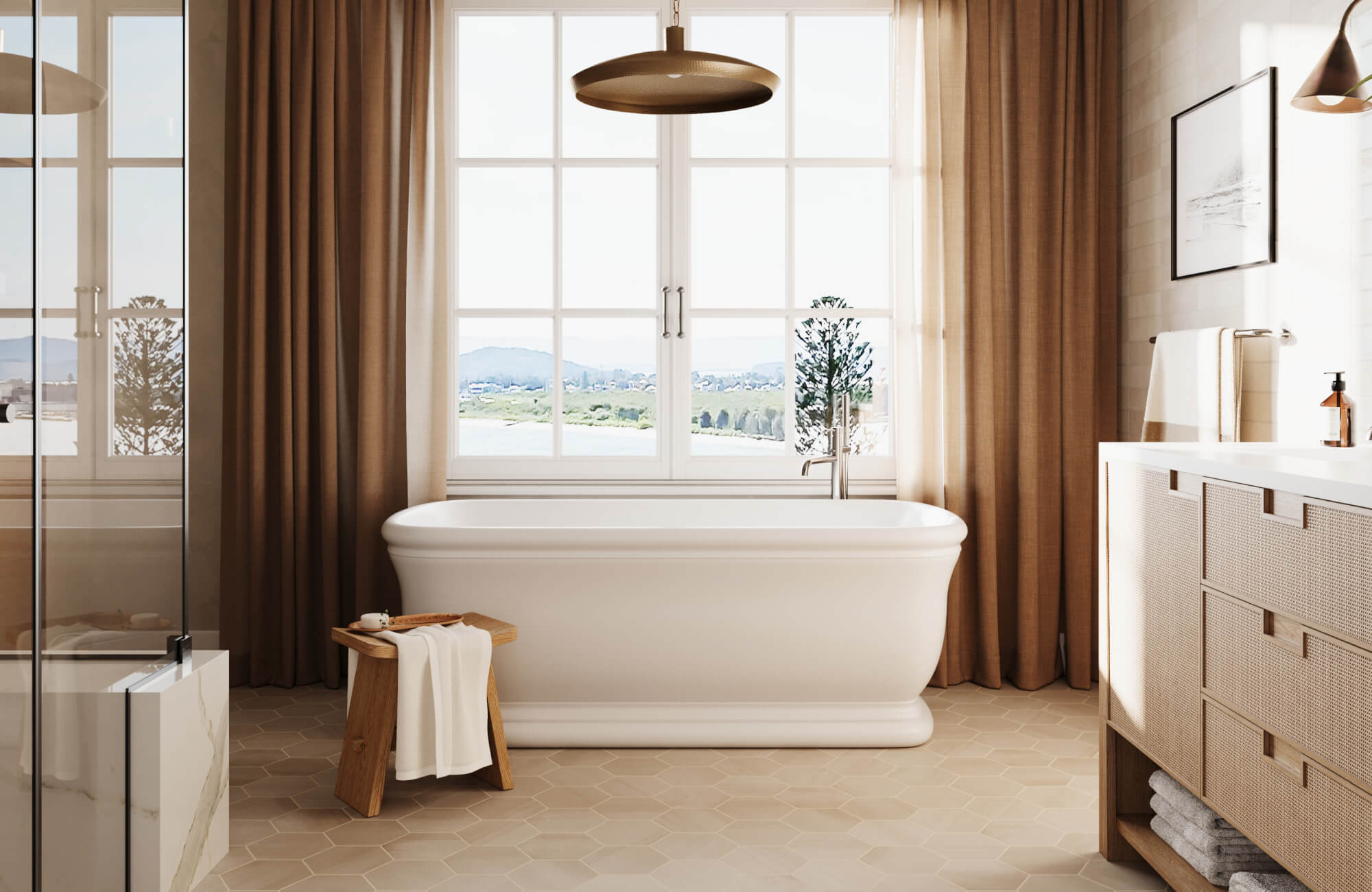
15. Long-Term Value and Resale-Oriented Design Decisions
Bathroom renovations in 2026 are increasingly guided by design choices that balance personal style with broad market appeal. Homeowners are prioritizing durable materials, neutral color palettes, and timeless formats that can withstand shifting trends while remaining attractive to future buyers. Flooring plays a critical role in this strategy, and Edward Martin’s Catalina 7×8 Hexagon Matte Porcelain Tile in Mushroom exemplifies how aesthetic restraint supports resale value.
As featured in the photo above, its earthy brown tone and classic hexagon geometry provide visual interest without overpowering the room, allowing architectural features, natural light, and fixtures to take center stage. The matte porcelain surface also offers slip resistance, moisture durability, and easy maintenance, reinforcing why resale-focused bathroom renovations increasingly rely on refined, performance-driven materials that age gracefully and appeal to a wide audience.
Bathrooms Designed for the Way Homes Will Be Lived In
Bathroom renovations in 2026 reflect a clear move toward thoughtful, performance-driven design that prioritizes comfort, durability, and adaptability. By integrating advanced materials, intelligent systems, and wellness-focused layouts, homeowners are creating spaces that function reliably over time. These trends also demonstrate how bathroom design is aligning more closely with broader architectural and lifestyle shifts. As expectations continue to rise, successful renovations balance innovation with proven construction principles. Ultimately, modern bathroom renovations are becoming essential investments in both daily living quality and long-term home value.
To support this level of intentional planning, Edward Martin’s design services provide homeowners and professionals with expert guidance across material selection, layout strategy, and finish coordination. By aligning professional design insight with future-focused trends, modern bathroom renovations become purposeful investments that enhance both quality of life and lasting home value!
Follow us on Instagram
@EDWARD.MARTIN
)
)
)
)
)
)
)
)
)
)
)
)
)
)
)
)