When looking at decorative pillows, the edge is often the detail that quietly defines the entire piece. Although it may seem subtle at first, it plays a meaningful role in shaping the pillow’s structure, style, and overall appearance. As you explore the different types, you’ll see how each edge treatment influences not only the pillow itself but also how it sits within a space. With a clearer understanding of these variations, it becomes easier to choose options that feel balanced, appropriate, and visually cohesive.

The Role of Pillow Edges in Overall Design
Before choosing a specific style, it helps to understand why pillow edges matter. Once you recognize how they influence structure and visual balance, it becomes easier to make decisions that feel considered and cohesive.
Edge as a Visual Frame
When you look at a pillow, the edge functions much like a frame around artwork. It defines the fabric and creates a clear boundary, allowing patterns and colors to stand out clearly. When working with patterned fabric, a more defined edge can keep the design from blending into a similarly toned sofa or bed. In contrast, a minimal edge allows the fabric to take full focus, creating a cleaner and more uninterrupted look.
Impact on Style Direction
Pillow edges play a subtle yet important role in communicating style. A crisp, clean edge often aligns with modern or minimalist interiors, while softer or more decorative edges tend to suit relaxed or traditional settings. As you consider your space, it helps to decide whether you want your pillows to blend in or stand out. The edge treatment can guide that direction naturally, without relying on bold colors or busy patterns.
Proportion and Scale
The thickness and construction of an edge influence how substantial a pillow appears. A wider or more pronounced edge can make a pillow feel fuller and more structured, which tends to suit larger furniture. On smaller seating, a slimmer edge helps maintain a lighter, more proportional look. Keeping this balance in mind allows the arrangement to feel considered rather than crowded or visually heavy.

Tailored Edge Types for Clean and Structured Looks
If you prefer a refined and uncluttered look, tailored edges are often a suitable choice. These styles focus on precise construction, giving the pillow a polished look without relying on added decoration.
Top-Stitched Edge
Top-stitching adds a visible line of stitching along the edge, introducing a subtle layer of detail. While it does not alter the overall structure, it provides a refined accent that enhances the finish. The stitching can either blend in or stand out, depending on the thread choice. This makes it a considered option when you want a tailored look with a touch of added character without overwhelming the design.
This detail is clearly illustrated by Edward Martin’s Brielle 18'' x 18'' Down Pillow in Natural / Brown, as shown in the photo above, where the stitched seam is brought forward through a contrasting band. The visible stitching defines the edge while introducing a subtle rhythm along the seam, giving the pillow a more considered and finished look.
Knife Edge
The knife-edge is one of the simplest and most common types, where the fabric is sewn together at the seam without any added detail. This results in a clean, streamlined outline that works well in modern interiors. Its minimal construction keeps the overall look neat and unobtrusive. Because no additional elements are introduced, the fabric itself remains the main focus, whether it is textured or smooth.
Box Edge
A box edge features a band of fabric around the pillow, adding depth and a more defined shape. This construction gives the pillow a structured and more substantial presence. It helps the pillow maintain its form, rather than appearing flat or compressed. This style is especially suitable for larger seating, where a more defined shape feels balanced and intentional.
Mitered Edge
Mitered edges emphasize the corners, where the fabric is folded neatly to form sharp, precise angles. This detail highlights the craftsmanship and attention to construction. The clean finish gives the pillow a more refined and structured appearance. It works especially well with solid fabrics, where the corners remain clearly visible without competing with patterns.

Decorative Trim Edges That Add Texture and Detail
When you want pillows to bring more character into a space, decorative trims offer an added layer of dimension. These edge styles introduce texture and contrast, allowing pillows to feel more expressive while remaining cohesive within the overall design.
Piped Edge
Piping involves inserting a cord into the seam that creates a defined outline around the pillow. This detail adds structure while also offering an opportunity to introduce subtle contrast through color or material. A neutral pillow, for instance, can be given more definition with darker piping that connects with other elements in the room. In this way, the edge enhances the overall design without overpowering it.
Flanged Edge
A flanged edge extends the fabric beyond the seam, creating a flat border around the pillow. This detail introduces a relaxed yet intentional look that feels less rigid than more structured edges. The added fabric softens the outline, making the pillow appear more inviting. It is particularly effective when creating a softer transition between the pillow and the surrounding furniture.
Fringe Edge
Fringe introduces movement through strands or tassels along the edge. This detail adds a dynamic and tactile quality that naturally draws attention. It brings a sense of variation that can soften more structured elements in a space. For a more balanced look, it is often best used as an accent, especially when layering multiple pillows.
Braided or Rope Trim
Braided or rope trim introduces a thicker, more textured edge around the pillow. This detail adds a sense of craftsmanship and visual weight, giving the pillow a more defined presence. It often complements traditional or coastal interiors where texture plays an important role. When paired with simpler fabrics, the trim stands out clearly without competing with other design elements.

Soft and Layered Edges for Relaxed Styling
Some spaces benefit from a softer and more inviting look, which is where layered edges come into focus. These styles place less emphasis on structure and instead highlight movement, texture, and a sense of comfort.
Ruffled Edge
Ruffled edges create volume by gathering fabric along the perimeter, giving the pillow a fuller appearance. This detail introduces a softer look that works well in more relaxed or decorative settings. The added movement helps balance out furniture with clean or structured lines. As a result, it becomes a thoughtful way to introduce contrast without disrupting the overall cohesion of the space.
Pleated Edge
Pleated edges offer a more controlled approach to softness, with evenly folded fabric creating a sense of rhythm along the perimeter. This detail adds texture while maintaining a structured and composed look. It also adds visual interest without leaning too decorative or ornate. As a result, it works well when you want a balanced look that feels refined yet approachable.
Scalloped Edge
Scalloped edges create gentle curves along the border, giving the pillow a distinct and approachable outline. This detail introduces variation through shape rather than added trims or embellishments. The soft curves help break up straight lines, adding subtle visual interest. It is especially effective in lighter color palettes, where the shape becomes more noticeable without overwhelming the design.

Choosing the Right Edge for Your Space
Once you understand the different types, the next step is to determine which options work best within your own space. This means looking beyond the pillow itself and considering how it interacts with surrounding elements, from furniture to overall styling.
Match with Interior Style
Start by aligning the edge type with your existing décor. Simpler edges tend to suit modern settings, while more classic interiors can accommodate decorative trims. This approach helps maintain consistency across different elements in the room. As a result, the pillows feel integrated rather than visually out of place.
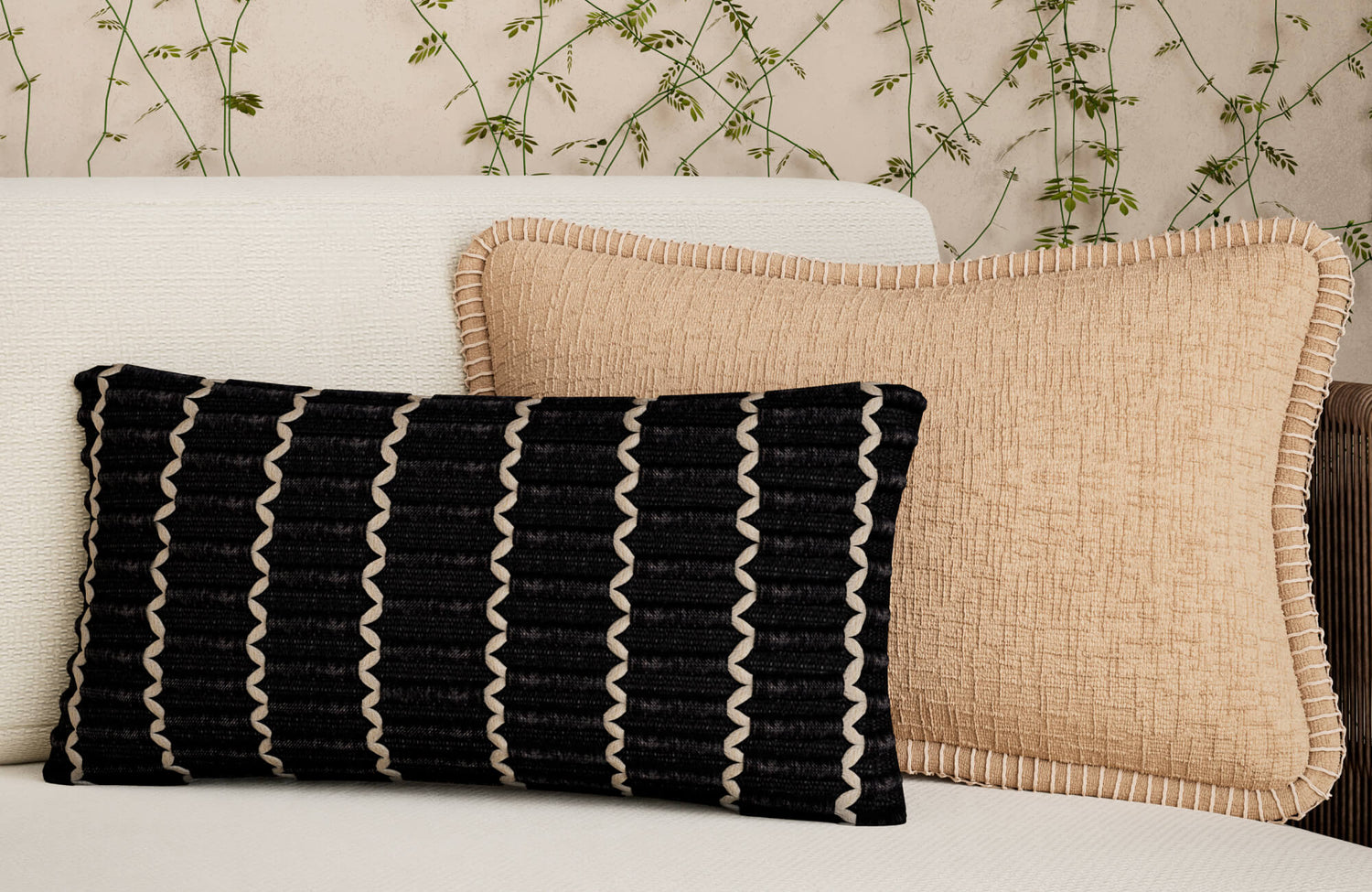
This can be seen with Edward Martin’s Merelle 13" x 21" Down Pillow in Ivory paired with the Marisette 12" x 27" Pillow Cover in Black, where the clean piped edge of the ivory pillow complements the structured seating, as shown in the photo featured above. The combination of a simple edge and a patterned accent pillow shows how different elements can come together while maintaining a cohesive, balanced look.
Consider Function and Placement
Consider where the pillow will be used and how often it will be handled. In frequently used areas, simpler edges tend to be more practical as they are easier to maintain and less prone to wear. More decorative edges can still be incorporated, but they are better suited for spaces where the pillows are used less frequently. This approach helps balance durability with visual detail.
Coordinate with Fabric and Pattern
The relationship between the fabric and the edge plays a key role in shaping the pillow’s overall look. When the fabric is already detailed, a simpler edge helps keep the design from feeling overwhelming. In contrast, a plain fabric can benefit from a more decorative edge to add interest and definition. This balance ensures that both elements work together without competing for attention.

Mixing Different Edge Types Without Clashing
Once you are familiar with individual styles, you may want to combine them. Mixing edge types can create depth, but it requires a thoughtful approach to keep the arrangement cohesive.
Establish a Base Style
Start with one primary edge style that anchors your arrangement. This establishes a sense of consistency and helps the overall look and feel more cohesive. It also provides a clear foundation that guides how other elements are introduced; from there, variation can be added in a more controlled and intentional way.
Vary with Intention
Introduce one or two contrasting edge types to add visual interest. The key is to ensure that these variations feel connected rather than random. Keeping the differences subtle helps maintain a sense of balance. This approach allows the arrangement to feel layered without becoming visually overwhelming.
Use Color as a Unifier
Color plays an important role when mixing edge styles. Repeating similar tones across different edges helps create a sense of connection. This consistency allows for variation without disrupting the overall look. As a result, the arrangement feels cohesive rather than disjointed.
Choosing Decorative Pillow Edges with Purpose
Decorative pillow edges range from clean and structured to soft and detailed, with each type shaping the space’s overall look distinctly. As you explore these options, it becomes clear that even a subtle detail can influence balance, texture, and overall style. When chosen thoughtfully, the edge becomes more than a finishing detail. It helps define how the pillow interacts with its surroundings, contributing to a space that feels cohesive and well considered.
If you need guidance in selecting the right edge styles or coordinating them with your existing décor, our design service can help you make informed decisions that suit your space. You may also contact us for more personalized recommendations and support.