Subway tiles are often associated with kitchen backsplashes and shower walls, but their clean rectangular shape makes them useful in many other areas of the home. With the right placement, pattern, color, and material pairing, subway tiles can frame fireplaces, define entryways, add interest to mudrooms and laundry rooms, refresh outdoor kitchens, or create decorative details in bathrooms and kitchens.
In this article, you’ll explore creative ways to use subway tiles across unexpected spaces, kitchens, bathrooms, outdoor and semi-outdoor areas, patterns, colors, and material combinations. You’ll also see how details like grout, scale, and layout can help turn a simple subway tile into a more intentional design feature.

Subway Tiles in Unexpected Spaces
Subway tiles work well in unexpected spaces because they offer durability while maintaining a clean, structured look. Although they are often used in kitchens and bathrooms, they can also bring character to overlooked areas of the home. The key is to match the tile application to the space’s purpose, so the result feels both practical and thoughtfully designed.
Entryways and Hallways
Entryways and hallways are ideal places to use subway tiles because they set the tone for the rest of the home. A tiled lower wall, also known as wainscoting, can create a polished first impression while protecting the surface from daily wear. This is especially helpful in areas where bags, shoes, coats, or pets often come into contact with the walls.
For a classic look, white or cream subway tiles can keep the entry bright and open. For a more distinctive look, green, blue, gray, or handmade-look tiles can add character without overwhelming the space. A vertical stack can make a narrow hallway feel taller, while a horizontal layout can make the area feel more continuous.
That same balance of function and design comes through with Edward Martin’s Juliet 2.5 x 10 Matte Porcelain Tile in Iron, as shown in the photo featured above. Its deep gray tone and elongated format create a grounded herringbone floor that adds movement to the hallway while keeping the entryway clean, structured, and inviting.
Living Rooms
Living rooms may not be the first place you imagine subway tiles, but they can be highly effective when used with purpose. A fireplace surround is one of the strongest options because subway tiles can frame the hearth with clean lines and subtle texture. Depending on the tile color and finish, the fireplace can feel classic, modern, rustic, or refined.
Subway tiles can also be used on a media wall or behind built-in shelving. Instead of relying only on paint, tile adds surface variation and helps create a more finished backdrop. For a softer effect, choose matte or handmade-look subway tiles in neutral shades. For a stronger focal point, deeper colors or glossy finishes can add dimension without requiring a complex pattern.
Home Offices and Workspaces
In a home office or workspace, subway tiles can add structure without making the room feel busy. A tiled wall behind a desk can create a defined work zone, especially in open-plan homes where different functions share the same area. This approach works well when the tile color supports concentration, such as warm white, muted gray, soft taupe, or deep blue.
Subway tiles can also be used behind built-in shelves or storage cabinets. This adds a clean backdrop for books, files, and decorative objects while making the workspace feel more designed. If the room is small, a glossy tile can reflect light and help the space feel brighter. If you want a calmer look, matte tiles offer a more understated surface.
Mudrooms and Laundry Rooms
Mudrooms and laundry rooms benefit from surfaces that are easy to maintain, which makes subway tiles a practical and creative choice. In a mudroom, tile can be used behind benches, coat hooks, or storage cubbies to protect the wall and give the area a more finished look. A darker grout can help define the pattern and make upkeep feel less demanding.
In laundry rooms, subway tiles work especially well behind sinks, folding counters, washers, and dryers. Instead of treating the room as purely functional, tile allows you to add color, texture, and personality. A soft blue tile can create a fresh feeling, while a warm neutral can make the room feel more inviting. Since these rooms often have limited space, a full-height tiled wall can make a simple layout feel intentional.

Creative Subway Tile Ideas for Kitchens
Kitchens are one of the most common places to use subway tiles, but that does not mean the design has to feel predictable. By expanding where the tile goes and how it is arranged, you can turn a familiar material into a more memorable feature.
Full-Height Backsplashes
A full-height backsplash extends the tile from the countertop to the ceiling or upper cabinets. This approach creates a more complete look than a standard backsplash because the wall becomes a design feature rather than a narrow strip of tile. It works especially well behind ranges, sinks, and open shelving.
Full-height subway tiles can make a kitchen feel taller and more cohesive. In small kitchens, carrying the same tile across the full wall can reduce visual breaks and create a cleaner look. In larger kitchens, a full-height backsplash can bring balance to wide walls or high ceilings. The effect can be subtle with matching grout or more graphic with contrasting grout.
Range Walls and Hood Surrounds
The range area naturally draws attention, so it is a smart place to use subway tiles creatively. A tiled range wall can frame the cooking zone and give the kitchen a clear focal point. This is especially effective when paired with a statement hood, open shelves, or a pot filler.
For a timeless look, consider a classic offset layout. For something more modern, a vertical stack or herringbone arrangement can add movement and interest. The tile does not need to be bold to stand out. Even a soft neutral subway tile can look striking when it covers the entire range wall and connects smoothly with the surrounding cabinetry.
Kitchen Island Fronts or Sides
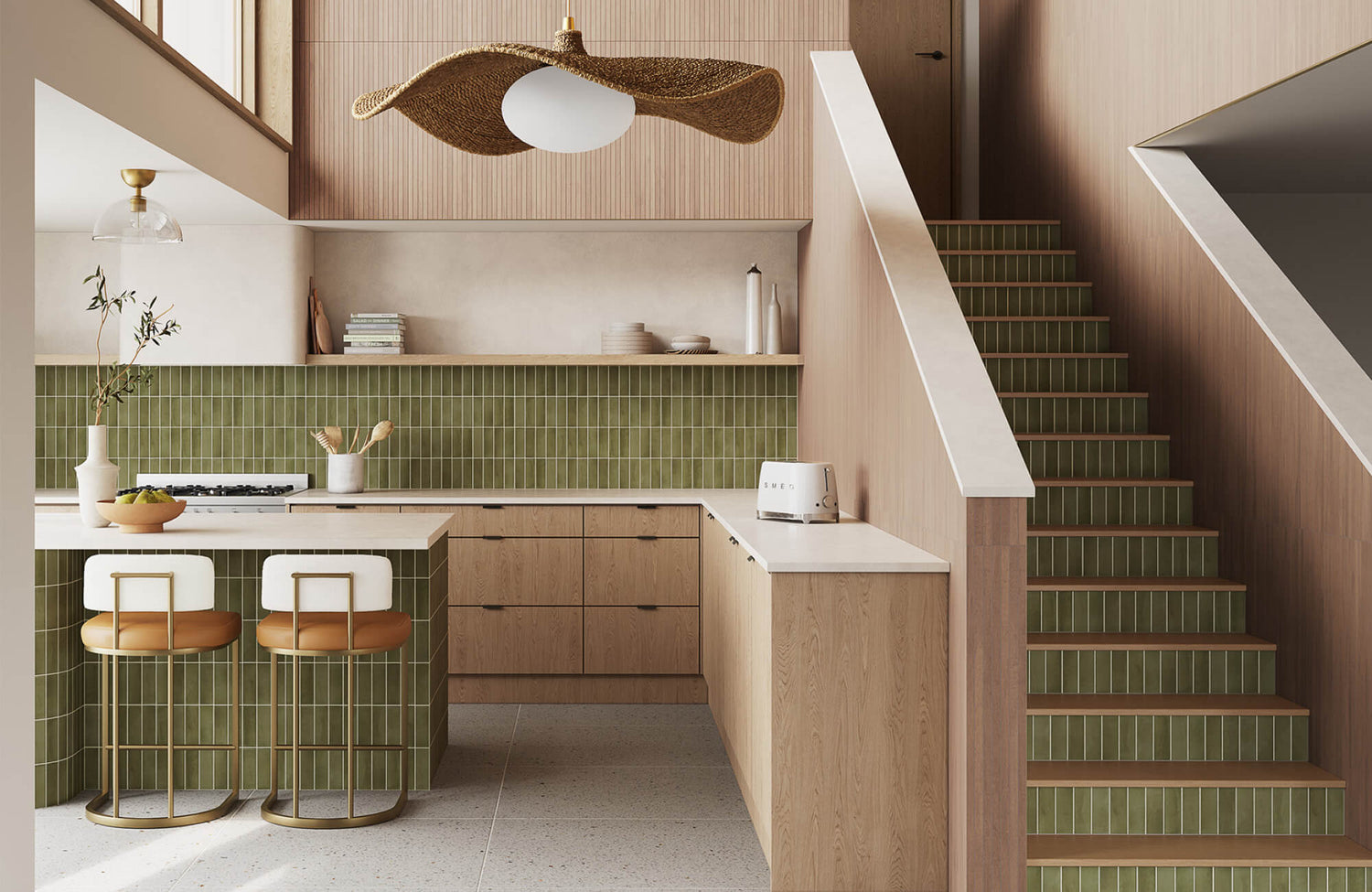
Using subway tiles on the front or sides of a kitchen island is a creative way to add texture and make the island feel more integrated with the rest of the room. This works especially well when the island faces a dining or living area, where the tiled surface becomes part of the overall design. Tile can also help connect surrounding finishes, such as wood cabinets, stone counters, and metal fixtures. Smaller subway tiles can create more pattern, while elongated tiles can make the island appear wider and more streamlined.
This idea comes through clearly with Edward Martin’s Mikayla 2.5 x 5 Glossy Ceramic Tile in Olive, as shown in the photo featured above. Its olive tone and glossy surface add subtle shine to the island, linking it to the backsplash while creating depth against the wood cabinetry and dark countertop.
Open Shelving Backdrops
Open shelving often needs a thoughtful background because everything displayed on the shelves becomes part of the design. Subway tiles can provide that background with just enough texture to support dishes, glassware, plants, or artwork. This creates depth without competing with the objects on display.
A tile backdrop behind open shelves also makes the wall easier to clean in cooking zones. For a subtle look, choose a grout color that closely matches the tile. For added definition, choose a contrasting grout that outlines the tile layout. Either way, the tile helps the shelving area feel integrated rather than added as an afterthought.

Creative Subway Tile Ideas for Bathrooms
Bathrooms are a natural fit for subway tiles, but the most creative designs often go beyond a simple shower wall. By considering scale, placement, and framing, you can use subway tiles to create a bathroom that feels more finished and personal.
Full-Wall Tile Installations
A full-wall subway tile installation can make a bathroom feel polished and cohesive. Instead of limiting tile to wet zones, extending it across an entire vanity wall or bathtub wall creates a strong architectural effect. This works well in both small and large bathrooms because the repeated tile pattern gives the room structure.
White subway tiles can create a bright and clean look, while deeper colors can make the wall feel more dramatic. If you want a softer design, consider a handmade-look tile with gentle surface variation. The slight irregularity adds depth while keeping the overall layout simple.
Shower Niches and Recessed Shelves
Shower niches and recessed shelves are small details, but they can have a major impact on the final design. Subway tiles can line the inside of a niche for a seamless look, or they can be arranged in a different pattern to make the niche stand out. For example, a shower wall in a horizontal layout can be paired with a vertical niche for contrast. A herringbone niche can add decorative interest without covering the entire room in a complex pattern. This approach gives you a creative feature while keeping the design easy to live with.
Vanity Walls and Mirror Frames
A vanity wall is another strong place to use subway tiles creatively. Tiling behind the sink and mirror protects the wall while giving the bathroom a more custom appearance. This can be especially effective in powder rooms, where a small area can handle a more expressive finish or color.
Subway tiles can also be used to frame a mirror. A tile border around a mirror adds structure and can make the vanity area feel more complete. For a refined effect, choose tiles that contrast gently with the wall color. For a bolder look, use a darker tile around a lighter mirror or vanity.
Half Walls and Wainscoting
Subway tile wainscoting is a practical and stylish option for bathrooms. It typically covers the lower portion of the wall, protecting it from splashes while adding visual detail. This approach works well in traditional, coastal, farmhouse, and transitional interiors.
The height of the tile can change the mood of the room. A lower wainscot feels classic and restrained, while a taller one adds more presence. A finishing trim or pencil liner can create a clean edge where the tile meets the painted wall above.

Outdoor and Semi-Outdoor Subway Tile Ideas
Subway tiles can also work in outdoor and semi-outdoor areas when you choose materials suited to the setting. Since these spaces may be exposed to moisture, sun, and temperature changes, it’s important to confirm that the tile, grout, and installation method are appropriate before getting started.
Outdoor Kitchens
Outdoor kitchens are a natural fit for subway tiles because backsplashes and prep areas benefit from easy-to-clean surfaces. A tiled backsplash behind a grill, sink, or serving counter can make the space feel more finished while adding color and texture. Porcelain subway tiles are often a strong choice for covered outdoor kitchens because they are dense and durable. Still, the tile, grout, and setting materials should all be rated for the specific environment. Professional installation is especially important in exterior conditions.
Covered Patios
Covered patios can benefit from subway tiles on feature walls, bar areas, fireplace surrounds, or serving stations. In these areas, tile helps define each zone while creating a stronger connection to the home’s interior design. For a relaxed patio look, consider earthy neutrals, soft greens, or handmade-look finishes. Meanwhile, for a more polished effect, glossy tiles can reflect light and add brightness. Since covered patios can still be exposed to moisture and temperature changes, it’s important to confirm that the materials are suitable for the setting.
Pool and Spa Areas
Pool and spa areas can use subway tiles creatively on waterline details, raised walls, outdoor showers, or surrounding feature walls. Porcelain subway tiles can create a clean, refreshing look when specified correctly. Safety and performance matter in these spaces, so tiles used near water should be chosen for the application, while walking surfaces require appropriate slip resistance.
This tailored effect is shown through Edward Martin’s Natasha 2 x 6 Glossy Porcelain Tile in Blue Grass, as featured in the photo above. Its glossy blue tone adds depth around the pool edge and steps, helping the waterline and raised surfaces feel crisp, coordinated, and visually connected to the surrounding outdoor space.

Creative Subway Tile Patterns and Layouts
The way subway tiles are arranged can completely change the look and feel of a space. Even with a simple tile, the layout can make the design feel classic, modern, playful, or refined. This makes pattern one of the easiest ways to use subway tiles creatively without relying on a bold color or unusual finish.
Basketweave for Classic Detail
Basketweave layouts use rectangular tiles in an interlocking arrangement to create a woven effect. This pattern brings a classic, decorative quality to subway tiles without making the surface feel overly busy. It works especially well on bathroom floors, shower walls, backsplashes, and small accent areas. For a more traditional look, pair it with neutral tiles and subtle grout. For a stronger definition, a contrasting grout can make the woven pattern more visible.
Herringbone for Subtle Movement
Herringbone layouts arrange subway tiles in a broken zigzag pattern, giving the surface a sense of movement. This pattern is a strong choice when you want more visual interest than a standard running bond but still want the design to feel balanced. It works well on range walls, shower niches, fireplace surrounds, and feature backsplashes. Because the pattern already draws attention, it often looks best with simple colors or understated finishes. This allows the layout to stand out without overwhelming the space.
Crosshatch for a Geometric Look
Crosshatch layouts group subway tiles in alternating directions to create a grid-like design with added texture. This pattern feels structured and graphic, making it a good option for modern kitchens, bathrooms, and feature walls. It offers more visual interest than a standard stacked layout while still keeping the design orderly. Crosshatch works especially well with elongated subway tiles because the tile shape makes the directional changes more noticeable. To keep the look cohesive, consider using one tile color and letting the pattern provide the detail.
Chevron for a Sharp, Modern Effect
Chevron patterns use angled tiles that meet in clean points to create a crisp V-shaped design. Compared with herringbone, chevron has a more continuous and tailored appearance. This layout works best in focal areas, such as range walls, shower features, powder rooms, or fireplace surrounds, where the pattern has enough room to stand out. It can make a simple subway tile feel more architectural and polished. For a cleaner effect, choose grout that blends with the tile rather than competing with the strong lines.
Diagonal Running Bond for Added Energy
Diagonal running bond takes the classic offset subway tile pattern and turns it at an angle. This creates a more dynamic look while still keeping the familiar feel of a traditional subway layout. It works well on backsplashes, bathroom walls, and feature areas where you want movement without using a highly decorative pattern. The angled direction can help break up straight lines in a room and make the surface feel more active. Because the layout is already energetic, simple tile colors often work best.
Before choosing a final layout, it helps to see how each pattern changes the feel of your room. Our AR tool lets you preview different subway tile arrangements in your own space, making it easier to compare options like basketweave, herringbone, crosshatch, chevron, or diagonal running bond before moving forward.

Creative Subway Tile Color Ideas
Color is one of the easiest ways to give subway tiles a fresh look. The same rectangular shape can feel classic in white, calm in green, bold in blue, or warm in terracotta. Choosing the right color helps the tile shape the room’s mood, whether you want the space to feel clean, calm, bold, or warm.
Warm Neutrals for a Softer Look
Warm neutral subway tiles include white, cream, ivory, beige, taupe, greige, and warm gray. These colors can create a softer look while keeping the design clean and easy to pair with other materials. They work especially well with wood cabinets, stone countertops, brass fixtures, and natural textures. For a more layered effect, choose a glossy finish for brightness or a handmade-look surface for subtle variation.
Warm neutrals work well when you want the tile to feel inviting while still letting the rest of the room take the lead. This is reflected in Edward Martin’s Jojo 2 x 6 Glossy Ceramic Tile in Grey, as shown in the photo featured above. Each piece features subtle shifts of soft gray with hints of light brown, creating a natural, handmade feel, while the glossy finish brightens the bathroom’s calm neutral palette.
Cool Colors for a Calm Finish
Cool subway tile colors include green, blue, blue-gray, cool gray, teal, and soft aqua. These shades can make a space feel calm, fresh, and balanced, especially in bathrooms, kitchens, and laundry rooms. Green brings a natural feel, while blue can create a clean coastal or spa-like effect. Cool gray and blue-gray offer a more understated option if you want color without a strong statement. To keep the look cohesive, pair cool colors with simple grout and finishes that do not compete with the tile.
Dark Subway Tiles for Contrast
Dark subway tile colors include black, charcoal, navy, forest green, deep brown, espresso, and dark gray. These shades create contrast and can turn a simple subway tile wall into a strong design feature. They work well behind vanities, around fireplaces, on range walls, or in powder rooms where a more dramatic look feels intentional. Dark tiles can also make lighter counters, fixtures, and cabinetry stand out more clearly. For balance, consider using them with warm metals, wood accents, or lighter surrounding surfaces.
Two-Tone Subway Tile Designs
Two-tone subway tile designs use two colors in one installation, such as white with green, cream with terracotta, beige with brown, blue with white, or gray with black. This approach works well for color blocking, borders, half walls, shower niches, and framed feature areas. A darker tile on the lower portion of a wall can create a grounded look, while a lighter tile above keeps the room feeling open. Two-tone designs can also help define zones without changing the room’s structure. To make the combination feel intentional, choose colors that share a similar undertone or repeat colors already found in the space.
Monochromatic Tile and Grout Pairings
Monochromatic pairings use tile and grout in similar shades, such as white tile with white grout, beige tile with beige grout, green tile with green-toned grout, or gray tile with gray grout. This creates a more seamless surface where the color and finish become more noticeable than the grout lines. It is especially effective with glossy, matte, or handmade-look subway tiles because the surface texture can still add depth. A monochromatic look works well in modern kitchens, calm bathrooms, and spaces where you want a clean, unified finish. For the best result, compare grout samples with the tile in the actual room lighting before making a final choice.

Mixing Subway Tiles with Other Materials
Subway tiles become even more versatile when paired with other materials. The clean shape provides a steady foundation, while surrounding surfaces add contrast, warmth, or pattern. This balance can make a room feel more complete.
Subway Tiles with Mosaic Floors
Pairing subway tile walls with mosaic floors is a classic approach that still feels creative when colors and patterns are chosen carefully. A simple subway wall can balance a patterned floor, while the floor adds detail and movement underfoot. This pairing works especially well in bathrooms, laundry rooms, and mudrooms. White subway tiles with penny rounds feel timeless, while colored subway tiles with geometric mosaics can create a more personalized look. The key is to let one surface lead and the other support it.
Subway Tiles with Natural Wood
Natural wood brings warmth to subway tile installations. Since tile can feel cool or crisp, wood helps soften the overall effect. This combination works well in kitchens with wood cabinets, bathrooms with wood vanities, and living rooms with wood shelving or beams. The tile color can shape the mood of the pairing. White tile and pale wood feel light and airy, while green or blue tile with medium wood feels richer and more grounded. The contrast between smooth tile and natural grain creates a balanced design.
Subway Tiles with Stone or Slab Surfaces
Subway tiles can pair beautifully with stone or slab surfaces such as marble, quartz, granite, concrete, or stone-look porcelain. This combination is especially common in kitchens and bathrooms, where countertops and walls meet. To keep the design cohesive, choose a subway tile that relates to the slab’s color or undertone. A warm white tile can complement creamy stone, while a gray tile can connect with cooler veining. This approach helps the materials feel connected rather than competing.
Subway Tiles with Decorative Accent Tiles
Decorative accent tiles can add personality when used with subway tiles. Instead of covering an entire room in a bold pattern, you can use decorative tiles in a focused area, such as a niche, border, backsplash panel, or floor. Subway tiles help balance the accent tile by giving the design a clean foundation. This is useful when you like a pattern but want the room to remain approachable. The result feels creative without becoming overwhelming.
Bringing Creative Subway Tile Ideas to Life
Subway tiles can be used creatively in far more ways than standard backsplashes and shower walls. They can frame a fireplace, define an entryway with wainscoting, add interest to a shower niche, create a full-height kitchen feature, refresh an outdoor kitchen, or bring movement to a wall through patterns like herringbone, basketweave, or diagonal running bond.
The best creative use depends on where the tile will be installed, how the surface needs to perform, and the mood you want to create. By thinking carefully about placement, pattern, grout, color, and material pairings, subway tiles can become a flexible design feature that adds structure, texture, and personality throughout your home. For guidance on choosing the right subway tile design for your space, contact us to discuss your project!