Selecting the perfect rug for your kitchen can feel like a puzzle. Beyond the practicalities of durability and cleaning, there’s the all-important question of aesthetics. Do you play it safe and match your rug to your existing kitchen palette, or do you make a bold statement? A common dilemma homeowners face is whether to coordinate their kitchen rug with their cabinets or their floors.
This article will break down the pros and cons of matching your kitchen rug to your cabinets or floors. We’ll delve into specific design principles, discuss practical considerations like maintenance and wear, and provide actionable tips to help you make an informed decision that elevates the look and feel of your kitchen, regardless of its size or style.

The Case for Matching Your Kitchen Rug to Your Floors
Starting with the most seamless option, matching your rug to the flooring creates a clean, unified look. This approach emphasizes flow and balance, especially in kitchens where open layouts benefit from visual continuity.
Enhancing a Seamless Flow
Coordinating a rug with the floor creates an uninterrupted visual line, helping the eye travel smoothly across the space. This technique is particularly effective in open-concept kitchens, where consistency across cooking, dining, and living areas strengthens cohesion. By aligning the rug’s hues and patterns with flooring materials, whether hardwood grain, porcelain veining, or polished concrete, you reinforce harmony across surfaces.
For example, in the image above, Edward Martin’s Hutchinson Polyester Face Rug in Graphite / Olive reflects this principle with muted tones and subtle patterning that mirror natural wood, creating an uninterrupted flow that makes the kitchen feel more expansive.
The Art of Understated Elegance
Beyond flow, a rug that mirrors the floor acts as a quiet backdrop, allowing cabinetry, countertops, and fixtures to remain the focal points. Instead of competing for attention, it integrates into the design, softening acoustics and adding comfort underfoot. This restrained approach is especially effective in minimalist or modern kitchens, where clean lines and balance are central. Through techniques like tonal layering and low-contrast value pairing, a floor-matched rug offers elegance without overwhelming the overall scheme, ideal for homeowners who appreciate refinement and subtlety.

The Strategy of Complementing Your Kitchen Cabinets
Building on the idea of harmony, another method is to connect your rug to the cabinetry instead of the floor. By echoing cabinet colors or finishes, you can highlight millwork details and create a focal point that feels intentional yet understated.
Creating Cohesive Color Palettes
When a rug complements cabinetry, it helps unify the overall palette and ensures the space feels thoughtfully balanced. For instance, a warm walnut cabinet paired with a muted terracotta rug establishes chromatic continuity, while gray-painted cabinetry can be echoed with soft charcoal or slate tones. Designers often use undertone matching, pairing cool with cool, warm with warm, to prevent discordance. This technique not only enhances harmony but also leaves room for flexibility if countertops, backsplashes, or fixtures are updated later.
Highlighting a Focal Point
Because cabinets naturally anchor both storage and style, they often serve as a kitchen’s visual centerpiece. A rug that mirrors their tones or introduces subtle accents can amplify this role, drawing attention to distinctive paint finishes, hardware, or custom details.
For example, as shown above, Edward Martin’s Hutchinson Polyester Face Rug in Navy / Rust illustrates this concept beautifully: its rich hues and medallion motif frame the cabinetry, adding depth and warmth while elevating the millwork as a true design statement.

When to Choose a Rug That Contrasts Everything
Of course, not every design thrives on cohesion, sometimes contrast delivers the most impact. After considering rugs that blend with floors or cabinets, choosing one that deliberately stands apart can bring bold personality and energy to the space.
The Power of Bold Contrast
A high-contrast rug immediately commands attention, functioning like an accent wall for the floor. Imagine a vibrant pattern against pale oak and white shaker cabinets: the result is visual drama paired with a clear expression of style. Contrast also enhances depth perception, adding layers that keep the design from feeling flat. This approach is especially effective in contemporary or eclectic kitchens, where tension, texture, and juxtaposition define the narrative. To ensure longevity, durable and colorfast materials such as solution-dyed nylon or polypropylene help maintain vibrancy even in busy areas.
Creating Zones and Defining Spaces
Beyond aesthetics, contrast can serve a practical role in large or open-plan kitchens. A richly colored runner beneath a prep zone or a patterned flatweave under a dining nook establishes subtle boundaries without the need for walls. This strategy also guides circulation, reinforcing the natural flow between islands, work triangles, and gathering spaces.
Above, Edward Martin’s Hutchinson Polyester Face Rug in Slate / Fog illustrates this idea: its muted contrasts and detailed motifs act as a visual anchor, defining the workspace while still maintaining balance with cabinetry and stone finishes.

Practical Considerations for Kitchen Rugs
Beyond style, function is just as important. Following the discussion of matching and contrasting strategies, it’s essential to weigh durability, material, and maintenance to ensure your rug performs as beautifully as it looks.
Durability and Material Matters
Kitchens endure constant movement, moisture, and the occasional spill, so rugs here must be exceptionally resilient. Flatweave constructions, such as kilim or dhurrie styles, are particularly effective thanks to their low pile, which resists matting and allows doors to glide easily. Synthetic fibers like polypropylene and nylon provide superior stain resistance and color retention, while recycled PET offers an eco-conscious option with comparable strength.
As illustrated in the image above, Edward Martin’s Pascal Polyester Face Rug in Burgundy / Multi demonstrates this balance, combining intricate design with durable polyester construction. For added safety, pairing any rug with a non-slip backing or underlay is essential on hard flooring like tile or wood.
Ease of Cleaning and Maintenance
Practicality doesn’t end with durability; cleaning is just as critical in a busy kitchen. Machine-washable rugs or those treated with stain-repellent finishes, such as Scotchgard or solution-dyed fibers, simplify routine care. Low-pile options are also easier to vacuum and less likely to trap debris than shag or high-pile alternatives.
In addition to these everyday strategies, reversible weaves can extend a rug’s lifespan by allowing periodic rotation. Performance-grade designs—often made for indoor/outdoor use—are another smart choice, combining comfort underfoot with strong resistance to stains and wear. And because every rug construction is unique, it’s always best to consult the manufacturer’s guidelines for specific care and maintenance to ensure long-term performance.

Design Paths for Choosing the Ideal Kitchen Rug
By now, it’s clear there’s no single “right” choice, each approach offers distinct advantages depending on your priorities. Pulling together the ideas of cohesion, contrast, and practicality, the best rug is the one that balances design vision with everyday living.
Mixing and Matching for a Personalized Look
One versatile strategy is to blend elements from multiple approaches, coordinating with cabinetry for cohesion while introducing accent colors that echo flooring undertones. For example, a rug with a neutral base that complements porcelain tile yet incorporates cabinet-inspired detailing creates layered harmony.
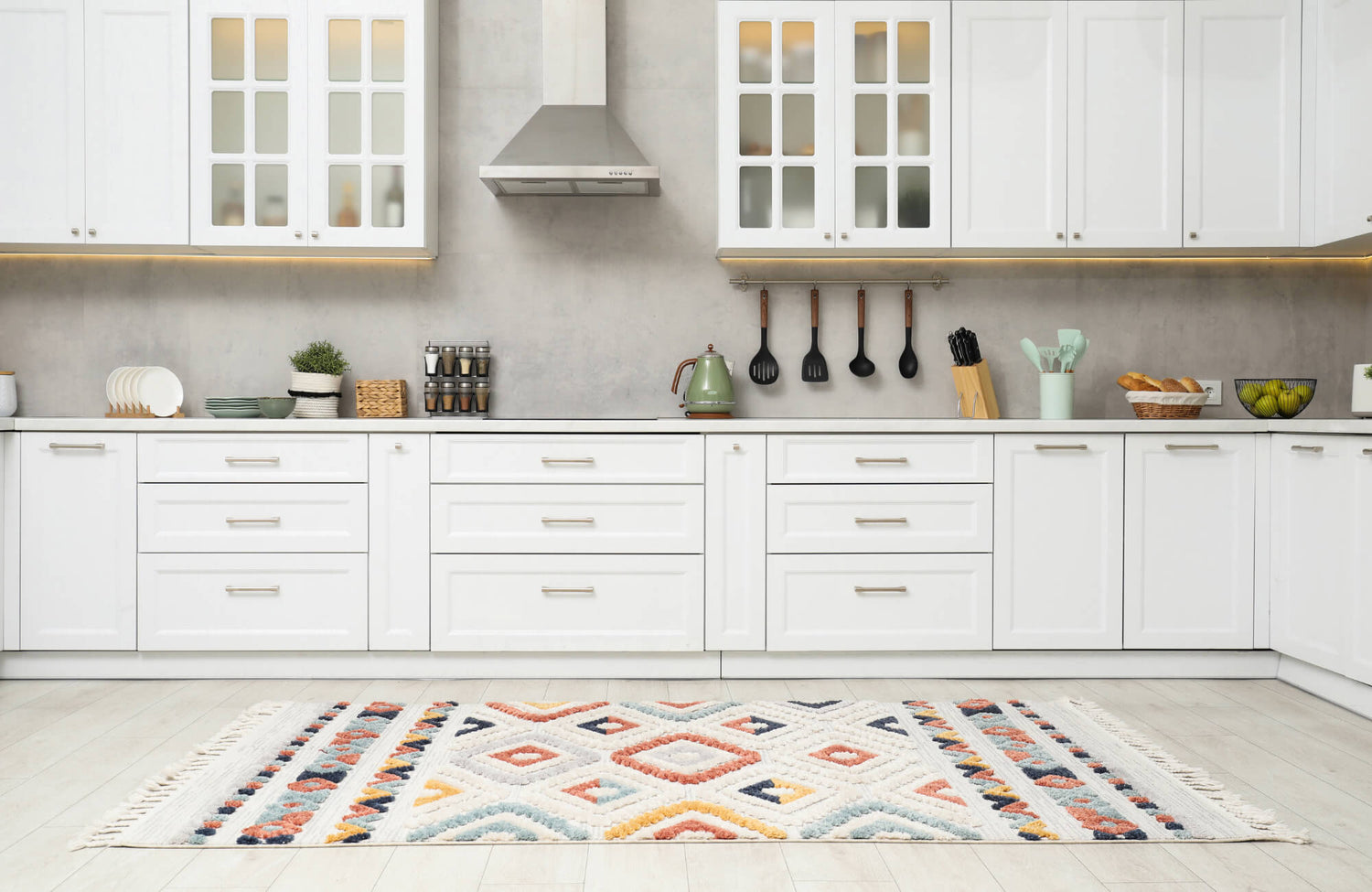
In the image above, Edward Martin’s Hutchinson Polyester Face Rug in Marine / Peach achieves this idea well. Its soft background is elevated by vibrant medallion details, bridging wood flooring with light cabinetry for a professional, curated aesthetic that still feels personal.
Putting Your Personal Style First
Design principles provide structure, but the most memorable spaces reflect individual taste and lifestyle. A bold Turkish kilim may break traditional palette rules while honoring cultural heritage, whereas a minimalist jute runner emphasizes organic texture and simplicity. Practical factors, such as stain resistance, comfort underfoot, and ease of cleaning, should also guide the decision, ensuring beauty and functionality coexist.
For those seeking tailored support, Edward Martin’s design consultation service offers expert guidance in balancing color, texture, and material performance. From balancing colors and textures to selecting materials suited for daily use, the consultation ensures that every decision feels both confident and purposeful. For personalized recommendations, product questions, or assistance with tile, rug, or furniture selections, simply contact Edward Martin to explore solutions that fit your vision.
Striking the Right Balance in Kitchen Rug Design
Ultimately, the choice to match, complement, or contrast a rug comes down to design intent and everyday practicality. Matching the floor enhances spatial continuity, coordinating with cabinetry reinforces cohesion, and introducing contrast adds dynamic focal points or defines zones.
Regardless of direction, considerations such as material durability, ease of maintenance, and slip resistance remain essential. By weighing these factors against the kitchen’s layout, lighting, and daily use, you can select a rug that supports both form and function. With thoughtful choices, the kitchen becomes not only cohesive and purposeful but also an authentic reflection of personal style.