A 60-inch vanity sits in a balanced middle ground. It offers enough width for a comfortable workspace while still fitting well in most standard bathrooms. As you consider whether a single or double sink suits you better, it's helpful to reflect on how you move through your daily routine, how you utilize the space around the 60-inch vanity, and what you envision for the room in the years ahead. In this article, we’ll walk you through each factor clearly so you can choose the best option that aligns with your goals.

How a 60-Inch Vanity Affects Your Bathroom Layout
Before choosing a sink configuration, it helps to understand how a 60-inch vanity shapes the space around it. This size often becomes the room’s visual anchor, shaping how you move through the space, how light is distributed, and how the bathroom feels as a whole. By seeing how a single or double sink alters the layout, you can more confidently match the vanity to the structure and flow of your bathroom.
Space Around the Vanity
When considering a 60-inch vanity, the first step is to understand how it shapes the space around it. A single sink usually sits centered on the countertop, creating a balanced room on either side. A double sink, however, spreads the basins apart, which may require closer attention to how doors, shower entrances, and nearby fixtures align with the vanity’s width. You can see this clearly in Edward Martin’s Rosalie 60" Single Vanity in Amber Birch with a 3 cm White Zeus Quartz Top, as displayed in the photo above, where the centered basin and generous counter space demonstrate how well a single-sink layout fits within a defined area.
As you evaluate your own bathroom, measuring the clearance in front of and beside the vanity will help ensure you have enough room to stand comfortably, turn, and reach daily items. It also helps to check how cabinet doors and drawers open to confirm they don’t interfere with nearby features.
Countertop Distribution
Countertop layout often plays a key role in the decision. A single sink provides an uninterrupted surface that you can use for grooming essentials, decorative accents, or everyday items. This continuous space appeals to those who appreciate a clean, open look. With a double sink, the countertop naturally divides into two sections, creating individual work areas that help users keep their belongings separate. As you consider what suits you best, consider whether you prefer a wide, flexible surface or clearly defined personal zones that support shared use.
Wall and Lighting Alignment
Mirror and lighting placement also shift depending on the sink configuration. A single sink allows for one large mirror or a centered setup, creating a balanced look in both narrow and wide bathrooms. With double sinks, the arrangement typically calls for two mirrors that line up with each basin, which influences where sconces or wall lights can be installed and how evenly the room is illuminated. As you plan your layout, consider whether your bathroom feels better with the symmetry of two mirrors or the clean simplicity of a single mirror.

How Daily Habits Influence Sink Choice
Your daily routine can provide valuable insight into whether a single or double sink fits your needs. The way you get ready in the morning, wind down in the evening, and share the bathroom with others often shapes which setup feels more convenient. When you look at your real-life habits, the right choice tends to become much clearer.
Morning and Evening Routines
Many households choose a sink setup based on how often multiple people need the bathroom at the same time. For example, if two people get ready together, a double sink can make the routine easier by giving each person a dedicated basin. Edward Martin’s Bridgette 60" Double Vanity in Light Natural Oak with a 3 cm White Zeus Quartz Top, as shown in the photo above, demonstrates how well a double-sink layout supports shared use, offering two distinct stations that make simultaneous routines feel more organized and efficient. However, if everyone uses the bathroom at different times, dual access may not be necessary, and a single sink could offer more than enough space. In fact, for solo users or households with staggered schedules, one basin often feels comfortable, practical, and easy to maintain.
Personal Grooming Space
Grooming habits vary widely, and the way you use the counter influences how functional the vanity feels. A single sink provides more open room for hair tools, skincare items, or grooming accessories. It suits those who prefer spacious surfaces that allow them to spread out. A double sink, however, works best for users who appreciate designated areas. Each basin creates a specific zone that can help maintain order in a shared bathroom. Consider whether you work best with open space or prefer defined stations that help keep your routine organized.
Cleaning and Upkeep Habits
Maintenance is another practical factor to consider. A single sink simplifies daily upkeep because there is only one basin to clean and fewer fixtures to maintain. A double sink, by comparison, requires attention to two basins, each with its own buildup over time. If you prefer quick cleaning sessions or want minimal upkeep, a single sink may suit your habits. In many households, convenience during busy weeks becomes the deciding factor, making the easier-to-clean setup the more appealing choice.

Storage and Organization Options
Storage often plays a major role in choosing between a single and double sink. The sink configuration you choose shapes how the interior of the vanity is arranged. In a 60-inch vanity, the layout of drawers and cabinets can vary depending on plumbing needs, and the usable space remains inside.
Cabinet and Drawer Layout Differences
A single sink usually allows more flexibility in cabinet design. With only one plumbing line to work around, the vanity can offer larger drawers or wider cabinets, creating a straightforward interior layout that accommodates bulkier items. Edward Martin’s Demi 60" Single Vanity in Mid-Century Walnut with a 3 cm White Zeus Quartz Top, as shown in the photo featured above, highlights this advantage, featuring spacious drawers and a clean, unobstructed interior that supports a wide range of storage needs.
When you install two sinks, the additional plumbing takes up more space and divides the cabinet area, leading to smaller, more segmented compartments. Each setup has its strengths depending on the type of storage you rely on. If you need room for tall bottles or broader containers, the open space of a single sink may be more practical. In contrast, shared bathrooms often benefit from the natural separation that double sinks provide.
Storage for Shared vs Individual Users
Your household setup plays a key role in how you approach storage. If two people share the vanity, having separate compartments can make organization easier by giving each person a dedicated spot for their items. A single sink, on the other hand, often offers more open storage, which works well for one user or anyone who prefers flexible space. You can also add organizers, dividers, or pull-out bins to create structure where needed. The goal is to choose a layout that supports your daily habits rather than adjusting your habits to fit the vanity.
Specialty Storage Needs
Some bathrooms need space for specific items such as hair tools, cleaning supplies, or stacked towels. In these situations, it’s helpful to consider how the inside of the vanity is arranged. A single sink often provides uninterrupted cabinet height, making it easier to store taller items. A double sink, with its divided plumbing, may limit vertical space and require a more strategic approach to organization. As you plan, consider the size and height of the items you reach for most often. This will also help you choose a layout that naturally supports your daily routine.

Plumbing Requirements and Installation Complexity
Beyond layout and storage, the plumbing setup can also play a major role in determining whether a single or double sink is practical for your bathroom. Installation choices can influence cost, timeline, and long-term reliability. By understanding these factors, you can better anticipate what the project will require and make a more informed decision.
Supply and Drain Line Requirements
A single sink uses one drain and one set of supply lines, which keeps installation relatively simple. By contrast, a double sink requires an additional drain connection and extra supply lines, and may require adjustments to your existing plumbing. If your bathroom was not designed for two sinks, you might need to extend or relocate pipes to make the layout work. Additionally, some situations may require moving outlets to suit the new mirror placement. Measuring your rough-in locations carefully will help you understand what modifications may be necessary.
Installation Costs and Timelines
The cost difference between single and double sinks often comes from the extra labor and materials required. A double sink requires two faucets, a longer countertop cut, extra plumbing components, and sometimes more extensive preparation by the installer. As a result, the timeline may increase, especially if walls need to be opened or plumbing must be rerouted. When budgeting, it also helps to review detailed quotes that outline both labor and material costs so you understand the full scope of the project. By planning, you can reduce the likelihood of unexpected delays during installation.
Future Repair Considerations
When you add more plumbing, you also increase the number of components that may need attention over time. A double sink includes two drains, two traps, and two sets of connections, making the system more complex than a single sink. While a well-installed double sink can remain reliable, it naturally requires more ongoing care. Choosing quality fixtures and having the plumbing checked can further prevent problems as the years pass by. A single sink, with fewer parts to maintain, often appeals to those who prefer a simpler long-term setup.

Design and Aesthetic Considerations
The vanity you choose plays a major role in defining your bathroom’s visual identity. Each sink configuration creates a distinct impression, influencing how the space feels and how your design elements complement each other. Understanding these aesthetic effects can help you select a setup that supports the overall look you want to achieve.
Visual Weight and Proportions
A single sink gives the vanity a more open, spacious look. The centered basin allows the countertop to feel wider and creates a soft, balanced focal point that works well in modern spaces with clean lines and minimal detailing. A double sink, on the other hand, introduces symmetry that enhances the vanity’s presence. Each basin reflects the other, creating a structured visual rhythm that suits traditional or transitional styles. Ultimately, the decision comes down to whether you prefer a broader, more expansive appearance or a layout with stronger definition and symmetry.
Mirror and Lighting Plans
Mirror selection can shift dramatically depending on whether you choose a single or double sink. A single sink supports one large mirror that expands the vertical sightline and brightens the wall, making it especially effective in smaller or narrow bathrooms. With double sinks, two separate mirrors typically align with each basin, creating a paired layout that requires more intentional lighting placement. You may also need sconces positioned evenly beside each mirror or a coordinated set of fixtures above them.
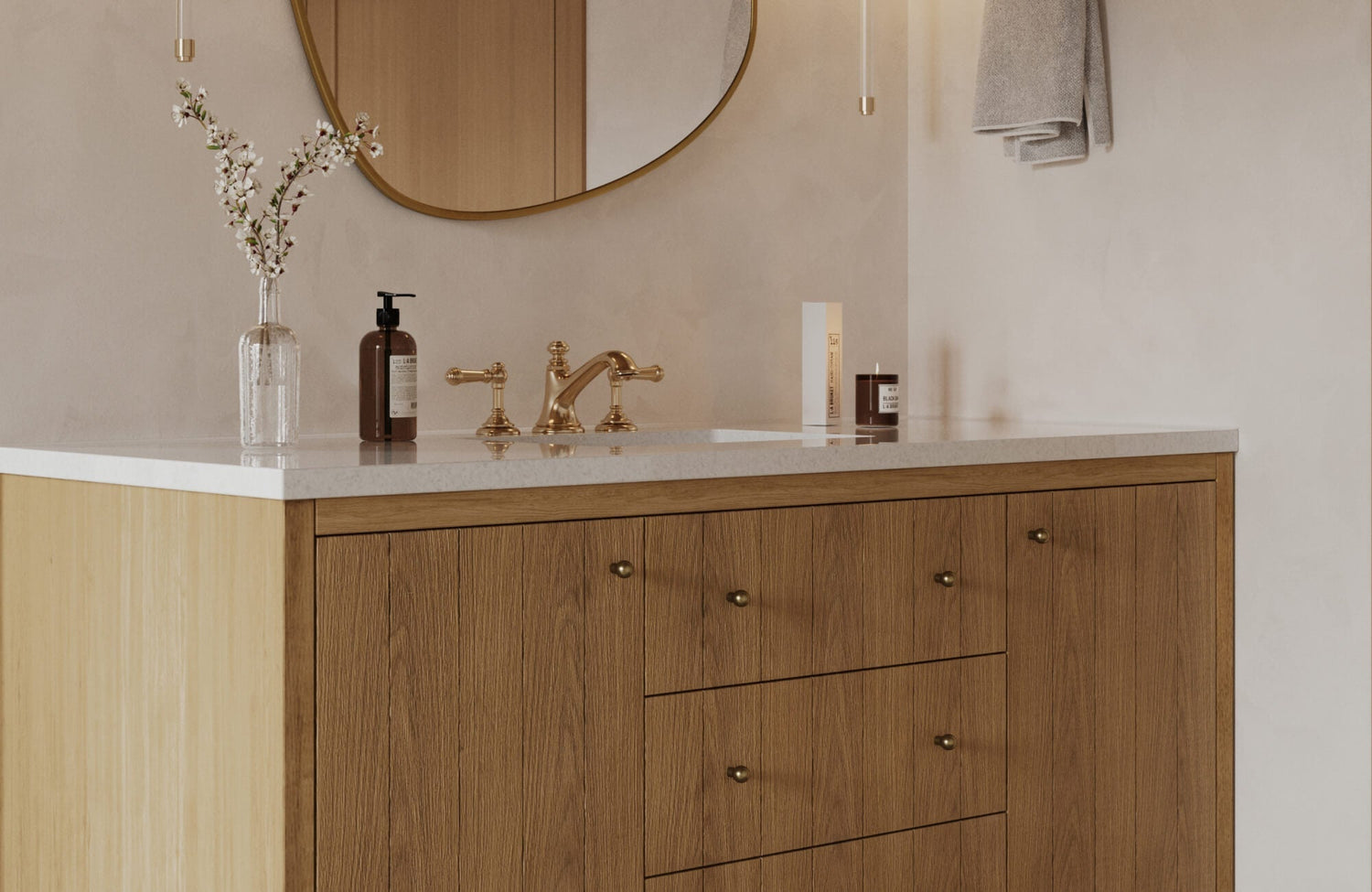
The combination of Edward Martin’s Esmeralda Round Mirror in Polished Brass and the Posey Wall Sconce in Aged Brass, as featured in the photo above, offers a clear example of how thoughtful mirror and lighting choices can elevate both function and style. Well-planned lighting design helps ensure that both users have clear and comfortable visibility.
Balancing Décor With Functionality
Your décor choices should support the sink layout you select. For instance, a single sink offers room for decorative touches, such as a small tray, a plant, or a soap dispenser, giving the countertop a flexible, personalized feel. A double sink, however, often benefits from a more streamlined approach since the surface is divided into two smaller areas. In this case, functional items such as toothbrush holders or grooming tools should be placed where they remain accessible without cluttering the space. As you refine the overall look, backsplash patterns, hardware finishes, and wall accents can further help reinforce your design style and tie the vanity into the rest of the bathroom.

Considering Home Value and Long-Term Flexibility
Your sink choice can also shape how well the bathroom serves you in the years ahead. Factors such as resale value, future remodeling plans, and changes in your lifestyle all play a role in determining which setup will continue to meet your needs over time.
Local Buyer Expectations
Real estate trends often vary by region, and in some areas, buyers expect a double sink in primary bathrooms, which can enhance the room’s appeal when you decide to sell. In other markets, buyers may place greater value on updated materials, thoughtful layouts, or generous countertop space rather than the number of basins. A single sink can still be an attractive feature if the bathroom feels more open and functional as a result. By considering comparable listings in your area, you can get a clearer sense of what local buyers tend to prioritize.
Future Remodel Paths
Looking ahead, your sink configuration can influence what changes are possible down the line. A single sink offers more flexibility if you plan to adjust storage, move fixtures, or update the countertop later. A double sink, on the other hand, limits some of those options because the additional plumbing lines are kept in place. As you select materials and finishes, consider whether you want a different layout in the future. Choosing a setup that aligns with your long-term plans makes future upgrades much easier.
Long-term Lifestyle Changes
Your bathroom needs may change over time as your household grows or daily routines change. If you expect children or additional users in the future, a double sink can provide meaningful convenience by allowing more than one person to get ready at once. If you anticipate simplifying your routine or having fewer people share the space, a single sink may feel easier to manage. By considering how your lifestyle might evolve over the next several years, you can gain a clearer sense of which option will continue to meet your needs.
Choosing a Single or Double Sink 60-Inch Vanity
Choosing between a single and double sink 60-inch vanity depends on how you use your bathroom and what you value most. A single sink offers more open counter space, simpler storage, and easier upkeep, making it ideal for individuals or households with staggered routines. A double sink, however, supports shared use, provides defined personal areas, and adds symmetry to the room. By considering your daily habits, the layout of your bathroom, and your long-term plans, you can determine which configuration will serve you most effectively.
If you’d like help choosing the right style or planning your layout, we invite you to contact us. Our team is here to guide you through the design process and help you create a bathroom that truly fits your needs.