A multifunctional kitchen island has the power to transform your space, turning the center of your kitchen into a purposeful hub where cooking, gathering, working, and organizing all come together. Instead of acting as a simple countertop, the right island becomes a dynamic part of your daily routine, adapting to the way you move and enhancing the way you live. When you approach its design with intention, your island can elevate everything from efficiency to comfort and even the overall atmosphere of your kitchen.

The Definitive Guide to Lifestyle-Centric Kitchen Island Design
Designing a lifestyle-centric kitchen island means shaping it around the way you genuinely cook, gather, and move through your day. Instead of creating an island that simply looks appealing, you build one that mirrors your habits and supports the natural rhythm of your space. This begins with understanding how you use your kitchen on a daily basis, whether you tend to multitask between cooking and remote work, prepare meals with a partner, or frequently host family and friends. By identifying these patterns early, you gain clarity on everything from ideal island size to the placement of utilities and the depth of the countertop. As a result, your island becomes a reliable partner in your routine rather than a decorative centerpiece with limited real-world function.
Moreover, a lifestyle-driven island thrives when it includes well-defined zones that match the tasks you perform most. Instead of letting activities overlap and create clutter, each zone has a clear purpose—prepping, cooking, serving, dining, or working—which naturally guides you from one task to the next. This zoned approach not only streamlines movement but also brings order and calm to the space, especially during busy moments. Whether you rely on a prep station equipped with knife storage and a hidden compost drawer or a discreet digital nook for charging devices and looking up recipes, each function has its own place. In turn, your island adapts with ease, allowing you to shift between cooking, entertaining, or casual work without disruption.
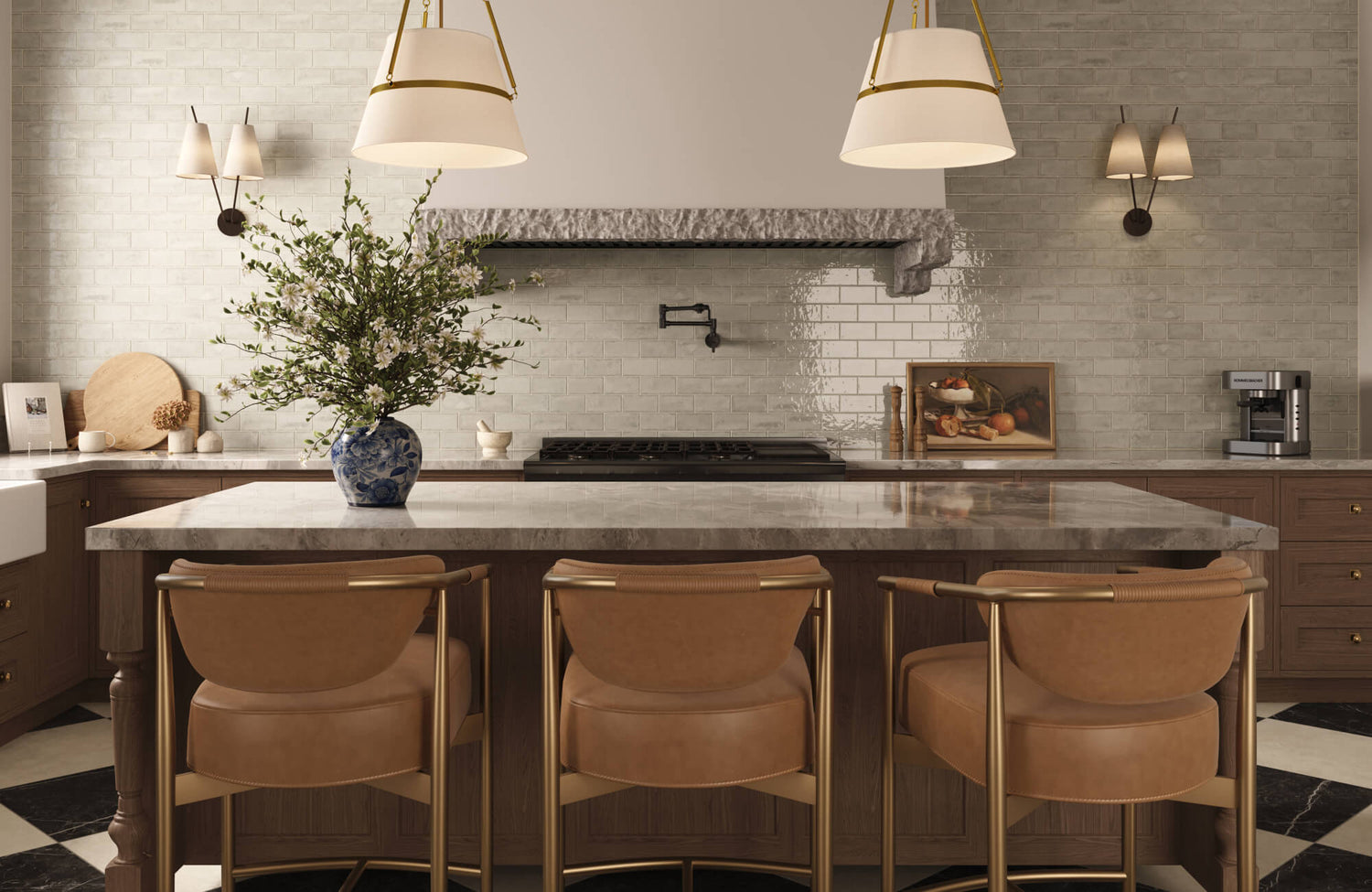
In the kitchen image shown above, thoughtful material and furniture choices reinforce this lifestyle-focused approach. The warm, natural look of our Jameson 8x48 Matte Porcelain Tile in Camel grounds the room with a golden brown finish that enhances both comfort and durability, making it ideal for busy zones around the island. The sleek and supportive Savannah Counter Stool in Black provides a comfortable seating zone that encourages conversation while complementing the island’s clean lines. Overhead, the sculptural Hailey 48" 4 Lights Linear Pendant in Aged Gold/Opal Matte Glass defines the workspace and adds a soft, ambient glow that makes the island feel even more inviting. Together, these elements create a cohesive environment where functionality and style work in harmony, supporting a kitchen island designed for real, everyday living.

Maximizing Space Planning Through Intelligent Layout Choices
Designing an effective kitchen island starts with understanding how it fits within the larger layout of your space. When the island is sized correctly and positioned with purpose, it becomes a natural extension of your workflow rather than an obstruction. This requires considering not just the dimensions of the room, but also how you move within it, from cooking and cleaning to entertaining and everyday living. With a layout shaped around comfort and flow, your island becomes both functional and harmonious, enhancing the overall experience of your kitchen.
A crucial part of this planning involves selecting the right proportions so the island supports your routine without overwhelming the room. Adequate clearance, ideally 42 to 48 inches around the island, allows you to open appliances, pivot between tasks, and move comfortably even when others are present. Additionally, the island’s depth and width should mirror its intended purpose, whether that includes seating, cooking appliances, or extended prep areas. When these dimensions are chosen strategically, the island feels proportional and balanced, creating a space that invites activity without creating clutter or congestion.
Equally important is how the island interacts with natural usage patterns. Your daily movement between the sink, stove, and refrigerator forms the backbone of your workflow, and the island should complement these routes rather than interrupt them. Thoughtful placement also ensures that tasks flow smoothly, and selecting the right island shape can amplify this effect. A narrow island keeps smaller kitchens feeling open, while an L-shaped or curved island gently guides guests toward social zones and away from active prep areas. By prioritizing circulation, your kitchen remains intuitive and enjoyable, with each pathway reinforcing a sense of ease and efficiency.

Designing Material Choices That Support Performance and Comfort
The materials you choose for and around your kitchen island play a major role in how well the space functions day to day. From the countertop you prep food on to the flooring you stand on while working, each surface should complement your habits, enhance comfort, and withstand the demands of an active kitchen. When these materials are selected with purpose, your island becomes more efficient, more enjoyable to use, and more cohesive within the room.
Countertops
Using multiple countertop materials is an effective way to give each part of your island a clear job. A butcher block section, for example, offers a naturally forgiving surface for chopping, slicing, and prepping ingredients. Its tactile warmth encourages hands-on tasks, while a nearby quartz or stone area withstands moisture, spills, and stains, making cleanup quicker and easier. As you move across the island, the change in material subtly cues you toward the most suitable zone for the task at hand.
Incorporating a marble slab for baking adds another layer of purpose. Its cool, smooth surface is ideal for rolling dough or tempering chocolate, and its sensory feel can inspire creativity during food preparation. These material transitions don’t just add visual interest. They also streamline your routine by aligning surface qualities with your workflow. When each zone is defined by its ideal material, your island becomes more intuitive, more organized, and far more efficient.
Tiles
Floor tiles surrounding your kitchen island can significantly influence both practicality and comfort. Porcelain tile is exceptionally durable and non-porous, making it an ideal choice for busy zones where spills, heat, or heavy usage are common. Its resistance to moisture and stains keeps the space hygienic, and its firm surface supports stability during tasks that require precision, such as chopping or kneading dough. This type of flooring can also strengthen the room’s visual identity by defining the island zone with texture, pattern, or color that complements your overall design.
Beyond style, tile impacts how you experience movement and maintenance in your kitchen. Some finishes provide more traction, which is especially useful near prep and sink areas, while larger format tiles help create a seamless, easy-to-clean surface. Options like our Brody 24x48 Matte Porcelain Tile in Dune, seen in the photo above, with its soft, warm beige tones, subtly elevate the space by adding warmth without overpowering the room. Because tile is long-lasting and low-maintenance, it ensures the flooring around your island remains functional and attractive even with daily use. When chosen intentionally, it enhances your workflow and reinforces the island as a hardworking centerpiece.
To help you visualize how different tile styles will look and feel in your actual space, you can explore our augmented reality (AR) tool, which allows you to view selected tiles directly in your space. This interactive experience takes the guesswork out of choosing materials by showing how colors, patterns, and finishes interact with your lighting and layout. With a clearer sense of how each option transforms the area around your island, you can make confident decisions that support both function and design.
Rugs
Although rugs are not part of the island’s structure, they play a meaningful role in shaping how you use the surrounding space. A well-placed rug can soften the feel of a tiled or hardwood floor, offering comfort during long stretches of cooking or cleanup. It also visually anchors the island, helping define its footprint within an open layout and creating a warm, welcoming transition between kitchen zones. This added softness encourages you to linger, whether you are preparing ingredients, hosting friends, or catching up on a task.
Additionally, rugs protect busy flooring from wear and spills, contributing to both longevity and cleanliness. A low-pile rug or runner works especially well in front of prep or sink zones, where traction and easy maintenance are essential. A style like our Hutchinson Polyester Face Rug in Sage / Graphite, with its sophisticated palette of olive green and earthy beige, with dark gray and golden yellow accents, can add a subtle layer of pattern and color, complementing the kitchen’s warm wood tones and soft neutrals while grounding the workspace with a touch of comfort. As shown in the same picture above, when paired strategically with durable flooring and functional countertop materials, rugs like this help create a balanced environment where your island supports comfort, efficiency, and visual harmony all at once.

Integrating Seating That Enhances Comfort, Social Flow, and Ergonomics
Seating at your kitchen island should offer more than a place to sit. It needs to support conversation, comfort, and accessibility so you can enjoy everything from casual breakfasts to lively gatherings. When planned intentionally, seating becomes an integral part of how the island functions and feels.
Match Seating Height to the Island’s Function
Choosing the right seating height begins with understanding how you intend to use your island. Counter-height stools at a 36-inch surface work beautifully for everyday meals, quick snacks, or moments when you need a comfortable spot to work or help a child with homework. The alignment with standard countertop height makes transitions feel seamless, allowing you to move easily between cooking and sitting. On the other hand, bar-height stools at a 42-inch surface create a more elevated, relaxed experience that suits social events, drink service, or evenings when friends gather around for conversation while you prepare food.
Comfort becomes even more important once you consider the details. Allowing 12 to 15 inches of knee space ensures people can sit naturally without feeling cramped, while at least 24 inches per stool gives everyone room to turn, shift, and engage comfortably. Selecting stools that combine ergonomic support with warm, inviting design also elevates your experience. A piece like our Genevieve Counter Stool in Light Oak, featured in the image above, works especially well in counter-height settings, offering a gently curved back, a light oak frame, and a woven seat that adds both comfort and softness to a straight-line seating arrangement.
Shape Seating Layout Around Conversation Patterns
The way your seating is arranged has a powerful effect on how people interact. Straight-line seating may work for quick meals or when space is limited, but it naturally positions everyone shoulder-to-shoulder, which limits the ability to maintain eye contact. If you want your island to encourage lingering conversation, transitioning to L-shaped, corner, or wrap-around seating creates a more inviting dynamic. These arrangements gently turn people toward one another, making conversations feel more natural and engaging.
Curved seating or seating that wraps around one end of the island further enhances the social experience. These shapes subtly guide guests away from busy prep zones and into areas designed for comfort and connection. Adding an angled stool setup or even a built-in bench also creates an atmosphere that feels intentional and welcoming, transforming the island into the social hub of your kitchen. With the right configuration, your seating encourages people to relax, stay longer, and enjoy not just the food, but the company.

Layering Lighting, Power, and Technology for a High-Functioning Island
Your kitchen island should support every activity, whether you are preparing a meal, enjoying a late-night snack, or hosting friends. Thoughtful lighting and discreet technology elevate both the function and feel of the island, allowing it to adapt seamlessly from task-oriented workspace to inviting social hub.
Layer Task, Ambient, and Accent Lighting
Lighting shapes how you experience your island at different moments throughout the day. Task lighting, such as pendants or well-placed recessed fixtures, provides the clarity you need for chopping vegetables, reading recipes, or finishing detailed prep work. These focused beams reduce shadows and help you work safely and confidently. Meanwhile, ambient lighting spreads a gentle, even glow across the entire room, ensuring the island feels integrated with the broader space rather than isolated under a spotlight.
Accent lighting adds another layer of depth and personality, creating a warm backdrop for gatherings or quiet evenings. Under-counter LEDs or toe-kick lights can draw attention to architectural features or provide subtle illumination during late-night visits to the kitchen. When these three types of lighting work together, your island becomes remarkably flexible. With a simple adjustment of brightness or color temperature, it can also shift from a practical workspace to a cozy gathering spot, matching your mood and the moment effortlessly.
A pendant like our Barnes 14" Pendant in Aged Antique Distressed Bronze, displayed in the photo above, can further enhance this balance by anchoring the visual rhythm above the island while echoing the room’s mix of textures and tones. Its aged antique bronze finish adds warmth that pairs beautifully with natural wood stools and muted cabinetry, while the domed shade softens the downward glow for inviting, task-friendly illumination. Incorporating lighting fixtures with this level of presence and practicality helps elevate both function and ambiance, turning your island into a focal point that feels cohesive, intentional, and full of character.
Integrate Power Access Discreetly and Safely
Power access is essential for modern living, but it doesn’t have to interrupt the clean lines of your island. Pop-up outlets or flush-mounted units can remain hidden until needed, offering easy access for small appliances, laptops, or phone chargers. Under-counter charging stations and discreet USB ports keep devices out of sight while still within reach, helping you maintain a clutter-free surface. Features like motion-activated toe-kick lights also add convenience and safety without drawing attention to themselves.
However, integrating power requires careful planning to ensure both safety and compliance. Outlets near sinks or cooktops must follow electrical code, and early placement decisions help you avoid expensive adjustments later. By thinking ahead, you create a kitchen island that feels polished, capable, and ready for anything, whether you’re blending smoothies, hosting guests, or catching up on a little work at the counter.
Designing a Kitchen Island That Evolves With You
Designing a multifunctional kitchen island ultimately comes down to creating a piece that supports your lifestyle with both intention and adaptability. By planning your layout thoughtfully, choosing materials that match your routine, incorporating versatile seating, and integrating intuitive lighting and technology, you shape an island that boosts efficiency while enhancing the character of your kitchen. As your needs shift over time, this well-designed centerpiece continues to evolve with you, becoming a place where cooking, gathering, and everyday living flow together in a way that feels effortless and uniquely yours.
To ensure your design aligns perfectly with your vision, you can also take advantage of our design services, where experts guide you through material selections such as tiles, rugs, stools, and lighting while offering personalized recommendations for your space. This added support helps refine your ideas and brings clarity to decisions that might otherwise feel overwhelming. With professional insight tailored to your lifestyle and layout, you can create a kitchen island that grows with you and feels beautifully considered from every angle.