At first glance, deciding how to place a rug might not seem like a big deal, but the direction you choose can also shape how a room feels and functions. Whether you're updating a single room or rethinking your entire home, the way you lay out your rug, horizontally or vertically, can subtly shape everything from the room’s flow to its overall feel. In this article, we’ll walk you through the practical, visual, and style-related factors to consider so you can make a choice that truly works for your space.

Start With the Room’s Proportions
A good place to start is by looking at the room itself. Before diving into furniture placement or color choices, take a moment to consider the space’s shape. The way the walls are arranged and how the floor is proportioned can also offer clear, natural clues for how your rug should be oriented.
Match the Dominant Length
When you step back and take in your space, does it naturally extend farther in one direction? If so, placing the rug horizontally along that longer axis can also help the room feel more balanced and visually connected. This approach enhances the room’s natural proportions and keeps the layout from feeling off-center. In a rectangular room, for instance, a horizontal rug placed parallel to the longer wall gives the space a sense of breathing room. It also works with the room’s architecture rather than against it, creating a gentle rhythm that feels effortless and cohesive.
Adjust for Irregular Shapes
Not every room fits neatly into a standard box. L-shaped layouts, angled corners, or open-concept spaces often require a different approach when it comes to placing a rug. In these cases, it’s helpful to think of the rug not as something that should follow every line of the room, but as a tool to ground the space. Rather than trying to mirror the architecture, focus on the area that gets the most use, like a seating group or conversation zone. By centering the rug in that functional area, you can create a sense of purpose and structure, even in rooms without clearly defined edges.
For example, in the layout above featuring Edward Martin’s Pascal Polyester Face Rug in Spice / Cobalt, it is placed horizontally to align with the longer dimension of the seating area. The open-plan room blends soft textures with distinctive architectural features, and rather than mimicking every wall or corner, the rug anchors the space with confidence. Its horizontal orientation also helps define the lounge zone, connecting the curved sectional, the round coffee table, and surrounding elements into one cohesive area. This setup demonstrates how the right rug direction, particularly in a room with an irregular layout, can bring clarity and structure while still preserving an open, airy feel.

Let Furniture Groupings Guide Rug Placement
After considering the shape and proportions of the room, the next step is to look at how your furniture is arranged. The way pieces are grouped does more than just occupy space; it also sets the tone for how the room works.
Living Room Zones
In most living rooms, the main sofa or sectional naturally becomes the visual anchor of the space. When the rug follows the same direction as this central piece, the entire arrangement tends to feel more unified. It frames the seating area in a way that brings everything together, from the coffee table to the surrounding chairs. Conversely, if the rug runs against the direction of the sofa, it can disrupt the sense of connection and make the room feel slightly unbalanced. Aligning the rug with the furniture not only ties the layout together visually but also improves how the space works, resulting in a setup that feels thoughtfully inviting.
Bedroom Layouts
In bedrooms, the bed naturally serves as the anchor of the space. That’s why it’s often recommended to place the rug vertically beneath it, running in the same direction as the bed and extending slightly beyond the foot and sides. This layout offers more than a soft surface underfoot; it visually grounds the bed and defines the overall structure of the room. It also provides warmth and comfort where it matters most, especially when getting in and out of bed. When aligned properly, the rug also complements the symmetry of nightstands and headboards, contributing to a restful and well-balanced atmosphere.
You can see this approach in action in the room above, where Edward Martin’s Rollins Polyester Pile Rug in Cream / Rust is laid out in a vertical orientation beneath the bed. Its placement enhances the room’s natural flow, while the subtle pattern and warm tones echo the textures of the wood beams and surrounding decor. The result is a space that feels both cozy and thoughtfully composed; proof that the right rug placement can elevate both comfort and design in a bedroom.

Account for Movement and Walkways
Once the furniture is in place, it’s just as important to consider how people move through the room. A well-placed rug should support that flow, guiding movement rather than disrupting it. The direction you choose can make all the difference; either reinforcing the room’s natural rhythm or creating obstacles that throw it off balance.
Maintain Clear Paths
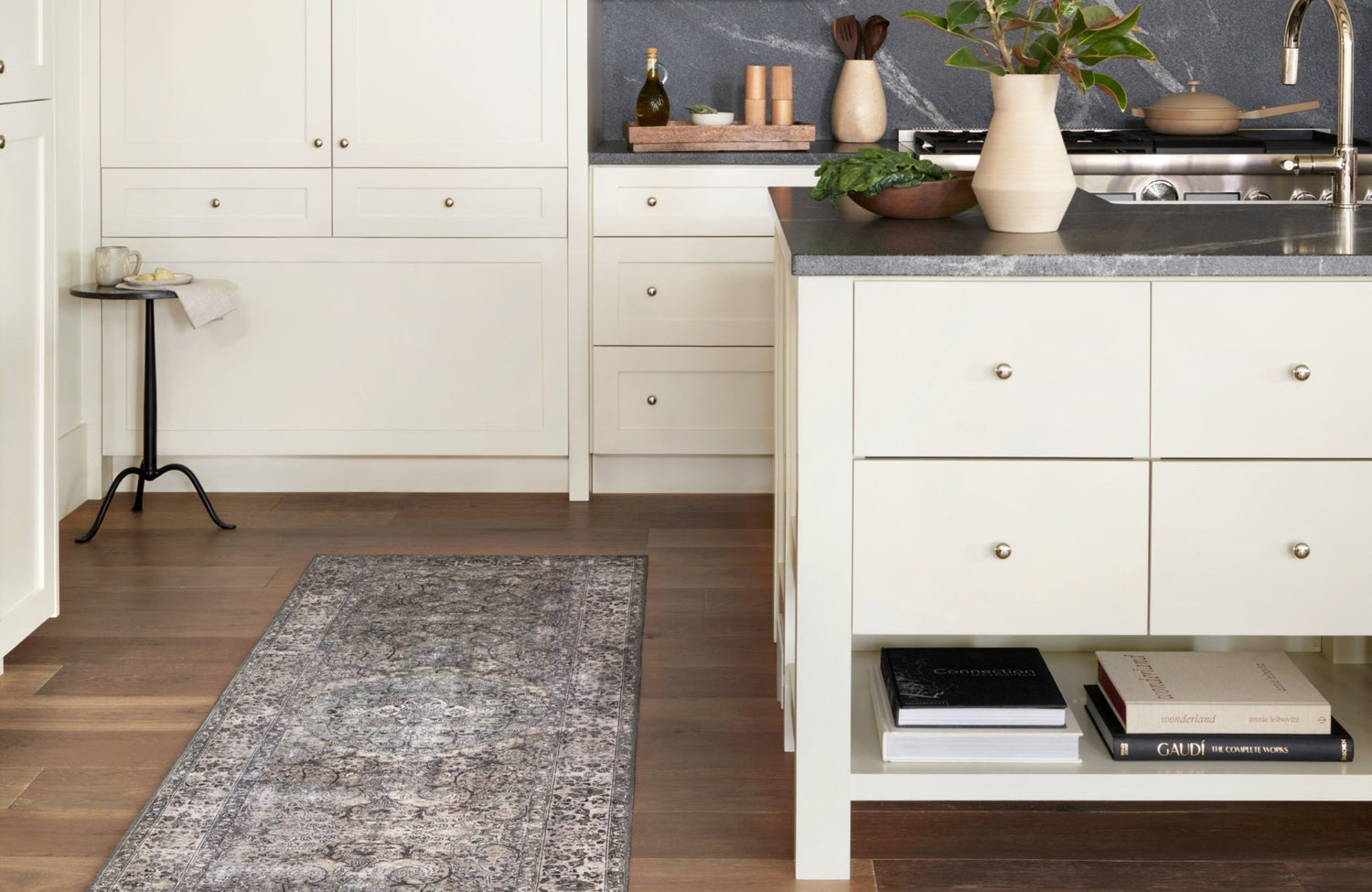
In areas where people move through often, such as hallways, entryways, or open-plan layouts, it’s equally important to let the rug support that natural movement. When the rug runs in the same direction as the main walkway, it helps the room feel more fluid and cohesive. This alignment acts almost like a visual guide, making the space easier to navigate and transitions feel more seamless. In contrast, placing the rug across the flow of movement can break that sense of continuity and leave the room feeling cramped or disjointed. Ultimately, the goal is to create a layout that feels open and intuitive from the moment you walk in.
This idea is beautifully demonstrated with Edward Martin’s Hutchinson Polyester Face Rug in Graphite / Olive, as displayed in the photo above. In this narrow, frequently used space, the rug is placed vertically, perfectly aligned with the room’s length. Its placement reinforces the natural direction of movement while adding warmth and texture without getting in the way. It’s a great example of how thoughtful rug orientation can blend form and function, making even a practical space feel polished and easy to use.
Work With Entry Points
When entering a room, the rug often sets the tone before anything else does. Its placement near doorways and transitions has a subtle but powerful effect on how the space feels at first glance. If the rug sits at an awkward angle or feels misaligned with the entry, the room can seem slightly off, even if everything else is well arranged. That’s why it’s important to let the rug guide you in, rather than interrupt your path.
Orienting the rug to lead from the doorway into the main area also helps create a smooth, welcoming transition. For instance, in a living room that opens directly from a hallway, placing the rug vertically from the entrance invites you in and gives the space a natural sense of direction. This approach doesn’t just improve flow; it also frames the area beyond the threshold, making the layout feel intentional from the moment you step inside.

Use Orientation to Influence Visual Experience
Aside from the layout and movement, the direction of your rug can also have a strong impact on how a room is perceived. It influences how we experience the space, what draws our attention, how large or small the room feels, and where the eye naturally travels.
Shape the Perception of Size
The way you position a rug can subtly influence how open a room feels. Placing a rug vertically tends to draw the eye forward, making the space feel longer; a useful trick in smaller or enclosed rooms. On the other hand, orienting the rug horizontally can visually widen a narrow space, giving it a more open and balanced feel. These small shifts in direction may seem minor, but they can also make even compact rooms feel noticeably more expansive and comfortable.
Emphasize Key Features
Sometimes the goal isn’t to alter the perceived size of a room; it’s to highlight what makes the space special. Whether it’s a fireplace, a striking window view, or a unique architectural detail, rug orientation can help draw attention exactly where you want it. By aligning the rug in a way that leads the eye toward a focal point, you can also reinforce its presence without overwhelming the space. It’s a subtle yet effective way to guide the room’s visual flow and tell a more intentional design story.
This concept comes to life in the layout above, where Edward Martin’s Micah Wool Blend Rug in Natural / Graphite is thoughtfully positioned horizontally, guiding the eye toward the fireplace. Its orientation, combined with the bold geometric pattern, draws attention to the center wall and subtly anchors the entire room around this key architectural element. Without the need for additional décor or visual clutter, the rug enhances the overall composition and brings quiet focus to the heart of the space.

Respond to Structural Features in the Room
Every room has fixed features, such as beams, columns, built-ins, or wall details, that shape how the space is experienced. Instead of working against them, let these architectural elements guide your rug placement. When you align your rug with the room’s structure, the layout feels more thoughtful, cohesive, and naturally balanced.
Echo Architectural Lines
When a room includes strong architectural features, such as exposed beams, long floorboards, or wide window walls, it often feels most natural to align the rug with those lines. These lines naturally guide the eye, and when the rug follows the same direction, the entire space feels more connected and intentional. Rather than drawing attention to itself, the rug quietly supports the room’s structure, helping everything feel calmer and more composed. This approach is particularly effective in rooms with clean layouts, where architectural features carry more visual weight.
This principle is reflected in the space above, where Edward Martin’s Georgette Polyester Pile Rug in Desert / Multi is thoughtfully aligned with the room’s key architectural lines. Running parallel to the built-ins, fireplace, and expansive window wall, the rug reinforces the room’s structure without drawing focus away from it. The result is a space that feels harmonious and well-composed, with the rug subtly supporting the design rather than competing with it.
Navigate Around Visual Obstacles
Most of us have dealt with design quirks, things like floor vents, radiators, or unusual corners that don’t quite cooperate with a perfect layout. While these features might not be ideal, the way you position your rug can help minimize their impact. A small shift in direction or placement can also draw attention away from those awkward spots and instead highlight the parts of the room you want to emphasize. Rather than trying to force a perfectly centered or symmetrical look, let the rug work with the room’s natural layout. The result often feels more effortless, balanced, and visually easy to live with.

Reinforce Style and Mood With Direction
In addition to structure and layout, the orientation of a rug can shape the overall mood of a room. Whether you're aiming for something calm and soothing or bold and energetic, the way the rug is positioned can subtly support and enhance that atmosphere.
Match Mood to Layout
When a rug runs horizontally, it often creates a sense of openness. This feels especially right in spaces that are meant to be inviting and laid-back, like casual family rooms or shared lounges. A vertical rug, in contrast, offers a more formal, directed feel. It’s a good fit in rooms where structure and symmetry are part of the overall look. Think of this as a subtle but effective way to shape the room’s energy without adding anything new.
Align With Design Aesthetic
Every design style has its own rhythm, and rug orientation can help reflect that. In modern or minimalist interiors, a horizontal rug layout often complements the clean lines and structured symmetry, reinforcing a sense of order and simplicity. On the other hand, if your style leans more eclectic or laid-back, a vertical orientation, or even a slightly angled placement, can also add a touch of movement and personality. The direction you choose should feel like a natural extension of your overall aesthetic, helping the space feel cohesive without feeling overly staged.
Choosing the Right Rug Direction for Your Space
Figuring out whether your rug should run horizontally or vertically isn’t just a question of fit; it’s also about how the room comes together. The shape of the space, how you move through it, the features you want to highlight, and the style you’re going for all influence what works best. When you take all of these factors into account, the right orientation often feels like the most natural choice. It’s less about following strict rules and more about creating a layout that feels balanced, comfortable, and right for the way you live.
If you're unsure where to begin or want a second opinion, we're here to help. Reach out to us anytime or explore our design services—we’d be happy to work with you to find a rug layout that suits your space beautifully!