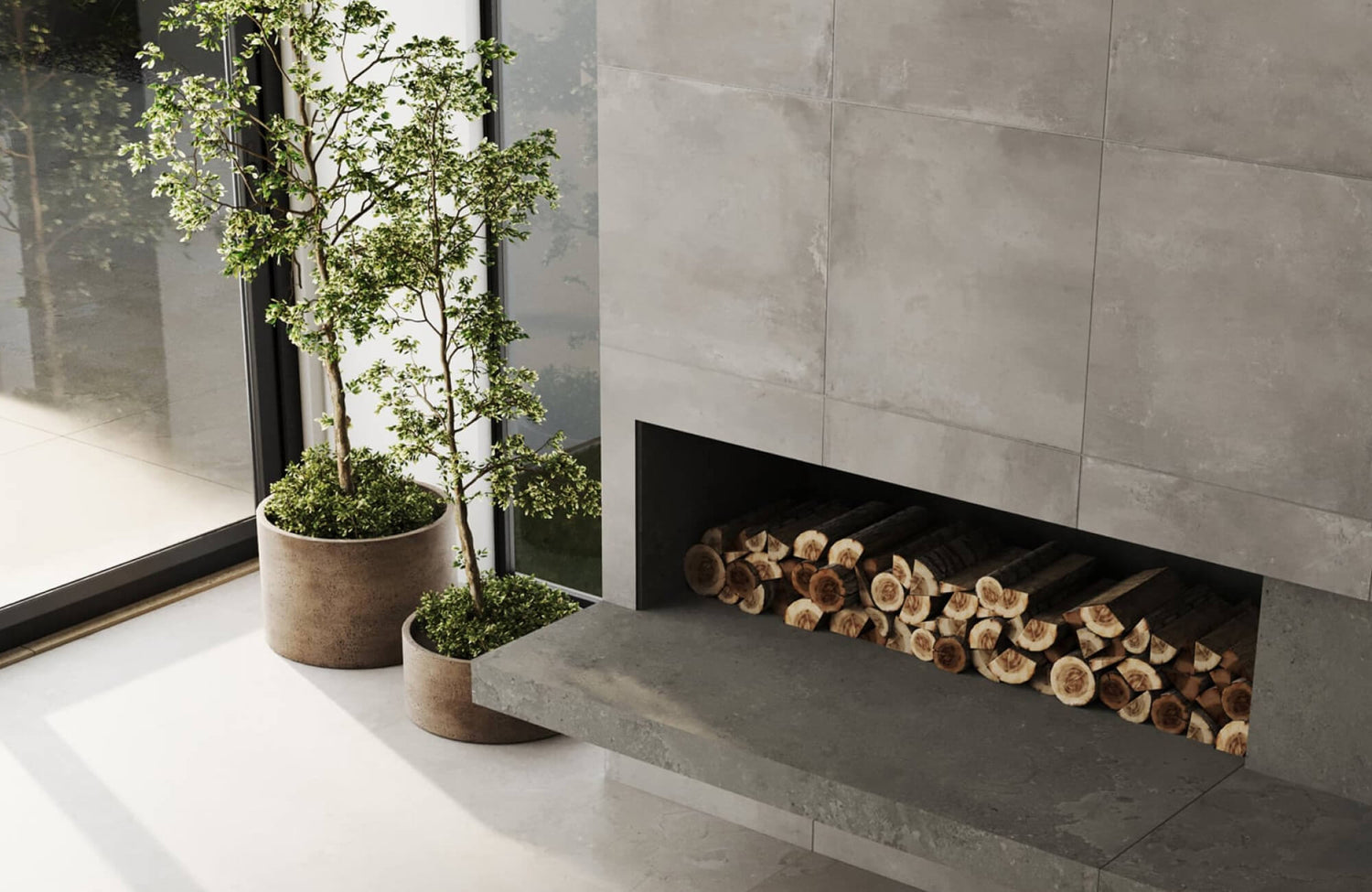
Choosing between matte and glossy fireplace tile is a common question, especially when both finishes can dramatically change how a fireplace looks and functions. The finish you select influences how the surface reflects light, responds to heat, and fits into your overall interior design.
In this article, we’ll walk you through how each finish influences light, heat performance, maintenance, and overall design, while also touching on alternatives such as stone-look tiles. By the end, you will have a clear sense of which option suits your space, your lifestyle, and the role you want your fireplace to play in the room.

Matte vs. Glossy Fireplace Tile at a Glance
Before exploring performance, style, or maintenance, it is helpful to understand how matte and glossy finishes behave on a fireplace surface. Each finish interacts differently with light and flame once installed, shaping both appearance and atmosphere. With a clear grasp of these basics, the decision process becomes more straightforward and confident.
What Matte Tile Brings to a Fireplace
Matte tile absorbs light rather than reflecting it, which subtly shapes how a fireplace is perceived within a room. As a result, attention shifts away from surface shine and toward texture, grout lines, and gentle color variation, allowing these details to define the overall look. This quality often gives the fireplace a grounded, visually calm presence, even when the fire is in use.
This effect is shown in the photo above, where Edward Martin’s Everett 2x10 Matte Ceramic Tile in Almond creates a cohesive and understated fireplace surface. Its soft matte finish complements warm wood beams, neutral furnishings, and built-in cabinetry, allowing the fireplace to feel settled within the space rather than visually dominant.
In addition, matte tile tends to appeal to those who prefer a fireplace that feels naturally integrated rather than positioned as a focal point. Because the surface does not compete with nearby materials, it supports the surrounding design and helps create a sense of balance that remains comfortable and easy to live with over time.
What Glossy Tile Adds Visually
Glossy tile reflects both natural and artificial light, giving it a distinctly different presence on a fireplace. The surface captures movement, including the flicker of flames, and reflects it into the room. As a result, the fireplace can feel more dynamic and visually engaging, even when the fire is low.
In many interiors, glossy finishes also make color appear deeper and more pronounced. This quality can shift the fireplace from a background feature to a visual focal point. It works especially well when the goal is to introduce energy or visual interest into an otherwise simple or restrained space.
How Finish Changes Overall Perception
The same tile color can appear very different depending on whether it has a matte or glossy finish. A soft gray in matte may feel warm and understated, while the same shade in gloss can read cooler and more pronounced. Finish influences not only brightness, but also how the space feels on an emotional level.
When considering this choice, it helps to connect the finish to the atmosphere you want to create. For a relaxed, settled environment, matte often supports that intention. If the space calls for contrast or visual impact, a glossy finish may better align with the mood you are aiming for.

How Finish Choice Impacts Heat and Performance
Aside from appearance, fireplace tile needs to handle heat safely and consistently. While finish does play a role, it often influences performance in more subtle ways than many people expect. Understanding how matte and glossy surfaces respond to heat allows you to make a confident, informed choice based on real performance rather than assumptions.
Heat Tolerance of Matte Tile
Matte tile often has a lightly textured surface, which can help soften the appearance of small changes over time. When exposed to prolonged heat, particularly near the firebox opening, this texture can make minor wear less noticeable. The glaze on matte tile is typically formulated to handle steady temperature changes without visible disruption.
This quality is illustrated in the photo featured above, where Edward Martin’s Brody 2x2 Matte Porcelain Mosaic Tile in Smoke creates a composed, resilient fireplace surround. Its subtly textured surface minimizes reflection around the firebox, allowing subtle tonal variation to remain consistent even with repeated heat exposure. Rather than highlighting wear, the matte finish helps the fireplace maintain a stable, uniform appearance.
There is also a visual aspect to how matte surfaces respond to heat. Because they do not reflect light, signs of thermal stress, such as faint marks or subtle color variation, are less likely to stand out. For fireplaces that see frequent use, this can make matte tile feel like a dependable, low-concern option.
Heat Response of Glossy Tile
Glossy tile is sometimes associated with heat concerns, yet modern glazes are engineered to perform reliably in fireplace settings. The distinction is less about durability and more about visibility. Glossy surfaces tend to reveal changes more easily, even when those changes are only cosmetic.
For that reason, placement becomes an important consideration. When glossy tile is used in areas properly rated for heat exposure, it remains stable over time. The shine does not make the tile more delicate, but it does make surface details more noticeable.
Placement Matters More Than Finish
Where the tile is installed often has a greater impact than whether it is matte or glossy. Tiles on the outer surround are exposed to different conditions than those closer to the firebox opening, and factors such as clearance zones, hearth extensions, and wall height all influence performance. When planning the layout, focus should be on pairing the right tile with the right location. With thoughtful placement and proper specifications, either finish can perform well and maintain its appearance over time.

Visual Style and Interior Design Compatibility
Once performance needs are addressed, style becomes a key consideration. Fireplace tile should feel intentional within the broader design of your home, not like an afterthought. The finish you choose plays a major role in how naturally the fireplace connects with the surrounding space.
Matte Tile in Modern and Rustic Spaces
Matte finishes pair naturally with modern and rustic interiors because they reinforce material authenticity and visual continuity. Concrete looks, stone textures, and muted tones tend to feel more cohesive without surface shine, allowing the fireplace to connect naturally with architectural elements and surrounding finishes. This makes matte tile especially effective in spaces where simplicity and material balance are central to the design.
That relationship is visible in the photo featured above, where Edward Martin’s Ramsey 24x24 Matte Porcelain Tile in Smoke helps the fireplace align with the room’s exposed wood beams, neutral palette, and clean-lined furnishings. Rather than competing for attention, the matte surface supports the overall composition, allowing the fireplace to feel like an intentional extension of the architecture.
In these settings, the fireplace often serves as a visual anchor that brings the room together. Matte tile enhances that role by emphasizing form and proportion, helping the fireplace blend seamlessly into the broader interior design rather than standing apart as a decorative accent.
Glossy Tile in Traditional and Decorative Designs
Glossy tile often feels well-suited to traditional or more decorative interiors. Its reflective surface emphasizes symmetry and draws attention to patterns and shapes. In rooms with detailed trim, classic furnishings, or layered finishes, gloss tends to add refinement without feeling excessive.
Glossy tile works particularly well when the fireplace is intended to stand out. The finish draws attention to craftsmanship and helps the space feel more refined and formal.
Using Finish to Balance the Room
Finish can also be used to bring balance to a room. In spaces with bold furniture or darker walls, a matte fireplace can help ground the design. By contrast, a glossy finish can add light and openness to a room that feels heavy or subdued.
Rather than choosing based on preference, it helps to consider what the room already offers. Often, the right finish complements what is missing rather than repeating what is already there.

Maintenance and Daily Practicality
Living with a fireplace also means managing ash, dust, and heat residue. The finish you choose directly affects how visible these elements are and how often cleaning feels necessary. While general care guidelines are helpful, it is always best to follow the manufacturer’s specific recommendations for cleaning, sealing, and maintenance to ensure long-term performance and appearance.
Cleaning Expectations for Matte Tile
In daily use, matte surfaces are typically forgiving to fingerprints and light dust. Since they do not reflect light, small marks are less noticeable, which makes routine upkeep feel more manageable. At the same time, textured finishes can collect fine soot if cleaning is delayed.
This can be seen in the photo featured above, where Edward Martin’s Wren 12x24 Chiseled Porcelain Tile in Dune demonstrates how a matte, stone-inspired surface maintains a consistent appearance around the fireplace. Its subtle texture adds visual depth while helping everyday residue blend in rather than stand out, reinforcing the practical benefits of a matte finish.
For this reason, regular, gentle cleaning is especially helpful around the firebox area. In addition, proper grout sealing helps maintain a consistent appearance over time, ensuring the tile continues to look composed with everyday use.
Glossy Tile and Visibility of Wear
Glossy tile tends to reveal more of what settles on its surface. Dust, streaks, and residue are easier to notice because light reflects off the finish. While this may lead to more frequent cleaning, the process is typically quick and straightforward.
For many, this tradeoff feels reasonable. A simple wipe can restore the shine, and the smooth surface does not trap debris the way textured finishes sometimes can.
Choosing Based on Lifestyle
How often the fireplace is used plays an important role in choosing the right finish. Homes with frequent fires, children, or pets may benefit from a surface that helps disguise minor marks. While in quieter households where the fireplace is mostly decorative, glossy tile can stay looking pristine with relatively little effort.
It helps to think realistically about how the space will be used day to day. A finish that aligns with your habits is more likely to feel right long after installation.

Lighting Conditions and Room Size Effects
Lighting has a strong influence on how fireplace tile looks and feels in a space. The same finish can look noticeably different depending on the room size and lighting conditions.
Matte Tile in Bright or Sunlit Rooms
In rooms with large windows or abundant daylight, matte finishes help reduce glare and visual strain. By absorbing excess light, the surface allows the fireplace to feel comfortable and balanced rather than overpowering. This becomes particularly important when the fireplace shares a wall with windows. In those settings, matte tile keeps the focus on warmth and texture and not on reflection.
This balance is clearly demonstrated in the photo featured above, where Edward Martin’s Chantel 24x48 Matte Porcelain Tile in Imperial helps the fireplace remain visually comfortable despite abundant natural light. The large-format matte surface absorbs daylight from the surrounding windows and skylight, preventing glare while allowing subtle stone-like variation to add depth. Rather than competing with the room’s brightness, the tile supports a calm, grounded focal point that feels well-suited to sunlit interiors.
Glossy Tile in Dim or Compact Spaces
Glossy finishes can help smaller or darker rooms feel more open. By reflecting available light, the tile adds brightness without relying on additional fixtures. This reflective quality can visually expand the area around the fireplace, making the room feel less enclosed. When used thoughtfully, glossy tile can make a fireplace feel lighter and more inviting, particularly in spaces with limited natural light.
Coordinating With Artificial Lighting
Artificial lighting interacts differently with each finish. Recessed lighting can emphasize texture on matte surfaces, while sconces and accent lighting tend to enhance the reflective qualities of glossy tile. Observing tile samples under your actual lighting conditions can be especially helpful, as it shows how the finish will behave throughout the day and into the evening.
Making the Final Choice With Confidence
Choosing between matte and glossy fireplace tile becomes much easier when you consider appearance, performance, and how the fireplace fits into daily life. Matte tile works well when the goal is a calm, cohesive look that blends into the room, particularly in spaces where texture, warmth, and subtlety matter more than visual impact. Glossy tile, on the other hand, is often the better choice when the fireplace is meant to stand out, as it enhances light, movement, and detail, adding energy and contrast to the space. To decide with confidence, it helps to test samples in your home, observe how they respond to lighting throughout the day, and think realistically about how often the fireplace will be used.
If you would like guidance tailored to your space, we are here to help. You can contact us to discuss your project or take advantage of our design services for personalized recommendations that ensure your fireplace feels considered, balanced, and well-suited to your home.