Why let a guest bathroom fade into the background when it can become one of the most memorable spaces in your home? With planning and smart design decisions, you can transform an overlooked guest bathroom into a polished retreat that feels both functional and welcoming.
Even with a smaller renovation budget than a primary bath, a spare bathroom offers plenty of opportunities to shine. By focusing on space efficiency, visual impact, and guest comfort, you can achieve impressive results without overextending costs. In this article, we’ve outlined 18 actionable, design-forward ideas to inspire a fresh and functional guest bathroom remodel.

1. Make the Most of a Small Space
One of the most effective ways to prevent a small bathroom from feeling cramped is to think vertically. Floor-to-ceiling shelving increases storage capacity without expanding the room’s footprint, keeping the space efficient and visually uncluttered. Mirrors also play a key role by reflecting light and visually expanding the space.
Compact fixtures and multifunctional pieces help tight layouts function more efficiently. For example, a modern vanity with built-in seating or storage increases usability without cluttering the room. Large-scale patterns, glass dividers, and pocket doors further enhance openness. These elements allow light to move freely and eliminate unnecessary visual barriers, helping the bathroom feel larger and more functional.

2. Install a Space-Saving Vanity - H2
Oversized vanities can overpower a guest bathroom, while wall-mounted designs can free up floor space and create a lighter, more open feel. Corner vanities offer another efficient solution by turning underused areas into functional storage.
Integrated vanities that combine the sink and storage into a single unit help streamline the layout and improve overall functionality. A good example of this approach can be seen in the photo featured above, where Edward Martin’s Abigail 36" Single Vanity in Light Natural Oak with a 3 cm White Zeus Quartz Top delivers ample storage within a compact footprint, maintaining visual balance without overwhelming the space.
Mirrored medicine cabinets further support this streamlined look by offering storage while visually expanding the room. In extremely tight spaces, pedestal sinks may also be a practical solution. When paired with floating shelves, they maintain a clean, minimalist feel while still preserving essential storage.

3. Brighten Up with Light Fixtures
Lighting is just as important in shaping how a bathroom looks and functions each day. Using a combination of task, ambient, and accent lighting helps create even, well-balanced illumination throughout the space.
LED lighting is commonly used because it is energy-efficient, long-lasting, and adaptable to different layouts. Wet-rated recessed lights are suitable for shower areas, while lighted mirrors provide consistent, natural-looking illumination for everyday tasks. To further refine the vanity zone, wall-mounted lighting—such as Edward Martin’s Leilani Wall Sconce in Patina Brass, shown in the photo featured above—adds focused light at eye level, helping to soften shadows and create a more even, comfortable glow that enhances both function and atmosphere.

4. Add Bold Patterns and Textures
Once the layout and lighting are in place, a guest bathroom becomes an ideal setting for bolder design choices. Patterned tile, textured surfaces, and high-contrast palettes introduce depth and visual interest without overwhelming the space. This approach allows the room to feel expressive while remaining cohesive and inviting.
That sense of impact is clear in the photo featured above, where Edward Martin’s Isabel 11x11 Matte Porcelain Tile Star in Charcoal and Cross in Rosewood brings graphic rhythm and visual movement to the floor. Its repeating star-and-cross pattern adds character underfoot while grounding the space with rich, muted tones. In other areas, wood-look tiles with raised patterns can introduce warmth and dimension, while classic black-and-white designs deliver contrast without relying on bold color. If a stronger statement is desired, moody wallpaper can instantly elevate the room’s style. When used thoughtfully, pattern and texture work together to transform a simple bathroom into a visually engaging, memorable space.

5. Upgrade Your Shower Experience
With the overall style taking shape, attention often shifts to the shower, which can set the tone for the entire bathroom. Frameless glass panels help to create a clean, modern look while also being easier to maintain than traditional enclosures.
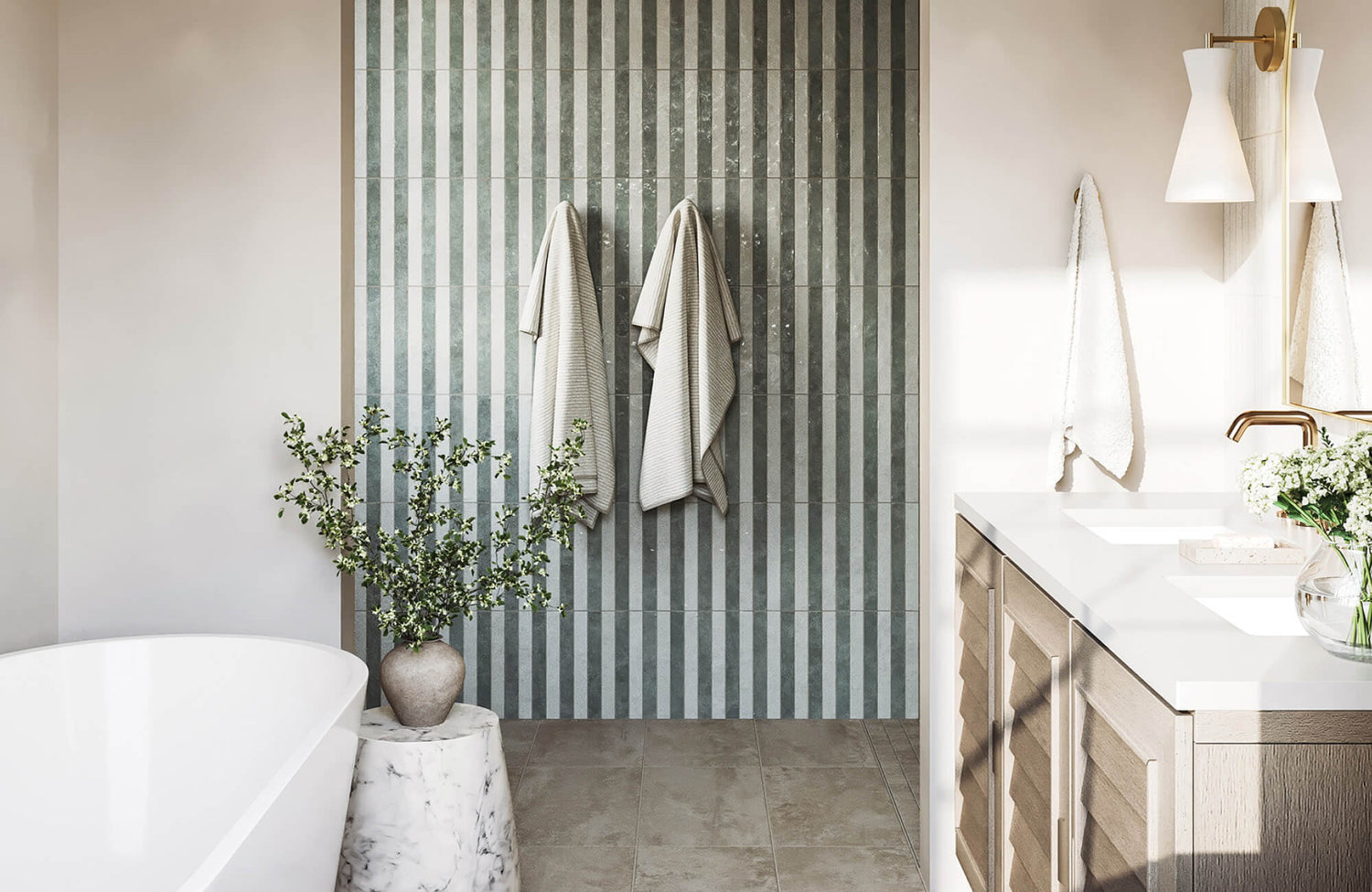
In addition, accent walls made from tile, wallpaper, or solid-surface materials introduce personality and create a clear focal point. Removing bulky shower doors further enhances visual flow, helping the space feel more open and spa-like.
To complete the experience, rain showerheads or multi-head systems add comfort and a subtle sense of luxury, while carrying the same tile from the bathroom floor into the shower helps unify the design and maintain visual continuity.

6. Consider a Freestanding Tub
Although often associated with primary bathrooms, freestanding tubs can bring an element of unexpected luxury to a guest bath when space permits. Their sculptural form naturally draws the eye, creating a focal point that elevates the overall experience. Soaking tubs designed for smaller footprints offer comfort without overwhelming the room. Whether the style leans modern or traditional, a freestanding tub adds visual interest and enhances guest comfort in a meaningful way.

7. Enhance with Fresh Flowers
Fresh flowers bring an immediate sense of life and warmth to a bathroom, and when arranged thoughtfully, they help create a calm, welcoming atmosphere that subtly enhances the guest experience.
Seasonal blooms keep the space feeling fresh and current, while simple white or cool-toned flowers support a serene, understated aesthetic. Even a small arrangement or a few garden clippings can also make a noticeable visual impact. Changing the water regularly helps keep the display looking fresh and inviting.

8. Use Open Shelving
Open shelving works especially well in guest bathrooms, where ease of access and simplicity are key. It allows guests to quickly find towels and everyday essentials without having to search through drawers or cabinets.
Floating or built-in shelves help minimize visual clutter while still providing useful storage and adding subtle design interest. Wicker baskets or similar organizers keep items neatly contained and visually cohesive.
When used thoughtfully, open shelving strikes a balance between practicality and style, enhancing both function and appearance.

9. Create Hidden Storage Solutions
While open shelving is ideal for items guests need to access easily, concealed storage still plays an equally important role in keeping the space organized. Cleaning supplies, extra toiletries, and backups are best tucked away out of sight.
Push-to-open cabinetry helps maintain a clean, streamlined appearance, while pull-out or fold-down shelves add flexibility and function without disrupting the design. Thoughtfully planned hidden storage keeps the bathroom tidy, uncluttered, and guest-ready at all times.

10. Install Privacy Features
Natural light is an important asset in a bathroom, but privacy should never be overlooked. Frosted window films allow daylight to enter while obscuring views, and smart glass provides privacy when needed. Roller shades and curtains offer classic, adjustable solutions that work across a range of styles.
Transom windows can help maximize light while maintaining privacy at eye level. Tall plants placed near windows can also act as natural visual barriers, adding greenery at the same time. Together, these options maintain comfort and privacy without sacrificing brightness.

11. Opt for Durable Flooring
Bathroom flooring must withstand moisture, daily use, and changing conditions. Porcelain tile remains a reliable choice because it is non-porous, making it resistant to heat, moisture, and scratches, and well-suited for long-term use. In shower and wet areas, mosaics with a matte or lightly textured finish are especially effective, as they provide added grip and improve safety underfoot.
This approach is illustrated in the photo displayed above, where Edward Martin’s Astrid 2x2 Matte Porcelain Mosaic Tile in Pearl is used on the shower floor. Its small-format design and subtle texture enhance traction while maintaining a clean, cohesive look that complements the surrounding tilework.
Luxury vinyl tile has become popular for its comfort and design versatility; however, it can be more susceptible to dents from heavy objects and may not provide the same long-term durability as tile. In lower-moisture spaces like powder rooms, extending hardwood flooring can visually connect the bathroom to nearby areas; however, it does require proper sealing and regular maintenance because it’s sensitive to humidity and water.
By considering both the advantages and limitations of each material, you can select flooring that performs reliably while supporting the way the space is used.

12. Update Cabinet Pulls and Fixtures
Small changes can make a noticeable difference, and updating cabinet hardware is one of the most cost-effective ways to refresh a bathroom. Swapping out dated pulls and fixtures can quickly bring the space up to date.
Modern finishes such as matte black or polished chrome add a clean, contemporary feel, while distinctive shapes or textured designs introduce subtle focal points. When done with intention, mixing hardware styles can add character without feeling disjointed.
Proportion is key—select pull sizes that align with the scale of cabinet doors and drawers to maintain a balanced, cohesive look.

13. Add a Statement Mirror
A statement mirror plays an equally important role in both the function and visual balance of a guest bathroom. Oversized or sculptural mirrors reflect light throughout the space, helping the room feel brighter, more open, and visually larger. They also anchor the vanity area, creating a clear focal point that brings structure to the overall layout.
This effect is illustrated by Edward Martin’s Shirley Small Mirror in Antique Brass Iron, as shown in the photo featured above. Its distinctive shape and warm metal finish add character while remaining versatile enough to complement both modern and transitional designs. Whether framed simply or designed with more detail, a thoughtfully chosen mirror elevates the space and reinforces a sense of intention in the bathroom design.

14. Utilize Vertical Space
When planning a guest bathroom, it’s helpful to look beyond the floor plan and make the most of vertical space. Tall cabinets, linen towers, and over-the-toilet storage add storage while keeping valuable floor space clear.
Hooks, rails, and over-the-door organizers keep towels and accessories within easy reach while helping to clear countertop space. These solutions are especially effective in compact layouts, where efficient storage is key. With thoughtful vertical planning, every part of the bathroom works more efficiently.

15. Install a Pocket or Sliding Door
Pocket and sliding doors are highly effective space-saving solutions, especially in smaller guest bathrooms. By eliminating the need for door swing clearance, they free up usable space and allow for more flexible layouts, improving overall flow and functionality.
These doors can also contribute to a cleaner, more streamlined look, blending easily with a range of design styles from modern to transitional. However, performance matters as much as appearance. High-quality hardware is essential to ensure the door operates smoothly and feels secure. Quality tracks, handles, and locking mechanisms help the door slide smoothly, stay aligned, and continue working reliably over time.

16. Make It Accessible
Accessibility is best addressed early in the design process, rather than treated as an afterthought. Planning for accessibility from the start is not only more cost-effective than retrofitting later, but it also results in a bathroom that feels more comfortable and user-friendly for everyone.
Simple additions such as grab bars, non-slip mats, and slip-resistant flooring can significantly improve safety without compromising aesthetics. Wider doorways, built-in shower seating, rounded countertop edges, and ADA-compliant clearances further support ease of movement and long-term usability. Designing with inclusivity in mind creates a bathroom that adapts to changing needs and remains functional for guests of all ages and abilities.

17. Illuminate with a Lighted Mirror
Lighted mirrors improve visibility by reducing shadows and providing clear, even illumination for grooming and daily routines. LED lighting closely resembles natural daylight, offering consistent brightness that supports accuracy and comfort.
Smart mirror designs further enhance this functionality. A thoughtfully designed option, such as our Jenny 37" LED Vanity Mirror in White, combines built-in anti-fog technology with an integrated LED system encased in a white acrylic diffuser. This construction delivers soft, evenly distributed light while maintaining a clean, modern appearance that feels effortless rather than technical.
Many lighted mirrors also feature adjustable brightness, allowing the lighting to adapt to different times of day and personal preferences. Selecting the right size helps reflect light more effectively and can make smaller bathrooms feel more open. By blending advanced features with a streamlined design, lighted mirrors add both practical benefits and refined visual appeal to a guest bathroom.

18. Add Thoughtful Décor Accents
While bathrooms are best kept simple, a few well-chosen décor accents can add warmth and personality without overwhelming the space. Wall art introduces character, and gallery-style arrangements create visual interest when they feel balanced and intentional.
Decorative lighting can also function as an accent element, layering warmth into the design while enhancing everyday usability. A refined bath light, such as Edward Martin’s Rue Bath and Vanity Light in Aged Brass, brings a soft glow and sculptural presence that complements surrounding finishes, as seen in the photo featured above. Paired placements help frame the vanity area and contribute to a cohesive, well-considered look.
Plants further soften the space by introducing a natural element and subtle movement. When décor, lighting, and accessories are selected with restraint and purpose, they enhance comfort and style without visual clutter. These thoughtful finishing touches help complete a guest bathroom that feels polished, welcoming, and memorable.
Creating a Guest-Ready Bathroom That Feels Complete
Must-try spare bathroom remodel ideas go beyond surface updates and focus on how the space is used and experienced. By prioritizing smart layouts, durable materials, and practical details—from storage and lighting to privacy and accessibility—you can create a guest bathroom that feels comfortable, cohesive, and welcoming, leaving a positive and lasting impression.
If you’re ready to take the next step, our design services can help bring these ideas together into a plan that fits your space, style, and budget. Contact us to get started and turn your spare bathroom into a thoughtfully designed, guest-ready retreat.

FAQs
Still have questions? These frequently asked questions provide practical details and design considerations that often come up when remodeling a guest bathroom, offering added clarity beyond the ideas shared above.
1. How do I choose finishes that appeal to a wide range of guests?
Neutral color palettes, timeless materials, and clean, simple silhouettes may appeal to a wide range of guests. Layering subtle texture instead of bold color helps the space feel inviting without being polarizing.
2. What upgrades provide the best return on investment for a guest bathroom remodel?
High-impact upgrades, such as updated lighting, modern fixtures, quality tile, and improved storage, often deliver strong visual returns without requiring major layout changes or high costs.
3. How can I make a guest bathroom feel more luxurious without a full remodel?
Small enhancements, such as plush towels, coordinated accessories, upgraded faucets, and thoughtful lighting, can significantly elevate the experience without structural changes.
4. Should a guest bathroom match the rest of the home’s design style?
While it doesn’t need to be identical, maintaining a visual connection through color tones, materials, or finishes helps the guest bathroom feel intentional and cohesive with the rest of the home.
5. How do I future-proof a guest bathroom remodel?
Choosing durable materials, timeless finishes, and flexible layouts helps ensure the space remains functional and stylish over time. Incorporating subtle accessibility features early can also extend long-term usability.