Modern bathroom vanity styles are no longer designed solely to support a sink; they now play a central role in how bathrooms function, feel, and visually connect to surrounding finishes. As bathrooms become more design-driven, vanities must balance storage capacity, moisture resistance, and spatial efficiency without overwhelming the room. This balance is especially important in contemporary spaces where clean lines, integrated materials, and thoughtful layouts define the overall aesthetic. Storage is also expected to be intuitive, accessible, and discreetly concealed, while the vanity itself contributes to the room’s architectural character.
The sections below explore how different modern vanity styles achieve this balance through structure, materials, and layout strategies that support both performance and visual harmony.

Floating Bathroom Vanities That Enhance Space And Storage Efficiency
Floating bathroom vanities are defined by wall-mounted construction that eliminates floor contact, creating a lighter visual profile while maintaining full storage functionality. By anchoring directly into wall framing, these vanities support deep drawer configurations without relying on bulky bases, which helps preserve a clean, modern appearance. The open floor area beneath the vanity also enhances spatial flow and allows flooring materials to remain uninterrupted, reinforcing a streamlined bathroom design.
From a functional standpoint, floating vanities, such as Edward Martin’s Royce 48" Single Vanity in Chestnut with 3 cm White Zeus Quartz Top, as displayed in the picture above, often incorporate full-extension drawers and concealed storage compartments that maximize internal volume. The absence of a traditional toe-kick allows designers to allocate more vertical space to drawers, improving organization for everyday essentials. This also makes floating vanities particularly effective for modern bathrooms where efficient storage must coexist with minimal visual weight.
In addition, floating installations support long-term durability in moisture-prone environments by reducing exposure to standing water and cleaning residue near the cabinet base. With proper wall support and sealed finishes, these vanities perform reliably in both compact bathrooms and expansive primary suites. Their adaptability makes them a strong choice for modern bathroom vanity designs focused on spatial clarity and storage efficiency.

Modular Vanity Systems Designed For Flexible Storage Layouts
Modular bathroom vanity systems are built around interchangeable components that allow storage to be tailored to the size and function of the space. Instead of relying on a single cabinet, modular designs combine sink bases, drawer stacks, and supplemental storage units into a unified layout. This approach also provides greater control over proportions while maintaining a cohesive finish and consistent design language.
Storage efficiency is a defining benefit of modular systems, as individual components can be assigned specific roles within the vanity layout. Shallow drawers support daily-use items, while deeper drawers and vertical cabinets accommodate towels, supplies, and backup storage. This separation also improves organization and helps maintain uncluttered countertops, which is essential in modern bathroom design.
Moreover, modular vanities integrate smoothly into bathrooms with layout constraints such as narrow walls or irregular dimensions. Because the system adapts to available space, it supports both small bathroom remodels and larger installations without compromising storage capacity. This flexibility makes modular vanity systems well-suited for contemporary bathrooms that prioritize customized storage solutions.

Material Selection That Supports Storage Durability And Modern Design
Material selection plays a critical role in how well a bathroom vanity performs in environments exposed to humidity and frequent use. Modern vanities often utilize engineered wood cores, moisture-resistant panels, or sealed composite materials that resist swelling and structural degradation. These substrates also support precise construction while allowing for modern finishes such as matte laminates, textured veneers, and low-sheen lacquer.
Internal construction details further influence storage performance, particularly drawer box materials, joinery methods, and hardware quality. For instance, durable drawer assemblies and stable cabinet structures support heavier storage loads while maintaining alignment over time. These technical considerations ensure storage remains functional without compromising the clean lines associated with modern vanity design.
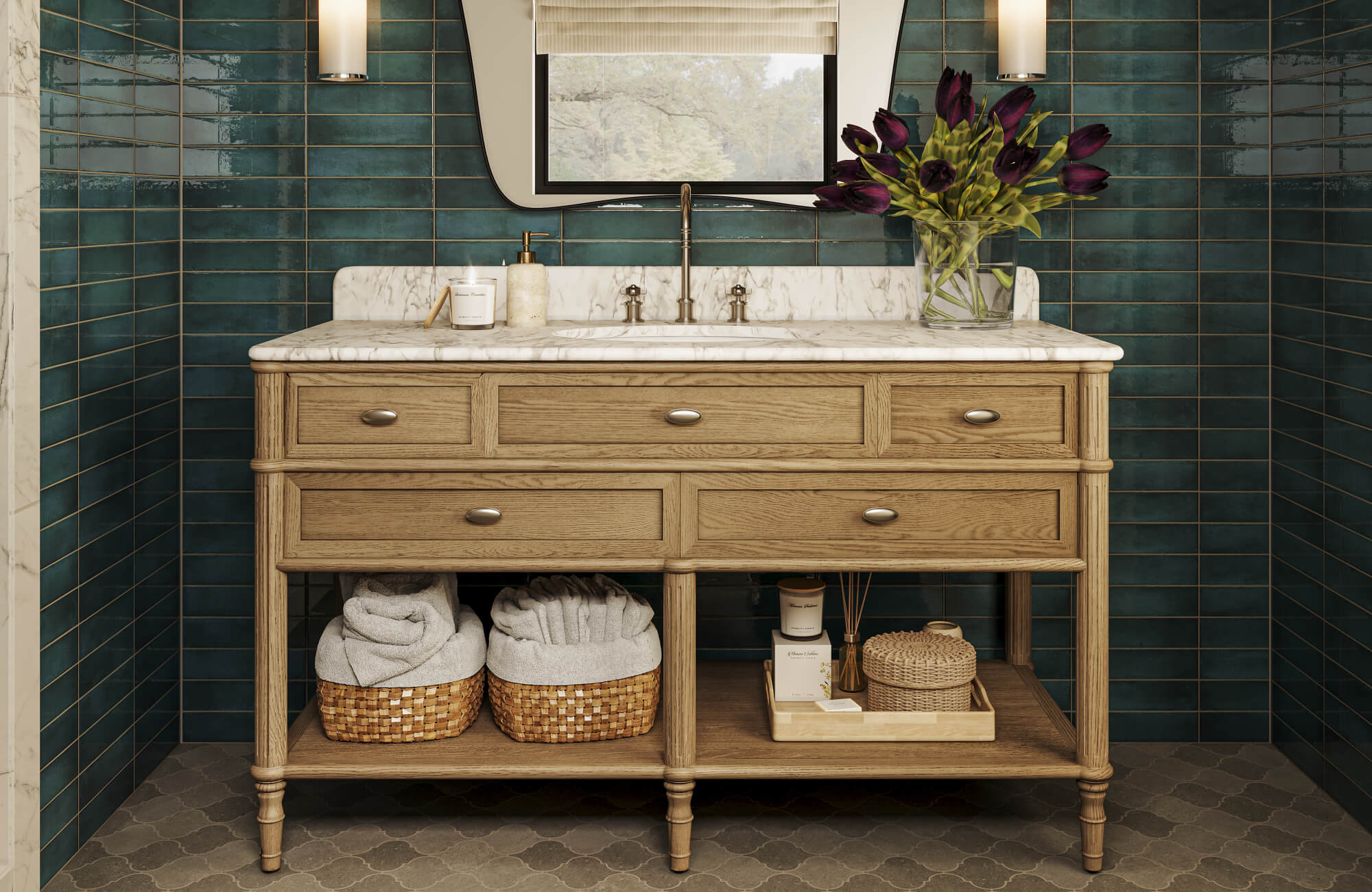
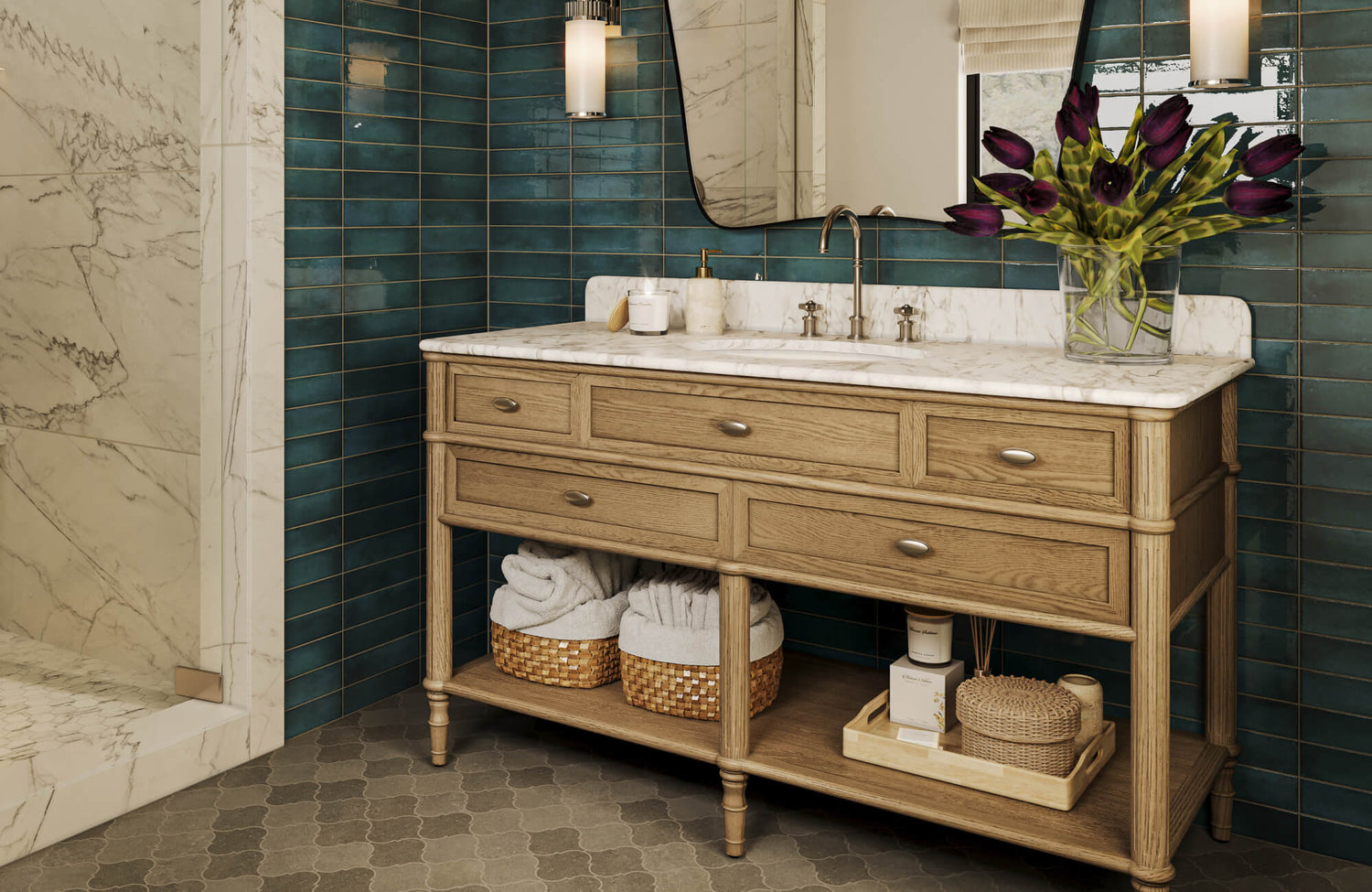
A refined example of this approach is the Abigail 72" Double Vanity in Light Natural Oak with 3 cm White Zeus Quartz Top, which pairs durable construction with a warm, understated aesthetic. As shown in the photo above, its cathedral ash veneers are finished to resist moisture and UV exposure, while soft-close undermount drawers, brushed aluminum laminate drawer bottoms, and adjustable internal shelving enhance long-term storage performance. Thoughtful details such as internal drawers, removable organizers, and integrated power access also demonstrate how material selection and interior engineering work together to support everyday use in larger bathrooms.
Material choices further affect how the vanity visually integrates with surrounding surfaces, including wall finishes and flooring. In addition, subtle textures and controlled color variation help maintain visual balance while minimizing signs of wear. When durability and aesthetics are addressed together, modern bathroom vanities achieve lasting storage performance with refined design appeal.

Integrated Sink And Countertop Designs That Maximize Usable Storage
The configuration of the sink and countertop directly impacts how much usable storage a vanity can provide. Integrated sink designs and undermount installations create uninterrupted countertop surfaces while reducing obstructions inside the cabinet. This also allows storage components to be designed around function rather than compromised by bulky sink hardware.
Modern vanity layouts often adjust drain placement and basin depth to improve drawer clearance beneath the sink. By minimizing the space required for plumbing, designers can introduce full-width drawers instead of false fronts, significantly increasing storage capacity. This approach improves organization without altering the vanity’s exterior appearance.
Countertop thickness and edge detailing play an important role in shaping both cabinet proportions and internal dimensions, while slim-profile surfaces support a modern aesthetic without sacrificing valuable interior storage. When the sink, countertop, and cabinetry are planned as a single system, the vanity delivers efficient organization along with a clean, cohesive look.

Furniture-Inspired Vanities That Combine Visual Warmth With Practical Storage
Furniture-inspired modern bathroom vanities blend residential design elements with the durability required for bathroom environments, using framed details, subtle profiles, and elevated bases to introduce visual warmth without sacrificing storage functionality. Often serving as focal points, these pieces add character while still supporting everyday use. Storage is also typically layered to accommodate different organizational needs, with shallow drawers keeping daily essentials within easy reach and deeper compartments handling towels and bulk items. This tiered approach streamlines routines while maintaining balanced proportions.
Despite their decorative influence, furniture-inspired vanities are engineered with sealed finishes and moisture-tolerant construction. Their ability to merge functional storage with a refined design language also makes them ideal for modern bathrooms seeking a balance between contemporary structure and inviting aesthetics.
A well-balanced example of this approach, as displayed in the picture above, is our Elodie 60" Double Vanity in Mid-Century Walnut with 3 cm White Zeus Quartz Top, which blends classic furniture detailing with functional storage planning. Its framed drawer and door fronts, dark brown finish, and tapered legs give it the presence of a standalone furniture piece, while the double-sink configuration supports shared daily use. Beneath the surface, a mix of drawers and enclosed cabinetry also provides structured storage that keeps essentials organized without detracting from the vanity’s refined, mid-century aesthetic.

Ergonomic Vanity Proportions That Improve Storage Accessibility
Ergonomic planning plays a critical role in how effectively a bathroom vanity supports everyday use and long-term storage needs, particularly in shared spaces. As featured in the photo above, the Demi 72" Double Vanity in Mid-Century Walnut with 3 cm White Zeus Quartz Top reflects this approach through its expansive width and balanced proportions, which allow two users to operate comfortably without crowding. Its standardized vanity height, combined with a raised, furniture-style base, also helps reduce bending during daily routines, supporting better posture while keeping the sink and countertop within a natural reach zone. These dimensional choices improve both comfort and the frequency with which storage areas are used effectively.
Depth is equally important in ergonomic vanity design, especially when increased width introduces more storage opportunities, and this Demi 72" vanity maintains a proportioned cabinet depth that maximizes internal storage without pushing items beyond comfortable reach. Its drawer-forward configuration, supported by soft-close undermount slides, also allows users to access contents fully without digging into deep cabinet cavities. This approach prevents back-of-cabinet storage from becoming underutilized while preserving clear circulation space in larger bathrooms.
In addition, ergonomic storage design considers how multiple users interact with the vanity simultaneously. With clearly defined drawer banks and sink zones, this Demi 72" Double Vanity minimizes overlap between users, allowing each person to access their own storage and fixtures smoothly. Thoughtful handle placement and consistent drawer alignment also support intuitive use, while the wide countertop provides adequate separation between sinks. By aligning storage access with natural movement patterns and shared-use behavior, this vanity reinforces the balance between user comfort, organized storage, and cohesive visual order.
Designing For Lasting Function And Visual Balance
Modern bathroom vanity styles that balance storage and design succeed when structure, materials, and layout are considered as a unified system. Floating, modular, integrated, and furniture-inspired vanities each offer distinct advantages that respond to different spatial and organizational needs. When vanities are selected with both storage performance and visual harmony in mind, they also support daily functionality without disrupting the overall bathroom design. This balance is what defines truly effective modern bathroom vanities in both residential renovations and new construction.
To achieve this level of balance, Edward Martin’s design services provide tailored guidance that aligns vanity selection with layout, materials, and long-term performance goals. Contact us to explore personalized solutions that bring functional clarity and refined visual balance to your bathroom design!