
)
)
)
)
)
)
)
)
Bathroom Design Trends To Consider Before Remodeling In 2026
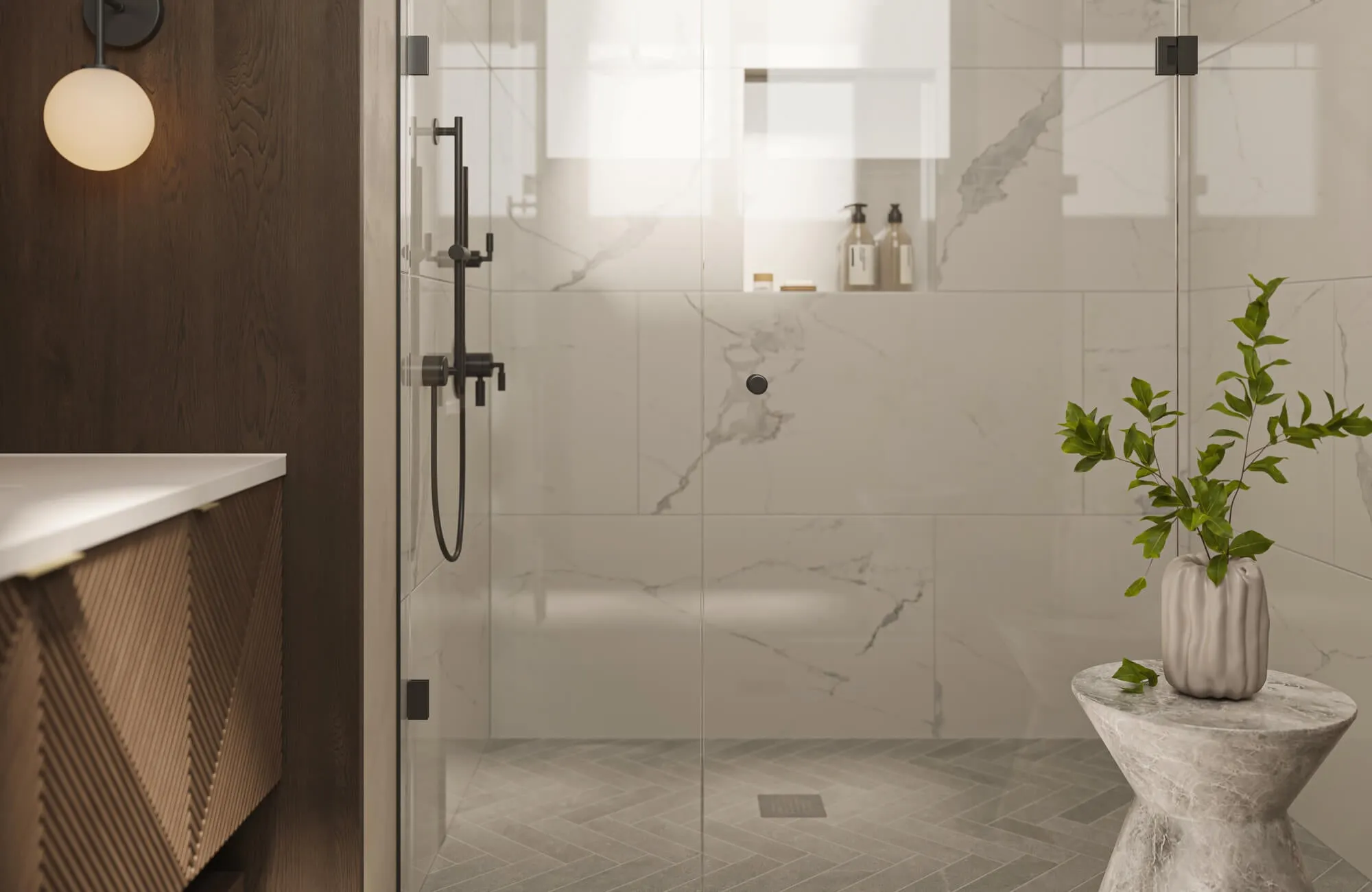
Bathroom design trends for 2026 reflect a quiet sophistication, where thoughtful craftsmanship, advanced technology, and purposeful materials come together in harmonious balance. Today’s bathrooms are no longer treated as purely functional spaces, but as carefully curated environments shaped by wellness, sustainability, and intelligent design. From spa-inspired layouts and layered lighting to high-performance tile and adaptive planning, each element contributes to a space that feels both refined and enduring. Subtle textures, warm color palettes, and integrated systems also elevate daily routines without visual excess.
Modern bathroom remodeling in 2026 emphasizes longevity, efficiency, and sensory comfort over fleeting trends. By understanding these emerging bathroom design trends before remodeling, homeowners can create spaces that feel timeless, personal, and future-ready.
Wellness-Oriented Bathroom Design Anchored in Performance
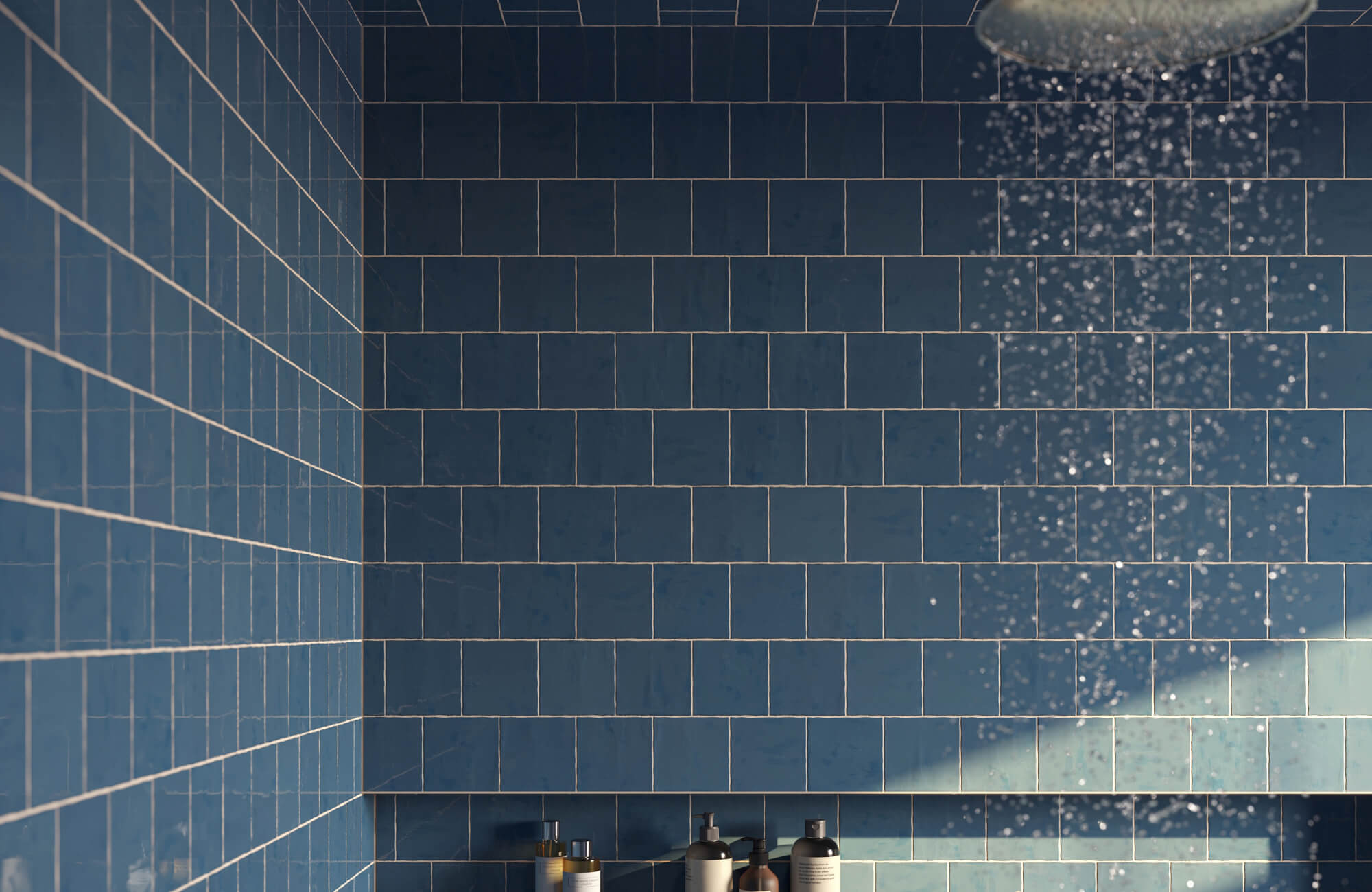
Bathrooms in 2026 are increasingly shaped by a wellness-driven philosophy that prioritizes comfort, safety, and sensory balance. Rather than relying solely on decorative cues, design decisions are informed by ergonomics, environmental control, and long-term usability.
Hydrotherapy-Focused Shower and Bathing Systems
Hydrotherapy has become a defining element of wellness-centered bathroom remodeling for 2026, driven by advancements in plumbing and fixture engineering. Thermostatic mixing valves are now standard, maintaining precise water temperatures while preventing sudden fluctuations that can occur with simultaneous water use. Multi-outlet shower systems also combine rainfall heads, body sprays, and handheld components to deliver customizable bathing experiences that promote circulation and relaxation. Moreover, freestanding soaking tubs are designed with deeper basins and ergonomic backrests, allowing full immersion without excessive water consumption. Integrated overflow controls and improved heat-retention materials extend comfort during longer soaks. Together, these features reflect spa-inspired bathroom design trends rooted in both luxury and efficiency.
Thermal Comfort Through Radiant Heating and Climate Control
Thermal comfort plays a subtle yet essential role in how a bathroom performs throughout the day. For instance, electric radiant floor heating systems installed beneath porcelain tile provide even warmth while eliminating cold surfaces underfoot. By maintaining surface temperatures above ambient dew points, radiant heat also helps reduce condensation and lingering moisture. Additionally, programmable thermostats allow zoning control, ensuring energy is used only when the space is occupied. When paired with proper insulation and vapor management, these systems support healthier indoor air quality. This approach aligns with wellness-focused bathroom remodeling strategies for modern homes.
Safety-Driven Design and Ergonomic Planning
Safety is seamlessly integrated into contemporary wellness bathrooms without compromising visual appeal. With this, flooring materials are selected based on certified Dynamic Coefficient of Friction (DCOF) ratings to ensure slip resistance in wet areas. Matte finish porcelain tiles are favored for their tactile grip and reduced glare, enhancing both comfort and visibility. Built-in shower benches and ledges are also ergonomically positioned to support extended use. Moreover, structural wall blocking is often installed during remodeling to accommodate future grab bars discreetly. These considerations support aging-in-place bathroom design while maintaining a refined aesthetic.
Sustainable Materials and Water-Efficient Bathroom Systems
Sustainability has become a foundational principle in bathroom remodeling for 2026, influencing both material selection and mechanical systems. The emphasis is on long-lasting performance, reduced environmental impact, and healthier interior spaces.
High-Performance Porcelain and Engineered Surface Materials
Porcelain tile continues to lead sustainable bathroom design due to its durability and low porosity. With water absorption rates below 0.5 percent, porcelain resists moisture infiltration, staining, and structural degradation, making it especially well-suited for high-humidity environments. Advanced digital printing technology also allows porcelain to replicate natural stone with remarkable realism, delivering the visual depth of marble without the ongoing maintenance demands. Large format porcelain tiles further reduce grout lines, supporting both hygiene and long-term performance. These engineered surfaces provide a refined balance of beauty and practicality that aligns seamlessly with modern bathroom remodeling in 2026. When thoughtfully selected, porcelain becomes both a functional foundation and a defining design feature.
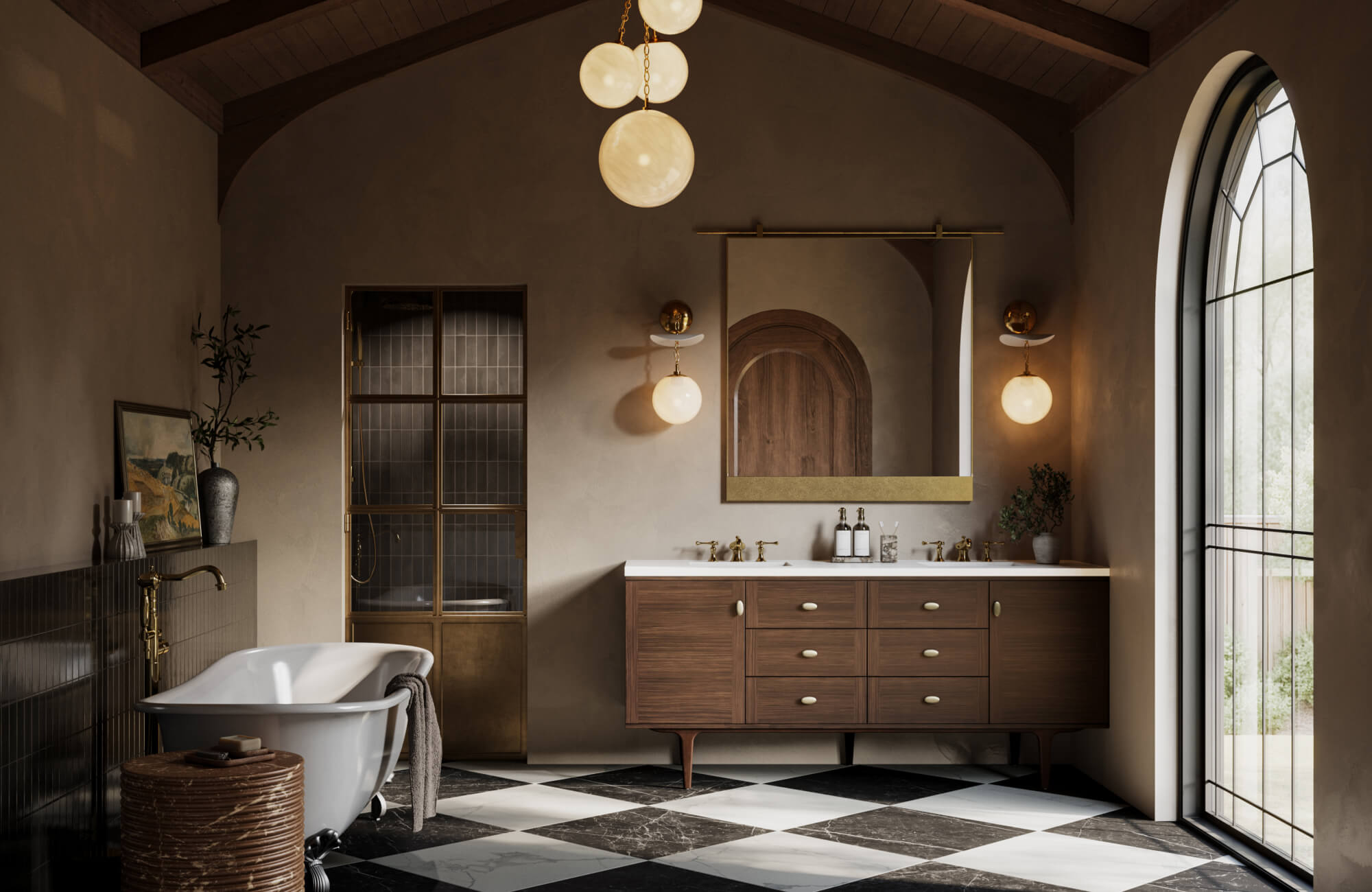
A strong example of this evolution is Edward Martin’s Leona 24x24 Checkerboard Matte Porcelain Tile in Calacatta and Nero Marquina, which captures the timeless elegance of marble checkerboard flooring in a high-performance porcelain format. As seen in the photo above, the bold contrast between soft white Calacatta veining and deep Nero Marquina tones creates visual structure while grounding the room’s warm plaster walls and rich wood cabinetry. The large-scale checkerboard pattern also introduces architectural rhythm without overwhelming the space, allowing other elements, such as sculptural lighting and brass fixtures, to remain visually balanced. In addition, its matte finish reduces glare and improves slip resistance, making it both a practical and refined choice for bathroom floors. By combining classic patterning with modern material performance, this tile supports sustainable, design-forward bathroom interiors that feel enduring rather than trend-driven.
Water-Efficient Plumbing Fixtures and System Design
In today’s bathrooms, water efficiency is designed into the fixtures themselves rather than added on as an afterthought. Dual-flush toilets, for example, let users choose the appropriate water volume for each use, helping meaningfully reduce overall consumption. Pressure-assisted systems further support this goal by improving flushing performance while still using less water per cycle. In the shower, low-flow heads now rely on air-induction technology to maintain strong spray coverage and a comfortable experience, even at reduced flow rates. Faucets follow the same philosophy: built-in aerators regulate water output without diminishing everyday usability. Taken together, these strategies create bathrooms that meet modern WaterSense standards while balancing efficiency, comfort, and performance.
Low-Emission Materials and Health-Conscious Construction
In sustainable bathroom renovations, indoor air quality is becoming a central priority rather than an afterthought. Using low-VOC adhesives, grouts, and sealants helps minimize off-gassing, supporting cleaner air and healthier daily living. Responsibly sourced materials also play a role; FSC-certified wood cabinetry promotes sustainable forestry practices while delivering long-lasting durability. Recycled-content surfaces are increasingly specified for vanities and countertops, reducing environmental impact without sacrificing style or function. Behind the walls, moisture-resistant backer boards and waterproofing membranes help prevent hidden mold growth and protect the integrity of tiled installations. Together, these choices create bathrooms that are not only environmentally conscious but also safe, resilient, and comfortable to live in.
Smart Bathroom Technology and Integrated Digital Systems
Smart bathroom design in 2026 emphasizes seamless integration, where technology enhances comfort and efficiency without visual disruption. Digital systems are interconnected to create responsive environments that adapt fluidly to daily routines and changing conditions.
Digitally Controlled Shower Systems and User Customization
Digitally controlled shower systems are becoming a cornerstone of smart bathroom remodeling, offering a level of precision that goes beyond traditional mechanical controls. Through intuitive touch panels or mobile apps, users can fine-tune temperature, flow rate, and spray patterns with exact calibration. Thermostatic technology also helps maintain consistent water temperature from the moment the shower starts, enhancing safety and reducing unnecessary energy use. Moreover, personalized user profiles can store preferred settings, making it easy for different household members to enjoy a consistent experience every time. Many advanced systems track water usage and shower duration, supporting both conservation goals and system diagnostics. Altogether, digital showering technology turns everyday bathing into a more controlled, efficient, and highly personalized ritual.
Layered Bathroom Lighting Design and Smart Illumination Systems
Bathroom lighting in 2026 is designed as a layered system that balances function, ambiance, and energy performance. For instance, ambient lighting establishes overall illumination through recessed or ceiling-mounted fixtures, creating a soft foundation that avoids harsh glare. Task lighting is then introduced at the vanity to provide focused, shadow-free illumination essential for grooming and daily routines. Accent lighting also completes the composition by highlighting key zones and adding visual warmth, allowing the bathroom to feel intentional rather than purely utilitarian. Smart lighting controls further enhance this system by enabling brightness and color-temperature adjustments that respond naturally throughout the day. Together, these layers support energy-efficient bathroom lighting design while elevating the overall atmosphere.
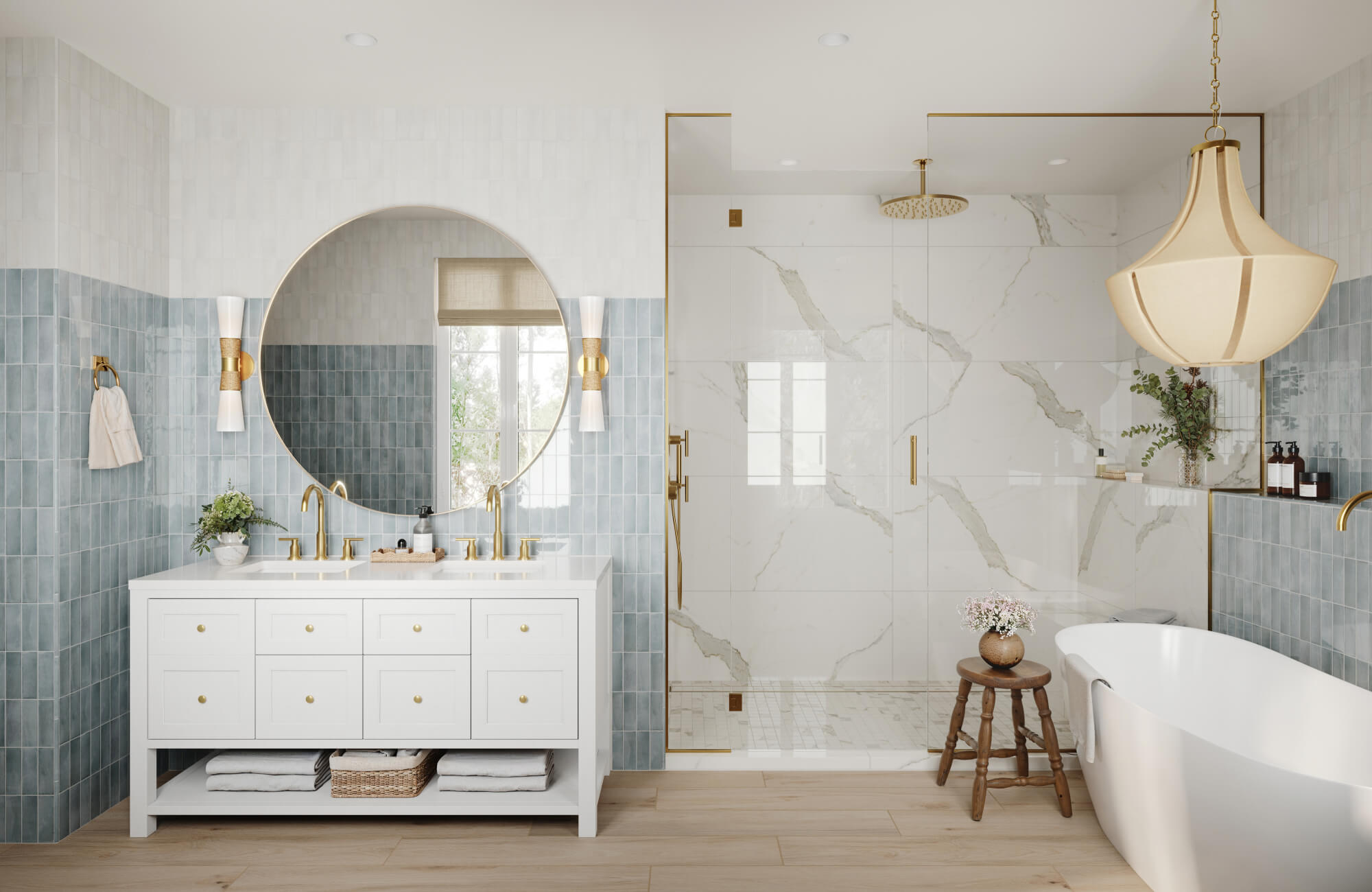
A refined example of this approach, as displayed in the photo above, is the Posey Wall Sconce in Aged Brass, which provides elegant task lighting at the vanity while introducing a warm metallic accent that complements surrounding finishes. Positioned on either side of the mirror, the sconce delivers balanced illumination that enhances visibility without casting harsh shadows, making it both practical and visually sophisticated. Its aged brass finish also adds depth and softness, pairing seamlessly with warm neutrals and stone-inspired surfaces. In the bathing area, the Aida Pendant in Aged Brass serves as a sculptural focal point above the freestanding tub, contributing ambient light that feels intimate and calming. The pendant’s gentle glow defines the soaking zone without overpowering the space, reinforcing the layered lighting strategy. Together, these fixtures demonstrate how thoughtfully selected lighting can unify form, function, and mood in modern bathroom design.
Intelligent Ventilation and Moisture Management
Effective moisture control is essential for preserving a bathroom’s long-term durability and surface integrity. Intelligent ventilation systems use built-in humidity sensors to activate exhaust fans only when moisture levels rise beyond set thresholds, ensuring the space is ventilated when it actually needs it. Variable-speed motors then adjust airflow in real time, helping to prevent excess energy use while still removing damp air efficiently. These systems can also be integrated with lighting and heating, allowing the entire environment to respond as a single, balanced unit. In practice, this reduces condensation on mirrors, walls, and tile surfaces, creating a drier and more comfortable room. Ultimately, smart ventilation contributes to high-performance bathroom remodels for 2026, extending material lifespan while improving everyday comfort.
Advanced Tile Design, Texture, and Visual Continuity
Tile design in 2026 prioritizes architectural clarity and tactile sophistication over decorative excess. Visual impact is achieved through scale, texture, and thoughtful transitions rather than bold pattern saturation.
Large Format Tile and Seam Reduction Strategies
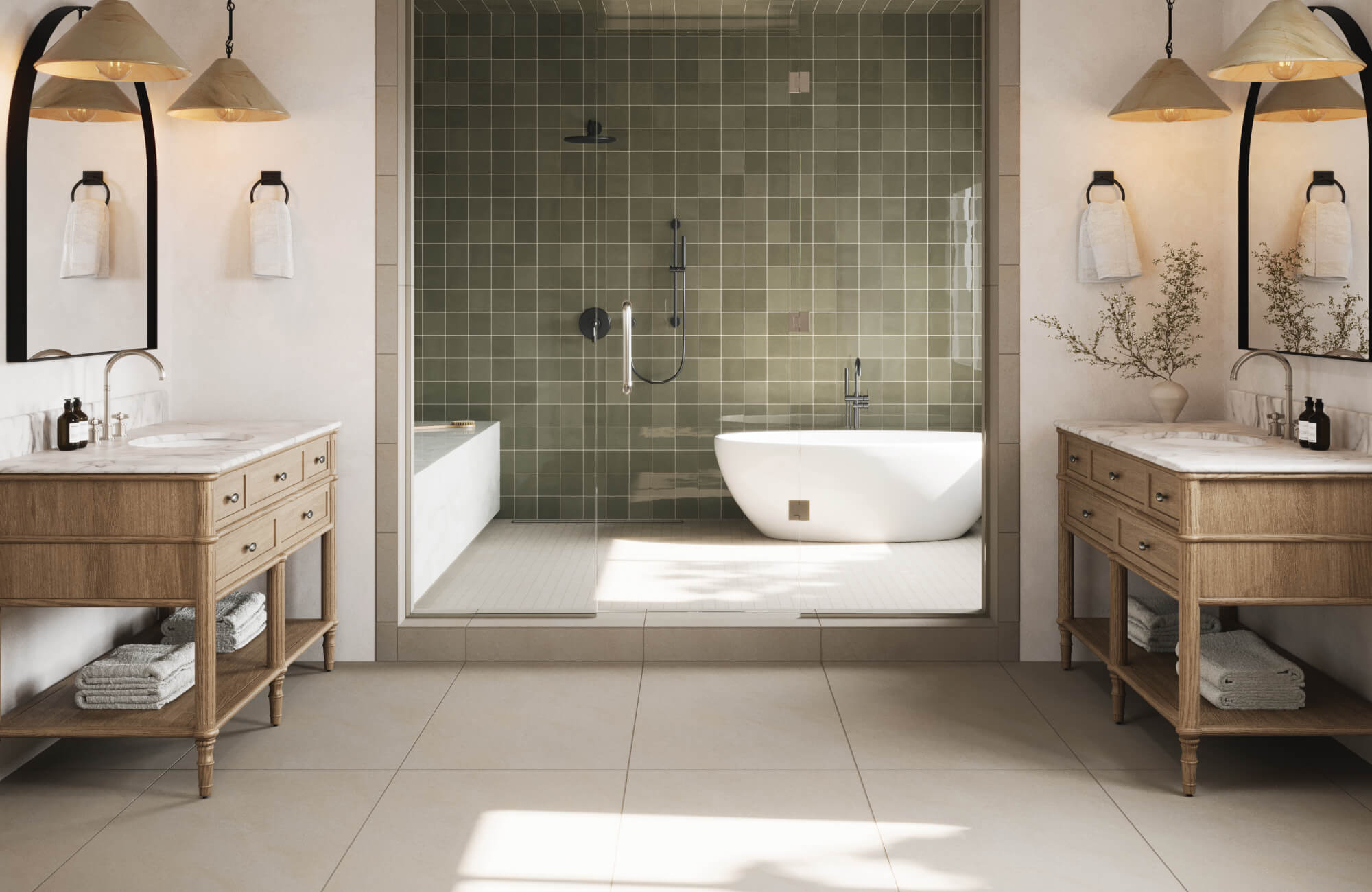
Large format tiles are increasingly being specified to create visually expansive and cohesive bathroom interiors. Tiles measuring 24×48 inches or larger dramatically reduce the number of grout joints, resulting in cleaner lines and a more continuous surface appearance. With fewer seams, hygiene also improves, since there are fewer places for moisture, soap residue, and bacteria to accumulate. To achieve these results, proper substrate preparation and the use of leveling systems are essential, helping ensure structural stability and preventing lippage between tiles. Rectified tile edges further support this look by allowing for narrower grout joints, enhancing both precision and visual refinement. Altogether, this installation approach aligns with modern bathroom design trends that emphasize durability, simplicity, and understated elegance.
Accent Tile Applications and Spatial Definition
Accent tiles are increasingly applied with the intention to define functional zones within the bathroom. Hexagon mosaics, linear tiles, and other smaller formats often appear on shower floors, niches, and backsplashes, creating subtle visual separation while maintaining overall cohesion. These tiles also enhance slip resistance in wet areas without disrupting the continuity of the larger surfaces. Designers typically maintain a unified color palette, ensuring that accent applications feel integrated rather than purely decorative. By emphasizing texture and scale over stark color contrasts, bathrooms achieve a more sophisticated and harmonious look. This approach reflects contemporary tile design trends for 2026, which favor cohesion, restraint, and thoughtful spatial definition.
Finish Selection and Tactile Performance
Choosing the right surface finish is essential for both usability and sensory experience. Matte and satin finishes are particularly popular, as they reduce glare while improving underfoot traction. Modern glaze technologies now offer better stain and chemical resistance without increasing sheen, while subtle tonal variations add visual depth within calm, neutral palettes. These finishes perform reliably in high-moisture environments and require minimal maintenance, making them ideal for everyday use. Thoughtful finish selection ensures that bathrooms are not only durable and practical but also comfortable, balanced, and visually inviting.
To help visualize how these tile choices, finishes, and layouts come together, Edward Martin’s augmented reality (AR) tool offers a valuable layer of clarity during the design process. By allowing users to preview tile styles, formats, and textures directly within their own bathroom space, the AR experience bridges the gap between inspiration and execution.
Color Palettes, Finishes, and Material Cohesion
Color and finish selection in the 2026 bathroom design extends beyond surface aesthetics, shaping how the space feels, functions, and ages over time. Carefully coordinated palettes and finishes ensure visual continuity while supporting lighting performance, material durability, and long-term design relevance.
Warm Neutrals and Earth-Toned Bathroom Color Trends
Bathroom color trends for 2026 continue to favor warm neutrals and earth-inspired tones that create calm, grounding environments. Shades such as soft clay, warm sand, muted beige, and mushroom hues are increasingly specified for their ability to feel both contemporary and timeless. These colors soften architectural lines and pair effortlessly with natural light, creating bathrooms that feel serene rather than stark. Earth-toned palettes also enhance material textures, allowing tile surfaces and finishes to become part of the sensory experience. When layered thoughtfully, these hues reduce visual contrast fatigue and support a more restorative atmosphere.
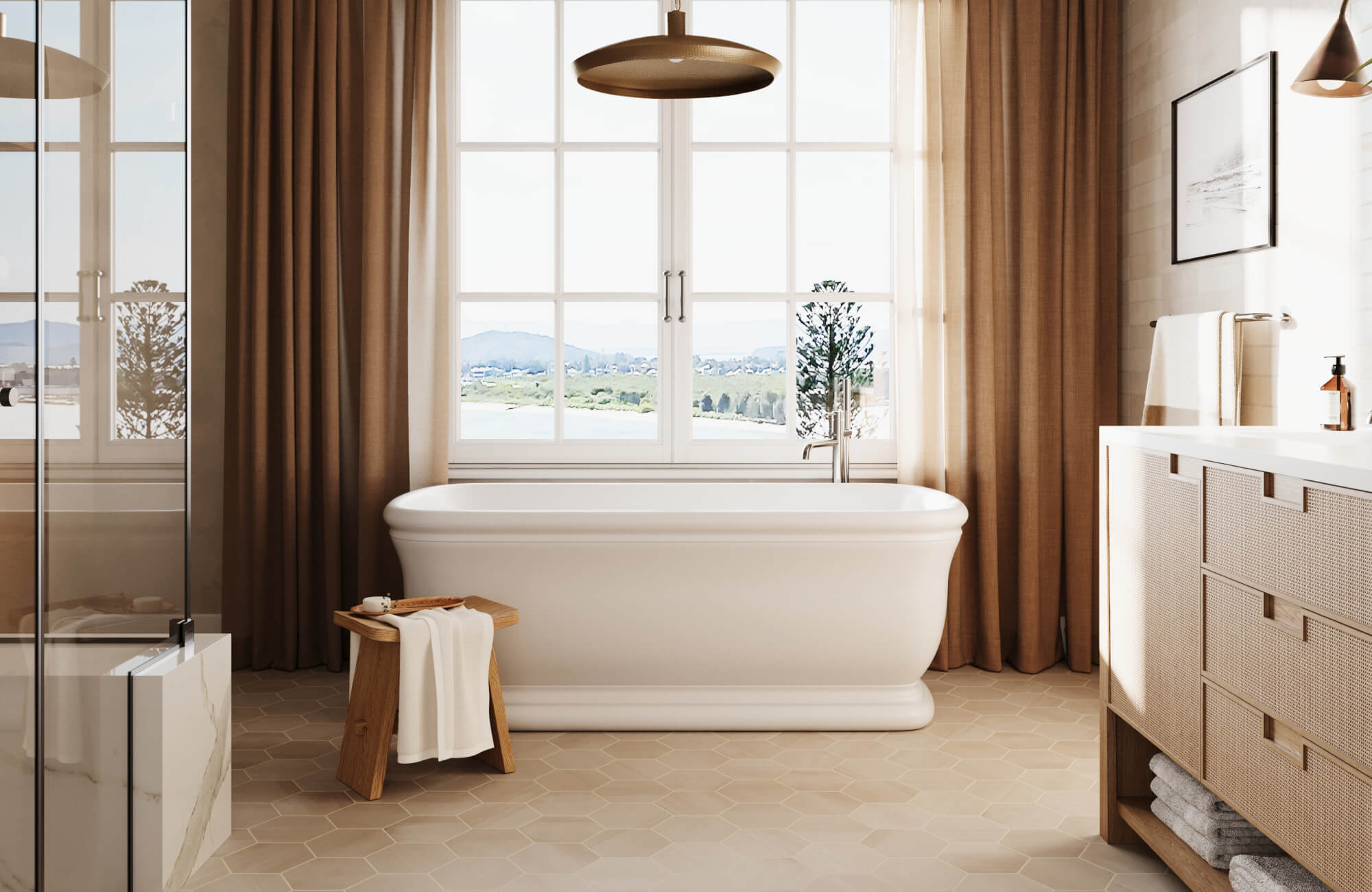
A refined expression of this trend is our Catalina 7x8 Hexagon Matte Porcelain Tile in Mushroom, which brings subtle warmth and organic balance to bathroom floors. As shown in the picture above, the soft mushroom tone grounds the room while complementing the freestanding tub, light wood accents, and neutral cabinetry. The hexagon format introduces gentle visual movement without overpowering the palette, helping the floor feel textured yet cohesive. Its matte finish also diffuses light naturally, reducing glare while enhancing slip resistance in wet areas. Moreover, the tile’s warm neutrality allows it to transition seamlessly between modern and classic design elements. This makes it an ideal foundation for earth-toned bathroom designs that prioritize calm, comfort, and material harmony.
Finish Consistency Across Fixtures, Hardware, and Surfaces
Finish consistency is a defining factor in achieving a polished, cohesive bathroom design in 2026. Rather than mixing multiple metal finishes, designers increasingly specify one dominant finish with a secondary accent used sparingly. Brushed, satin, and soft-matte finishes are preferred for their ability to resist fingerprints, water spots, and wear over time. Maintaining finish alignment across faucets, shower systems, cabinet hardware, and lighting fixtures also creates visual rhythm and balance. This consistency is especially important in smaller bathrooms, where visual fragmentation can make the space feel cluttered. Coordinated finishes reinforce high-end bathroom remodeling outcomes while simplifying long-term maintenance.
Balancing Contrast and Continuity in Modern Bathroom Design
Contrast remains an essential design tool, but it is applied with restraint and intention in 2026 bathrooms. Instead of sharp color shifts, contrast is often introduced through texture, scale, or finish variation. For example, matte wall tiles may be paired with satin-finish fixtures to create subtle differentiation without visual disruption. Darker flooring or vanity bases also help anchor the space, while lighter wall surfaces preserve openness and reflect light. Moreover, repeating materials, colors, or finishes across multiple surfaces strengthens continuity and prevents isolated design moments. This balanced approach results in bathrooms that feel layered, cohesive, and visually enduring.
Space Optimization, Storage Engineering, and Adaptive Layouts
Bathroom layouts in 2026 are increasingly shaped by efficiency and adaptability. Design strategies focus on maximizing usable space while preparing for future needs.
Wall-Mounted Fixtures and Visual Expansion
Wall-mounted fixtures play a key role in space-optimized bathroom design for 2026, creating interiors that feel open, balanced, and intentionally composed. By lifting vanities and storage off the floor, these installations expose more surface area, allowing light to move freely and making the room appear larger. Concealed wall supports also provide the necessary structural strength while maintaining a clean, minimal profile. Moreover, floating designs improve accessibility and simplify cleaning, supporting both daily function and long-term usability. When paired with thoughtful lighting, wall-mounted fixtures add depth and architectural interest rather than visual weight. This approach aligns seamlessly with modern bathroom remodeling trends focused on efficiency and visual clarity.
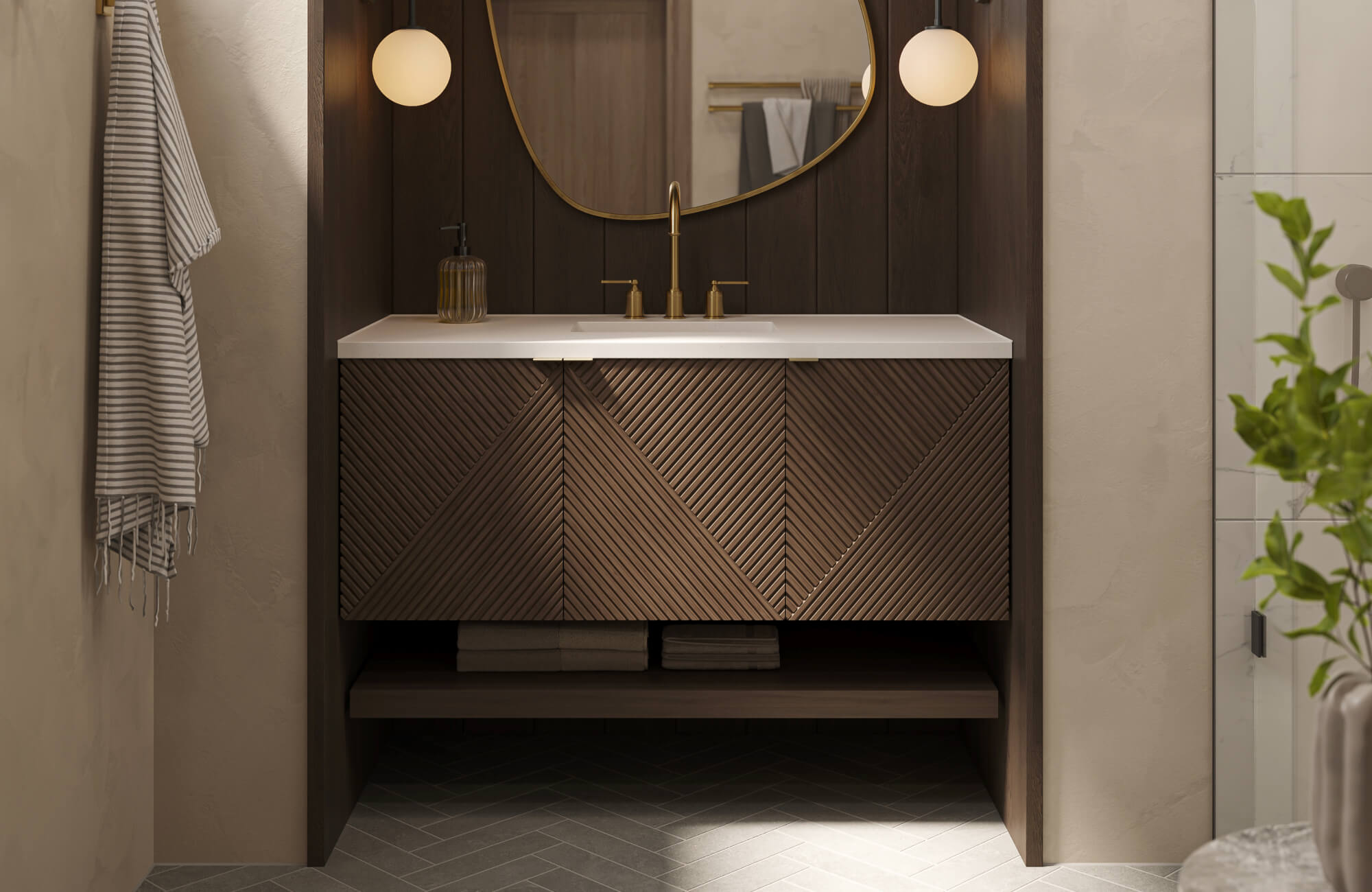
A strong expression of this concept is our Royce 48" Single Vanity in Chestnut with 3 cm White Zeus Quartz Top, which balances warmth and precision in a floating format. As featured in the photo above, the wall-mounted installation opens up the floor area beneath the vanity, reinforcing a lighter, more expansive feel. The medium-to-dark brown finish adds depth and texture without overpowering the room, while the geometric wood detailing introduces subtle visual movement. Its white quartz-based top also provides crisp contrast, reflecting light and enhancing the vanity’s clean-lined silhouette. Together, these elements demonstrate how a thoughtfully designed floating vanity can anchor the space while supporting openness, functionality, and modern elegance.
Integrated Storage and Organizational Solutions
In 2026, bathroom storage design focuses on efficiency, accessibility, and customization, creating spaces that support daily routines without adding visual clutter. Drawer-based vanity systems, for example, make it easy to keep items visible and within reach, offering superior organization compared to traditional cabinets. Recessed medicine cabinets also provide discreet storage while maintaining clean wall lines and unobstructed circulation. Meanwhile, built-in shower niches eliminate the need for surface-mounted accessories, reducing visual noise and improving moisture management. In addition, interior drawer dividers and modular organizers allow grooming tools, toiletries, and personal care items to have their own designated space. Together, these integrated storage solutions create high-functioning bathrooms that feel orderly, intentional, and effortless to maintain.
Barrier-Free Design and Future-Ready Planning
Future-ready bathroom design in 2026 emphasizes accessibility and long-term adaptability without sacrificing style. Curbless showers create seamless transitions that enhance both safety and visual flow, while linear drains combined with precise slope engineering ensure efficient water management and a streamlined appearance. Wider clearances around fixtures improve usability for people of all mobility levels, supporting aging-in-place considerations. Reinforced wall backing allows for the discreet addition of grab bars or support accessories as needs evolve over time. By integrating these thoughtful elements, bathroom remodels remain functional, inclusive, and stylish, standing the test of both daily use and years to come.
Small Bathroom Remodel Strategies for Efficient, Future-Ready Spaces
Within space-conscious layouts, a small bathroom remodel demands an even more deliberate approach to planning and organization. Every design decision must support efficient circulation, visual openness, and long-term adaptability, especially when square footage is limited. Streamlined layouts that reduce visual breaks help the room feel more expansive, while integrated lighting and reflective surfaces enhance brightness without adding bulk. Storage solutions are most effective when built directly into the architecture, preserving floor space and maintaining clean sightlines. These considerations form the foundation for many of the space-saving strategies that follow, from wall-mounted fixtures to integrated storage systems designed to maximize performance in compact bathrooms.
A Thoughtful Path Forward for Bathroom Remodeling
Bathroom design in 2026 is guided by choices that balance innovation, comfort, and visual harmony. Wellness-focused systems, sustainable materials, and intelligent technology work together to create spaces that feel both refined and highly functional. Layered lighting, tactile surfaces, and cohesive finishes also enhance atmosphere while supporting long-term performance. Flexible layouts and future-ready planning ensure that bathrooms can adapt gracefully as needs change over time, making each space as enduring as it is beautiful.
To bring these elements together with clarity and confidence, Edward Martin’s design services offer expert guidance rooted in material knowledge, spatial planning, and a deep understanding of modern bathroom remodeling. With a collaborative, detail-driven approach, their team helps translate emerging design trends into beautifully resolved spaces that feel intentional, timeless, and distinctly personal!
Follow us on Instagram
@EDWARD.MARTIN
)
)
)
)
)
)
)
)
)
)
)
)
)
)
)
)