Your living room sets the tone for your entire home, making it one of the most impactful spaces to remodel. When you start thinking about adding visual interest, look beyond décor and consider how structure, materials, lighting, layout, and color interact to create depth and dimension.
Visual interest is not about adding more. It is about directing the eye with intention, creating contrast where it matters, and ensuring every surface serves a purpose. As we explore practical, design-focused ideas together, you will see how thoughtful changes can transform your living room into a space that feels layered, cohesive, and naturally engaging.

Rethink Architectural Details for Instant Depth
Architectural details form the foundation of visual interest. When we refine the room’s built-in elements instead of focusing solely on furnishings, you introduce depth that feels intentional, lasting, and seamlessly integrated into the space.
Statement Ceiling
The ceiling is frequently overlooked; however, it offers one of the most effective ways to redefine a room. By introducing beams, coffering, wood planks, or even a subtle shift in paint tone, we naturally guide the eye upward, which enhances the sense of height and openness.
That said, the approach should reflect the room’s proportions. In spaces with standard ceiling heights, shallow trim detailing or a gentle contrast color can introduce dimension without making the ceiling feel lower. Conversely, in taller rooms, exposed beams or structured panel grids help scale the volume appropriately so it feels intentional rather than empty. When the eye is encouraged to move upward, you gain depth and architectural presence without sacrificing any usable floor area.
Wall Paneling and Molding
Flat drywall can leave even a thoughtfully furnished room feeling incomplete. By introducing panel molding, board-and-batten, fluted wall treatments, or vertically stacked tile, you create subtle shadow lines that break up expansive surfaces and add visual depth. In the photo featured above, Edward Martin’s Everett 2x10 Matte Ceramic Tile in Almond is applied around the fireplace, demonstrating how a linear tile format can function much like paneling by adding structure and rhythm to the wall plane.
Just as importantly, proportion should guide every decision. When you align panel height, tile layout, and spacing with your ceiling height and furniture placement, the detailing feels intentional and balanced. When scaled correctly, whether through millwork or elongated ceramic tile, wall treatments introduce texture and architectural definition without overwhelming the space. The result is a refined backdrop that quietly enhances everything placed in front of it.
Framed Openings
Doorways and pass-throughs play a subtle but important role in how you experience a room. By thickening casings, introducing gentle arches, or refining trim profiles, you can create architectural framing that clearly defines transitions between spaces. In turn, this added definition strengthens visual continuity throughout the home. Even subtle refinements can also make your living room feel more intentional and cohesive, giving it the sense that it was thoughtfully designed from the beginning rather than assembled over time.
Built-In Niches
Rather than introducing additional furniture, you can integrate storage and display areas directly into the walls. Recessed niches can add dimension through natural shadow lines while creating purposeful space for art, books, or sculptural accents. Because they sit flush with the wall, niches add depth and interest without using up any floor space. For that reason, they are especially effective in smaller living rooms where maintaining openness is essential.

Layer Materials to Build Contrast and Texture
Once the architectural framework is established, material selection becomes a natural next step in adding depth and dimension to the room. Visual interest naturally increases when surfaces contrast and complement one another rather than blending, allowing each element in the room to stand out with purpose.
Mixed Surface Pairings
Combining materials with varied textures helps create balance and visual interest. For instance, pairing smooth plaster walls with natural stone accents or warm wood furniture with matte metal details allows each surface to stand out while still working together.
That said, contrast is most effective when it is intentional. Limiting the space to three or four primary finishes keeps the design cohesive rather than disjointed. When each material serves a clear purpose, whether grounding the room or introducing contrast, the overall composition feels thoughtful and well resolved.
Feature Wall Materials
If you are looking to create a more defined focal surface, consider installing vertical wood slats, ribbed panels, slab stone, or large-format porcelain tile behind the seating area. Unlike a simple painted accent wall, these materials introduce genuine depth and dimension. In the photo featured above, Edward Martin’s Ramsey 24x24 Matte Porcelain Tile in Smoke is applied across the fireplace wall, demonstrating how oversized matte tile can create a bold yet refined architectural statement.
Because of its scale and subtle surface variation, the tile adds texture without overwhelming the room. As natural and artificial light shift throughout the day, the matte finish responds softly, altering how the wall is perceived and reinforcing its presence as a focal point. This shifting effect keeps the space visually engaging while allowing you to maintain a restrained, balanced color palette.
Varied Upholstery
Furniture upholstery influences how layered and dynamic your living room feels. By mixing woven textiles with leather or velvet, you introduce contrast not only in texture but also in sheen, which adds subtle visual depth. Instead of matching every piece exactly, coordinate tones while varying the materials. This approach keeps the seating area from appearing flat and allows each piece to maintain its own distinct presence within the overall design.
Anchoring Rugs
A well-chosen rug helps define the seating area while introducing pattern and texture at floor level. Subtle tonal variation or understated motifs can add depth without competing with larger design features in the room. For example, a piece like our Davies Rug in Dove / Stone offers a soft blend of neutral tones that adds visual movement while remaining refined and versatile.
To feel cohesive, the rug should connect naturally to your overall color palette while grounding the furniture arrangement. When selected thoughtfully, it becomes a visual anchor that ties together upholstery, wood tones, and surrounding finishes, reinforcing a balanced and layered composition.

Use Lighting as a Sculptural Element
Lighting influences how every design decision is experienced. Beyond its functional role, the right fixtures and thoughtful placement help shape the room’s atmosphere, emphasize architectural details, and introduce a sense of depth that enhances the overall composition.
Oversized Fixtures
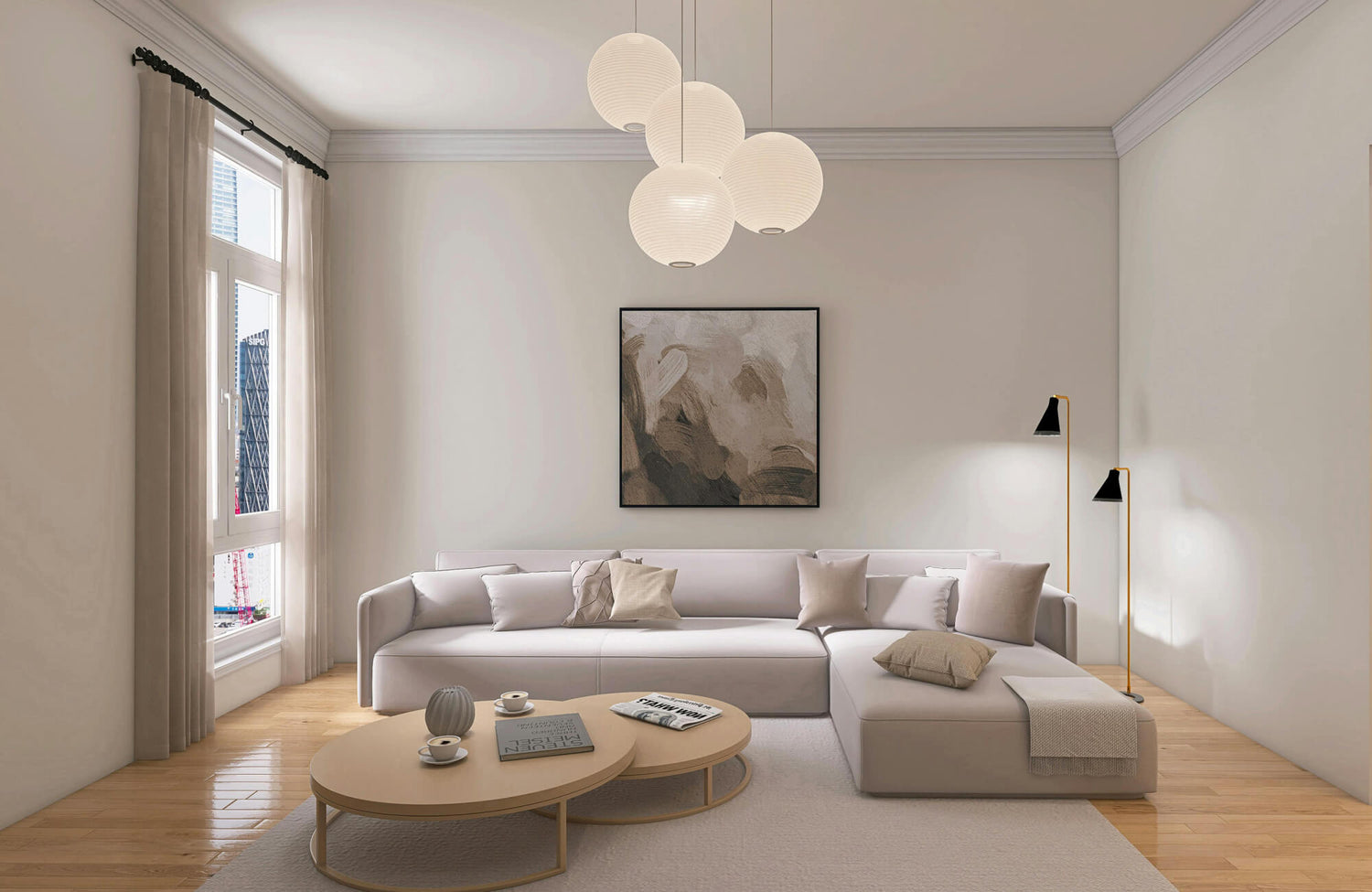
A substantial pendant or chandelier can act as a strong visual anchor at the center of the room. When properly scaled, it balances larger furniture pieces and ensures the ceiling does not feel overlooked or underutilized.
The space shown in the photo featured above highlights this principle with Edward Martin’s Clement Chandelier in Polished Nickel. Its clean circular form and refined finish establish a focal point that draws the eye upward while visually grounding the seating arrangement below.
Proportion should always guide the selection. The fixture needs to respond to ceiling height, room width, and furniture scale so it feels cohesive and intentional. When chosen thoughtfully, an oversized chandelier adds architectural presence and definition without overwhelming the space.
Layered Light Sources
Relying on a single overhead fixture can leave a room feeling flat and one-dimensional. By incorporating a mix of ceiling lights, wall sconces, table lamps, and floor lamps, you can create layered illumination that adds nuance and balance. This variation introduces soft shadows that highlight texture and architectural detail. As a result, your living room maintains depth and character in the evening, rather than appearing overly bright or uniform.
Accent Lighting
Directional lighting allows you to draw attention to specific architectural features or artwork. Recessed spotlights and adjustable fixtures give you control over where the eye naturally settles. By highlighting one surface at a time, you can establish a clear visual hierarchy within the room. This ensures your living space maintains defined focal points and depth, even after natural light fades.
Backlit Features
Integrated LED strips placed behind shelving or wall panels introduce a soft, ambient glow without exposing visible hardware. This subtle illumination enhances built-in elements and adds another layer of architectural depth. Because the light source remains concealed, the overall effect feels clean and intentional. The result is a polished backdrop that enhances the room while keeping the lighting discreet and unobtrusive.

Create Focal Points That Guide the Eye
Visual interest becomes stronger when the eye has a clear place to land. By establishing a thoughtful focal hierarchy, you prevent competing elements from overwhelming the space and instead create a room that feels balanced and intentionally composed.
Reimagined Fireplace
If your living room includes a fireplace, updating the surround can dramatically reshape the space. Materials such as slab stone, smooth plaster, or streamlined tile help establish a strong, cohesive centerpiece. The fireplace shown in the photo featured above achieves this effect through Edward Martin’s Wren 12x24 Chiseled Porcelain Tile in Dune, whose textured surface and elongated format introduce subtle depth while preserving a clean architectural profile. Its soft, natural tone integrates seamlessly with the surrounding finishes, allowing the fireplace to stand out without feeling disconnected.
At the same time, restraint remains essential. By keeping the design focused and uncluttered, the fireplace continues to function as a grounding anchor that enhances the room rather than competing with surrounding elements.
Large Scale Art
Rather than grouping multiple small frames, consider featuring one substantial piece of artwork. A single large-scale piece creates a cleaner composition and minimizes visual clutter. For instance, a piece such as our Dusk Fold Wall Art can introduce depth and visual interest through its scale and composition while still maintaining a refined presence.
In addition, one prominent artwork reinforces the seating arrangement by providing a defined backdrop. With a clear focal element anchoring the wall, the room feels more cohesive, balanced, and intentionally arranged.
Statement Furniture
Introducing a single distinctive furniture silhouette is an effective way to add personality to your living room. A curved sofa or uniquely shaped coffee table can naturally draw attention without relying on bold color. By limiting the statement to one or two standout pieces, you preserve balance within the space. This approach allows the design to feel intentional and refined rather than visually overwhelming.
Intentional Styling
Styling works best when approached with restraint. By arranging objects at varied heights and leaving open space between them, you can create a composition that feels balanced rather than crowded. When these elements work together, the effect is both structured and relaxed. By grouping décor thoughtfully and preserving negative space, you maintain visual clarity and prevent clutter, giving each piece the space it needs to stand out.

Play With Layout and Spatial Flow
At times, adding visual interest does not require new materials or furnishings but a fresh perspective on what you already have. By rethinking the layout, you can change how depth, movement, and balance are experienced throughout the room.
Floating Furniture
Positioning sofas away from the wall can instantly introduce layered depth by creating usable space behind them. This approach is especially effective in medium to larger living rooms, where there is enough square footage to support a more dynamic arrangement. Additionally, the added space allows for features such as slim console tables or supplemental lighting without crowding the room’s perimeter. The result is a layout that feels intentional and thoughtfully composed rather than confined to the edges.
Defined Zones
In larger living rooms, creating distinct functional zones can bring clarity and structure to the space. For example, placing a reading chair with a floor lamp in one corner while arranging a separate conversation area elsewhere helps define how each part of the room is meant to be used. At the same time, cohesion remains essential. By maintaining consistent materials, scale, and proportion across zones, you ensure the room feels unified rather than fragmented.
Symmetry and Asymmetry
Symmetrical arrangements bring a sense of order and formality to a living room, creating visual stability. In contrast, asymmetrical layouts introduce a more relaxed and dynamic feel, often making the space appear more casual and lived-in. Choosing between the two depends on how you use the room and the atmosphere you want to create. Beyond aesthetics, this decision also influences how comfortably and naturally the space functions.
Visual Pathways
Clear walking paths enhance both functionality and visual clarity within a living room. Thoughtful furniture placement should encourage natural movement rather than interrupt it. When sightlines remain open and unobstructed, the space feels more organized and purposeful. This sense of flow not only improves daily use but also contributes to a cleaner, more intentional overall design.

Incorporate Color and Pattern With Intention
Color and pattern play a powerful role in shaping mood and perception within your living room. When applied thoughtfully, they can add depth and character while maintaining balance, ensuring the space feels cohesive rather than overwhelming.
Accent Ceilings or Trim
Painting trim or ceilings in a complementary tone is a subtle yet effective way to introduce contrast. This approach highlights architectural lines and adds definition without requiring additional materials. It is particularly impactful in rooms with detailed molding, where a slight color shift can emphasize craftsmanship and create a more tailored, intentional look.
Subtle Pattern Play
Tone-on-tone wallpaper or understated textiles can introduce depth and visual interest without overpowering the room. By keeping patterns refined and layered thoughtfully, you add complexity in a controlled way. For example, a design like our Windsor Wallpaper in Grey I, 52" x 132", offers a soft, rhythmic pattern that can enhance the wall surface without dominating the overall palette.
To maintain balance, avoid repeating the same pattern across multiple surfaces. Instead, vary the scale or limit the placement to one primary area so the room remains engaging while still feeling cohesive and well considered.
Color Blocking
Strategic color blocking on built-ins or select wall sections can help define specific areas within your living room. Instead of covering an entire wall, isolating certain portions creates structure and visual organization. In the photo featured above, this concept is reinforced through the contrast between Edward Martin’s Chantel 24x48 Matte Porcelain Tile in Dolomite and Preston 8x48 Matte Porcelain Tile in Chestnut. The lighter dolomite surface establishes a clean, expansive backdrop, while the deeper chestnut tone introduces warmth and visual separation.
Pairing these two finishes introduces a clear distinction while preserving a cohesive overall look. This approach works particularly well in open-plan layouts, where subtle shifts in tone and material can define zones while maintaining a unified overall aesthetic.
Coordinated Palette
Rather than relying on a vague idea of mixing colors until the room looks right, focus on a controlled palette of three to five complementary shades. This approach creates consistency and ensures every element feels connected. Being precise with color selection also leads to clearer results. Instead of aiming for something that simply looks “nice” or “interesting,” think in terms of complementary, cohesive, and layered tones that work together to support the overall design.
Adding Visual Interest to Your Living Room
Living room remodel ideas that genuinely add visual interest stem from thoughtful decisions rather than excess decoration. When you approach architectural refinement, material contrast, sculptural lighting, defined focal points, strategic layout, and purposeful color as interconnected elements, the space naturally becomes more layered and cohesive. With clarity and restraint guiding each choice, you create a room that draws the eye with intention while supporting your daily routines. The result is a living room that feels balanced, purposeful, and visually engaging without feeling overdone.
If you are ready to take the next step, we are here to help. Contact us to discuss your living room remodel goals, or explore our design services to receive tailored guidance that aligns with your space, style, and budget. Together, we can help you turn thoughtful ideas into a living room that feels both elevated and uniquely yours.