Choosing a bathroom vanity can feel simple at first, until you start thinking about everything it actually needs to hold. What looks spacious in a showroom can feel surprisingly tight once your daily essentials move in. Between grooming tools, skincare, shared storage, and countertop clutter, small planning mistakes tend to show up quickly. In this blog, we’ll walk through the most common storage missteps to avoid so your vanity works smoothly for your routine, not against it.

Overlooking How You Actually Use the Vanity
Before choosing drawer counts or cabinet layouts, it helps to pause and think about how you truly move through your daily routine. A vanity should reflect real habits, not a perfectly staged version of them. In this section below, we’ll look at how everyday patterns such as rushed mornings, nighttime skincare, and shared storage needs should guide your decisions from the very beginning.
Assuming All Storage Needs Are the Same
One of the most common mistakes is assuming every bathroom needs the same type of storage. In reality, someone with a simple toothbrush-and-face-wash routine uses their vanity very differently from someone storing hair tools, skincare collections, and backup supplies. Because of that, copying a layout without considering your habits often leads to wasted space or overcrowded drawers. For instance, a deep drawer may sit half empty while smaller items spill across the counter. Storage works best when it reflects what you actually own and reach for daily. When you plan around your specific routine, the vanity feels functional instead of frustrating.
Forgetting About Everyday Countertop Clutter
It’s easy to focus on what fits inside the vanity while overlooking what tends to live on top of it. Items like soap dispensers, toothbrush holders, skincare bottles, and styling tools often migrate to the countertop if internal storage doesn’t feel accessible. Over time, that visible buildup makes even a well-designed vanity feel cramped. Thinking ahead about what needs quick access can help prevent this slow accumulation of clutter. For example, if certain items are used twice a day, they need a logical home that’s easy to reach. Planning for those daily essentials keeps the surface feeling clear without forcing everything out of sight.
Ignoring Shared vs Single-User Storage Needs
Storage needs change significantly when more than one person uses the vanity. A layout that works perfectly for a single user can quickly feel crowded in a shared bathroom. Without clear zones or divided storage, items tend to overlap and create confusion. This is especially noticeable during busy mornings, when multiple routines happen at once. Considering whether the vanity will serve one person or several helps determine how storage should be organized from the beginning. When shared use is acknowledged early, the space feels more balanced and easier to maintain.
Planning for Aesthetics Instead of Routine
It’s tempting to prioritize how a vanity looks over how it functions, especially when scrolling through inspiration photos. Clean counters and minimal styling can be appealing, but they don’t always reflect everyday life. If storage decisions are made purely for appearance, the vanity may struggle to keep up with real habits. For instance, selecting fewer drawers to maintain a sleek facade can lead to overcrowding behind cabinet doors. A beautiful vanity should still support how you get ready, wind down, and store essentials. When routine leads and aesthetics follow, the space tends to feel both polished and practical.

Choosing the Wrong Drawer and Cabinet Configuration
It’s not just about how much storage a vanity offers, but how that storage is arranged. Drawers, cabinet doors, open shelving, and internal organizers all function differently, and the layout can either support your routine or complicate it. Here, we’ll look at why configuration matters more than total volume and how accessibility often determines whether a vanity feels effortless or frustrating.
Too Many Doors and Not Enough Drawers
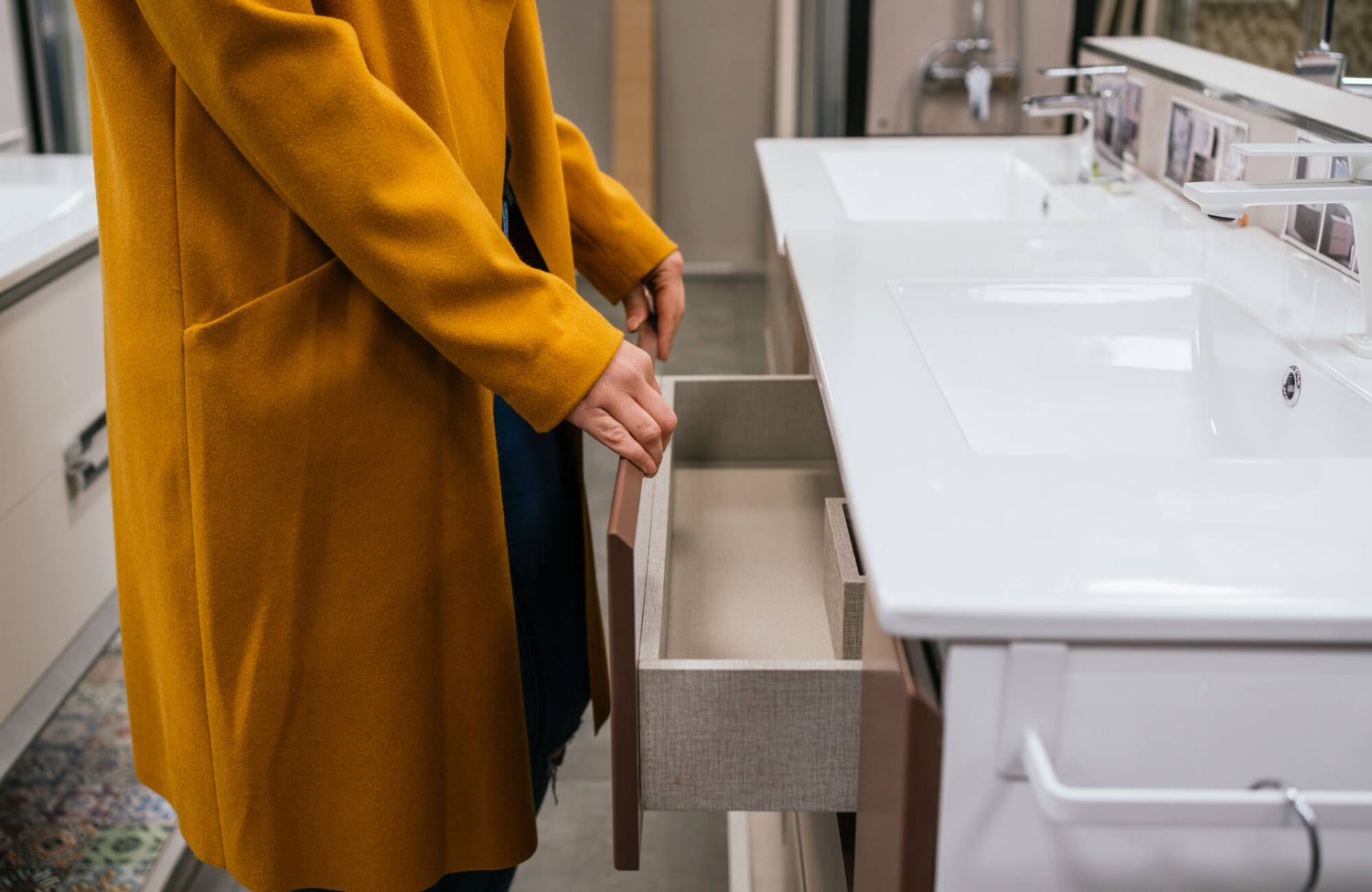
Cabinet doors may seem practical, but relying too heavily on them can create hidden clutter. When everything sits behind one large door, smaller items tend to pile up or get lost in the back. Drawers, on the other hand, allow you to see and access contents more easily from above. This makes everyday items like grooming tools or skincare products easier to organize and retrieve. Without enough drawers, you may find yourself constantly shifting items around just to reach what you need. A thoughtful balance between doors and drawers often makes daily use feel smoother.
Deep Cabinets That Hide Everything in the Back
Deep cabinet spaces can look generous on paper, but they often become black holes for smaller essentials. Items pushed toward the back are easy to forget, especially when visibility is limited. Over time, this leads to duplicate purchases or unused products taking up valuable space. Accessibility matters just as much as capacity, because storage that’s hard to reach rarely stays organized. Pull-out drawers or tiered shelving can prevent that out-of-sight issue from becoming a daily annoyance. When everything is within reach, the vanity feels far more functional.
Skipping Built-In Organizers
Even a well-designed drawer can feel chaotic without internal organization. Built-in dividers, trays, or compartments help separate tools, cosmetics, and toiletries so they don’t shift around with every use. Without them, drawers often turn into catch-all spaces where small items get tangled or misplaced. Over time, that lack of structure makes storage feel inefficient, even if there’s technically enough room. Organizers support consistency because they give each item a defined place. When storage has structure, it’s easier to maintain order without constant rearranging.
A great example of thoughtful configuration can be seen in our Rosalie 36" Single Vanity in Amber Birch with 3 cm White Zeus Quartz Top, shown above. Beyond its warm wood tones and tailored silhouette, it’s designed with everyday organization in mind, featuring a tip-out drawer, three double-height drawers on soft-close slides, and an open lower shelf for flexible storage. The brushed aluminum laminate drawer bottoms add durability, while the interior is coated for added moisture resistance. It’s a reminder that smart layout and accessible storage matter just as much as total capacity when creating a vanity that truly works for daily routines.
Forgetting Vertical Storage Potential
Storage isn’t limited to what sits flat inside a drawer or cabinet. Vertical space often goes underutilized, especially inside taller cabinets. Stacking solutions or tiered inserts can help maximize height without increasing clutter. Ignoring this potential usually results in wasted air space while lower areas feel overcrowded. Thinking upward creates more functional room for everyday essentials without making the vanity feel cramped. When vertical storage is considered early, the entire layout tends to feel more intentional and efficient.

Ignoring Bathroom Size and Spatial Proportion
Storage decisions don’t exist in a vacuum. The size of your bathroom and how people move through it should shape the vanity you choose just as much as storage capacity does. In this section, we’ll look at how proportion, clearance, and realistic movement patterns influence whether a vanity feels balanced or overwhelming.
Oversized Vanities That Cramp the Layout
It’s easy to assume that a larger vanity automatically means better storage, but that isn’t always true in practice. An oversized piece can dominate the room, making walkways feel tight and limiting how comfortably you can move around. When space feels squeezed, even a well-organized vanity can become frustrating to use. You may find yourself adjusting how you stand, turn, or open drawers just to avoid bumping into nearby fixtures. Over time, that subtle crowding affects how the entire bathroom functions. A vanity should support movement, not restrict it.
Narrow Designs That Sacrifice Practical Storage
On the other end of the spectrum, overly narrow vanities can look sleek but struggle to hold everyday essentials. Shallow drawers and tight cabinet interiors often limit what you can realistically store. This leads to overflow onto countertops or into other areas of the bathroom. While a slim profile may preserve floor space, it can quietly reduce day-to-day convenience. If basic grooming tools or cleaning supplies don’t fit comfortably, the design starts working against you. The goal is balance, not just a smaller footprint.
Forgetting About Door and Drawer Clearance
Clearance is one of the most overlooked parts of vanity planning. Doors and drawers need room to fully open without colliding with walls, toilets, or other fixtures. When this space isn’t accounted for, storage becomes partially usable at best. You might not notice the issue in a showroom, but it becomes obvious once everything is installed. Limited extension can make deeper compartments harder to access, which reduces their usefulness. Thinking through clearance early helps avoid daily inconveniences that are difficult to correct later.
When Double Vanities Don’t Actually Add Function
Double vanities are often seen as a storage upgrade, but they don’t always add real function. In some bathrooms, splitting the width between two sinks reduces available drawer and cabinet space. This can leave each side with less practical storage than a well-planned single vanity would offer. If the layout doesn’t support comfortable spacing between users, the extra sink may not improve daily routines at all. It’s important to ask whether two stations truly serve your needs or simply fill visual space. Sometimes, thoughtful configuration matters more than doubling up.

Not Accounting for Plumbing and Internal Obstructions
What looks spacious on the outside doesn’t always translate to usable storage inside. Plumbing lines, sink placement, and internal cutouts quietly reduce how much you can actually store. Below, we’ll walk through how these hidden factors shape real capacity so you can avoid surprises once the vanity is installed.
How Sink Placement Affects Drawer Depth
Sink placement has a direct impact on how deep and functional your drawers can be. When a sink sits closer to the front of the vanity, it often forces drawers to be shallower to accommodate the basin and plumbing behind it. That reduction may not seem significant on paper, but it can limit what fits comfortably inside. Taller bottles, stacked organizers, or grooming tools may suddenly feel cramped. Even a few inches of lost depth changes how flexible the storage feels. Thinking about sink positioning early helps you understand what kind of drawer space you’re truly getting.
The Storage Space Lost to Plumbing
Plumbing lines and trap systems take up more room than most people expect. Pipes run vertically and horizontally, cutting through what would otherwise be open storage space. In many vanities, this means the center area beneath the sink becomes partially unusable. While the cabinet may look wide from the outside, the internal layout can feel fragmented. This often leads to awkward storage zones that are harder to organize efficiently. Understanding how much space plumbing consumes helps set realistic expectations for what can actually fit inside.
Why U-Shaped Drawers Can Be a Smart Solution
U-shaped drawers are designed to work with plumbing rather than pretend it isn’t there. Instead of sacrificing an entire drawer to the sink basin and pipes, the cutout allows storage to wrap neatly around those obstructions. That means you still gain usable space on either side, even if the center needs to stay clear. While it may not offer full-width storage, it’s far more practical than losing the drawer altogether. Over time, that additional accessible space makes everyday organization noticeably easier. Choosing a vanity that accounts for these internal constraints often leads to a layout that simply feels smarter to live with.
Planning Around Outlet and Electrical Needs
Modern bathrooms increasingly include built-in outlets or electrical components inside vanities, which can be incredibly convenient for daily routines. At the same time, these features take up interior space that might otherwise be used for storage. Wiring channels and outlet boxes often reduce drawer depth or shift where compartments can realistically sit. If this isn’t considered early on, you may find there’s less room than expected for tools like hair dryers or electric toothbrushes. Thinking through these details ahead of time helps you avoid sacrificing usability for convenience. With a thoughtful layout, you can support modern electrical needs without compromising practical storage.

Overlooking Long-Term Storage Flexibility
Storage needs rarely stay the same for long. What works perfectly today may feel limiting a year from now as routines shift, products change, or another person begins sharing the space. That’s why it helps to think beyond your current setup and consider how adaptable the vanity will be over time.
Fixed Shelving That Limits Adaptability
Fixed shelving can feel sturdy and straightforward at first, but it often limits how the space evolves with you. When shelves can’t be adjusted, you’re forced to organize around predetermined heights rather than your actual items. Taller bottles, stacked containers, or storage bins may not fit as neatly as expected. Over time, this rigidity can lead to wasted vertical space or awkward gaps that are hard to use efficiently. Adjustable shelving, by contrast, allows you to reconfigure as your storage mix changes. That added flexibility quietly extends the life of the vanity’s usefulness.
Storage That Doesn’t Grow With Your Routine
Daily routines rarely stay the same for long. New skincare products, grooming tools, and even small cleaning essentials have a way of slowly taking over more space than you expected. When storage is too fixed or tightly compartmentalized, it can start to feel restrictive instead of supportive. Rather than constantly reshuffling items to make everything fit, it helps to choose a setup that can evolve with you. Removable dividers, adjustable inserts, and modular organizers make it easier to rework compartments as your habits shift. Planning with a bit of flexibility from the start helps the vanity stay functional instead of frustrating over time.
Planning for Seasonal and Guest Storage
Storage needs also shift depending on the season or who is using the bathroom. Extra towels, guest toiletries, or travel items often need temporary space, even if they are not part of your everyday routine. Without a little breathing room built in, those extras tend to migrate onto the countertop or into other cabinets. Thinking ahead allows you to leave space for occasional overflow without disrupting your main setup. Adjustable interiors make it much easier to accommodate short-term additions without reorganizing everything else. That kind of foresight keeps the bathroom feeling steady and organized, even when routines change.
Choosing Closed vs Open Storage for Longevity
The balance between closed and open storage also plays a role in long-term flexibility. Closed cabinets conceal visual clutter and allow you to store items that may not always look tidy. Open shelving, on the other hand, requires a more consistent level of organization because everything remains visible. Over time, routines change, and not every item will be display-ready. Choosing more concealed storage can provide greater freedom as your needs evolve. A thoughtful mix ensures the vanity remains practical and adaptable well beyond its initial setup.
A strong example of this balanced approach is our Bridgette 72" Double Vanity in Whitewashed Oak with 3 cm White Zeus Quartz Top, shown above. It combines two single-door cabinets with six full-extension drawers and an open base shelf, giving you both concealed and display-ready storage in one thoughtful layout. The built-in power and USB outlet inside the cabinet also adds flexibility as grooming tools and tech become part of daily routines. With generous width and a mix of hidden and open compartments, it’s designed to adapt as your storage needs shift over time.

Prioritizing Style Over Practical Storage Function
It’s easy to fall in love with how a vanity looks before thinking about how it actually works. Clean lines, slim profiles, and statement finishes can feel exciting in a showroom or online, but daily routines quickly reveal whether the storage truly supports you. The goal isn’t to sacrifice style, but to make sure design decisions still respect real-life use. When aesthetics lead without considering function, small frustrations tend to show up over time.
Floating Vanities With Limited Internal Depth
Floating vanities often create a sleek, modern look that visually lightens the room. At the same time, that streamlined profile sometimes means reduced internal depth. If drawers are too shallow, everyday items like hair tools, bulkier bottles, or storage bins may not fit comfortably. Over time, this can push items back onto the countertop because there simply isn’t enough concealed space. That doesn’t mean floating vanities are a mistake, but they benefit from a closer look at what needs to be stored. Making sure the interior depth aligns with your routine helps the design feel just as practical as it looks.
Open Shelving That Creates Visual Clutter
Open shelving can feel airy and design-forward, especially in styled photos. In real life, however, it requires consistent organization to avoid looking messy. Toiletries, extra toilet paper, and everyday products don’t always lend themselves to a curated display. Without baskets or containers, shelves can quickly turn into catch-all spaces. Over time, what once felt minimal may start to feel visually busy. Thinking honestly about how disciplined you want to be with organization helps determine whether open storage will truly work for you.
Decorative Hardware That Impacts Function
Hardware is often treated as the final detail, yet it quietly shapes how the vanity feels every single day. Oversized pulls, sharp edges, or highly sculptural knobs can look striking, but they do not always translate to comfortable use. If a handle catches on clothing or feels awkward in your hand, that small annoyance tends to repeat itself. In shared bathrooms, this becomes even more noticeable since drawers and doors are opened constantly. Choosing hardware that feels natural to grip and easy to operate makes a real difference over time. Well-proportioned pieces that complement the design usually strike the best balance between form and function.
When Minimalism Reduces Practical Storage
Minimalism can absolutely create a bathroom that feels calm, clean, and visually effortless. However, when storage is stripped back too far, everyday items quickly run out of places to live. A vanity with very limited compartments may look streamlined at first, yet it can struggle to support real routines. As products accumulate or habits shift, the lack of internal flexibility becomes more obvious. The goal is not to abandon minimalism, but to make sure it still works behind the scenes. When storage quietly supports daily use, the space can feel both refined and genuinely practical.
A well-executed example of minimalism done right can be seen in our Holly 48" Single Vanity in Sunwashed Oak with 3 cm White Zeus Quartz Top, shown above. While its waterfall frame and fluted tambour door detailing lean into a clean, modern aesthetic, the interior tells a more practical story. Three drawers on the left, a concealed shelf and drawer with a built-in power outlet behind the right door, and an open base shelf ensure everyday items still have structure and flexibility. It proves that a minimalist exterior doesn’t have to mean compromised storage, especially when the layout is thoughtfully planned behind the scenes.
Choosing a Vanity Storage Plan You Won’t Regret
Choosing the right bathroom vanity is less about maximizing storage on paper and more about understanding how that storage actually works in real life. When layout, configuration, plumbing, and daily habits are considered together, the vanity becomes a practical tool rather than just a design feature. Small missteps, like ignoring clearance or overlooking internal obstructions, can create daily frustration that adds up over time. Taking a thoughtful approach early on helps ensure the space feels supportive, organized, and easy to live with.
If you’re weighing different vanity options and want clarity before committing, our personalized design consultation can help you think through the details with confidence. We’ll look at how you use your space, what storage gaps need solving, and how to balance function with design. Instead of guessing, you can move forward with a layout that truly fits your routine. A well-planned vanity doesn’t just look good on day one; it continues to work beautifully long after installation.