



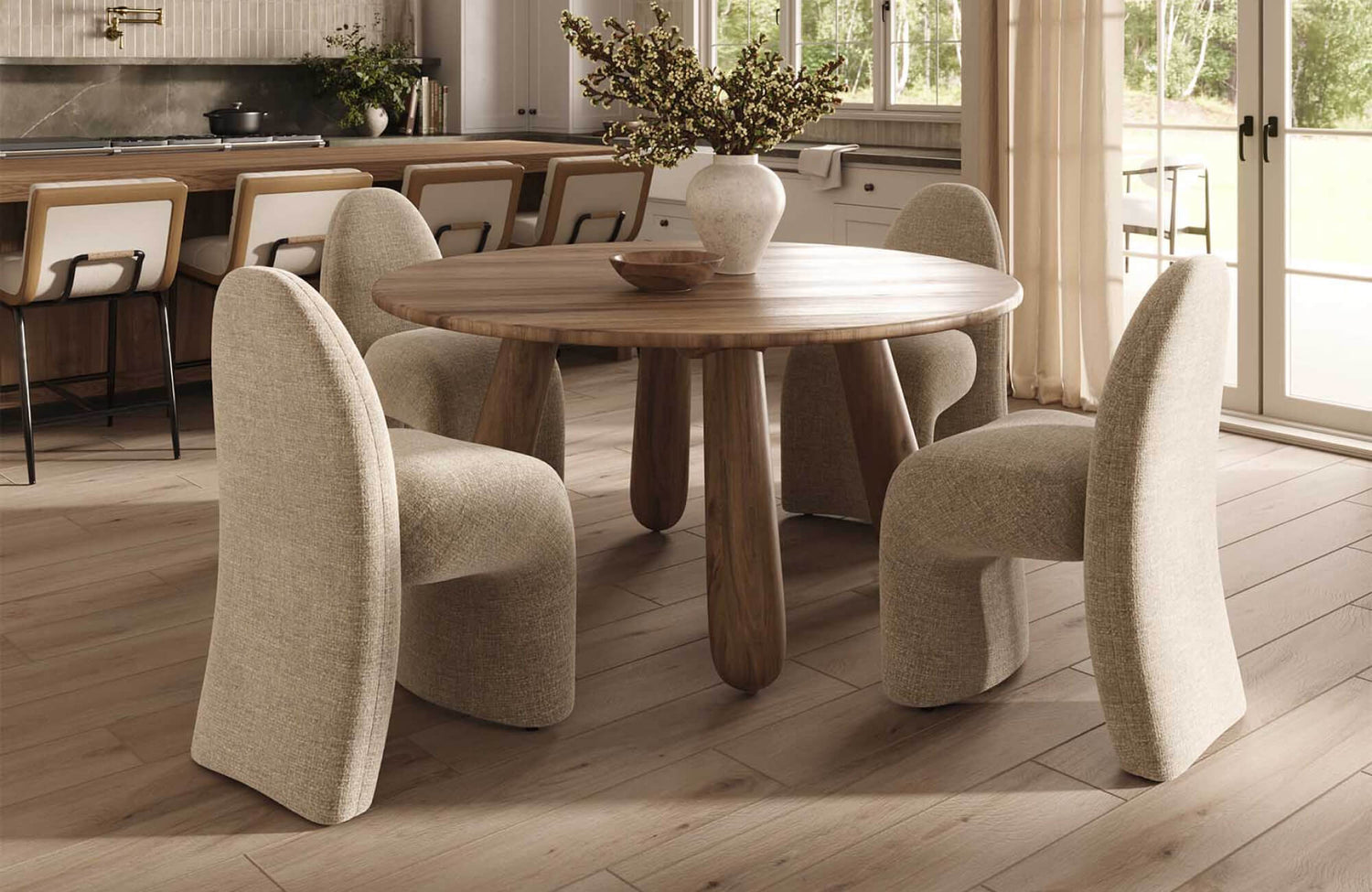
Choosing flooring for busy areas means balancing style, durability, and maintenance. Hardwood offers timeless elegance through its rich grain and natural warmth, while wood look tile captures a similar visual appeal with the added resilience of porcelain or ceramic. But which is better for busy areas like kitchens, entryways, or family rooms?
In this article, we’ll compare how hardwood and wood look tile perform in busy areas, focusing on durability, maintenance, water resistance, and design flexibility. By the end, you’ll have a clearer sense of which flooring option is better suited for kitchens, entryways, family rooms, and other busy spaces.

What Is Hardwood Flooring?
Hardwood remains a popular flooring choice for busy areas because of its natural warmth, character, and long-term value. However, its performance depends on several factors, including construction, wood species, finish, and exposure to moisture or heavy use. Understanding these qualities helps clarify where hardwood works best and where it may require more care.
Types of Hardwood Flooring
Hardwood flooring is generally available in two forms: solid hardwood and engineered hardwood. Solid hardwood is made from a single piece of real wood, typically ¾ inch thick, and can be sanded and refinished multiple times to extend its lifespan. However, it is sensitive to humidity and temperature, which can cause it to expand or contract, making it less suitable for wet areas like basements or bathrooms.
Engineered hardwood, on the other hand, has a real wood veneer bonded to layers of plywood or high-density fiberboard for added stability and to help reduce the risk of warping. This makes it more adaptable to areas where solid hardwood may not perform as well, such as over concrete slabs or radiant heating systems. Its refinishing potential depends on the veneer’s thickness.
Hardwood Species
Hardwood species differ in hardness, which affects how well they hold up in busy areas. Hickory and maple are stronger choices for busy spaces because they resist dents more effectively, while walnut, cherry, and other softer woods are more prone to scratches and impressions. Still, even harder hardwood species can show signs of wear over time, especially in homes with pets, children, heavy furniture, or frequent footfall.
Aesthetics Of Hardwood Flooring
Hardwood flooring is valued for its natural grain, warmth, and unique variation from plank to plank. Lighter species like maple or ash can make a space feel bright and open, while darker woods like walnut or mahogany add depth and richness. Finish also plays a role in how well hardwood suits busy areas: matte and satin finishes tend to hide minor scratches better, while glossy finishes can make wear more noticeable. Over time, hardwood may also develop a patina, which some homeowners appreciate as added character, though others may choose to refinish it for a cleaner look.

Exploring Wood Look Tile
As wood look tile continues to gain popularity in busy homes and commercial spaces, it helps to consider the qualities that shape its performance and visual appeal. These factors influence where it works best, how it holds up to daily use, and how effectively it brings the character of wood into practical spaces.
What Is Wood Look Tile?
Wood look tile is a type of ceramic or porcelain tile designed to replicate the natural appearance of hardwood. Using advanced manufacturing techniques, these tiles capture details such as grain patterns, color variation, and subtle surface texture, offering the warmth of wood with the durability of tile.
Porcelain
Porcelain wood look tiles are made from refined clay and fired at extremely high temperatures, creating a dense, low-porosity material suitable for many indoor and outdoor applications. They are often rectified, giving them precise edges that allow for narrower grout lines and a cleaner, more seamless look.
In busy, moisture-prone areas like bathrooms, these qualities make porcelain wood look tile a practical alternative to hardwood. Edward Martin’s Jameson 8x48 Matte Porcelain Tile in Camel, shown in the photo above, brings in the warmth of wood without the concerns of swelling, cupping, or frequent refinishing. Its elongated plank format and soft camel tone complement the wood vanity, brass fixtures, and stone-look shower tile, creating a polished bathroom design suited to daily use and water exposure.
Ceramic
Ceramic wood look tiles are also made from clay but are fired at lower temperatures, giving them a slightly more porous structure than porcelain. Best suited for indoor applications, they work well on walls, decorative surfaces, and lighter-use interior spaces while remaining an accessible option for budget-conscious renovations.
In the bathroom featured above, Edward Martin’s Jameson 12x36 Matte Ceramic Tile in Camel Deco is used on the shower walls, showing how wood look tile can add warmth and texture to a busy, moisture-prone space where natural hardwood would not be practical. Its soft camel tone and dimensional pattern complement the wood vanity, brass fixtures, and stone-look shower surround, creating a cohesive bathroom design with added visual interest.
Aesthetics Of Wood Look Tile
Wood look tile offers strong design flexibility, with options from rustic and traditional to sleek and modern. It is available in a wide range of shades, from light ash and maple-inspired tones to deeper walnut and mahogany hues, making it easy to coordinate with different interior styles. Visual finishes such as weathered, distressed, or whitewashed styles can also help create a specific design effect, from reclaimed and casual to clean and contemporary.
Wood Look Tile Formats and Finishes
Wood look tile is available in a range of plank sizes, layouts, and surface textures, each influencing how a busy space looks, feels, and functions. Longer planks can create a more seamless, hardwood-like appearance, while larger formats can make open areas feel more expansive. Patterned layouts such as herringbone, chevron, or staggered planks add movement and visual interest, making them especially effective in entryways, bathrooms, kitchens, and feature areas. For busy spaces, textured or matte surfaces are often practical choices because they can help improve grip, reduce glare, and make everyday wear less noticeable. Edward Martin’s Preston 8x48 Matte Porcelain Tile in Teak is a good example, combining a matte finish with an elongated plank format to bring teak-inspired warmth into busy areas while offering a practical, easy-to-maintain surface.

Durability And Maintenance Comparison
In busy areas, flooring needs to withstand daily wear while staying easy to care for. Hardwood and wood look tile can both offer strong visual appeal, but they differ greatly in how they handle scratches, moisture, impact, and long-term maintenance.
Which Flooring Holds Up To Wear and Tear?
While hardwood is known for its natural beauty, it can show scratches, scuffs, and surface wear in busy areas. Pet claws, grit, and moving furniture can leave visible marks, especially in active households. Harder wood species, such as hickory, maple, and Brazilian cherry, tend to perform better, but even durable hardwood can show wear over time.
Porcelain wood look tile is generally much harder than wood and highly resistant to scratches from everyday use. Unlike hardwood, it does not require periodic refinishing, allowing it to maintain its appearance with routine cleaning. In the kitchen above, Edward Martin’s Nora 8x48 Matte Porcelain Tile in Espresso shows how wood look tile can meet the demands of a busy space while preserving the warmth of natural wood. Its dark brown tone adds depth to the room, while the matte surface and elongated plank format create a practical floor suited to daily movement, furniture, and routine cleaning.
Which Flooring Handles Moisture Better?
Water resistance is one of the biggest differences between hardwood and wood look tile. Spills, pet accidents, and high humidity can all affect flooring, especially in kitchens, bathrooms, laundry rooms, and mudrooms.
Hardwood flooring is vulnerable to moisture, and spills should be wiped up quickly to prevent swelling or cupping. In moisture-prone rooms, excess water can cause planks to expand, buckle, or develop long-term damage, making hardwood less suitable for bathrooms, laundry rooms, and basements.
Porcelain wood look tile is highly water-resistant and, when properly installed, performs well in moisture-prone areas such as bathrooms, kitchens, mudrooms, and laundry rooms. It also resists mold, mildew, and staining, making it a strong choice for humid environments. By contrast, hardwood is better suited for controlled spaces with minimal water exposure, such as living rooms and bedrooms.
Can The Flooring Handle Heavy Impact?
Heavy impact affects hardwood and wood look tile in different ways. Hardwood can dent when heavy furniture, dropped objects, or concentrated pressure from high heels press into the surface. Harder species like hickory and maple resist dents better, while softer woods such as pine or walnut are more likely to show indentations.
Wood look tile does not dent, but it can chip if a heavy object, such as a cast-iron pan, is dropped. Porcelain tile is generally more impact-resistant than ceramic, making it the stronger option for busy areas. For furniture dents, tile usually outperforms wood; for dropped objects, the better choice depends on whether denting or chipping is the bigger concern.
Which Flooring Requires More Upkeep?
When it comes to long-term maintenance, wood look tile generally requires less effort than hardwood. Hardwood needs regular sweeping or vacuuming to reduce dust, grit, and scratches, and it may require refinishing every 5 to 10 years, depending on wear, finish, and household activity.
Porcelain wood look tile requires minimal upkeep by comparison. Routine sweeping and mopping are usually enough to keep it clean, with no sanding, resealing, or refinishing required. While grout can collect dirt over time, narrow grout lines and stain-resistant grout can help maintain a cleaner look with less effort.
Here's a general comparison of the most suitable flooring options for each room:
| Room | Best Option | Why? |
| Living Room | Either | Hardwood adds warmth, while wood look tile offers better scratch resistance for active households. |
| Kitchen | Wood Look Tile | Handles spills, splashes, and frequent cleaning better than hardwood. |
| Bathroom | Wood Look Tile | Performs better in humid, moisture-prone spaces. |
| Laundry Room | Wood Look Tile |
Resists spills, humidity, and appliance-related moisture. |
| Bedroom | Either | Hardwood feels warm and classic, while tile can work well with rugs. |
| Hallways | Wood Look Tile | Better suited to heavy footfall, dirt, and scratches. |

Design Flexibility for Busy Spaces
Aesthetic appeal still matters when choosing flooring for busy areas. Hardwood is valued for its natural warmth and variation, but wood look tile offers more flexibility in color, plank size, texture, and layout while providing better resistance to everyday wear. Oversized formats, such as 8”x48” and 12”x72” tiles, can create a sleek, spacious look, while matte, textured, weathered, or distressed finishes help support styles ranging from rustic and farmhouse to coastal and industrial.
For rustic or farmhouse spaces, wood look tile can capture the charm of aged or reclaimed wood without the upkeep that natural hardwood requires. This is especially clear in the photo featured above, where Edward Martin’s Preston 8x48 Matte Porcelain Tile in White Oak brings a soft, wood-inspired foundation to the living room. Its grayish beige tone and elongated plank format complement the exposed beams, stone fireplace, and natural textures throughout the space, creating a warm, relaxed look that still feels practical for everyday use.
In coastal homes, lighter tones such as whitewashed oak, bleached pine, or soft gray can create a relaxed driftwood effect while standing up better to sand, moisture, and frequent cleaning. For industrial interiors, darker wood tones, distressed finishes, and larger plank formats can add warmth against concrete, brick, and metal while remaining practical for busy spaces.
To compare colors, plank sizes, and finishes more easily, our AR Visualization Tool lets you preview how different wood look tiles may work in your space before making a final choice.
Why Wood Look Tiles Are The Perfect Fit For Busy Spaces
For most busy and moisture-prone areas, wood look tile is the more practical choice than hardwood. It offers the warmth and character of natural wood while providing stronger resistance to scratches, water damage, stains, and everyday wear. Hardwood can still be a beautiful option for bedrooms, formal living rooms, and other lower-use spaces; however, in kitchens, bathrooms, laundry rooms, entryways, and active family areas, wood look tile typically offers better long-term performance with less maintenance.
Choosing the right flooring also depends on finding a style that complements your space. For personalized guidance, Edward Martin offers expert design consultation to help you compare options and select a look that fits your home. Whether you need mood boards, room visuals, or tailored advice, their team can help you make a more confident and informed decision.


