Rugs have the power to transform a room, but only when they’re sized correctly. The right rug can anchor your furniture, define the layout, and bring a sense of balance and intention to the space. The wrong one, on the other hand, can make even a well-designed room feel awkward, disconnected, or incomplete.
Despite their impact, rug sizing is one of the most common design challenges homeowners face. It’s not always obvious how large a rug should be, how it should sit within a room, or how it should relate to surrounding furniture. This guide breaks down everything you need to know, from essential sizing principles to room-by-room recommendations, so you can choose a rug that not only fits your space, but enhances it.

Why Rug Size Matters
Rug size is essential in defining a room’s structure. A properly sized rug connects furniture pieces, grounds the layout, and establishes clear zones, especially in open or multifunctional spaces. In transitional areas like bathrooms or hallways, a well-proportioned runner, such as Edward Martin’s Georgette Rug in Sand / Peach, shown in the image above, can softly define movement while adding warmth and visual continuity.
When a rug is too small, it tends to “float,” leaving furniture disconnected. When it’s too large, it can overwhelm the room and reduce the sense of openness. The goal is to strike a balance where the rug supports the layout without dominating it.

Rug Sizing Rules You Should Know
Before choosing a rug for a specific room, it’s important to understand the foundational guidelines that influence how a rug should fit and function within any space.
Leave Space Around the Edges
A rug should rarely extend wall-to-wall. Leaving a border of visible flooring, typically 8 to 18 inches, creates a natural frame and prevents the room from feeling crowded. This negative space helps the rug feel intentional rather than oversized.
Align Your Rug With Furniture
Your rug should relate directly to your furniture layout. In most cases, it should sit under key pieces to visually connect them. Whether all legs or just the front legs rest on the rug, the goal is to create a unified arrangement rather than isolated elements. This is especially effective in dining settings, where a piece like Edward Martin’s Quinton Rug in Ash, as seen in the image above, helps anchor the table and chairs into a cohesive composition.
Avoid Rugs That Are Too Small
One of the most common mistakes is choosing a rug that’s too small for the space. A rug that doesn’t reach the main furniture pieces can make the entire room feel incomplete. When in doubt, sizing up is almost always the better choice.

Living Room Rug Size Guide
With these core principles in mind, you can start applying them to different areas of the home, beginning with the living room, where rug size has the most visual impact.
Sectionals
For L-shaped sectionals, choose a rug large enough to extend beyond the sofa on all sides. Ideally, the rug should reach at least 18 to 24 inches past the edges of the sectional. This ensures the entire seating area feels cohesive and grounded.
Two Sofas
In layouts with two opposing sofas, a large rectangular rug should sit beneath both pieces, connecting them into one conversation area. Make sure there’s enough room for a coffee table and additional seating without crowding the layout.
Open Layouts
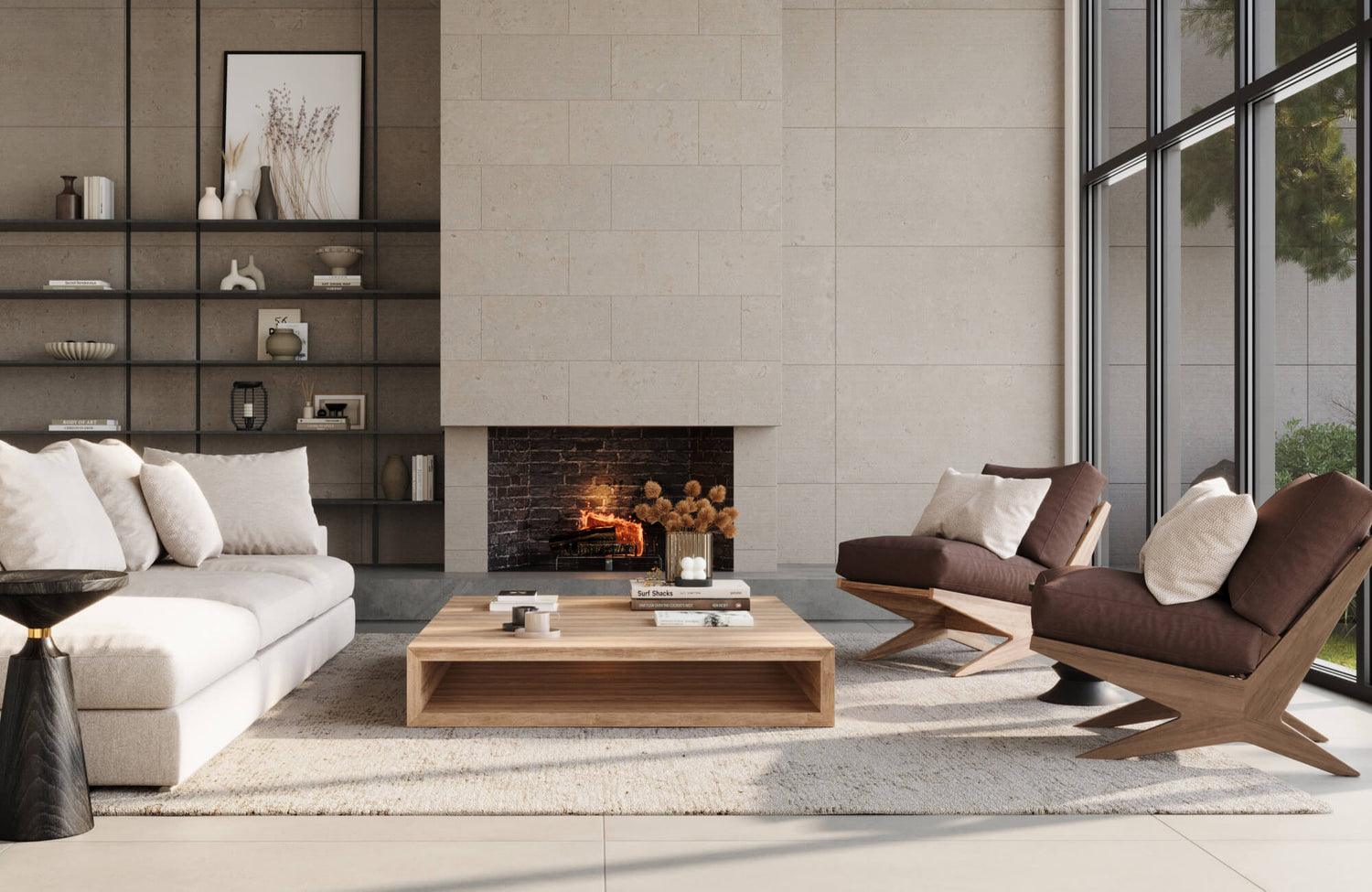
In open-concept spaces, rugs help define zones. A larger rug can anchor the main seating area, while smaller rugs can distinguish adjacent spaces like reading corners or secondary lounges. This layering creates structure without the need for physical dividers, as demonstrated by Edward Martin’s McGowan Rug in Midnight / Sand in the image above, which subtly separates the seating area while maintaining visual flow.

Dining Room Rug Size Guide
In the dining room, rug size is as much about function as it is about aesthetics. A well-scaled rug not only frames the table but also enhances the overall composition of the space, much like Edward Martin’s Davies Rug in Wheat / Dune, featured in the image above, which provides a soft, balanced foundation beneath the dining set.
A good rule is to choose a rug that extends 24 to 36 inches beyond the dining table on all sides. This allows chairs to slide in and out comfortably without catching on the rug’s edge. For larger tables or extendable setups, increase that allowance to 36 to 48 inches to maintain ease of movement. The result is a dining area that feels both practical and visually balanced.

Bedroom Rug Size Guide
After considering the functional needs of dining spaces, bedroom rugs shift the focus toward comfort and visual balance, requiring a more relaxed and layered approach to sizing and placement.
Under the Bed
Placing a rug under the lower portion of the bed is a classic approach. The rug should extend at least 18 to 24 inches beyond the sides and foot of the bed, creating a soft landing area and balanced proportions. In the image above, Edward Martin’s Hutchinson Rug in Sage / Graphite demonstrates how a properly sized rug can frame the bed while adding depth and texture to the room.
Side Placement
For a more minimal setup, placing runners or smaller rugs along each side of the bed works well. This provides comfort underfoot while maintaining a lighter visual footprint.
Standard Sizes by Bed
As a general guideline, queen-size beds pair well with 8x10 or 9x12 rugs, depending on the room’s proportions and the desired amount of coverage.
For king-size beds, a 9x12 rug or larger is typically recommended to maintain proper scale and balance within the space. In both cases, the goal is to ensure that enough of the rug remains visible around the bed, creating a well-framed and visually cohesive look.

Entryway Rug Size Guide
Entryways set the tone for the rest of the home, and the rug should reflect both function and proportion. A thoughtfully chosen piece, like Edward Martin’s Hutchinson Rug in Lake / Terracota shown in the image above, can introduce color and pattern while guiding the flow of movement through the space.
In smaller entryways, a runner or compact rectangular rug helps define the space without overwhelming it. For larger foyers, a more expansive rug can create a strong visual statement while accommodating foot fall. Regardless of size, the rug should allow enough room for movement and practical use, such as opening doors or removing shoes comfortably.

Additional Considerations
Once you’ve determined the right size and placement, a few additional factors can further refine your choice and ensure the rug complements both your space and lifestyle.
Material
Busy areas benefit from durable materials like wool or synthetic blends, which are designed to withstand daily use. Softer, more delicate materials can be reserved for lower-activity areas where comfort is the priority.
Thickness
Thicker rugs add warmth and a sense of comfort, making them ideal for bedrooms and lounging areas. Thinner rugs, on the other hand, offer a cleaner, more streamlined look and are better suited for spaces where doors or furniture need to move easily.
Personal Style
Ultimately, your rug should reflect your personal taste. While guidelines are helpful, experimenting with different sizes and placements can lead to the most satisfying results. A well-chosen rug should feel intentional and elevate the overall atmosphere of the room, much like Edward Martin’s Marroway Indoor/Outdoor Rug in Black / Grey, 5'3" x 7'7", featured in the image above, which brings a modern, textural element to a relaxed seating area.
Finding the Right Balance for Your Space
Choosing the right rug size comes down to proportion, placement, and how the space is used. A well-sized rug connects furniture, defines areas, and enhances the overall flow of a room without overwhelming it.
If there’s one principle to keep in mind, it’s this: your rug should work with your layout, not against it. When properly scaled, it brings clarity, comfort, and cohesion to your space, transforming it from simply furnished to thoughtfully designed. If you’re unsure where to start, Edward Martin’s design consultation can provide tailored guidance to help you refine your layout and make confident decisions. You can also reach out through Edward Martin’s contact page for additional support in creating a space that feels both balanced and intentional.