Many of us are drawn to the natural warmth and character of wood, yet hesitate when thinking about how it performs in spaces exposed to moisture and daily wear. Concerns about upkeep, durability, and long-term appearance often lead us to explore alternative materials. Ceramic tile that looks like wood has emerged as an option that aims to balance visual appeal and practical performance. In this article, we take a closer look at ceramic tile designed to resemble wood, explaining how it achieves its appearance, where it performs best, and what you should consider when deciding if it is the right fit for your space.

Wood Look Ceramic Tile Explained
When you wonder whether ceramic tile can genuinely resemble wood, the answer is yes. Its convincing appearance comes not from basic coloring, but from carefully developed technologies and design techniques that work together to capture the visual character of natural wood in a practical tile surface.
What Makes Ceramic Tile Resemble Wood
Modern ceramic tile uses high-resolution digital printing to apply detailed wood imagery directly to the surface. This technology captures details such as grain direction, knots, and natural color variation found in real wood planks. Subtle surface textures are then applied, allowing the tile to reflect the look of wood while adding light tactile variation underfoot. A final glazing layer seals and protects the design, preserving visual depth and ensuring long-term performance.
Ceramic Tile vs. Porcelain Tile Differences
While both ceramic and porcelain tiles can achieve a wood-like appearance, they differ in composition, durability, and typical use. Ceramic tile is generally lighter and easier to work with, which makes it more suitable for wall applications or lower-impact interior areas where the risk of chipping is minimal. Porcelain tile, by comparison, is denser and more durable, allowing it to perform well in demanding conditions such as floors and some outdoor environments.
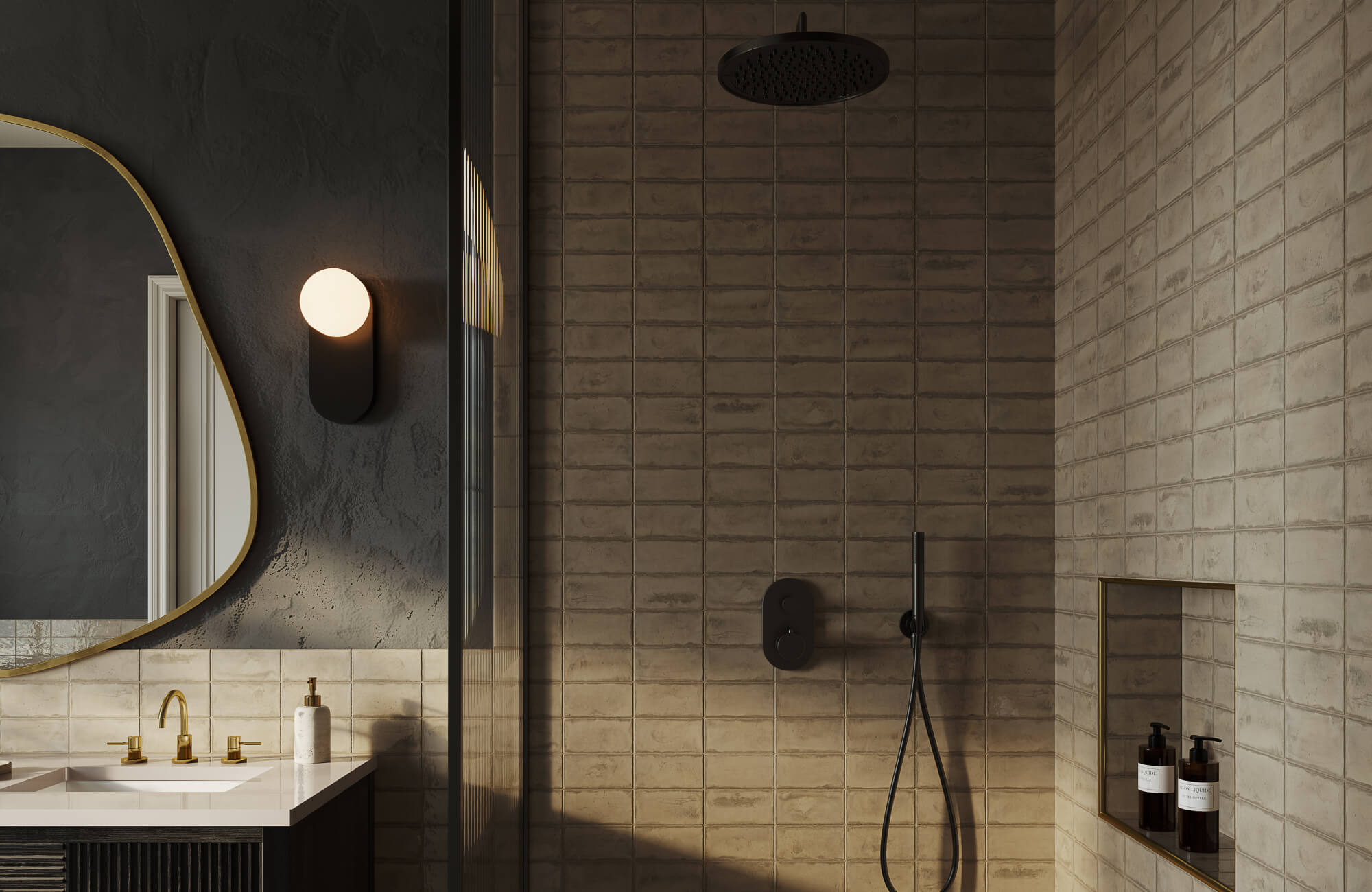
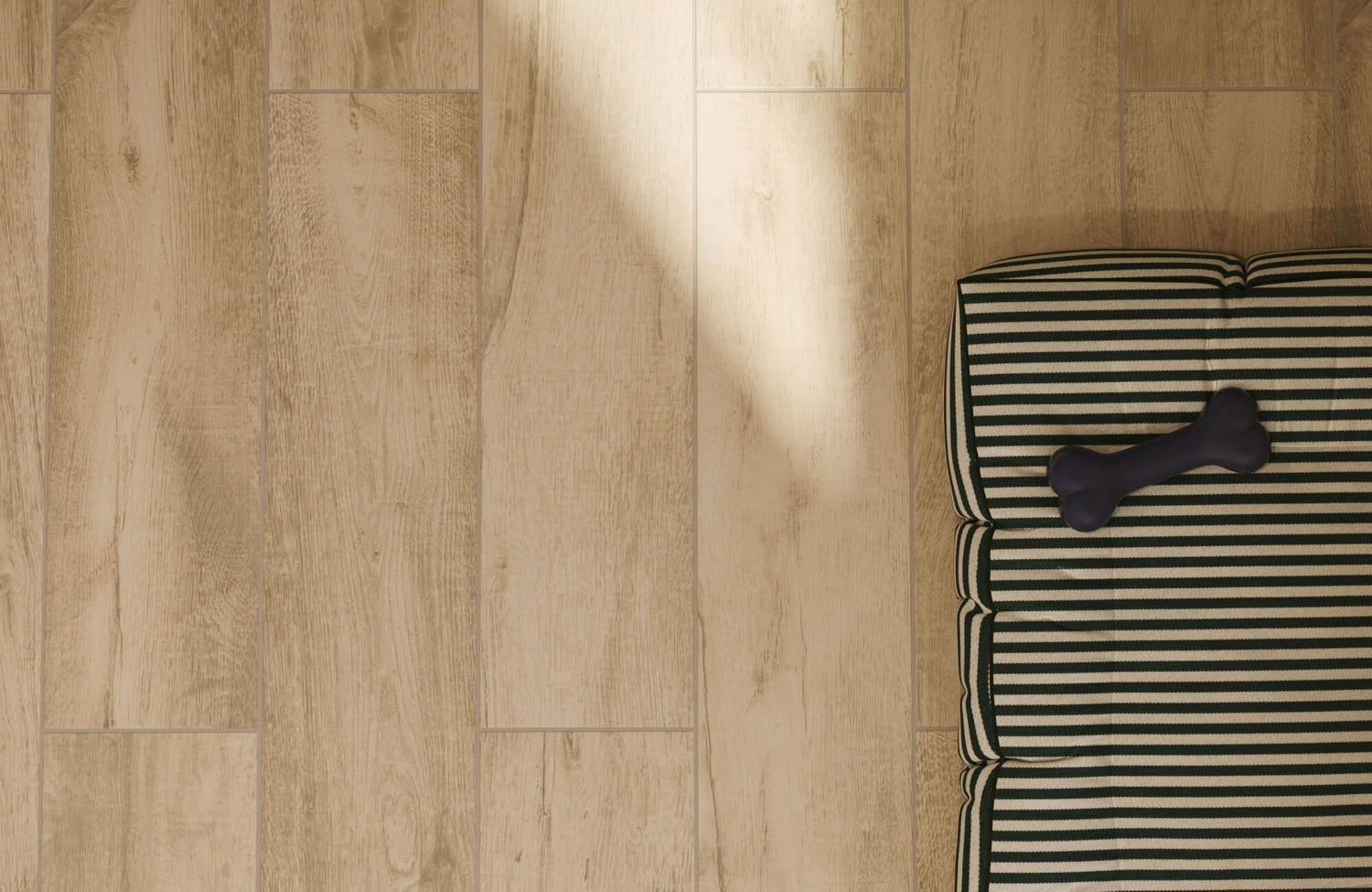
This contrast is clearly illustrated in the photo featured above, where Edward Martin’s Jameson 12x36 Matte Ceramic Tile in Camel Deco is applied on the shower wall for decorative emphasis, while the Jameson 8x48 Matte Porcelain Tile in Camel is used on the floor to support moisture exposure and daily wear. Understanding these differences helps you select the appropriate material for each surface, rather than assuming one option works equally well in every application.
Why Wood Look Tile Became Popular
As open floor plans and active households have become more common, expectations for flooring have shifted. Natural wood, while visually appealing, can be vulnerable in areas exposed to moisture, spills, and frequent cleaning. Ceramic tile that looks like wood addresses these concerns by preserving the appearance people enjoy while offering greater resilience for everyday living.

How Realistic Does Wood-Looking Ceramic Tile Appear
Once the fundamentals are understood, attention naturally shifts to appearance. Many people want to know whether wood-looking ceramic tile will feel authentic in the space or appear artificial after installation.
Grain Patterns and Color Depth
Today’s wood-look ceramic tiles are created using layered color printing rather than flat tones. This approach allows them to reflect the natural variation found in oak, maple, walnut, and even reclaimed wood. Instead of repeating a single pattern, manufacturers produce multiple tile faces so the surface appears more organic and varied once installed. That effect is clearly demonstrated in the photo featured above, where Edward Martin’s Zayne 12x36 Matte Ceramic Tile in Slat shows fine linear grain detail and subtle tonal shifts that closely resemble real wood. This level of variation helps the finished space feel closer to natural wood rather than a uniform tiled surface.
Matte vs. Gloss Finishes
Finish has a significant influence on how realistic wood-looking ceramic tile appears. In general, matte finishes absorb light and closely resemble unfinished or lightly sealed wood surfaces. By comparison, gloss finishes can be easier to maintain, yet they often reflect light in a way that draws attention to the tile rather than the wood effect. For this reason, in spaces where authenticity is a priority, matte finishes tend to create a more natural and visually balanced result.
Size and Plank Proportions
Tile size plays an equally important role in how realistic the finished surface appears. Longer, narrower planks closely reflect traditional hardwood boards and help create a smooth, continuous visual flow across the room. Shorter or wider tiles can still work well, but they are more likely to read as a deliberate design element rather than a direct substitute for wood. Choosing proportions that align with the scale of the space further enhances the overall sense of balance and authenticity.

Where Wood Look Ceramic Tile Performs Best
Appearance is only part of the decision. It is equally important to understand where wood-look ceramic tile performs well in everyday use and where it offers the most practical value.
Kitchens and Laundry Areas
In spaces where spills and humidity are part of everyday life, ceramic tile offers added peace of mind. It does not absorb moisture the way wood does, allowing for regular cleaning without concerns about swelling or staining. This makes it well-suited for kitchens and laundry rooms where practicality matters as much as appearance. Over time, this resistance helps the surface maintain a consistent look despite frequent use.
Bathrooms and Wet Zones
Bathrooms present one of the biggest challenges for natural wood. Ceramic tile handles splashes, steam, and frequent temperature changes without losing its shape or finish. When paired with a slip-resistant surface, it allows you to enjoy a wood-inspired look in areas where real wood would struggle. This approach is effectively illustrated in the photo featured above, where Edward Martin’s Zayne 12x36 Matte Ceramic Tile in Slat is used on the shower walls and ceiling to introduce warmth and linear texture while maintaining the moisture resistance required in wet zones. As a result, it becomes easier to carry a cohesive, wood-inspired design into bathroom spaces while maintaining reliable performance.
Entryways and Mudrooms
Entryways take the brunt of dirt, water, and daily wear. Ceramic wood-look tile holds up well under these conditions, maintaining its appearance despite frequent use and routine cleaning. This durability makes it a reliable option where first impressions and function meet. It also helps reduce concerns about seasonal moisture being tracked in from outdoors.

Practical Advantages Over Natural Wood
Aside from placement, ceramic tile also offers clear performance benefits that influence long-term satisfaction. These advantages become especially important when you consider how the material responds to everyday wear and changing environmental conditions over time.
Moisture and Temperature Stability
Unlike wood, ceramic tile remains dimensionally stable when humidity levels change. This stability reduces the likelihood of gaps, warping, or surface damage over time, particularly in regions with noticeable seasonal shifts. It also allows the tile to maintain consistent alignment and spacing once installed. As a result, the surface tends to look uniform and well-finished for years with minimal intervention.
Scratch and Dent Resistance
Homes with pets, children, or heavy furniture place added demands on flooring surfaces. Ceramic tile resists scratches and dents more effectively than wood, allowing the floor to maintain a consistent appearance even with active daily use. This durability can be especially reassuring in rooms that see constant movement and rearrangement.
Long-Term Maintenance Simplicity
Caring for ceramic tile is straightforward. Regular sweeping and damp mopping are usually enough, and there is no need for refinishing or sealing. Over time, this ease of care can reduce both maintenance effort and overall costs while keeping the surface looking consistent. It also makes ceramic tile easier to maintain in homes where time for upkeep is limited.

Limitations to Consider Before Choosing
A balanced decision also means understanding where ceramic tile may fall short compared to wood. Being aware of these considerations early helps you set realistic expectations and avoid surprises after installation.
Surface Hardness and Comfort
Ceramic tile is firm underfoot, which some people notice during extended periods of standing. This firmness can feel different from the slight give of natural wood, particularly in spaces where you spend a lot of time on your feet. Area rugs can help soften the surface, while radiant heating beneath the tile adds warmth and improves comfort. Together, these adjustments can make ceramic tile more comfortable without changing its appearance.
Grout Visibility and Maintenance
Unlike wood planks, tile installations include grout lines. While modern grout colors can blend well with wood tones, grout still requires occasional cleaning. Choosing the right grout color and width helps maintain a cohesive look over time. Proper sealing can also make grout easier to maintain and less prone to discoloration.
Installation Complexity
Installing ceramic tile requires proper subfloor preparation and precise placement. Even small inconsistencies can affect alignment, grout spacing, and the overall finished appearance. Because these details influence both durability and visual quality, professional installation is often recommended. This approach helps ensure the tile performs as intended over time and maintains a clean, well-balanced look.

How to Choose the Right Wood-Look Ceramic Tile
Once you understand both the benefits and limitations, the final step is making a confident selection. Focusing on how the tile will function within your space helps narrow options and supports a more satisfying long-term choice.
Matching Tile Style to Interior Design
Rustic interiors often pair well with tiles that show stronger grain variation and warmer tones. Modern spaces typically benefit from cleaner lines and more subtle color shifts, while traditional interiors tend to work best with classic plank proportions and natural hues. Paying attention to surrounding finishes and furnishings helps the tile feel integrated into the space rather than purely decorative. This alignment allows the floor or wall surface to support the overall design rather than compete with it.
Selecting the Right Finish for Function
In rooms where water is present, a textured or matte finish improves grip and reduces glare. In lower-use areas, smoother finishes can work well and offer easier cleaning. Matching the finish to the function helps the tile perform as expected. This thoughtful selection also contributes to long-term comfort and safety within the space.
Coordinating Layout and Pattern
Installation layout plays an equally important role in how a room is perceived. Staggered patterns create a natural flow similar to traditional wood flooring, while straight layouts offer a more structured appearance. Extending the same layout across connected spaces can make the home feel more cohesive. Careful planning at this stage helps avoid visual breaks that can disrupt the overall design.
Wood Look Ceramic Tile as a Wood Alternative
Ceramic tile that looks like wood does exist, and for many homes, it offers a practical balance between visual warmth and dependable performance. By understanding how it is made, where it performs best, and the considerations involved, you can better determine whether it aligns with your space and lifestyle. If you would like guidance tailored to your layout, usage needs, or design goals, you can contact us to explore options or take advantage of our design services for more personalized support.