Designing a bathroom is one of the most detail-driven decisions in a home. It is a space that must balance visual harmony with daily functionality, aesthetic expression with long-term durability. Among the many choices homeowners face, one question consistently surfaces during bathroom planning or renovation: is it better to buy a vanity and mirror as a coordinated combo, or to select them as separate pieces?
This decision goes far beyond surface-level style. It affects budget allocation, installation logistics, spatial proportions, and even how the room feels when used every day. For quality-conscious homeowners investing in premium materials and thoughtful design, understanding the implications of each approach is essential. By examining both options through the lens of design cohesion, flexibility, practicality, and room-specific needs, the right choice becomes less about rules and more about intention.

The Case for the Combo Convenience and Cohesion
Vanity and mirror combos are designed to work as a single visual and functional unit. For many, particularly those seeking a streamlined decision-making process, this approach offers clarity and confidence. The appeal lies in cohesion, predictability, and the reassurance that all elements have already been thoughtfully aligned.
Eliminating the Headache of Matching Wood Stains
One of the most underestimated challenges in bathroom design is achieving consistency in finishes. Wood stains, even when labeled similarly, can vary dramatically depending on species, grain, undertones, and finishing processes. When a vanity and mirror are purchased separately, even small discrepancies in color temperature or sheen can disrupt the visual balance of the space.
A vanity and mirror combo removes this uncertainty entirely. The finishes are produced together, ensuring that tones, textures, and undertones align seamlessly. This is particularly valuable in premium bathrooms where natural wood vanities, oak grains, walnut tones, or painted finishes are meant to read as intentional and refined rather than slightly mismatched. The result is a space that feels calm, cohesive, and professionally curated.
The Financial Advantage of Bundled Pricing
From a cost perspective, bundled vanity and mirror sets often provide better overall value. Manufacturers are able to optimize production and packaging, passing savings along to the buyer. While a combo may appear more expensive upfront, the total cost frequently undercuts that of purchasing two comparable standalone pieces.
Beyond the sticker price, there are also indirect financial benefits. Reduced shipping complexity lowers the risk of additional fees or replacement costs, and fewer vendors mean fewer chances for delays or compatibility issues. For those working within a defined budget but still prioritizing premium quality, a well-designed combo can represent a smart allocation of resources.
Ensuring Perfect Scale and Proportion
Bathrooms are particularly sensitive to scale. A mirror that is too small can make a vanity feel oversized and heavy, while an overly large mirror can overwhelm the space and diminish the impact of surrounding finishes. Vanity and mirror combos are designed with proportional balance in mind, ensuring that width, height, and visual weight complement one another.
This is especially important in compact bathrooms where every inch matters. A pre-matched set removes the guesswork, delivering a harmonious composition that feels intentional rather than improvised. The result is a bathroom that feels visually resolved, with each element reinforcing the others.

The Case for Separates Design Freedom and Contrast
While combos offer simplicity and cohesion, choosing a vanity and mirror separately opens the door to greater creative expression. For those who view their bathroom as an extension of personal style, this approach allows for contrast, customization, and a more layered aesthetic.
The Power of Mixing Materials and Metals
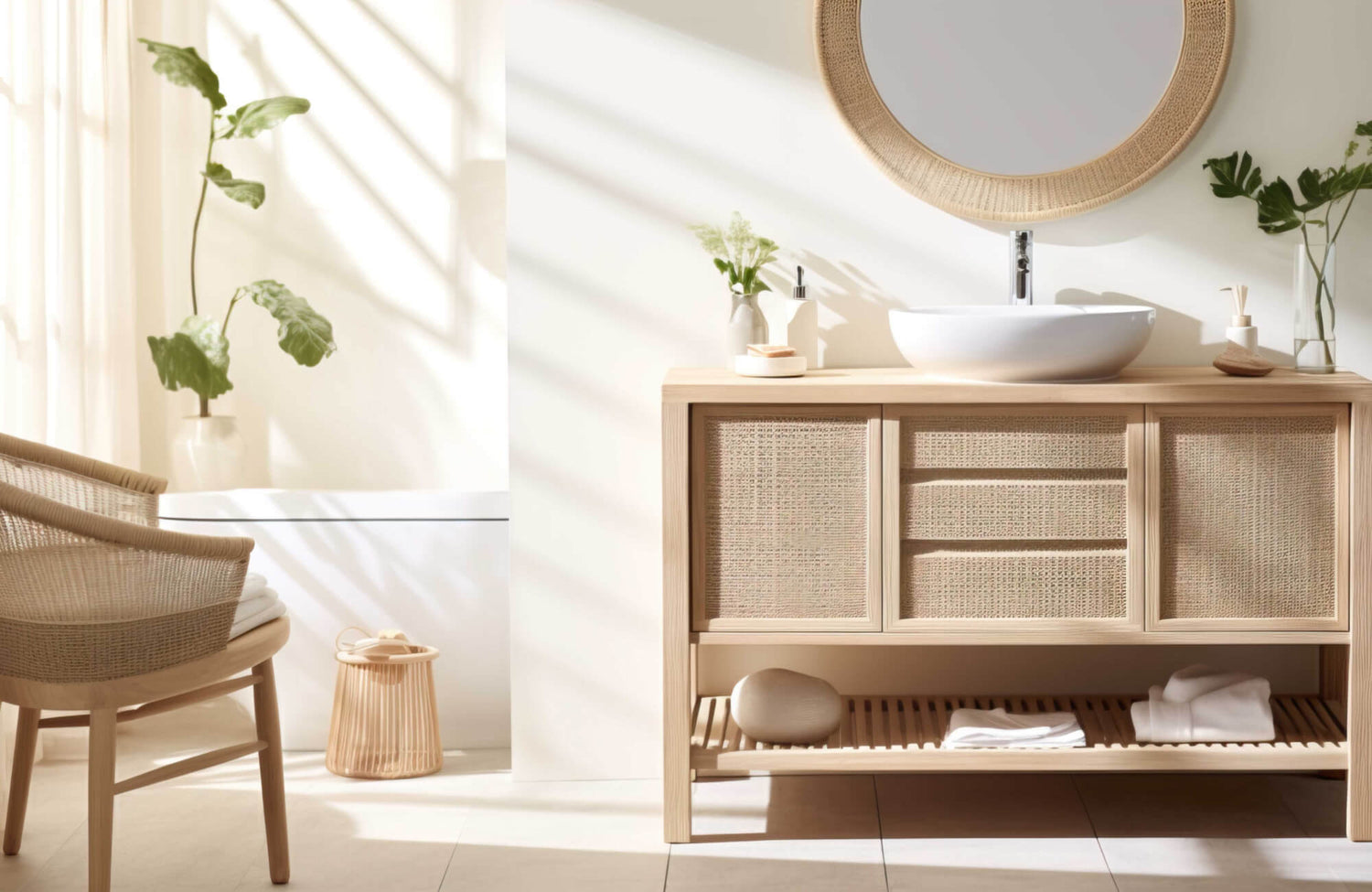
Selecting separate pieces allows you to play with contrast in a way that combos rarely permit. A warm wood vanity paired with a sculptural metal-framed mirror, a softly patinated brass mirror, or a minimalist stone vanity topped with an organic, irregular silhouette creates visual tension that feels intentional and sophisticated. This layered approach is exemplified by Edward Martin’s Raelynn Mantel Mirror in Iron Matte Black paired with the Gemma 55" Single Vanity in Washed Blonde Oak Veneer with Carrara Marble Top, as seen in the image above, where contrasting finishes feel balanced rather than competing.
This approach is particularly effective in contemporary and transitional interiors where contrast adds depth and nuance. Mixing materials such as wood, metal, glass, stone, and brass mirrors introduces warmth and dimensionality, elevating the bathroom from purely functional to distinctly expressive. When executed thoughtfully, the mirror becomes a focal point rather than a supporting element, contributing meaningfully to the overall narrative of the space.
Solving Vertical Challenges with Custom Heights
Not all bathrooms are built alike, and ceiling height can dramatically influence mirror selection. In rooms with high ceilings, a standard combo mirror may feel undersized or leave awkward negative space above. Conversely, in bathrooms with soffits or architectural constraints, a tall mirror may simply not fit.
Choosing separate pieces allows for greater flexibility in vertical proportions. Mirrors can be selected to extend closer to the ceiling for a dramatic effect or positioned lower to accommodate lighting, shelving, or architectural details. This adaptability is invaluable in custom homes, renovations of older properties, or spaces with unique structural considerations.
Upgrading Functionality with Storage Mirrors
Functionality is another area where separates often shine. Medicine cabinets and storage mirrors have evolved significantly, offering concealed shelving, integrated lighting, defoggers, and electrical outlets without sacrificing aesthetics. These features are rarely included in standard vanity and mirror combos.
For those who prioritize practicality, especially in shared or master bathrooms, a storage mirror can dramatically improve daily usability. By selecting a vanity that focuses on base storage and a mirror that adds vertical organization, the bathroom becomes more efficient without appearing cluttered.

Assessing Installation and Logistical Realities
Beyond design considerations, practical realities strongly influence whether a combo or separate pieces make more sense. Installation complexity, shipping risks, and electrical planning all influence the overall experience and long-term satisfaction.
Navigating Shipping Risks and Breakage
Mirrors are inherently fragile, and shipping them carries a degree of risk. When a vanity and mirror are shipped together as a set, packaging is often engineered to protect both components, reducing the likelihood of damage. A single shipment also simplifies tracking and coordination.
When purchasing separate pieces from different suppliers, shipping timelines may vary, and the risk of damage increases with each additional delivery. While many premium brands invest heavily in protective packaging, the logistical complexity can introduce delays or complications that are worth considering, particularly for time-sensitive projects.
Electrical Planning for Sconces versus Vanity Lights
Lighting design is closely tied to mirror selection. Combos are often designed with integrated or over-mirror lighting in mind, simplifying electrical planning. This can be advantageous in renovations where altering wiring is costly or impractical.
Choosing a separate mirror allows for more nuanced lighting strategies, such as wall sconces placed on either side of the mirror for balanced facial illumination. While this approach often yields superior lighting quality, it requires careful planning during the rough-in stage. Homeowners must weigh the desire for optimal lighting against the complexity and cost of electrical modifications.
Flexibility in Mirror Placement and Hanging
Separate mirrors offer greater flexibility in placement, which can be crucial in bathrooms with unconventional layouts. A mirror can be centered on the sink, aligned with architectural features, or adjusted to accommodate window placements or wall niches, allowing the design to respond to the room rather than forcing symmetry. This adaptability is illustrated by Edward Martin’s Esmeralda Round Mirror in Polished Brass paired with the Elodie 60" Double Vanity in Mid-Century Walnut with a 3 cm White Zeus Quartz Top, where placement enhances both proportion and visual flow in the image above.
Combos, by contrast, are designed to align precisely with the vanity, leaving little room for adjustment. While this ensures visual consistency, it can be limiting in spaces that deviate from standard proportions. Understanding the constraints and opportunities of the room is key to making the right choice.

Matching the Strategy to the Specific Room Type
Not all bathrooms serve the same purpose, and the optimal approach often depends on how the space is used. Considering the unique demands of each room helps clarify whether a combo or separate pieces will deliver the best result.
Creating Wow Factor in Powder Rooms
Powder rooms are often the most design-forward spaces in a home. Used primarily by guests, they offer an opportunity to make a strong visual statement without the need for extensive storage or daily-use functionality.
In these spaces, separate pieces often shine. A bold mirror paired with a sculptural vanity can create a memorable impression that feels curated and intentional. Since practicality is less of a concern, design freedom takes precedence, making separates an attractive choice.
Prioritizing Efficiency in Guest and Kid Bathrooms
Guest and children’s bathrooms benefit from clarity, durability, and ease of use. In these spaces, vanity and mirror combos often make sense. The cohesive design reduces visual clutter, while the predictable proportions simplify installation and maintenance.
Combos also tend to age well in these contexts, providing a timeless look that accommodates changing users without requiring frequent updates. For those seeking a reliable, low-maintenance solution, the simplicity of a combo is hard to overlook.
Curating a Retreat in the Master Suite
The master bathroom is where design and functionality must coexist seamlessly. As a personal retreat, it often demands both elevated aesthetics and thoughtful storage solutions, making the choice between a combo and separate pieces more nuanced. Carefully selected individual elements can help create a space that feels intentional, calming, and tailored to daily routines.
Many people opt for separate pieces in master suites to achieve a refined, custom look that reflects personal taste. Edward Martin’s Esmeralda Wide Mirror in Polished Brass paired with the Paxton 48" Single Vanity in Carbon Oak with a 3 cm White Zeus Quartz Top demonstrates how generous scale, warm finishes, and clean lines can work together to elevate the space without overwhelming it. While high-end combos with integrated features can also deliver exceptional results, separates often allow for a more curated, retreat-like atmosphere when luxury and personalization are the priority.
Designing Your Perfect Reflection
Ultimately, the decision between a vanity and mirror combo or separate pieces is not about which option is objectively better, but which aligns more closely with your priorities. Combos offer cohesion, convenience, and value, making them an excellent choice for streamlined projects and efficiency-driven spaces. Separates provide creative freedom, functional upgrades, and adaptability, appealing to those who view design as a form of self-expression.
By considering the specific needs of each bathroom, the architectural context of your home, and the balance between aesthetics and practicality, the right choice becomes clear. For those seeking added confidence in their selections, Edward Martin’s design consultation service offers personalized guidance tailored to your space, whether you need help refining proportions, coordinating finishes, or selecting complementary tile, rugs, or furniture. And for product-specific questions or project support at any stage, you can always contact Edward Martin to ensure every detail comes together seamlessly. Whether unified or intentionally contrasted, a thoughtfully selected vanity and mirror pairing has the power to transform the bathroom into a space that feels both beautiful and deeply personal.