In contemporary bathroom design, the vanity has evolved into a defining architectural feature that influences both visual harmony and daily functionality. Choosing between a floating vanity with storage and a freestanding vanity shapes how space is perceived, organized, and maintained over time. Clean lines, engineered performance, and thoughtful proportions now matter as much as surface aesthetics, particularly in modern and luxury bathroom renovations. As homeowners seek solutions that balance refined style with practical efficiency, understanding how each vanity type performs becomes increasingly important. Examining structure, storage, spatial impact, maintenance, and long-term value reveals which option truly elevates the bathroom environment.

Structural Performance and Installation Complexity
The structural behavior determines how a vanity interacts with the wall framing, flooring systems, and plumbing infrastructure. These underlying mechanics quietly influence installation precision, daily stability, and long-term reliability.
Wall-Mounted Load Distribution Systems
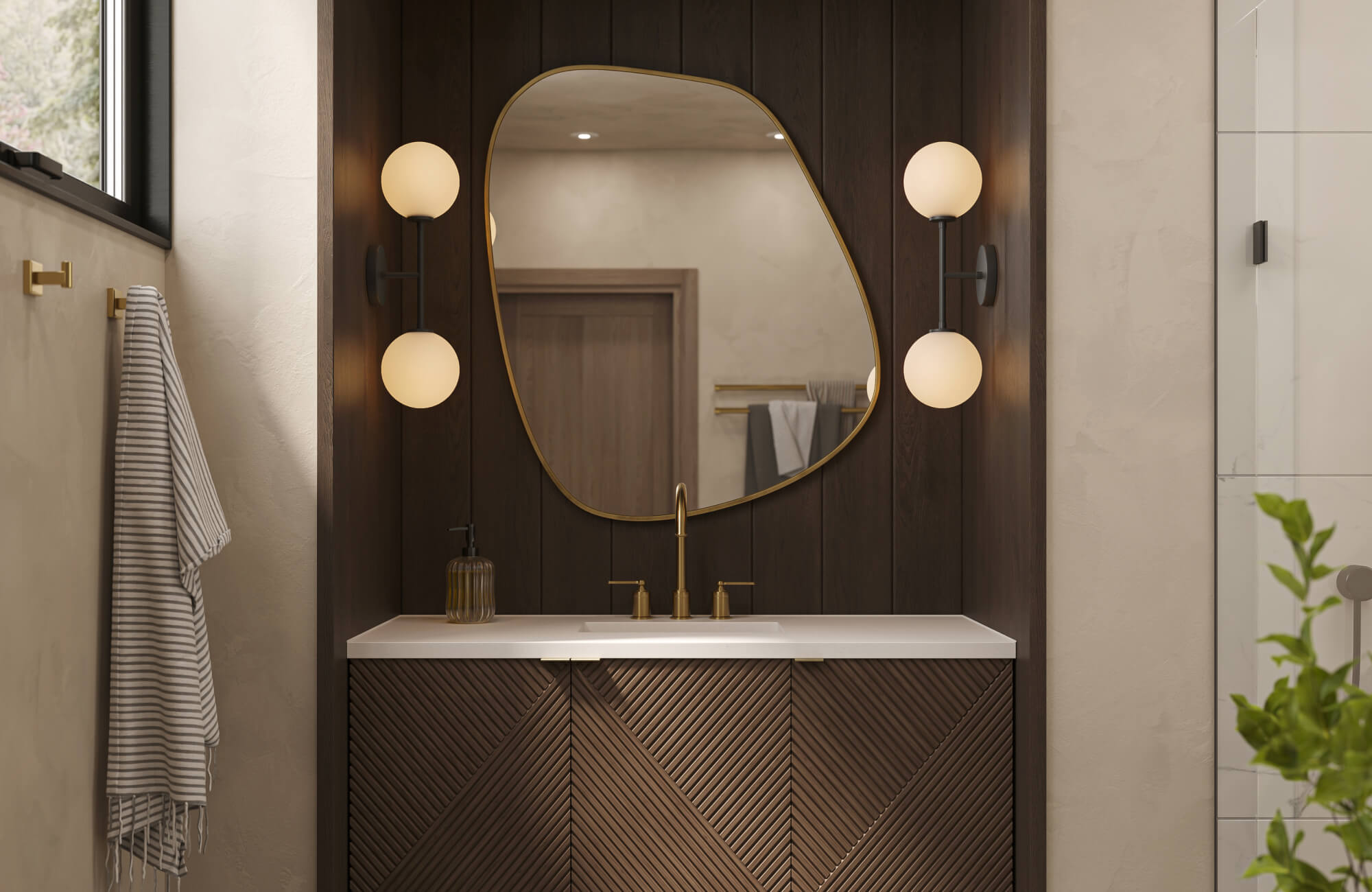
Floating vanities with storage rely on engineered wall-mounting systems that transfer structural loads from the cabinet into reinforced wall framing, allowing the unit to remain fully suspended without compromising stability. Steel mounting rails and concealed brackets work together to distribute the combined weight of the vanity body, integrated storage, and countertop evenly across studs or blocking, creating a stable structural base. This precise load management becomes especially important for vanities incorporating substantial materials, such as Edward Martin’s Royce 36" Single Vanity in Chestnut with a 3 cm White Zeus Quartz Top, where the density of a quartz-based surface requires dependable wall support.
As shown in the picture above, the floating configuration preserves a clear visual line beneath the cabinet, contributing to the light, contemporary aesthetic while still maintaining the structural capacity needed for daily use. When proper stud alignment and manufacturer load ratings are observed, both the vanity’s sculptural wood façade and quartz surface perform reliably over time. In this way, wall-mounted load distribution supports not only safety and durability but also the refined architectural presence that defines modern floating vanity design.
Floor-Supported Stability in Freestanding Vanities
Freestanding vanities depend primarily on gravitational load transfer directly to the subfloor, which simplifies structural requirements. This approach allows installation even when wall framing is inconsistent or inaccessible, making it well-suited for older homes. The vanity’s weight also naturally stabilizes the unit without the need for specialized mounting hardware. However, reliance on floor support limits flexibility when adjusting height or optimizing plumbing placement. Over time, subfloor movement or moisture exposure can affect base-level durability. Even so, freestanding vanity installation remains a practical solution where wall reinforcement is limited.
Plumbing Rough-In and Alignment Considerations
Plumbing placement plays a subtle yet influential role in overall vanity performance, particularly when storage efficiency is a priority. Floating vanities make it possible for drain lines and supply connections to be positioned higher on the wall, which in turn supports deeper, more functional drawer configurations and minimizes interference between plumbing components and storage hardware. By contrast, freestanding vanities typically route and conceal plumbing within the cabinet base, a solution that protects the lines but often reduces usable interior volume and limits drawer depth or accessibility. Because floating installations offer greater flexibility in rough-in height and layout, they also provide a distinct advantage in modern bathroom remodeling projects where maximizing storage and maintaining a clean interior structure are key goals.

Storage Capacity, Accessibility, and Interior Engineering
Beyond surface appearance, vanity performance is defined by how intelligently interior space is engineered. Storage layout, hardware quality, and ergonomic access all shape daily usability and long-term satisfaction.
High-Efficiency Drawer Configuration
Floating vanities with storage often feature full-extension drawer systems, designed so every item can be reached smoothly and completely. These drawers are paired with soft-close undermount glides, which enhance durability while ensuring operation remains quiet and refined. To accommodate plumbing without sacrificing space, U-shaped drawers wrap efficiently around drain assemblies. Vertical stacking further increases usable storage volume within a compact footprint. This layered configuration also supports better organization of toiletries, grooming tools, and cleaning essentials. Consequently, floating vanity storage systems feel intuitive, efficient, and well-suited for daily use.
Cabinet and Shelf-Based Storage Design
Freestanding vanities typically rely on hinged cabinet doors paired with fixed shelving, a layout rooted in traditional cabinetry design. While familiar, this arrangement can limit visibility and make smaller items harder to access, especially when plumbing components interrupt shelf space and reduce functional storage. Users often need to bend or kneel to reach stored items, which can affect daily convenience, and these challenges become even more noticeable in shared or busy bathrooms. As a result, cabinet-based vanity storage tends to prioritize simplicity and classic form over fully optimized usability.
Ergonomic Access and User Comfort
Vanity height plays a key role in comfort during daily grooming routines, and floating vanities offer the advantage of customized mounting to improve posture and reduce physical strain. This flexibility accommodates a wider range of users, including taller adults and households focused on accessibility. By contrast, freestanding vanities are limited to fixed manufacturer dimensions, which may not suit all users equally. For this reason, ergonomic adaptability strongly favors floating vanity designs in modern bathrooms.

Spatial Efficiency and Visual Impact
Vanity placement influences how space is perceived, shaping both physical movement and visual openness. Elevation, mass, and proportion subtly determine whether a bathroom feels expansive or confined.
Floor Continuity and Visual Expansion
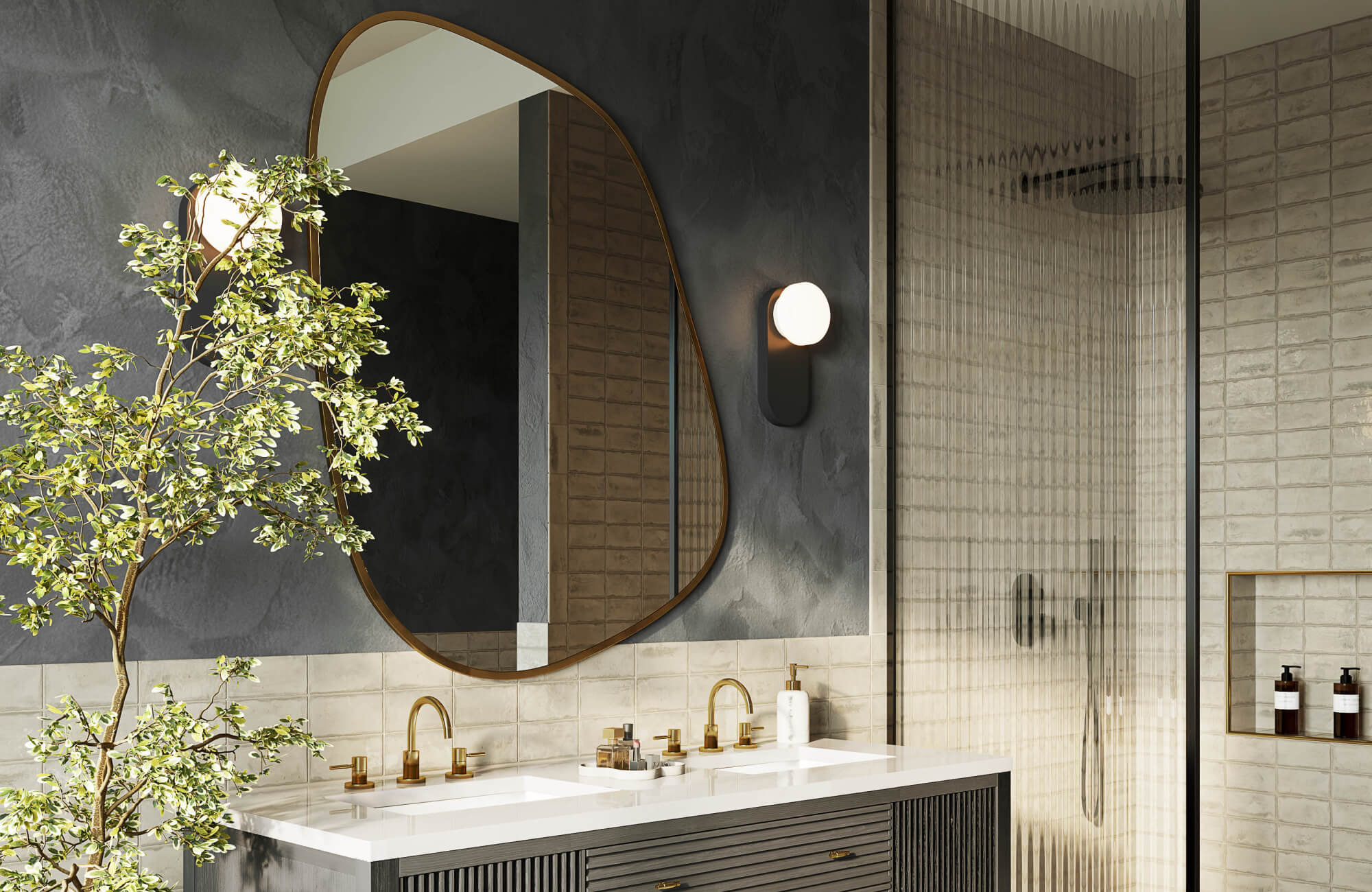
Floating vanities with storage preserve uninterrupted floor planes, allowing the eye to move fluidly across the bathroom without visual interruption. This continuity becomes especially impactful at larger scales, as shown in the photo above with the Royce 72" Double Vanity in Chestnut with a 3 cm White Zeus Quartz Top, where the extended floating profile emphasizes width while maintaining visual lightness.
By lifting the vanity off the floor, the design allows flooring materials to run seamlessly beneath the cabinet, reinforcing spatial cohesion. In wider bathrooms, this uninterrupted flow helps balance the visual weight of a double vanity without making the space feel grounded or heavy. Light also reflects more evenly across the exposed floor surface, subtly enhancing brightness and perceived depth. Together, these qualities demonstrate how a floating double vanity can expand visual openness while anchoring the room with architectural presence.
Visual Mass and Design Anchoring
Freestanding vanities introduce visual weight at floor level, establishing a grounded presence that can anchor the overall design. This sense of solidity often complements traditional or transitional bathroom styles where permanence and structure are valued. However, in smaller or narrower spaces, that same mass can dominate the room. The base interrupts horizontal flow, drawing the eye downward rather than outward. As a result, the bathroom may feel more enclosed or visually compressed. Balancing visual anchoring with openness becomes essential when working with freestanding vanity designs.
Layout Flexibility and Modern Integration
Floating vanities integrate effortlessly with wall-hung toilets, recessed lighting, and other contemporary architectural elements. Their elevated form supports modern design strategies that prioritize visual clarity and spatial efficiency. By concealing plumbing and electrical components within wall cavities, the overall composition remains clean and uncluttered. This concealment also allows for stronger alignment and symmetry across fixtures and finishes. Freestanding vanities, by contrast, introduce fixed footprints that limit layout adaptability. Consequently, floating vanity layouts offer greater flexibility in modern bathroom planning.

Maintenance, Moisture Resistance, and Longevity
Bathrooms demand materials and configurations that withstand humidity while remaining easy to maintain. Vanity placement plays a decisive role in how well these conditions are managed over time.
Moisture Exposure and Floor Contact
Floating vanities remain elevated above the floor, which significantly limits direct exposure to standing water and residual moisture. This separation helps protect cabinet materials from swelling, warping, and gradual finish deterioration caused by repeated contact with damp surfaces. In bathrooms where splashing, condensation, or steam is common, this advantage becomes increasingly valuable over time. Freestanding vanities, particularly at the base, are more vulnerable to moisture wicking from the floor. Even minor water exposure can accumulate, leading to material fatigue or discoloration. By reducing this point of contact, elevated vanity designs provide a more resilient solution for moisture-prone environments.
Cleaning Efficiency and Hygiene
Routine maintenance becomes more efficient when the area beneath the vanity remains fully accessible. Floating vanities allow uninterrupted cleaning across the entire floor surface, preventing dust, debris, and moisture from collecting in hidden zones. This openness also supports a cleaner bathroom environment with less ongoing effort. Freestanding vanities, on the other hand, often create narrow gaps along the base that are difficult to reach. These concealed areas can trap dirt and moisture, requiring more frequent deep cleaning. Improved accessibility, therefore, makes floating vanities especially well-suited for modern, high-use bathrooms.
Material Construction and Finish Performance
High-quality floating vanities with storage are commonly constructed with moisture-resistant plywood cores and sealed exterior finishes designed for humid conditions. These materials maintain structural stability while resisting delamination and surface breakdown over time. Hardware components are also often engineered for high-cycle use, ensuring consistent performance with frequent drawer operation. Freestanding vanities, by comparison, vary widely in material quality depending on price point and manufacturer. Lower-cost models frequently rely on MDF or particleboard, which are more susceptible to moisture-related damage. Regardless of vanity type, construction quality ultimately determines how well the piece withstands long-term bathroom conditions.

Cost, Design Longevity, and Overall Value
True value emerges when initial investment, long-term performance, and design relevance are considered together. Vanity selection directly influences how well a bathroom renovation holds up over time.
Initial Cost and Installation Investment
Floating vanities with storage typically represent a higher upfront investment, largely due to their reinforced construction and precise wall-mounted installation requirements. In addition to the vanity itself, wall preparation, stud reinforcement, and accurate leveling contribute to overall labor costs. These added steps also reflect the engineering necessary to ensure safe and stable load distribution over the years of daily use. On the other hand, freestanding vanities are more accessible in terms of initial pricing because they rely on floor support and simplified placement. The reduced need for specialized labor often shortens installation timelines and lowers overall project cost. As a result, budget considerations frequently influence early decision-making, even when long-term performance differs.
Design Relevance and Trend Alignment
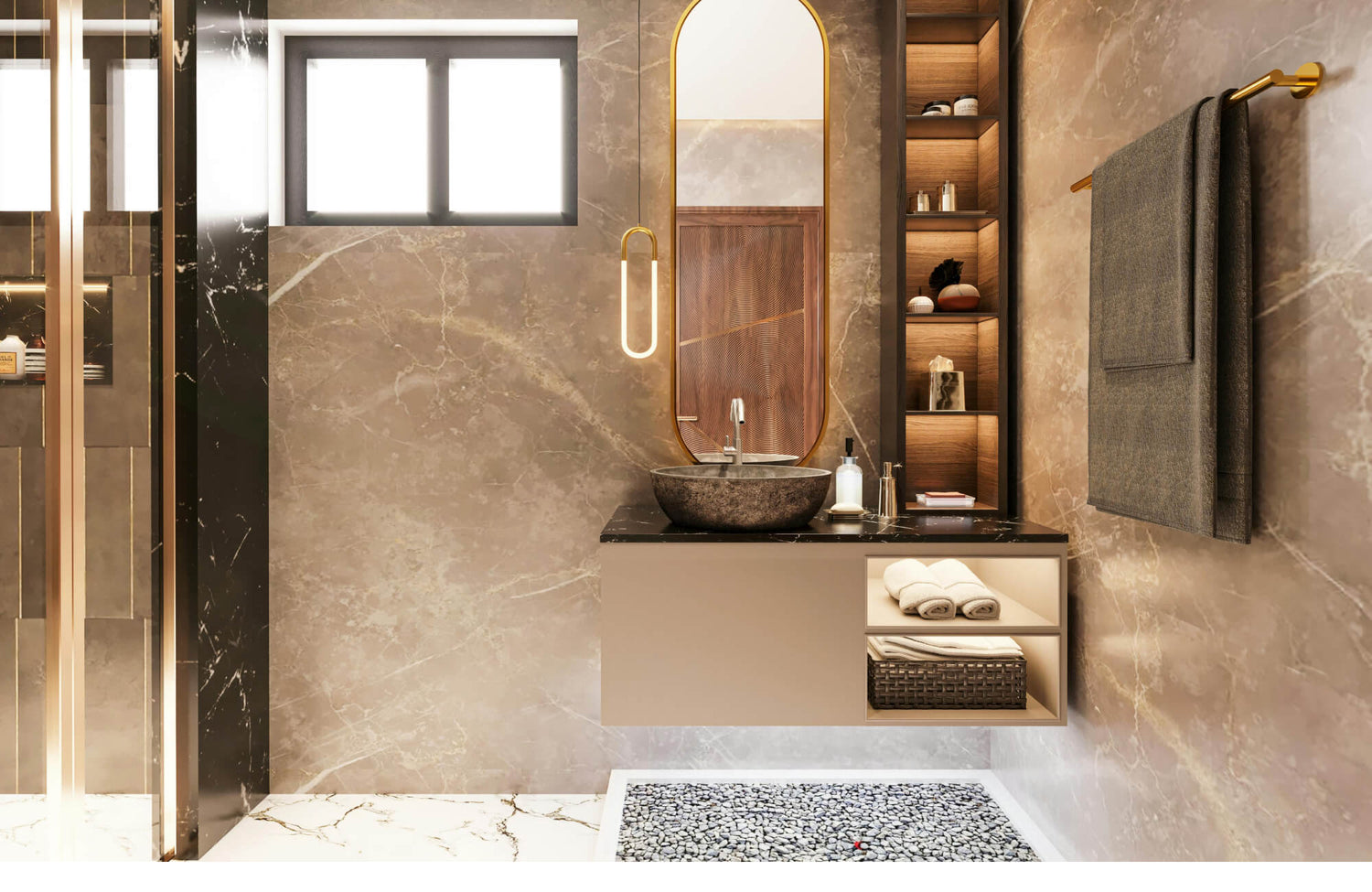
Floating vanities align seamlessly with contemporary bathroom design trends that favor warmth, texture, and architectural detail over purely minimal surfaces. Our Royce 48" Single Vanity in Chestnut with a 3 cm White Zeus Quartz Top reflects this shift through its sculpted wood façade, floating profile, and balanced proportions that feel modern yet enduring. As featured in the photo above, the combination of rich wood tones with a crisp quartz-based surface creates visual contrast while remaining neutral enough to adapt as surrounding finishes evolve. The wall-mounted form also reinforces today’s preference for open floor space and streamlined layouts without sacrificing material presence. Paired with rounded mirrors and warm metal fixtures, the vanity integrates effortlessly into current design narratives that emphasize softness and approachability. This adaptability allows floating vanities to remain visually relevant as trends transition from stark minimalism toward more layered, tactile interiors.
Long-Term Performance and Resale Appeal
From a long-term perspective, floating vanities often contribute to a perception of refined, modern craftsmanship that resonates with prospective buyers. This elevated aesthetic can subtly enhance resale appeal, particularly in competitive housing markets where bathroom upgrades carry significant weight. Durable construction materials and moisture-resistant design further support longevity by reducing the likelihood of early replacement. Freestanding vanities, while dependable, may show wear sooner at floor level due to moisture exposure and material limitations. As styles evolve, these units may also require cosmetic updates to remain visually relevant. When viewed holistically, floating vanities tend to deliver stronger overall value through durability, adaptability, and sustained market appeal.
Designed to Elevate Everyday Living
When thoughtfully selected, a floating vanity with storage becomes an architectural asset that enhances both functionality and visual refinement. Its ability to optimize storage, improve spatial flow, and resist moisture supports long-term bathroom performance. Freestanding vanities remain a reliable choice for traditional interiors or structural constraints, yet they often lack the adaptability demanded by modern lifestyles. As bathroom design continues to favor clean lines and efficient layouts, wall-mounted vanities increasingly define high-end renovation standards. Choosing the right vanity ultimately means aligning structural integrity, daily usability, and enduring value into one cohesive design decision.
For homeowners seeking expert guidance in achieving this balance of form and function, Edward Martin’s design services offer personalized solutions that translate inspiration into cohesive, livable spaces—contact us today to begin crafting a bathroom designed to perform beautifully every day!